
Reviewed · JEWISH HERITAGE TOURS
Warsaw: Jewish Heritage 4-Hour Private Tour
Warsaw’s Jewish heritage story is not a museum-only thing. It’s written into streets, walls, street names, and memorial shapes you walk right up to. This tour is interesting because you move through key places that explain how Jewish life in the city formed, fractured, and was remembered.
I love how the route is focused and human. You do more than point at dates, you connect the story of Warsaw Jews to real locations, from preserved neighborhoods to memorial routes. I also love that it’s private and paced around your questions, with guides like Wojciech and Ziggy who are praised for clarity and flexibility.
One possible drawback: this is a somber, emotionally heavy route, and it packs a lot into 4 hours. If you need lots of breaks or you prefer lighter sightseeing, you might want to plan a slower day afterward.
Key highlights you will feel quickly
- A concentrated Trail of Jewish Monuments that connects medieval roots to modern memory
- Ghetto Heroes Monument and the 1943 Uprising story at the heart of the preserved memorial route
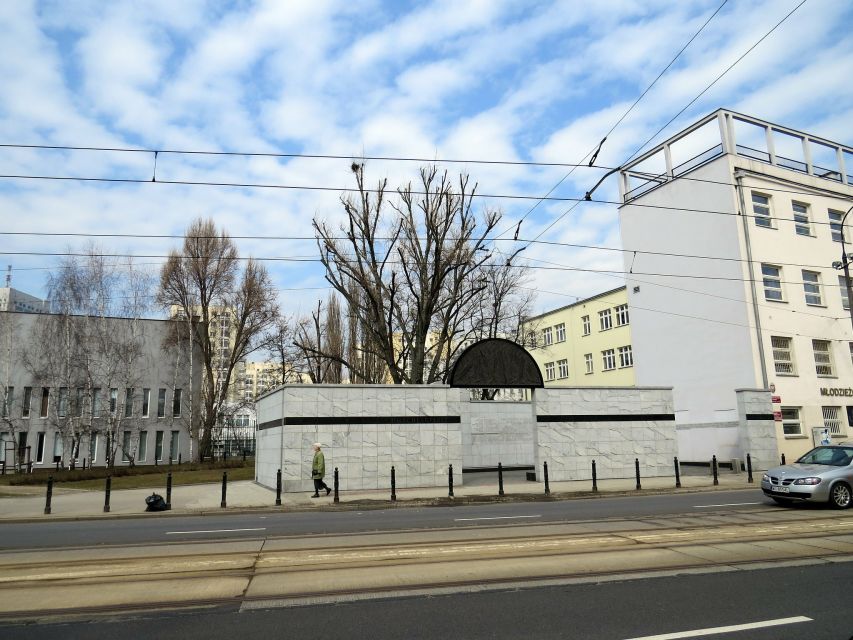
- Umschlagplatz memorial stop with names engraved on walls shaped like ghetto boundaries and a railway wagon
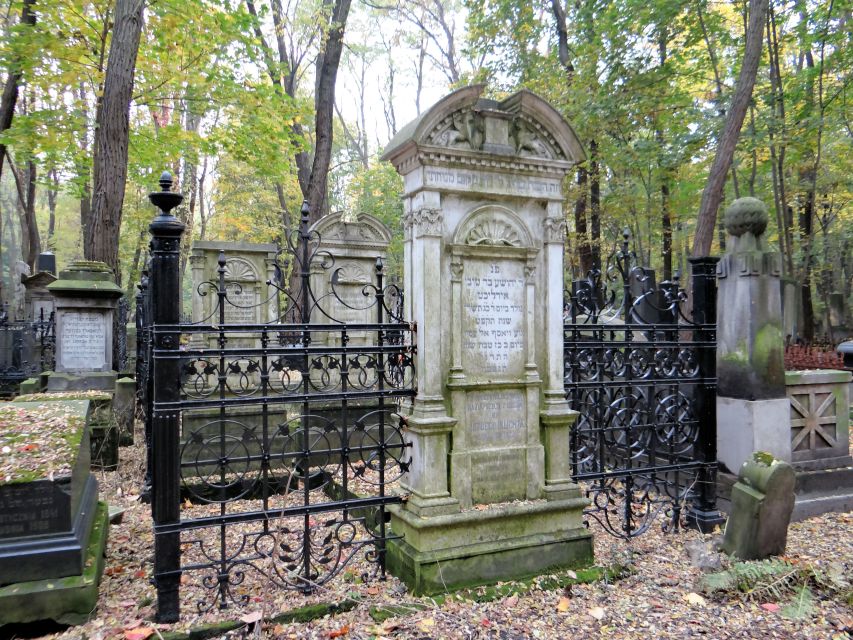
- Okopowa street cemetery visit to one of Europe’s largest Kirkuts, including major figures like Zamenhof and writers like Ischok Leib Perec
- Janusz Korczak symbolic grave and the story of Treblinka and the children in his care
- Próżna street and the Footbridge of Remembrance for a real sense of how the area is remembered today
Why Warsaw Jewish Heritage hits in just 4 hours
Four hours sounds short until you see what this tour actually does. You are not trying to cover every synagogue and every layer of the city. Instead, you get a guided path through the places that help you understand the community’s scale and the Holocaust’s machinery of displacement and loss.
The value is in the sequencing. You start with the broader sweep of Jewish life in Warsaw, then move into the ghetto history, and finish with places where memory is kept in stone and street layouts. That structure makes the facts stick, and it also helps you avoid the common problem of reading about the Holocaust without ever grounding it in geography.
And yes, it is heavy. You will stand at memorials and learn what happened at Umschlagplatz and Treblinka. But that is also why the tour works. The city becomes more than a backdrop, it becomes part of the story you carry out with you.
More Historical Tours in Warsaw
- Warsaw: POLIN Museum of the History of Polish Jews Ticket
★ 4.7 · 1,142 reviews - Warsaw: Chopin Concert at Historical Venue in Old Town
★ 4.7 · 445 reviews - Small-Group Historical Guided Tour of Warsaw with pick up/drop off. Public Tour.
★ 4.5 · 343 reviews
Price and what you really get for $42 per person
At $42 per person for a 4-hour private tour, the big question is what’s included. Here, you get a local guide for the full 4 hours and transportation. That matters because you are moving across multiple key areas without having to figure out routes on your own.
Entry fees are not included, so if you want to go inside specific sites, you may need to budget separately. For many people, that’s fine because a lot of the impact is built into the outdoor memorials, street fragments, and cemetery setting. Still, it’s smart to ask in advance what is open and what requires tickets, so you can decide whether to add extra time.
Compared with piecing together public transport plus guide time, this price can feel fair when you add up convenience. And the private format is part of the value, because you can slow down at the places that matter most to you.
Starting out: meeting your guide and setting the tone
You are picked up right at your hotel lobby, with the guide waiting and meeting you by name. That reduces friction, especially if you are staying in central Warsaw and want to avoid time spent coordinating meet points.
The tours run with live guides in multiple languages: Spanish, English, German, Russian, Polish, French, Italian, and Portuguese. If you want the story in your own language, this helps. And if you end up with a guide like Wojciech, you’ll likely appreciate the way he builds context and answers questions as they come up. Ziggy’s style is described as helpful and emotionally grounded, which is exactly what you want for this kind of route.
Because this is private, you can also adjust the pace. If something stops you in your tracks, you can stay there a moment longer. If you’re ready to keep moving, your guide can keep the flow.
The Trail of Jewish Monuments: learning Warsaw in walking distance
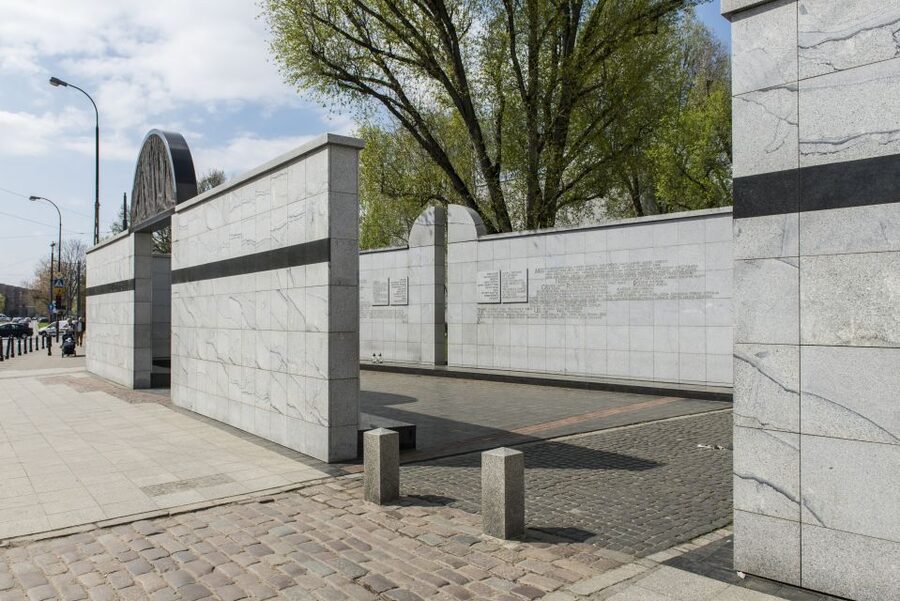
The tour’s opening is built around the idea that Jewish culture shaped Warsaw long before the world wars. You will follow the trail of Jewish monuments and learn how Jewish tradition showed up in everyday life, architecture, art, and literature. The guide frames Warsaw as one of Europe’s major Jewish centers before World War II, with only New York having a larger Jewish population worldwide.
What I like about starting this way is that it prevents the story from being only about catastrophe. You get a baseline for what was lost, and that baseline makes the memorials make more sense. Without it, a memorial can feel like a postcard. With it, it feels like a missing chapter.
You also get the “through-line” that your guide keeps returning to: the way Jewish life shaped the city’s identity, then how the ghetto system turned the city into a trap, then how memory is preserved in public spaces.
If you want an authentic feel, pay attention to the street-level details your guide points out. The strongest moments here are usually small physical cues, not big monuments. Street layouts, fragments, and memorial stones do a lot of emotional work on the body, not just the brain.
More Jewish Heritage Tours in Warsaw
- Warsaw: Warsaw Ghetto Private Walking Tour with Hotel Pickup
★ 4.9 · 369 reviews - Warsaw: Jewish History Guided Walking Tour in English
★ 4.7 · 324 reviews - Private Tour: Warsaw’s Jewish Heritage by Retro Fiat
★ 5.0 · 208 reviews - Warsaw: Ghetto, Jewish Cemetery & POLIN Museum Private Tour
★ 4.8 · 132 reviews
Ghetto Heroes and the Monument Route of martyrdom
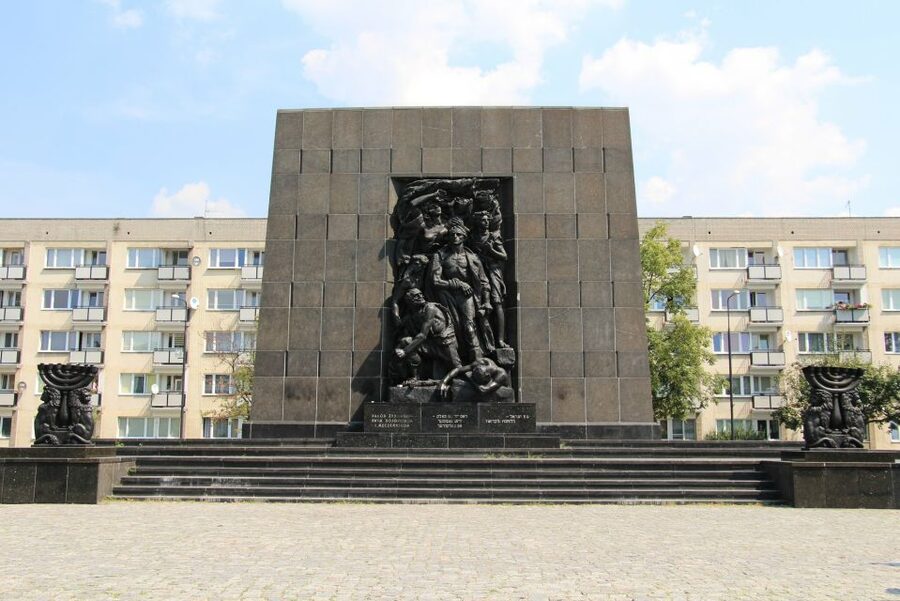
Once you are in the ghetto area, the tour centers on two linked ideas: resistance, and remembrance. You visit the Monument to the Ghetto Heroes, which commemorates those who fought and died in the Warsaw ghetto. Your guide also explains the story behind the Warsaw Ghetto Uprising of 1943, when a few hundred Jews resisted against Nazi artillery and dive bombers.
Even if you know the basics, having the story connected to the monument’s location helps. It turns an uprising into something spatial. You can better understand what “fighting back” meant in a neighborhood system designed for control.
From there, you walk along the Memorial Route of the Martyrdom and Struggle of Jews. This route includes commemorative stones that point to major figures connected to the ghetto. This is a place where your guide’s flexibility matters. If you want more names, you get them. If you want fewer names and more understanding of what happened and why, you can steer.
A practical note: this section can be mentally intense. If you are the kind of person who processes by talking, this is a good tour to choose. If you process by quiet, ask your guide to keep explanations short and let you absorb what you’re seeing.
Umschlagplatz: a memorial shaped like a ghetto wall and a rail wagon
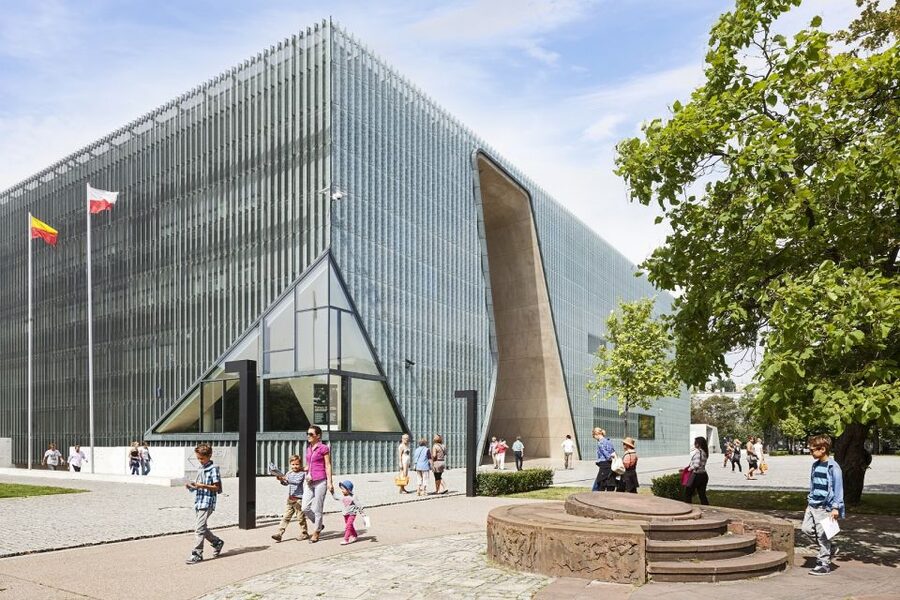
One of the most powerful stops is Umschlagplatz. You stop at the monument and learn about the people sent to extermination camps. The guide describes the tribute as something like a moment of prayer for those who never returned.
What makes Umschlagplatz different is the design. The memorial shape resembles the walls of the ghetto and a railway wagon. More than four hundred names of victims are engraved on the walls, and that detail changes the tone. It’s not only about history, it’s about presence. You can stand there and understand how numbers become individuals, even when you do not know their stories.
You also walk the route to the Ghetto Heroes Monument and, along the way, pay attention to markers set into the memorial environment. The tour encourages you to read those commemorative stones as you go, instead of treating them like background landscaping.
If you’re going to take photos, do it thoughtfully. This is a tribute stop, and you’ll get more out of the visit by giving yourself a few minutes without your phone.
Okopowa street Jewish Cemetery: one of Europe’s largest Kirkuts
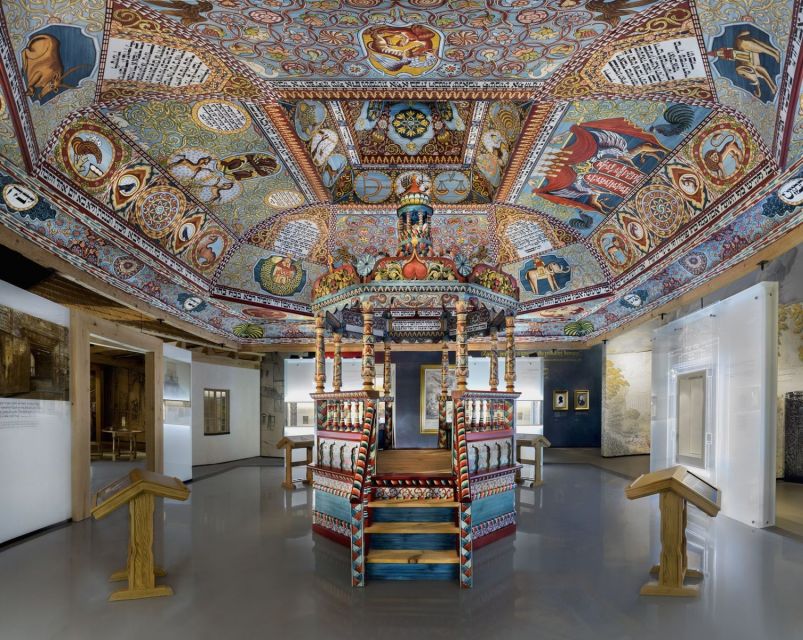
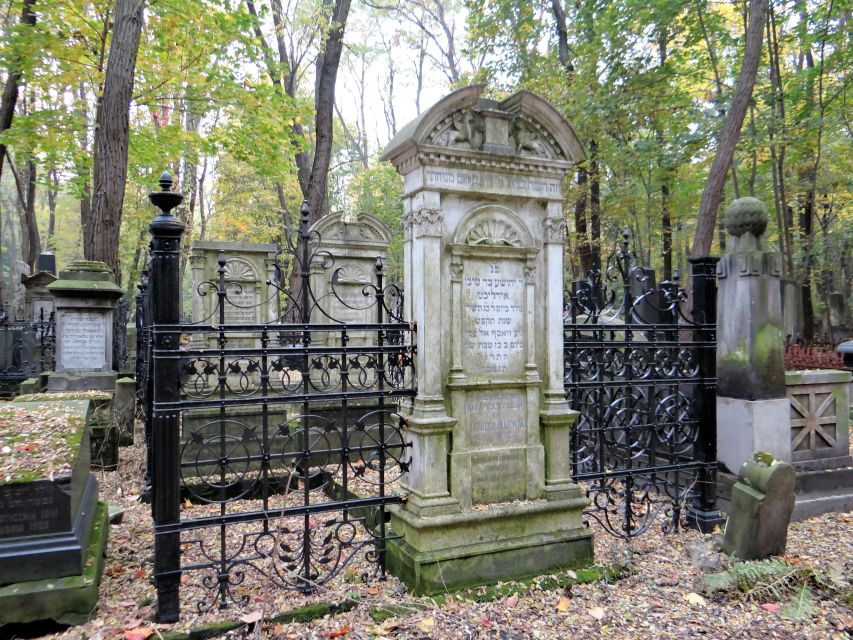
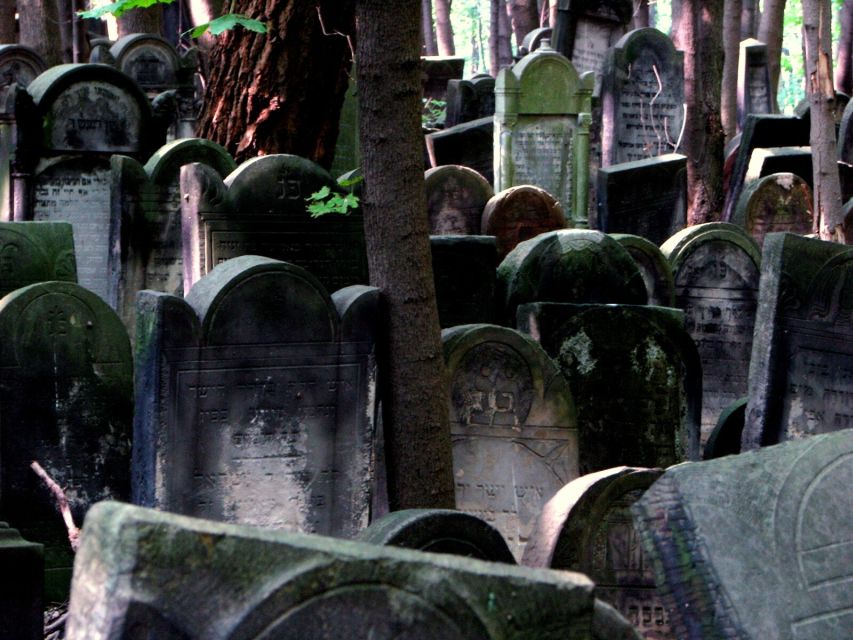
The cemetery stop is where the tour expands from wartime history into long memory. You visit Jewish Cemetery on Okopowa street, described as one of the largest Kirkuts in Europe. That scale alone tells you this was not a small community. It was a complex one with generations, leaders, writers, and public figures.
You also learn about notable burials, including Ludwik Zamenhof, the founder of the Esperanto language, and Ischok Leib Perec, a writer. The presence of figures like this helps you see Jewish Warsaw as part of broader European intellectual life, not only as a chapter of tragedy.
One more specific stop stands out: the symbolic grave of Janusz Korczak. The guide connects Korczak to his role as protector of children and explains that during World War II he was murdered in Treblinka along with the children in his care in a gas chamber.
This part is not just informational. It is reflective. The symbolic grave gives you a focal point for what you’re learning, and it also gives you a way to understand compassion as an action, not only a feeling.
Practical tip: wear comfortable shoes. Cemetery walking can be slow, and you may naturally want to linger.
Nozyk synagogue and surviving proof in architecture
You also see fragments tied to Jewish institutions, including Nozyk synagogue, built in a Neo-Romanesque style. The key point your guide makes is that it survived the Holocaust period.
This is meaningful because many visitors arrive in Warsaw knowing the big headlines but not the quieter story of what remained. Seeing the building form and learning it endured adds another layer. It tells you that the city was not only a site of destruction. It was also a place where some threads continued, even after everything.
Your guide also points out elements of preserved Jewish Warsaw, and this architectural stop helps anchor that theme. You can look at a building style and realize it reflects cultural taste, community investment, and identity before the catastrophe.
The Footbridge of Remembrance and Próżna street atmosphere
Between ghetto areas, you visit the Footbridge of Remembrance over Chłodna street, which connects the small and large ghetto. Today it includes a multimedia art installation that reminds visitors of the tragic events of that period.
This is one of those stops that works on two levels. First, it teaches you how the ghetto areas were separated but also connected in daily reality. Second, it gives memory a modern voice, so you are not only looking backward at old ruins.
Then you go to Próżna street, where the atmosphere of Jewish Warsaw has been preserved. This is a contrast stop, and it matters. It helps you shift from memorial language back into the texture of life: streets that still carry cultural cues, buildings that hint at what the community felt like.
For me, the best part of this section is that it shows you how the present holds onto the past. You can see how history is not locked away behind glass. It lives in the streets.
Ghetto wall fragments and pavement boundaries you can literally trace
Near the end of the story you see fragments of the Jewish ghetto wall. You also notice iron slabs set into the pavements that set out the boundaries of the former ghetto.
This is a subtle idea, but it’s one of the most important ones on the entire tour. You are not just being told where the boundaries were. You are walking alongside the markers that show you exactly how the city was shaped into confinement.
If you are a detail person, you’ll enjoy slowing down and letting your guide point out how the boundary lines work. If you prefer big picture, you’ll still benefit because the slabs make the concept concrete.
If you have more time: adding POLIN Museum to your day
You have an option to spend more time at POLIN Museum of the History of Polish Jews. If you want a deeper museum-style extension, your guide can help you connect what you learned on the street to what you might see inside.
This is a smart add-on if you want more background on the long arc of Jewish life in Poland, plus the larger historical framing you cannot fully cover in a short walk. It’s also useful if you want to revisit themes at your own pace.
Just keep in mind: this tour already covers major sites. POLIN is a separate, layered experience, so you will likely get the best value by leaving time to read and reflect rather than rushing through.
Who should book this private tour
This tour is ideal for you if you want:
- A private guide who can answer questions and adapt your pace
- A route that links Jewish life in Warsaw to the ghetto and the Holocaust through specific, walkable locations
- A tour that balances factual history with memorial respect
It might be less ideal if:
- You want only light sightseeing and short emotional stops
- You struggle with intense subjects and need a very gentle schedule
- You want ticketed museum time as the main event, since entry fees are not included and the tour is primarily an outdoor, guided route
Should you book Warsaw Jewish Heritage 4-hour private tour
I think you should book if you want a clear, well-paced understanding of Warsaw’s Jewish heritage tied to real places. The combination of a private local guide, included transportation, and a tight selection of meaningful stops makes it strong value for the time.
If you care about emotional realism, this is one of those tours where the guide’s approach matters. The praise you’ll see for guides like Wojciech and Ziggy lines up with what you need here: clarity, care, and the ability to respond to your questions.
If you’re on the fence, here’s my practical advice: plan this tour early enough that you can process what you learn, then build your later day around lighter city moments. This tour will change your lens on Warsaw, so give yourself room to absorb.
FAQ
How long is the Warsaw Jewish Heritage private tour?
It lasts 4 hours.
Is this a private tour?
Yes, it is a private group experience.
What is included in the price?
The tour includes a local guide for 4 hours and transportation.
Are entry or admission fees included?
No, entry or admission fees are not included.
Where does pickup happen?
Pickup is included, and the guide waits for you at your hotel lobby with your name.
What languages are available?
The live guide is offered in Spanish, English, German, Russian, Polish, French, Italian, and Portuguese.
Can I cancel or change my plans?
There is free cancellation up to 24 hours in advance for a full refund, and you can also reserve now and pay later to keep plans flexible.
Fresh Warsaw reviews
- Warsaw Off The Beaten Path Self-Drive Tour★ 5.0 · 18 reviews
- Private Warsaw Chopin Airport One Way Transfer★ 5.0 · 18 reviews
- Zelazowa Wola: Frederic Chopin Half-Day Private Tour★ 4.7 · 18 reviews
- Warsaw: 2-Hour Chopin’s Life Walking Tour★ 5.0 · 19 reviews
- Warsaw: melt museum Entry Ticket★ 3.5 · 19 reviews
- Deluxe Polish Food Tour Experience in Warsaw★ 5.0 · 19 reviews
- FSO Gunrange, Shooting Package US ARMY★ 5.0 · 19 reviews
- Warsaw Old Town: Spy-Themed Walk & Game with Host★ 4.5 · 19 reviews
Jewish Heritage Tours, compared.
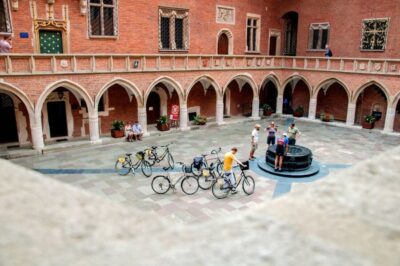
Bike Tour of Old Town, Jewish Quarter and the Ghetto
Read our review →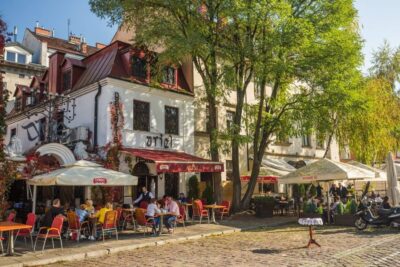
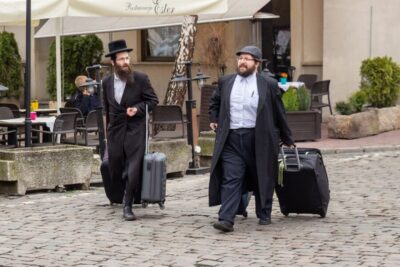
Kazimierz, Schindler’s Factory & Ghetto Guided Tour
Read our review →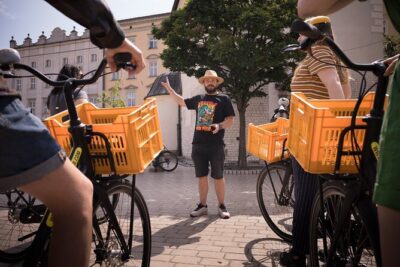
Full Bike Tour – the Old Town, Jewish Qtr & the Ghetto NEW BIKES
Read our review →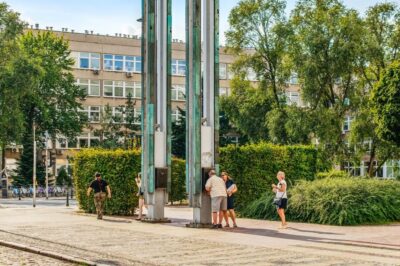
Warsaw Ghetto Private Walking Tour with Hotel Pickup
Read our review →
Browse the lists this tour appears in