
Reviewed · JEWISH HERITAGE TOURS
Private Tour: Warsaw’s Jewish Heritage by Retro Fiat
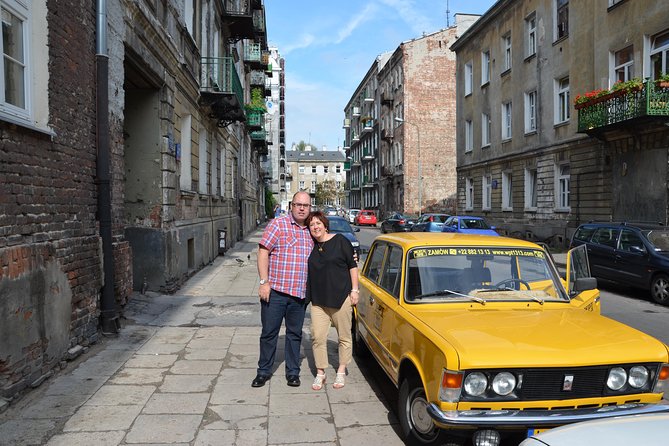
If you want Warsaw Jewish history in a way that feels close to the street, this private 4-hour ride in a retro Fiat 125p does the job. I like that you get real time with a guide plus hotel pickup and drop-off, so you are not wrestling with buses while learning heavy facts.
The biggest thing to plan for is timing. The Nożyk Synagogue and the Jewish Cemetery are closed from Friday evening through Saturday, so your itinerary may shift on those days.
Quick hits before you go
- Retro Fiat 125p (or a vintage minivan for groups of 4+) makes the whole day feel special and easy.
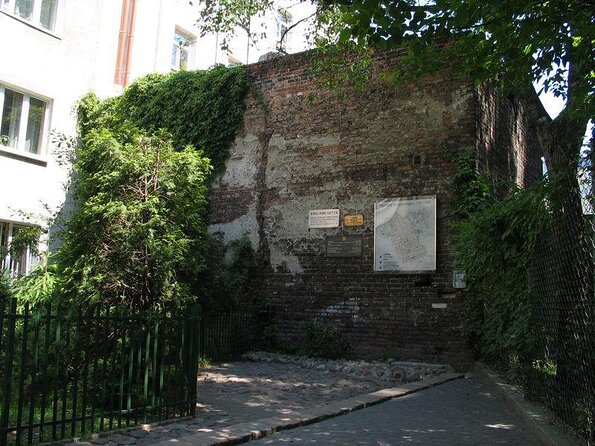
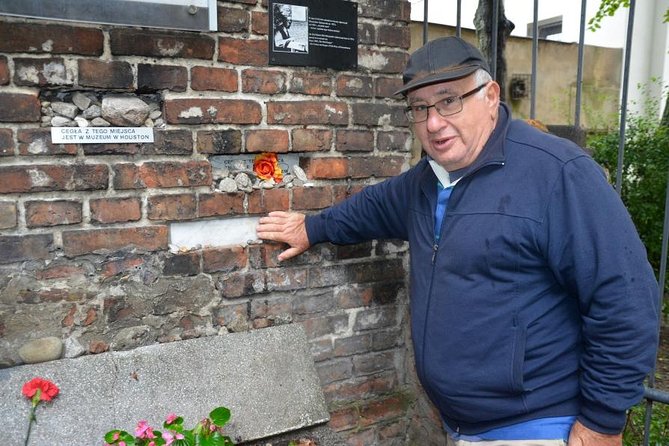
- Ghetto Wall remnants with commemorative plaques give you something tangible to connect to the story.
- Chłodna Street and Adam Czerniaków’s house put names to history, not just dates.
- Muranów and the Large Ghetto area show how the past sits under modern Warsaw and street art.
- Nożyk Synagogue plus the Jewish Cemetery are powerful stops, but bring timing awareness for Sabbath closures.
- Guides like Konrad, Karol, Marcin, Max, and Alec can turn complex WWII history into a clear, human timeline.
Riding Warsaw’s Jewish history in a retro Fiat 125p
Warsaw can be walked, sure. But this tour trades walking stress for something better: a guided route that links sites you might otherwise miss or misread. The vehicle matters here. That vintage Fiat 125p is part transport, part mood setter, and it keeps you moving between places that are not all right next to each other.
You get hotel pickup and drop-off, and pickups are only from the city center. If your hotel is outside the pickup area, you will need to coordinate for the best solution. Starting at the Palace of Culture and Science (Pl. Defilad 1) is the default meeting point if you do your own way in.
Duration is about 4 hours, with multiple short stops and a couple of places where you actually pause. The tour is private, meaning it is just your group. That matters because the guide can answer your questions in the moment and adjust the pacing.
If you are a group of 4+, you will not ride the Fiat 125p. Instead, the tour switches to a vintage minivan. That is a practical detail, and it usually helps groups spread out more comfortably.
More Historical Tours in Warsaw
- Warsaw: POLIN Museum of the History of Polish Jews Ticket
★ 4.7 · 1,142 reviews - Warsaw: Chopin Concert at Historical Venue in Old Town
★ 4.7 · 445 reviews - Small-Group Historical Guided Tour of Warsaw with pick up/drop off. Public Tour.
★ 4.5 · 343 reviews
What you gain from a private, driver-guide setup
A good walking tour tells a story. A good car tour does something else: it helps you see how all the pieces connect across the city. Here, the guide-turned-driver format keeps the history coherent.
In real terms, you get:
- Short, purposeful stops instead of long gaps where everyone is waiting
- In-depth attention from the guide at each memorial or landmark
- A chance to tailor what you care about, including film locations from The Pianist if that is on your radar
Guides you might get can be very strong at clarity and emotional balance. Names that come up include Konrad, Karol, Marcin, Martin, Max, Alec, and Alex. One standout detail from past tours is how some guides bring extra context with humor and careful explanations, even while handling heartbreaking material. Karol, for example, has been described as a doctoral student in history, which helps when you want the timeline to lock in.
Also, if you are the type who likes asking follow-up questions, this is the right format. You can ask about what you are seeing, why a street name matters, and how Warsaw’s Jewish community changed over time.
Stop 1: Fragment of the Ghetto Wall, where the story turns physical
The tour starts at the remains of the Ghetto Wall. This is not a museum wall behind glass. It is a surviving fragment tied to plaques and the geography of the former Jewish Ghetto, built in 1940 and responsible for imprisoning over 400,000 Jews.
Even when you only look for 15 minutes, this stop sets the tone. Before you move on, you have a concrete reference point. It helps when later you hear terms like ghetto, uprising, and deportation, because you are imagining what it meant in real space.
The good news: access here is free and the time is short. That means you are not stuck waiting for tickets or long lines before the real story unfolds.
Stop 2: Chłodna Street, plus Adam Czerniaków’s connection
Next is Chłodna Street for about 10 minutes. This is one of those stops that quietly makes history feel personal. You see the Footbridge of Memory and a building associated with Adam Czerniaków, the president of the Jewish Community, also called the Judenrat.
What I like about a stop like this is how it breaks the usual pattern of “bigger events, less human scale.” A name like Czerniaków gives you a person to attach to the impossible decisions leaders faced.
It is short, but it is designed to plant specific details. If you are a notes person, this is where you might want to write down names and then ask your guide to clarify the role and context.
More Jewish Heritage Tours in Warsaw
- Warsaw: Warsaw Ghetto Private Walking Tour with Hotel Pickup
★ 4.9 · 369 reviews - Warsaw: Jewish History Guided Walking Tour in English
★ 4.7 · 324 reviews - Warsaw: Ghetto, Jewish Cemetery & POLIN Museum Private Tour
★ 4.8 · 132 reviews - Tour of the Warsaw Ghetto
★ 5.0 · 119 reviews
Stop 3: The Warsaw Ghetto, now Muranów and a different kind of street reality
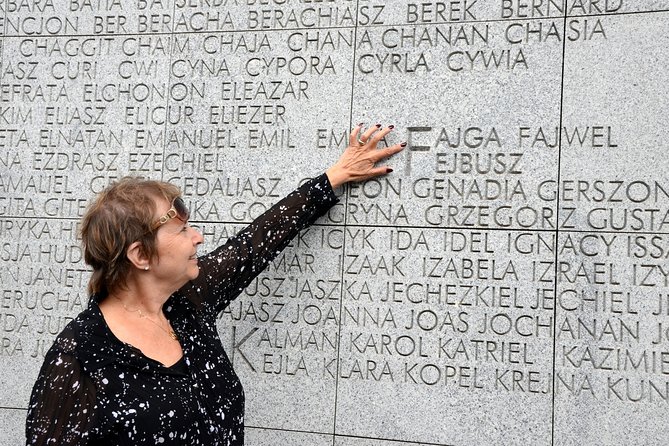
After the wall fragment and Chłodna Street, you head into the Muranów district, known as part of the former “Large Ghetto” area. You spend about 30 minutes here.
Today, this area is marked by modern buildings and street art. That contrast can feel unsettling, but it is also the whole point of Warsaw’s memorial landscape: the past is present, even when the buildings are new.
This is a place where your guide can connect big WWII events to the city’s layout. If you are thinking about The Pianist, it is also the kind of location where film references can help you picture the era. The guide can point out film-related places you may recognize.
If you prefer a tour that focuses on how Warsaw looks today while still staying honest about what happened, this is one of the best segments.
Stop 4: Ghetto Heroes Monument, built around the 1943 uprising
You then go to the Monument to the Ghetto Heroes, spending about 15 minutes. This monument commemorates the Warsaw Ghetto Uprising of 1943 during WWII.
I value this stop because it shifts the emphasis from only suffering to also resistance and agency. Even if you already read about the uprising, a memorial like this gives you a physical place to stand and reflect.
Like the earlier stops, there are no ticket worries listed for this segment. The pacing keeps you from burning daylight before you reach the synagogue and cemetery.
Stop 5: POLIN Museum (exterior), with an optional add-on
The POLIN Museum of the History of Polish Jews is next, but here you only see it from the outside during the core tour. The listed time is about 15 minutes, and the optional museum entry is not included.
The practical part: if you want to go inside, the guide can leave you at the museum after the tour. That is a smart option because the museum visit can take hours on its own. You avoid the trap of trying to “do it all” in the same 4-hour window.
Why I think this is good value: the exterior stop gives you orientation. Then, if you want more depth, you have a clean choice to add time at your own pace.
Stops with heavier context: Treblinka departure, group suicide memorial, and survivor streets
Between the main ghetto area and the synagogue/cemetery, the route includes additional memorial points. These are aimed at the darker chapters of the war, including:
- the departure point for the Treblinka extermination camp with gas chambers
- a memorial for a group suicide connected to the Ghetto Uprising
- a street associated with what survived from both sides of the ghetto area
Even without a long stop at each one, these markers keep the story from floating at an abstract level. They also give you a fuller picture of what happened beyond the ghetto wall.
If you are emotionally sensitive, keep a bottle of water handy and take a moment when you need it. Your guide can usually pace pauses based on your comfort.
Stop 6: Entering Nożyk Synagogue, and the timing rule you cannot ignore
The Nożyk Synagogue is one of the most important stops on the itinerary. You get about 30 minutes here, but there is a critical timing note: the synagogue is closed from Friday evening through Saturday due to Sabbath.
The listed claim is big and specific: it is the only surviving prewar Jewish house of prayer in Warsaw. It was also the only synagogue to survive WWII.
Two practical tips matter here:
- Bring something to cover your head. You may be required to cover your head at some Jewish sites.
- If your tour date falls into the Friday evening through Saturday window, assume you might not be able to enter. This is not a minor detail, it can change the whole feel of the stop.
One caution that has shown up in feedback is that some people booked later in the day and were surprised that entry was not available. So if you care most about the interior experience, aim for a weekday or a time when entry is likely open.
Stop 7: Jewish Cemetery, where tens of thousands of stories are layered
The Jewish Cemetery stop is another centerpiece, again with a timing rule: it is closed from Friday evening through Saturday due to Sabbath.
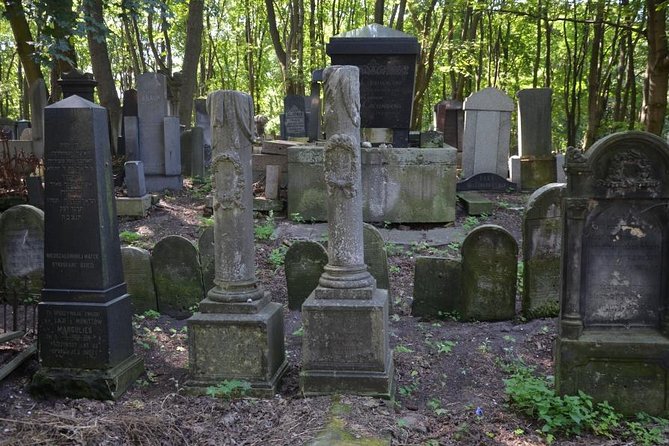
The itinerary says the cemetery includes the remains of graves of over 200,000 people, spanning spiritual and political leaders, creators of Jewish culture, and thousands of nameless victims. It also notes that many generations of Jewish residents of Warsaw were buried there.
You get about 30 minutes. That is not long, but it is enough time to make the names and symbols stick in your mind. If you are expecting a peaceful park visit, temper that expectation. This is a place of remembrance with a heavy atmosphere.
Also plan for the “practical grief” factor. You will likely see stone fragments, inscriptions, and memorials. It can feel strange to take photos, and you may choose not to. Either choice is fine, and the guide can guide you on respectful behavior if needed.
If you want to spend more time, do it by adding time outside this tour rather than trying to rush through the cemetery during the scheduled window.
Tailoring the route: film locations, personal questions, and quick adaptations
One of the best parts of a private tour is that you can point your curiosity in a direction. This tour explicitly allows that. You can mention points of interest, including film locations featured in The Pianist, and your guide can route attention accordingly.
Some guides also bring extra human texture to the day. Past groups describe guides who connected the history to personal family stories, and who balanced heartbreak with an ability to explain the timeline clearly. There is also a theme of flexibility, like adapting the stops when you want more time at a specific memorial or less time at a quick exterior view.
If you want to keep it simple, do not worry. The default route is already built to cover the key Warsaw Jewish heritage sites in one pass.
Price and value: what $108.28 per person buys you
At $108.28 per person for about 4 hours, you are paying for three things that add up fast if you try to do it alone:
- Private guide attention for multiple sites, not just one neighborhood
- Hotel pickup and drop-off, which saves time and prevents missed starts
- Private vintage transport that keeps the route smooth
Many self-guided plans fail because the locations are spread out and you still need context. Without a guide, you can walk from plaque to plaque, but you may not connect the dots quickly enough to understand what each spot represents.
One note: since the synagogue and cemetery are sometimes closed, the “value” of your visit depends on timing. If entry is available, you get the full impact. If not, the tour still covers essential memorial points, but the stops become more exterior and interpretive.
Who this tour is best for, and who should choose differently
This tour suits you if:
- you want WWII and Jewish Warsaw history in a clear, guided storyline
- you prefer a private setting where you can ask questions and set the pace
- you like the idea of seeing multiple sites without managing logistics
It may be less ideal if:
- you are traveling with very limited mobility and want minimal walking and standing
- you are visiting during the Friday evening to Saturday window and the synagogue and cemetery interiors are your top priority
If you are the kind of traveler who loves architecture and city change over time, you will also appreciate Muranów’s mix of modern streets and memorial context.
Should you book Warsaw’s Jewish Heritage by Retro Fiat?
Yes, if you want a focused, guided route through the places that shaped Jewish Warsaw, especially the ghetto wall remains, the key memorials, and the Nożyk Synagogue and Jewish Cemetery when open. The private format and hotel transfers make it feel efficient, not like a rushed checklist.
Book earlier in the week or pick a schedule that avoids Friday evening through Saturday if you want to enter the synagogue and cemetery. If you do not, the tour can still be meaningful, but you should adjust your expectations for interior access.
In short: this is a strong choice for first-time visitors who want depth without planning fatigue.
FAQ
How long is the Warsaw Jewish Heritage tour?
It runs for about 4 hours.
How much does the tour cost per person?
The price is $108.28 per person.
Is hotel pickup and drop-off included?
Yes. Hotel pickup and drop-off are included, with pickup offered from the city center.
Do we ride in the retro Fiat the whole time?
You ride in a private retro Fiat 125p. For groups of 4 or more, the tour description says you will be driven in a vintage minivan instead.
What language is the tour in?
The tour is offered in English.
Are tickets for the Nożyk Synagogue and Jewish Cemetery included?
No. Admission tickets for the synagogue and cemetery are not included.
Are the synagogue and cemetery open on Fridays and Saturdays?
The Nożyk Synagogue is closed from Friday evening through the whole Saturday. The Jewish Cemetery is also closed from Friday evening through the whole Saturday.
Can I cancel for a full refund?
You can cancel up to 24 hours in advance for a full refund. If you cancel less than 24 hours before the experience starts, the amount paid is not refunded.
Fresh Warsaw reviews
- Warsaw Off The Beaten Path Self-Drive Tour★ 5.0 · 18 reviews
- Private Warsaw Chopin Airport One Way Transfer★ 5.0 · 18 reviews
- Zelazowa Wola: Frederic Chopin Half-Day Private Tour★ 4.7 · 18 reviews
- Warsaw: 2-Hour Chopin’s Life Walking Tour★ 5.0 · 19 reviews
- Warsaw: melt museum Entry Ticket★ 3.5 · 19 reviews
- Deluxe Polish Food Tour Experience in Warsaw★ 5.0 · 19 reviews
- FSO Gunrange, Shooting Package US ARMY★ 5.0 · 19 reviews
- Warsaw Old Town: Spy-Themed Walk & Game with Host★ 4.5 · 19 reviews
Jewish Heritage Tours, compared.
Bike Tour of Old Town, Jewish Quarter and the Ghetto
Read our review →
Kazimierz, Schindler’s Factory & Ghetto Guided Tour
Read our review →
Full Bike Tour – the Old Town, Jewish Qtr & the Ghetto NEW BIKES
Read our review →
Warsaw Ghetto Private Walking Tour with Hotel Pickup
Read our review →
Browse the lists this tour appears in