
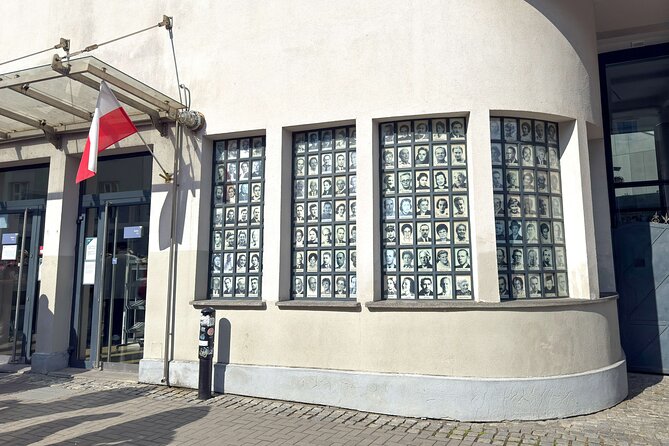
Reviewed · SCHINDLER'S FACTORY TOURS
Krakow: Schindler’s Factory & Ghetto Guided Tour
Kraków’s Schindler’s Factory plus a guided walk through the Kraków ghetto is interesting because it puts two key parts of World War II side by side: how Nazi occupation crushed daily life, and how a handful of people tried to protect lives anyway. You get a museum experience that uses its layout to make you feel what confinement meant, then you move outside to real ghetto locations that still carry weight.
I love two things in particular. First, the museum uses the exhibition Kraków under Nazi Occupation 1939 to 1945 to connect the story of Oskar Schindler to everyday fear and survival for both Jewish and non-Jewish residents. Second, the ghetto walk is very focused, with stops at the Ghetto Walls remains, Ghetto Heroes Square, the Chair Memorial, and the Under the Eagle Pharmacy. One thing to consider: this is a fast-moving, information-heavy 3-hour format, and some of the museum rooms are small and dim, so you may not have much time to linger.
Key Points You Should Know Before You Go
- Skip-the-line admission to one of Kraków’s most popular museums saves time when queues are long
- Narrow, dim rooms are designed to make you feel boxed in, not just informed
- Ghetto Heroes Square focuses attention on deportations, with the moving Chair Memorial as the centerpiece
- Under the Eagle Pharmacy highlights Tadeusz Pankiewicz and his team’s work helping people with medicine
- The factory museum has no original machinery, so expect an exhibition, not a working workshop
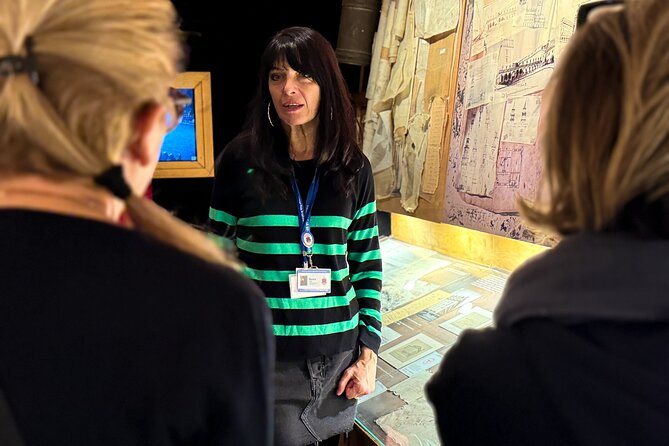
- The guide is the multiplier for the amount of information you’ll process in a short window
Entering Schindler’s Factory, the Museum That Uses Space Like a Story
Schindler’s Factory in Kraków is one of those places where the building matters as much as the exhibits. It sits inside Oskar Schindler’s former enamel factory, so the setting already has context. Even so, the museum is not about seeing machines running. It’s about understanding what happened to ordinary people under Nazi occupation, and the exhibition team uses the rooms to shape your emotions.
What I like about this setup is that it avoids turning history into a dry timeline. The museum route is described as a journey through the years of Nazi occupation, with a strong focus on daily experience: what fear did to neighborhoods, how persecution tightened its grip, and how some people still tried to resist. You are not just hearing one man’s biography. You’re seeing a bigger system and its human cost.
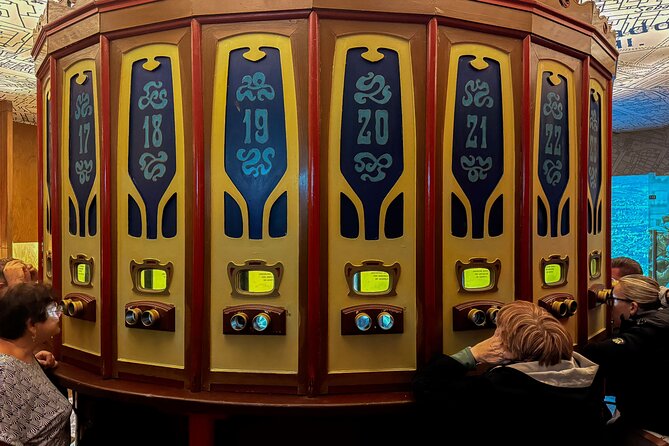
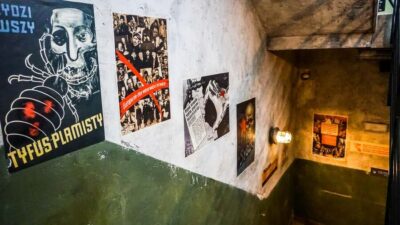
Expect the exhibition Kraków under Nazi Occupation 1939 to 1945 to be the backbone of your visit. The story moves through artifacts, photographs, and immersive reconstructions. And because so much of it unfolds in narrow, dimly lit rooms, the pace matters. If you are the type who likes to read every sign slowly, plan for the reality that this is a guided highlight tour, not a self-guided weekend marathon.
More Jewish Heritage Tours in Krakow
- Krakow: Jewish Quarter and Former Ghetto Tour
★ 4.9 · 1,441 reviews - Krakow: Bike Tour of Old Town, Jewish Quarter and the Ghetto
★ 4.9 · 1,155 reviews - Krakow: Kazimierz Jewish Quarter Walking Tour
★ 4.8 · 571 reviews
Meeting Point, Timing, and How to Not Stress the Start
Your tour starts outside Schindler’s Factory Museum, at the main entrance on the right-hand side. The guide will be holding an excursions.city sign. This is simple, but it helps to arrive early because the group departs on time.
You should plan to get there about 10 minutes before the start. Once the group has left, latecomers can’t join, and tickets can’t be refunded. That rule is common for timed museum access, but it’s worth taking seriously here, because the whole point of the tour is that you have skip-the-line admission already lined up.
The tour duration is 3 hours total, and it’s a two-part experience: museum first, then a walking route in the ghetto area. Also note that the tour runs in one language per group, based on what you select when booking.
Schindler’s Enamel Factory Museum: What the Exhibits Make You Understand
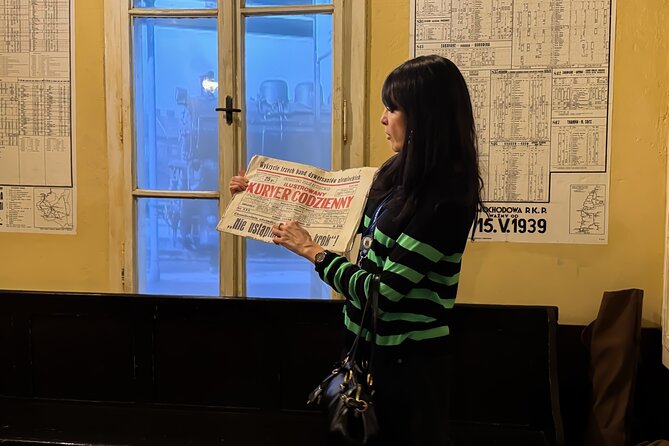
The museum portion is where the emotional tone starts, and it’s also where you get the best framework for the ghetto walk afterward. The exhibition is set up to show how the war transformed Kraków and how Jewish life, and the lives of non-Jewish residents, changed day by day.
A big design choice here is how the exhibition handles crowding and pressure. Many galleries are narrow and dimly lit, and that’s not an accident. The goal is to recreate the feeling of confinement and uncertainty that people lived with under Nazi rule. It’s history presented through physical experience, and that can hit hard.
You’ll also learn about the Schindler story, but it’s presented as part of a wider tragedy. The museum explains how Schindler’s factory provided refuge to more than a thousand Jewish workers. It places that help in the larger context of persecution, deportations, and the destruction of Kraków’s Jewish community. That scale can feel overwhelming, and the museum guide’s job is to make sense of it without turning it into a lecture that you tune out.
Practical heads-up: what you will not see
If you’re hoping for a factory floor with surviving machinery, adjust expectations. The building once housed Schindler’s factory, but today it is a museum, and it does not include original machinery. Some visitors noted this point clearly, and it’s worth knowing upfront so you don’t walk in thinking you’ll watch industrial processes.
More of Schindler's Factory and wartime Krakow:
- Krakow: Schindler’s Factory Ticket and Guided Tour Option
★ 4.3 · 4,306 reviews - Krakow: Schindler’s Factory Tour with Entrance Ticket
★ 4.5 · 3,182 reviews - Krakow: Schindler’s Factory Skip-the-Line Ticket
★ 4.4 · 3,105 reviews - Krakow: Schindler’s Factory Tour with Entrance Ticket
★ 4.6 · 1,737 reviews
The Guided Museum Route: Why the 3-Hour Format Feels Like It Works
This tour is built as a time-efficient combo, and that’s one reason it scores so well with people who have limited time in Kraków. Even with the emotionally heavy topic, the structure keeps moving: introduction in the museum, then the walk where the places become concrete.
You’ll go through the exhibition with a licensed expert guide. That matters because this museum has a lot to absorb, from documentary material to reconstructed scenes. In reports of the experience, the guide is repeatedly singled out for how they make the details understandable and how they handle sensitive topics with care.
Some guides also use amplification tools, like microphones or headsets, which can make a big difference in smaller rooms where sound can get messy. You’ll likely have some chance to take a short break between the museum and the ghetto portion, which is a smart concession in winter or rainy months.
Still, there’s a tradeoff. Several visitors note that the museum is information heavy, and the rooms are small, so you might not have time to linger over every display. If you want to read everything at your own rhythm, you may prefer doing the museum separately another day. This tour is excellent when your priority is context plus efficiency, not slow, solitary study.
From Ghetto Walls to Ghetto Heroes Square: Seeing the City as It Was
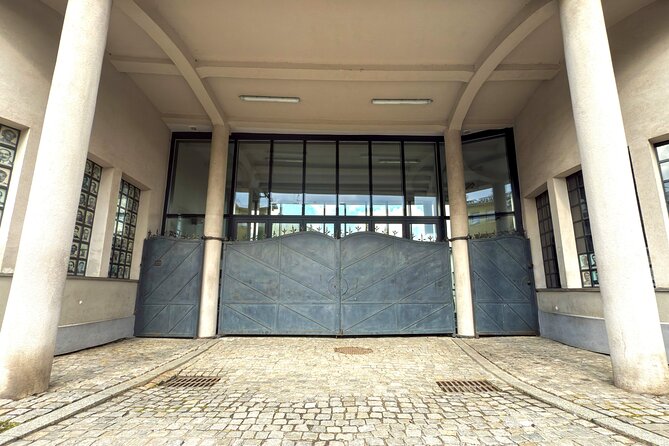
Once you leave the museum, the tour turns into a walking history lesson. The ghetto stops are not random. They move through the logic of confinement, then through the places where deportations and loss became visible in the public space.
The first ghetto stop is the remains of the Ghetto Walls. Seeing the surviving remnants of the barrier gives you a concrete sense of how the ghetto physically cut Kraków into “inside” and “outside.” That matters because it helps you understand why wartime propaganda and control were not just ideas. They were implemented through streets, checkpoints, and boundaries.
Next comes the heart of the ghetto: Ghetto Heroes Square. This is where the tour focuses on deportations to extermination camps. The square’s most memorable element is the Chair Memorial, made of chairs that represent lives lost. It’s simple, symbolic, and hard to forget.
As you walk, your guide connects what you see to what people endured. The point is not to shock you for shock’s sake. It’s to make the geography of the ghetto make sense, so you understand the places as part of a system, not as isolated landmarks.
Under the Eagle Pharmacy and the Story of Tadeusz Pankiewicz
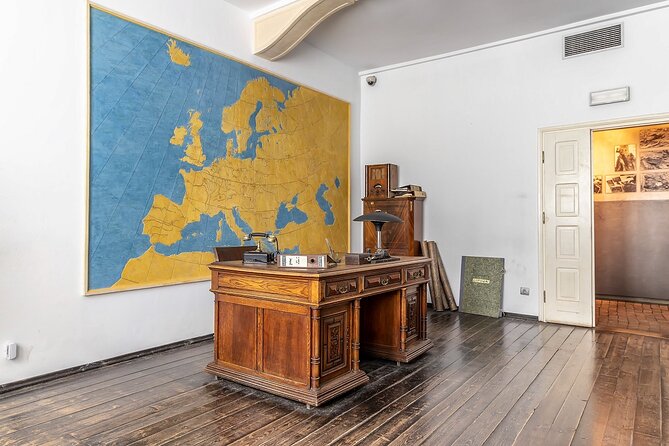
One stop in the ghetto route is especially meaningful: the Under the Eagle Pharmacy. This location is tied to the story of Tadeusz Pankiewicz and his staff, who aided ghetto residents by preserving medicine and hope.
The value of this stop is how it balances the darker parts of the story. The museum gives you the big picture of occupation and persecution. The ghetto walk then gives you specific places. The pharmacy stop adds a third layer: agency. It shows how people tried to keep basic human needs working, even when the odds were impossible.
If you remember anything from this section, I’d aim for this idea: history isn’t only about what was destroyed. It’s also about what people managed to protect, even briefly, for specific people.
How the Guide Shapes Your Understanding (and Why It Matters More Here)
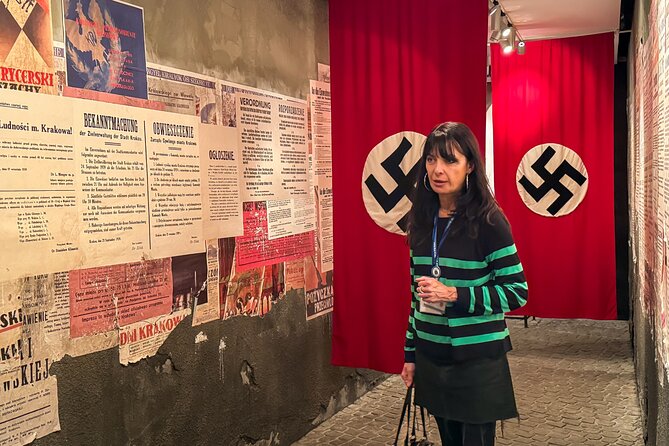
In a normal city tour, the guide mostly helps you find points of interest and keep time. In a museum-plus-ghetto experience like this, the guide becomes the difference between collecting facts and understanding what those facts mean.
Across the tour experience, certain guide names come up often in reports, including Alexandra, Joanna, Fil/Phil, Eva, Helena, Alice, Anna, Magdelena, and Alicja. The common thread is that they’re praised for clear explanation, strong pacing in small spaces, and handling emotionally heavy material respectfully.
That matters because this museum has many short corridors and dimly lit rooms, where it’s easy to feel lost in the details. A strong guide helps you keep track of cause and effect. They also answer questions, and that can turn your confusion into a clearer mental map fast.
Also, because the group moves together, guide leadership is what controls your pacing. One concern that can pop up with any guided museum route is group size. Some reports mention about 20 people, and when the rooms are tight, that can mean some visitors have less space to stop and read. If you’re sensitive to crowds in small indoor spaces, consider that reality when you choose your time slot.
Price and Value: Does $57 Buy You Enough?
At $57 per person for a 3-hour guided combo, the value depends on two things: time and context.
First, you get skip-the-line admission to Schindler’s Factory. That saves you from one of the most common travel frustrations in top museums, waiting in ticket lines while your day slips away.
Second, your money covers a guide for two parts: the museum and the walking tour. Doing these separately might be possible, but having one guide connect the museum story to the ghetto stops is the real value. It turns the second half of the experience from a set of locations into a continuation of the same narrative.
Finally, the tour is designed for limited time. If you only have a half-day in Kraków for history, this combo is a very efficient choice. If you have the time and want more breathing room, you could do the museum at a slower pace on your own. But if you want structure and a guided explanation fast, this tour makes a strong case for its price.
Who This Tour Fits Best (and Who Might Prefer a Different Approach)
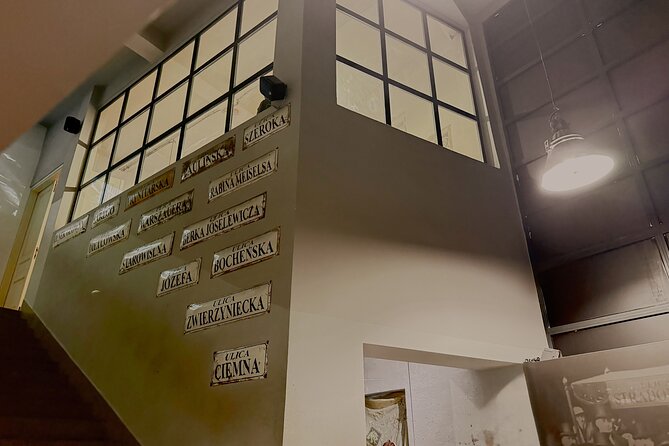
This tour fits best if you want:
- A guided, place-based understanding of Kraków under Nazi occupation
- A museum experience with emotional design, not just text panels
- A focused walking route through the ghetto, including Ghetto Heroes Square and the Under the Eagle Pharmacy
It may not fit as well if you:
- Hate small indoor rooms and prefer lots of personal reading time
- Need very slow pacing and wide photo stops inside museums
- Are expecting to see working factory machinery on site
Also, the tour runs in all weather, rain or shine. That’s usually a good sign for reliability, but it means you should dress for walking outdoors after the museum.
Quick Tips So You Get the Most From It
- Wear comfortable shoes. The outdoor walk adds up even if each segment feels short.
- Bring layers. The museum is controlled inside, then you step outside for the ghetto walk.
- Consider a small bag if you’ll be carrying water or a warm layer. You’ll want to move freely in narrow spaces.
- If you’re a slow reader, know that this is a guided highlight format. You’ll get a lot, but you won’t see everything equally.
Should You Book This Schindler’s Factory and Kraków Ghetto Tour?
I think you should book this tour if your priority is clarity and context, not just checking boxes. The Schindler’s Factory museum gives you the framework through its guided exhibition, and the ghetto walk turns that framework into visible geography, including the Chair Memorial and the Under the Eagle Pharmacy.
Book it with eyes open if you dislike fast pacing or if you want to spend long minutes alone in dark rooms reading every label. In that case, you can still consider it, but plan to follow up later with a slower museum visit on a free day.
If you’re on a time crunch in Kraków and want a guided experience that connects the human story to the city itself, this one is a strong pick.
FAQ
Where do I meet the guide?
Meet your guide in front of the main entrance to Schindler’s Factory Museum, on the right-hand side. The guide will hold an excursions.city sign.
How long is the tour, and what is the start timing like?
The tour lasts about 3 hours. Starting times vary, and you can choose a preferred time, but the exact time is not guaranteed.
Is the ticket line skipped for Schindler’s Factory?
Yes. The tour includes skip-the-line admission to Schindler’s Factory.
What languages are offered?
Live tour guides are available in Italian, English, French, Spanish, and German. The group tour is only in one language, based on your booking selection.
Do I need to arrive early?
Yes. Arrive about 10 minutes before the tour begins. Once the group departs, latecomers can’t join, and tickets can’t be refunded.
Does the tour run in bad weather?
Yes. The tour goes ahead in all weather, rain or shine, so wear suitable clothing and footwear for walking outdoors.
Fresh Krakow reviews
- Czestochowa Black Madonna Private Day Tour from Krakow★ 5.0 · 18 reviews
- Zakopane PRIVATE TOUR from Krakow★ 5.0 · 18 reviews
- Krakow City Pass – Museums, Atractions & City Transport★ 4.0 · 18 reviews
- Chopin Candlelight Concert with Wine in Krakow★ 5.0 · 18 reviews
- Krakow: Garden of Lights Pinocchio Entry Ticket★ 4.7 · 18 reviews
- Auschwitz Birkenau Memorial and Museum group tour from Krakow★ 5.0 · 18 reviews
- Krakow: Schindler’s Factory & Ghetto Guided Tour★ 5.0 · 18 reviews
- Half-Day Wieliczka Salt Mine Tour from Krakow★ 5.0 · 18 reviews
Schindler's Factory Tours, compared.
Schindler’s Factory Ticket and Guided Tour Option
Read our review →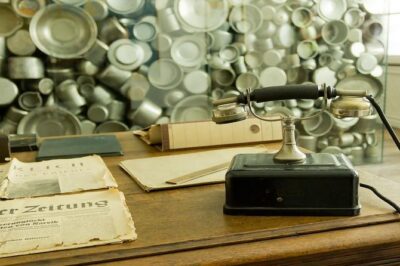
Krakow Schindler’s Factory Guided Tour with Admission Ticket
Read our review →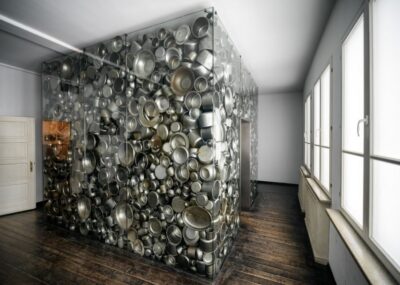
Kazimierz, Schindler’s Factory & Ghetto Guided Tour
Read our review →Browse the lists this tour appears in