

Reviewed · JEWISH HERITAGE TOURS
Skip-the-Line Polin Museum Warsaw Jewish History Tour
This tour is interesting because it pairs the best museum in town for Polish Jewish history with a street-level walk through the Warsaw Ghetto area. I like the skip-the-line access to POLIN Museum and the fact it’s led by a licensed, English-speaking guide who explains what you are seeing. One thing to keep in mind, though: the exact stops depend on whether you choose the 2-hour or 4-hour option.
I also like that the route does not stay stuck in one place. You get a cemetery, synagogue exterior and possible interior visit, and multiple ghetto-area landmarks tied to WWII events. The main drawback for some people is pacing: with a 2 to 4 hour window, you will see highlights rather than everything, so plan to return to POLIN if you want to read every label slowly.
Key things that make this tour worth your time

- POLIN Museum skip-the-line reduces the boring waiting, so you can spend more time inside the galleries
- Licensed guide in English keeps the story clear and chronological, not random stops
- Jewish cemetery visit (included) with stone symbolism and the grave of Janusz Korczak is a standout moment
- Real ghetto remnants nearby like the fragment of wall, built into the walk so context sticks
- Nozyk Synagogue stop is included, with a chance to enter for request
- 4-hour option includes the Warsaw Ghetto walking tour, which you will miss on the shorter option
Why this Warsaw Jewish history tour feels different than a checklist
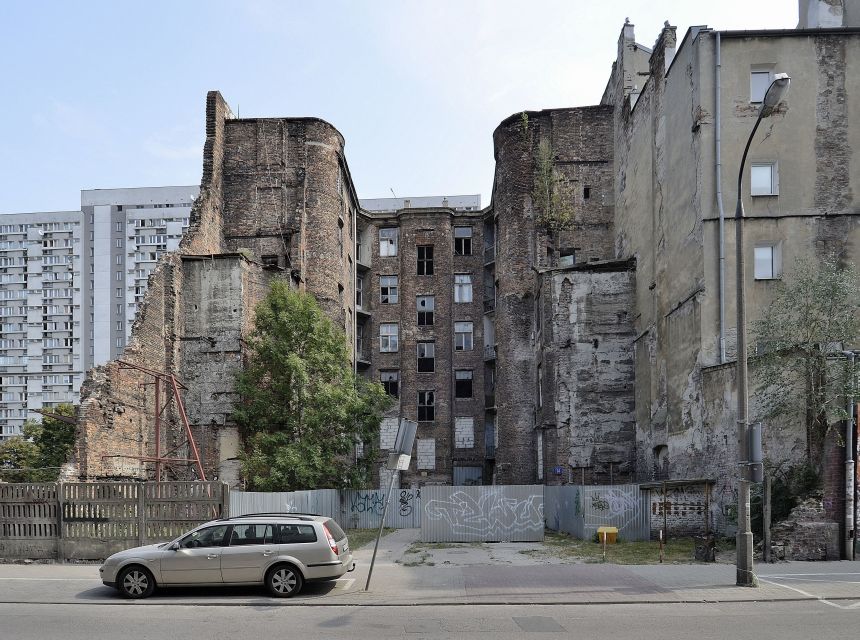
If you care about understanding the Warsaw Ghetto beyond a handful of plaques, this format helps. The day splits into two kinds of learning: museum learning in a structured flow, then street learning where the city itself becomes the timeline.
I especially appreciate how the tour keeps returning you to the big question, what daily life was like under occupation. Even when you are looking at monuments or building exteriors, your guide connects them to what happened here. And since the POLIN museum part is designed for a chronological experience, you are not guessing at dates and names as you go.
The value is also practical. You are paying a set price, getting skip-the-line entry for POLIN, and having a licensed guide do the heavy lifting of interpretation. If you tried to cobble this together on your own, you would still need to research the story order and figure out which sites belong where.
More Historical Tours in Warsaw
- Warsaw: POLIN Museum of the History of Polish Jews Ticket
★ 4.7 · 1,142 reviews - Warsaw: Chopin Concert at Historical Venue in Old Town
★ 4.7 · 445 reviews - Small-Group Historical Guided Tour of Warsaw with pick up/drop off. Public Tour.
★ 4.5 · 343 reviews
Price and duration: what you are really paying for
At $167.97 per person, the cost might sound steep until you break down what’s included. You are not just buying museum tickets. You are also paying for a licensed guide and a private tour format (only your group participates). That guide time matters most at POLIN, where the museum can easily swallow an entire day.
Duration runs from about 2 to 4 hours. The big decision is what you want to leave with:
- The 2-hour option centers on POLIN Museum. You will not see the Warsaw Ghetto walking portion on that shorter version.
- The 4-hour option adds the street walk through the former ghetto area, with more time at outdoor landmarks and memorial spaces.
If you want the strongest “museum plus place” effect, choose the 4-hour tour. If you are short on time or you mainly want POLIN, the 2-hour version can be a smart way to protect your energy while still seeing the core sites.
Meeting point and how the start sets the tone

You meet at Ludwika Zamenhofa 11, 00-153 Warszawa, Poland. Starting in Warsaw like this is helpful because it keeps the tour grounded in real neighborhoods rather than launching you from a faraway bus stop.
You should also expect a normal pace for a walking history tour. The tour is near public transportation, and confirmation is sent at booking. Check your email the day before for important details, since guides sometimes send timing notes that matter on the ground.
POLIN Museum skip-the-line: what it includes, and what it does not
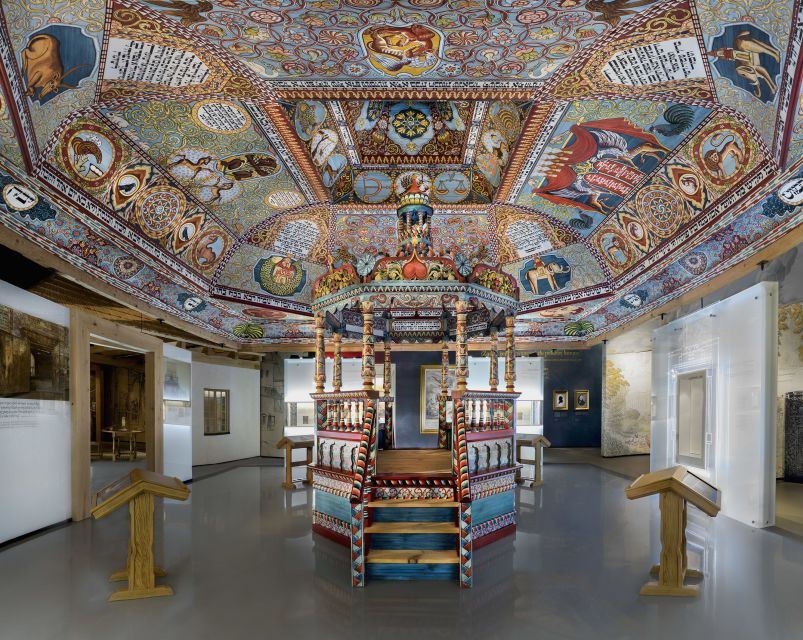
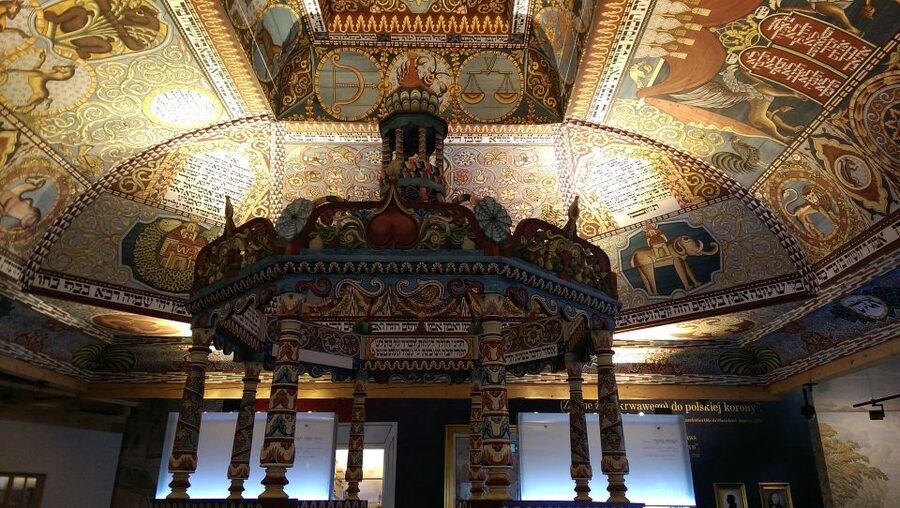
POLIN Museum is the heart of the experience. Your tickets are skip-the-line, but with an important clarification. You can skip the line at the ticket office, not at the entrance and security checks. In other words, it is still worth arriving on time so security does not turn your “skipping” into more waiting.
Your admission covers the main exhibition, an ongoing temporary exhibition, and the Heritage Gallery. That’s a good mix, because the main exhibition gives the long arc of Jewish life in Poland, while the temporary and gallery spaces add extra angles without feeling like you’re paying to see random extras.
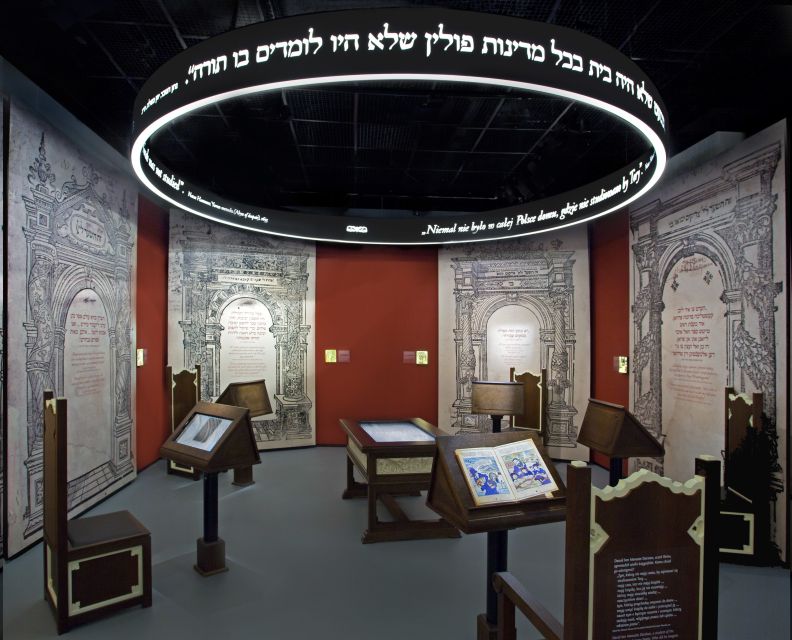
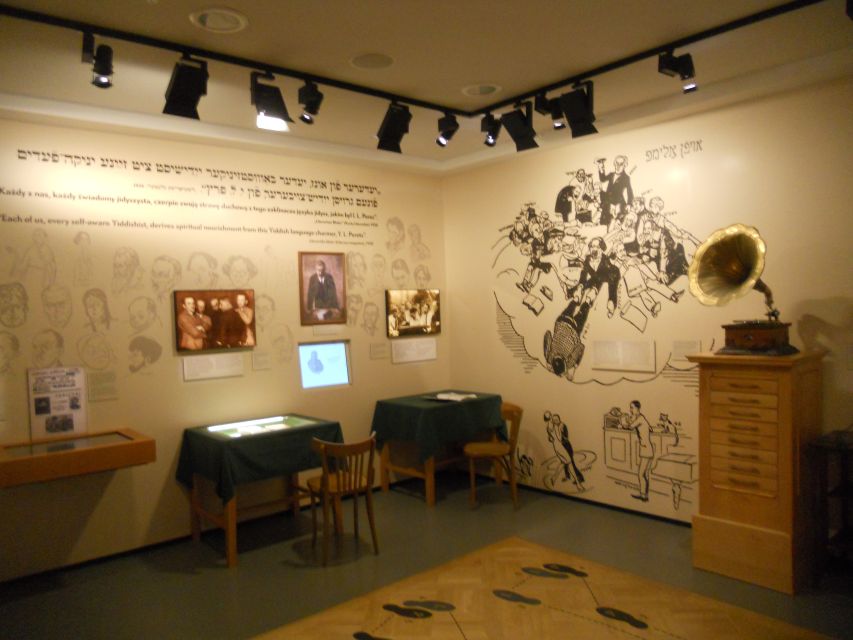
Inside, the museum experience is built for active attention: artifacts, photographs, documents, films, and hands-on elements. Expect surprises in interactive areas, like drawers you can open and screens you can use. That matters because it keeps the story moving for people who get bored by museum-only lecturing.
More Jewish Heritage Tours in Warsaw
- Warsaw: Warsaw Ghetto Private Walking Tour with Hotel Pickup
★ 4.9 · 369 reviews - Warsaw: Jewish History Guided Walking Tour in English
★ 4.7 · 324 reviews - Private Tour: Warsaw’s Jewish Heritage by Retro Fiat
★ 5.0 · 208 reviews - Warsaw: Ghetto, Jewish Cemetery & POLIN Museum Private Tour
★ 4.8 · 132 reviews
The street walk starts with a Warsaw landmark, not just tragedy
One of the smartest choices on this route is the way it opens. You begin near the Palace of Culture and Science, a major Warsaw skyscraper and one of the city’s most iconic buildings. From the outside, its scale is impressive, and it gives you a big-picture frame for how Warsaw looks now.
Admission is free here, and your time is short. The architecture outside is the point, plus the context your guide provides about how the city’s symbols and structures fit into the larger WWII story.
Pomnik Bohaterow Getta: a monument that forces the story to slow down
Next comes Pomnik Bohaterow Getta, a powerful memorial tied to Polish Jews and the persecution and German occupation during WWII. You spend only around 15 minutes, but that’s enough for the guide to explain what you are looking at and why this specific memorial matters in the neighborhood memory.
This stop works because it is not an abstract concept. Monuments like this are designed to anchor emotion and history. When your guide places it in the right timeline, you can feel the difference between knowing dates and understanding what those dates meant to people living nearby.
The Jewish cemetery stop you will remember: masebas and Janusz Korczak
The tour then moves to the Jewish Cemetery (Cmentarz Zydowski), established in the late 1790s to early 1800s. This is scheduled for about an hour, and it earns its time.
Here’s what makes it special for a guided experience: the cemetery’s tombstones, including masebas made of marble and sandstone, carry delicately carved symbols and ornaments. Without interpretation, you might see stone. With interpretation, you see meaning.
The emotional center is the symbolic grave of Janusz Korczak, the writer and teacher who was killed in Auschwitz. Your guide uses that connection to bring home how Jewish community life, education, and culture were targeted, not just property and bodies.
Admission here is included, so you avoid ticket hassle and can focus on the place.
Fragment of Ghetto Wall: why touching the past matters
After the cemetery, you shift to something more immediate: a fragment of ghetto wall. You get about 15 minutes here. The key detail is that you can see the wall remains, hear how the area functions around you, and even touch the construction.
That “touch the construction” moment is not about being dramatic. It is about making the material reality of confinement real in your hands. When your guide sets it up, it stops being a background photo spot and becomes part of your mental map of the ghetto perimeter.
Walking the Warsaw Ghetto area: small percentages, huge impact
Next is the Warsaw Ghetto area itself, established in late 1940. You are given the scale in a way that helps your brain process it: the district covered only about 2.4 percent of Warsaw’s land area, yet more than 450,000 Jews were forced into crowded conditions.
That contrast is powerful because it explains why the ghetto experience was so intense. Your guide connects that density to everyday reality, not just numbers. Even if you only have 20 minutes for this stop in the route, it gives you a sense of how much the city changed in a few years.
Nozyk Synagogue: the only surviving synagogue and a possible interior visit
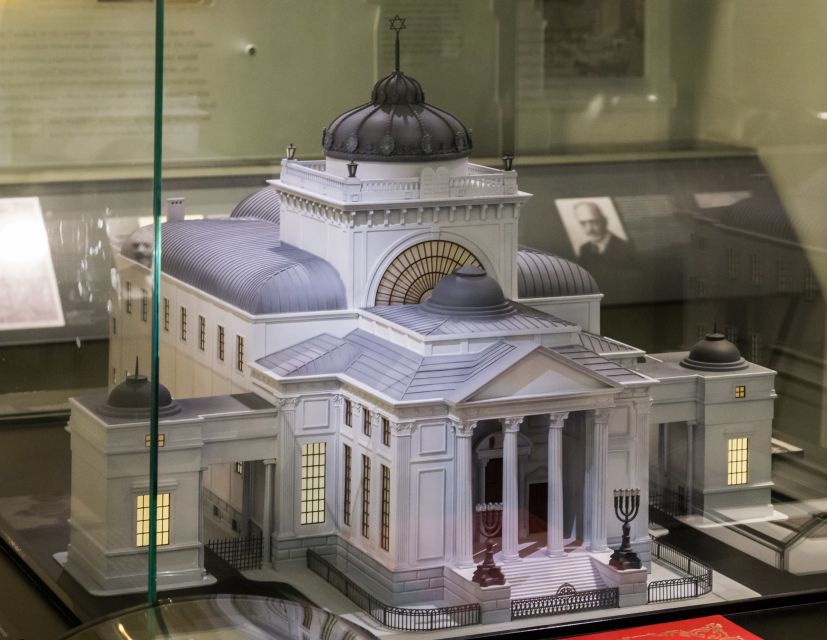
The tour includes Nozyk Synagogue, described as the only surviving synagogue of the roughly 400 that existed in Warsaw before the war. It has been refurbished and is now a functioning synagogue.
You spend about 30 minutes. The catch is that admission here is not included, but it says entry is possible for request. In practice, that means you should be ready with patience and a polite willingness to ask, since entry may depend on current access rules.
Even from the outside, this stop is worthwhile because it is proof that some continuity survived. If you do get in, that extra dimension often makes the story feel less like a closed chapter and more like a living thread.
Jewish Historical Institute: records, photos, and what remained
Another museum-like stop, the Jewish Historical Institute, focuses on records, photographs, videos, and artifacts connected to the Warsaw Ghetto during the Nazi occupation.
Admission is free for this stop. Even with limited time, it supports what you learned earlier in POLIN, because you see the kinds of material historians work with. This is one of those add-ons that helps you understand why the museum can tell stories so precisely, instead of relying only on general summaries.
Prozna Street and Grzybowski Square: neighborhoods with memory built in
On the route, there is a stop at Prozna Street (Ulica Prozna), a street associated with the Nazi occupation and Holocaust education as part of the walking context. You get about 20 minutes.
Then the tour includes Grzybowski Square, also around 15 minutes. You learn that the area was part of the Jewish Ghetto during WWII. Around the square you may find newer Jewish theater, plus a “hidden in plain sight” memorial garden and a beautiful fountain.
That combination is important. It shows you how memory and everyday city life overlap here. It can feel quietly unsettling, in a useful way, because it refuses to put history into a separate museum box.
What the 4-hour version adds that you might miss in 2 hours
The shorter 2-hour option keeps things focused on POLIN Museum and does not include the Warsaw Ghetto walking portion. If that walking portion matters to you, don’t treat the 2-hour as a partial version.
The 4-hour tour is the better match for people who want to connect indoor storytelling with outdoor geography. The cemetery, ghetto wall fragment, and the ghetto-area streets are the “why this place matters” layer, and the guide ties them together into a single narrative.
In one praised experience, the 4-hour tour included around two hours at POLIN and two hours walking. A guide named Yulia was highlighted as phenomenal, and the key takeaway from that kind of tour is how well the guide condenses a lot of material into a clear pace. That matters because POLIN can be overwhelming if you try to treat it like a casual stroll.
Who should book this tour
This is a great fit if:
- You want English guidance and a clear story arc, not wandering
- You plan to spend real time at POLIN, but also want the ghetto geography
- You prefer a private tour with your group rather than a packed group experience
It may be less ideal if:
- You only want the museum and you hate walking
- You expect to see everything at POLIN in one visit, since this tour is built for highlights in a limited time window
Should you book the Skip-the-Line POLIN + Warsaw Ghetto tour?
I think it’s worth booking if you want the best value move: one licensed guide, skip-the-line ticket access for POLIN, and a route that connects the museum’s timeline to the physical remains of the ghetto area. The inclusion of the cemetery time also makes it feel more grounded than a quick photo stop loop.
If your schedule is tight, the 2-hour option can still be smart, especially because POLIN admission is included and skip-the-line helps. But if you want the full “museum plus place” effect, choose the 4-hour version so you actually get the ghetto walking context.
And if you are unsure, you can keep some flexibility. The experience offers free cancellation up to 24 hours before, which makes it easier to commit without stress.
FAQ
How long is the tour?
It runs for about 2 to 4 hours, depending on the option you select.
Is the tour private?
Yes. It is a private tour, so only your group participates.
What language is the guide?
The tour is offered in English.
What does skip-the-line to POLIN Museum cover?
It lets you skip the line at the ticket office, but not at the entrance and security checks.
What is included in POLIN Museum admission?
Your admission covers the main exhibition, the ongoing temporary exhibition, and the Heritage Gallery.
Does the 2-hour option include the Warsaw Ghetto walk?
No. If you choose the 2-hour option, you will not see the Warsaw Ghetto walking portion.
Is the Jewish cemetery ticket included?
Yes. Admission to the Jewish Cemetery stop is included.
Can I enter Nozyk Synagogue?
You can request entry. Admission is not included, but the tour notes it is possible to enter for request.
Where do I meet the tour?
The meeting point is Ludwika Zamenhofa 11, 00-153 Warszawa, Poland.
What is the cancellation policy?
Cancellation is free up to 24 hours in advance for a full refund. If you cancel less than 24 hours before, the amount paid is not refunded.
More Museums in Warsaw
- Warsaw: Polish Vodka Museum Tour with Tasting
★ 4.6 · 788 reviews - Warsaw: Museum World of Illusion Entry Ticket
★ 3.9 · 666 reviews - Warsaw: Museum of Life Under Communism Entry Ticket
★ 4.5 · 178 reviews - World of Illusion Museum Skip-the-Line Ticket
★ 4.0 · 55 reviews
Fresh Warsaw reviews
- Warsaw: Wolf’s Lair & Swieta Lipka Small-Group Tour + Lunch★ 5.0 · 3 reviews
- World War II Warsaw Old Town, Military Cemetery Walking Tour★ 4.7 · 3 reviews
- Warsaw: Old Town Walking Tour, Hidden Gems & Hot Chocolate★ 4.3 · 3 reviews
- Warsaw: Explore the Vistula on Its Longest Speedboat Route★ 4.6 · 3 reviews
- 5-hour: Royal Castle, Old Town and POLIN Museum/inc.Pick-up/★ 5.0 · 3 reviews
- Majdanek – German camp from II World War – Private Tour – 1 DAY TRIP FROM WARSAW★ 5.0 · 3 reviews
- Museum of Modern Art in Warsaw★ 5.0 · 3 reviews
- Warsaw Outdoor Paintball with Transfers (all year round)★ 5.0 · 3 reviews
Jewish Heritage Tours, compared.
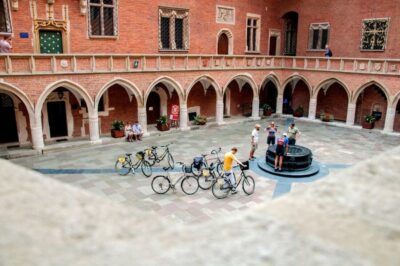
Bike Tour of Old Town, Jewish Quarter and the Ghetto
Read our review →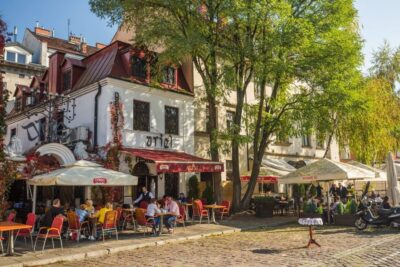
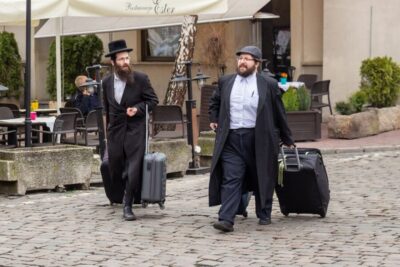
Kazimierz, Schindler’s Factory & Ghetto Guided Tour
Read our review →
Full Bike Tour – the Old Town, Jewish Qtr & the Ghetto NEW BIKES
Read our review →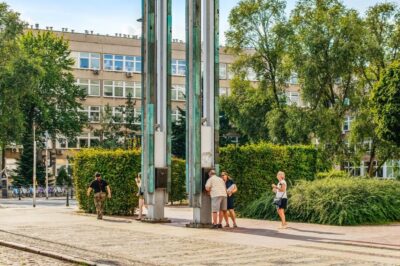
Warsaw Ghetto Private Walking Tour with Hotel Pickup
Read our review →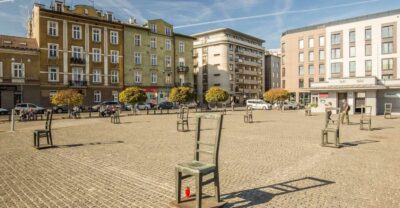
Browse the lists this tour appears in