
Reviewed · JEWISH HERITAGE TOURS
Jewish Legacy in Warsaw. Private Tour with the best local specialist.
Jewish Warsaw is interesting because the city still holds proof in plain view, from surviving synagogue walls to places where deportations started. This private tour focuses you on the key sites connected to the Warsaw Ghetto and Jewish life, with Nozyk Synagogue and POLIN Museum taking real center stage. Two things I like a lot are that it’s guided in English by a local specialist and that it’s designed as a logical walk through memory. One drawback to consider: because the stops are meaningful and sometimes emotionally heavy, you will want to keep a steady pace and plan for some longer quiet moments.
It’s also a good value if you’re traveling as a small group, since the price is per group (up to 3 people). Pickup is offered from around Warsaw, so you do not have to figure out transit between scattered locations on your own. Just be mindful with timing on meet-up day, especially if you expect the pickup to be smooth and punctual.
Key highlights
- Nozyk Synagogue as Warsaw’s oldest existing synagogue and a rare survival connected to the ghetto’s final chapter
- POLIN Museum with time to see the museum area and a quick look inside the interior design
- Ghetto Wall Fragment officially recognized in 1992 by Chaim Herzog
- Umschlagplatz as the ghetto’s cargo rail terminal, where people were sent to Treblinka
- Mila 18 bunker linked to Mordechaj Anielewicz and the uprising fighters who hid there
- Praga Polnoc film locations tied to The Pianist and an optional Villa visit from The Zoo Keeper’s Wife
Jewish Warsaw, with a guide who keeps the story straight
This tour works because it doesn’t treat the sites like a checklist. Instead, you move through connected chapters of Warsaw’s Jewish legacy, from religious life and education, to ghetto boundaries, to deportations, to resistance and remembrance. When you see these places in the right order, the meaning clicks faster.
I also like that it is private. You are not stuck listening to someone else’s pace or questions. With a private format, your guide can slow down where you want clarity, and speed up where you already understand the basics.
And since it is offered in English, you are not stuck piecing things together. Polish history is complex, and Warsaw’s Jewish story is deeply layered. A good local specialist helps you put events into human scale without turning it into a lecture you can tune out.
More Jewish Heritage Tours in Warsaw
- Warsaw: Warsaw Ghetto Private Walking Tour with Hotel Pickup
★ 4.9 · 369 reviews - Warsaw: Jewish History Guided Walking Tour in English
★ 4.7 · 324 reviews - Private Tour: Warsaw’s Jewish Heritage by Retro Fiat
★ 5.0 · 208 reviews
Price and group size: when up to 3 people makes sense
The price is $361.23 per group, for up to 3 people. That means your true cost depends on how full your group is.
- If you come as a pair, you are effectively paying more per person than if you can include a third seat.
- If you can fill all 3 spots, it starts to feel more like a fair, small-group experience rather than a pricey solo tour.
What makes the value better than it first looks is pickup around Warsaw and the fact that the tour is private. You are paying for access to a local specialist and for a tightly planned sequence of stops, not just transportation.
Pickup, timing, and how to keep the day stress-free
This tour starts at 9:00 am, and pickup is offered from all around Warsaw. You also get a mobile ticket, and it is offered in English. Service animals are allowed, and the tour notes that most people can participate.
Here is the practical trick I use for tours like this: plan to be ready a few minutes earlier than you think. Warsaw pickup can depend on traffic and neighborhood access. Since the schedule is built around specific sites, being late can squeeze your time at the most important stops.
One more thing: keep your booking confirmation handy on your phone. If anything seems off with the meet-up, contact the operator right away using the contact details you received at confirmation. Then you can fix it fast instead of losing the morning.
Nozyk Synagogue: a surviving thread from before the destruction
Your first real stop is Nozyk Synagogue, at Twarda 6. The time here is about 20 minutes. This synagogue is described as the oldest existing synagogue in Warsaw, and the account is specific about why it survived: the Nazis did not destroy it because of its location and usefulness during the ending chapter of the ghetto period.
That detail matters. When you stand near a place that the Nazis did not fully erase, you start to understand how uneven the destruction was, and how some buildings were treated as assets even while everything else was collapsing around them. It also gives you an anchor point before you move into memorial spaces.
Even in a short visit, I’d treat this stop as an orientation moment. Look closely, then let your guide connect it to what comes next. It helps you understand why later sites like the ghetto wall fragment and Umschlagplatz are not just symbols, they are part of the same geography.
Another way through a Warsaw day:
- Warsaw: Chopin Concert in the Old Town
★ 4.8 · 2,287 reviews - Warsaw: Traditional Galar Cruise on The Vistula River
★ 4.6 · 1,640 reviews - Warsaw: Old Town Highlights Walking Tour in English
★ 4.7 · 1,516 reviews - Warsaw Concert: Chopin – Painted by Candlelights with Wine
★ 4.8 · 1,442 reviews
POLIN Museum: the story in a museum that does more than display
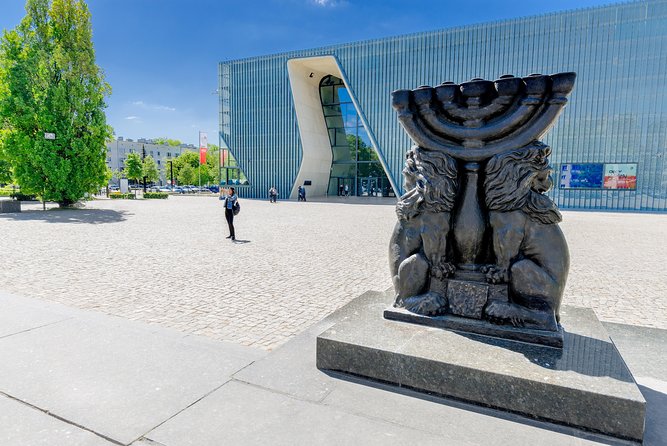
Next comes POLIN Muzeum Historii Zydow Polskich at Mordechaja Anielewicza 6, with about 50 minutes on site. You’ll have time for the museum area and a quick look inside at the interior design.
This stop is valuable because it puts Jewish legacy in Poland into a wider perspective, and it’s described as one of the early efforts to present the subject in a proper, broad way. That framing can change how you read the rest of the day. Without it, the ghetto sites can feel like isolated tragedies. With it, you see continuity, culture, learning, community life, and then the rupture.
A practical mindset for the museum time: you do not need to read every panel in 50 minutes. Instead, ask your guide to point out what they consider the clearest bridge from the museum’s overview to the ghetto sites you’ll walk to afterward. That way, the museum becomes a tool, not a time trap.
The Fragment of Ghetto Wall: what you can still measure
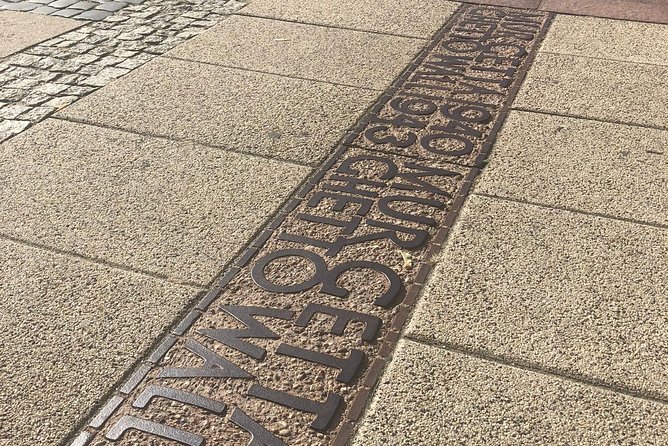
Then you visit a Fragment of Ghetto Wall at ul. Zlota 60 for about 20 minutes. This is described as the only remaining fragment of the largest Jewish ghetto that existed. It is also noted that it was officially recognized by Chaim Herzog in 1992, and it has been visited by thousands of people annually.
This is one of those stops where the emotional impact comes from the smallness of what remains. A fragment sounds minor until you realize it is all that is left of a whole system of enclosure. A wall fragment also lets you picture the border conditions that shaped everyday life.
Here is a tip: let your guide describe the wall not just as a physical barrier, but as a lived reality. Once you understand what it divided, you start noticing how the rest of the day’s locations fit into that boundary logic.
Umschlagplatz: the cargo terminal where deportations began
Your next stop is Umschlagplatz, at the corner of ul. Stawki and ul. Dzika, for about 20 minutes. The site is also called the cargo railroad terminal in the ghetto, and it is described as the place where Jews were taken to the Treblinka death camp.
This stop can feel like it compresses an entire chain of events into one square area. Your guide’s job here is crucial. You need the context of what Umschlagplatz meant in practice, not just as a tragic label.
Also, notice the wording in how the site is presented. Calling it a cargo terminal forces the mind to confront how people were processed, not simply how they suffered afterward. That is often harder to hold emotionally, but it is also clearer and more honest.
If you feel you are getting overwhelmed, it’s okay to tell your guide to slow down. In a private tour, you have that control.
Mila 18 bunker: resistance where people hid
Next is the Memorial at Mila 18 at the corner with Dubois, for about 20 minutes. This is described as the largest bunker in the Jewish ghetto in Warsaw. It is also linked directly to the uprising: the leader of the uprising, Mordechaj Anielewicz, and nearly 30 other members of the Jewish fighting organization would hide here away from the Nazis.
I appreciate that this stop adds another layer besides the usual horror story. It brings in agency. Even if resistance in wartime conditions was brutal and uneven, it was still action by real people making impossible choices.
A good way to use this stop is to ask your guide how the bunker fits into the larger uprising timeline, since the memorial is specifically tied to leadership and hiding. That way, your understanding shifts from what happened to people to how people tried to survive and fight.
Willy Brandt’s gesture, then the Heroes of Warsaw monument
You pass Pomnik Willy’ego Brandta near the POLIN Museum, on Willy Brandt Square. This is a commemorative moment tied to reconciliation and apology. The description is specific: the chancellor knelt in front of a monument of the heroes of the ghetto as a symbol of apology and reconciliation with the Jews.
Even though this is listed as a pass-by, it is a smart pause. It helps you see how memory and diplomacy intertwine in the physical space of Warsaw. Monuments do not only remember the past. They also announce what a society chooses to acknowledge later.
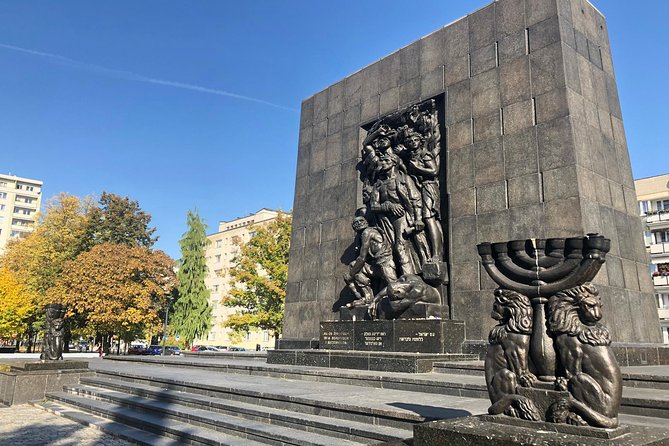
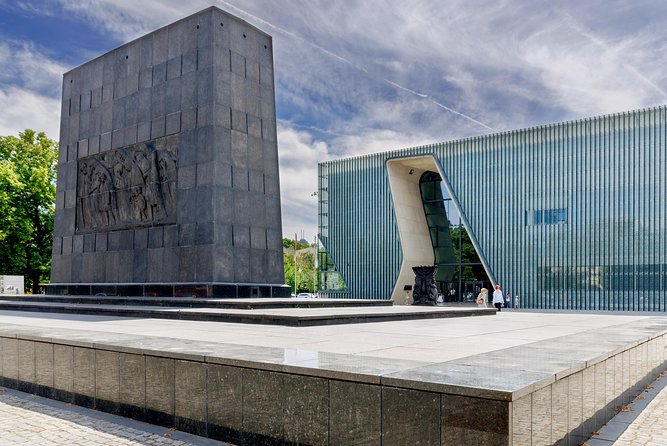
After that, you go to the Monument to the Heroes of Warsaw at Nowy Przejazd for about 50 minutes. This stop is devoted to memory of the Jews who went through the nightmare of the ghetto. The longer time here gives you space to take it in rather than just snap photos and move on.
If you like taking notes, this is where I’d do it. You can write down the names, themes, and questions that come up. Then when you reach the next ghetto-linked street stop, your brain has something to connect to.
Chlodna Street: the footbridge and the dangerous liveliness
Then you visit Chlodna Street for about 10 minutes. The site description points to a footbridge connecting a small ghetto section with the larger ghetto part. It is described as the liveliest area of the ghetto, and also the most dangerous.
Ten minutes sounds short, but that’s okay here. This is less about lingering and more about getting the mental map. A footbridge implies movement between zones. A livelier street implies business, crowds, and contact. And a most dangerous street implies constant risk.
I would treat this as your transition stop, a bridge between formal memorial sites and the more street-level feeling of what the ghetto neighborhoods were like.
Praga Polnoc and film locations tied to The Pianist
Finally, you head to Praga Polnoc, on ul. Zabkowska, with about 40 minutes. Here the tour connects Warsaw Jewish memory to film locations: Roman Polanski would produce shots for The Pianist in this area. You also may visit a Villa from the book The Zoo Keeper’s Wife, and that villa visit is optional depending on your interest.
This is a thoughtful twist in the day. You are still in Warsaw, still in the city’s layers, but you are seeing how literature and film translate places into story. That can help you picture what you just learned, especially if you are the kind of person who remembers scenes and locations through characters.
The optional villa part is a good feature. If you care about the literary angle, you can lean into it. If you want to keep the day strictly focused on Jewish legacy sites, you can choose to skip the extra stop.
What makes this itinerary work, emotionally and logically
What I like about the flow is that it builds understanding in stages. You start with a surviving synagogue that signals pre-war continuity. Then you hit a museum that frames Jewish life across time. After that, you move into the remaining physical marks of the ghetto, then into deportation geography, and then into the resistance story.
The last part, with Praga Polnoc and film-linked spots, gives you a release valve. Not a distraction. More like a different way to hold the city in your mind after a heavy day.
The only real drawback is pacing. Some stops are only 10 to 20 minutes, which means the guide has to condense explanations. That is normal for a multi-site route, but if you want extremely slow, long contemplation at every memorial, a single-site tour might feel better.
Who should book this private Jewish legacy tour
This tour is a strong match if you want:
- A private, English-language guide to connect the locations into one story
- A focused route built around major Jewish legacy sites in Warsaw
- Pickup around the city, so you can spend energy on the content, not transit planning
- A blend of Holocaust-linked geography plus a final literary or film connection
It may not be your best choice if you hate structured itineraries or if you need unhurried time at every single stop with no schedule pressure.
Because it is up to 3 people, it also works well for a couple plus a friend, or two adults plus a teen who can handle serious subject matter.
Should you book it?
If your priority is to see the key Warsaw Jewish legacy sites in a single guided outing, and you like having someone local keep the story clear in English, this one is worth booking. The private format and pickup make it efficient, and the stop choices are coherent, from Nozyk Synagogue to POLIN to Umschlagplatz to Mila 18.
One caution: do not assume the day will run on autopilot. Be ready at the right time and keep your confirmation details accessible. That way, you protect your schedule and reduce stress if anything goes off track.
FAQ
How much does the tour cost?
It costs $361.23 per group, up to 3 people.
Is pickup included, and where does it start?
Yes. The tour offers pickup from all around Warsaw. The start time is 9:00 am.
What language is the tour offered in?
The tour is offered in English.
Do I need to print tickets?
No. A mobile ticket is provided.
Is this tour private?
Yes. It is a private tour or activity, so only your group participates.
Can I cancel for a full refund?
Free cancellation is available if you cancel up to 24 hours in advance of the experience’s start time. If you cancel less than 24 hours before the start time, the amount paid will not be refunded.
Fresh Warsaw reviews
- Warsaw: Wolf’s Lair & Swieta Lipka Small-Group Tour + Lunch★ 5.0 · 3 reviews
- World War II Warsaw Old Town, Military Cemetery Walking Tour★ 4.7 · 3 reviews
- Warsaw: Old Town Walking Tour, Hidden Gems & Hot Chocolate★ 4.3 · 3 reviews
- Warsaw: Explore the Vistula on Its Longest Speedboat Route★ 4.6 · 3 reviews
- 5-hour: Royal Castle, Old Town and POLIN Museum/inc.Pick-up/★ 5.0 · 3 reviews
- Majdanek – German camp from II World War – Private Tour – 1 DAY TRIP FROM WARSAW★ 5.0 · 3 reviews
- Museum of Modern Art in Warsaw★ 5.0 · 3 reviews
- Warsaw Outdoor Paintball with Transfers (all year round)★ 5.0 · 3 reviews
Jewish Heritage Tours, compared.
Bike Tour of Old Town, Jewish Quarter and the Ghetto
Read our review →
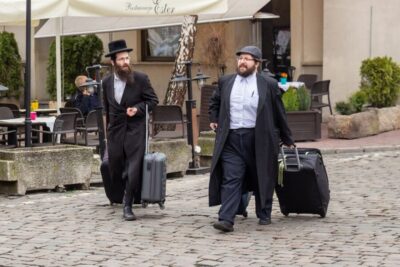
Kazimierz, Schindler’s Factory & Ghetto Guided Tour
Read our review →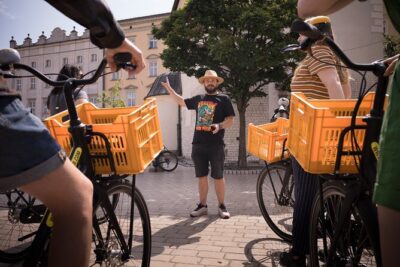
Full Bike Tour – the Old Town, Jewish Qtr & the Ghetto NEW BIKES
Read our review →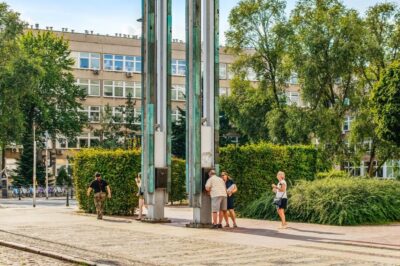
Warsaw Ghetto Private Walking Tour with Hotel Pickup
Read our review →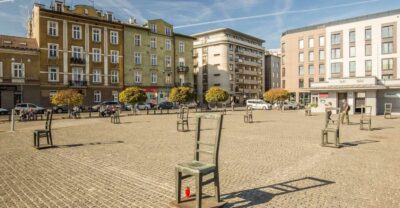
Browse the lists this tour appears in