
Reviewed · JEWISH HERITAGE TOURS
Jewish Heritage and Holocaust Memorial Tour of the Former Ghetto
This walk is interesting because it connects Warsaw’s Jewish past to specific places you can still stand on today, from medieval Jewish life to the ghetto’s final memorial sites. I love how the route is built around real remnants and memorial areas, not just a lecture in one spot. I also like the pacing, with six focused stops that keep you moving while you absorb heavy material.
One possible drawback: because it is tightly structured around memorial locations, it may feel a bit more direct than a broader history tour. If you want a wide-ranging, balanced overview of everything Polish Jewish life across centuries, you might pair this with extra time on your own at nearby museum exhibits.
Key highlights to look for
- Stop-by-stop memorial storytelling, from Castle Square to Umschlagplatz
- Castle Square and Krasinski Palace context, linking medieval Jewish Warsaw to later protection
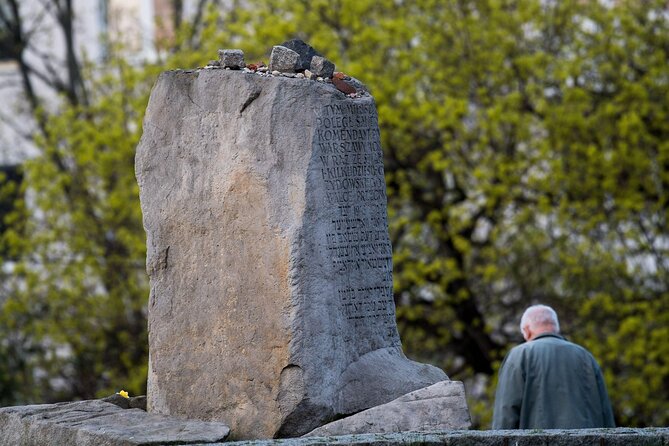
- Physical ghetto traces, including the relic area tied to Nalewki street
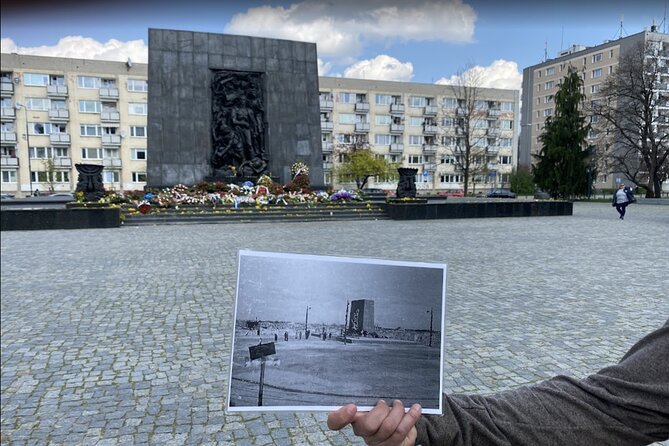
- POLIN Museum memorial zone, with the Monument to the Ghetto Heroes in front of the museum
- Anielewicz Bunker Memorial Area, marking the Jewish Combat Organization headquarters during the ghetto uprising
- Umschlagplatz deportation memorial, including the note about the only three prewar buildings that survived in the Big Ghetto
Why This Former Ghetto Walk Makes Sense in Warsaw
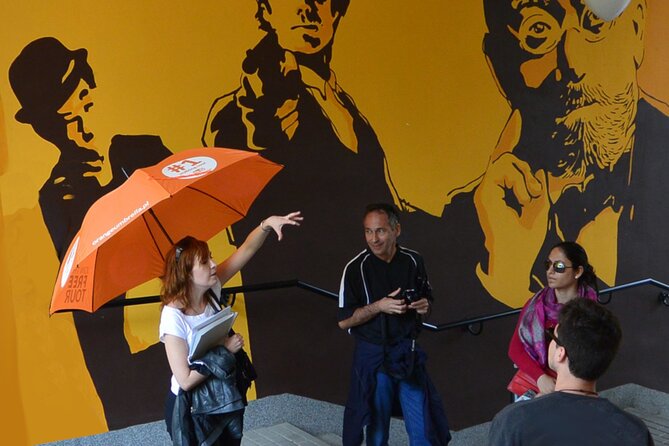
Warsaw can feel like a city of layers, and this tour helps you read those layers with your feet. You start near Sigismund’s Column and finish at Umschlagplatz, which is two blocks from the POLIN Museum entrance area.
The best part is that you are not stuck in one viewpoint. You move through a sequence of places that each carry a different kind of meaning. That matters, because Jewish heritage and Holocaust memory are not one story. They are many, and they unfold in geography as much as in dates.
The tour is also a good length for the topic. At around 2 hours 30 minutes, you get time to listen, look, and absorb without feeling like you are trapped in a long, exhausting session. With a maximum group size of 25, the guide can keep the tone clear and manageable.
More Historical Tours in Warsaw
- Warsaw: POLIN Museum of the History of Polish Jews Ticket
★ 4.7 · 1,142 reviews - Warsaw: Chopin Concert at Historical Venue in Old Town
★ 4.7 · 445 reviews - Small-Group Historical Guided Tour of Warsaw with pick up/drop off. Public Tour.
★ 4.5 · 343 reviews
Start at Sigismund’s Column, Then Follow the City’s Memory Trail
The meeting point is Sigismund’s Column, plac Zamkowy, 00-001 Warsaw. You begin at 1:30 pm, and the tour ends at the Umschlagplatz Memorial near Stawki 10, 00-178 Warsaw. The route is designed to end close to the POLIN Museum, so you can keep going after the walk if you want.
One small practical note I appreciate: the tour includes a mobile ticket, which is easy on the day. You also get a free tourist map of Warsaw, and that helps if you want to navigate the area later on your own.
It is a walking tour with six stops, and each stop is allotted about 20 minutes. Expect some time for short transitions between locations. If you get easily tired from city walking, bring a calm mindset and take breaks when the group pauses.
Also, plan for the emotional weight. This is not a light sightseeing circuit. The route is built around memorials connected to ghettos, deportations, and resistance, so you should go in with the right headspace.
Castle Square Lessons: Medieval Jewish Warsaw and the Nearby Quarter
Your first stop is Castle Square (Plac Zamkowy). You meet at Sigismund’s Column, and the guide talks about migrations of medieval Jews and the medieval Warsaw Jewish quarter that was situated nearby.
This first segment is a smart move. Many tours jump straight to the ghetto era. Starting with medieval context reminds you that the story did not begin in a crisis. It grew through community life, movement, and settlement patterns long before the ghetto system existed.
You will also get oriented fast. Castle Square is a natural starting point because it helps you grasp where you are in the city and how the rest of the walk threads through Warsaw’s older geography. Since the stop time is about 20 minutes and marked as free admission, it is a clean, low-friction start.
Krasinski Palace and Park: Baroque Elegance With a Human Connection
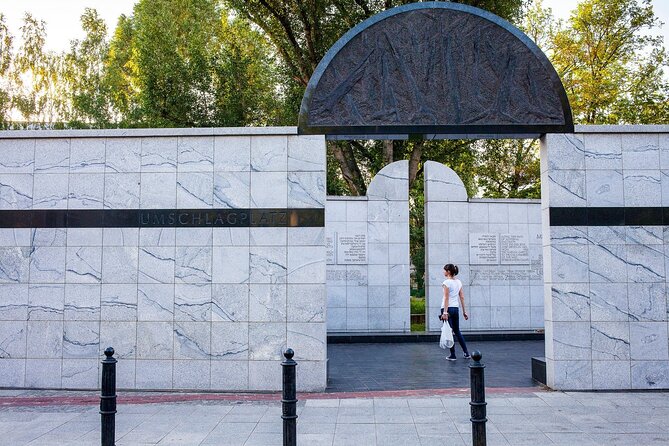
Next you head to Krasinski Palace, a major baroque aristocratic palace in Warsaw with a surrounding park. The key idea here is not just architecture. The guide frames the Krasinski family as protectors of the Warsaw Jews, linking power and responsibility to the people living under it.
This stop adds balance to a tour that otherwise focuses heavily on tragedy and memorials. Seeing a palace and then learning about its protective role gives you a fuller sense of how different corners of society interacted with Jewish communities over time.
The time here is also about 20 minutes, so you are not dragged into a long visual detour. You get a sense of place, you learn a specific theme, and then you move on.
If you are someone who likes taking photos, do it quickly and respectfully. Memorial walks reward you most when you are present, not just collecting images.
More Jewish Heritage Tours in Warsaw
- Warsaw: Warsaw Ghetto Private Walking Tour with Hotel Pickup
★ 4.9 · 369 reviews - Warsaw: Jewish History Guided Walking Tour in English
★ 4.7 · 324 reviews - Private Tour: Warsaw’s Jewish Heritage by Retro Fiat
★ 5.0 · 208 reviews - Warsaw: Ghetto, Jewish Cemetery & POLIN Museum Private Tour
★ 4.8 · 132 reviews
Finding the Ghetto Trace at Nalewki: A Relic You Can Stand On
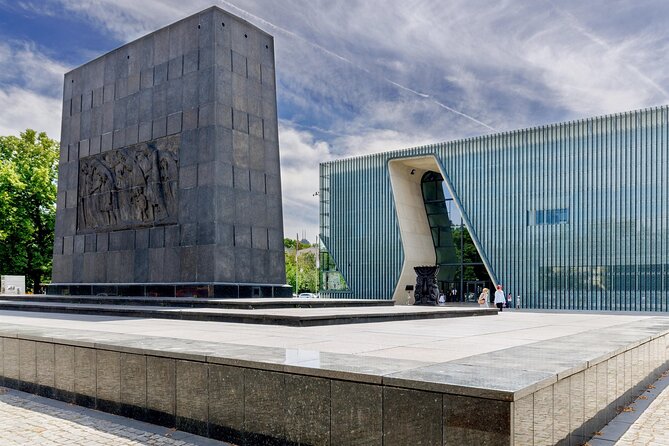
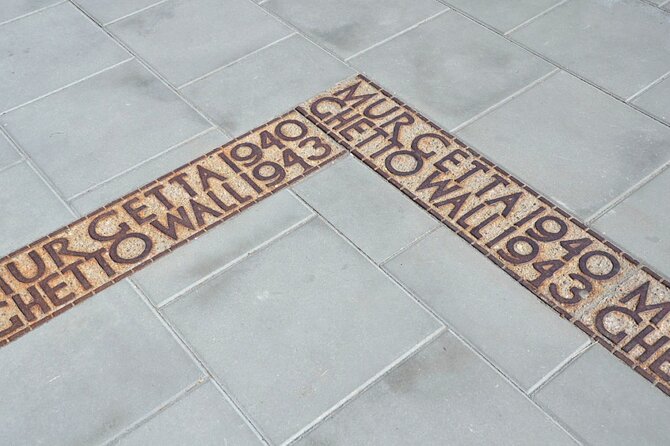
The tour then moves to Warsaw Ghetto, specifically describing a relic of the former Nalewki street area. Here you encounter traces of the main Ghetto Gate and Ghetto Wall, with the tour framing this as a physical reminder of confinement.
I like this stop because it gives you a “this is what it looked like” moment. Even when the city has changed, a trace on the ground helps you stop treating the ghetto as an abstract concept. You are literally standing near a place tied to the gate and wall remnants.
The tour’s timing stays tight here, about 20 minutes. That is enough time to understand what you are looking at, without turning it into a confusing scavenger hunt. If you are the type who wants to ask questions, this is a good moment to do it, since the guide can connect the street relic to the larger story you just started.
POLIN Museum Memorial Area: Monument to the Ghetto Heroes
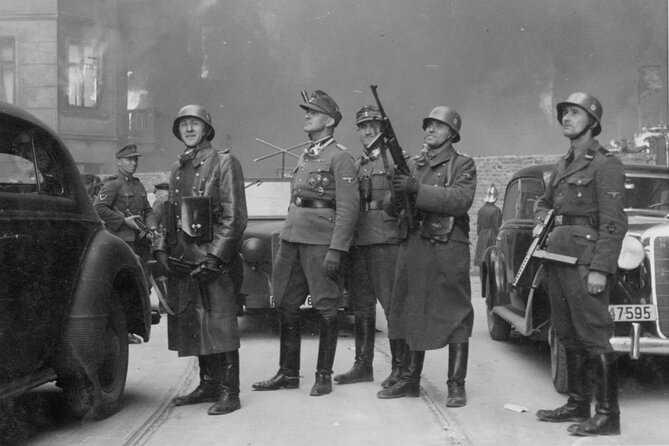
After the gate-and-wall trace, you reach POLIN Muzeum Historii Żydow Polskich, specifically the memorial area in front of the main museum entrance. You will see the Monument to the Ghetto Heroes.
This part hits differently because the monument is designed for remembrance and reflection. It is not only about what happened, it is also about who acted, and what courage looked like under impossible conditions.
Even if you do not plan to enter the museum on the same day, this exterior memorial zone is still valuable. You are meeting the story where public memory lives, right at the museum’s threshold.
The stop is about 20 minutes. Take a full minute or two to look before you let your mind race forward. If you rush through monument spaces, the impact can slip away. Slow down just enough to let the words and names land.
Anielewicz Bunker Memorial Area Near Miła Street
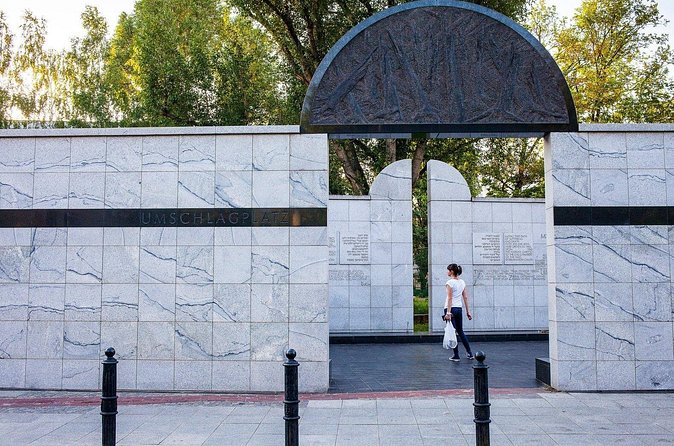
Next is Mordechaja Anielewicza, located by Miła street, where the Anielewicz Bunker Memorial Area marks the place that served as headquarters of the Jewish Combat Organization during the uprising in the ghetto.
This stop adds a crucial shift in tone. You go from confinement and deportation memory toward resistance and decision-making. The guide’s job here is to connect names and locations to the reality of leadership and organization during the uprising.
Why I think this stop matters for your visit is simple: it reminds you that people were not only acted upon. They also acted. Even if you know the story already, the memorial location makes it feel more human and less like a distant historical chapter.
The stop is again about 20 minutes. If you feel emotional, that is normal here. You are in the right place for that reaction.
Umschlagplatz: Deportation Memorial and Surviving Prewar Buildings
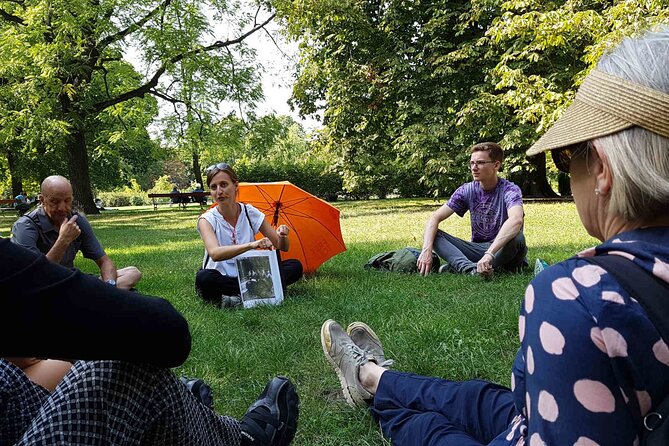
The final stop is Umschlagplatz, the memorial of the deportation area. Here you will see the detail that there are only three prewar buildings that survived in the Big Ghetto.
This is the part of the walk that people remember hardest, because deportation is the word that captures systematic removal. The setting is meant to hold memory in place, and the guide’s explanations help you understand what the memorial is indicating, not just what it looks like.
The fact about the surviving prewar buildings matters because it creates a stark contrast. It is a reminder that even when structures remain, the life around them can be broken and erased.
The tour ends at this memorial area, and that is useful for your plan. You finish at a site that is both a destination and a springboard to more exploration nearby, especially given the close proximity to the POLIN Museum.
Price, Group Size, and Real Value for $19.22
The price is $19.22 per person, and for this kind of guided, memorial-based walking tour, that is a straightforward value proposition. You are paying for a professional local guide service, plus the free tourist map of Warsaw.
The group size limit of 25 is part of the value. Smaller groups tend to make the experience feel more focused, and they give the guide room to keep the pace respectful. You are not herded like a number, and the emotional tone stays coherent.
One more detail I like: the tour is offered in English and uses a mobile ticket. That removes friction for travelers who do not want to manage paper confirmations on busy streets.
Stops are listed as admission ticket free, which keeps your day simple. You do not need to budget extra entry fees for each memorial point. If you want to add on museum time afterward, that becomes a choice, not a requirement built into your walking tour.
Guides, Tone, and What to Expect From the Storytelling
The experience depends a lot on the guide, and the feedback you have is clear. People praised guides such as Max for being engaging and information-rich, and Magda is specifically highlighted for clarity and empathy, explaining the material in a way that felt both educational and emotionally careful.
So, what should you expect in practice? You will likely hear a mix of city geography, historical context tied to specific sites, and guided reading of memorial elements. The route includes architecture, street relics, and purpose-built memorials, and the guide weaves them into one connected walk.
To keep it balanced, there is also a caution worth taking seriously. One experience described a guide as a bit single-minded and not presenting a full picture. That can happen on any tour, especially with complex topics. If you care about breadth, do not be shy about asking direct questions, like what the guide thinks you should prioritize next, or what themes you should know before visiting POLIN Museum on your own.
Who This Tour Fits Best (and Who Might Want a Different Option)
I think this tour fits best if you want:
- a guided walk focused on ghetto sites and Holocaust memorial areas
- a structured route with six meaningful stops
- English commentary and a small-group feel
It might be less ideal if you want a broad, survey-style history tour that covers more than the former ghetto area and its closest memorial connections. Since the walk emphasizes memorial locations and physical traces, you may crave additional context afterward.
A good workaround is to treat this as your “where and how it happened in place” tour, then add time to learn more on your own nearby. Ending close to POLIN Museum makes that pairing natural.
A Practical Way to Prepare for a Heavy, Worthwhile Walk
This is a memorial walk, so comfort matters. Wear shoes you can walk in for the whole route, and bring water if the day is warm. Keep your phone charged enough for the mobile ticket, and consider bringing a small note pad so you can jot down names mentioned by the guide.
More importantly, protect your attention span. If you try to sprint from stop to stop mentally, you will miss the point of the memorial spaces. Give yourself permission to slow down for the Monument to the Ghetto Heroes, the Anielewicz Bunker Memorial Area, and Umschlagplatz.
Also, if you are someone who likes to process out loud, ask questions. A guide can often clarify what you are seeing and why it is placed there.
Should You Book This Jewish Heritage and Holocaust Memorial Tour of the Former Ghetto?
Yes, you should book it if you want a focused 2.5-hour English walking tour that links Warsaw Jewish heritage and Holocaust memory to specific places, ending at Umschlagplatz near POLIN Museum. The price of $19.22, the free map, and the small-group limit help make the value feel real, not inflated.
You might skip it or pair it with more museum time if you need a wider history overview than a structured memorial route provides. And if emotional content is tough for you, be honest about that going in, because the tour is designed to be meaningful, not cheerful.
If you book, choose it for what it is: a guided walk through Warsaw’s former ghetto memory spaces, where each stop adds another piece of the story tied to the ground under your feet.
FAQ
What language is the Jewish Heritage and Holocaust Memorial Tour offered in?
The tour is offered in English.
How long is the tour?
It runs for about 2 hours 30 minutes.
How much does the tour cost?
The price is $19.22 per person.
Where does the tour start and where does it end?
It starts at Sigismund’s Column (plac Zamkowy, 00-001 Warsaw) and ends at the Umschlagplatz Monument (Stawki 10, 00-178 Warsaw).
What is included in the price?
Included are a professional local guide service and a free tourist map of Warsaw.
Are there admission fees for the stops?
The stops listed on the itinerary are admission ticket free.
What if there is an event at the usual meeting point?
If there is a mass event like a parade, protest, or concert at Sigismund’s Column, the tour starts beneath a red-brick medieval defensive wall about 100 meters north of the Column.
Is tipping expected?
Tipping is not included, but the guide notes that you can tip if you enjoyed the tour.
Fresh Warsaw reviews
- Warsaw: Wolf’s Lair & Swieta Lipka Small-Group Tour + Lunch★ 5.0 · 3 reviews
- World War II Warsaw Old Town, Military Cemetery Walking Tour★ 4.7 · 3 reviews
- Warsaw: Old Town Walking Tour, Hidden Gems & Hot Chocolate★ 4.3 · 3 reviews
- Warsaw: Explore the Vistula on Its Longest Speedboat Route★ 4.6 · 3 reviews
- 5-hour: Royal Castle, Old Town and POLIN Museum/inc.Pick-up/★ 5.0 · 3 reviews
- Majdanek – German camp from II World War – Private Tour – 1 DAY TRIP FROM WARSAW★ 5.0 · 3 reviews
- Museum of Modern Art in Warsaw★ 5.0 · 3 reviews
- Warsaw Outdoor Paintball with Transfers (all year round)★ 5.0 · 3 reviews
Jewish Heritage Tours, compared.
Bike Tour of Old Town, Jewish Quarter and the Ghetto
Read our review →
Kazimierz, Schindler’s Factory & Ghetto Guided Tour
Read our review →
Full Bike Tour – the Old Town, Jewish Qtr & the Ghetto NEW BIKES
Read our review →
Warsaw Ghetto Private Walking Tour with Hotel Pickup
Read our review →
Browse the lists this tour appears in