Reviewed · JEWISH HERITAGE TOURS
Historical Walking Tour of Jewish Warsaw
What makes this Historical Walking Tour of Jewish Warsaw so compelling is that it connects two emotional bookends, the surviving Nozyk Synagogue and the final stop at Umschlagplatz. I also like that guides such as Aga and Olivia bring the street plan to life with clear pacing, photos, and maps you can actually follow.
One catch: you are on your feet for about 3 hours. It is a long walk on cobblestones, and it is not the best fit if you have trouble with long distances, even if the guide keeps the pace manageable.
Key things that make this tour worth your time
- Nozyk Synagogue: see the only Warsaw synagogue that survived the war and is still standing
- Fragment of the Ghetto Wall: one of the few remaining bits of the wall
- Warsaw Ghetto core sights: memorials, the Solidarności courthouse area, Muranów, and major markers like Miła 18
- Ringelblum archive connection: the location tied to the archive discovery
- Umschlagplatz: the departure point for transports to Treblinka, tied to the figure of 300,000 Jews
- Small group limit (max 10): easier questions, smoother pacing, and more time at the stops
Jewish Warsaw on foot: why this route hits harder than a museum alone
This walk works because it is built around what still exists in the streets, not what used to exist long ago. In Warsaw, the WWII destruction was total in many areas, so you will not be surrounded by preserved old Jewish neighborhoods. Instead, you get something more useful: a guided reading of the landscape, where a memorial, a surviving structure, or even a short street segment can anchor a story.
I like that the tour is timed around the big emotional arc. You start at a surviving synagogue, you move through key ghetto markers, and you end at Umschlagplatz, the place associated with mass deportations to Treblinka. That sequence helps you connect details without feeling lost.
You will also get practical support along the way. The tour includes a full info pack with FAQ and links, plus visual aids such as photos and maps the guide uses during the walk. Even if you come prepared with books, these materials help you match what you read to what you see.
More Historical Tours in Warsaw
- Warsaw: POLIN Museum of the History of Polish Jews Ticket
★ 4.7 · 1,142 reviews - Warsaw: Chopin Concert at Historical Venue in Old Town
★ 4.7 · 445 reviews - Small-Group Historical Guided Tour of Warsaw with pick up/drop off. Public Tour.
★ 4.5 · 343 reviews
Meeting at Sienna 53 and easing in at Baguette Mi – Banh mi bistro
You meet at Sienna 53, on the corner with Jana Pawla II Avenue. The first on-the-ground moment is at Baguette Mi – Banh mi bistro, where the guide begins with a short introduction.
That opening matters. Before you step into sites connected to WWII, you need a map in your head. This is where the guide typically sets expectations and helps you orient yourself so later stops do not feel like random plaques on buildings. It is also a convenient place to regroup if you are arriving from another part of Warsaw by tram or bus, since the route is described as being near public transportation.
Tip for your day: even though this first stop is not a sightseeing “win” in the traditional sense, it sets the tone. I would treat it like your warm-up, not a break. If you need a moment to steady your pace, do it here.
Nozyk Synagogue: the surviving landmark and the one extra fee to plan for
Nozyk Synagogue is the standout pre-war survivor on this walk. You will see the building that survived the war and remains in use today, which makes it a powerful reference point for everything else you will cover.
Important practical note: the Nozyk Synagogue entrance fee is 20 PLN and is not included. So go in knowing you may pay extra if you choose to enter.
Even if you do not plan to go inside, this stop is still valuable. A surviving synagogue is not just architecture, it is a reminder that Warsaw’s Jewish life did not vanish without leaving traces. On a walking tour like this, that contrast makes later memorial sites feel less abstract.
If you are trying to budget tightly, keep the 20 PLN in mind before you book your day. If you like visiting interiors as well as exteriors, this is the one stop on the route where you should expect an added cost.
The fragment of the ghetto wall: when “almost nothing left” becomes the point
One of the stops is the Fragment Of Ghetto Wall, which you will see for about 15 minutes. The word fragment tells you what to expect: you are not looking at a long restored section.
But this is exactly why the stop works. When a city has been devastated, small remnants carry extra weight. The wall piece is a physical boundary that turns history from a timeline into something you can picture, a place where ordinary life was reduced, controlled, and ultimately crushed.
You should also use your senses here. Even on a short visit, stand back for a moment, then move closer and look at edges and surfaces. The guide’s visual aids and explanations are meant to make these details meaningful, not just scenic.
More Jewish Heritage Tours in Warsaw
- Warsaw: Warsaw Ghetto Private Walking Tour with Hotel Pickup
★ 4.9 · 369 reviews - Warsaw: Jewish History Guided Walking Tour in English
★ 4.7 · 324 reviews - Private Tour: Warsaw’s Jewish Heritage by Retro Fiat
★ 5.0 · 208 reviews - Warsaw: Ghetto, Jewish Cemetery & POLIN Museum Private Tour
★ 4.8 · 132 reviews
Warsaw Ghetto core: memorials, Muranów, Solidarności, St. Augustine, and Miła 18
The heart of the tour is the long middle section, about 2 hours 5 minutes focused on the Warsaw Ghetto area. This is where the walk stops being a list of sites and turns into a connected story.
Here is what you will see during this stretch, and why each part matters:
Jewish Ghetto memorial and Heroes of the Jewish Ghetto memorial
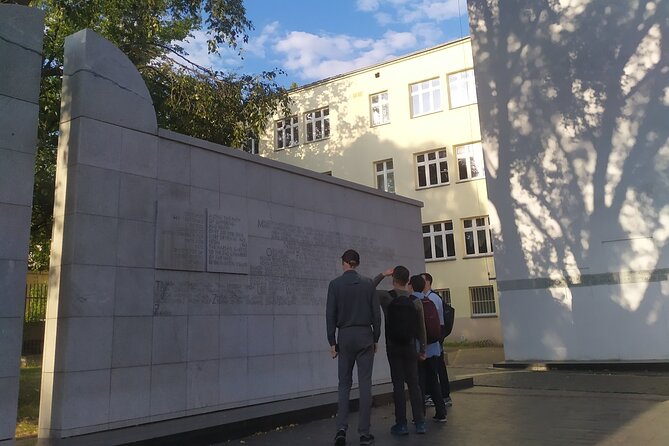
These memorial stops help you shift from individual buildings to collective experience. They are there to be read slowly, and the guide’s pace is designed so you can take in the meaning rather than rushing past.
Courthouse on Solidarności Street and the Muranów residential district
This is about context: where institutions sat, where people lived, and how the area was shaped around policies and persecution. Even if you only get a view from the street, the guide ties the place to what happened there.
The discovery location of Ringelblum’s archive
One of the most important threads on this walk is the idea of testimony preserved despite everything. The guide points to the location tied to the Ringelblum archive discovery, which turns the story from pure loss into also including documentation, memory, and evidence that survived.
Church of St. Augustine
This stop can feel surprising at first because it is a Christian church in a Jewish ghetto landscape. The value comes from how the guide frames it, as part of the urban overlap you still see in Warsaw today. It helps you understand that the city’s geography did not neatly segregate history, and that the same blocks can hold multiple layers of meaning.
Miła 18, also known as Anielewicz’s Bunker
This is one of the most intense moments on the route. Miła 18 is tied to resistance and survival in the ghetto. Seeing it in context, with the guide’s explanation, helps you understand why this site is treated as more than a memorial stop. It becomes a focal point for the story of struggle within the Warsaw Jewish Ghetto.
A practical note from what I have seen work on tours like this: if you are choosing what to do on a limited schedule in Warsaw, treat this long middle section like the main event. Do not stack too many other walking plans the same day. Your feet will feel it, and your brain will need time to process what you are being shown.
Jana Karski monuments: the resistance story told through public memory
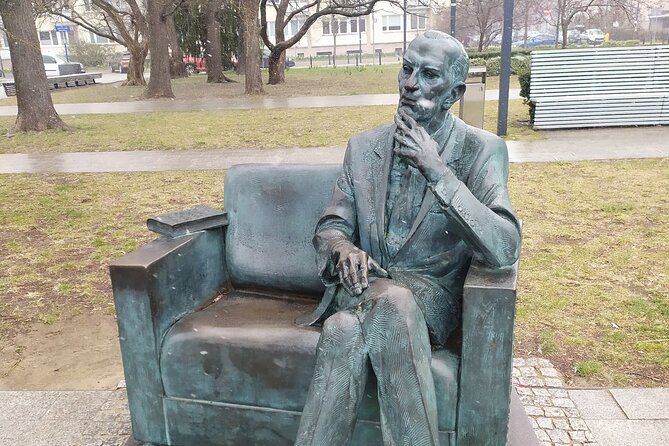
After the ghetto core, you move to Laweczka Jana Karskiego and related monuments that remind you of the Jews’ heroic struggle within the Warsaw Jewish Ghetto.
Jana Karski is a name many people know from WWII-era testimony and reporting. On this walk, the value is in how the monuments are used as signposts. You are not just seeing “more statues,” you are getting a bridge from the immediate geography of the ghetto to the broader question of how the story was carried beyond Warsaw.
This stop is short, around 15 minutes, but it works well as a mental reset. You leave the heaviest concentration of sites, then come back to the theme of remembering, reporting, and resistance.
Umschlagplatz: the transport point to Treblinka and the final walk-off
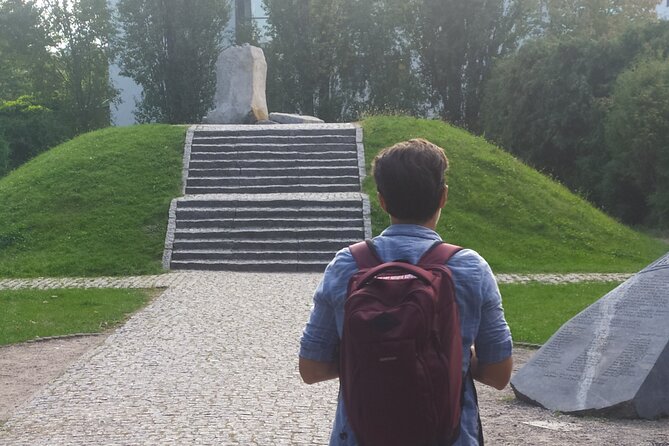
The tour ends at Umschlagplatz, the place associated with the transport of 300,000 Jews to Treblinka. You visit this stop for about 10 minutes, then the tour finishes in front of the Umschlagplatz Monument at Stawki 10.
This ending is not chosen randomly. It is the moment where the story becomes brutally specific, the turning point from confinement to deportation. A good guide keeps this grounded and factual while still honoring what it meant for human beings.
If you want to do something useful right after the tour, stay in the area for a bit. Let the images settle. You will probably have questions you did not have before you started.
What it feels like on the ground: pacing, shoes, umbrellas, and group size
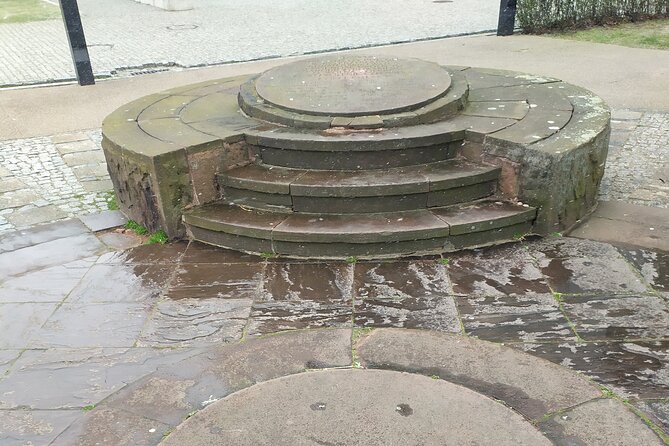
This is a maximum 10 travelers kind of tour. That matters more than you might think. When a group is small, you can pause for photos, ask follow-ups, and not feel pushed through.
You will also do a lot of walking. Expect cobblestones and a few stretches where you will want to keep your energy steady. Bring good walking shoes. If the weather is iffy, consider an umbrella, because you are outdoors for long stretches.
Also plan for recovery time in your day. If you pair this with a museum afterward, choose something that does not require a ton of standing. The tour is only about 3 hours, but it is not a slow stroll.
English tour, mobile ticket, and the info pack you actually use
The tour is offered in English and uses a mobile ticket. You get full info pack materials with FAQ, plus recommendations about where to eat and drink and what else to visit.
I like that the guide supports the narrative with visual aids. Several stops rely on you understanding where you are standing relative to what used to be here. Photos, maps, and printed materials help you build that mental overlay quickly.
If you are the type who likes to follow along with your own notes, this format is friendly. You are not being handed facts with no way to place them. Instead, you get enough help to connect the dots.
Price and value: $28.87 for guided street-level context
At $28.87 per person, this tour prices itself like a practical add-on rather than a luxury experience. The value comes from what is included, not just the guiding.
You get:
- A structured route through major Jewish Warsaw and ghetto sites
- Visual aids used during the walk
- An info pack with useful links and recommendations
The Nozyk Synagogue entrance fee is extra at 20 PLN, so your total may be a bit higher if you enter. Still, for a guided 3-hour route that ends at Umschlagplatz and includes stops like Miła 18 and the Ringelblum archive connection point, it tends to work out as good value.
Where you get the biggest payoff is if you like authenticity and context. If you plan to just “look at plaques,” you can do that on your own. But if you want the street-level story assembled in a way you can remember, this kind of route is hard to match without a guide.
Should you book the Historical Walking Tour of Jewish Warsaw?
Book it if you want a focused way to understand the Warsaw ghetto landscape using the few things that still remain. This tour gives you a street-to-stories flow, from the surviving Nozyk Synagogue to Umschlagplatz, with key stops like the ghetto wall fragment and Miła 18.
Skip it, or at least reconsider, if you cannot handle long walking distances. The route is outdoors and paced for steady movement, plus it includes cobblestones. Also plan extra money for the Nozyk Synagogue entrance if you want to go in.
If you have limited time in Warsaw and you care about WWII Jewish history, this is a strong choice because it targets the most important locations within a single morning or afternoon block, without forcing you to bounce around the city on your own.
FAQ
How long is the Jewish Warsaw walking tour?
It is about 3 hours.
Where does the tour start and end?
The tour starts at Sienna 53, 00-820 Warszawa, Poland, and ends in front of the Umschlagplatz Monument at Stawki 10, 00-178 Warszawa, Poland.
What is the price per person?
The price is $28.87 per person.
Is the tour offered in English?
Yes, it is offered in English.
Is the entrance fee to Nozyk Synagogue included?
No. Entry fee to the Nozyk Synagogue is 20 PLN and is not included.
What stops are included on the route?
You will visit Nozyk Synagogue, a fragment of the ghetto wall, the Warsaw Ghetto area with several memorial and site stops including Miła 18 and the Ringelblum archive discovery location, Laweczka Jana Karskiego, and Umschlagplatz.
How large is the group?
The tour has a maximum of 10 travelers.
Is the tour ticket mobile?
Yes, the tour includes a mobile ticket.
Is the meeting point near public transportation?
Yes, the tour is near public transportation.
Is this tour suitable if I have trouble walking long distances?
It is not recommended for travelers who have problems with walking long distances.
What is the cancellation window for a full refund?
You can cancel up to 24 hours in advance of the experience for a full refund.
More Walking Tours in Warsaw
- Warsaw: Old Town Highlights Walking Tour in English
★ 4.7 · 1,516 reviews - Warsaw: Old Town Guided Walking Tour
★ 4.9 · 599 reviews - Half-Day Polish Food Walking Tour with Guide and Dinner
★ 4.5 · 381 reviews - Old Town Warsaw Walking Tour
★ 4.5 · 333 reviews
Fresh Warsaw reviews
- Warsaw Off The Beaten Path Self-Drive Tour★ 5.0 · 18 reviews
- Private Warsaw Chopin Airport One Way Transfer★ 5.0 · 18 reviews
- Zelazowa Wola: Frederic Chopin Half-Day Private Tour★ 4.7 · 18 reviews
- Warsaw: 2-Hour Chopin’s Life Walking Tour★ 5.0 · 19 reviews
- Warsaw: melt museum Entry Ticket★ 3.5 · 19 reviews
- Deluxe Polish Food Tour Experience in Warsaw★ 5.0 · 19 reviews
- FSO Gunrange, Shooting Package US ARMY★ 5.0 · 19 reviews
- Gdansk and Malbork Castle Small Group Tour from Warsaw with Lunch★ 4.5 · 20 reviews
Jewish Heritage Tours, compared.
Bike Tour of Old Town, Jewish Quarter and the Ghetto
Read our review →
Kazimierz, Schindler’s Factory & Ghetto Guided Tour
Read our review →
Full Bike Tour – the Old Town, Jewish Qtr & the Ghetto NEW BIKES
Read our review →
Warsaw Ghetto Private Walking Tour with Hotel Pickup
Read our review →