
This Jewish Warsaw and ghetto stories walk is gripping because the city itself becomes the “map” and the evidence. You move from the origins of Jewish life in Warsaw to surviving landmarks, then toward the points where the Nazi machine broke a community apart. Along the way, you connect the dots between street corners and names, using real places tied to real decisions and real people in the Warsaw Ghetto (Jewish Warsaw and the Warsaw Ghetto).
I especially like the anchor points that make the story feel concrete. The stop at the Nożyk Synagogue matters because it is the only synagogue in Warsaw that survived the war, so you can see faith and continuity in brick and stone. I also like how Robert structures the tour around people with voices, including Janusz Korczak and the staff of the Bersohn and Bauman Children’s Hospital, not just dates and locations.
One drawback to think about: this is heavy subject matter, and you will spend the 2 hours walking outdoors through areas that are deliberately quiet and somber. If you want a light sightseeing break, or if you are traveling with kids under 16, you may find this tour too intense.
Key moments that make this walk memorable
- Nożyk Synagogue as the surviving thread of Jewish Warsaw
- Grzybowski Square to set the context for what existed before the ghetto
- Janusz Korczak and the children’s hospital staff stories of courage
- Warsaw Ghetto Walls and Waliców Street as remaining reminders in the modern city
- Warsaw Ghetto Museum for the “why did this happen” context
- A Footbridge of Memory on Chłodna Street tied to separation and the 1942 Great Action
Starting at Plac Grzybowski, you get the story’s spine
The tour begins at Plac Grzybowski, by the fountain. Meet your guide there, and look for Robert’s brown flat cap. From the first minute, you are not handed a random list of stops. You are given the logic of how Warsaw’s Jewish community formed, grew, and then faced systematic destruction under Nazi occupation.
This matters because the ghetto story works best when you understand what came before. You will hear how Warsaw became home to the largest Jewish community in Europe before the war, so the later tragedy lands with real weight. If you are the type who likes understanding causes, not just outcomes, you will appreciate this framing.
More Jewish Heritage Tours in Warsaw
- Warsaw: Warsaw Ghetto Private Walking Tour with Hotel Pickup
★ 4.9 · 369 reviews - Warsaw: Jewish History Guided Walking Tour in English
★ 4.7 · 324 reviews - Private Tour: Warsaw’s Jewish Heritage by Retro Fiat
★ 5.0 · 208 reviews
From Grzybowski Square to Nożyk Synagogue, faith survives in the middle of loss
As you walk away from Plac Grzybowski, you will be introduced to the earlier Jewish presence in the city and the everyday life that existed before the ghetto became a prison of paperwork, walls, and fear. This part is your setup. It helps you notice that the ghetto was not some sudden fog. It was engineered.
Then you reach the Nożyk Synagogue. Seeing it on this route changes how you interpret everything around it. The synagogue is the only one in Warsaw that survived, which makes the building feel like a physical link to continuity, not a monument pulled out of a textbook.
Practical note: this stop can feel emotionally intense, especially once the guide shifts from what life looked like to what Nazi policies demanded. If you think you might get overwhelmed, give yourself permission to pause, look, and take your time.
The Janusz Korczak monument, and why stories of children hit hardest
Next comes the monument to Janusz Korczak. Even if you have heard the name before, this tour treats it like a starting point, not a full stop. You connect Korczak’s role to the human cost of wartime cruelty and to the moral choices made by adults who were tasked with protecting children.
The guide ties in stories of courage from the Bersohn and Bauman Children’s Hospital staff as well. That pairing matters. It keeps the focus from drifting into abstract tragedy. You stay with human beings making decisions, trying to preserve dignity under impossible pressure.
In the feedback I’m drawing from, Robert is praised for telling these stories with sensitivity and a lot of care. You will also get answers when you ask questions, including the kind that go beyond a simple timeline and into how people coped, what the options were, and how survival worked in practice.
Ghetto walls and Waliców Street, where the city still keeps quiet reminders
The tour then turns toward the former ghetto’s physical remnants. You will visit the Ghetto Walls and Waliców Street, both still part of today’s Warsaw. These locations are powerful because you can stand where restrictions once turned into everyday reality.
The walls are not just scenery. They are a lesson in how control was built into architecture. When you see remnants that have outlasted the war, you can better understand how separation was enforced in both visible and invisible ways.
Waliców Street helps you picture daily life inside the ghetto grid, including the cramped conditions and the constant pressure. The guide’s approach here is practical: you are not just told that life was hard. You are shown what the layout implied for movement, work, and family survival.
More Walking Tours in Warsaw
- Warsaw: Old Town Highlights Walking Tour in English
★ 4.7 · 1,516 reviews - Warsaw: Old Town Guided Walking Tour
★ 4.9 · 599 reviews - Half-Day Polish Food Walking Tour with Guide and Dinner
★ 4.5 · 381 reviews - Old Town Warsaw Walking Tour
★ 4.5 · 333 reviews
Warsaw Ghetto Museum stop, context without noise
Mid-tour you include the Warsaw Ghetto Museum. On a walk like this, museums can go two ways: either they feel like extra stops that slow you down, or they add context that makes the street-level story click.
Here, the museum works as a bridge between “where” and “what it meant.” You get a clearer sense of how the ghetto operated and how Nazi actions escalated over time. If you like a story with cause and effect, this helps you connect the earlier parts of the walk to the final, darker chapter.
Even if you do not plan on reading everything you see, the museum stop helps you reset your brain. Streets are emotional. A museum gives you a bit of structure, so you can carry the emotion with understanding.
The wooden footbridge of memory on Chłodna, separation turned into a symbol
The last major segment ends at the site of the wooden footbridge on Chłodna Street, known as the Footbridge of Memory. This is one of those places where the meaning is not subtle. The footbridge symbolizes separation between the smaller and larger ghettos, and also separation between Jewish and non-Jewish worlds.
From here, the guide brings you into the story behind the symbol, including the “Great Action” of 1942 and the Warsaw Ghetto Uprising. These are not just names. You get the sense of what the Nazi regime was doing in that period, and why resistance grew into open revolt.
The guide also leads you toward the final phase, including deportations to the gas chambers. In the feedback I’m using, Robert is specifically praised for ending with that tragic arc, without turning it into a shock show. It stays human. It stays serious.
If you tend to get emotionally stuck at endings, take a slow walk back when the tour finishes. Let the last stop settle in before you jump back into normal sightseeing.
Price and value: $13 plus a pay-what-you-wish reality
The listed price is $13 per person for a 2 hour guided walk. On paper, that sounds modest for a guided historical route. In practice, what makes it good value is that the guide focuses on story quality, not just pointing.
This is also a pay-what-you-wish walking tour. The listed price covers the booking and guide service, while any additional tip is up to you. That’s a helpful setup if you like to reward effort based on your experience rather than a fixed “tour tax.”
So how should you think about value? For this topic, you are paying for sensitive interpretation and clear explanations, plus the ability to answer questions in a way that respects what happened. If you want someone to connect sites into a coherent narrative, this format makes sense. If you only want a quick walk past a few landmarks with no heavy context, you might decide you want a shorter or lighter option instead.
Language, timing, and how to get comfortable for 2 hours
This tour runs for about 2 hours. You can check starting times based on availability. The guide offers English and German, so if you prefer one of those languages, plan your booking around the time that matches your comfort.
Because the tour is mostly an outdoor walk, winter or cold weather can matter. In the feedback I’m using, the tour is described as engaging even in cold conditions, which is a good sign. Still, bring layers you can move in, and wear shoes with good traction. The subject is intense. Your comfort should not be part of the problem.
There is also an age guideline: it is not suitable for children under 16. That makes sense for the emotional weight of the route and what is discussed at each stage.
Who this walk is best for (and who should skip it)
This tour is ideal if you want more than surface facts. You will like it if you care about how the story connects from pre-war Jewish life to ghetto creation, daily survival under confinement, and the final violence and resistance.
It is also a good fit if you enjoy asking questions. Robert is repeatedly praised for strong answers and for handling questions with detail. If you like to understand the “how” and “why,” you will likely get more than you expected from a walking format.
On the other hand, skip this if you want a carefree, upbeat day. This is a walk through one of the darkest chapters of Warsaw’s history, and you should be ready for that. If you are traveling with younger kids, the tour is not designed for them.
Should you book this Jewish Warsaw & Ghetto Stories walk?
Yes, if you want a structured, place-based understanding of Warsaw’s Jewish story from origins to destruction, and you value a guide who can keep the tone respectful while still answering hard questions. The combination of Nożyk Synagogue, the ghetto walls and Waliców Street reminders, and the closing focus at the Footbridge of Memory gives you a route with meaning, not just movement.
Book it if you like guides who can speak with empathy and clarity, and who handle the emotional parts with steadiness. In the feedback I’m drawing from, Robert’s storytelling style stands out, including his fluent German when that language is chosen, and his ability to make personal narratives feel close to the ground without turning them into drama.
If you’re unsure, here’s a simple test: ask yourself whether you want to understand this history in context. If you do, this walk is a strong use of two hours in Warsaw.
FAQ
Where does the tour meet?
The meeting point is at the fountain at Grzybowski Square in Warsaw.
How long is the Jewish Warsaw & Stories from the Ghetto walking tour?
The tour lasts about 2 hours.
What price should I expect to pay?
The price is $13 per person.
What languages is the tour offered in?
The live guide offers English and German.
Is the tour wheelchair accessible?
Yes, the tour is wheelchair accessible.
Is this tour suitable for children?
It is not suitable for children under 16.
Are entry fees included or do I need extra money for museums and sites?
The tour includes the walking tour with a licensed guide, and it does not require payment for entries or additional expenses.
What is the cancellation policy?
You can cancel up to 24 hours in advance for a full refund.
Is the tour pay-what-you-wish?
This is a regular pay-what-you-wish walking tour. The listed price covers the booking and guide service, and any additional tip is up to you.
Fresh Warsaw reviews
- Warsaw: Wolf’s Lair & Swieta Lipka Small-Group Tour + Lunch★ 5.0 · 3 reviews
- World War II Warsaw Old Town, Military Cemetery Walking Tour★ 4.7 · 3 reviews
- Warsaw: Old Town Walking Tour, Hidden Gems & Hot Chocolate★ 4.3 · 3 reviews
- Warsaw: Explore the Vistula on Its Longest Speedboat Route★ 4.6 · 3 reviews
- 5-hour: Royal Castle, Old Town and POLIN Museum/inc.Pick-up/★ 5.0 · 3 reviews
- Majdanek – German camp from II World War – Private Tour – 1 DAY TRIP FROM WARSAW★ 5.0 · 3 reviews
- Museum of Modern Art in Warsaw★ 5.0 · 3 reviews
- Warsaw Outdoor Paintball with Transfers (all year round)★ 5.0 · 3 reviews
Jewish Heritage Tours, compared.
Bike Tour of Old Town, Jewish Quarter and the Ghetto
Read our review →
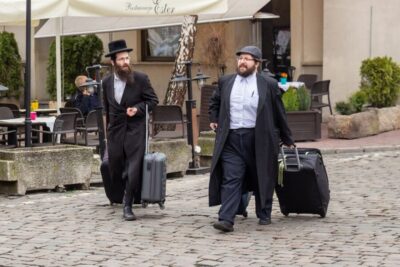
Kazimierz, Schindler’s Factory & Ghetto Guided Tour
Read our review →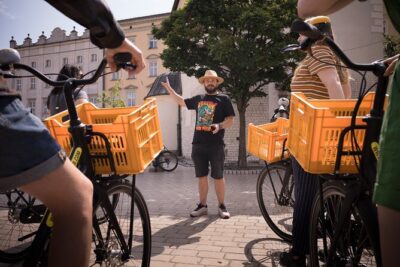
Full Bike Tour – the Old Town, Jewish Qtr & the Ghetto NEW BIKES
Read our review →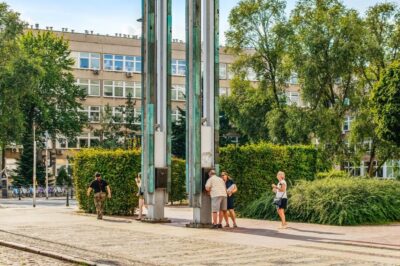
Warsaw Ghetto Private Walking Tour with Hotel Pickup
Read our review →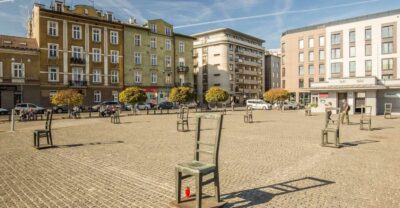
Browse the lists this tour appears in