
Reviewed · HISTORICAL TOURS
Wrocław: Historical Tour with Tablets and Guide
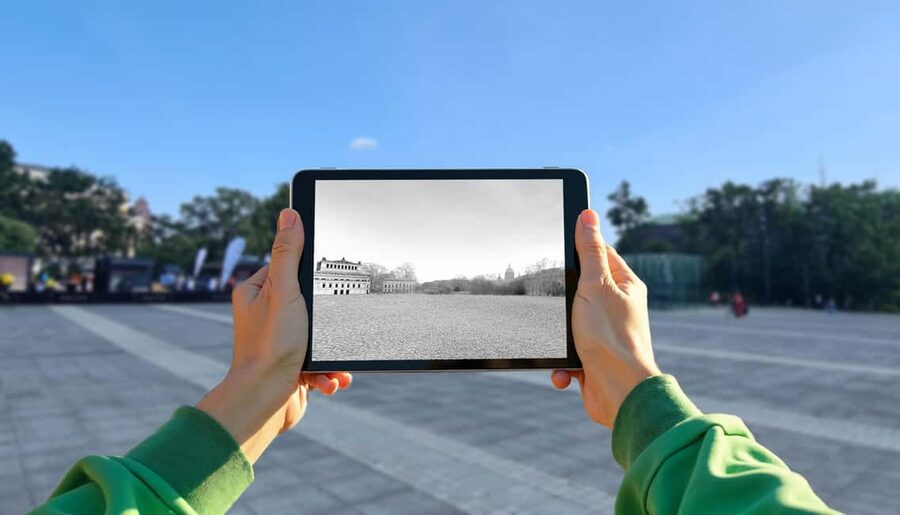
Wrocław has plenty of old buildings, but this tour makes you see the city change in real time, using a tablet time-travel feature at 10 major stops. You start at the historic Pręgierz area, then keep flipping the city back to its early 20th-century look as you walk.
I especially like the practical setup, because the tablets come preloaded and you do not need an app download or login. I also like the human touch: a professional guide keeps the story clear while you compare views at places like the Market Square and the Wrocław Opera.
One thing to consider is the walking. It is a 2-hour route, and if weather gets extreme, the tour may be canceled or rescheduled, so wear comfortable shoes and dress for the day.
Key highlights you will feel right away
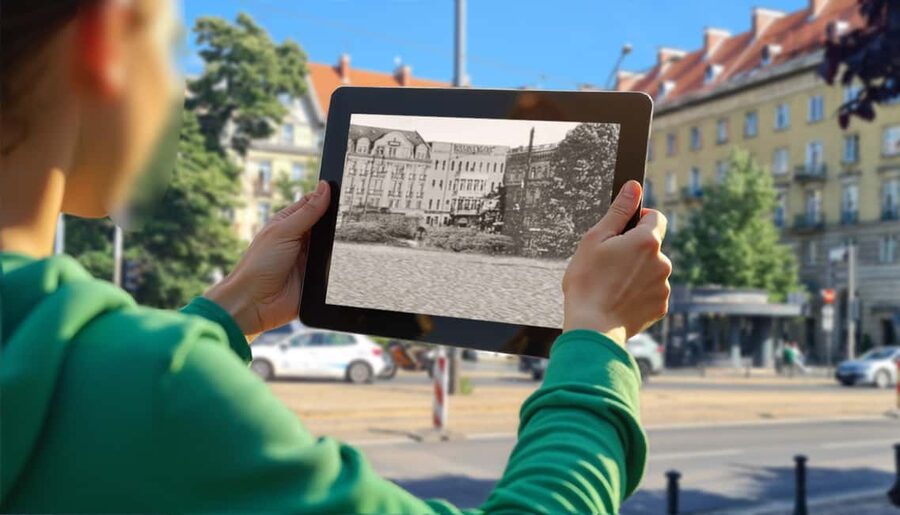
- Tablet-based time travel: turn around at each stop to view 100-years-ago scenes, photos, videos, or spherical visuals
- 10 key Wrocław locations: from Pręgierz and Iron Gate Passage to Świdnicka Street, the Opera, and Hotel Monopol
- Live guide in your language: Polish, English, German (Spanish is listed as an option as well)
- Compare then and now: you stand in the same spot and watch the city transform
- Smart, no-login tech: dedicated preinstalled app on the rental tablet
- Small groups or private tours: calmer pace and more chances to ask questions
Why a tablet time machine works better than old postcards
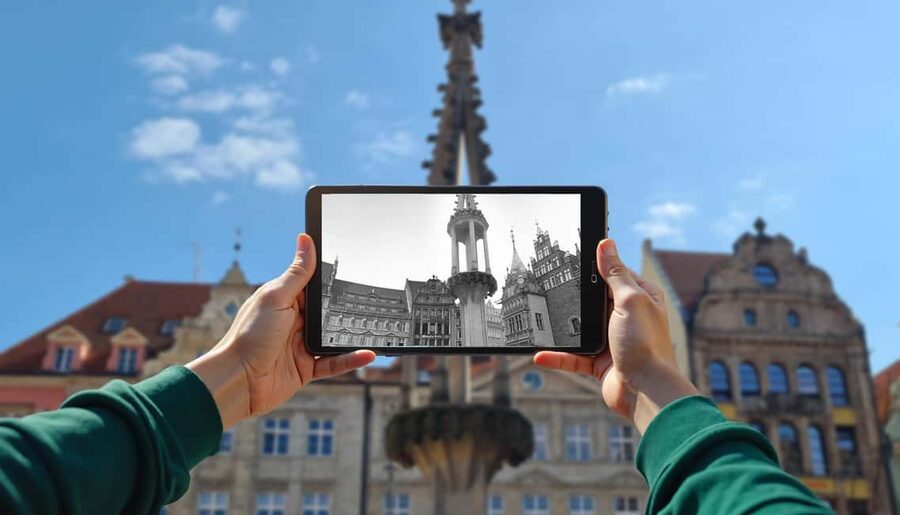
A standard walking tour gives you facts. This one gives you a trick for your brain: the ability to line up the past with the present while you are standing in the same place.
What makes it work is simple. At each of the selected stops, you activate the time travel mode on a provided tablet. Then, with the easy motion of turning around, you are shown scenes from about 100 years earlier, so your mental picture stops being fuzzy.
I also like that the guide does not just recite dates. The route is built around places where you can actually notice change, so the stories stick. And yes, the tablets are bright and readable in typical city conditions, which matters when you are outside for two hours.
The occasional tablet “fit” issue can happen. One review notes the image sometimes needs a manual adjustment to match what you see in the street, but it was described as easy to do once you know what to look for.
More Historical Tours in Wroclaw
- Best of Wroclaw 3-Hour History and Culture Walking Tour
★ 4.9 · 49 reviews - Wroclaw: Third Reich and World War Two Historical Tour
★ 4.9 · 43 reviews - Wroclaw: Private Tour by smal Historic Tram 1,5h 13-16 seats
★ 4.9 · 24 reviews
Starting with Pręgierz, the tour’s time jump point
You kick off at Pręgierz, which sets the tone fast. This is the moment where the tour asks you to stop thinking of Wrocław as just a collection of landmarks and start thinking of it as a city that gets remade, layer by layer.
From the first stop, the tablet becomes more than a gadget. You are not watching a history slideshow somewhere else. You are standing in an actual square or passage, and the guide’s explanation plus the tablet visuals help you connect what you see today with how the area looked back then.
If you like history details, this opening is a smart choice. It gives you a concrete anchor before the route starts moving through corridors and squares.
Przejście Żelaźnicze and the Iron Gate Passage story
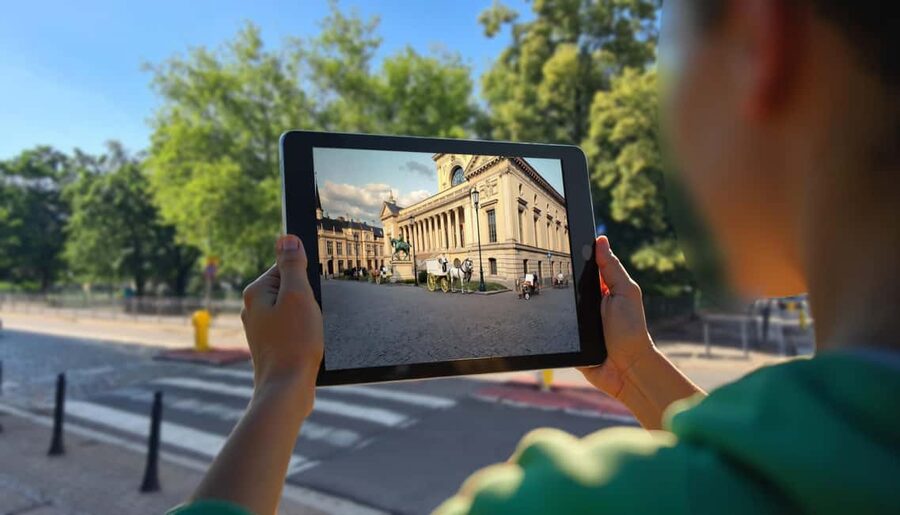
After Pręgierz, you head to Przejście Żelaźnicze (Iron Gate Passage) for a shorter guided segment, about 20 minutes. This is the kind of place that rewards slow looking. Passages like this often hold old routes, old entrances, and old urban habits, even when facades change.
The guide’s job here is important: they turn a narrow walkway into a timeline you can follow. With the tablet, you can compare the atmosphere around you, not just the buildings. The contrast is what makes the passage feel like a bridge between eras.
If your feet get tired, this is a good time to pace yourself. It is still walking, but the stop structure keeps it from feeling like one long slog.
Market Square and the Pillory, where you get your bearings fast
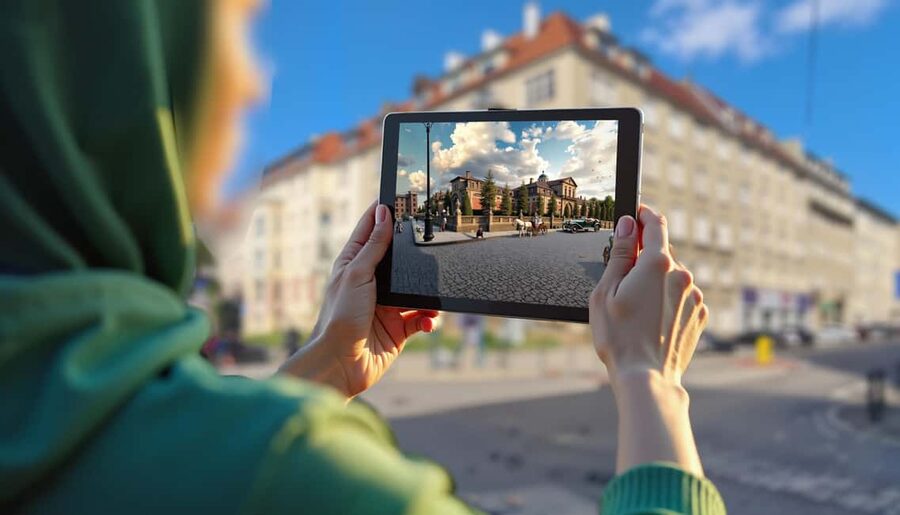
Next up is the Market Square area, with a guided stop around 15 minutes. You begin at the historic Pillory point, which the tour uses as the first big “time travel” reference.
Here is where the comparison becomes addictive. You look around and then activate the tablet feature, and suddenly the Market Square stops being a single image in your head. It becomes a before-and-after puzzle, with the guide helping you place what you are seeing into a story you can actually understand.
You also spend time on the northern side of the Market Square during this segment. That detail matters because the view changes depending on which buildings you are facing. You are building a 360-degree map of the city in your mind, even though you only walk along one route.
One practical tip: keep your eyes up. The tablet visuals show the past, but the guide’s commentary helps you notice which lines and openings match up today.
Another way through a Wroclaw day:
- Wroclaw: E-Car Tour and Audio Guide
★ 4.6 · 1,738 reviews - Wroclaw: 2-Hour Private Guided Tour by Electric Car
★ 4.8 · 805 reviews - Wroclaw: Ticket for Old Town Boat Cruise
★ 3.9 · 361 reviews - Wrocław: Old Town and Ostrów Tumski Walking Tour in English
★ 4.8 · 311 reviews
Plac Solny (Salt Square): the market logic of the old city
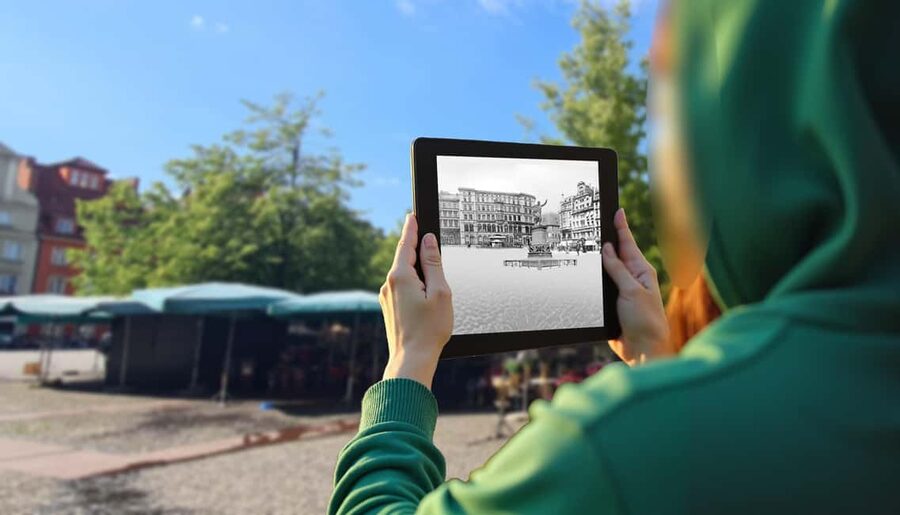
The tour then moves to Plac Solny for about 10 minutes. Salt Square is one of those names that sounds ordinary until you remember that old city centers were run on trade and supply.
This stop is short, so treat it like a reset. Turn on the tablet, look at what you see in the historical view, then let the guide connect the dots to how the square functioned. When a tour is built this way, you get the pattern without losing your attention.
If you like cities where commerce shaped architecture, you will probably enjoy this. The tablet approach makes the commercial purpose feel more immediate, because the “then” scene gives the square a sense of daily life.
Freedom Square and the “why” behind the changes
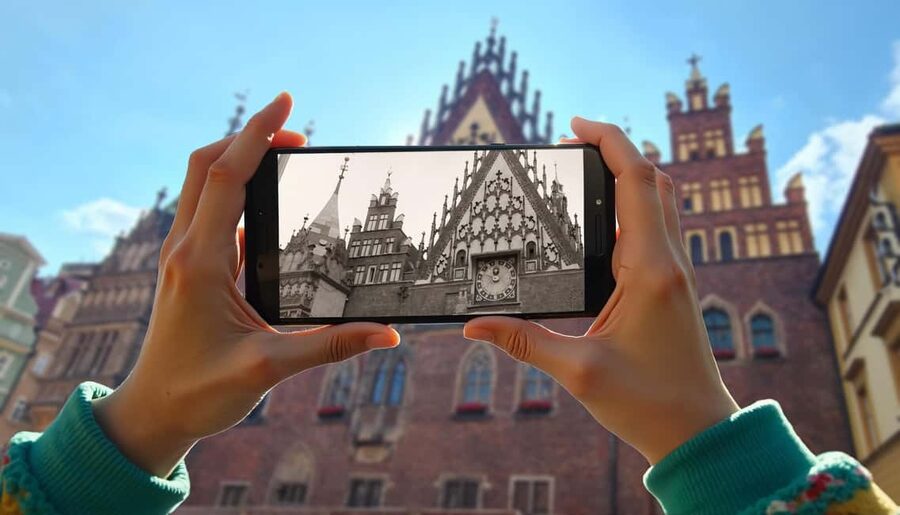
At plac Wolności (Freedom Square), the guided portion is around 15 minutes. This stop is where the tour shifts from seeing surfaces to understanding change.
You are still comparing visuals with the tablet, but the guide tends to focus on transformation: what the city became and why the look shifted over time. If you are the type who wonders why a street or square feels different in one direction than another, this is where you start getting answers.
The tablet helps you stop guessing. Instead of imagining how the square once looked, you can literally compare the camera angle you are standing at now.
Museum Square and Kościuszko Square: reading the city like a timeline
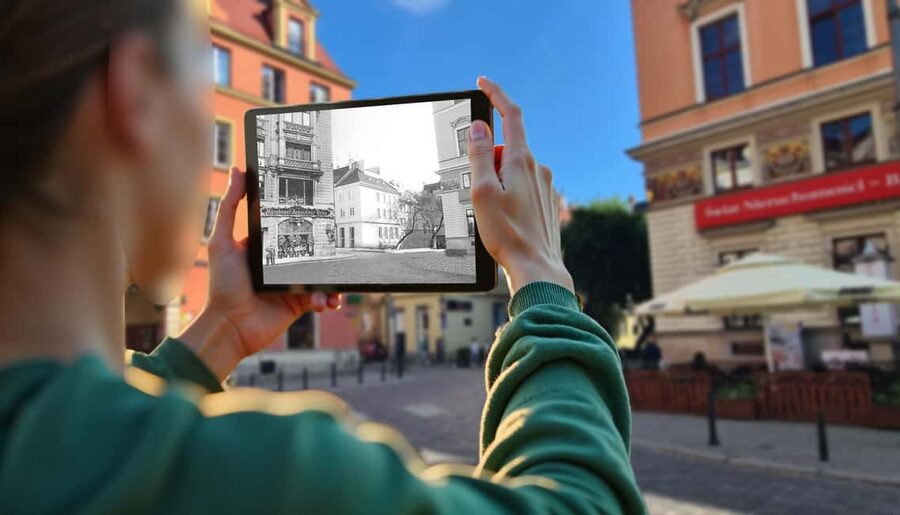
Next come plac Muzealny and plac Tadeusza Kościuszki, each about 15 minutes. Put together, these stops feel like a careful pairing: you look, you compare, and then you get a guided interpretation.
This is where the tablet tech really earns its place. In many cities, you can only guess at earlier layouts based on one view. Here, each stop is selected so the “then” image gives you context for why buildings, openings, and sightlines feel the way they do.
Kościuszko Square adds a different mood because it invites broader looking. You are not just tracking one facade. You are thinking about how an area would feel from a step or two away, and the tablet’s historical view helps you visualize the larger urban setting rather than only the details.
Świdnicka Street: the long view you can actually compare
The tour continues to Świdnicka for about 15 minutes. A street stop can go two ways on a history tour. It can become repetitive. Or it can become the strongest part of the day.
This one aims for the second. Street environments show how continuity and change work together. When you compare the historical visuals with the present street view, the differences become clearer, and so do the patterns of development.
If you are the kind of traveler who likes walking through old quarters and then leaving with a sharper mental map, this is a high-value stop. You are gathering clues about how the city grew, not just reading about it.
Wrocław Opera: where architecture helps you understand the past
Next is the Wrocław Opera, another guided segment around 15 minutes. Even if you are not an opera superfan, this stop usually lands well because grand architecture is built for long sightlines and strong impressions.
The tablet time-travel feature gives this location a special advantage. You are not only looking at the building as it is now. You are getting a sense of how the surrounding visual world may have looked around it in the earlier era.
The guide’s explanation matters here because buildings do not exist in isolation. You can see how context frames the architecture, and then you can compare what changed without losing the plot.
Hotel Monopol finish: the moment the city clicks together
You finish at Hotel Monopol. The guided portion at the Opera and the final wrap-up at the last stop are designed to bring the story together while you still have energy to think.
One reviewer mentioned that their group finished individually on the roof of the final point with a beautiful panorama. That kind of extra pause is not guaranteed, but it matches the tour’s goal: give you a last chance to look around and connect the dots from the whole route.
If the weather cooperates, I would take a moment to do what this tour trains you to do. Look at a building, then look at the space around it, and think about how the street scene might have looked when the tablet shows the earlier view.
What you get for the price, and why $26 can feel like a bargain
At $26 per person for about two hours, this tour can feel good value because you are paying for two things that are hard to replicate on your own.
First, you are paying for the tablet time-travel experience. It is not just a slideshow, and you do not need to bring your own equipment or figure out an app. The rental tablet includes a dedicated, preinstalled feature, and there is no app download or login required.
Second, you are paying for a professional guide who speaks Polish, English, or German, with Spanish also listed as an option. That matters because the tablet visuals only become meaningful when someone helps you interpret what you are seeing and why each stop is placed where it is.
Two hours is also a practical length. You get a strong “history reset” without turning your day into a half-day mission.
Who should book this tour, and who might prefer something else
This tour is a great fit if you want history you can see, not history you only hear. If you enjoy walking, and you like the idea of comparing streetscapes across time, the tablet approach makes the route memorable.
You may also like it if you are traveling with mixed interests. One person can focus on the architecture and the comparisons, while another listens to the guide’s stories, and both are still getting something out of each stop.
It might be less ideal if you strongly prefer to sit down often or you dislike technology at all. While the tablet is straightforward, you do need to interact with it at each location. And since the tour is walking-based, comfortable shoes matter.
Wheelchair access is listed, which is a real plus. If you need mobility support, plan ahead so you can keep a steady pace.
How to make the most of the tablet feature
The tablet experience is simple, but a few habits will make it feel smoother.
Look for alignment cues in the street view before you turn. When the tablet image does not match right away, one review notes manual adjustment may be needed, but it was easy with a quick try. Your guide and the team assisting with tablets can help you troubleshoot if something feels off.
Also, do not rush the viewing moment. The comparisons work best when you pause, scan, and let the “then” image sink in before you move on. Short guided segments mean you have to stay present, but that is also what keeps the pacing lively.
Weather, pacing, and group size reality checks
The tour generally runs in all weather conditions, so plan for rain or cold and dress appropriately. In extreme weather, cancellation or rescheduling is possible, and you should expect advance communication.
The route is designed for about a two-hour walk, with guided stops that range roughly from 10 to 20 minutes each. That makes it feel structured. You get breaks without long dead time.
Group size can be private or small groups, which tends to be a comfortable setup for questions and for getting help with the tablet when you need it.
Should you book the Wrocław historical tour with tablets?
Book it if you want a two-hour Wrocław reset that turns big historical ideas into something you can visually compare at street level. The combination of a live guide and time-travel tablets at major landmarks is the heart of the value here, especially at places like the Market Square, Świdnicka Street, the Opera, and the final stop at Hotel Monopol.
Skip it or consider alternatives if you hate walking, you want a purely museum-style visit, or you prefer history told only through speaking, not through a device in your hands.
If you can handle a comfortable walking pace and you like the idea of seeing Wrocław then and now side by side, this is one of the easier “yes” decisions in the city.
FAQ
How long is the Wrocław historical tour with tablets?
The tour runs for about 2 hours.
How much does it cost per person?
The price is listed as $26 per person.
Where does the tour start and where does it end?
It starts at Pręgierz and finishes at Hotel Monopol.
What are the main stops on the route?
The route includes 10 key locations: Pręgierz, Przejście Żelaźnicze, Market Square (with the Pillory), Plac Solny, plac Wolności, plac Muzealny, plac Tadeusza Kościuszki, Świdnicka, Wrocław Opera, and Hotel Monopol.
Do I need to download an app or log in?
No. The tablet uses a dedicated preinstalled time-travel application, and there is no app download or login required.
How does the time-travel feature work on the tablet?
At each location, you activate the time travel feature on the provided tablet, and by turning around you are shown scenes from around 100 years earlier, using historical photos, videos, or spherical visualizations.
What languages does the guide speak?
The guide is listed in Polish, English, and German, and Spanish is also mentioned in the included details.
Is the tour wheelchair accessible?
Yes, wheelchair accessibility is listed.
What if the weather is bad?
The tour generally takes place in all weather conditions, and you should dress appropriately. In extreme weather, the operator reserves the right to cancel or reschedule and will inform you in advance with an alternative solution.
Is there free cancellation?
Yes, free cancellation is offered up to 24 hours in advance for a full refund.
Fresh Wroclaw reviews
- Wrocław: Long City Walk and Luxury Ship Cruise (for groups)★ 1.9 · 3 reviews
- Wroclaw to Rock City in Adsprach and Church of Peace in Świdnica Private Tour★ 5.0 · 3 reviews
- Wroclaw: Skip the Line Panorama Raclawicka and Ostrow Tumski Guided Tour★ 4.5 · 3 reviews
- Private Transfer from Wroclaw (WRO) Airport to Wroclaw city centre★ 5.0 · 3 reviews
- Wrocław: 2-Hour Guided Tour for Children★ 4.9 · 3 reviews
- Wrocław: Following the dwarfs’. See the city differently! 2h★ 4.4 · 3 reviews
- Wrocław: World War II and the non-existent city of Breslau★ 3.6 · 3 reviews
- Wroclaw : Walking Custom Tour with a Local Guide★ 4.8 · 3 reviews
Historical Tours, compared.

POLIN Museum of the History of Polish Jews Ticket
Read our review →
Gdańsk City Sights & History Guided Walking Tour in English
Read our review →


Tipsy Polish Food Tour With History, Pierogi & Shots
Read our review →
Browse the lists this tour appears in