
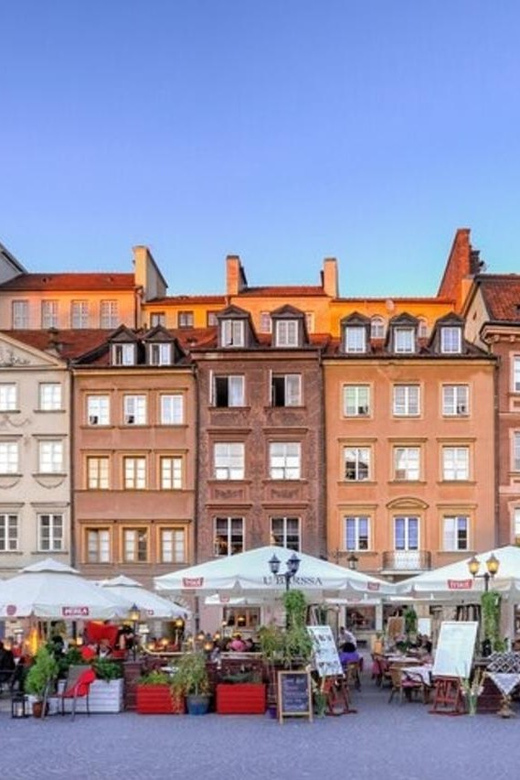
Reviewed · JEWISH HERITAGE TOURS
Warsaw : Jewish Quarter Private Walking Tour
This tour is interesting because it links key Warsaw sites to the lived story of the Jewish community, from prayer and community life to the trauma of the ghetto and resistance. I like that it is private and customizable, so you can ask questions and set a pace that fits you. I also like the guide-led focus on the exact places that shaped daily life and memory, not just photo stops. The main drawback is that the subject matter is heavy, so if you want a light, casual sightseeing walk, this may feel intense.
Here is what you get, in practical terms: a 2-hour guided walk that hits the big emotional and historic points without trying to cram your whole day full. One consideration: it is still a walking tour with multiple memorial sites, so wear comfortable shoes and be ready for an on-your-feet pace.
Key things you will notice on this Warsaw Jewish Quarter walk

- Private, exclusive group means no need to share questions or slow the pace for strangers
- Nożyk Synagogue to cemetery to Umschlagplatz covers several layers of Jewish Warsaw in one tight route
- Footbridge of Remembrance adds modern storytelling with a multimedia installation
- Guides use visuals at times, including photos to help connect the locations to the story
- You get extra city advice after the main route, which helps you plan the rest of your trip
A 2-hour private walk that connects Warsaw landmarks to memory
Warsaw can feel like a city of layers, and this tour focuses your attention on one of the hardest chapters in those layers. You are walking through places that still carry weight, so your guide keeps the tone respectful while explaining what you are seeing.
I like that the format is short enough to stay sharp. Two hours is long enough to make sense of the geography, but short enough that you are not exhausted before you even reach the hardest stops. I also like that you are not just handed facts. You are guided to understand why each place matters, including what the spaces were used for and what changed over time.
More Jewish Heritage Tours in Warsaw
- Warsaw: Warsaw Ghetto Private Walking Tour with Hotel Pickup
★ 4.9 · 369 reviews - Warsaw: Jewish History Guided Walking Tour in English
★ 4.7 · 324 reviews - Private Tour: Warsaw’s Jewish Heritage by Retro Fiat
★ 5.0 · 208 reviews
Where you start at Miodowa 21B, and how the route fits together

The meeting point is Miodowa 21B, right in the city center near the historic Old Town area. That is helpful because you can pair this tour with a later visit to classic Old Town sights without changing neighborhoods.
The walk moves in a way that feels like a story, not a checklist. You begin with memorial space and remembrance, then you move toward sites tied to community and burial, and you finish with the most internationally recognized ghetto memorial points. By the end, you may find yourself still close enough to continue independently, and at least one guide experience ended with the group about a 30-minute walk from Old Town.
One practical point: because the tour includes some walking plus public transport depending on the option you pick, you should check what is planned when you book. If you dislike transit during a walking tour, look for the option that keeps things mostly on foot.
Nożyk Synagogue: a real starting point for Jewish Warsaw
Your first stop is Nożyk Synagogue. You get a photo pause and a guided visit, and that sets the emotional and historical tone early.
This is a smart first anchor because it is not only about tragedy. It reminds you that Jewish Warsaw was built on religion, community organization, and public life. Even if your understanding starts out with the ghetto story, beginning with a synagogue helps you see the “before” that the memorial sites rely on.
The session also helps you settle in. A good guide can explain what you should look for, where to stand for the best view, and how the story connects to later locations.
The Footbridge of Remembrance: where modern media meets old boundaries
Next comes the Footbridge of Remembrance. You get another photo stop and guided time to take it in, and the big feature here is the multimedia installation that commemorates the true past of the ghetto.
I like this stop for one reason: it turns an abstract history lesson into something you can sense. A footbridge is a boundary-crossing space, and here it becomes a symbol of division and separation, even as you move across it.
If you have limited time in Warsaw, this is the kind of stop that packs meaning into a relatively small area. You do not have to be an expert to benefit, because the guide’s job is to translate what you see into what it meant.
More Walking Tours in Warsaw
- Warsaw: Old Town Highlights Walking Tour in English
★ 4.7 · 1,516 reviews - Warsaw: Old Town Guided Walking Tour
★ 4.9 · 599 reviews - Half-Day Polish Food Walking Tour with Guide and Dinner
★ 4.5 · 381 reviews - Old Town Warsaw Walking Tour
★ 4.5 · 333 reviews
Jewish Cemetery on Okopowa Street: names, legacy, and symbolism
Then you head to the Jewish Cemetery in Warsaw on Okopowa Street. You get time for a photo stop and a guided visit, and this part tends to land differently for many people because cemeteries are where you feel continuity across generations.
The cemetery includes memorials for prominent figures, including Ludwik Zamenhof and Ischok Leib Perec. You also pay tribute to Janusz Korczak at his symbolic grave.
A cemetery can be both quiet and overwhelming. That is why having a guide matters. A guide can point out what to notice, share context for who is remembered, and help you understand why these names carry weight beyond their individual biographies.
Comfort tip: cemeteries are often exposed to wind or cold, depending on the season. If your tour falls on a brisk day, a warm layer helps, even if you are only out for 20 minutes at a time.
The Mauzoleum Walki i Męczeństwa: a memorial stop with purpose
After the cemetery, the route includes the Mauzoleum Walki i Męczeństwa. You get another photo stop and guided time for sightseeing and understanding.
This is where the tour shifts further into memorial geography. Mausoleums like this usually function as a focal point, a place where the story gathers into one recognizable form. Your guide helps you connect the location to the wider route of martyrdom and struggle that the walk references.
If you are the kind of person who likes to understand how commemoration is designed, this stop is worth paying attention to. Even a short visit can clarify how memory is built into the physical environment.
Umschlagplatz Monument: the place where numbers become a story
One of the most significant stops is the Umschlagplatz monument. You pause for photos, then your guide brings context to what you are looking at, including the grim reminder of deportations during the Holocaust.
This section is solemn, and the tour’s structure reflects that. You are not rushing past. The pace is designed to give you a moment to reflect, then absorb the explanation.
I appreciate how guides in this experience often tie meaning to location. It is easy to feel that memorials are just markers, but a good guide shows how the site connects to transport routes and forced separation, so your brain stops treating it as a vague historical label.
Monument to the Ghetto Heroes: resistance, bravery, and defiance
Then comes the Monument to the Ghetto Heroes. This is framed around remembrance for Holocaust victims and attention to bravery during the Ghetto Uprising and resistance against Nazi oppression.
This is also a place where your guide’s phrasing matters. The goal is not to overwhelm you with dates. The goal is to help you understand the difference between suffering and resistance, and why commemoration honors both.
From what you are likely to notice on tour, guides tend to make this part of the walk emotionally clear. If you have ever felt guilty or confused after visiting memorial sites, a thoughtful guide can help you process what you see in a grounded way.
Fragments of the wall and boundary markers: why the ghetto shape matters
Throughout the walk, you also encounter elements connected to the ghetto’s physical boundaries. The tour includes fragments of the Jewish Ghetto wall and iron slabs that mark where those boundaries were.
I like this part because it turns “the ghetto” from an idea into geography you can imagine. When you can see how the area was shaped and how boundaries were marked, the story becomes easier to visualize and harder to dismiss as distant.
This is also where your guide’s local familiarity pays off. It is one thing to read about a boundary. It is another to stand near it and have a guide explain the practical reality of what living inside that shape meant.
Private and customizable: what you gain by walking with just your group
This is a private group tour, meaning it is exclusive. That changes the whole vibe. You can ask follow-up questions, and you do not have to worry about your guide rushing to satisfy someone else’s list.
It is also described as customizable. In practice, that usually means you can spend a little more time on what interests you most, whether that is religious history, memorial context, or how Warsaw fits into the wider European picture.
Guide quality is a major factor here, and the experiences shared by previous groups highlight that. Names you might hear mentioned include Paulina, Karol, and Maria, each praised for strong communication and the ability to connect the story to the specific stops. Paulina, for example, stood out for excellent English and using photos to illustrate points, which is a smart teaching trick for a subject this dense.
Price and value: is $58 for two hours worth it?
At $58 per person for a 2-hour private walking tour, you are paying for three main things: time with a live guide, the convenience of having the route planned and explained, and the privacy of your own group.
If you are used to group tours, the difference is big. You are not only buying sightseeing, you are buying clarity. In a memorial-focused tour, that clarity matters. A good guide turns “I saw signs and monuments” into “I understand what those places represent.”
Also, the included support is practical. The tour includes help booking tickets for the desired visits, and it covers walking plus public transport depending on the option you choose. You still need to bring your own drinks and food, but at least you are not handling the complex pieces while trying to learn.
If your travel style is hands-on and you like asking questions, private is the value sweet spot. If you prefer self-guided wandering and already know the ghetto story well, you might feel a private guide is more than you need. But for most people, a guided two-hour focus is exactly what makes this kind of visit meaningful.
Practical tips for comfort, pacing, and respect
This tour is accessible: it is described as wheelchair accessible, and the guide is live in English or Spanish. Still, you will be walking through memorial spaces that can involve surfaces and steady walking. If you need an easier pace, this is a great situation to ask your guide to adjust the rhythm.
Wear comfortable shoes. Even with photo stops, you are moving between several significant points. Bring a warm layer if you are visiting in colder months, since memorial areas can be exposed.
Bring water, but note that drinks and food are not included. Plan a snack before or after, and do not treat this as a meal break kind of outing.
Finally, be ready for emotion. The tour includes remembrance for Holocaust victims and discussion of ghetto resistance and deportation. You do not need to force a strong reaction, but you do want to give yourself space to absorb what you learn.
Best for: who should book this tour
This tour is a strong fit if you want a structured, respectful way to understand the Jewish Quarter and Warsaw ghetto memorial sites in a limited time window. It is also ideal if you like walking tours but prefer the calm focus of a private group.
You will especially enjoy it if you value context and guide-led storytelling. If you tend to remember places better when someone explains why they matter, this should work well.
Should you book this Warsaw Jewish Quarter Private Walking Tour?
If you want one guided, high-impact way to understand Warsaw’s Jewish Quarter with the help of a local guide, book it. The combination of major memorial points, cemetery legacy, and community landmarks gives you a fuller picture than you can get from a quick stop-and-photo route.
Skip it only if you strongly dislike walking, want a casual sightseeing mood, or are not prepared for a heavy subject. For everyone else, this is one of those two-hour tours where the guide does most of the hard work, and you get to concentrate on learning and reflecting at the right places.
Fresh Warsaw reviews
- Warsaw: Wolf’s Lair & Swieta Lipka Small-Group Tour + Lunch★ 5.0 · 3 reviews
- World War II Warsaw Old Town, Military Cemetery Walking Tour★ 4.7 · 3 reviews
- Warsaw: Old Town Walking Tour, Hidden Gems & Hot Chocolate★ 4.3 · 3 reviews
- Warsaw: Explore the Vistula on Its Longest Speedboat Route★ 4.6 · 3 reviews
- 5-hour: Royal Castle, Old Town and POLIN Museum/inc.Pick-up/★ 5.0 · 3 reviews
- Majdanek – German camp from II World War – Private Tour – 1 DAY TRIP FROM WARSAW★ 5.0 · 3 reviews
- Museum of Modern Art in Warsaw★ 5.0 · 3 reviews
- Warsaw Outdoor Paintball with Transfers (all year round)★ 5.0 · 3 reviews
Jewish Heritage Tours, compared.
Bike Tour of Old Town, Jewish Quarter and the Ghetto
Read our review →
Kazimierz, Schindler’s Factory & Ghetto Guided Tour
Read our review →
Full Bike Tour – the Old Town, Jewish Qtr & the Ghetto NEW BIKES
Read our review →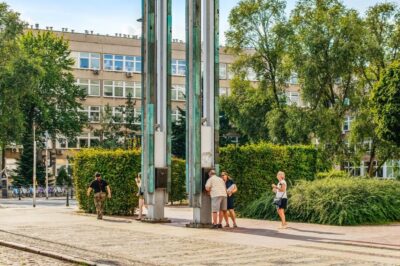
Warsaw Ghetto Private Walking Tour with Hotel Pickup
Read our review →
Browse the lists this tour appears in