
Reviewed · HISTORICAL TOURS
Wrocław’s Old Town: A Self-Guided History Tour
Wrocław’s Old Town works especially well as a self-guided history walk, because the city is compact and the story beats land right where you can see them. What I like is that you can follow GPS audio at your own pace and still hit the big landmarks, plus the route is built for a walk of about 1 to 1 hour 15 minutes. One drawback to plan for: you need to bring your own smartphone and headphones, since nothing is provided.
The route starts at the Monument of Alexander Fredro on Rynek and ends at Wrocław Cathedral, with English narration for each stop. And the value is hard to ignore, because once you buy, you get unlimited lifetime use of the tour both before and after your booking date, plus offline access to audio and maps.
Key highlights if you want the quick decision
- A timed route that usually fits 1 to 1 hour 15 minutes, so you can do it between museum visits or coffee stops.
- Offline audio and maps, so you are not stuck hunting for signal in the Old Town.
- Clear stop-by-stop narration that ties buildings to events, like medieval punishment sites and church history.
- Bridge walking built into the plan, including Sand Bridge and Lovers Bridge by the padlocks.
- City dwarf theme is part of the experience, but the main thread stays focused on Wrocław’s past.
- English guidance with options to listen like an audiobook, including virtual playback.
What you really get from this Wrocław Old Town audio walk
This is not a guided group tour where you shuffle along with everyone else. It is a self-guided route, so you control the tempo, pause for photos, and spend longer where your curiosity pulls you in. The audio comes in as you move from stop to stop, so you are always anchored to what you are seeing.
You are also not paying for entry tickets as part of the tour. That sounds obvious, but it matters, because it means the experience is about orientation and interpretation. You get the why behind the sights, and then you decide if you want to pay extra for tower views or museum access on your own.
The other practical win is the gear-light setup. Plan to use your own phone with your own headphones. If you like walking with Bluetooth earphones, this kind of audio format is usually easier than holding your phone in your hand.
More Historical Tours in Wroclaw
- Best of Wroclaw 3-Hour History and Culture Walking Tour
★ 4.9 · 49 reviews - Wroclaw: Third Reich and World War Two Historical Tour
★ 4.9 · 43 reviews - Wroclaw: Private Tour by smal Historic Tram 1,5h 13-16 seats
★ 4.9 · 24 reviews
What $8.99 buys, and the only gear you must bring
At $8.99 per person for about an hour, this feels like a smart “value add” for any Wrocław itinerary. You are not buying a day trip or a big ticket attraction. You are buying a guided route with offline support, which is often the difference between wandering and actually learning something as you walk.
Your required equipment is simple:
- A smartphone
- Headphones
Everything else is handled: directions to the start, GPS-based self-guidance, and offline access to audio, maps, and geodata. If you travel with only one phone and one set of headphones for a couple, you will still do fine, since it is structured for a single listener per device.
One planning note: since it is a private activity for your group, it is not meant to mix you with strangers. That is good if you want flexibility without worrying about group pacing.
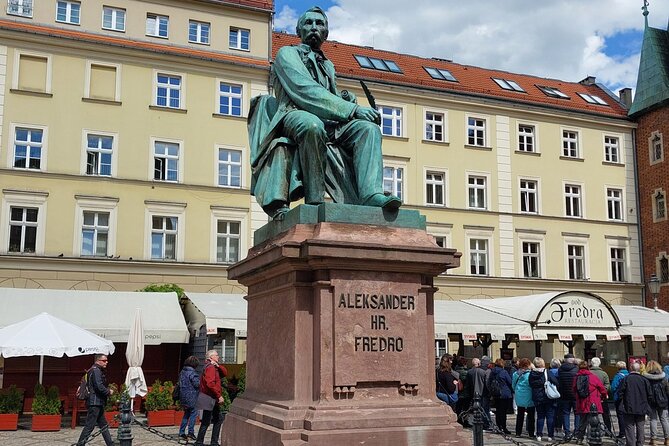
Starting at Alexander Fredro’s Monument in Rynek
You begin at the Monument of Alexander Fredro in Rynek, placing you right at the center of Wrocław’s Old Town energy. Starting here is helpful, because you are immediately in the thick of the city’s main architectural lines, with streets radiating outward and the Market Square area pulling your route forward.
Alexander Fredro matters because he is a major name in Polish literature, and starting with him sets a cultural tone. Even if you are not a literature person, the narration helps you connect the city to the broader Polish cultural world, not only to medieval buildings.
Practical tip: take 30 seconds to get your phone set up before you press play. If your battery is low, this is where you want to charge or at least enable power saving mode.
Market Square and the Old Town Hall area
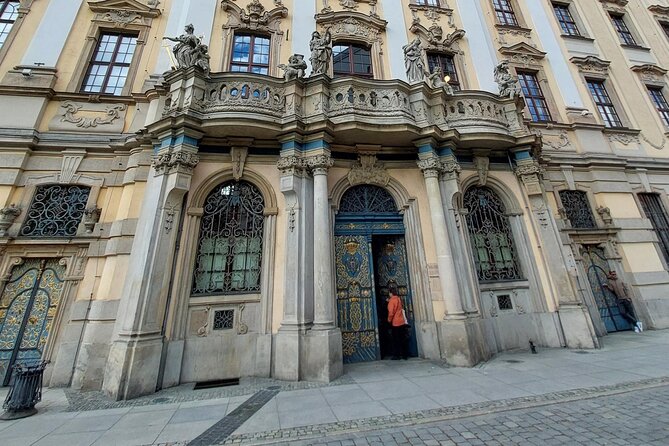
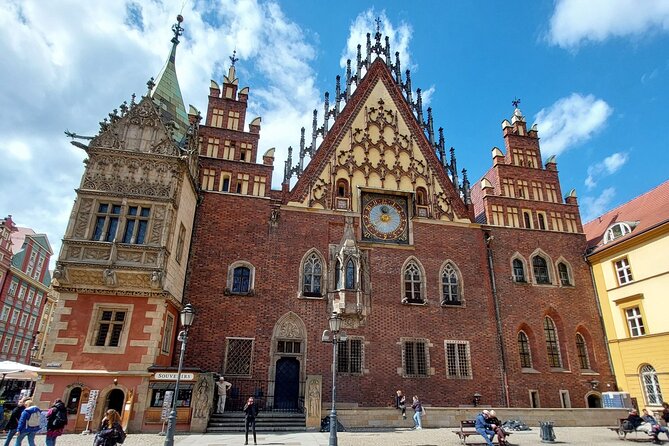
From the opening spot, the first major visual anchor is Wrocław’s Market Square, known for its size and for the way the surrounding buildings frame the space. This is where the audio works like a street-level history lesson. You learn what you are looking at, and why it matters, including the Old Town Hall.
Why this stop is worth your time:
- The square gives context. When you understand the civic center, the later landmarks make more sense.
- The architecture is easier to read once you know the roles the buildings played.
A small drawback to watch for: if you are very photo-focused, this area can tempt you to linger and then feel rushed later. The audio is built for walking, so if you stop for long breaks here, consider stretching your overall timeline.
Another way through a Wroclaw day:
- Wroclaw: E-Car Tour and Audio Guide
★ 4.6 · 1,738 reviews - Wroclaw: 2-Hour Private Guided Tour by Electric Car
★ 4.8 · 805 reviews - Wroclaw: Ticket for Old Town Boat Cruise
★ 3.9 · 361 reviews - Wrocław: Old Town and Ostrów Tumski Walking Tour in English
★ 4.8 · 311 reviews
The Pillory: medieval justice made physical
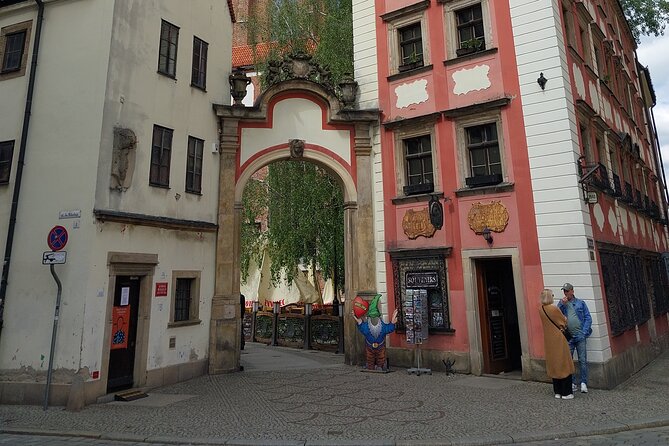
Next up is the Pillory, an ancient site tied to public punishment. This is one of those stops where the narration shifts your brain from aesthetics to power, law, and daily consequences.
You might not think of medieval justice when you stand in a pleasant square, but Wrocław kept marks of that past in plain sight. Hearing the story here is the kind of detail that transforms a sightseeing route into an actual timeline.
A practical consideration: this stop may feel darker in tone than the others. If you are traveling with kids or you prefer lighter content, plan for a quick listen and keep moving. You can always spend more time at the more romantic or scenic bridge stops later.
Jaś i Małgosia twin houses and the fairy-tale side of the city
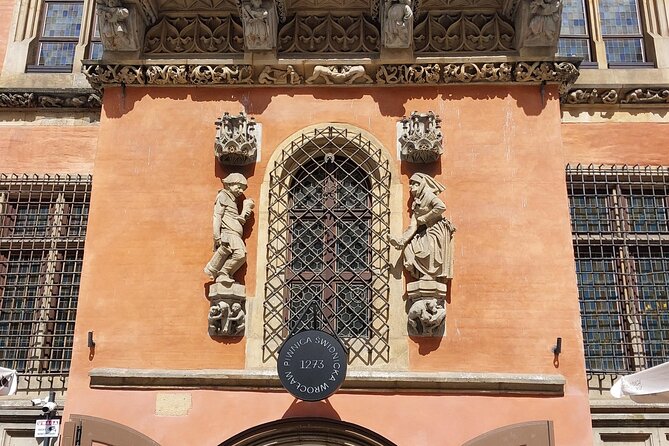
Then you reach the twin houses known as Jaś i Małgosia, a Wrocław symbol linked to fairy-tale charm and folklore. This is where the tour adds a playful register to the medieval and institutional theme.
I like this contrast because it mirrors what cities feel like when you walk them. Wrocław is not only churches and courts. It also has characters, legends, and a sense of imagination that shows up in street-level details.
If you are the type of traveler who came for dwarves, ghosts, or beer-related lore, keep your expectations anchored. The audio touches those themes, but it is not a full-blown specialty fantasy lecture. Treat it as short, story-driven highlights woven into the main history route.
St. Elizabeth’s Church, the tower, and a view worth the effort
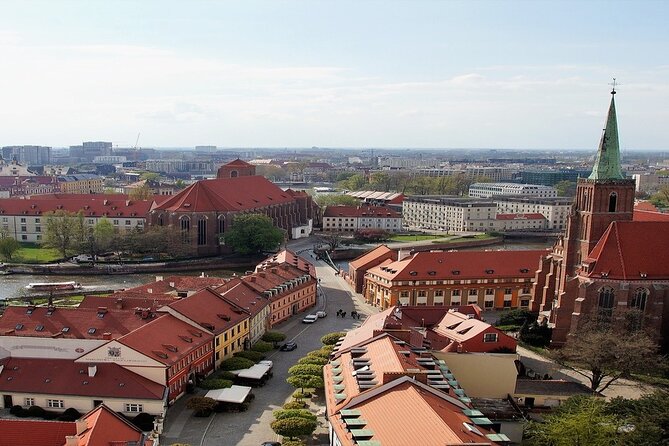
St. Elizabeth’s Church, also called the Garrison Church, is a big visual moment. The narration gives you the historical significance, and it also encourages you to climb the tower for panoramic views.
Two practical realities:
- The tower experience may involve separate access rules or tickets, since entries are not included in the tour package.
- If stairs are an issue for you, you can still enjoy the church exterior and let the narration fill in the background while you listen.
The payoff, though, is real. Tower time is one of the few ways to instantly understand why the rest of the route makes sense. When you look back at the Old Town layout, you connect the dots between square, bridges, and cathedral silhouette.
Slaughtered Animals Monument, the University area, and Ossolineum
Near the University of Wrocław you will find the Slaughtered Animals Monument. This is the kind of stop that forces you to slow down. Instead of grand beauty, it offers a story with an edge, and the audio explains the connection to the city’s past.
Right after that, the route focuses on the University of Wrocław and then the Ossolineum Institute, described as a renowned research and cultural institution. This part of the walk shifts from civic life to education and preservation, which is a smart sequencing move. By the time you reach these stops, you already understand Wrocław as a city with institutions, not just streets and monuments.
Value for you:
- You get a sense of how knowledge and culture were organized and sustained.
- You see how Wrocław preserved identity through institutions, not only through buildings.
What to consider: university and research sites can have areas that are not open for casual entry. Since museum and attraction entry is not included, you might mostly experience these stops from the outside and through the narration. That is still worthwhile, but it helps to be mentally flexible.
Market Hall, the Cathedral of Commerce, and what to look for
The route then heads to the Market Hall, a key hub of local commerce. It is described as the Cathedral of Commerce, which is a great way to think about it. This stop is less about monuments and more about how people actually traded, bought, and lived day to day.
Even if you do not plan to shop much, you will probably enjoy the atmosphere. Listen to the audio while you scan the building, its role, and how the market functioned historically.
A practical tip: if you want a snack or a local bite, this is one of the better places to do it, because the route is still close to the center and the narration keeps you oriented.
Crossing the Oder: Sand Bridge for the city-of-bridges feeling
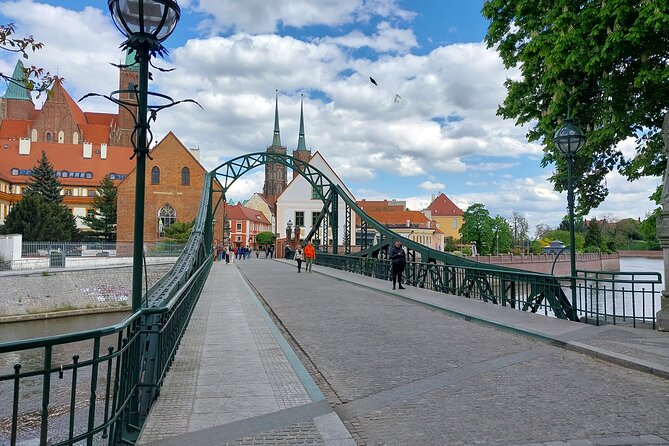
Then comes the fun walking part, as the route crosses Sand Bridge. The audio frames it with the idea that Wrocław is called the City of Bridges, and it also sets you up to appreciate views over the Oder River.
Why this works in an audio format:
- Bridges naturally mark transitions, so the narration can reset the story for the next segment.
- The views are a reward, not just a backdrop.
If you are short on time, do not try to “race” this. Even a brief pause looking toward the river makes the bridge theme click. That theme is what makes the final romantic bridge feel earned.
Tumski Bridge, Lovers Bridge, and the padlock tradition
Next is Tumski Bridge, also known as Lovers Bridge. This stop is famous for padlocks left by couples as symbols of love. It is a lighter moment, and the audio helps you see it as part of a living city ritual.
This is a good point to slow down and get photos, because the river and the bridge line create a natural composition. It is also the kind of stop where you can decide how long you want to linger without throwing off the whole day.
If you are not into the padlock tradition, you can still treat this as a scenic crossing and focus on the views and the bridge role in Wrocław’s riverside geography.
Ending at Wrocław Cathedral, with architecture you can spot from the outside
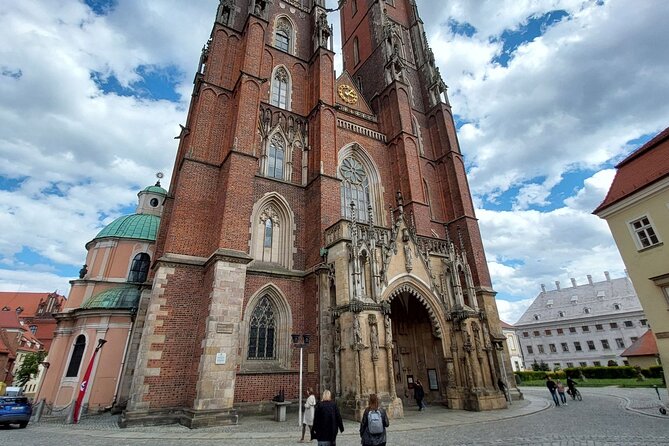
The tour ends at Wrocław Cathedral at Plac Katedralny. The audio guides you through the Gothic structure and its architectural history and significance for religious and cultural life.
Even if you do not plan to go inside, this ending still works well. The cathedral is one of the landmarks where shape, towers, and stonework make it easy to connect narration to reality.
The schedule shown for the cathedral stop suggests it is accessible across all days in the given range, but you should still expect that actual access can depend on services or special events. If you do want to enter, plan to check on-site.
Dwarf Trail and the other side stories, what to expect
One of the most praised elements of this kind of route is the way it keeps you alert to details as you walk, including the city dwarf theme often nicknamed as the Dwarf Trail. I love tours that give you a reason to look up, not just ahead.
That said, I would not treat this as a dwarf-only tour. The main emphasis stays on Wrocław’s history, civic development, and major monuments. The narration does include dwarf, ghost, and beer-related topics, but the pace is still designed for a compact walk. If you want long, deep lore, you might end up wanting more. If you want a balanced walk where the lore shows up as flavor between major facts, it fits well.
Who this self-guided Wrocław Old Town walk is best for
This is ideal if you:
- Want a structured route without a fixed group schedule
- Like audio narration and walking at your own pace
- Want to understand what you are seeing, not just take photos
- Are comfortable using a smartphone for navigation and audio
It is less ideal if you:
- Do not want to carry a phone or use headphones
- Prefer hands-on museum-style visits as the main event
- Need a very detailed, deep-discipline history lecture on every stop
Should you book this self-guided Wrocław Old Town audio tour?
Yes, if you want an efficient, low-cost way to make Wrocław’s Old Town click. The price makes sense because you get offline audio and maps, an audio-led route that fits into an hour, and lifetime use tied to your purchase.
Book it if you will spend time in the center anyway. This tour does not ask you to add a separate big attraction. It turns your walk around the Market Square, churches, bridges, and cathedral into something you will remember.
Skip it only if you already plan to follow a different guide that covers the same landmarks in more depth, or if you do not want to rely on your own device and headphones.
FAQ
How long is the Wrocław Old Town self-guided history tour?
It takes about 1 hour to 1 hour 15 minutes for most people, depending on how long you pause at each stop.
Do I need to bring headphones and a smartphone?
Yes. You need your own smartphone and headphones. The tour provides the audio and offline access, but it does not include devices or headphones.
Where does the tour start and where does it end?
The tour starts at the Monument of Alexander Fredro on Rynek, and it ends at Wrocław Cathedral at Plac Katedralny.
Is the tour available in English?
Yes. The tour is offered in English.
Are museum entries or attraction tickets included?
No. Entry into museums and attractions mentioned along the way is not included.
Is the tour refundable if I cancel?
Yes. Cancellation is free, and you can cancel up to 24 hours in advance for a full refund. If you cancel less than 24 hours before the start time, you do not get a refund.
Fresh Wroclaw reviews
- Wrocław: Long City Walk and Luxury Ship Cruise (for groups)★ 1.9 · 3 reviews
- Wroclaw to Rock City in Adsprach and Church of Peace in Świdnica Private Tour★ 5.0 · 3 reviews
- Wroclaw: Skip the Line Panorama Raclawicka and Ostrow Tumski Guided Tour★ 4.5 · 3 reviews
- Private Transfer from Wroclaw (WRO) Airport to Wroclaw city centre★ 5.0 · 3 reviews
- Wrocław: 2-Hour Guided Tour for Children★ 4.9 · 3 reviews
- Wrocław: Following the dwarfs’. See the city differently! 2h★ 4.4 · 3 reviews
- Wrocław: World War II and the non-existent city of Breslau★ 3.6 · 3 reviews
- Wroclaw : Walking Custom Tour with a Local Guide★ 4.8 · 3 reviews
Historical Tours, compared.

POLIN Museum of the History of Polish Jews Ticket
Read our review →
Gdańsk City Sights & History Guided Walking Tour in English
Read our review →


Tipsy Polish Food Tour With History, Pierogi & Shots
Read our review →
Browse the lists this tour appears in