
Reviewed · JEWISH HERITAGE TOURS
Tour of the Warsaw Ghetto
This tour is interesting because it strings together the Warsaw Ghetto story using real streets, real walls, and real memorial points. I especially like the old photos and maps your guide uses to help you picture the area before it was destroyed. It also connects major events with the everyday places where people lived, worked, and tried to survive.
My other big plus is the pace and structure. You move through the story in a clear path on foot, with a short transport segment built in, so you are not stuck watching a slideshow. One possible drawback to plan for: expect lots of walking, about 2.5 hours on foot during the full roughly 3-hour experience.
Key things I’d mark on your mental map
- A still-in-operation synagogue stop (Nozyk Synagogue), with the ticket fee extra
- Wall fragments and street-level remains that make the ghetto feel real, not abstract
- Umschlagplatz context on how deportations were carried out and why it became symbolic
- POLIN Museum time focused on the uprising era, not the full museum exhibition
- Memorial stops tied to Willy Brandt’s Kniefall and the Miła 18 bunker site
- A strong guide-led story, often supported with photos and period maps
How this Warsaw Ghetto route tells the story step by step
This is not a drive-by tour. You are traveling through the Warsaw Ghetto’s history as a sequence of places, starting with a site that survived and still functions, and ending with memorial and remembrance spaces connected to imprisonment, resistance, and Nazi repression.
What makes it work for me is the blend of “what happened” and “where it happened.” At each stop, you get context on the origins of the ghetto, daily life inside it, and the 1943 uprising, then you follow the timeline forward to deportation logistics and the occupation’s machinery. It helps you understand that the Warsaw Ghetto was not just one event or one moment. It was a system that tightened over time.
More Jewish Heritage Tours in Warsaw
- Warsaw: Warsaw Ghetto Private Walking Tour with Hotel Pickup
★ 4.9 · 369 reviews - Warsaw: Jewish History Guided Walking Tour in English
★ 4.7 · 324 reviews - Private Tour: Warsaw’s Jewish Heritage by Retro Fiat
★ 5.0 · 208 reviews
Price, what you get for $102.78, and what costs extra
At about $102.78 per person for an approximately 3-hour tour, you are paying for a guided walk that includes pickup in central areas, a licensed city guide format, and a private group experience where only your group participates. You also get a mobile ticket, and group discounts are mentioned.
There is one clear extra cost: the Nozyk Synagogue admission is not included, listed as €5.00 per person. Everything else on the route is marked as free.
Also note what is not included. The tour does not include the main exhibition at POLIN Museum. The museum itself is visited for a shorter stop tied to symbolism and the uprising era, so if you want the full exhibition, you should plan extra time.
Pickup, mixed transit, and the real time on your feet
This tour is built as a mixed experience: you are about 2.5 hours on foot and about 30 minutes on public transit, like bus, tram, or underground. That matters because it means you will see a lot of street-level detail, but you still get brief breaks from pure walking.
Pickup is offered for hotels in the city center. Your guide meets you with a PolinTours sign, either at the hotel reception if you are staying centrally, or outside if you are in an apartment. The order of stops can be adapted to where your hotel is, which helps reduce backtracking.
For comfort, this is best for adults and older teens who can handle steady walking. It is also not suitable for children, so if you are traveling with kids, you will likely want a different format.
Nozyk Synagogue, the wartime survivor that is still alive today
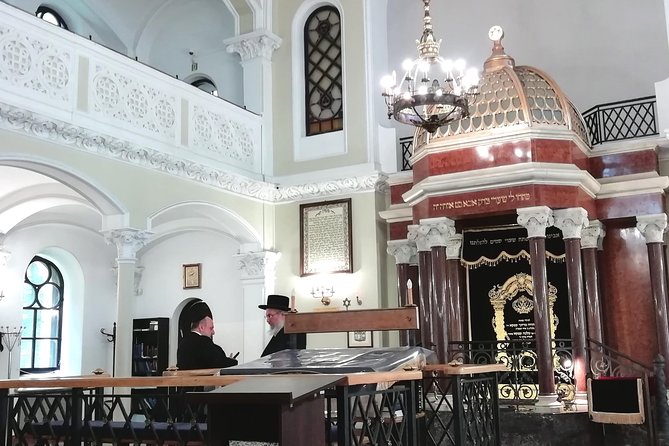
Stop 1 is Nozyk Synagogue, described as the only synagogue that survived the Second World War and is still in operation. You get about 15 minutes here, but the key point is practical: the admission ticket is not included and costs €5.00 per person.
Why this stop matters is that it anchors the rest of the route in continuity. You are not only looking at fragments and aftermath. You are standing at a functioning place, which changes the feeling of the tour from purely historical to painfully human.
If you are on Friday afternoon (from 1 p.m.), or on Saturdays and Jewish holidays, the tour is conducted without visiting the synagogue. In that case, you still get the rest of the ghetto-area sites, but you will miss this specific “surviving place” moment.
Another way through a Warsaw day:
- Warsaw: Chopin Concert in the Old Town
★ 4.8 · 2,287 reviews - Warsaw: Traditional Galar Cruise on The Vistula River
★ 4.6 · 1,640 reviews - Warsaw: Old Town Highlights Walking Tour in English
★ 4.7 · 1,516 reviews - Warsaw Concert: Chopin – Painted by Candlelights with Wine
★ 4.8 · 1,442 reviews
Próżna and Waliców, the last surviving street maze and wall fragments
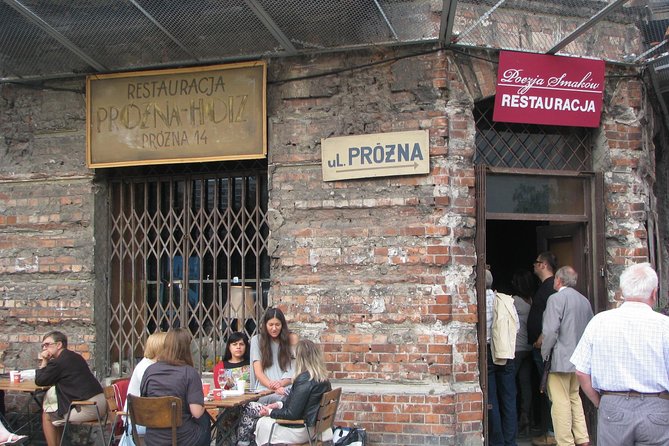
From Nozyk Synagogue, the route moves to Próżna, about 20 minutes. This is where you explore last surviving streets and neighborhoods within the ghetto area. You are not just hearing a timeline. You are looking at the layout, the closeness, and the sense of being hemmed in.
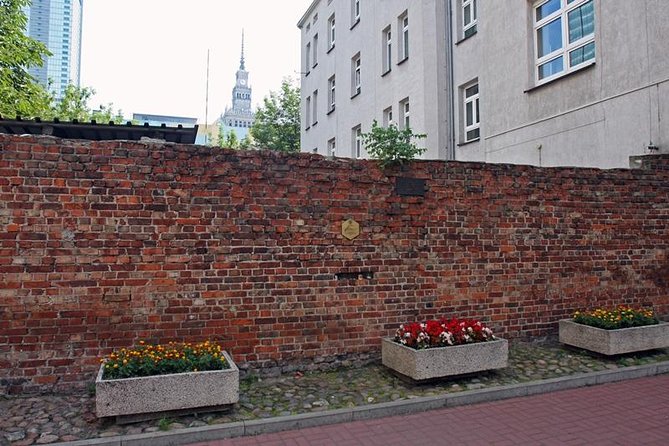
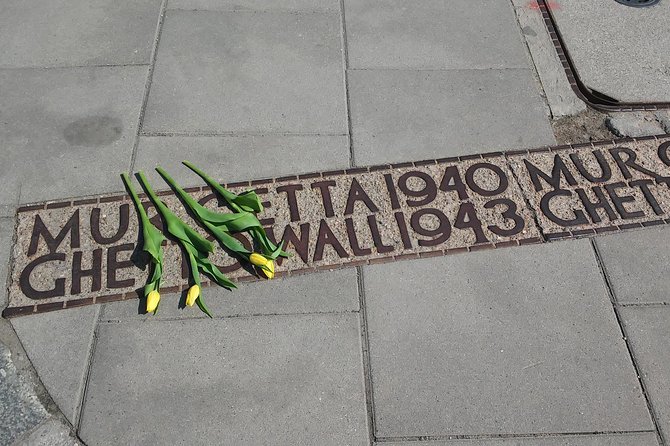
Then comes Waliców, around 15 minutes. Here you see fragments of the ghetto wall and get a concentrated lesson on how the ghetto was formed, what everyday life looked like, and how the 1943 uprising unfolded.
A small but important note: this is one of those tours where photos and maps help a lot. I like that guides often bring these visuals because it is hard to grasp scale and direction just from memory, especially when the modern city hides old boundaries.
Chłodna Street and the bridge between the Small and Big Ghetto
Stop 4 is Chłodna Street for about 20 minutes. This is a symbolic and physical hinge in the story, tied to where a connecting bridge between the Small and Big Ghetto stood.
You also hear how cultural memory ties in. The tour connects the location to authentic stories associated with Władysław Szpilman, the title figure of Roman Polański’s The Pianist.
What I like about this stop is that it links the abstract to something you can point at on the ground. You get a real-world location for a bridge that sounds like a detail until you understand how separation and movement worked in practice.
Umschlagplatz, the deportation site and why it became symbolic
Next is Umschlagplatz, about 15 minutes. This is one of the most serious stops on the route because it’s tied to where the Nazi plan of the Final Solution was put into action.
You learn about the symbolic meaning of Umschlagplatz, not just the fact that deportations happened. The difference is subtle but important: symbolism matters because it shapes remembrance, and remembrance shapes how we understand responsibility and method.
This stop can hit hard. I find it helpful that the tour does not throw facts at you and move on. It ties the place back to what you heard earlier about the tightening system and the way violence was administered.
POLIN Museum: short, focused, and centered on uprising-era meaning
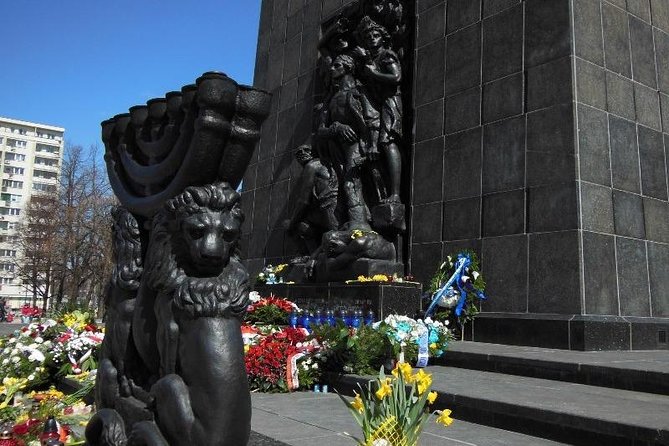
Stop 6 is at POLIN Museum Historii Żydów Polskich and is about 15 minutes during the tour. This is not the full museum day. The tour includes an introduction to the uprising period, why Jews took up arms, and who helped, plus the symbolism tied to the Ghettohelden Memorial.
In the same sweep, you get references to Willy Brandt’s Kniefall and how that moment connects to the POLIN Museum area.
Two practical notes:
- The tour does not include the main exhibition. If you want it, the guidance is to allow about 2.5 hours for the visit.
- There are specific opening hours to watch. The museum hours provided are:
- Mo., Do., Fr.: 10.00 a.m. to 6.00 p.m.
- Tue.: closed
- Wed., Sa., So.: 10 a.m. to 8 p.m.
If you plan your day, think of this tour as the guided “reading” of key sites around POLIN, and then consider a longer museum time as optional homework you do with audio support.
Willy Brandt’s knees and Miła 18, when remembrance turns into place
Stop 7 is Pomnik Willy’ego Brandta, a short 10 minutes. You stop at the spot associated with Willy Brandt’s famous knees.
Stop 8 is the Memorial at Mila 18, about 10 minutes. This is connected to the former location of a bunker at Miła Street 18 and its eventful history.
These two stops can feel like a tonal shift from street-level facts to a more reflective mode. I like that the tour does not avoid that. It gives you a moment to process without pretending the story is over.
If you need a practical tip for handling these moments: take a breath before you move on. You will be moving through emotionally heavy content in a tight loop, and your brain needs micro-pauses.
Pawiak Prison Museum, the occupation machine in human scale
Stop 9 is Pawiak Prison Museum, about 10 minutes. This is where the tour turns toward imprisonment and the Nazi occupation’s brutal infrastructure.
Even with a short time block, the stop works because the tour has already given you context: the ghetto as a system, deportations as an operation, and resistance as a desperate response. Pawiak fits as part of the same machinery, not as a random add-on.
Guide style that makes a heavy subject easier to follow
The standout from the people leading this tour is how they tell the story with both clarity and care. Guides named Marzena (often mentioned as Marzena Swirska-Molenda) and Olivia show up in the experience accounts, and the common thread is storytelling that stays respectful while still answering hard questions.
A big practical advantage is that strong guides support the talk with photographs and period maps, so you are not stuck guessing what you are looking at. It also helps that the guides tend to pace the walk so you can absorb what you see, instead of sprinting between sites.
There is also a recurring theme of empathy and responsiveness. People describe being allowed to ask many questions and getting patient answers, which helps you fill in gaps like who did what, why events unfolded when they did, and how daily life was affected.
Who should book this Warsaw Ghetto tour
This tour is a smart choice if you:
- Want a guided, place-based route rather than a museum-only visit
- Like chronological structure and want context you can connect to specific streets
- Prefer English narration and a private group setting
It is less suitable if:
- You are traveling with children, since it is stated as not suitable for them
- You do not like steady walking, because roughly 2.5 hours on foot is part of the design
- You want the full POLIN Museum main exhibition during the tour itself, because the main exhibition is not included
Should you book this Warsaw Ghetto tour?
I would book it if you want a focused route through the Warsaw Ghetto that actually helps you picture the geography, the sequence of events, and the meaning behind memorial points. The value is strongest when you use it as your foundation, then add optional museum time later at POLIN if you want the main exhibition.
I would think twice if walking is a deal breaker or if you are expecting a children-friendly itinerary. Also, build your expectations around the synagogue ticket and the fact that the POLIN main exhibition is not part of this tour. If you plan for those two points, this experience can become one of the most meaningful ways to understand Warsaw’s WWII history.
FAQ
Where does the tour start and end?
The tour starts at Próżna 11, 00-107 Warszawa, Poland. It ends at Mordechaja Anielewicza 6, 00-157 Warszawa, Poland, with the end point at POLIN Museum.
Is hotel pickup included?
Yes. Pickup is offered from your hotel in the city center. Your guide meets you with a PolinTours sign, either at the hotel reception if you are in central accommodations, or outside if you are staying in an apartment.
How long is the tour?
It is approximately 3 hours.
How much of the tour is walking versus public transport?
You are about 2.5 hours on foot and about 30 minutes using bus, tram, or underground.
What language is the tour offered in?
The tour is offered in English.
Which admission fees are not included?
Nozyk Synagogue admission is not included. The ticket fee is listed as €5.00 per person. The other stops are marked as free within the tour.
Will the synagogue always be visited?
No. On Friday afternoons from 1 p.m., Saturdays, and Jewish holidays, the tour is conducted without visiting the synagogue.
Does this include the main exhibition at POLIN Museum?
No. During the tour there will be no visit to the main exhibition at the POLIN Museum. You can add that separately with audio guides.
What opening hours should I know for the POLIN Museum main exhibition?
The hours provided are: Mo., Do., Fr. 10.00 am to 6.00 pm; Tue. closed; Wed., Sa., So. 10 a.m. to 8 p.m.
Is the tour suitable for children?
No. This tour is not suitable for children.
What is the cancellation policy?
Free cancellation is available. You can cancel up to 24 hours in advance for a full refund, and cutoff times are based on the local time of the experience.
Fresh Warsaw reviews
- Warsaw Off The Beaten Path Self-Drive Tour★ 5.0 · 18 reviews
- Private Warsaw Chopin Airport One Way Transfer★ 5.0 · 18 reviews
- Zelazowa Wola: Frederic Chopin Half-Day Private Tour★ 4.7 · 18 reviews
- Warsaw: 2-Hour Chopin’s Life Walking Tour★ 5.0 · 19 reviews
- Warsaw: melt museum Entry Ticket★ 3.5 · 19 reviews
- Deluxe Polish Food Tour Experience in Warsaw★ 5.0 · 19 reviews
- FSO Gunrange, Shooting Package US ARMY★ 5.0 · 19 reviews
- Warsaw Old Town: Spy-Themed Walk & Game with Host★ 4.5 · 19 reviews
Jewish Heritage Tours, compared.
Bike Tour of Old Town, Jewish Quarter and the Ghetto
Read our review →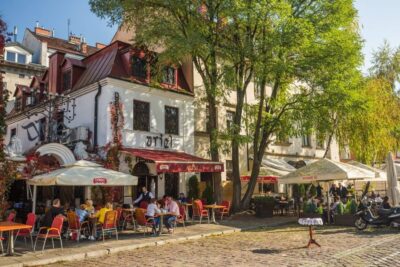
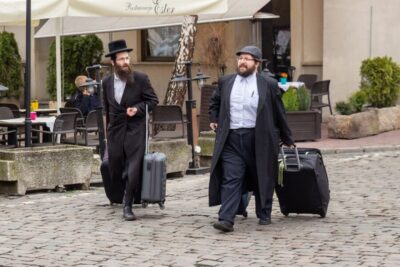
Kazimierz, Schindler’s Factory & Ghetto Guided Tour
Read our review →
Full Bike Tour – the Old Town, Jewish Qtr & the Ghetto NEW BIKES
Read our review →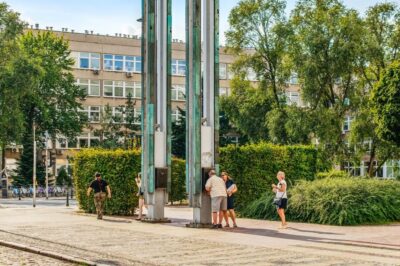
Warsaw Ghetto Private Walking Tour with Hotel Pickup
Read our review →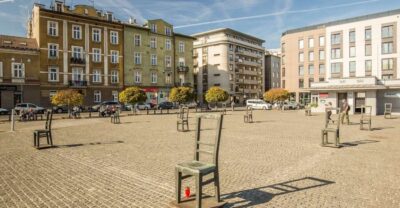
Browse the lists this tour appears in