
Reviewed · JEWISH HERITAGE TOURS
Warsaw Jewish Ghetto: private tour by retro car with hotel pickup
This tour is interesting because it gives you a focused route through the Warsaw Jewish Ghetto sites that still shape the city today, from memorials to preserved wall fragments. I like the private format with hotel pickup, and I like the retro Communist-era minibus that lets you cover a lot of ground without burning half your day on transit. One drawback to plan for is the subject matter is heavy, and the narration can feel intense in just 3 hours.
I also appreciate how the route is built for seeing. You get a walking piece at each stop, and your guide uses specific, place-based stories so the map in your head starts to make sense fast.
Do consider logistics: these vintage vehicles may have no air conditioning and some seats may not have belts, though they do have heating in winter. Comfortable shoes help too, because you will step out and walk briefly several times.
Key highlights worth clocking before you go
- Hotel pickup within 3 km of central Warsaw, then drop-off back at your place
- Retro Communist-era minibus (private to your group), with heating for cold days
- Stops that connect the ghetto’s creation, the walls, and the uprising in a single route
- You see major points like Umschlagplatz and Mila 18, not just general landmarks
- Entrance to POLIN Museum is optional and not included in the tour price
- A guide-led pace designed for about 3 hours, with short walking segments each time
A 3-hour route that keeps the story legible
If you have limited time in Warsaw, this is one of the more efficient ways to understand what happened in the Jewish Ghetto area. Instead of trying to connect scattered sights on your own, you get a guided sequence that stays anchored to real locations.
I like that the tour ends with Umschlagplatz, the deportation point. It helps the whole day feel like one arc, from early wartime confinement to the final deportations and resistance during 1943.
The duration is also a double-edged sword. Three hours is enough to get oriented and see the core sites, but it is still a lot of emotional material packed into one morning or afternoon window.
More Jewish Heritage Tours in Warsaw
- Warsaw: Warsaw Ghetto Private Walking Tour with Hotel Pickup
★ 4.9 · 369 reviews - Warsaw: Jewish History Guided Walking Tour in English
★ 4.7 · 324 reviews - Private Tour: Warsaw’s Jewish Heritage by Retro Fiat
★ 5.0 · 208 reviews
Retro-minibus pickup and what it means for your comfort
This tour is built around an easy start. If your hotel or apartment is within 3 km of central Warsaw, you get pickup and drop-off. If your place is farther or hard to reach by car, the operator will suggest a closer meeting point, and that transfer time still counts toward the tour length.
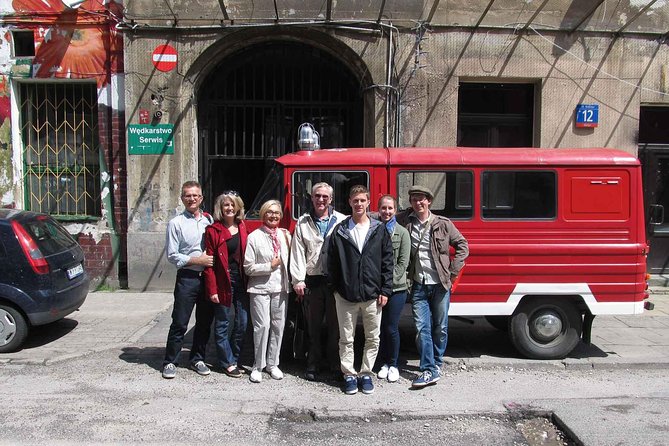
Transportation is handled by a fleet of retro style minibuses. Each vehicle holds up to 8 passengers, and this tour is private, meaning it is just your group in that minibus.
A few comfort notes matter in real life. These classic vehicles may lack air conditioning, and some do not have seat belts since they are historic vehicles (which is permitted). In winter, you should have heating, but bring warm layers anyway, because you will still spend time walking at the stops.
You can also expect your guide to use the car efficiently, with most of the explanation happening while you move between sites and during the short stops. That is a good fit if you want the story without a long day.
Janusz Korczak: the tour starts with a moral choice
The first stop is the Monument to Janusz Korczak, the Polish-Jewish educator, author, and director of a Warsaw orphanage. The point of starting here is not just biography. It sets the human stakes of the ghetto era right away.
Korczak is remembered for staying with the children in his care rather than escaping, and he was deported with them to Treblinka. Your guide uses this moment to frame Jewish life in Warsaw before the ghetto, and the way wartime policies stripped people of safety and choice.
This opening works well because it gives you a compass. Once you understand the intent of the story at Korczak’s monument, the later walls, memorials, and deportation sites land with more meaning.
Grzybowski Square and Próżna Street: where the pre-war city still lingers
From there, you move into Grzybowski Square, once part of Jewish Warsaw. This is one of those places where the area’s look today reflects its dramatic 20th-century history, not just the ghetto years.
Grzybowski is a reminder that the tragedy did not happen in a vacuum. You get context about the shift through two world wars and two totalitarian systems, and then you connect that to what still shows up in nearby streets.
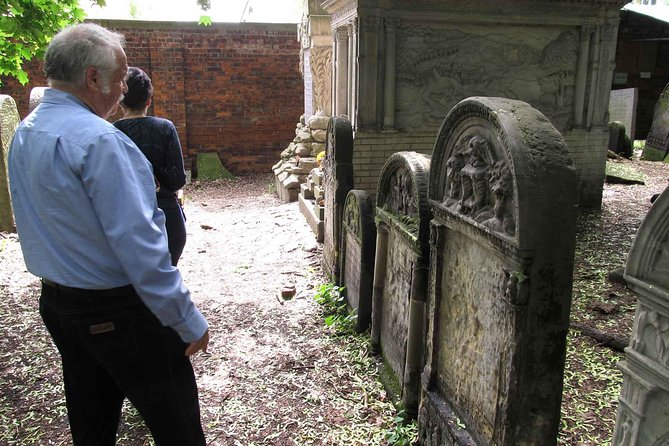
Next comes Próżna Street, also called Ulica Prozna. This is the only street in Warsaw where pre-war Jewish tenement houses have survived. When you walk this stretch, the ghetto story turns from abstract to physical, because you are looking at older housing fabric rather than only memorial signs.
Your guide also points out how Próżna becomes part of the annual Singer’s Warsaw Jewish Culture Festival. That matters, because it shows cultural continuity, not just loss.
Another way through a Warsaw day:
- Warsaw: Chopin Concert in the Old Town
★ 4.8 · 2,287 reviews - Warsaw: Traditional Galar Cruise on The Vistula River
★ 4.6 · 1,640 reviews - Warsaw: Old Town Highlights Walking Tour in English
★ 4.7 · 1,516 reviews - Warsaw Concert: Chopin – Painted by Candlelights with Wine
★ 4.8 · 1,442 reviews
Ghetto wall fragments and Waliców 14: the city boundary becomes visible
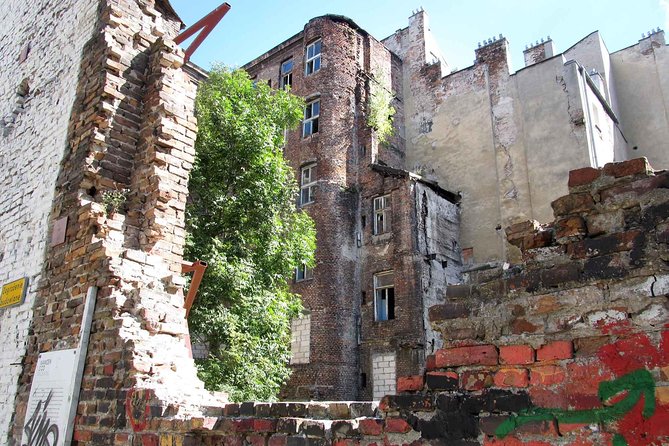
The tour then tackles one of the most important questions you will have during a ghetto visit: what did separation actually look like on the ground.
You see a preserved fragment of the Warsaw Ghetto Wall. Some wall sections are hidden between buildings, so your guide leads you to an accessible spot and explains how the boundary was sealed off from the rest of the city. Even if you know the concept already, seeing what remains makes it feel real.
Then you visit Kamienica przy Waliców 14, often described as the last visible ghost of the ghetto. Here you see a ruined tenement house, plus another preserved piece of ghetto wall. The visual contrast is stark, and your guide’s explanation helps you read those surviving scraps of structure as evidence, not just atmosphere.
This is also a part of the route where the guide’s tone matters. I recommend paying attention to how they handle specifics and responsibility. Warsaw’s wartime history can get politicized, and you will benefit from a guide who keeps the focus on victims, resistance, and documented facts.
Chłodna Street and the bridge story you will not forget
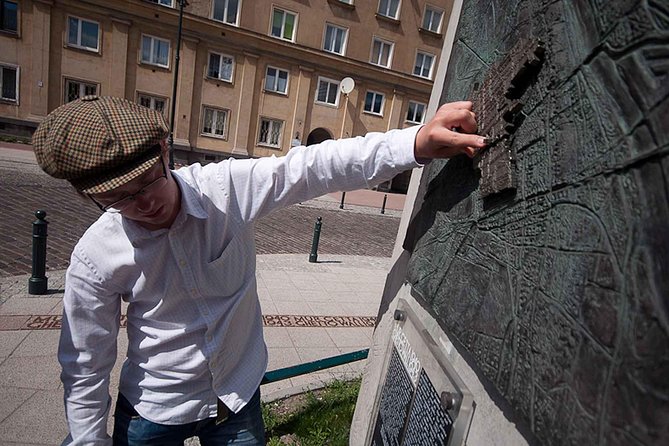
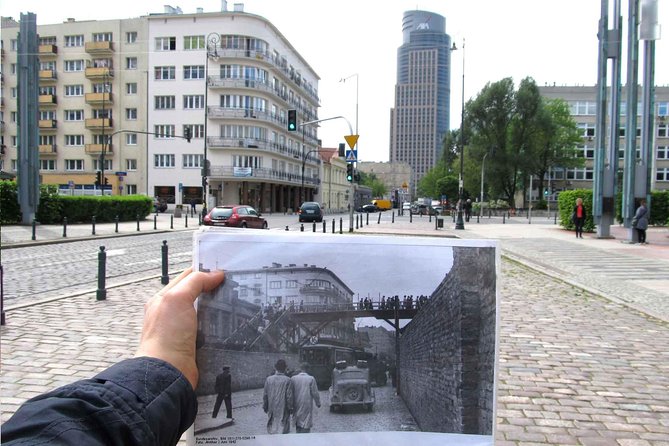
At Chłodna Street, the tour highlights a detail that makes the ghetto story feel even more complicated, and human. Your guide explains a wooden bridge built in 1941 to connect the two separated parts of the ghetto.
The key idea is that it rose above street traffic, allowing trams and German vehicles to pass underneath. It is a small structure with big implications, because it shows how the authorities controlled movement while keeping the city’s everyday machinery running around the fence line.
If you like when guides use archival photos, this is exactly the kind of stop where that helps. In prior experiences with guides for this route, images from the past are used to make the scale and layout clearer as you stand there.
Muranów’s everyday neighborhood built on rubble
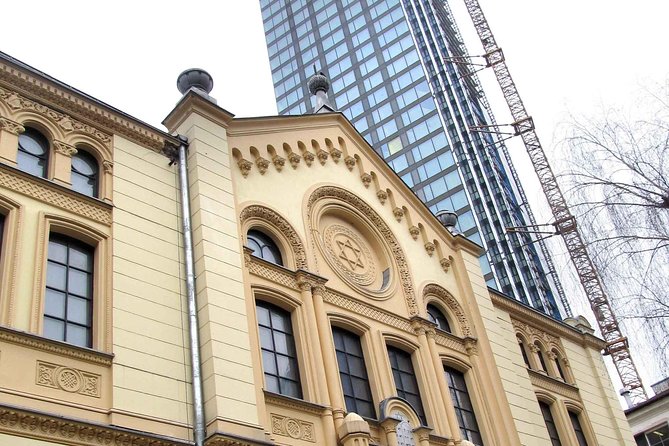
Next is Muranów, a post-war district built directly on the rubble of the destroyed ghetto. On the surface, it can look like a normal residential area. That is part of the point.
Your guide explains how the ground layers hold wartime history even when the street view looks ordinary. This stop is valuable because it helps you understand why Warsaw can feel both modern and marked by loss at the same time.
If you only see the memorial sites, you can miss this survival-and-remaking element. Muranów gives you the other side of the story: reconstruction, and the way memory sits under daily life.
Ghetto Heroes Monument and Mila 18: uprising and resistance
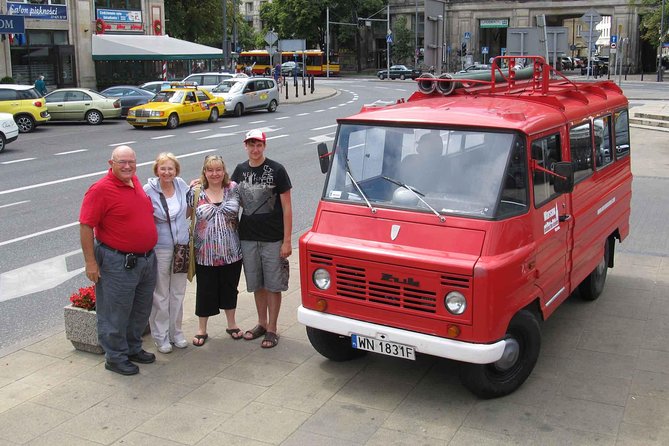
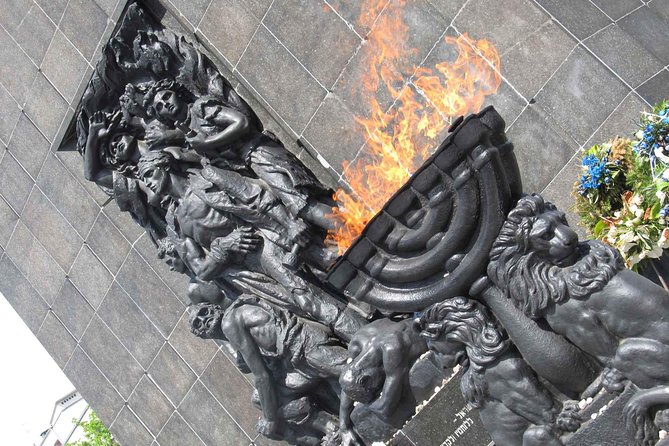
Then you visit the Pomnik Bohaterów Getta, the Monument to the Ghetto Heroes. It is located near the site of the first armed clashes of the Warsaw Ghetto Uprising in 1943.
This is where your guide ties together confinement and the turn toward resistance. The memorial area also symbolizes post-war remembrance and reconciliation through events held over decades, so you do not just walk through history. You see how Warsaw tries to keep it from fading.
After that, you go to Memorial at Mila 18, one of the most sobering stops on the route. Your guide explains that Mila 18 was used as a bunker by Jewish resistance fighters during the 1943 uprising. When German forces discovered it, many people hiding inside chose death rather than capture.
The tour also notes that their remains are buried beneath the site. I find this kind of ending within the middle of the tour important. It forces the story to stay grounded in human agency and brutal consequences, not just dates and locations.
POLIN Museum by the edge of the story, then Umschlagplatz
The tour’s POLIN Museum moment is outside the building, not inside. The POLIN Museum of the History of Polish Jews sits on former ghetto grounds, and the name connects to a legend about Jewish settlement in Poland. Entrance is optional and not included in your tour price.
This is a smart choice for a 3-hour format. You get a sense of the modern interpretive space, and you are not forced to trade guided walking time for museum time if you are already stretched.
The final stop is Umschlagplatz, the deportation point where Jews were transported to the Treblinka extermination camp. Today, it is marked by a memorial at Stawki Street, and the ending lands as a reminder of the final chapter of Jewish life in wartime Warsaw.
If you want a clear emotional arc, this is it. You finish at the place where the city’s confinement policies became mass deportation.
Price and value: when $168.58 makes sense
The price is $168.58 per person for about 3 hours with a professional English-speaking local guide, plus hotel pickup and drop-off within 3 km of central Warsaw.
Is it cheap? No. But it can be good value for three reasons.
First, you are paying for a guide who turns multiple scattered locations into one coherent route. Second, you are saving time and stress, because you do not have to coordinate taxis or buses across many points. Third, you get the “private” feel in a small vehicle, not a packed group where you cannot hear details.
This tour also has a strong track record on paper, with a 4.9 rating from 12 reviews and 100% recommended in the data you were given. That does not guarantee your experience, but it does suggest that the structure and guide-led delivery generally work.
If you care about comfort, plan for the lack of air conditioning and the potential for no seat belts. I also suggest wearing warm layers and shoes that work well on city sidewalks, because the walk segments at each stop are part of how the route teaches you the geography.
Timing and best-fit traveler
This tour offers a wide range of departure times, and it is commonly booked about 23 days in advance. If you are traveling in busy weeks, booking ahead is worth it.
You will likely enjoy this experience most if you want a structured introduction and you value seeing physical remnants like wall fragments and surviving tenement buildings. It also suits travelers who want hotel pickup, and who do not want to piece together transport for a sensitive, multi-stop route.
This is not a great choice if you are looking for a light, casual sightseeing loop. You are walking through sites connected to deportation, resistance, and mass murder. If you need a gentler pace, you might want to pair this with quiet time afterward so your brain can process.
Should you book this Warsaw Jewish Ghetto tour?
Yes, if you want an efficient, guide-led route that links major sites into a clear storyline. The biggest reason to book is the balance of seeing specific remnants, like wall fragments and Próżna Street, while also reaching the emotional anchors like Mila 18 and Umschlagplatz.
Book it especially if you appreciate logistics done for you, since pickup is included within 3 km and you get a small private minibus. If you are sensitive to political framing, consider asking your guide to keep the focus on documented facts, victims, and resistance, and do not be afraid to clarify your questions during the ride.
In short: this is a serious tour, delivered in a practical format. For many first-time visitors, it becomes the most meaningful way to understand the ghetto area in a single morning.
FAQ
How long is the Warsaw Jewish Ghetto private tour by retro car?
It lasts about 3 hours.
Is hotel pickup included?
Yes. Pickup and drop-off are available within 3 km of the city center.
Is the tour private?
Yes. Only your group participates.
What sites does the tour include?
You will visit places such as the Monument to Janusz Korczak, Grzybowski Square, Próżna Street, a preserved fragment of the ghetto wall, Kamienica przy Waliców 14, Chłodna Street, Muranów, the Monument to the Ghetto Heroes, Memorial at Mila 18, and the Umschlagplatz area. The POLIN Museum is viewed from outside.
Is the POLIN Museum entrance included?
No. Entrance is optional and not included in the tour price.
Are synagogue and cemetery visits included?
No. Entrance fees to synagogues and cemeteries are not included, and any visits are optional.
What vehicle will you ride in?
A retro Communist-era minibus. It may not have air conditioning, and some vehicles may not have seat belts, since they are historic vehicles. Heating is available for winter.
Is the tour suitable for children?
It’s for adults and children over 150 cm. For children under 150 cm, you need to contact the operator in advance to check availability of seat boosters, which are mandatory by Polish law.
Can I cancel for a full refund?
Yes. You can cancel up to 24 hours in advance for a full refund.
Fresh Warsaw reviews
- Warsaw: Wolf’s Lair & Swieta Lipka Small-Group Tour + Lunch★ 5.0 · 3 reviews
- World War II Warsaw Old Town, Military Cemetery Walking Tour★ 4.7 · 3 reviews
- Warsaw: Old Town Walking Tour, Hidden Gems & Hot Chocolate★ 4.3 · 3 reviews
- Warsaw: Explore the Vistula on Its Longest Speedboat Route★ 4.6 · 3 reviews
- 5-hour: Royal Castle, Old Town and POLIN Museum/inc.Pick-up/★ 5.0 · 3 reviews
- Majdanek – German camp from II World War – Private Tour – 1 DAY TRIP FROM WARSAW★ 5.0 · 3 reviews
- Museum of Modern Art in Warsaw★ 5.0 · 3 reviews
- Warsaw Outdoor Paintball with Transfers (all year round)★ 5.0 · 3 reviews
Jewish Heritage Tours, compared.
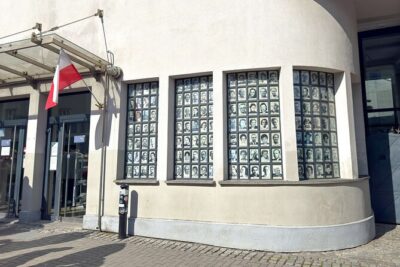
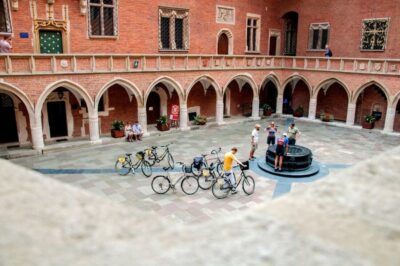
Bike Tour of Old Town, Jewish Quarter and the Ghetto
Read our review →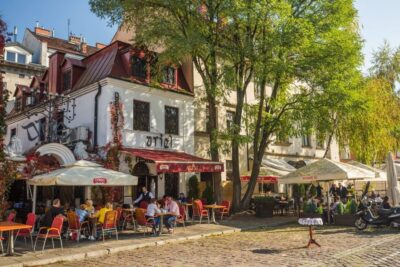
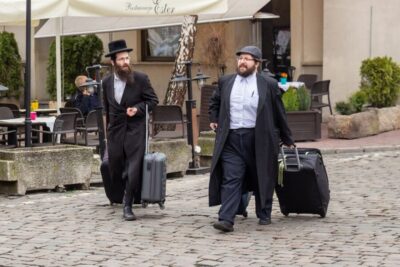
Kazimierz, Schindler’s Factory & Ghetto Guided Tour
Read our review →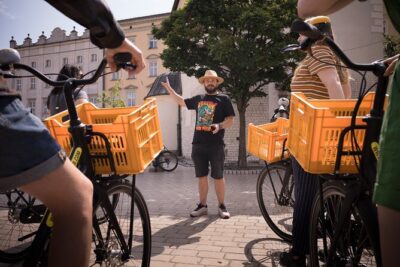
Full Bike Tour – the Old Town, Jewish Qtr & the Ghetto NEW BIKES
Read our review →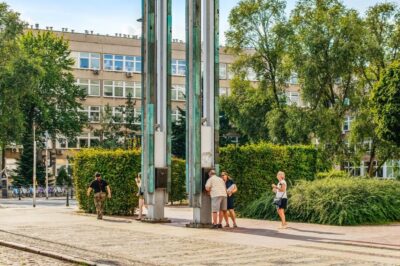
Warsaw Ghetto Private Walking Tour with Hotel Pickup
Read our review →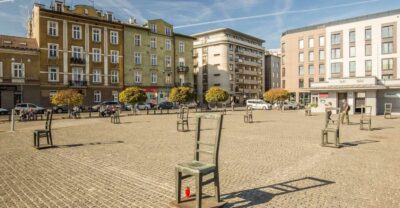
Browse the lists this tour appears in