
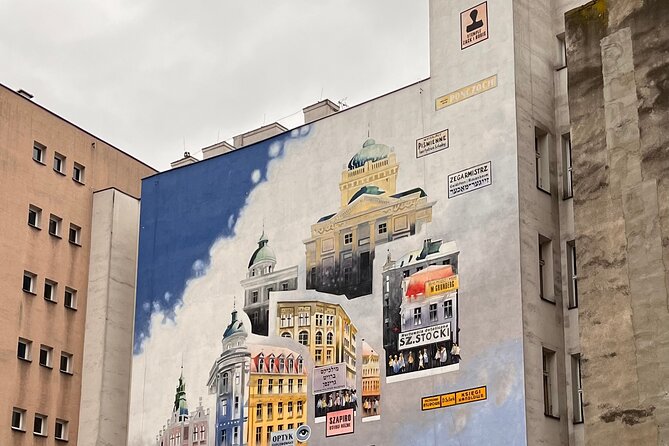
Reviewed · JEWISH HERITAGE TOURS
Past Meets Present in Warsaw’s Jewish Ghetto
Warsaw’s Jewish Ghetto can feel like one huge chapter of tragedy, but this tour makes it tangible by moving you street by street, site by site. You’ll connect the human scale of daily life with the hard, organized machinery of persecution, and it ends at places that still matter to modern Warsaw.
What I love most is how this route links big events to exact corners and buildings, so the story lands in your feet and your eyes, not just your head. A second thing I really liked is meeting the past through archives and memorials that Warsaw uses to keep memory active.
The main drawback to consider is that it is a walking tour, and it is not recommended if you have mobility or walking problems. It is also emotionally heavy in several stops, even though the guide keeps the tone respectful and human.
- Small group size (max 10) for a more personal pace
- English certified guide, with Mona’s patient, heartfelt approach
- A thoughtful sequence from everyday ghetto life to Umschlagplatz deportations
- Every stop includes free admission, so your ticket money goes to the guide
- Modern commemoration details you can actually see, like daffodils for the uprising
Walking the Warsaw Jewish Ghetto with your eyes, not just facts
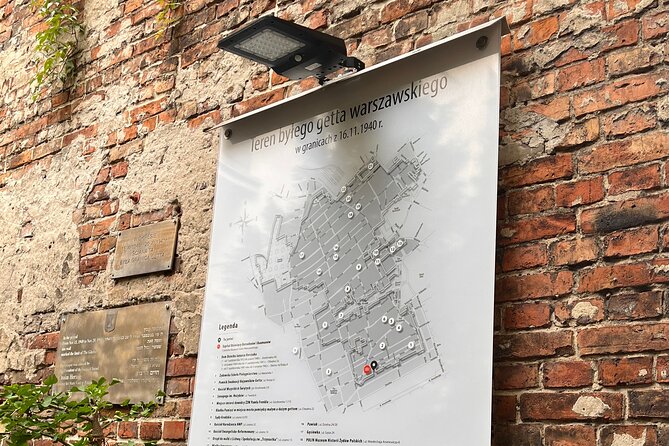
I like history tours that don’t feel like a slideshow. This one earns its value by doing the opposite: it has you look at places, then explains what happened there and why it matters today. Warsaw’s ghetto is sometimes treated as a single, sealed-off period. Here, it is presented as a chain of moments, some rooted in ordinary routines and others in sudden brutality.
You start with settings that help you understand how Jewish community life functioned under extreme pressure. Then you move into the spaces designed for control, confinement, and deportation. The effect is stark, but clear. You end with memorial work that shows how a city chooses to remember.
And the best part is the human tone. Mona, the guide I especially recommend, has a calm way of telling the story. Her style is gentle, but she does not dodge the truth. That balance shows up again and again in the way each stop is framed.
From Monument of Slowackiplac Bankowy to Willy Brandt Square: how the day flows
The walk runs about 2 hours 30 minutes, in an easy-to-follow loop through the most meaningful ghetto-related sites. You meet at the Monument of Slowackiplac Bankowy, then the tour finishes at the area of Skwer Willy’ego Brandta and Mordechaja Anielewicza. After the final stop, you get recommendations for where to find coffee nearby.
That end detail matters more than you might think. When you’ve spent time at memorials, you need a reset. The guide gives you a practical landing spot instead of just sending you off into the next thing.
Also, this is a small group, capped at 10 travelers. In a story this sensitive, a smaller group helps you ask questions and keep the pace steady.
More Jewish Heritage Tours in Warsaw
- Warsaw: Warsaw Ghetto Private Walking Tour with Hotel Pickup
★ 4.9 · 369 reviews - Warsaw: Jewish History Guided Walking Tour in English
★ 4.7 · 324 reviews - Private Tour: Warsaw’s Jewish Heritage by Retro Fiat
★ 5.0 · 208 reviews
Zydowski Instytut Historyczny: where ghetto life becomes documentary proof
Your first major stop is the Zydowski Instytut Historyczny, a key Jewish historical institute building. During the war, the building served as a center for Jewish social life in the Warsaw ghetto. Today, it supports documentary archives, which means the emphasis is on records, not rumors and not myth.
This is one of the smartest early choices on the route. If you jump straight to deportation and violence, you only get the final act. Starting here gives you an anchor: the ghetto was not only suffering, it was also human organization, community networks, and daily social life squeezed into impossible conditions.
One practical plus: the admission for this stop is free. That keeps the tour focused on the guide’s interpretation rather than adding cost at each point.
A consideration: if you are expecting quick soundbites, this stop sets up a slower, more reflective tone. Give yourself a minute to take it in.
Długa and Nalewki Street: the commerce of survival in the northern quarter
Next you walk near Długa and Nalewki Street, in the area once known as the northern Jewish quarter. This crossing area was described as one of the most lively, busy street settings, packed with shops, manufactories, and stalls.
That detail can surprise people. When we think of ghettos, we often picture only restriction. Here, you see that even under oppression, economic life continued in forms forced by reality. Stores and workshops were not just business. They were a way people tried to keep routines alive.
You’ll likely notice how the street layout shapes what you can see from the sidewalk. The guide uses that to help you imagine how people moved, where trade concentrated, and how an urban neighborhood became a pressure cooker.
Ogrod Krasinskich: a calm pocket excluded from the ghetto
Ogrod Krasinskich is the tour’s breathing point. This park, known as a quiet oasis for Warsaw residents, was excluded from the ghetto during WWII. That one fact carries a heavy undertone: the city’s geography did not treat all residents equally, and the “outside” had rules too.
In a tour filled with memorials, this park stop is valuable because it teaches you to read space. You can feel the shift from crowded street life into a place meant for rest. The guide uses the contrast to help you understand how exclusion worked in everyday terms.
This stop also gives you a chance to slow your own body down. Use it. You will likely be glad you did before you move toward the most difficult commemoration points.
Another way through a Warsaw day:
- Warsaw: Chopin Concert in the Old Town
★ 4.8 · 2,287 reviews - Warsaw: Traditional Galar Cruise on The Vistula River
★ 4.6 · 1,640 reviews - Warsaw: Old Town Highlights Walking Tour in English
★ 4.7 · 1,516 reviews - Warsaw Concert: Chopin – Painted by Candlelights with Wine
★ 4.8 · 1,442 reviews
The Polin Museum square and the Monument to the Ghetto Heroes
After the park, you reach a major commemorative space tied to the Polin Museum area: the Warsaw Ghetto Square with the Monument to the Ghetto Heroes. This is one of the most important places in the Warsaw landscape for honoring the Jews of the ghetto who resisted.
One striking detail you can observe in the way the city marks remembrance is the tradition of Varsovians placing daffodils on the anniversary of the Ghetto Uprising. It’s a small ritual, but it turns history into something living. You are not only looking at a monument, you are seeing how memory shows up in public life.
This stop is where the tour’s emotional tone becomes most explicit. The guide frames the uprising with respect for what people faced, and with clarity about what resistance cost.
A practical note: plan to spend time here even if you feel like you want to rush ahead. The meaning lands best when you slow down.
Mila 18 and the Mordechaja Anielewicza mound: leadership remembered in earth and form
Then you go to the Mordechaja Anielewicza mound at Mila 18. This commemorative mound marks the deaths of the leaders of the Warsaw Ghetto Uprising, with Anielewicz as the central name in that story.
If you like understanding events through people, this is a key moment. The guide connects leadership to decision-making under impossible conditions. You also get help putting the uprising in context as a struggle for survival, not just a headline.
You’ll feel how the site works as memorial architecture. A mound changes how you read the ground under your feet. It invites stillness. I find that effect useful on tours like this, because it makes your body quiet even before your mind finishes absorbing everything.
Umschlagplatz: the departure point for Treblinka and the scale of loss
Umschlagplatz is the stop with the sharpest, most direct message about genocide. Here you see the monument marking the departure point for Jews transported to the Treblinka Extermination Camp, where around 300,000 Jewish people died.
This is not a place for vague language. The guide’s job is to keep facts clear while also treating the subject like human lives, not numbers. The emotional weight here can be intense, and that intensity is part of what makes the tour valuable. You don’t leave with a sanitized version.
If you get overwhelmed, it is okay to take a few slow breaths. Stand where you can see the monument clearly, then let the guide finish the explanation before you decide how long to linger.
Admission is free at this stop too, which helps keep your focus on meaning rather than logistics.
Pomnik Willy’ego Brandta: why a public tribute matters
The final memorial stop is the Pomnik Willy’ego Brandta, a memorial linked to Brandt’s tribute to the murdered Jews of Warsaw and also to victims of World War II.
I like ending with this kind of site because it shifts the lens from the ghetto sites themselves to the broader act of remembrance. The guide shows how memory is shaped by public acknowledgment, not only private mourning. In a city that survived so much devastation, memorials also become a form of civic voice.
This final segment helps you leave with one last, important thought: the story is not only about what happened to people. It’s also about how later generations chose to respond, remember, and name victims.
Mona’s guiding style: heartfelt, hopeful, and brutally honest when it counts
From what I’ve learned about this tour approach, Mona’s style is a big reason people rate it so highly. She is described as gentle and warm, but also very firm about the truth. That combination is rare.
What makes her approach work is the pacing. She builds understanding step by step, and then she does not pull punches when the facts require it. You get both the human hope that people still tried to hold onto and the brutal reality of what the Nazis carried out.
You’ll likely also appreciate that the tour encourages questions. This kind of subject has lots of details people want clarified, and a smaller group setting makes it easier.
Price and value: why $112.43 can make sense here
At $112.43 per person for about 2 hours 30 minutes, this is not a bargain-basement add-on. But you are paying for a certified guide and a structured route through major historical and memorial sites.
Here’s what makes the math more attractive than it first looks:
- The tour includes admission tickets that are free for the listed stops, so you are not paying separately to enter each place.
- You get a focused route that connects multiple sites that would be harder to link together on your own, especially with the right context.
- The group size cap at 10 helps you get more guide attention than on a large tour.
Is it worth it? If you care about understanding the story clearly, yes. If you want only photos and quick facts, you might find a self-guided route cheaper. But a guided walk is what turns the sites into a coherent human narrative.
Practical tips for this walking format in Warsaw
This tour is a walking route, and it is not recommended for travelers with mobility or walking problems. If that is you, you should consider an alternative format.
A few practical things I’d do before you go:
- Wear comfortable shoes. You will be moving between sites for about 2.5 hours.
- Bring water, especially if you are visiting in warm weather.
- Plan your expectations. This is heavy material, so leave time afterward to decompress.
- Since coffee is not included, decide in advance where you want to go after you finish. The guide will point you to a spot near the end.
Also, it is near public transportation, so getting there and leaving is generally manageable.
Should you book this Warsaw Jewish Ghetto tour?
Book it if you want a guided walk that connects the ghetto’s daily life, its brutal transformation, and its modern commemoration into one understandable route. I especially think it’s a strong choice if you value a guide who can hold a respectful tone while being direct about what happened.
Skip it or choose another format if walking is a problem for you, or if you know you struggle with emotionally intense memorial sites. This route doesn’t try to soften the reality of deportation and mass murder.
If you’re the kind of traveler who likes your history grounded in place names, monuments, and the way a city remembers, you’ll likely feel you got more out of this than you paid for.
FAQ
How long is the tour?
It runs for about 2 hours 30 minutes.
What language is the tour offered in?
The tour is offered in English.
What is the group size limit?
The tour has a maximum of 10 travelers.
Where do I meet and where does the tour end?
You start at the Monument of Slowackiplac Bankowy (00-142 Warszawa) and finish at the area of Skwer Willy’ego Brandta and Mordechaja Anielewicza (01-999 Warszawa).
Are tickets included for the stops?
Admission tickets are free for the stops listed on the itinerary.
Is coffee included?
No, coffee and/or tea is not included, though you can get recommendations after the tour ends.
Is a mobile ticket used?
Yes, a mobile ticket is used.
Is the tour accessible for people with mobility issues?
It is not recommended for travelers with mobility or walking problems.
Can I get a refund if I cancel?
Yes, you can cancel for a full refund up to 24 hours in advance. If you cancel less than 24 hours before, the amount paid is not refunded.
Fresh Warsaw reviews
- Warsaw: Wolf’s Lair & Swieta Lipka Small-Group Tour + Lunch★ 5.0 · 3 reviews
- World War II Warsaw Old Town, Military Cemetery Walking Tour★ 4.7 · 3 reviews
- Warsaw: Old Town Walking Tour, Hidden Gems & Hot Chocolate★ 4.3 · 3 reviews
- Warsaw: Explore the Vistula on Its Longest Speedboat Route★ 4.6 · 3 reviews
- 5-hour: Royal Castle, Old Town and POLIN Museum/inc.Pick-up/★ 5.0 · 3 reviews
- Museum of Modern Art in Warsaw★ 5.0 · 3 reviews
- Majdanek – German camp from II World War – Private Tour – 1 DAY TRIP FROM WARSAW★ 5.0 · 3 reviews
- Warsaw Outdoor Paintball with Transfers (all year round)★ 5.0 · 3 reviews
Jewish Heritage Tours, compared.
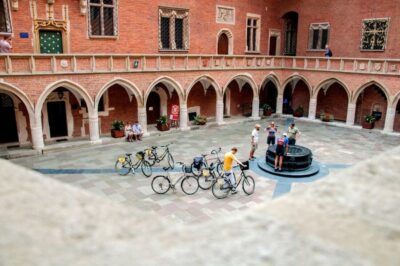
Bike Tour of Old Town, Jewish Quarter and the Ghetto
Read our review →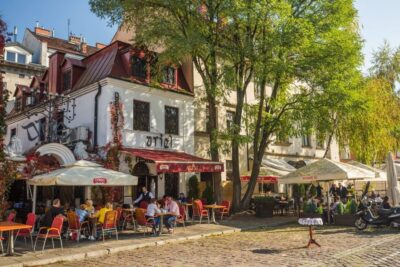
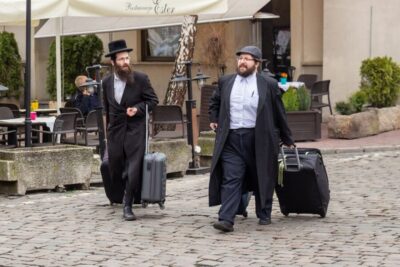
Kazimierz, Schindler’s Factory & Ghetto Guided Tour
Read our review →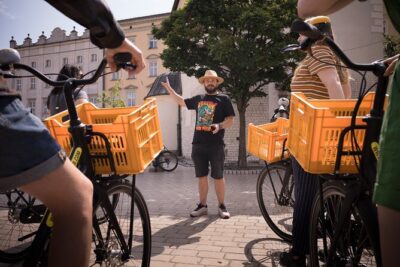
Full Bike Tour – the Old Town, Jewish Qtr & the Ghetto NEW BIKES
Read our review →
Warsaw Ghetto Private Walking Tour with Hotel Pickup
Read our review →
Browse the lists this tour appears in