
Reviewed · JEWISH HERITAGE TOURS
The Jewish Quarter – Walking Tour
Krakow’s Kazimierz can look like a quiet neighborhood of old streets and stone facades, but a guided walk turns it into a clear, human timeline. It helps you see what used to be normal here, and why it changed so drastically.
I love how the route connects centuries of Jewish life in Poland to the specific streets and buildings you can actually stand in. I also love the inclusion of Schindler’s List filming locations, so history comes with visual context, not just facts.
A possible drawback: some stops may require admission tickets, and those are not included in the price, so budget a little extra if you want to go inside every site.
Key highlights you should care about
- Licensed guide-led route that keeps the story grounded in the exact places you’re walking
- WW2 emphasis that connects everyday Jewish life to what happened in Krakow during the war
- Schindler’s List filming locations that make the setting easier to recognize on the spot
- Synagogue lineup across time, from older structures to sites tied to community practices
- Places linked to real people, including Helena Rubinstein and memorials that carry moral weight
- Wheelchair accessible walking tour, with an on-your-feet pace focused on a two-hour window
Why Kazimierz feels more real with a licensed guide
The Jewish Quarter in Krakow, often called Kazimierz, is one of those places where the buildings can look the same from a distance, but the meanings are totally different up close. This tour is interesting because it slows you down and gives you the map of what you are seeing, from medieval origins through World War II.
What I like most is that the story is not trapped in one time period. You start with how Jewish communities took root in Poland centuries ago, then you move through the physical layout of Kazimierz, the institutions like synagogues and ritual spaces, and finally the hard turn into WW2. That flow matters because it prevents the common mistake of treating the area like only a museum of tragedy. It also treats the neighborhood like it is still a lived-in place, not a set.
If you want the big picture, you get it. Poland was central to Jewish history, including a time when around 75% of the world’s Jewish population lived in Poland during the 16th century. If you want the details, you also get those, with stops tied to particular synagogues, streets, and memorials. And yes, the guide keeps steering the walk back to what you can see, not just what you can imagine.
One practical thing to note: this is a 2-hour walking tour. Comfortable shoes help. Also, you will likely encounter indoor or ticketed stops along the way, since admission tickets are not included.
More Jewish Heritage Tours in Krakow
- Krakow: Schindler’s Factory & Ghetto Guided Tour
★ 4.7 · 1,694 reviews - Krakow: Jewish Quarter and Former Ghetto Tour
★ 4.9 · 1,441 reviews - Krakow: Bike Tour of Old Town, Jewish Quarter and the Ghetto
★ 4.9 · 1,155 reviews
Price and what you actually get for $33 per person
At $33 per person for a 2-hour walking tour, you’re paying for guided interpretation, not for a long museum day. The value is in the “why,” and the licensed guide format matters here. Instead of reading a sign and moving on, you get an explanation that connects places like the Tempel Synagogue, Kupa Synagogue, and the Mikveh to the broader Jewish story in Krakow.
This is also a good value if you are trying to make your first day in Kazimierz count. If you arrive with only a guidebook and a loose plan, you can miss the connections between neighborhoods, religious spaces, and the wartime narrative. With a structured route and a guide on hand, the same streets click into place faster.
The main cost consideration is simple: admission tickets are not included and public transportation is not included. If you plan to enter paid sites, you will want to keep extra cash or card ready.
For planning, the tour runs in English with a live guide, and it is wheelchair accessible. That makes it easier to fit into a Krakow itinerary without needing special arrangements.
Entering the story at Kazimierz’s Main Square
You start in the heart of Kazimierz, at Kazimierz’s Main Square. This is a smart opening stop because it gives you orientation right away. From here, you can start imagining how community life moved through the neighborhood, not just how the neighborhood looks now.
This is also where the tour’s theme becomes clear: you cannot separate Jewish and Christian history in Krakow in any honest way. Kazimierz is often labeled as a Jewish district today, but historically it functioned as a shared space across centuries. Understanding that up front helps you make sense of why the streets and institutions are so tightly interwoven.
From the Main Square, you move into the street network that shaped daily movement. Even if you have seen photos of Kazimierz before, you’ll likely find that the tour makes the area feel less like “a place to visit” and more like “a place that used to function.”
A small practical note: since you are starting on foot, arrive ready to walk. The route is compact for a two-hour experience, but you will be moving.
Miodowa Street and the walls that frame the neighborhood
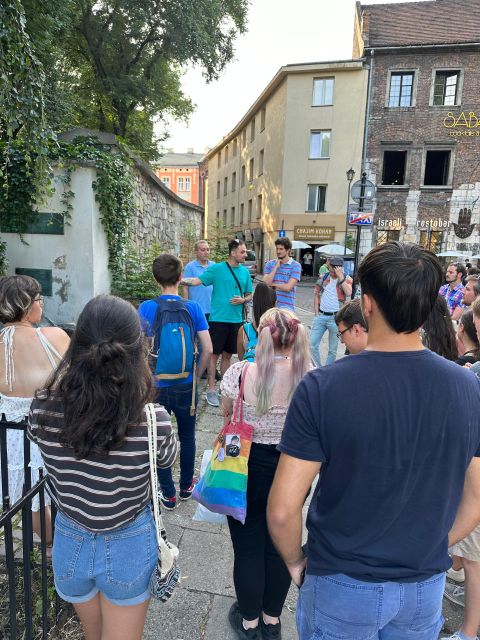
Next comes Miodowa Street, including a focus on the city walls of Kazimierz. This matters more than it sounds, because walls are a real clue to how communities formed, defended themselves, and negotiated space within a larger city.
I like that the walk doesn’t treat Kazimierz as an isolated bubble. Instead, it shows you how this neighborhood sat inside Krakow’s geography and power structure. When you understand that setting, the later stops in synagogues and cemeteries hit harder, because they were not abstract institutions. They were part of a community living in real constraints.
If you are the type who gets restless on long explanations, good news: the guide’s format is place-first. You’re standing at the street that ties to the idea you are being told. That keeps the pacing lively during the two-hour window.
More Walking Tours in Krakow
- Old Town Krakow & Wawel Castle Walking Tour
★ 5.0 · 1,508 reviews - Creepy Krakow: 2-Hour City Walking Tour
★ 4.7 · 1,131 reviews - Krakow: The Old Town Walking Tour
★ 4.8 · 794 reviews - Krakow: Kazimierz Jewish Quarter Walking Tour
★ 4.8 · 571 reviews
The Tempel, Kupa, and Izaak’s Synagogues: places with very specific roles
The tour continues with stops tied to multiple synagogues, including the Tempel Synagogue, Kupa Synagogue, and Izaak’s Synagogue. This is one of the best segments for understanding how Jewish community life was organized around institutions, not just individuals.
Here’s the value for you: synagogues can all look similar on postcards, but in real life each one has its own story and symbolism. When a guide points out what each site represented in the community, you start noticing differences in how worship and community needs were supported over time.
Even if you are not a synagogue expert, you’ll get a useful baseline: the tour helps you connect religious life with street life. The goal is not trivia. The goal is comprehension. You walk away knowing that these buildings were part of a functioning ecosystem that served prayer, learning, and communal identity.
One consideration: the tour includes both exterior-focused and possible interior-focused stops, and since admission tickets are not included, some indoor entry may cost extra. I would check on the day if you want to go inside everything.
The oldest Jewish Quarter building and the Mikveh for women
A standout stop is the oldest building inside the Jewish Quarter from the 1400s. When you see age like that in person, it changes how you interpret everything else. Instead of treating the Jewish Quarter as “historic,” you realize it is historic in the literal sense, with structures that witnessed long spans of community life.
Then the tour moves to the Mikveh, a ritual cleansing bath house for females from the 16th century. This is the kind of stop that makes the tour feel grounded and real. It shifts the story from big public landmarks to private, embodied practices.
This is also where you get a fuller view of everyday life. A lot of tours focus on dramatic events and famous names, but here the guide connects community survival to routine rituals and beliefs. Understanding the role of the Mikveh gives you a different lens for seeing the neighborhood, because you start thinking about how people prepared for religious life and community participation.
This segment is also emotionally thoughtful without being overly heavy-handed. It shows you that culture and practice are not only about ceremonies in the spotlight. They are also about repeated steps that keep a community stable.
Szeroka Street and people you recognize: Helena Rubinstein
Next is Szeroka Street, a major corridor that helps stitch the walk together. Streets like this are where the past becomes readable. You can almost picture the flow of people, commerce, and daily movement.
One of the most memorable stops tied to a real person is Helena Rubinstein’s birth place. If you have any awareness of her as a later figure in beauty and business, this stop adds a second layer to the tour. You are not only learning about Jewish religious history. You are also learning how a place produced talent and ambition that would later travel beyond Krakow.
The tour does something smart here: it doesn’t make the neighborhood only about what was lost. It also highlights what was built.
If you like learning about individuals connected to a place, this is one of the moments where your brain goes, okay, I get it. This neighborhood shaped people, not just events.
Monuments, a moral story, and the pressure of the 20th century
Later, you visit the Nissenbaum Family Foundation monument and a statue of a man who tried to stop the Holocaust. These stops matter because they turn the history into moral choices, not just dates.
I find monuments like these useful for two reasons. First, they force you to confront that history was made by people, including people who resisted evil. Second, they keep the story from becoming purely academic. Even if you already know the broad outlines of WW2, a statue like this pushes you to think about specific human actions.
From a tour-experience point of view, these stops add balance. The earlier parts help you understand culture and community life. These moments bring you closer to the crisis period where community life was attacked.
Remuh, Popper’s, and the Old Synagogue, plus the cemetery
The tour then shifts to Remuh Synagogue and the Jewish Cemetery, followed by Popper’s Synagogue and the Old Synagogue. This is another big value segment. It builds a sense of continuity, moving from worship spaces to memorial ground.
Cemeteries can be uncomfortable if you go too fast, but a guided pace helps you slow down and read what you are looking at. Even if you do not know the names or details in advance, you learn how the cemetery fits into Jewish community identity and memory.
The inclusion of multiple synagogues also prevents the “one building, one story” trap. You get a range of settings and time layers, which helps you see that Jewish life in Krakow was not one single chapter. It was a chain of generations, each with their own institutions.
One practical thing again: admission tickets are not included, so if any of these stops require paid entry, you may need to cover those costs separately.
Schindler’s List filming locations: why movie sites can still teach you
Near the end, you get numerous filming locations of Schindler’s List. I know, some people roll their eyes at movie-tour stuff. But handled well, these stops can be surprisingly useful.
Films tend to give you a visual anchor, and that helps you make sense of the physical layout of the area during WW2. When you see where scenes were shot, you start recognizing how streets, facades, and sightlines shaped daily movement in a time of danger.
The best part is that the tour does not treat the movie as the main point. It uses the filming locations as a bridge back to real history, especially the wartime sections.
If you are a fan of the film, you will probably appreciate this more than you expect. If you are not a film fan, you can still benefit because you get structured, place-based history in a compact walk.
What this tour is best for (and who might want something else)
This Jewish Quarter walking tour is a strong choice if you want a first-round orientation with real guidance. It works especially well if you:
- want to understand Jewish history in Krakow with specific stops and a chronological feel
- care about WW2 history and how it connects to everyday community life
- like guided walks that focus on place and story, not only general commentary
- enjoy seeing how a neighborhood changes when history is acknowledged properly
It might be less ideal if you want a long, museum-style experience with lots of downtime, because this is a 2-hour walking tour. Also, if you strongly prefer fully ticketed inclusions with no extra fees, the fact that admission tickets are not included may be a minor friction point.
The format also matters: it is in English with a live tour guide, and it is wheelchair accessible, so it is designed for practical participation.
If you are visiting in colder or rainier weather, you’ll want to dress for walking. The tour is short enough that a bit of weather won’t ruin the day, but you are still outside most of the time.
Should you book? My decision guide
Book this tour if you want the Jewish Quarter to make sense fast. At $33 per person for 2 hours, you are buying a guided story that connects the community’s centuries of life with the WW2 transformation, plus the added clarity of Schindler’s List filming locations.
I would strongly consider booking if you are the type who likes authenticity over guesswork. Licensed guidance matters when you’re trying to separate what you are seeing from what it meant. This tour is built around that exact idea.
Skip or adjust your expectations if you dislike walking tours, hate the idea of possible extra admission costs, or want more free time than a structured route provides.
If you are starting to plan Krakow and want one solid cultural, historical walk that gives you real footing for the rest of your trip, this is an easy “yes” to put on your list.
FAQ
How long is the Jewish Quarter walking tour?
The tour lasts 2 hours.
What is the price per person?
It costs $33 per person.
Is the tour guide English-speaking?
Yes, the live tour guide speaks English.
Is the tour wheelchair accessible?
Yes, the tour is wheelchair accessible.
Where do I meet for the tour?
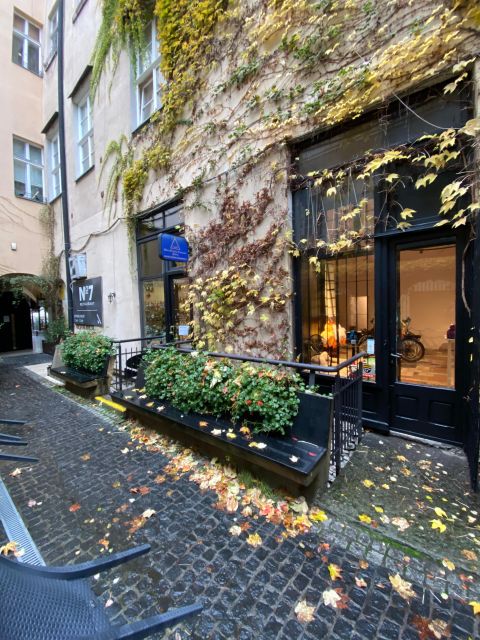
Look for Restaurant No7, go into the building. ZeeTour’s office is in the courtyard of the building where Restaurant No7 is, and it is the second shop on the left in the courtyard.
Are admission tickets included?
No, admission tickets are not included.
Is public transportation included?
No, public transportation is not included.
Can I cancel for a full refund?
Yes, you can cancel up to 24 hours in advance for a full refund.
Do I have to pay right away?
You can reserve now and pay later, meaning you can book your spot and pay nothing today.
Does the tour include licensed guides?
Yes, it includes guiding services with licensed guides.
Fresh Krakow reviews
- Krakow Zakopane Cable Car Vodka Cheese and Hot Springs Tour★ 3.5 · 3 reviews
- Krakow Skip The Line Wawel Castle & Old Town Guided Tour★ 5.0 · 3 reviews
- Krakow: Zakopane and Thermal Pools Tour with Hotel Pickup★ 5.0 · 3 reviews
- Museo Czartorisky : Visita in Lingua Italiana salta fila…★ 3.5 · 3 reviews
- Half-Day John Paul II Route Tour from Krakow★ 5.0 · 3 reviews
- Krakow: John Paul II Home & Black Madonna Sanctuary – Guided Tour★ 5.0 · 3 reviews
- 1-Hour Tour to Krakow’s Old Town by Electric Golf Cart★ 5.0 · 3 reviews
- Auschwitz and Birkenau WITHOUT GUIDE private transport from Kraków★ 5.0 · 3 reviews
Jewish Heritage Tours, compared.
Bike Tour of Old Town, Jewish Quarter and the Ghetto
Read our review →
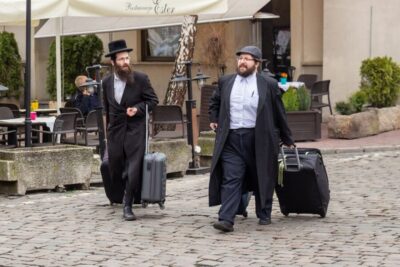
Kazimierz, Schindler’s Factory & Ghetto Guided Tour
Read our review →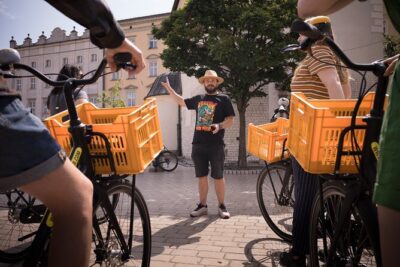
Full Bike Tour – the Old Town, Jewish Qtr & the Ghetto NEW BIKES
Read our review →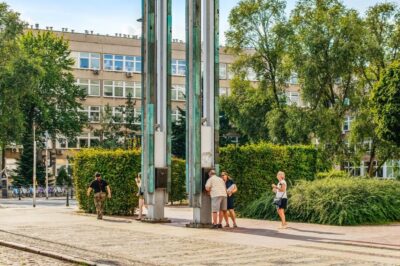
Warsaw Ghetto Private Walking Tour with Hotel Pickup
Read our review →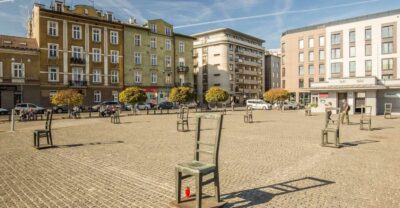
Browse the lists this tour appears in