Reviewed · WARSAW TOURS
Private 4h Tour in Warsaw Old Town
Warsaw can look pretty effortless today, but this tour explains why that calm has a cost. In about 4 hours, you walk a tight loop from Sigismund’s Column through the Old Town and into the Royal Route area, with context that makes the buildings feel personal, not just postcard-like.
I love how the route links big events to specific corners. You get that pre-war versus post-war perspective, including visuals that help you picture what changed and what had to be rebuilt. I also like the mix of sights with meaning, from the King’s symbol to the Uprising memory, without turning it into a nonstop lecture.
One consideration: it is a walking tour with many stops in a short time. If you like slow wandering and long photo breaks, build in a bit of extra time after the tour, because the itinerary keeps moving.
Key highlights you should notice
- A guided walk that ties Warsaw’s past to the exact street axis
- Free-entry major sights, so you do not rack up add-on costs
- Reconstruction stories you can actually see in the stonework and street layout
- Old Town defensive history at the Barbican, with exhibits inside in season
- 20th-century memory stops, including the Warsaw Uprising Monument and the Tomb of the Unknown Soldier
- English-only, private pacing, so your guide can answer your questions
Getting your bearings at Sigismund’s Column
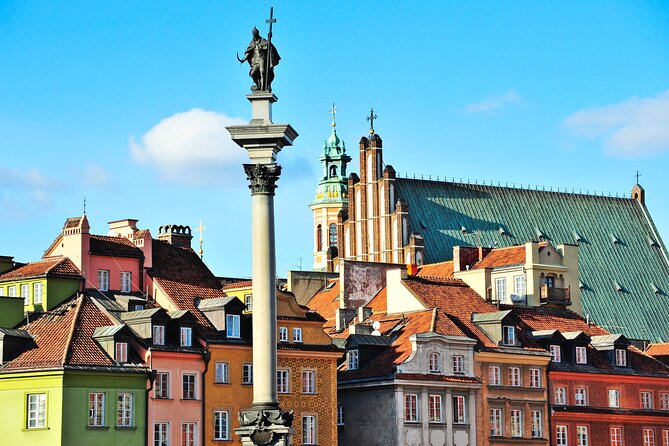
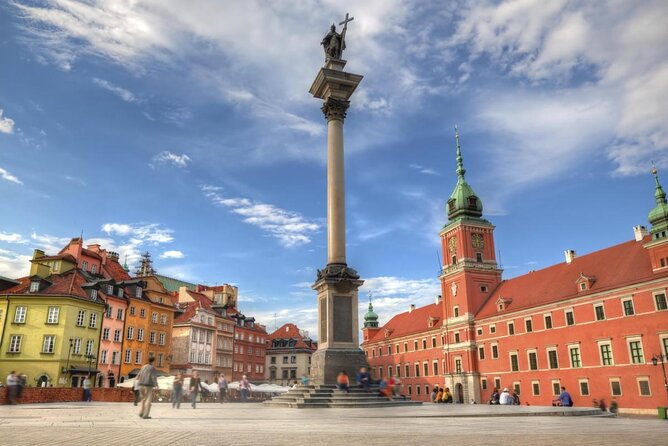
You start at Sigismund’s Column (Kolumna Zygmunta) near plac Zamkowy. It is one of Warsaw’s best-known symbols, yet it is also a reminder that monuments can be moved, broken, and rebuilt as the city changes around them.
Here’s the key idea to keep in mind while you look at it. The column is not just old, it is relocated. It was shifted when the main street axis, Krakowskie Przedmieście, was reworked in the 19th century. Later it was moved again during the post-war era when the Warsaw transport route development changed the area. Then came the big turning point: on September 2, 1944, German troops brought it down, and reconstruction was completed in 1949.
If you like history that is specific, this opening works well. You learn the symbol’s story before you even enter the Old Town zone. It also sets the tone for the tour: Warsaw’s identity has been reshaped again and again, and the city rebuilt itself on purpose.
Practical note: the column is a free stop, so you can focus on the explanation instead of spending time figuring out tickets.
More to book in Warsaw:
- Warsaw: Chopin Concert in the Old Town
★ 4.8 · 2,287 reviews - Warsaw: Traditional Galar Cruise on The Vistula River
★ 4.6 · 1,640 reviews - Warsaw: Old Town Highlights Walking Tour in English
★ 4.7 · 1,516 reviews
Old Town lessons: medieval trade, war loss, and UNESCO rebuilding
Next you move into the Old Town, where the story starts with geography. Warsaw grew from a location on a river that supported trade, straddling a main route between the Baltic Sea and the Black Sea. That made the area rich quickly, with wealthy merchants and skilled craftsmen moving in.
As the settlement evolved, the city’s face changed too. Early wooden structures were replaced by masonry tenement houses after fires. Earthen fortifications became stone walls. Institutions took root as well, including a town hall built in 1429, plus defensive towers and the barbican. And then, tragically, nearly everything was erased in 1944, with about 90 percent of the Old Town area razed.
This is where the UNESCO status matters in a real, not abstract, way. You are not just seeing pretty streets. You are seeing a rebuilt place that represents a major effort to reconstruct what was lost, and the end result is an actual, walkable historic district. The streets and building shapes help you understand what “rebuilding faithfully” means.
A small drawback to note: because the area is so important, it can feel busy if you go at a peak time. Use the guide’s pacing to keep your attention on details, not the crowd flow. The best way to enjoy this part is to let the guide point out how the area changed over centuries, then look down the streets as if they were part of a living plan.
Royal Castle Gardens, and why faithful reconstruction hits hard
From the Old Town you shift to the Warsaw Royal Castle Gardens. The Royal Castle went through a long cycle of rise, destruction, and return. It gained status as a royal residence in the 16th century, once the Masovia region joined the Crown. It was destroyed multiple times, including during major invasions and conflicts that shook Poland.
World War II is the moment that explains why you see a more modern return today. The castle was bombed early in the war and mostly destroyed by fire. Some priceless works of art were removed in time, but what remained was plundered. Then in 1944, the castle was blown up in retaliation for the Warsaw Uprising.
The rebuilding decision came much later, in 1971, and it was largely funded through community support. The site reopened to visitors in 1984 and was later placed on UNESCO’s World Heritage List as an example of successful reconstruction.
Why this stop is valuable for you: gardens give your eyes a break while the guide ties the castle story to the broader theme of Warsaw’s resilience. It is easier to process the heavy history when you are not standing in the middle of constant streetscape noise.
This stop is short on purpose, about 15 minutes, so be ready for a brisk but meaningful overview.
St. John’s Archcathedral: crypt memory and organ festival timing
St. John’s Cathedral is the kind of landmark that rewards listening. This stop is Archcathedral Basilica of St. John the Baptist, one of the oldest churches in Warsaw. The guide helps you connect the building to events that mattered, including the Constitution of May 3 oath, described as the first of its kind in Europe.
There is also a very practical angle to this church. Every Sunday at 4 PM, from July to September, concerts happen here as part of the International Organ Music Festival. If your dates fall in that window and the tour timing lines up, you may catch the atmosphere even if you do not attend a full concert.
Under the main church, you also find the crypt with tombs of historical figures. The Chapel-Mausoleum of the Primate of the Millennium is highlighted as a special interest point. Even if you do not go deep into every detail, the guide’s job is to orient you to what is historically significant.
Admission here is free in the tour setup, which means you can spend your limited time on understanding, not logistics.
More Warsaw bookings to weigh
- Private Tour: Warsaw City Sightseeing by Retro Fiat
★ 5.0 · 562 reviews - Warsaw: Warsaw Ghetto Private Walking Tour with Hotel Pickup
★ 4.9 · 369 reviews - Private Tour: Warsaw’s Jewish Heritage by Retro Fiat
★ 5.0 · 208 reviews - Private Historical Tour of Warsaw by a Retro Fiat with Pickup
★ 5.0 · 190 reviews
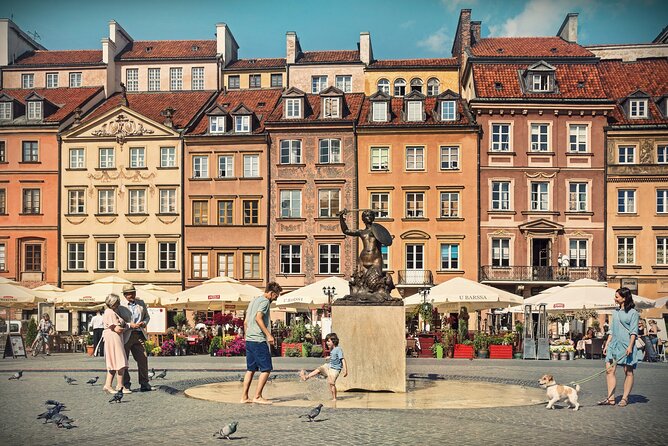
Rynek Starego Miasta and the Warsaw Mermaid in the market square
Now you step into Rynek Starego Miasta, the Old Town Marketplace. This is one of those squares where you can either treat it like a backdrop or treat it like a clue. The tour leans toward the clue side.
You get a sense of how the square developed, then notice how it is used today. The surrounding tenement buildings hold restaurants, cafes, clubs, galleries, and museums. You can feel why this area supported the city’s social and economic life.
And yes, there is a statue of the Warsaw Mermaid in the central square. It matters beyond being cute. The Mermaid is one of Warsaw’s best-known symbols, often only second to the wider Polish capital identity marker. Seeing it here helps connect the city symbol to the neighborhood that embodies Warsaw’s survival and rebuilding.
If you are the type who likes to eat well while sightseeing, this is a smart pause point. You can grab a snack after the tour and keep your eyes on the buildings the guide pointed out, rather than switching fully into shopping mode.
This stop is brief, around 15 minutes, but it sets you up for the defensive structures next.
From the Barbican to defensive Warsaw: imagining the 16th-century walls
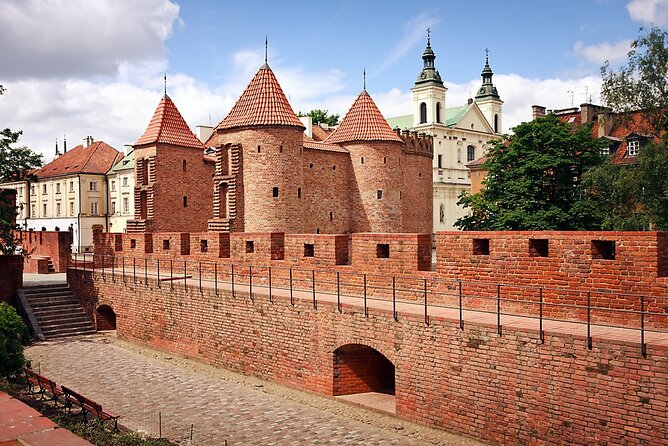
Your next major structure is the Warsaw Barbican (Barbakan Warszawski), a surviving slice of the city’s defensive system. It was built in 1548 as part of around 4,000 feet of defensive ramparts.
Today it is a different kind of stage. It draws painters exhibiting work and musicians performing for passersby. In season, May to October, there is also an exhibition inside the Barbican with historical photos and models of defensive lines and towers that no longer exist. That seasonal exhibit is what makes this stop feel extra tangible, because it helps you compare old plans with what you see now.
Why this works on a walking tour: the Old Town can feel like it is all about architecture, but defenses explain why the city was shaped the way it was. Once you understand the defensive logic, the streets and walls start to make more sense.
Even without spending long inside, you can picture what Warsaw’s heart might have looked like if the war destruction had not changed everything. The emotional impact is real here, but the guide keeps it grounded in what you can actually observe.
This part is also about 15 minutes, with time for the key orientation moments.
Warsaw Uprising Monument to Miodowa Street’s architecture and churches
The tour moves into 20th-century memory with the Warsaw Uprising Monument. It depicts insurgents in battle, tied to the uprising’s tragic outcome, including the death toll figure of around 200,000 Poles. This is heavy content, and it helps to have a guide who can keep the tone respectful and clear.
Near the Uprising area, you also pass through the story around Krasiński Palace, currently associated with special collections for the National Library. The palace is described as Warsaw’s most enchanting Baroque structure, with reliefs inspired by antique works. The park behind it is a good place for a breather, and it is also a reminder that green public space once belonged to residents regardless of social status.
Then you shift to Ulica Miodowa, a narrow street with a lively feel and older, sometimes luxurious residences. This is where the tour slows slightly in your brain, because you are surrounded by small architectural clues. Stop to look at key buildings:
- Number 24 was once Collegium Nobilium, described as the first school for the young of the ruling elite, and it now houses the Academy of Theatre.
- Number 17 is linked to the Primate of Poland, with the Palace of Warsaw’s Archbishops, erected in the 18th century.
- Number 16 is Warsaw’s only Eastern Catholic Church.
- You can also spot the Church of the Capuchins, where the altar’s right side has the heart of Jan III Sobieski, its founder.
The tour also points out viewpoints and nearby landmarks, like the Monument of Warsaw’s Heroes, commonly called the Monument of Nike.
This whole section is a strong choice if you like history that is not only political. It shows you how institutions, faith, and education sit inside the same streets as monuments of tragedy.
Theatre Square, the Tomb of the Unknown Soldier, and the Royal Route finish
After Miodowa, you reach Plac Teatralny (Theatre Square), a classic sweep of power, art, and public life. The square borders the Late Baroque Blank Palace, and behind it sits Jabłonowski Palace, which used to function as city hall before World War II. The building was razed and later rebuilt in the 1990s, but only the façade and clock tower remain from the original design. The guide also directs you to the gate under the tower so you can see the foundations laid in the 19th century.
Facing this area is the Grand Theatre, a huge Classicist building that is home to the National Opera and the National Theatre. Even if you do not attend a performance, it helps to know that the opera stage is described as one of the largest in Europe, and that the interiors include cut glass chandeliers, a spacious foyer with columns, and floor tiling you can only really appreciate if you take a careful look.
From there, you move to the Tomb of the Unknown Soldier. This is one of the most emotionally direct stops on the tour. It commemorates millions of soldiers who sacrificed themselves for Poland’s freedom. The tomb includes ashes from a defender of Lvov and soil urns from battlefields of World War I, and today it contains urns from every battlefield where Polish troops fell in the last century. An eternal flame burns next to it, maintained with a military honour guard that changes daily at noon.
You end with the Royal Route, stretching from Zamkowy Square toward Trzech Krzyży Square. The guide frames major sites you can keep exploring on your own, including St. Anne’s Church and views from its tower, Polonia House tied to Maria Skłodowska-Curie’s work, the Radziwiłł Palace (President of Poland’s residence), and Warsaw University campus buildings like Kazimierzowski Palace. The route also continues along Nowy Świat Street, an extension of Krakowskie Przedmieście.
In the tour setup, the guide leaves you at the Nicolas Copernicus Monument on Krakowskie Przedmieście, which is a smooth way to transition into self-guided wandering.
Price and pacing: what $111.75 gets you in real value
At $111.75 per person for an approx 4-hour private tour, the biggest value is not just the highlights. It is the fact that you get a professional local guide coordinating history, timing, and explanations across a dense area of symbols.
This tour includes free admission stops at the listed sites, and that matters. Even if you only pay small amounts elsewhere in Warsaw, free entries add up fast on a multi-stop walk.
You also get group discounts and a mobile ticket, which helps you avoid last-minute friction. The private format means your group stays together, and your guide can adapt the pace to how much you want to ask.
One more thing: this experience is often booked well ahead, averaging 58 days in advance. If you have fixed dates, treat that as a sign to plan early rather than relying on last-minute availability.
Language is English, and the tour is set up so most people can participate. Still, because it is a concentrated walk, it helps if you are comfortable on foot for an afternoon loop.
Should you book this private Warsaw Old Town and Royal Route walk?
Book it if you want Warsaw history that connects street level to real events, especially if you care about how the city rebuilt itself after World War II. This is the right fit for first-time visitors who want the essential landmarks in a smart order, and for repeat visitors who want deeper meaning behind the familiar squares and monuments.
Skip or adjust expectations if your priority is long, independent exploration. The route is focused, with many stops in about four hours, so you will need to save extra time after the tour if you want to linger in cafes or revisit buildings you found especially compelling.
FAQ
Where does the tour start and where does it end?
It starts at Sigismund’s Column at plac Zamkowy, 00-001 Warszawa. It ends on the Royal Route area at Krakowskie Przedmieście (your guide leaves you at the Nicolas Copernicus Monument).
How long is the private tour?
The duration is about 4 hours.
Is the tour in English?
Yes. The tour is offered in English.
Do I need to buy entry tickets for the stops?
In the tour setup, the listed admissions are marked free, so you should not need separate paid entry tickets for these stops.
What is included in the price?
The tour includes a professional local guide.
Is this tour private?
Yes. It is private, so only your group participates.
Do I get a mobile ticket?
Yes, the tour includes a mobile ticket.
Is it easy to reach by public transportation?
The tour is described as near public transportation.
What is the cancellation policy?
You can cancel for a full refund up to 24 hours in advance of the experience start time.
Who is this tour best for?
It is designed so most travelers can participate, and it works well if you want a guided walk through major Old Town and Royal Route landmarks with a clear historical storyline.
Fresh Warsaw reviews
- Warsaw: Wolf’s Lair & Swieta Lipka Small-Group Tour + Lunch★ 5.0 · 3 reviews
- World War II Warsaw Old Town, Military Cemetery Walking Tour★ 4.7 · 3 reviews
- Warsaw: Old Town Walking Tour, Hidden Gems & Hot Chocolate★ 4.3 · 3 reviews
- Warsaw: Explore the Vistula on Its Longest Speedboat Route★ 4.6 · 3 reviews
- 5-hour: Royal Castle, Old Town and POLIN Museum/inc.Pick-up/★ 5.0 · 3 reviews
- Museum of Modern Art in Warsaw★ 5.0 · 3 reviews
- Majdanek – German camp from II World War – Private Tour – 1 DAY TRIP FROM WARSAW★ 5.0 · 3 reviews
- Warsaw Outdoor Paintball with Transfers (all year round)★ 5.0 · 3 reviews
Warsaw Tours, compared.

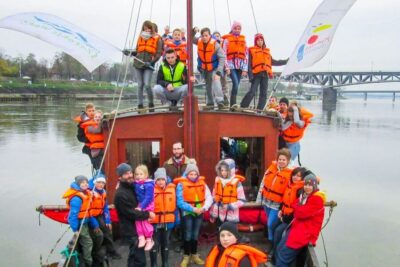
Traditional Galar Cruise on The Vistula River
Read our review →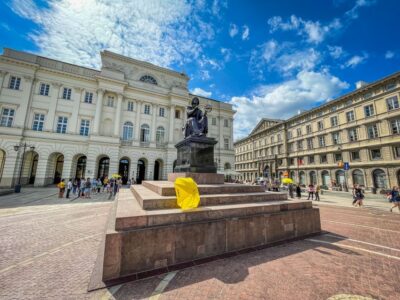
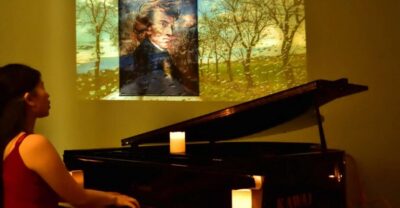
Warsaw Concert: Chopin – Painted by Candlelights with Wine
Read our review →
Highline Warsaw Entry With 360° Views & Rooftop Bar
Read our review →
POLIN Museum of the History of Polish Jews Ticket
Read our review →