
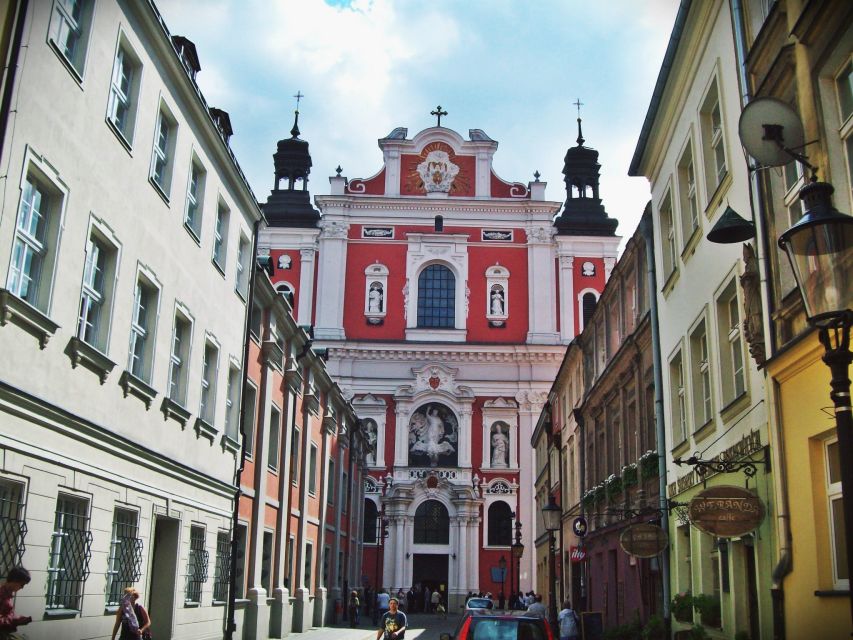
Reviewed · JEWISH HERITAGE TOURS
Poznan: Private Jewish Heritage Tour
Poznan is one of those cities where Jewish life is written into everyday streets, but the footprints can be easy to miss. This private 3-hour walk uses the city itself as your guide, starting at the New Synagogue and moving through squares, monuments, and the places where community life once centered. I like the fact that it is fully private, so your questions do not get squeezed between other groups.
My favorite part is how the route connects normal city locations to hard history, especially the forced-labour camp memorial sites and the World War II synagogue destruction. If you want a quick hit, this is great, but there is one consideration: it is a walking tour, and entrances are not included, so you may want to budget a little extra depending on which stops require tickets.
Key highlights worth your attention
- A mapped trail of Jewish monuments across central Poznan, including key squares and community landmarks
- Holocaust-era stops focused on forced labor and German occupation, not just general background
- A walk through the former Jewish quarter, so the old geography feels real
- Akiva Eger Square and the Jewish cemetery connection, including finding his grove
- The World War II synagogue reality check, including what was destroyed and what remains
- A guide-led “connect-the-dots” experience, with room for questions (including English, Spanish, German, Russian, Polish, French, and Italian)
A 3-hour private walk that ties Jewish life to real city streets
This tour works because it is short enough to feel focused, but detailed enough to give meaning to each stop. You get a live guide, and you move from landmark to landmark at a pace that lets you actually read what is in front of you instead of just checking boxes.
I especially like tours that treat street names, squares, and memorials as historical evidence. Here, that matters because much of what you will see in today’s Poznan is fragmented or scattered. The guide’s job is to stitch those pieces into a readable story, from pre-war community life through forced labor and wartime destruction.
More Jewish Heritage Tours in Poznan:
- Krakow: Schindler’s Factory & Ghetto Guided Tour
★ 4.7 · 1,694 reviews - Krakow: Jewish Quarter and Former Ghetto Tour
★ 4.9 · 1,441 reviews - Krakow: Bike Tour of Old Town, Jewish Quarter and the Ghetto
★ 4.9 · 1,155 reviews
Is it good value at about $16 per person?
At $16 per person for a 3-hour private guided walk, the value is in access and interpretation, not in museum ticketing. Since entrances are not included, you should think of this as paying for context and guiding expertise, while any site fees (if a stop requires them) are your extra cost.
For a city where a lot is outside, outdoors, or only partially preserved, paying for a guide who can point out what you would otherwise miss is usually the best bargain. This tour leans into that.
A small practical note
One review flagged that the listed meeting spot on Stawna 10 can be confusing in practice, with the actual arrival spot ending up about 50 meters away from what people expect. My advice is simple: show up on time, and if you do not see your guide immediately by the New Synagogue entrance you expect, take a quick look a short distance down the street before you panic. It is a city walk, not a gate-check inside a huge venue.
Meeting at the New Synagogue on Stawna 10, with your name ready
You meet your guide at the New Synagogue on Stawna 10 Street, and the guide will be holding a sign with your name. That sounds basic, but it helps a lot when you are in an unfamiliar neighborhood. It also sets the tone: you start with a landmark that signals this is not a vague history lecture.
Because it is private, you can also use the first minutes to calibrate. If you have family ties, or you want a more personal angle, ask early. If you are short on time and just want the core story, say so. A good guide will adapt the order and emphasis on the fly.
More Historical Tours in Poznan:
- Gdansk: City Cruise on Historical Polish Boat
★ 4.8 · 2,913 reviews - Warsaw: POLIN Museum of the History of Polish Jews Ticket
★ 4.7 · 1,142 reviews - Gdańsk: Sunset Cruise on a Historic Polish Boat
★ 4.9 · 977 reviews - Gdańsk City Sights & History Guided Walking Tour in English
★ 4.8 · 876 reviews
Former Jewish quarter: community institutions, social life, and the city’s memory
The tour starts by leading you into the former Jewish quarter, once the center of social and religious life for Poznan’s Jewish community. Even if you know little to begin with, this part is valuable because it teaches you how to look.
You will see the headquarter of the Jewish community and the New Synagogue area, then you move toward Akiva Eger Square. City squares like these are not just scenery. They are where people gathered, decided things together, and built identity in public.
Why the “former quarter” framing matters
When Jewish heritage survives as scattered remnants, it helps to be reminded that the community was once cohesive and urban. Walking through the quarter gives you a mental map, and your later stops on cemeteries and memorials will feel less abstract.
A drawback to keep in mind
Because this is a city walk, you spend plenty of time outside and moving between sites. If you have mobility limits, the tour is listed as wheelchair accessible, but you will still want to think about how comfortable you are with walking segments between points. Comfortable shoes are not optional here.
Wolnosci Square and the meaning of a place of rest
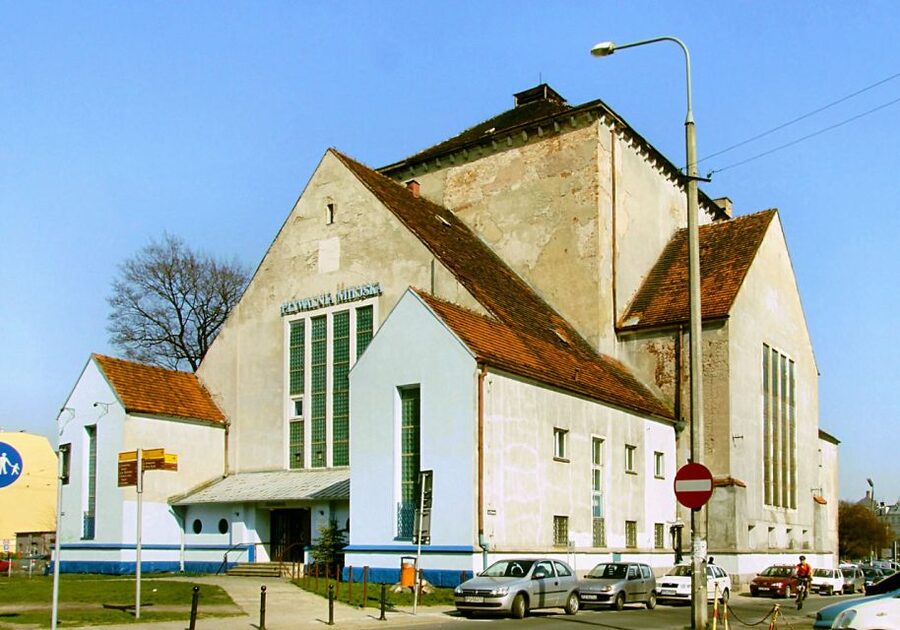
Next you stop at Wolnosci Square, described as the former place of the eternal rest of Poznan’s Jews. Even without going into fine detail, that kind of stop changes how you experience the walk. You notice the contrast between public life in town squares and the private dignity of burial spaces.
This stop is also where the tour’s balance shows. It does not only talk about the past as architecture. It emphasizes how community life included mourning, memory, and an idea of belonging that lasted beyond the individuals.
The City Stadium and the forced-labour story under German occupation
The tour then shifts into wartime history with a stop at the City Stadium, which witnessed the tragic fate of Jews during German occupation. This is not a generic Holocaust talk. It is anchored to a specific place in Poznan, which makes the story harder and more real.
From there, you reach the Monument to the Victims of the Labor Camp for Jews in Poznan. That monument is one of the most important stops in the whole experience because it connects the personal scale of tragedy to a visible, named remembrance.
How to make this part land emotionally
This is where I’d suggest you ask questions if you have them. If your family history connects to Poznan or you just want clarity on what happened locally, your guide is the right person to ask. The format is private, so you are not stuck listening politely while thinking of your next stop.
Also, give yourself a minute at each memorial. If you rush through, you miss what these sites are trying to communicate: forced labor was not an accident of war. It was a system, and the system has a location in this city.
The Square of the Righteous Among the Nations
The next major theme is recognition and remembrance, at the Square of the Righteous Among the Nations. This is a different emotional register than the forced-labor memorials, and that contrast matters.
You do not only leave the tour with the weight of what happened to victims. You also see a space that honors people who acted with moral courage. For many visitors, this makes the story feel more complete, because it acknowledges human choice, not only human harm.
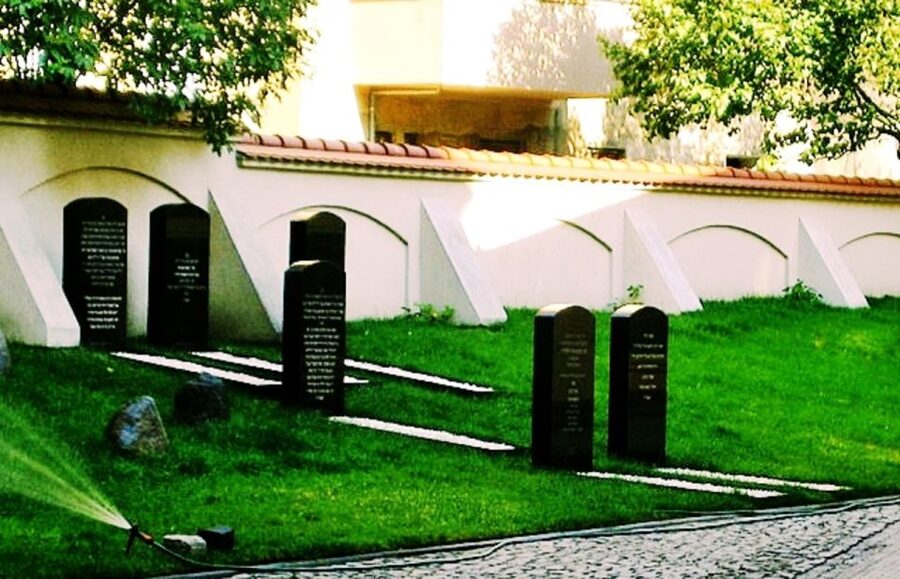
Akiva Eger Square and finding his grove in the Jewish cemetery
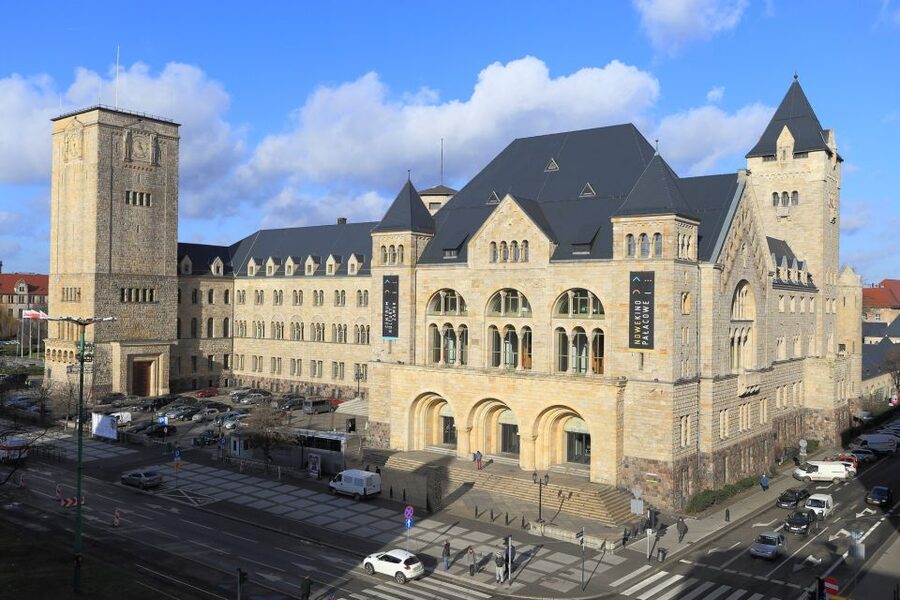
One of the most interesting parts of this tour is the focus on an individual name that shaped community identity: Akiva Eger. The itinerary includes learning who Akiva Eger was and then finding his grove on the Jewish cemetery.
This is where heritage tours can either feel like a checklist or feel personal. A cemetery stop usually does the second one, because it turns history into something specific: names, places of memory, and continuity.
Why this stop is a highlight even if you know zero Jewish history
Even if you start with no context, the guide’s explanation helps you understand why a single scholar or teacher could leave an imprint strong enough to be marked in a cemetery setting. That is not trivia. It is how communities preserve intellectual and spiritual lineage when other structures are gone.
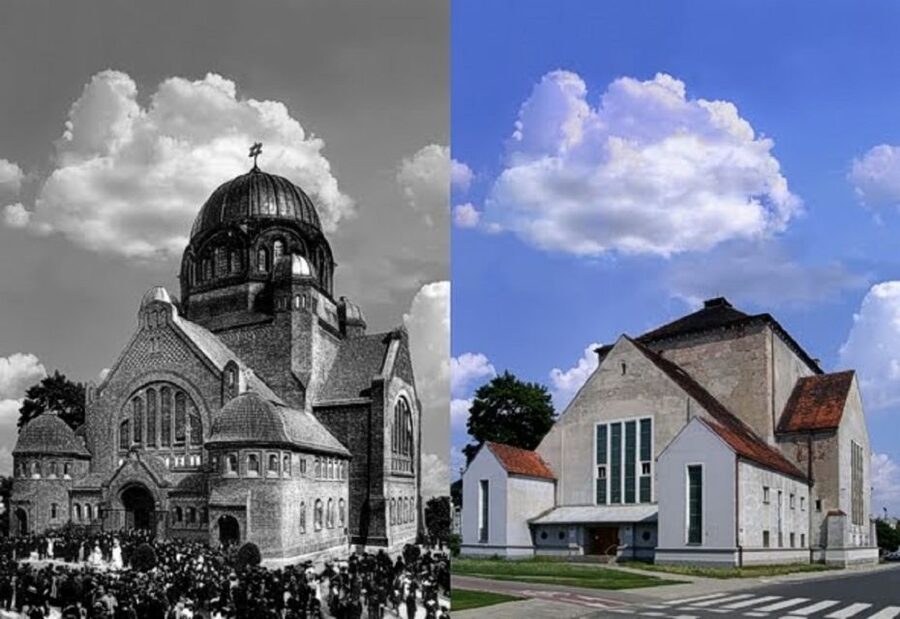
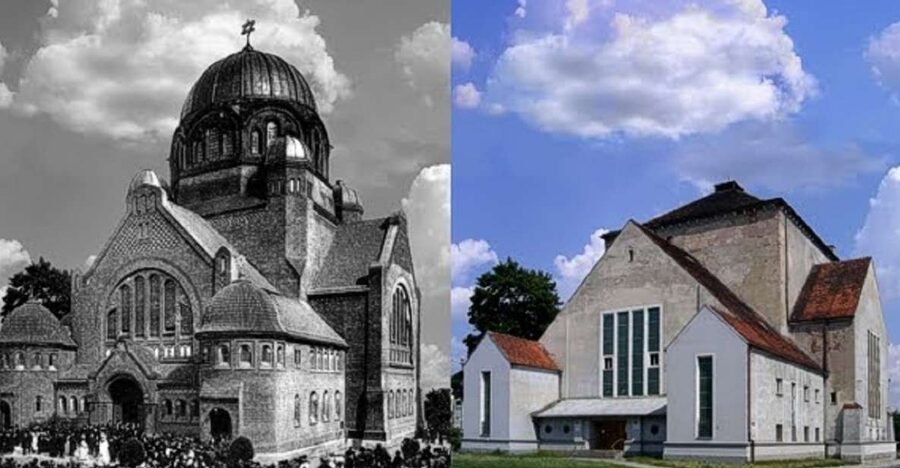
Synagogue destroyed during World War II, and what you can still see today
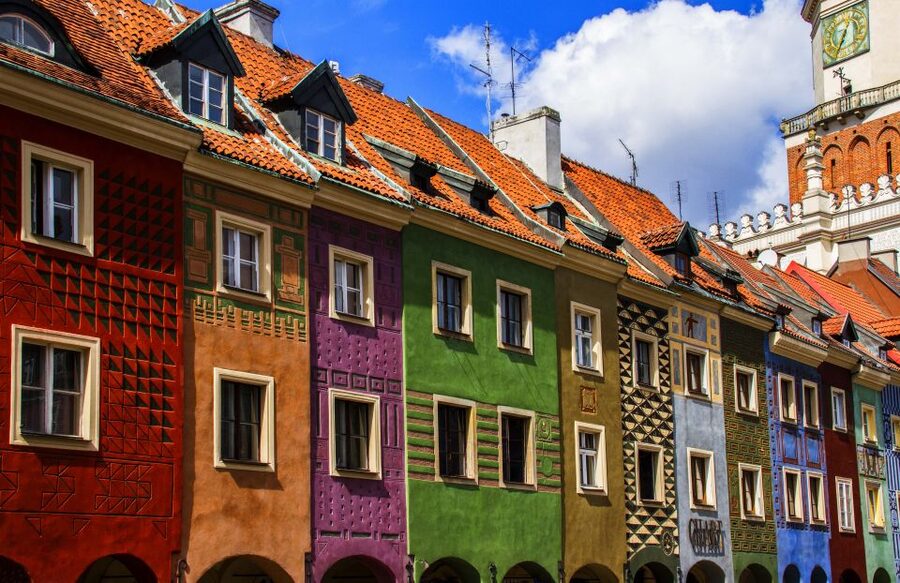
The tour includes seeing the synagogue destroyed by Germans during World War II. This matters because it prevents a common mistake: treating heritage only as what has survived neatly.
Instead, you see absence as part of the story. What remains may be limited, but the point of the stop is to help you understand what was lost and why that loss was systematic, not accidental. Even if you cannot access much inside, the guided explanation gives you a framework for reading what is visible.
A guide can make or break this kind of history tour
The strongest reviews in the information you provided point to one thing repeatedly: the guides have real passion and strong research. Guides named Martin and Matteusz are specifically mentioned, and both were described as giving detailed insights and answering questions with energy.
What you should take from that as a traveler: this is not a “walk, point, move on” tour. It is built around conversation. If you like to ask follow-up questions, this format suits you well.
Also, one review mentioned a surprise video by drone at the end. That is not something you should assume every guide will do, but it tells you something about how guides sometimes add extra layers beyond the standard route.
Who this tour is best for
This tour is a smart match if you:
- Want a short, structured Jewish heritage walk with a clear storyline
- Appreciate learning history anchored to specific locations in Poznan
- Prefer private pacing so you can ask questions about what you see
- Have family connections to the region and want the city to make more sense
It is also a good choice for first-timers in Poznan. The route hits major reference points, including the former Jewish quarter, memorial sites, and cemetery context, all in just 3 hours.
Should you book this private Jewish Heritage Tour in Poznan?
I think you should book it if you want a focused, guide-led story that connects community life, wartime persecution, and remembrance in one walking route. At $16 per person with a live guide and a private format, it is good value for the interpretation you get.
Pass on it or adjust expectations if you are hoping for lots of inside museum time, because entrances are not included and the tour is built around outdoor and city-based stops. Also, if you are extremely sensitive to heavy World War II themes, prepare for that emotional weight when you reach occupation and labor camp memorials.
If you want to understand Poznan’s Jewish heritage in a way that makes the streets feel meaningful, this private walk is one of the most direct ways to do it.
Fresh Poznan reviews
- Poznan Private Vodka Tasting Tour★ 5.0 · 3 reviews
- Poznan Old Town and Croissant Museum Private Walking Tour★ 5.0 · 3 reviews
- Poznan: Private Polish Beer Tasting Tour★ 4.6 · 3 reviews
- Poznań: Cathedral Island and Śródka District Guided Tour★ 5.0 · 4 reviews
- Palace, Castle and Ancient Oaks – Rogalin and Kórnik guided tour from Poznan★ 5.0 · 4 reviews
- Discover Poznan: Walk, Take a tram and have a traditional snack★ 5.0 · 4 reviews
- Poznan: City and Brewery Private Walking Tour with Beer★ 4.6 · 5 reviews
- Private 3-hour Poznan Old Town Tour★ 5.0 · 5 reviews
Jewish Heritage Tours, compared.
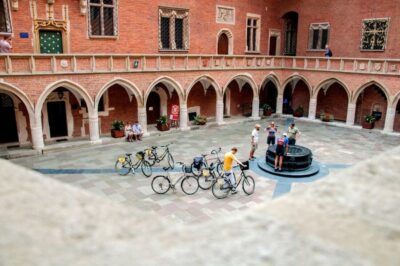
Bike Tour of Old Town, Jewish Quarter and the Ghetto
Read our review →
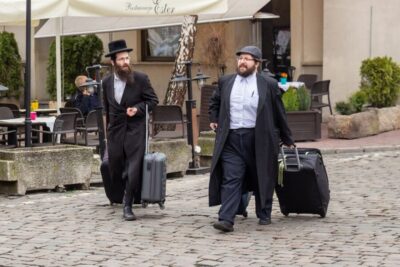
Kazimierz, Schindler’s Factory & Ghetto Guided Tour
Read our review →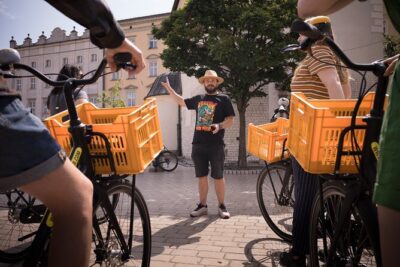
Full Bike Tour – the Old Town, Jewish Qtr & the Ghetto NEW BIKES
Read our review →
Warsaw Ghetto Private Walking Tour with Hotel Pickup
Read our review →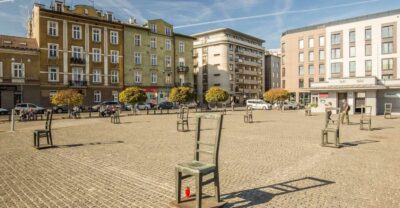
Browse the lists this tour appears in