
Reviewed · JEWISH HERITAGE TOURS
Krakow: Old Town – Kazimierz – Ghetto by Electric Golf Cart
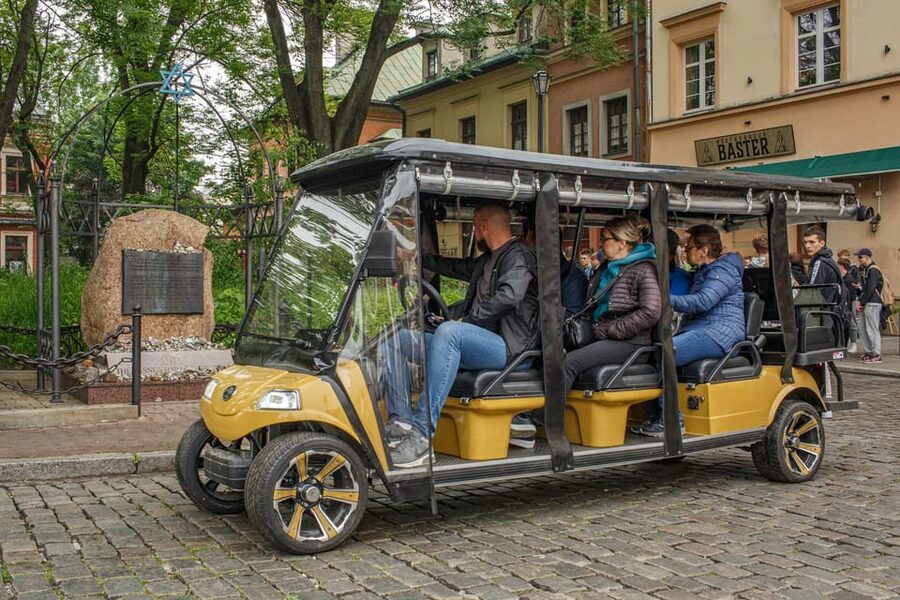
Krakow can feel like a lot on your first day, so what makes this experience interesting is the way it gives you a fast, structured overview from a quiet electric golf cart. I really like two things right away: you get live guiding plus an audio system that stays with you, and you see the city through three key areas rather than just one neighborhood. The only drawback to keep in mind is that it is a moving tour, so you will cover many stops in 150 minutes and you will likely want to return for longer looks later.
I also like the human side of it. It is a group trip, which is a simple way to meet new people, and you can choose Polish or English so the explanations land comfortably. On top of that, the ride itself changes how you experience Krakow, because you are getting a continuous city flow instead of hopping between far-apart points on foot.
One more practical note. The operator has strict rules around who it is suitable for, including age and height limits, and there are also limits on what you can bring on board. If you fit the criteria and travel light, it is an efficient way to get your bearings fast.
Key points I think you will care about
- 150 minutes that links Old Town, Kazimierz, and the former ghetto area in one run
- Live guide plus audio system, available in Polish and English
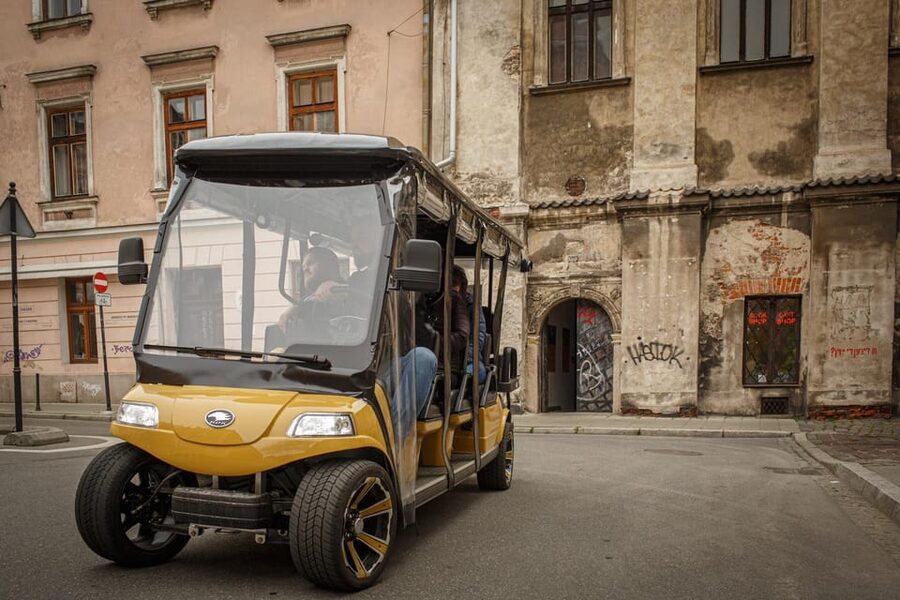
- Electric golf carts for an easier way to move while still seeing major landmarks
- Big-picture city orientation using a guided storyline across neighborhoods
- Strong guide performance, with reports of guides like Radar and Natalie keeping things clear and engaging
- Strict onboard rules (no smoking, no alcohol, and no bags), so pack smart
Sliding into Krakow by electric cart: why this format works
I like tours that help me stop guessing. This one is built for orientation, and you feel that from the start because you are not starting with a random checklist of stops. Instead, the driver and the tour guide are setting you up with a route that ties together Krakow’s Old Town, Kazimierz, and the Podgorze area through a consistent story.
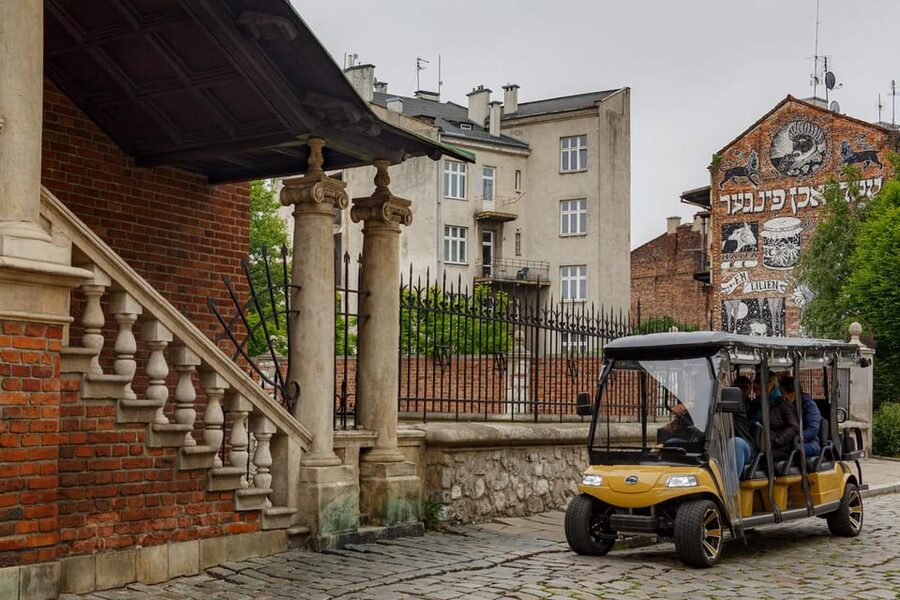
The electric golf cart matters more than it sounds. When you are riding, the city stays in motion, and you keep context. You are not losing time crossing between far points, and you are not relying on your feet to cover every turn. That is why this kind of tour is so good early in a trip, when your mental map is still forming.
It also helps that the tour is paired with an audio system. You can catch explanations even if you drift a little while looking around. And if you want to focus, you can, because the audio keeps the pacing steady while the live guide handles the bigger narrative.
A personal note from the booking feedback: I noticed a pattern that the guides stand out. One report praised Radar as a super guide, and another highlighted Natalie as gentle and very competent. That combination, a clear live guide plus reliable audio, is exactly what you want for a first pass through a city.
More Golf Cart Tours in Krakow
- Krakow: City Sightseeing Tour by Electric Golf Cart
★ 4.5 · 3,264 reviews - Krakow: City Sightseeing Tour Eco Electric Buggy Golf Cart
★ 4.7 · 3,143 reviews - Krakow: Extended City Sightseeing Tour – Eco Buggy Golf Cart
★ 4.7 · 794 reviews
Price and value: what $41 gets you in real terms
At $41 per person for 150 minutes, this is not a bargain you should ignore. It is priced like a structured guided experience, and that is what you are buying: a live guide, an electric vehicle ride, and an audio guide that covers a long list of landmarks.
Here is how I think about the value. If you tried to replicate this yourself, you would spend money on transport, then spend time coordinating walking routes, then spend extra effort just to line up explanations for multiple neighborhoods. Paying for a guided route is really paying for clarity and speed.
Also, because it is a group trip, the cost is shared. If you are traveling solo, you still get the benefit of a guided setup, and one review described a case where the guide ended up being alone with the guest, which made the tour feel extra special. You should still expect a group pace, but that detail tells you the guide quality can translate into a more personal experience when circumstances allow.
Where the price can feel less worth it is if you are only in Krakow for a short stop and you already know the city well. If you want deep time inside museums or long, unhurried wandering, this kind of cart tour may feel too efficient.
Where you meet and what to bring for a smooth start
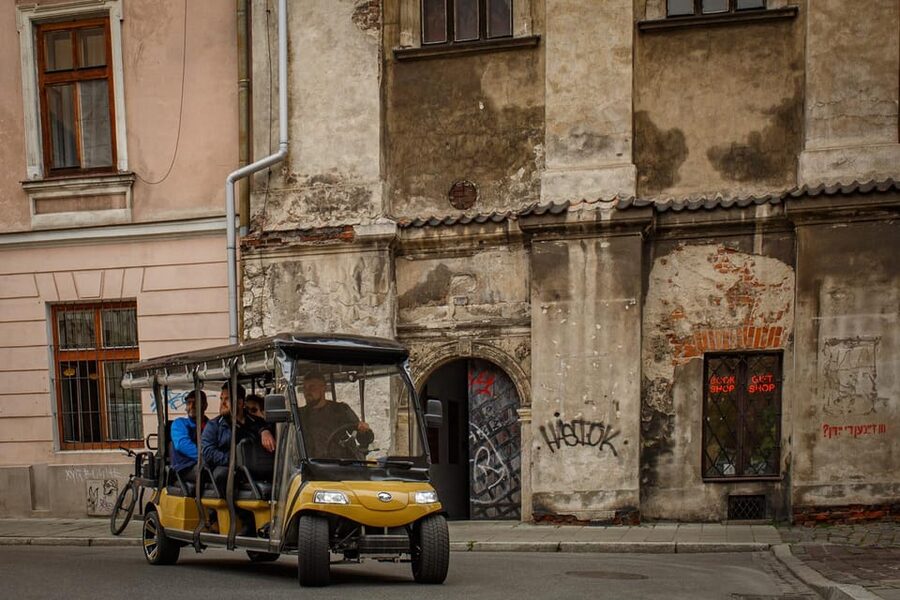
You meet at the Kiss and Ride parking opposite the Żabka store. That is one of those helpful details that saves stress. Arrive a few minutes early, because you want time to settle into your cart and get started without feeling rushed.
For what to bring, the advice is simple: bring water. The tour is 150 minutes, and you will be outside and moving through neighborhoods.
What not to bring is equally important. You cannot smoke in the vehicle. Alcohol and drugs are off limits, and alcohol drinks are also not allowed in the vehicle. Bags are not allowed, and electric wheelchairs are not allowed. There are also restrictions on bikes and non-folding wheelchairs. If you are the type who carries a backpack for everything, plan to travel lighter than you normally might.
Old Town orientation: Planty, churches, and the city walls vibe
The tour opens with the kind of landmarks that quickly tell you where you are in Krakow. You will learn the history of Krakow through the guide’s descriptions and the audio system, and then the route starts threading through places that shape the city’s look.
Here are some of the Old Town stops you will hit and why they are useful:
- Krakow Planty: This is a key orientation point. Even if you do not stop for long, it helps you understand the city’s inner geography.
- Church of St. Cross and Church of St. Florian: These are good examples of how Krakow mixes religious architecture into everyday city streets. The audio helps you place what you are seeing into the tour’s bigger story.
- Słowacki Theater: It is a practical mid-route marker. When you see it, you start to recognize the major urban spine the guide is using.
- Former city walls and Barbican: These are the kinds of features that give a city its silhouette. I like having wall remnants and defensive structures pointed out early, because it changes how you read the streets later.
As you move along, you also get an architectural and civic rhythm. Jan Matejko Square helps you orient to open spaces, and then you transition toward streets and civic sites that feel more connected to daily city life.
Next you will see Sławkowska Street, and that sets up a nice flow toward museums and old lanes. Then comes Czartoryski Museum, which is a good reference point even if you are not doing an extended museum visit today. You are getting the layout and the connections.
From there, you will pass St. John’s Street and Church and then land at the Main Square. For many first-time visitors, the Main Square is the easiest place to recognize on a map, and having it arrive inside a guided circuit helps you remember where everything is relative to everything else.
You will also get Plac Szczepański and Palace of Art, then St. Anne’s Church and Town Hall. I like these stops because they are not just random photos. They help you build a mental index of city identity: major squares, major buildings, and major street directions.
More Jewish Heritage Tours in Krakow
- Krakow: Schindler’s Factory & Ghetto Guided Tour
★ 4.7 · 1,694 reviews - Krakow: Jewish Quarter and Former Ghetto Tour
★ 4.9 · 1,441 reviews - Krakow: Bike Tour of Old Town, Jewish Quarter and the Ghetto
★ 4.9 · 1,155 reviews - Krakow: Kazimierz Jewish Quarter Walking Tour
★ 4.8 · 571 reviews
A good tip for this section
Keep an eye on what the guide connects. If the guide links a church, a square, and then a street, you are learning a relationship, not just seeing objects. That is what makes this route feel like more than transport.
From Franciscan Church to Wawel Castle: the Old Town finale you can remember
As the Old Town part continues, the tour naturally builds toward the most famous-looking skyline moment: Wawel Castle. But before you get there, the route includes Franciscan Church.
Why I like this build-up. When you see a “big ending” landmark inside a sequence of earlier stops, you remember the approach. You do not just remember the castle. You remember where it sits in the larger city.
The audio and live guide descriptions help you connect the dots. Even if you are not studying every fact, you start to understand why these locations matter in Krakow’s story as told by the tour.
Then Wawel Castle becomes a strong visual anchor. If you are planning your own follow-up day, you now have a reference point that makes it easier to choose what to do next. You can aim your feet and your time with less guesswork.
One consideration here: if you are hoping for lots of time to roam at Wawel itself, this is not designed like a free, long visit. It is designed like a moving narrative. You get views and context, then you keep moving.
Kazimierz by golf cart: synagogues and the Jewish quarter storyline
After Old Town, the tour shifts into Kazimierz, the Jewish district. The tour includes a Jewish Quarter description, then it continues with a sequence of religious and community-focused locations, plus street-level details like Ciemna Street.
This section is one of the main reasons I like a guided route in a city like Krakow. The landmarks are many, and the meaning is easier when it is packaged as a story delivered in real time with audio support.
You will see Skałka Church, Church of St. Catherine, and then head toward Wolnica Square, including the Jewish City Hall reference. That square-to-street flow is useful because it helps you feel how the neighborhood is organized, not just what buildings exist.
Then comes a dense and recognizable run of synagogue names: Tempel Synagogue, Kupa Synagogue, and Isaac Synagogue. The tour continues on Ciemna Street, then includes Old Synagogue and Popper Synagogue. Even if you are not entering any buildings, the guided framing helps you understand why these stops appear back to back.
Next, you will get Family House of Helena Rubinstein. That stop is helpful because it breaks up the pace and gives you a different kind of reference point in the neighborhood.
The tour also includes Remuh Synagogue and old cemetery, plus the Memorial Stone of the Nissembaum Family Foundation. Then you visit Old Jewish Shops. I like including both places of worship and places that represent everyday community life. It keeps the story from feeling one-note.
What you should expect from the guide here
This section is where strong guiding matters most, because there are many names and many locations packed into a route. The audio system helps, but the live guide ties it together so you do not just collect synagogue titles in your head.
The booking feedback lines up with that need. One review singled out the guide’s high competence, and another praised Natalie for being kind and very skilled. That is exactly what you want for a narration-heavy, landmark-dense area like Kazimierz.
Podgorze and the former ghetto area: hearing the story where it happened
The last big shift is into Podgorze, the former ghetto area. The tour gives you a Former Ghetto description, then continues with multiple stops that keep the narrative grounded in place.
You will see Ghetto Heroes Square, then Pharmacy under the Eagle, which is linked to the residence of Tadeusz Pankiewicz in the tour’s explanations. That detail matters because it turns a stop into a story, not just a street corner.
Then the route moves to Oskar Schindler’s history and includes a Life in Ghetto description, followed by the Ghetto Wall. Even without extra time inside buildings, this is the part of the itinerary that feels most serious, because the tour stays focused on how the area is remembered.
The section concludes with Church of St. Joseph. That final stop gives you a place-based end point so you can tie the last images to one more recognizable Krakow structure.
How to handle this emotionally and practically
This portion of the tour is not casual. If you want to photograph, do it thoughtfully and keep moving. If you want quiet attention, take it. The golf cart format means you will not be stuck in one location for long, but you can still choose how quickly you process what you are hearing.
Also, bring your water. You will want it by the time the tour reaches the more intense stops in the narrative.
Guides, language, and the big-picture city plan you leave with
The tour is built around two layers: a live tour guide and an audio guide. The driver and guide work together, with the driver listed as Polish and English, and the audio offering Polish and English as well.
I find this setup especially helpful if you are traveling with mixed interests. Some people want the main storyline, and some people want to catch names and references. Audio lets you control that pace without turning the tour into a stop-and-start debate.
One more value point comes from the group format. It is a group trip, which often means you share the route with people who are at similar stages of trip planning. That can help you compare what you want to do next after the tour ends.
And based on booking feedback, the guide delivery is a standout. Radar was praised as a super guide, and Natalie was described as gentle, available, and competent. When that kind of skill shows up, you feel it most in the sections with a lot of names, like Kazimierz and the former ghetto area.
Who this tour suits best, and who should choose something else
This is a strong match if:
- You want a first-time overview that helps you understand how Krakow’s districts relate to each other.
- You prefer learning with a guide plus audio in Polish or English.
- You like the idea of city sightseeing from an electric cart, with less walking pressure.
It may not be the best match if:
- You want lots of time for independent museum visits or long stops inside buildings.
- You rely on equipment or carry items that the onboard restrictions do not allow, like bags.
- You fall outside the operator’s strict suitability rules, including age and height limits.
If you are a senior visitor, check the suitability rules before you get your heart set on it. The tour data lists limits that include people over 60, and also includes height and age thresholds. If you are unsure, it is worth confirming directly with the provider before booking.
Should you book Krakow Old Town, Kazimierz, and the Ghetto by electric golf cart?
I would book this if you want a guided, structured “get oriented” tour that also takes you into the neighborhoods that define modern Krakow’s identity. The combination of electric golf cart travel, a live guide, and an audio guide in Polish or English makes it efficient without feeling like a rushed bus ride.
The biggest reason to choose it is the narration quality. The repeated praise for guides like Radar and Natalie points to the same thing: the tour is better when the explanations are clear, and this one seems to deliver that.
I would skip or compare if you are expecting long free time, or if your travel style is heavy on carrying bags and stopping whenever the mood hits. This tour works best when you keep your kit light and let the route do the organizing.
If you fit the suitability rules and you want your first Kraken of landmarks connected into one storyline, this is a very practical choice for Krakow.
FAQ
How long is the Krakow Old Town, Kazimierz and Ghetto tour?
The tour duration is 150 minutes.
What is included in the price?
The package includes a live tour guide, an electric vehicle tour, and an audio guide.
Where do I meet the group?
You meet at the Kiss and Ride parking opposite the Żabka store.
What languages are available?
The audio guide and tour experience are available in Polish and English.
Is smoking or alcohol allowed during the tour?
Smoking is not allowed in the vehicle, and alcohol is not allowed on the tour or in the vehicle.
Is the tour suitable for children or older adults?
The tour lists strict suitability limits. It is not suitable for children under 2 years, and it also lists upper age limits, including people over 60 years, plus additional age and height thresholds.
Fresh Krakow reviews
- Krakow Skip The Line Wawel Castle & Old Town Guided Tour★ 5.0 · 3 reviews
- Krakow Zakopane Cable Car Vodka Cheese and Hot Springs Tour★ 3.5 · 3 reviews
- Krakow: Zakopane and Thermal Pools Tour with Hotel Pickup★ 5.0 · 3 reviews
- Museo Czartorisky : Visita in Lingua Italiana salta fila…★ 3.5 · 3 reviews
- Half-Day John Paul II Route Tour from Krakow★ 5.0 · 3 reviews
- Krakow: John Paul II Home & Black Madonna Sanctuary – Guided Tour★ 5.0 · 3 reviews
- 1-Hour Tour to Krakow’s Old Town by Electric Golf Cart★ 5.0 · 3 reviews
- Auschwitz and Birkenau WITHOUT GUIDE private transport from Kraków★ 5.0 · 3 reviews
Jewish Heritage Tours, compared.
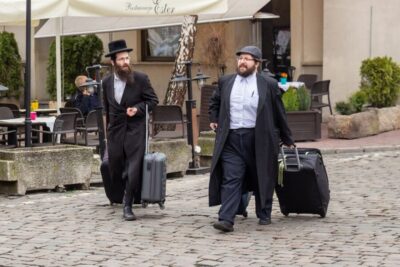
Bike Tour of Old Town, Jewish Quarter and the Ghetto
Read our review →
Kazimierz, Schindler’s Factory & Ghetto Guided Tour
Read our review →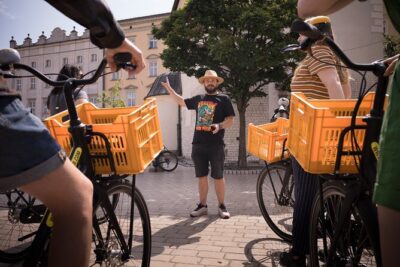
Full Bike Tour – the Old Town, Jewish Qtr & the Ghetto NEW BIKES
Read our review →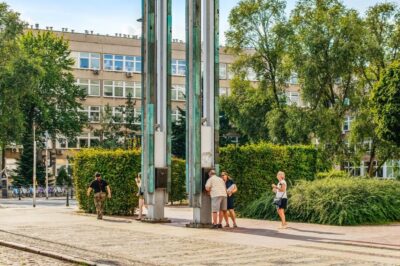
Warsaw Ghetto Private Walking Tour with Hotel Pickup
Read our review →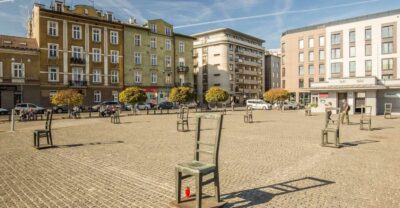
Browse the lists this tour appears in