
Reviewed · JEWISH HERITAGE TOURS
Krakow: Jewish Ghetto Guided Tour
Krakow’s former ghetto in Podgórze is one of those places where history is not behind glass, it is on the street. I love how this tour uses a licensed guide to connect everyday street corners to what people endured, and I love the emotional clarity of stops like Ghetto Heroes Square and the Chair Memorial. The main drawback is that this is heavy material, and it is a walking tour not designed for anyone who needs mobility support.
You’ll be on your feet for about an hour, and the route is not wheelchair-friendly. If you are hoping for a lighter, casual sightseeing walk, this may feel too intense.
Key things to know before you go
- Podgórze streets that Nazi authorities turned into the Krakow Ghetto, explained by your guide
- Original ghetto wall fragments that make the imprisonment feel physical, not abstract
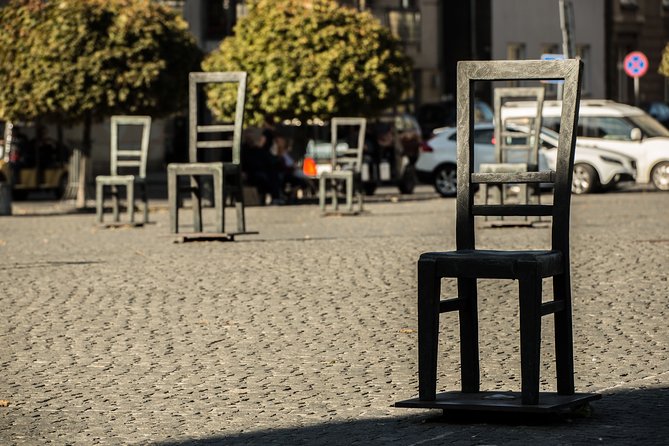
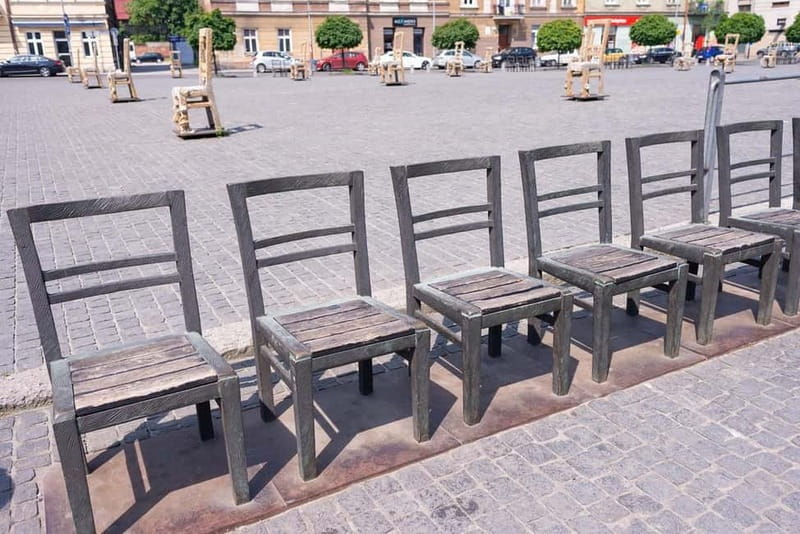
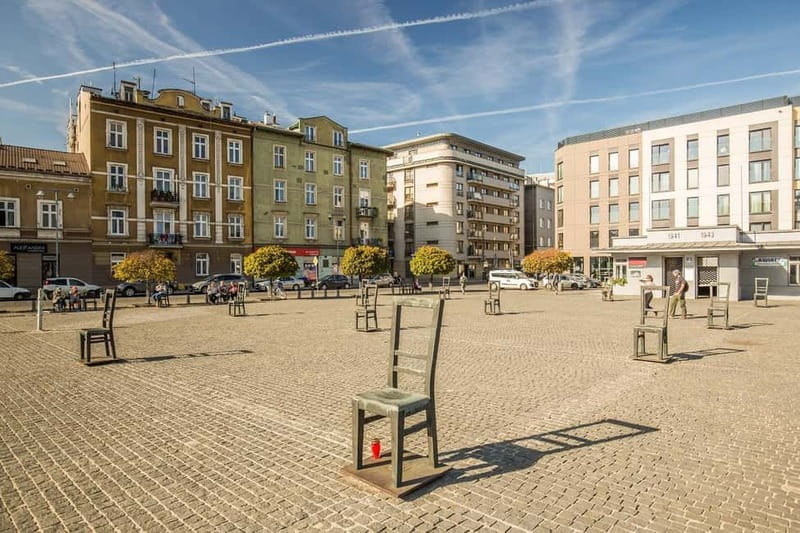
- Ghetto Heroes Square with rows of empty metal chairs, marking lives erased
- Under the Eagle Pharmacy and the story of Tadeusz Pankiewicz helping people despite huge risk
- End at the Schindler’s Factory site (no entry), with rescue woven into the narrative
- Multiple tour languages and a single-language format chosen at booking
What This Krakow Jewish Ghetto Walk Teaches in 1 Hour
This tour is interesting because it takes you into a part of Krakow that many visitors miss, Podgórze, where an entire community was forced into a controlled, shrinking world. In the span of about an hour, your guide helps you see how persecution worked day to day, not just as a headline from a textbook.
I like that the tour focuses on people, not only dates. You hear about families, survival, and everyday courage under Nazi rule, with the human choices that made some lives possible and some lives tragically cut short.
One more thing to know up front: the tone is sober. You are walking through a site of systematic persecution and remembering deportations to extermination camps, so your emotions may run higher than on typical city tours.
More Jewish Heritage Tours in Krakow
- Krakow: Schindler’s Factory & Ghetto Guided Tour
★ 4.7 · 1,694 reviews - Krakow: Jewish Quarter and Former Ghetto Tour
★ 4.9 · 1,441 reviews - Krakow: Bike Tour of Old Town, Jewish Quarter and the Ghetto
★ 4.9 · 1,155 reviews
Starting in Podgórze, Where the Ghetto Became Reality
Most of the emotional weight hits early. The walk begins in Podgórze, a district transformed by Nazi authorities into the Krakow Ghetto. Your guide builds the setting as you move, so you understand that this was not just a sad neighborhood, it was a system.
As you walk, you’ll get the practical details that explain why fear was constant. The group’s pace is slow enough to absorb it, and the guide ties together overcrowding, hunger, and the threat of violence, then balances that with moments of solidarity and dignity.
If you get a guide like Annetta or Chiara, you’re likely in for a strong story-teller who links the past to what you can still notice today, and who makes time for questions. That comes through in how people describe their guides, with a focus on clear answers and thoughtful explanations.
The Ghetto Wall Fragments, Physical Evidence of Psychological Imprisonment
A big reason I think this walk hits hard is that you do not only hear about confinement. You see surviving fragments of the original ghetto wall, which makes the story feel locked in place.
Those wall remnants are stark, and your guide uses them to talk about imprisonment in more than one sense. There was the obvious physical barrier, and there was the psychological reality of living inside rules enforced by terror.
This stop is especially valuable because it helps you grasp scale. The ghetto held more than 15,000 Jewish residents, and the wall fragments are like punctuation marks for what the city forced on people.
The drawback here is simple: if you expect only broad overview facts, you might want a more classroom-style tour. But if you like the street-level feel of history you can see, this is a strong match.
Ghetto Heroes Square and the Chair Memorial
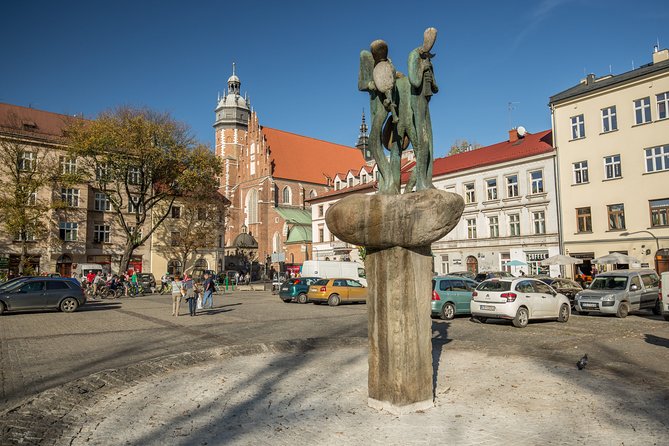
Then you reach the moment that many people remember the longest. Ghetto Heroes Square was once the central point of deportations to extermination camps. Today it is a memorial, and it works because it looks quiet, but it is not gentle.
The Chair Memorial uses rows of empty metal chairs to represent lives abruptly erased. Your guide explains why empty is the point, and how this memorial turns absence into a message you can’t casually scroll past.
I like that the guide does not treat the chairs as decoration. The emphasis stays on deportations and what people faced, so you leave with the memorial’s meaning, not just its appearance.
This is one of those stops where your brain wants to rush to the next location. I recommend slowing down instead. Give yourself a minute or two, and let your guide’s context land.
Another way through a Krakow day:
- From Krakow: Auschwitz-Birkenau Guided Tour & Hotel Pickup
★ 4.5 · 33,358 reviews - From Krakow: Auschwitz-Birkenau Guided Tour & Hotel Pickup
★ 4.5 · 29,340 reviews - Krakow: Auschwitz Guided Tour with Optional Hotel Pickup
★ 4.5 · 15,280 reviews - Krakow: Wieliczka Salt Mine Tour with Entry Ticket
★ 4.6 · 10,927 reviews
Under the Eagle Pharmacy and the Story of Tadeusz Pankiewicz
Next comes one of the most human parts of the route. You’ll stop at Under the Eagle Pharmacy, where Tadeusz Pankiewicz and his staff helped ghetto prisoners in defiance of Nazi orders.
Your guide connects the story to actions, not slogans. You’ll hear about medicine, shelter, and assistance provided at great personal risk, and you’ll understand why this kind of help was rare.
I find this stop adds balance, because it shows moral courage inside a system built to crush it. Yes, you see terror and persecution, but you also see resistance that looked like everyday, practical care.
If you’re the type who asks follow-up questions, this is usually a good moment to do it. People highlight how guides answer questions thoughtfully, and this stop naturally invites curiosity about how help could work under such danger.
The Schindler’s Factory Site Stop, Rescue Without the Entry
The tour ends at the Schindler’s Factory site. It’s important to know this part clearly: there is no entry. You are there to understand the symbol of rescue and to connect it to the larger narrative of survival.
Your guide places Schindler’s story in context as part of what happened nearby, framing rescue as something that had limits, costs, and consequences. The goal is not to treat rescue as a movie plot, but as a real set of choices made under extreme pressure.
This final stop works best if you hold two thoughts at once. First, the ghetto experience you walked through is about persecution and loss. Second, the Schindler area connection points to how some people tried to save others, even when the odds were brutal.
If you hate ending a walk with more questions than answers, you might want to plan a little time after the tour to keep learning on your own.
Price and Value: $15 for a Licensed 1-Hour Walk
At $15 per person for about an hour, this is strong value if you care about guided interpretation. The cost includes an expert licensed guide, which is the part you can’t DIY easily, especially for sites like these where wording matters and context changes everything.
If you’re comparing this to typical Krakow sightseeing tours, the difference is that this one is not trying to entertain you. It is trying to help you understand, and you pay for that clarity.
You also get efficient route design. It is short, so you’re not spending your day transferring between distant sites. Instead, you focus on a tight corridor of meaning, from ghetto streets to memorial spaces and the rescue-related Schindler connection.
The trade-off is time. Because it is only an hour, you won’t have time to become an expert. You will leave with an organized mental map, plus enough details to guide your next reading.
What You Can Expect on the Street: Pace, Language, and Questions
The tour is conducted as a walking experience, and it runs in one language at a time. At booking, you choose the language, with options including Italian, English, French, Spanish, Russian, Swedish, Slovak, and German.
I like the single-language approach. It keeps the flow focused, and it helps your guide tailor explanations to one audience at once instead of bouncing between languages.
Your guide’s job is also to connect the dots. As you move, they reconstruct the reality of life under repression: fear, hunger, overcrowding, and violence, plus small moments of solidarity that prove people still acted like people.
One more practical note: plan to arrive at the meeting point at least 10 minutes early. Once the group sets off, joining late is not possible, and you would lose the chance to participate.
Practical Tips That Make the Tour Easier
Comfort matters here. Bring comfortable shoes and dress for the weather, because you’ll be out walking rather than seated in a museum.
Bring a calm mindset too. This is not a stop-and-take-photos-to-celebrate kind of outing. The goal is respect and attention, especially around the memorial chair installation and the square connected to deportations.
Also follow the basic rules: alcohol and drugs are not allowed. If you’re traveling with family or friends and you want a serious, respectful tone, this helps everyone stay aligned.
If you’re the type who likes to ask questions, have a few ready in advance. The tour is short, so the best questions are usually specific, like how particular places fit into the ghetto’s layout or how the rescue efforts worked in practice.
Who Should Book, and Who Should Rethink It
This is a good fit for you if you want Holocaust education grounded in real streets and real landmarks. It works especially well if you like a guided narrative that connects each stop to what people experienced.
It is also a good choice if you want a short tour that does not waste time. In about an hour, you can walk away with a meaningful overview that you can build on later with independent visits.
But it is not a good fit if you need mobility support. The tour is not suitable for people with mobility impairments and it is not for wheelchair users. Since the route is a walk through outdoor areas, plan accordingly.
If you’re sensitive to heavy content, go in knowing the tone is serious and the story includes deportations to extermination camps. You can still choose to do it, but treat it like an emotional appointment, not just a sightseeing add-on.
Should You Book This Krakow Jewish Ghetto Tour?
If you want one focused, guided way to understand Krakow’s former ghetto in Podgórze, I think this is worth booking. The combination of expert licensed guiding, street-level locations, and the memorial stops makes the history feel organized and unforgettable.
Do it if you value context, respect, and clear explanations, and if you can handle the emotional weight. Skip it if you want a light, casual walk or if mobility is a concern.
FAQ
FAQ
How long is the Krakow Jewish Ghetto guided tour?
The tour lasts 1 hour.
What does the tour cost?
The price is $15 per person.
Where does the tour take place?
It takes place in Krakow, specifically in the Podgórze district tied to the former Krakow Ghetto.
What is included in the price?
The tour includes an expert licensed guide and a walking tour of the former Kraków Ghetto.
What is not included?
Hotel pickup and drop-off, plus food and drinks, are not included.
Where do I meet the guide?
The meeting point may vary depending on the option booked, so you should check your specific booking details.
Do I need to arrive early?
Yes. Arrive at the meeting point at least 10 minutes before the scheduled start. Joining late is not possible once the group has set off.
What languages are available?
The live guide is available in Italian, English, French, Spanish, Russian, Swedish, Slovak, and German.
Is the tour accessible for wheelchair users?
No. It is not suitable for people with mobility impairments and it is not for wheelchair users.
What should I bring and what is not allowed?
Wear comfortable shoes and dress for the weather. Alcohol and drugs are not allowed.
Fresh Krakow reviews
- Czestochowa Black Madonna Private Day Tour from Krakow★ 5.0 · 18 reviews
- Zakopane PRIVATE TOUR from Krakow★ 5.0 · 18 reviews
- Krakow City Pass – Museums, Atractions & City Transport★ 4.0 · 18 reviews
- Chopin Candlelight Concert with Wine in Krakow★ 5.0 · 18 reviews
- Krakow: Garden of Lights Pinocchio Entry Ticket★ 4.7 · 18 reviews
- Auschwitz Birkenau Memorial and Museum group tour from Krakow★ 5.0 · 18 reviews
- Krakow: Schindler’s Factory & Ghetto Guided Tour★ 5.0 · 18 reviews
- Half-Day Wieliczka Salt Mine Tour from Krakow★ 5.0 · 18 reviews
Jewish Heritage Tours, compared.
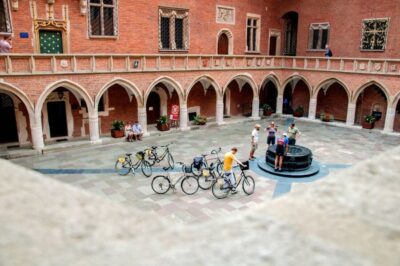
Bike Tour of Old Town, Jewish Quarter and the Ghetto
Read our review →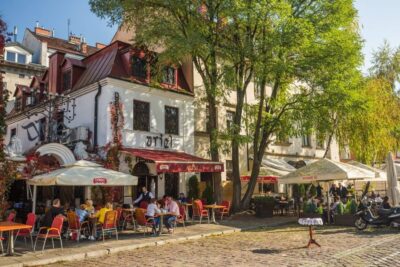
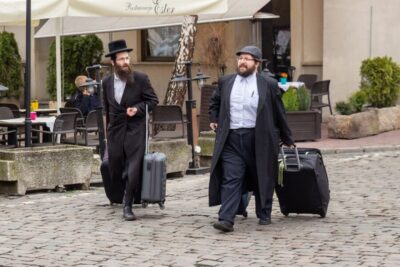
Kazimierz, Schindler’s Factory & Ghetto Guided Tour
Read our review →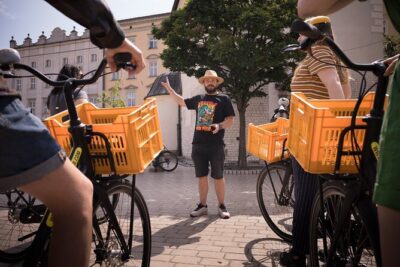
Full Bike Tour – the Old Town, Jewish Qtr & the Ghetto NEW BIKES
Read our review →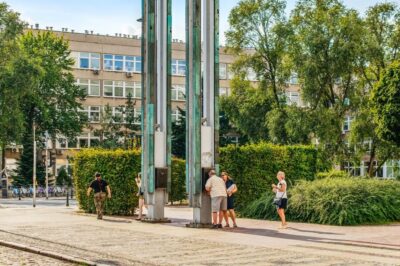
Warsaw Ghetto Private Walking Tour with Hotel Pickup
Read our review →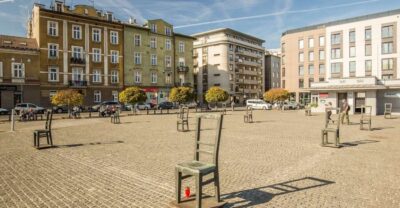
Browse the lists this tour appears in