
Reviewed · JEWISH HERITAGE TOURS
Krakow: Guided Tour of the Jewish Ghetto
This tour hits hard, in the best way. In just 1 hour, you walk the former Jewish Ghetto in Podgórze with a licensed guide who connects the streets you see to the lives people had to live. I love how the stops are concrete, like standing near the Ghetto Wall remains and then moving to memorials that force you to look longer than a photo ever would.
Two things I like a lot: the tour centers real locations, including the Ghetto Heroes Square and the empty-chair memorial, and it includes human stories of rescue work at Under the Eagle Pharmacy, linked to Tadeusz Pankiewicz. One possible drawback is the subject matter is heavy, so if you want a lighter sightseeing pace, this may feel emotionally intense.
Key highlights I’d plan around
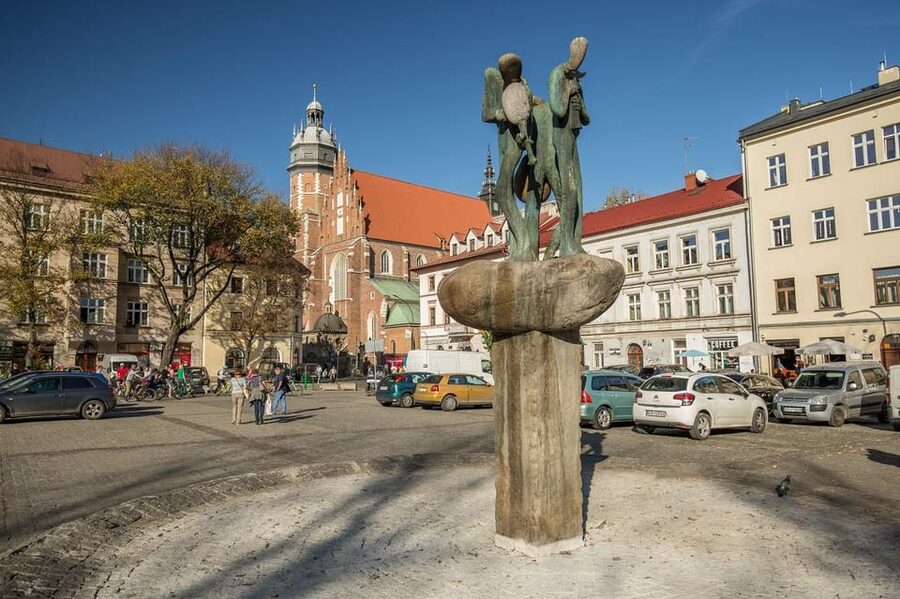
- Ghetto Wall fragments you can see in place, so you understand the physical boundary, not just the idea of it
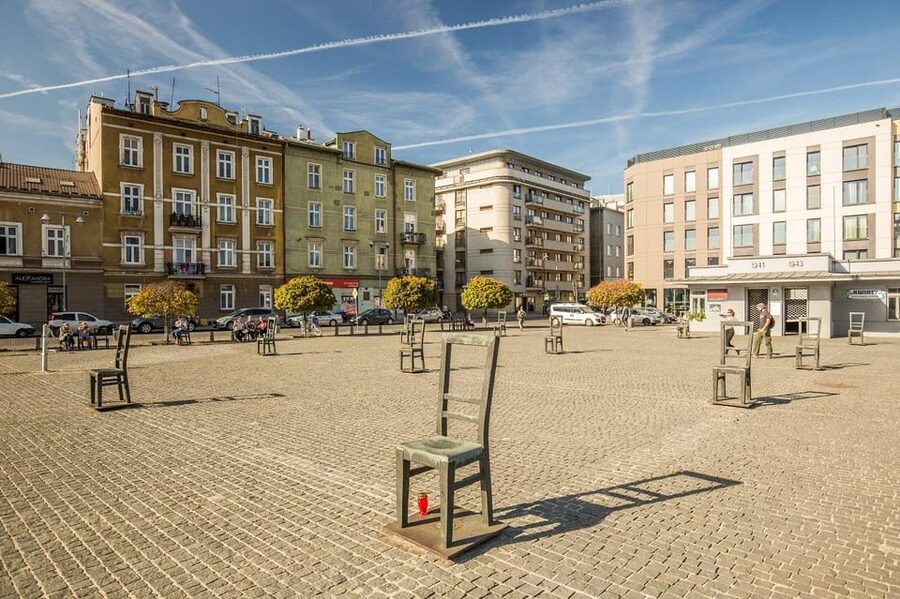
- Ghetto Heroes Square with dozens of empty metal chairs, each representing a life lost
- Under the Eagle Pharmacy and the bravery connected to Tadeusz Pankiewicz and his staff
- Authentic wartime street layout, helping you picture how movement and confinement shaped daily life
- Daily life, deportations, and survival, told as a connected story instead of random facts
Podgórze to the Ghetto, why this walk matters
Kraków’s Jewish Ghetto was not an abstract chapter in a book. It was a set of streets, boundaries, and routines in Podgórze, turned into a site of confinement during WWII. What makes this tour especially powerful is that it uses the city itself as the classroom.
You start in Podgórze, where quiet streets now sit where fear and uncertainty once ruled. As you walk, your guide helps you imagine what it meant to live behind walls, to follow rules that stripped people of choice, and to hold onto hope anyway. You also learn how daily life changed over time, with deportations and survival becoming part of the everyday reality for the people trapped there.
This is not a “quick photo stop” kind of tour. You go to understand. And because you move block by block, you come away with a better sense of scale. The ghetto held over 15,000 people within a few city blocks, which is hard to grasp until you’re standing near the places where that closeness was enforced.
More Jewish Heritage Tours in Krakow
- Krakow: Schindler’s Factory & Ghetto Guided Tour
★ 4.7 · 1,694 reviews - Krakow: Jewish Quarter and Former Ghetto Tour
★ 4.9 · 1,441 reviews - Krakow: Bike Tour of Old Town, Jewish Quarter and the Ghetto
★ 4.9 · 1,155 reviews
Price and time: what $15 gets you in 1 hour
At $15 per person for a 1-hour guided walking tour, the value is in the focus. This isn’t trying to cover every WWII site in Kraków. It concentrates on the former ghetto area, with key memorial stops and a guiding narrative that ties them together.
In practice, that means you should expect:
- a guided route with multiple meaningful stops, not a long wandering stroll
- a tight schedule where you’re hearing context right as you look at each location
- a tour pace geared toward understanding, not lingering in shopping areas
The tradeoff is simple: you’ll leave wanting more time at the places that hit hardest. If you like slow museum-style pacing, plan a longer visit elsewhere later. Think of this as the emotional and educational “prime” that sets up the rest of your day.
Meeting point at Schindler Factory, then straight into Podgórze
You’ll meet at the entrance to the Schindler Factory Museum. Look for a guide holding an excursions.city sign. This matters because you’ll start the tour in the right context. Schindler’s story is a nearby thread of WWII-era Kraków, so beginning here helps you orient quickly before you shift into the ghetto district.
From there, your walk moves into Podgórze, where the streets feel calmer than the history behind them. That calm is part of the effect. Your guide builds the mental map: what the area became, what it forced people to endure, and how that geography shaped what happened next.
Since the tour is in walking format, the main thing you need to do is show up ready to walk and listen. You do not need special gear. But do expect a guided experience that asks for attention, not just sightseeing.
The remains of the original Ghetto Wall: boundaries you can see
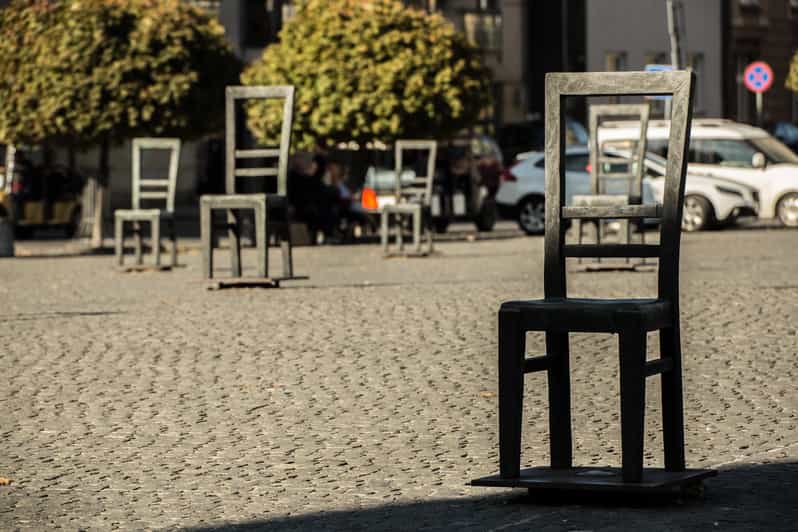
One of the strongest moments comes when you reach the remains of the original Ghetto Wall. Even in fragments, it changes your understanding. It turns the idea of a sealed-in world into something physical, right there in front of you.
Your guide will connect the wall to the basic reality of the ghetto: that it was designed to control movement and compress lives into a tiny space. Hearing that more than 15,000 people were enclosed in a few blocks becomes easier when you can point to the boundary line.
This stop also tends to shift how you look at the streets. After you’ve seen wall fragments, you start noticing how sightlines, corners, and narrow stretches would have mattered during wartime. It’s a small shift, but it makes the whole tour click.
One practical consideration: if you’re someone who gets impatient with slower historical explanations, the wall stop can feel like it’s taking time. I’d treat that as a good sign. This is the moment where the tour stops being abstract.
Another way through a Krakow day:
- From Krakow: Auschwitz-Birkenau Guided Tour & Hotel Pickup
★ 4.5 · 33,358 reviews - From Krakow: Auschwitz-Birkenau Guided Tour & Hotel Pickup
★ 4.5 · 29,340 reviews - Krakow: Auschwitz Guided Tour with Optional Hotel Pickup
★ 4.5 · 15,280 reviews - Krakow: Wieliczka Salt Mine Tour with Entry Ticket
★ 4.6 · 10,927 reviews
Ghetto Heroes Square and the symbolic chair memorial
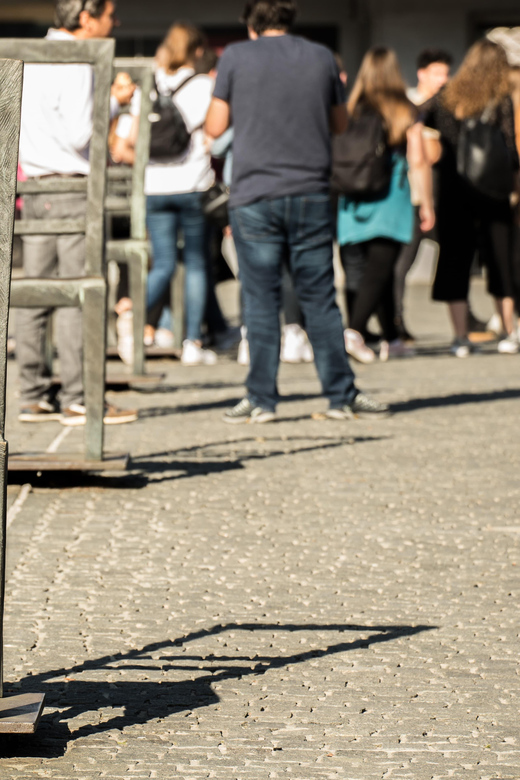
Next comes Ghetto Heroes Square, described as the heart of the ghetto. The square itself can be quiet now, but the story attached to it is not. It includes the memory of how people were gathered for deportations to concentration camps.
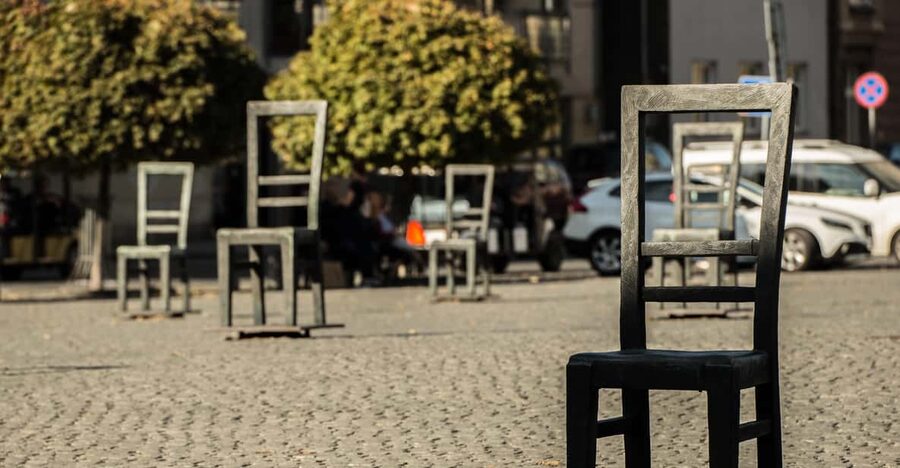
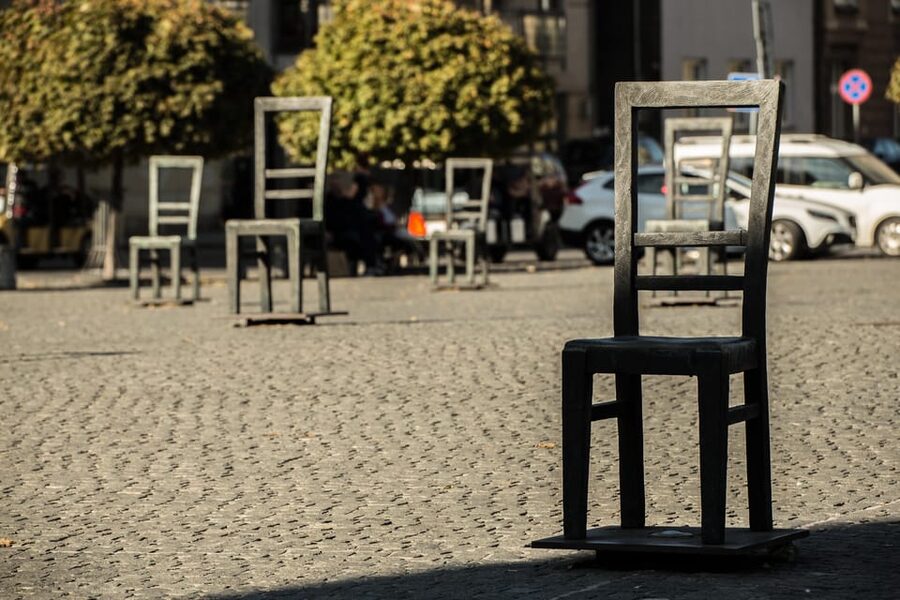
The signature detail here is the chair memorial. You’ll see dozens of empty metal chairs, with each one representing a life lost. This is the kind of memorial that works because it doesn’t try to be flashy. It turns absence into something you can count, and it keeps the focus on individuals rather than only on numbers.
As you stand there, your guide’s job is to slow your thinking down. You’re not meant to race to the next stop. You’re meant to reflect long enough for the symbolism to land. If you prefer structured tours that tell you exactly what to feel, you might find this part open-ended. That’s intentional. The chair memorial is about respect and remembrance, and it asks you to stay present.
Under the Eagle Pharmacy: Tadeusz Pankiewicz and acts of rescue
Then you move to Under the Eagle Pharmacy, one of the most moving stops on the route. This is where your guide shares stories of bravery connected to Tadeusz Pankiewicz and his staff.
The key detail is why the pharmacy matters: Pankiewicz and his team risked their lives to help ghetto residents by providing medicine and shelter. That’s not just a dramatic footnote. It changes your understanding of what “survival” could look like inside the ghetto system. Survival was not only about enduring. It was also about people who still chose to act.
This is also where the tour becomes more than tragic history. You learn about compassion under extreme risk. The guide will connect the pharmacy to the broader story of daily hardship, fear, and the thin space that still allowed courage.
If you’re the kind of person who wants the most human stories in a tour, this stop is a top pick. It gives you something to hold onto besides loss: the reality that ordinary people did extraordinary things, even when the odds were against them.
The story your guide stitches together: daily life, deportations, survival
A good ghetto walk tour is only as good as its narrative. This one is built around the lived experience of the people in the ghetto, not only on end results.
Expect your guide to cover:
- daily hardships inside the ghetto and the struggle to get through each day
- acts of solidarity, meaning small choices that helped people stay human
- the process and impact of deportations
- survival, including how people coped when options were shrinking
The value here is continuity. You’re not jumping from one topic to another. You’re watching the story unfold in the places where it happened. As you walk the street layout and reach memorial points, the history becomes easier to hold in your head as a timeline rather than scattered facts.
And because the tour is only an hour, your guide will focus on what’s essential. That’s helpful for short attention spans, but it can also be useful even if you love history. You get a clear backbone, then you can choose what to study deeper afterward.
Walking route reality: how to get the most out of it
This tour is built for walking, so your comfort affects your experience more than you might expect. Plan for:
- sensible shoes for a short but meaningful walk
- a willingness to pause when your guide stops for context
- quiet attention during the reflective segments, especially at the chair memorial
Also, since the tour is 1 hour, you should avoid timing it back-to-back with another long attraction. Give yourself a buffer afterward. The sites stay with you, and you’ll likely want a few minutes to regroup and process what you just learned.
If you’re visiting in hot weather or cold weather, dress for comfort. You’re outside for the tour, and the emotional weight can make minor discomfort feel louder than usual. A small practical choice, like a light layer, can make a big difference.
Language options and the kind of guide you want
The tour is offered with live guides in German, Italian, English, French, and Spanish. That matters because interpretation affects how stories land. If history is already emotional for you, hearing it in a language you understand well helps you focus on the meaning rather than translating in your head.
The overall tone is also important. Based on the way the tour tends to be described, the personal guidance is a major part of why it’s so well received. You can feel that a good guide is not reciting a script, but shaping the walk so it makes sense minute by minute.
If you care about small local tips too, it can be a bonus. One example from bookings shows guides who go beyond history with helpful city guidance, like recommending a good rugby bar when someone was in town for a rugby tournament. That kind of extra care does not change the content of the ghetto story, but it makes the overall experience feel more human and connected to your trip.
Who should book this tour, and who should skip it
You should book if:
- you want a focused introduction to Kraków’s WWII ghetto history
- you like learning in the real street setting, not only in a museum
- you appreciate memorials that use symbolic elements like the chair installations
- you prefer a guide who connects geography to personal stories
You might skip or consider another format if:
- you want a light, entertainment-focused walking tour
- you feel overwhelmed by emotionally heavy subjects in a short timeframe
- you need a lot of time at each site for independent reading and quiet looking
This is best as an “anchor” tour. You do it, then you can add other Kraków experiences around it.
Should you book Kraków: Guided Tour of the Jewish Ghetto?
Yes, if you want a short, powerful route with a professional guide and a clear narrative. For $15, you’re not paying for a long itinerary. You’re paying for concentrated, respectful storytelling at key sites: the Ghetto Wall remains, Ghetto Heroes Square with its empty chairs, and Under the Eagle Pharmacy tied to Tadeusz Pankiewicz.
Book it especially if you’re the type who learns best by seeing places in context. The walking format makes the history feel real without requiring extra planning or museum tickets for the core experience.
If you’re unsure, treat this as a first step. You’ll get enough grounding to decide what else to read or visit next in Kraków, and you’ll understand why this corner of the city is so important to remember.
FAQ
How long is the Kraków Jewish Ghetto guided tour?
The tour lasts 1 hour.
How much does the tour cost?
The price is $15 per person.
Where do I meet my guide?
Meet at the entrance to the Schindler Factory Museum, and look for a guide with an excursions.city sign.
What is included in the tour price?
It includes a professional guide.
Is food or drink included?
No, food and drink are not included.
What languages are available for the live tour guide?
The guide is available in German, Italian, English, French, and Spanish.
Can I cancel for a refund?
Yes. You can cancel up to 24 hours in advance for a full refund.
Can I reserve and pay later?
Yes. You can reserve now and pay later, meaning you book your spot and pay nothing today.
Fresh Krakow reviews
- Czestochowa Black Madonna Private Day Tour from Krakow★ 5.0 · 18 reviews
- Zakopane PRIVATE TOUR from Krakow★ 5.0 · 18 reviews
- Krakow City Pass – Museums, Atractions & City Transport★ 4.0 · 18 reviews
- Chopin Candlelight Concert with Wine in Krakow★ 5.0 · 18 reviews
- Krakow: Garden of Lights Pinocchio Entry Ticket★ 4.7 · 18 reviews
- Auschwitz Birkenau Memorial and Museum group tour from Krakow★ 5.0 · 18 reviews
- Krakow: Schindler’s Factory & Ghetto Guided Tour★ 5.0 · 18 reviews
- Half-Day Wieliczka Salt Mine Tour from Krakow★ 5.0 · 18 reviews
Jewish Heritage Tours, compared.
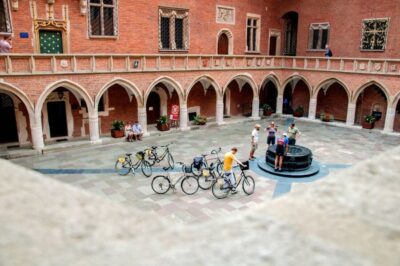
Bike Tour of Old Town, Jewish Quarter and the Ghetto
Read our review →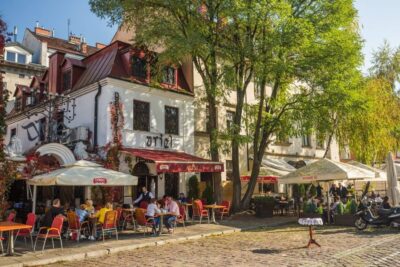
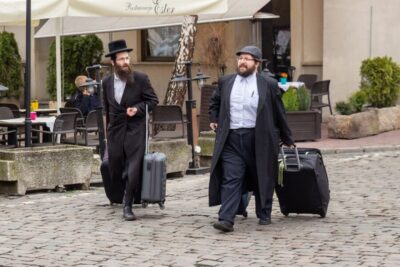
Kazimierz, Schindler’s Factory & Ghetto Guided Tour
Read our review →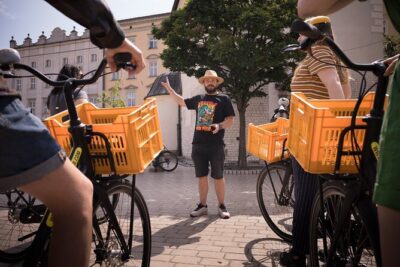
Full Bike Tour – the Old Town, Jewish Qtr & the Ghetto NEW BIKES
Read our review →
Warsaw Ghetto Private Walking Tour with Hotel Pickup
Read our review →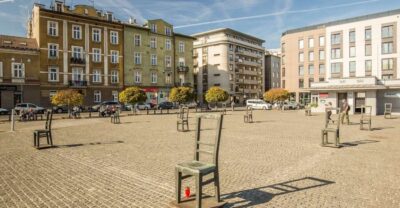
Browse the lists this tour appears in