
Reviewed · SCHINDLER'S FACTORY TOURS
Kazimierz, Schindler’s Factory & Ghetto Guided Tour
Kraków’s Jewish story is not one stop, it’s a chain. This 5-hour guided tour connects Kazimierz, the historic Jewish Quarter, with the former ghetto area in Podgórze, and then anchors everything in Schindler’s Factory. The mix of streets, synagogues, and museum storytelling makes the whole picture feel real, not abstract.
I especially love the walking route through Kazimierz. You start on Szeroka Street and pass the Old Synagogue, Remuh Synagogue and Cemetery, Kupa Synagogue, and Tempel Synagogue, so you get a sense of faith, community roles, and how daily life was organized. I also like the Schindler’s Factory stop because the museum focuses on the human scale of Nazi occupation and on what Oskar Schindler did to protect Jewish workers.
One thing to consider is crowding inside the museum. Even with a max group size of 25, galleries and corridors can feel tight, and in a tight space you might not see every display as clearly while also listening to the guide.
Key highlights to focus on
- Old Synagogue meeting point right where the story begins, on the steps with a Kazimierz Guided Tour sign
- Kazimierz streets plus major synagogues, from the museum at the Old Synagogue to Tempel Synagogue in active cultural use
- Schindler’s Factory fast-track admission, so you spend your time listening and walking instead of standing in lines
- Podgórze ghetto wall remnants and the physical sense of boundaries under occupation
- Ghetto Heroes Square memorial of empty metal chairs, a memorable reminder of lives lost
- Licensed guide in one language (English, French, German, Spanish, or Italian)
Entering Kraków’s Kazimierz, where religious life was part of the street
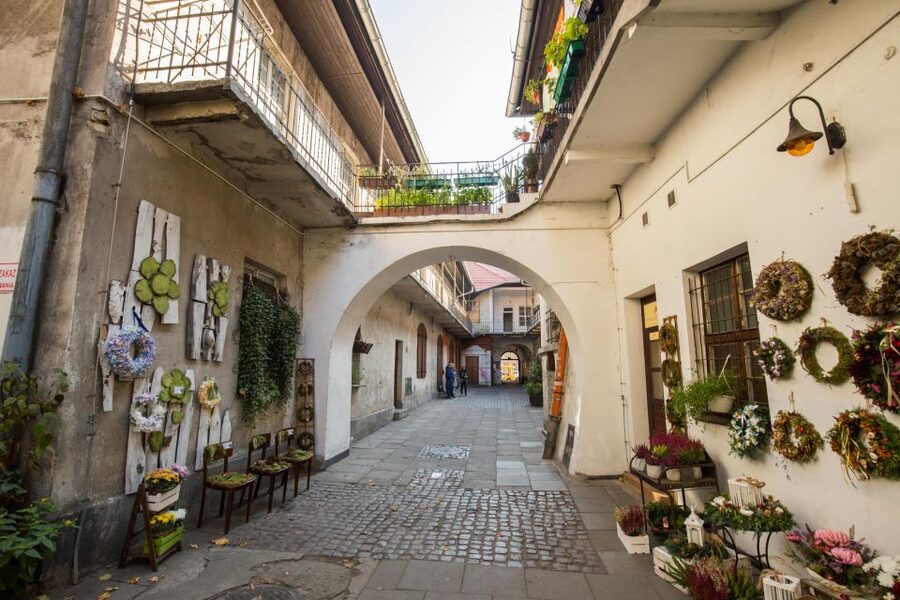
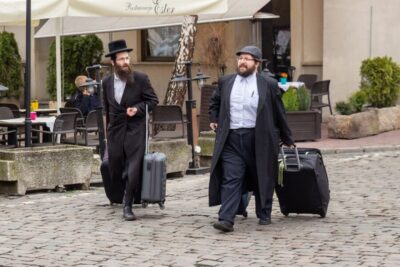
If you’ve only seen Kraków from the central squares, Kazimierz will feel like a different city. This neighborhood still carries the geometry of community life, narrow streets and historic facades that help you picture people moving between worship, home, and work. The tour is built around that idea: it’s a walk through places that shaped everyday Jewish identity over many centuries.
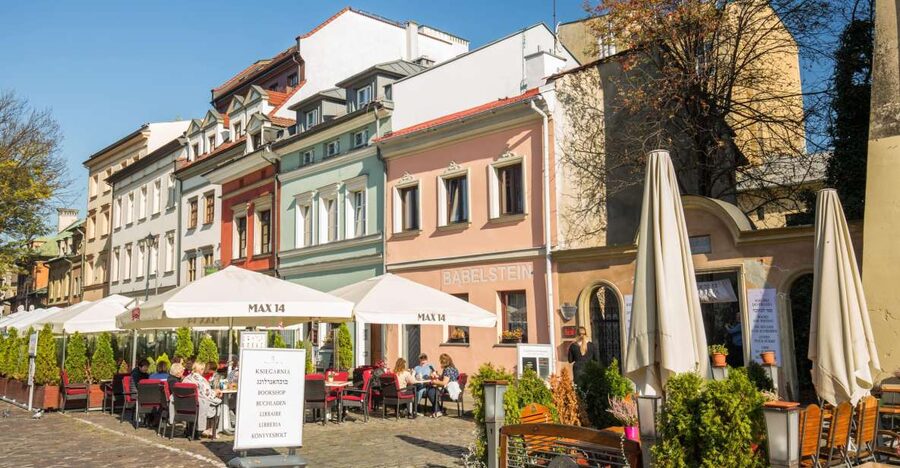
The guide keeps you oriented with a logical route. You begin at the historic center of Kazimierz on Szeroka Street, where you’ll see synagogues and townhouses dating back to the 16th-18th centuries. That timeframe matters. It helps you understand that Kazimierz is not only a WWII story, it’s also a long story of continuity, adaptation, and cultural practice.
You’ll likely feel two emotional rhythms during the walk. First, a quieter rhythm in Kazimierz, tied to prayer spaces and cemeteries. Then the sharper rhythm as you move toward the ghetto area, where the city’s layout was used to control and confine.
More Jewish Heritage Tours in Krakow
- Krakow: Schindler’s Factory & Ghetto Guided Tour
★ 4.7 · 1,694 reviews - Krakow: Jewish Quarter and Former Ghetto Tour
★ 4.9 · 1,441 reviews - Krakow: Bike Tour of Old Town, Jewish Quarter and the Ghetto
★ 4.9 · 1,155 reviews
The 5-hour pacing, and what you should do before you start
This is a true walking tour, 5 hours of steady movement. That’s great if you like a guided “flow” rather than scattered stops where you spend more time figuring things out. It’s also why your prep matters.
Plan to wear comfortable shoes and dress for the weather. The tour is outdoors for most of Kazimierz and Podgórze, and the note about weather can matter in Kraków, especially if rain or cold slows down comfort.
You’ll meet your guide on the steps of the Old Synagogue, and they’ll hold a Kazimierz Guided Tour sign. Arrive at least 10 minutes early. Once the group enters, late arrivals cannot be accommodated, and tickets are non-refundable. So I treat that as a hard rule, not a suggestion.
Group size is limited to a maximum of 25. That’s usually comfortable enough for Q and A, but it can still feel crowded in indoor sites. You’ll get the best experience if you stay attentive to the guide’s rhythm and accept that you may not always stand in perfect viewing angles inside museum rooms.
Szeroka Street and the synagogues that explain community life
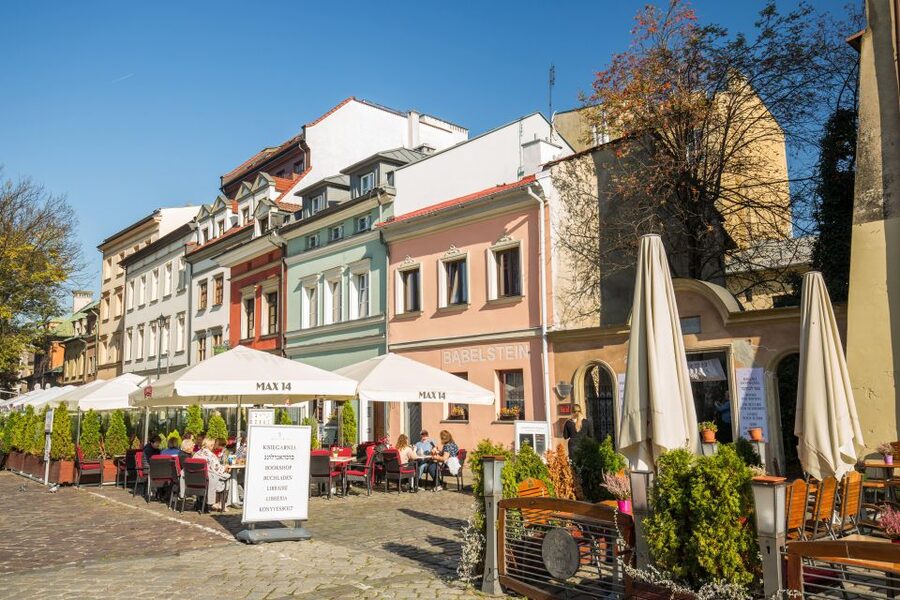
Szeroka Street is a strong starting point because it frames Kazimierz as a neighborhood of institutions, not just scenery. As you walk, the guide’s job is to connect each synagogue to how people lived, prayed, and organized community space.
Old Synagogue: oldest preserved, and now a Jewish history museum
The Old Synagogue is the oldest preserved synagogue in Poland, and today it functions as a museum of Jewish history. For me, the value here is simple: it turns architecture into context. You don’t just see a building, you learn what kinds of records, traditions, and communal memory were preserved.
This stop sets the tone for the rest of Kazimierz. It helps you understand the difference between a modern visitor gaze and what the space meant to worshippers.
More of Schindler's Factory and wartime Krakow:
- Krakow: Schindler’s Factory Ticket and Guided Tour Option
★ 4.3 · 4,306 reviews - Krakow: Schindler’s Factory Tour with Entrance Ticket
★ 4.5 · 3,182 reviews - Krakow: Schindler’s Factory Skip-the-Line Ticket
★ 4.4 · 3,105 reviews - Krakow: Schindler’s Factory Tour with Entrance Ticket
★ 4.6 · 1,737 reviews
Remuh Synagogue and Cemetery: religion tied to place
Remuh Synagogue and Cemetery are among the most important Jewish religious sites in the country. Cemeteries are always heavier to visit, but they also do something useful for a guided tour: they ground the story in generations.
If you’re the type who wants to understand how faith and identity were sustained, this is the moment that makes the later WWII material feel less like a separate topic and more like an outcome of a long-established community.
Kupa Synagogue: the building as a social snapshot
Kupa Synagogue is included because it once served the poorest residents. That detail matters. It reminds you that community institutions were not only spiritual centers, they were practical supports for different social needs.
Even if you’re not a “history nerd,” the social angle helps you picture who lived where and why certain spaces mattered to different groups inside Kazimierz.
Tempel Synagogue: tradition plus ongoing cultural use
Tempel Synagogue is now an active center of cultural life. That inclusion keeps the tour from becoming purely tragic. You see that Jewish community life continued in some form, not only as memory frozen in the past.
By the time you reach Plac Nowy, the neighborhood’s present-day pulse makes more sense because you’ve been guided through how buildings served people before the war and after.
Plac Nowy as a natural pause between past and present
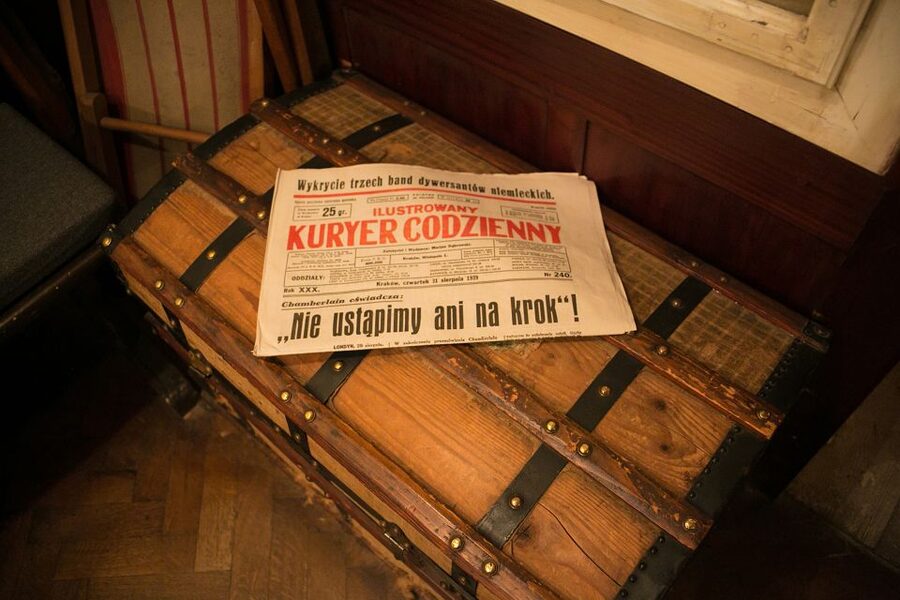
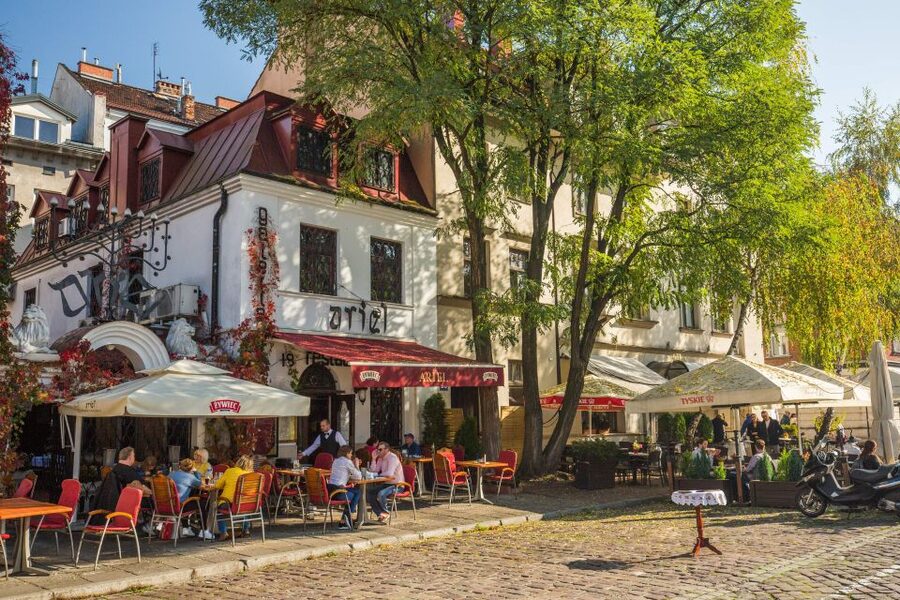
The walk concludes at Plac Nowy, a square with cafés, markets, and local art. This is a smart closing point. After moving from Kazimierz’s sacred sites into the WWII story, you need a “reality check” that people still use these streets now.
I like that the square is lively in a normal way. It helps you reset your body after absorbing heavy themes. It also gives you an easy place to continue your day on your own, grab a drink or snack, and watch how locals move through the city.
Schindler’s Factory, fast-track entry, and why the museum hits hard
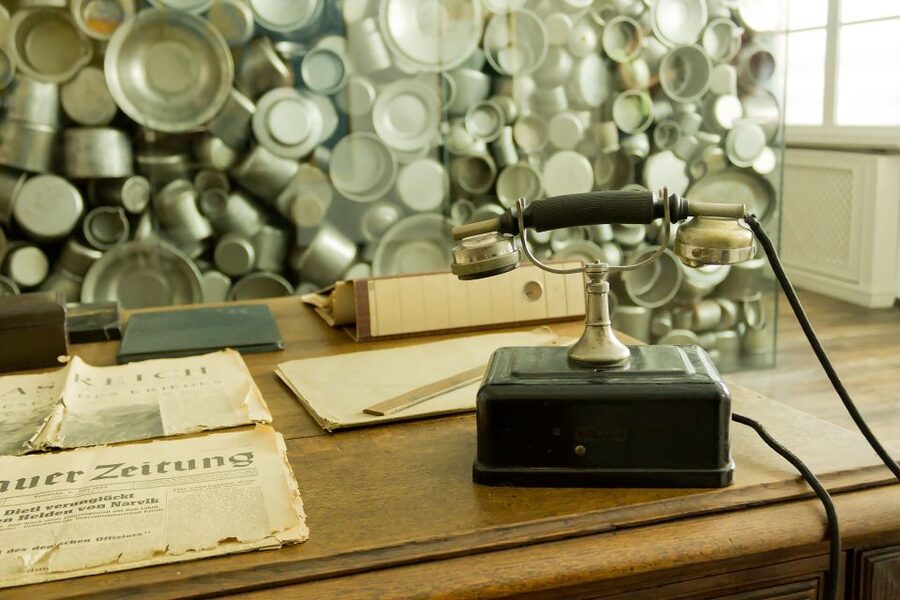
The tour includes Schindler’s Factory, today one of Kraków’s most visited and moving museums. You’ll have fast-track admission, so you’re not burning your energy in line. That’s a real value when you’re already spending 5 hours walking and learning.
One important clarification: although the building originally functioned as Schindler’s factory, it now operates as a museum and no longer contains original production equipment. So don’t expect to see machines in action. Instead, you’re there for the story work.
What you’ll learn inside the exhibition
The exhibition is Kraków under Nazi Occupation 1939-1945. Through that lens, your guide explains Oskar Schindler’s role and why his story became so influential for how we understand human choices during occupation.
The key idea you’ll hear clearly: Schindler employed Jewish workers and used his position, influence, and resources to help protect them from deportation. The museum’s narrative highlights that more than a thousand men and women survived thanks to his actions. You’ll also hear the term Schindlerjuden, used to describe the people who were saved.
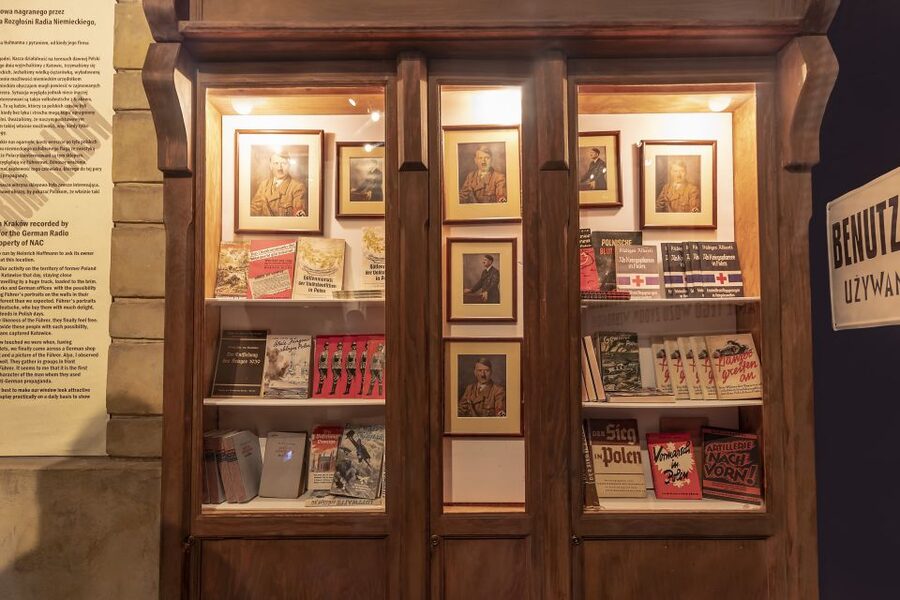
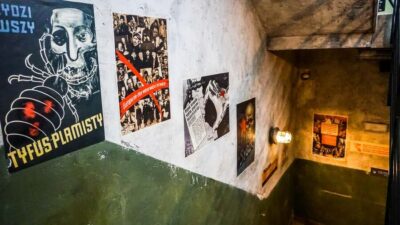
The way the museum builds emotional understanding is practical. Photographs, personal objects, and reconstructed streets show fear, uncertainty, and daily struggles. Then Schindler’s story is placed against that pressure, so you can see what “hope” meant in real, constrained circumstances.
A small caution about seeing everything
In tight museum spaces, it can be hard to watch exhibits and follow the guide’s pointing at the same time. One past experience mentioned audioguides and described the challenge of hearing while not being able to see everything in crowded corridors. So if you’re planning this, decide ahead of time what you want most: close listening to the guide’s narration, or maximum viewing of every display. You can do both, but in a full group, you may have to choose for a few minutes.
Podgórze and the ghetto boundaries you can actually feel
After Schindler’s Factory, the tour continues toward the former Jewish Ghetto in Podgórze. This part of the walk changes the mood fast. Kazimierz streets felt like community space. Podgórze feels like control space.
You’ll see remnants of the ghetto walls. Even when fragments are small, the boundaries matter. They help you understand that segregation wasn’t only a policy, it was a physical reality that shaped movement, safety, and daily routine.
This is also where your guide’s explanations earn their keep. Without the context, you might look at stones and concrete and miss the point. With the guide’s framing, you can start connecting the city’s map to the lived experience of confinement.
Ghetto Heroes Square and the memorial of empty chairs
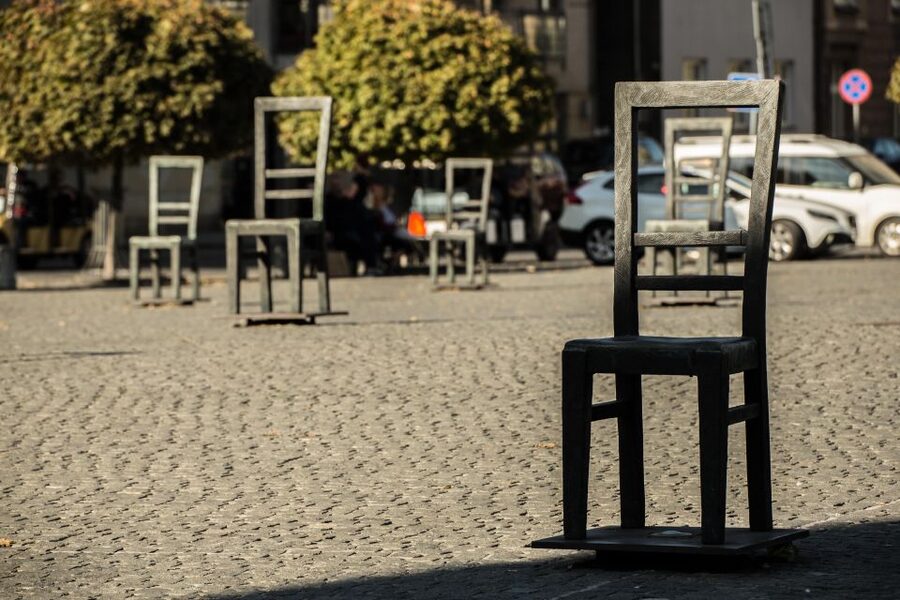
The route leads to Ghetto Heroes Square, described as a former center connected with deportations. Today, it functions as a remembrance space, marked by a powerful memorial: empty metal chairs symbolizing lives lost.
What I like about this stop is that it doesn’t ask you to do mental gymnastics. The memorial is a straightforward visual metaphor for absence, and it’s easy to linger without needing extra explanation.
If you’ve been carrying heavy information from Schindler’s Factory, this square can feel like a moment of pause. It’s not a reset to normal life. It’s a transition into remembrance, in a place that has become public memory.
Price and value: what $81 buys you for 5 hours
At $81 per person for a 5-hour guided walk plus fast-track museum entry, this tour sits in the midrange. The value comes from the combination of three things:
- A licensed guide in your chosen language, which matters when you’re dealing with cultural and WWII context.
- Fast-track admission to Schindler’s Factory, which saves time and reduces stress.
- A route that ties together Kazimierz, Schindler’s story, and Podgórze ghetto remnants, rather than treating them as separate topics.
Food and drinks are not included, so budget for a drink or snack, especially if you plan to continue in Plac Nowy afterward. That’s not a deal-breaker, it’s just part of the math.
If you’re deciding between a short Kazimierz only walk and a longer historical package, this one makes sense because it includes both heritage and the WWII turning point in one coherent flow.
Guide quality, language, and how to get the most out of a group tour
The tour is led by a professional, licensed guide. It runs in a single language at a time, and you choose your preferred option when booking. Available languages are French, English, German, Spanish, and Italian.
This structure helps because the guide can keep a tight narrative without switching. It also means the pacing can be consistent across the group.
One detail from real experiences that I take seriously: guides can make or break the Schindler portion. There’s a specific guide name, Aneta, that came up as especially prepared and effective. That doesn’t guarantee who you’ll get, but it does suggest that the operator tends to use strong storytellers.
Group size is capped at 25. That’s good news. Still, in narrow passages, you might feel a little compressed. If you want your best view inside Schindler’s Factory, try to position yourself near an edge where you can look without blocking others. And keep your expectations realistic: museums can be crowded and your attention will split between guide and displays.
Practical tips to make this tour easier and more respectful
A few small choices will improve your experience right away:
- Bring layers. Weather can influence comfort, and you’ll be outside for significant stretches.
- Wear shoes that handle uneven pavement. Old streets are not made for flip-flops.
- Plan for a slower pace inside Schindler’s Factory and the ghetto area. This is not a quick photo stop.
- When the guide points out synagogues and cemeteries, be ready to listen. Some stops are sensitive, and the best way to honor them is to stay present.
- If you want good photos, take them between narration moments rather than trying to shoot during the guide’s key explanation.
These steps keep you from feeling rushed or disconnected.
Should you book the Kazimierz, Schindler’s Factory and Ghetto guided tour?
I think this is a strong choice if you want a structured, narrative-driven way to understand Kraków’s Jewish heritage and WWII history without turning it into a checklist. The walk through Kazimierz gives you context for culture and community spaces, Schindler’s Factory adds the critical human story of protection and survival, and Podgórze brings you to the ghetto boundaries and remembrance.
Skip it if you’re looking for a light, purely scenic walk, or if you hate crowded indoor spaces. In that case, you may find the museum rooms more stressful than you expected.
If you’re comfortable walking for 5 hours and you like clear guidance, book it. It’s one of the most focused ways to connect street-level heritage with the hardest chapters of Kraków’s past, all in a single day.
FAQ
Where do I meet the guide?
Meet your guide on the steps of the Old Synagogue. They will hold a Kazimierz Guided Tour sign.
How long is the tour?
The tour duration is 5 hours.
What languages are available?
The live guide is available in French, English, German, Spanish, and Italian.
Is Schindler’s Factory included, and do I get fast-track entry?
Yes. The tour includes Schindler’s Factory and includes fast-track admission.
What’s included in the walking route?
You’ll walk through Kazimierz in Kraków, visit Schindler’s Factory, and then explore the former ghetto area in Podgórze, including remnants of the ghetto walls and Ghetto Heroes Square.
Is food or drinks included?
No. Food and drinks are not included.
Do I need to provide names for tickets?
Yes. The museum issues personalized tickets, and providing the full names of all participants at the time of booking is mandatory.
Can I cancel for a refund?
You can cancel up to 24 hours in advance for a full refund.
Fresh Krakow reviews
- Czestochowa Black Madonna Private Day Tour from Krakow★ 5.0 · 18 reviews
- Zakopane PRIVATE TOUR from Krakow★ 5.0 · 18 reviews
- Krakow City Pass – Museums, Atractions & City Transport★ 4.0 · 18 reviews
- Chopin Candlelight Concert with Wine in Krakow★ 5.0 · 18 reviews
- Krakow: Garden of Lights Pinocchio Entry Ticket★ 4.7 · 18 reviews
- Half-Day Wieliczka Salt Mine Tour from Krakow★ 5.0 · 18 reviews
- Auschwitz Birkenau Memorial and Museum group tour from Krakow★ 5.0 · 18 reviews
- Krakow: Schindler’s Factory & Ghetto Guided Tour★ 5.0 · 18 reviews
Schindler's Factory Tours, compared.
Schindler’s Factory Ticket and Guided Tour Option
Read our review →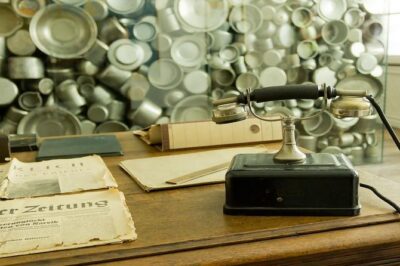
Krakow Schindler’s Factory Guided Tour with Admission Ticket
Read our review →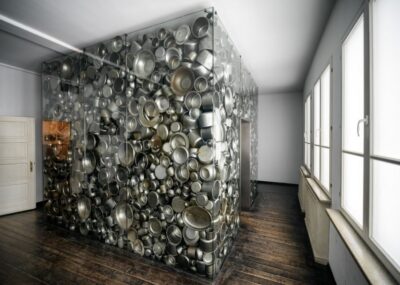
Kazimierz, Schindler’s Factory & Ghetto Guided Tour
Read our review →Browse the lists this tour appears in