
Reviewed · SCHINDLER'S FACTORY TOURS
Jewish Quarter and Schindler’s Factory Guided Tour in Krakow
What makes this tour interesting is how it ties together everyday Jewish life in Kazimierz with the WWII story at Schindler’s Factory. I like that it is not just one museum stop, it is a focused walking route through streets and buildings that still shape the city. I also like that the time with your guide is built in, so you are not left guessing what you are looking at. The one drawback to plan for is the emotional weight of the WWII parts, plus a few synagogue entries are not included.
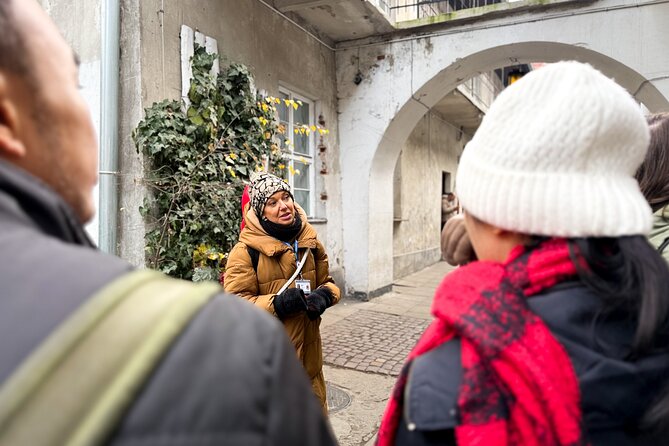
You’ll also appreciate the pacing and the human touch. In my book, the best guides do two things well, they keep moving at a walking pace that makes sense, and they tell stories that help the places click. The tour’s small cap of 25 travelers supports that kind of attention, but it does mean you should bring your ID seriously, because Schindler’s Factory uses personalized tickets.
Key things to know before you go
- Small group size (max 25) helps you get real answers instead of one-way lectures.
- Schindler’s Factory entry is included but requires your full name and ID for the museum gate.
- Several synagogue sites are ticketed separately (Old Synagogue, Remuh, Kupa, Tempel), so budget a bit for entries if you want inside access.
- You’ll cover both Kazimierz and Podgórze with key ghetto landmarks and viewpoints.
- The route includes the Father Bernatek Footbridge linking Kazimierz to Podgórze, built on the site of an older bridge.
- Guides keep a steady pace with breaks so you can handle a 3.5-hour walk without feeling rushed.
A tour that moves through places, not just dates
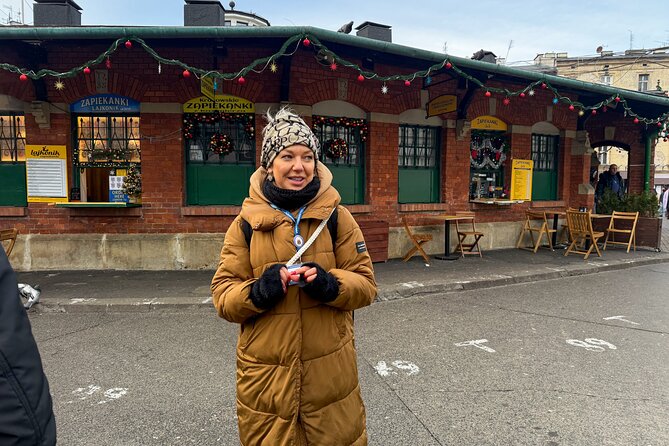
This is a 3.5-hour, English-speaking guided walk that combines Krakow’s old Jewish quarter with the most famous WWII museum in the city. The value is in the order. You start in Szeroka Street, where the architecture sets the scene for centuries of community life, and you end at Fabryka Emalia Oskara Schindlera, where the story turns brutally modern.
That structure matters. If you visit Schindler’s Factory first, you may feel like you entered history through a doorway. Here, you walk up to the story through the streets that held daily life. It makes the museum hits land harder, for the right reasons.
More Jewish Heritage Tours in Krakow
- Krakow: Schindler’s Factory & Ghetto Guided Tour
★ 4.7 · 1,694 reviews - Krakow: Jewish Quarter and Former Ghetto Tour
★ 4.9 · 1,441 reviews - Krakow: Bike Tour of Old Town, Jewish Quarter and the Ghetto
★ 4.9 · 1,155 reviews
Price and logistics, the practical stuff that affects your day
The price is $71.35 per person for about 3 hours 30 minutes, and it is typically booked around 72 days in advance. That timing suggests it’s popular, and it also suggests you should lock it in early if you want a specific slot.
Here’s how the money breaks down. You get a professional guide, and Kazimierz walking tour is included. You also get tickets to Schindler’s Factory Museum included in the price. The stops along the way are mixed: some are marked as free, and several synagogue-related stops have admission not included. So think of the total cost as “tour price plus a few possible entry fees,” depending on whether you want inside visits at the ticketed synagogues.
A couple of details can make or break the day:
- Bring the full names of all participants used at booking, and bring a passport or ID for entry at Schindler’s Factory. If you skip this, entry can be denied.
- The tour ends at Lipowa 4, in front of Oskar Schindler’s Factory. Plan to stick around nearby for transit after the museum.
- Expect walking through older districts, and accept that some stops are only as long as the schedule allows, about 10 minutes each, except the museum.
Entering Kazimierz: Szeroka Street and the old street-level world
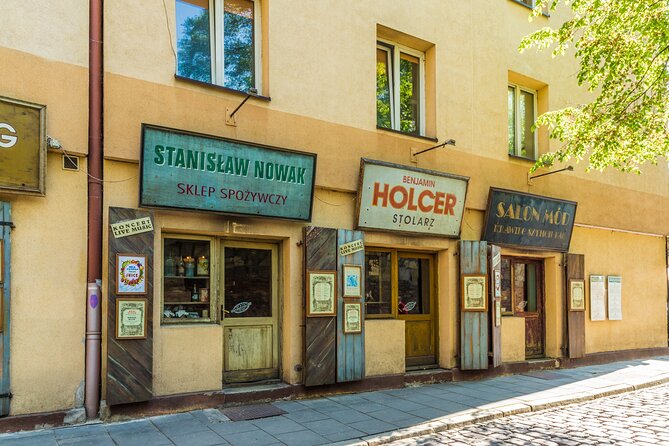
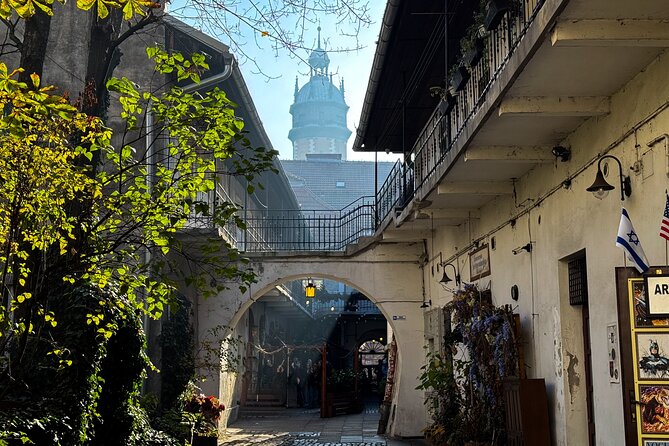
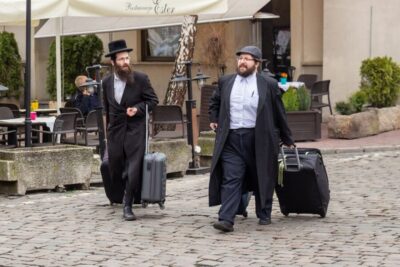
You start at Szeroka 24. From step one, the focus is on street-level context. Szeroka Street is the kind of place where history is not behind ropes only. It is in the street plan, in the feel of the neighborhood, and in the mix of buildings that date to the 16th, 17th, and 18th centuries.
At this stop, you’re not just sightseeing. You’re learning what “Jewish Quarter” means in real space. Your guide can connect the architecture to community life, like how the area became a center for culture and religious buildings over time. It’s a good warm-up, especially before you start walking past synagogue sites with real layers of meaning.
The stop is listed at about 10 minutes, with free admission. So treat it like a briefing plus orientation. If you want photos, this is where you can usually get them without feeling like you’re sprinting.
Old Synagogue, Remuh, and Kupa: what you see changes what you feel
After Szeroka Street, the route narrows into specific synagogue landmarks.
More of Schindler's Factory and wartime Krakow:
- Krakow: Schindler’s Factory Ticket and Guided Tour Option
★ 4.3 · 4,306 reviews - Krakow: Schindler’s Factory Tour with Entrance Ticket
★ 4.5 · 3,182 reviews - Krakow: Schindler’s Factory Skip-the-Line Ticket
★ 4.4 · 3,105 reviews - Krakow: Schindler’s Factory Tour with Entrance Ticket
★ 4.6 · 1,737 reviews
Stara Synagoga (Old Synagogue)
Next up is Muzeum Krakowa – Stara Synagoga. The Old Synagogue is described as the oldest preserved synagogue in Poland and a major monument of Jewish religious architecture in Europe. Even if your time inside is limited, the building itself helps explain why these sites matter beyond religion, they represent memory you can stand in front of.
This stop is about 10 minutes, and admission is not included. If you want to go inside here (and at the other ticketed synagogues), plan for a separate entry fee.
Remuh Synagogue and the cemetery complex
Then you reach Remuh Synagogue. It’s identified as the second oldest Jewish prayer house in Kraków, and the synagogue plus the adjacent cemetery form a unique complex. I like this stop because it turns architecture into something personal. Cemeteries and sacred spaces change how you read the rest of the walk.
Again, time is tight at about 10 minutes, and admission is not included.
Kupa Synagogue, the last one of an era
The route also includes Kupa Synagogue. It is described as the last synagogue built during the existence of the Jewish town. It also carried names tied to its neighbors: Szpitalna because of proximity to the Jewish hospital, and Poor because the poorest members of the community prayed there.
This is the moment where the tour can feel especially human. A building like this is not only “old.” It is a clue about who the community served and how different groups found a place to worship.
Like the other synagogue stops, it’s listed for about 10 minutes and admission is not included.
Quick reality check on ticketed synagogue stops
The tour includes four synagogue-related entries that are marked as ticket not included (Old Synagogue, Remuh, Kupa, Tempel). That doesn’t mean you will miss them, but it does mean you should expect a little extra spend if you want the inside view at each. If your budget is tight, prioritize the one you most want to enter.
Market Square and Tempel Synagogue: daily life mixed with memory
The route shifts a bit from synagogue-focused stops into broader neighborhood landmarks, which is smart. It prevents your brain from getting stuck on one type of place.
Market Square (Nowy Świat area)
Stop five is Market Square, also described as part of the Old Town District I, with a long administrative history and recognition as a historical monument in 1994. You don’t need a history degree to appreciate this stop. It helps you understand how the city reorganized itself over time, and how the Jewish Quarter was not isolated from the rest of Kraków.
This stop is listed as free admission.
Tempel Synagogue: active today
Then comes Tempel Synagogue. It’s identified as one of four active synagogues in Kraków. Services are held sporadically, but it functions as a center of Jewish culture, hosting concerts and meetings, especially during the Jewish Culture Festival.
This stop is easy to remember because it adds an important angle. The story here is not only “then and gone.” It’s also “this is still a living part of Kraków.” Time is short (about 10 minutes), and admission is not included.
If you care about seeing a place that is still in use, this is a strong candidate for paid entry.
Corpus Christi Church and a brief architectural reset
The itinerary includes Corpus Christi Church (Kosciol Bozego Ciala), about 10 minutes, with free admission. The description emphasizes the way the interior combines gothic stone walls with baroque gold.
I like this part of the walk because it gives you a mental breather. You’ve been absorbing Jewish religious architecture, and then you see how Kraków’s religious art also works in a different style. It helps you feel how the city’s layers overlap in real space.
Also, in practical terms, this is a good photo-and-pause stop. Big architecture often makes it easier to slow down without feeling behind schedule.
Podgórze crossover: Father Bernatek Footbridge and the ghetto landscape
After Kazimierz, you connect to Podgórze with a landmark that looks modern but sits on older ground.
Father Bernatek Footbridge
Stop eight is the Father Bernatek Footbridge. It’s noted as being built in 2010 on the site of the former Podgórze bridge, connecting Kazimierz with Podgórze. That detail matters. It’s a reminder that even when you see something new, you might be walking over continuity.
This stop is free and quick, about 10 minutes. Use it to reset your bearings. Once you get into ghetto territory, the city can start to look different, and it helps to have an easy visual landmark in mind.
Ghetto Heroes Square: Plac Bohaterow Getta
Then you reach Plac Bohaterow Getta (Ghetto Heroes Square). This square was within the ghetto between 1941 and 1943. It was described as a place of concentration of the Jewish population before transport to concentration camps.
Today, the square features cast-iron chairs placed individually. They symbolize items left behind during the liquidation of the ghetto. This is one of those places where you don’t need extra explanation to understand what it’s doing. Your guide’s role is to give you context so your emotions have something solid to hold.
This stop is free admission, and it is listed for about 10 minutes. In a short time, it can shift from “landmark” to “you understand why this walk matters.”
Schindler’s Factory: what the museum does best in 90 minutes
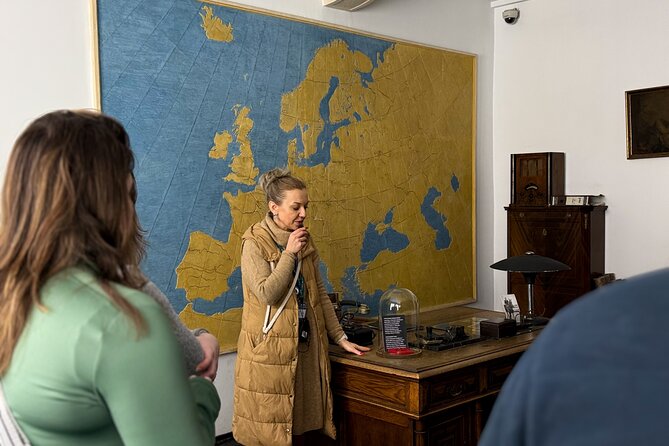
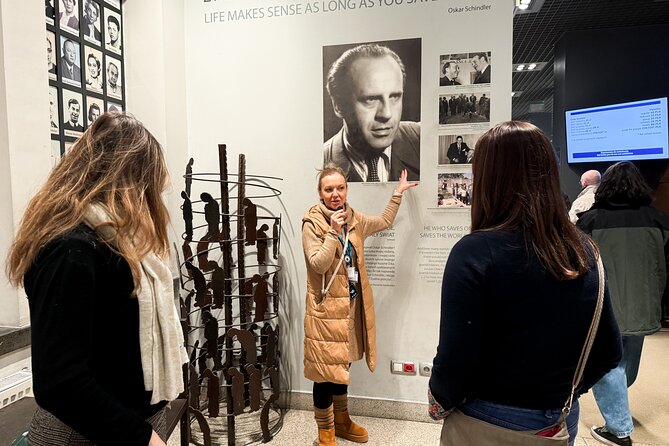
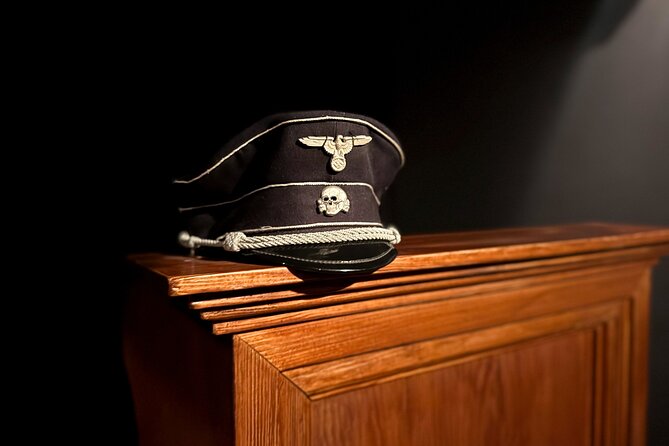
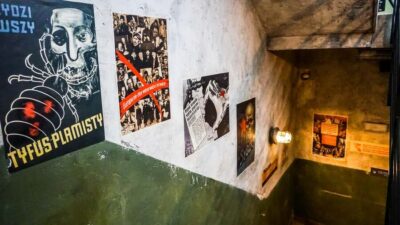
The final stop is Fabryka Emalia Oskara Schindlera, scheduled for about 1 hour 30 minutes with admission included. This museum presents the tragic WWII events in Kraków, and it is linked in the description to the Oscar-winning film Schindler’s List by Steven Spielberg.
Here’s what makes the museum visit valuable in a guided format. Your guide can help you read what you’re seeing. Without that, the modern exhibition style can feel like a lot of information at once. With guidance, you tend to catch the key story threads faster, and you can spend more time actually absorbing the most important sections.
I also appreciate that the museum time is not huge. Ninety minutes is enough to get the major points and still leave you with enough energy to reflect rather than crash. The pacing can matter, especially after multiple sacred sites and street stops.
Pacing, breaks, and why the guide choice matters
One of the strongest points from the tour experience is how the guide handles the human side of a heavy itinerary. The tour is designed for a walking route with short stops, but it still takes effort. A good guide keeps an eye on how fast people move, and builds in breaks so you can stay present.
In practice, you should expect a guide who explains, then watches the group, then adjusts. That approach shows up especially in the synagogues and ghetto-related stops, where people often slow down naturally. If you’ve ever done “classic city tours” where everyone gets rushed through the hard parts, you’ll notice the difference here fast.
Who should book this tour, and who might want to think twice
This tour is a strong fit if you want a guided, respectful walk that connects the Jewish Quarter and ghetto sites to the WWII story at Schindler’s Factory. It is also a smart choice if you prefer structure: specific stops, a clear route, and a guide to help you understand what you’re seeing in a short window.
You might think twice if:
- You are very sensitive to WWII subject matter, because the museum and ghetto square are not light.
- You hate paying extra entry fees for indoor visits, since multiple synagogue admissions are not included.
- You don’t have the correct ID and matching names, because Schindler’s Factory uses personalized tickets and entry may be denied.
If you like walking, short stop-and-start pacing, and you want your Krakow Jewish history experience to feel coherent instead of scattered, this is the kind of tour that works.
FAQ
FAQ
What is the duration of the Jewish Quarter and Schindler’s Factory tour?
It runs for approximately 3 hours 30 minutes.
What does the tour price include, and what does it not include?
The price includes tickets to Schindler’s Factory Museum, a professional tour guide, and the Kazimierz walking tour. Tips are not included.
Are synagogue tickets included during the walk?
Not all of them. The Old Synagogue, Remuh Synagogue, Kupa Synagogue, and Tempel Synagogue are listed as having admission tickets not included, so you may need separate entry fees if you want to go inside.
Do I need to bring ID for Schindler’s Factory?
Yes. Because the museum uses personalized tickets, you must provide full names when reserving and bring a passport or ID for entry.
Where does the tour start and end?
The tour starts at Szeroka 24, Kraków and ends at Lipowa 4, in front of Oskar Schindler’s Factory.
Can I cancel for a full refund?
Yes, you can cancel for free up to 24 hours before the experience start time for a full refund.
Should you book this Jewish Quarter and Schindler’s Factory tour?
If you want a single, well-paced plan that covers Kazimierz street life, active Jewish sites, ghetto landmarks, and then the big WWII museum, yes, book it. The included Schindler’s Factory ticket saves time, and the guided format helps the story make sense rather than just shock you.
Just do one thing before you go: bring the right ID and accept that a few synagogue entries may cost extra. If you can handle that, you’ll walk away with a Krakow that feels connected, not random.
Fresh Krakow reviews
- Krakow Zakopane Cable Car Vodka Cheese and Hot Springs Tour★ 3.5 · 3 reviews
- Krakow Skip The Line Wawel Castle & Old Town Guided Tour★ 5.0 · 3 reviews
- Krakow: Zakopane and Thermal Pools Tour with Hotel Pickup★ 5.0 · 3 reviews
- Museo Czartorisky : Visita in Lingua Italiana salta fila…★ 3.5 · 3 reviews
- Half-Day John Paul II Route Tour from Krakow★ 5.0 · 3 reviews
- Krakow: John Paul II Home & Black Madonna Sanctuary – Guided Tour★ 5.0 · 3 reviews
- 1-Hour Tour to Krakow’s Old Town by Electric Golf Cart★ 5.0 · 3 reviews
- Auschwitz and Birkenau WITHOUT GUIDE private transport from Kraków★ 5.0 · 3 reviews
Schindler's Factory Tours, compared.
Schindler’s Factory Ticket and Guided Tour Option
Read our review →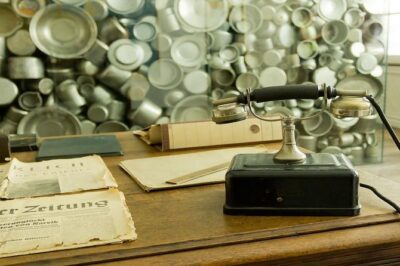
Krakow Schindler’s Factory Guided Tour with Admission Ticket
Read our review →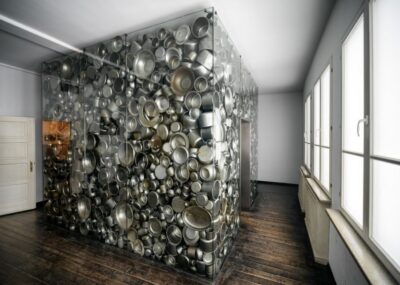
Kazimierz, Schindler’s Factory & Ghetto Guided Tour
Read our review →Browse the lists this tour appears in