
Reviewed · COMMUNISM TOURS
Communist Warsaw: private tour by retro minibus with hotel pickup
If you want Warsaw history without a sore neck and nonstop walking, this is a fun, focused way to see how communist-era ideas shaped the city. The route is built around the big places you already recognize, then explains what they were trying to do to everyday life.
I especially like two things about it: the retro minibus ride that keeps you moving through different neighborhoods quickly, and the fact that it’s private, so your guide can give full attention to your questions. The only real drawback to know upfront is that these classic vintage vehicles may have no air conditioning, so warm days can feel warm.
Key Points to Know Before You Go
- Private, small-group format means your guide can respond to your questions in real time
- Hotel pickup and drop-off is included, which saves time and hassle
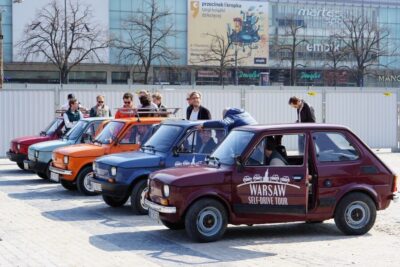
- Retro communist minibus transport keeps you comfortable between neighborhoods
- No Palace terrace stop keeps the schedule tight and focused on the main sights
- Walking happens at each stop, so wear comfortable shoes
- Admission is free at the stops and the tour includes all fees and taxes
Why Communist Warsaw Works So Well in a Retro Minibus
Warsaw has a lot of layers, and this tour puts them into a clear route instead of asking you to connect the dots on your own. You start with one of the most recognizable communist-era landmarks in the city, then move through planned districts and everyday-city areas where the story feels more personal and less staged.
I like that the experience does not pretend the topic is tidy. It treats communist Warsaw as something real, with compromises, propaganda buildings, and neighborhood impacts you can actually see. Even better, you are not stuck zigzagging around the city on foot, because the transport between sights is part of the plan.
The vibe is part sightseeing, part explanation. You get the “why” behind the architecture and the layout, not just dates and names.
More of communist-era Poland:
- Warsaw: Museum of Life Under Communism Entry Ticket
★ 4.5 · 178 reviews - Private Tour: Warsaw’s Communist History by Retro Fiat
★ 5.0 · 115 reviews - Warsaw: Communist History Self-Driving Tour
★ 4.8 · 52 reviews
Price and Logistics: What You’re Paying For
At $134.43 per person, you are paying for a short, guided route with transport, pickup, and a private group setup. That sounds simple, but the value is in what’s included: you get an English-speaking local guide, transport by retro communist minibus, and hotel pickup and drop-off. All fees and taxes are also included.
A practical bonus is that the key stops are listed as admission ticket free. That means you are not juggling extra payments or hunting for ticket windows during the 3-hour run. The main extra cost to plan for is optional tipping, since gratuity is not included.
One thing to watch is how the company counts time. Transfer from and to your hotel counts toward the tour’s total duration, so if your hotel is far out, you might spend more time in transit than you expect. If you are trying to maximize time with the guide at each location, meeting in the city centre can sometimes be smarter than waiting for pickup from a distant hotel.
Meeting, Pickup, and the Real Meaning of 3 Hours
This tour runs about 3 hours and stays active the whole time. It is not a long sit-and-watch kind of outing. The minibuses handle the connections between neighborhoods, and then you do short walking segments at each stop.
Because pickup is part of the schedule, your exact experience can shift depending on your starting address. If your pickup location is not already in the selection box, you send the address to the operator, so they can route pickup properly. After that, the day feels straightforward: pickup, drive to the first landmark, then a sequence of neighborhood stops with time to look and listen.
Also keep in mind the vehicle details. These classic minibuses are vintage, and some are not equipped with seat belts, which is permitted for historic vehicles. There is heating for winter season, but the lack of air conditioning is a real factor in warmer months.
Palace of Culture and Science: The Soviet-Era Icon, Minus the Terrace
You kick off at the Palace of Culture and Science, Warsaw’s most recognizable communist landmark. Built between 1952 and 1955, it was constructed as a “gift” from the Soviet Union, and it still triggers mixed feelings among locals. If you want one single building that symbolizes the era’s influence, this is the one.
You also get a helpful schedule detail up front: the tour does not visit the terrace (the itinerary specifically notes that terrace access is not included). That keeps time focused on the exterior impressions and the surrounding context, which is often what most people actually want from this kind of route anyway.
What you gain here is perspective. The building is controversial, but it is also a compass. It frames the rest of the tour, because every neighborhood stop later connects back to the communist idea of what Warsaw should become.
If you’re the type who likes architecture and public monuments, you’ll likely enjoy the way your guide links buildings and symbolism to politics. One English guide named Tom stood out in recent feedback for clearly explaining communist history through buildings and statues, and that same approach is exactly what makes a start like this work.
More to book in Warsaw:
- Warsaw: Chopin Concert in the Old Town
★ 4.8 · 2,287 reviews - Warsaw: Traditional Galar Cruise on The Vistula River
★ 4.6 · 1,640 reviews - Warsaw: Old Town Highlights Walking Tour in English
★ 4.7 · 1,516 reviews - Warsaw Concert: Chopin – Painted by Candlelights with Wine
★ 4.8 · 1,442 reviews
Muranów: Socialist Reconstruction in a Planned Neighborhood
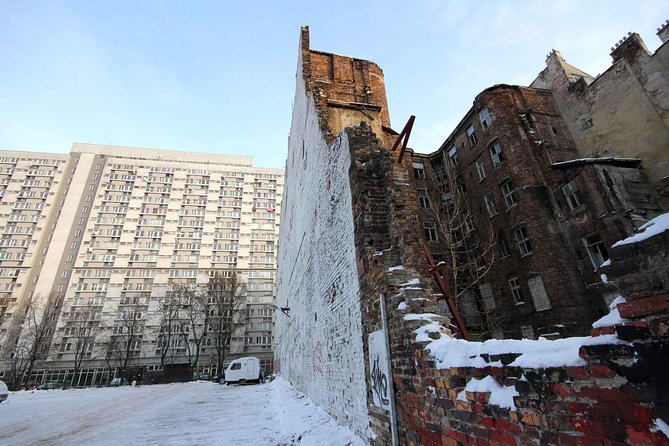
After the main landmark, the route heads to Muranów, a district tied directly to postwar rebuilding choices. The story starts with what Warsaw was before World War II: a dense, tenement-heavy city that looks more like a typical capitalist European urban pattern.
Then the narrative shifts after 1945, when communist authorities and modernist architects treated reconstruction as a chance to redesign society. In Muranów, you can see that thinking in the layout: a green residential district built in the late 1940s on wartime ruins, planned as a model socialist neighborhood.
The value of this stop is not just seeing buildings. It’s seeing how planning itself becomes a political tool. Instead of talking only about ideology, your guide can point out how the district’s design is part of a broader attempt to create a particular kind of daily life.
One practical note: the stop length is short, about 20 minutes, so come ready to look and listen. If you love photo stops, this is one where you can get a lot out of quick viewing because the design concept is visible fast.
Old Town Reconstruction and the Soviet-Linked Traffic Route
You do not spend time in a museum or a long walkthrough here. Instead, you pass through an area connected to the reconstruction of the Old Town and the infrastructure built underneath it.
The itinerary explains that a key traffic route was built with assistance from Soviet engineers involved in the Moscow metro. That’s a specific, memorable connection, and it helps you see communist influence not only in statues and government buildings, but also in how cities move and function.
What I like about this part of the route is that it reframes “reconstruction” as more than rebuilding what was lost. It is also rebuilding what people needed next: roads, movement, and the machinery of daily city life.
Since this is a pass-through segment, you’ll get less time than the named stops. Still, it is a useful bridge that keeps the tour from feeling like a collection of disconnected sights.
Praga Połnoc: Trading, Western Music, and Survival
Next comes Praga Połnoc, which shifts the tone. This district shows the darker realities of communist Warsaw, where state investment lagged and the area became a center of informal and illegal activity.
The specifics are the interesting part. Behind courtyards, residents exchanged foreign currency, traded Western music, and searched for goods that were unavailable elsewhere. That turns the story from “government decisions” into “what people did to survive inside the system.”
I find stops like this valuable because they keep the tour honest. You do not just see the official face of communist ideology. You see how daily life adapted when supplies, access, and rules did not match everyday needs.
This stop lasts about 30 minutes with admission noted as free. That extra time compared with some other stops gives you a better chance to absorb the area’s message, even with only short walking segments.
Śródmieście: Prewar Modernism Meets Socialist Realism
The final major segment is Śródmieście, the government district area where prewar modernist architecture meets monumental socialist realism. It is a strong end point because it mixes styles and intentions in the same urban zone.
The tour also shares a story that adds bite. It notes that the communist leader of Poland reportedly refused to move into the new party headquarters, saying it looked more like a capitalist bank than an office for a workers’ party. That kind of detail matters because it shows the mismatch between image and reality, even inside the leadership.
You end with about 45 minutes here, which helps you slow down and let the themes settle. It also gives you time to take in how different architectural languages coexist in the same neighborhoods.
If you like history through visible contrasts, you will probably leave with clearer mental pictures of how communist-era priorities shaped the city’s look.
The English Guide Factor: Getting Explanations That Stick
This is a private tour/activity, so you are not sharing your guide with strangers and getting rushed answers. Your guide is described as a professional English-speaking local guide, and that language detail is practical in Warsaw, where the city is visitor-friendly but explanations about ideology and architecture are much clearer in English.
The best sign here is the specific feedback about the guide style. One highlight from recent comments praised Tom for describing communism with real clarity and for connecting the story to buildings and statues you can actually see from the street.
That matters because this topic can feel abstract. A good guide makes it physical. You start to recognize how a monument’s placement, an architectural style, or a planned district’s layout is part of an argument about society.
If you enjoy asking questions, this format gives you that room. You can press for clarification when something feels confusing, especially since the route covers multiple neighborhood styles and time periods.
Comfort Notes for Retro Minibuses (Heating, Seat Belts, and Footwear)
The retro vehicle adds charm, but it also adds reality. These classic minibuses are not necessarily modern comfort machines. The information states that they are not equipped with air conditioning, and some do not have seat belts, though this is permitted for historic vehicles. Heating is provided for the winter season.
So plan your clothing with the weather in mind. On cold days, you should be fine thanks to heating. On hot days, think breathable layers and quick shade whenever you get out for walking segments.
Since the minibuses mainly transport you between locations, you still do short walks at each stop. Comfortable clothing and suitable footwear are recommended. This is not a long hike, but the stops are paced and you want shoes that handle city sidewalks.
Finally, remember that each minibus holds up to 8 passengers, and a fleet of 5 minibuses is available. That supports the “private group” idea while keeping the route smooth.
Who This Tour Fits Best (And Who Might Prefer Something Else)
This tour fits best if you want a guided route through communist-era Warsaw without doing long distances on your own. The hotel pickup is also a big plus if you want to start quickly, avoid transit stress, and stay focused on the story.
It is a good match for people who enjoy:
- architecture and public monuments
- neighborhood planning and urban design
- political history that can be seen on the street
The one group that might hesitate is anyone who strongly dislikes riding in older vehicles without air conditioning. If you travel in hot weather, the comfort factor becomes more important, even though the heating promise covers winter nicely.
It also helps if you like a “look, listen, move” structure. The tour runs about 3 hours, with walking segments and guide explanations at each location.
Should You Book This Communist Warsaw Private Tour?
If you want a high-value, time-efficient way to see communist Warsaw with minimal hassle, I’d book it. The biggest reasons are practical: hotel pickup and drop-off, a private English-speaking guide, and transport on a retro minibus that keeps the pacing workable. You also avoid the Palace terrace stop, which often cuts down on bottlenecks and keeps your time with the guide meaningful.
Before you book, sanity-check the vehicle comfort for your season. If you travel in warm weather, plan for the lack of air conditioning. Also think about where your hotel sits, since transfers count toward the total tour time, and meeting closer to the city centre can help you get more of the guided experience per minute.
If your goal is to understand how communist-era planning shaped Warsaw’s recognizable landmarks and everyday areas, this route does that in a tight, guided package.
FAQ
How long is the Communist Warsaw private tour?
The tour lasts about 3 hours.
Is hotel pickup and drop-off included?
Yes. Hotel pickup and drop-off are included in the tour.
Is this tour private?
Yes. It is private, so only your group participates.
What language is the guide?
The guide speaks English.
Do you visit the Palace of Culture and Science terrace?
No. The tour specifically notes that the terrace on the Palace is not part of this experience.
How much walking is involved?
There are walking segments at each stop, and the minibuses mainly handle transport between locations. Comfortable clothing and suitable footwear are recommended.
Are there admission tickets to pay for the stops?
The listed admission for the stops is free, and the tour includes all fees and taxes. Tip or gratuity is not included.
Are retro minibuses comfortable in hot weather?
The vehicles are not equipped with air conditioning. Some do not have seat belts (historic vehicles), and all vehicles have heating for winter.
Can children join the tour?
Adults and children over 150 cm (4 ft 9 in) can participate. For a child under 150 cm, you need to contact the operator in advance to check seat booster availability, since seat boosters are mandatory under Polish law.
What is the cancellation policy?
Free cancellation is available, and you can cancel up to 24 hours in advance for a full refund. Cut-off times are based on the experience’s local time.
Fresh Warsaw reviews
- Warsaw Off The Beaten Path Self-Drive Tour★ 5.0 · 18 reviews
- Private Warsaw Chopin Airport One Way Transfer★ 5.0 · 18 reviews
- Zelazowa Wola: Frederic Chopin Half-Day Private Tour★ 4.7 · 18 reviews
- Warsaw: 2-Hour Chopin’s Life Walking Tour★ 5.0 · 19 reviews
- Warsaw: melt museum Entry Ticket★ 3.5 · 19 reviews
- Deluxe Polish Food Tour Experience in Warsaw★ 5.0 · 19 reviews
- FSO Gunrange, Shooting Package US ARMY★ 5.0 · 19 reviews
- Gdansk and Malbork Castle Small Group Tour from Warsaw with Lunch★ 4.5 · 20 reviews
Communism Tours, compared.

Legendary Private Nowa Huta Communism Tour with Crazy Guides
Read our review →
Nowa Huta: Steelworks Administration Buildings/Shelters Tour
Read our review →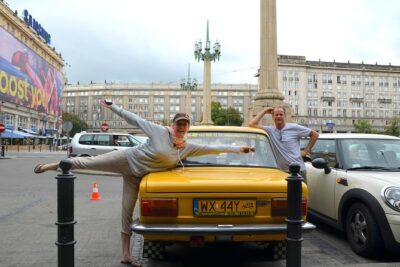
Private Tour: Warsaw’s Communist History by Retro Fiat
Read our review →
Private Nowa Huta Adventure Tour in Communist Cars
Read our review →
Browse the lists this tour appears in