
Reviewed · COMMUNISM TOURS
Krakow: Nowa Huta Guided Tour in Vintage Car
Nowa Huta is interesting because it was planned like an ideal communist city, then lived like a real place with real propaganda, steel, and fear. I like the Socialist Realist architecture you can actually see up close, and I like that the tour is told by local guide Mateusz (a name that shows up again and again), not a textbook script. One thing to consider: you’re driving in older cars, and comfort and vehicle features (like seatbelts) may be basic compared with modern standards.
I also appreciate how the experience balances big political symbols with small street-level details. You’ll spend real time walking, then switch to a vintage-car perspective that makes the whole story feel less abstract. If you want a fast hit of photos only, this might feel a bit slow, since there are longer guided stops.
What You’ll Remember Most About Nowa Huta by Vintage Car
Socialist Realism you can read in real streets, not just in postcards
Roses Avenue and Plac Centralny, including where Lenin’s big statue once stood
A WWII Soviet tank close-up, which adds weight to the Cold War theme
Underground nuclear-war shelters and steelworks stories, depending on your option
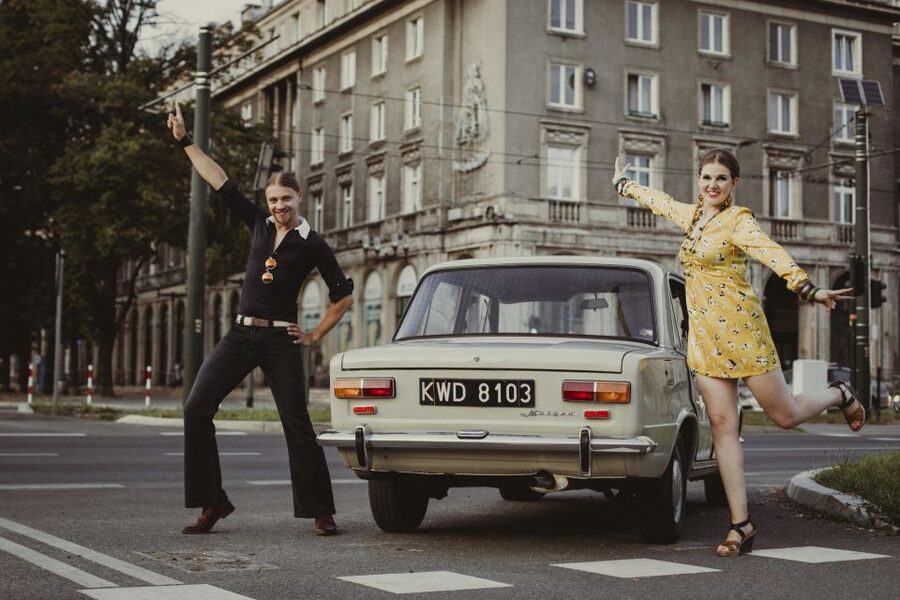
A classic Polish car ride, with 1970s and 1980s vibes that draw curious looks
A guided style that answers questions, with extra old photos for context
Why This Nowa Huta Tour Feels Different Than a Standard City Sightseeing Day
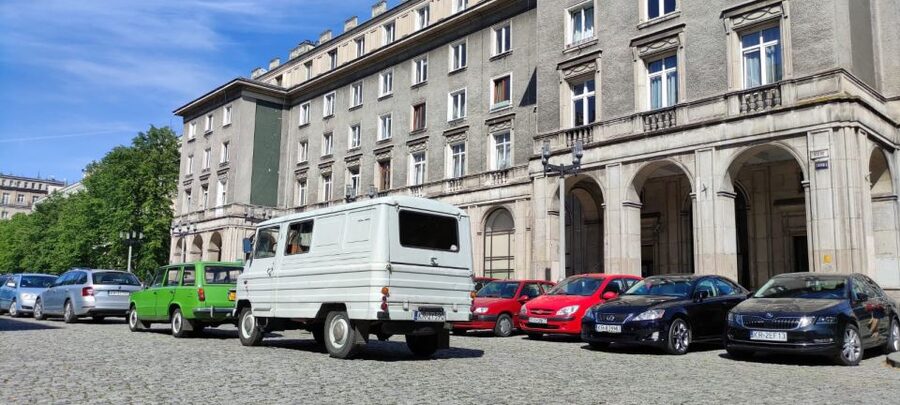
Nowa Huta is part of Krakow that most people miss, partly because it’s not the postcard core. It was built around heavy industry, and that purpose shapes everything: broad avenues, planned squares, repetitive building blocks, and a strong propaganda message baked into design. The result is a neighborhood that feels like a set and a living city at the same time.
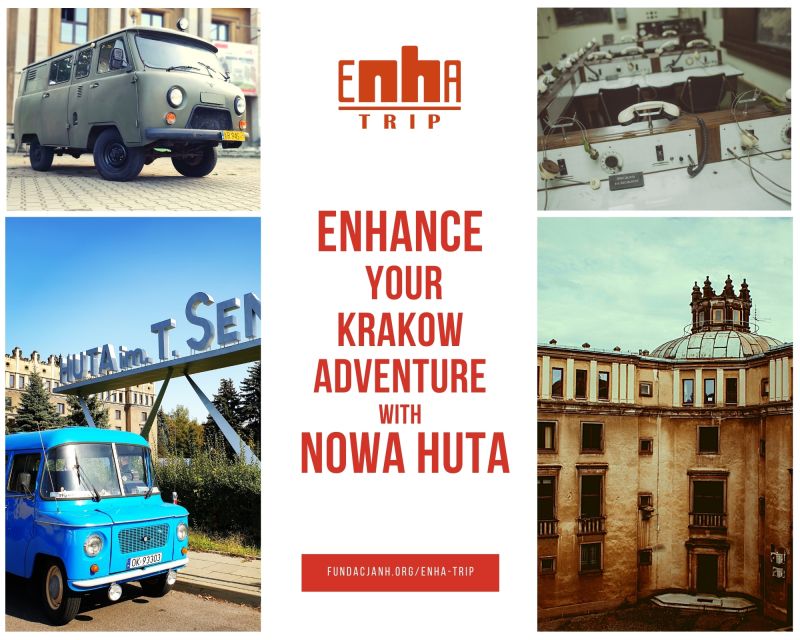
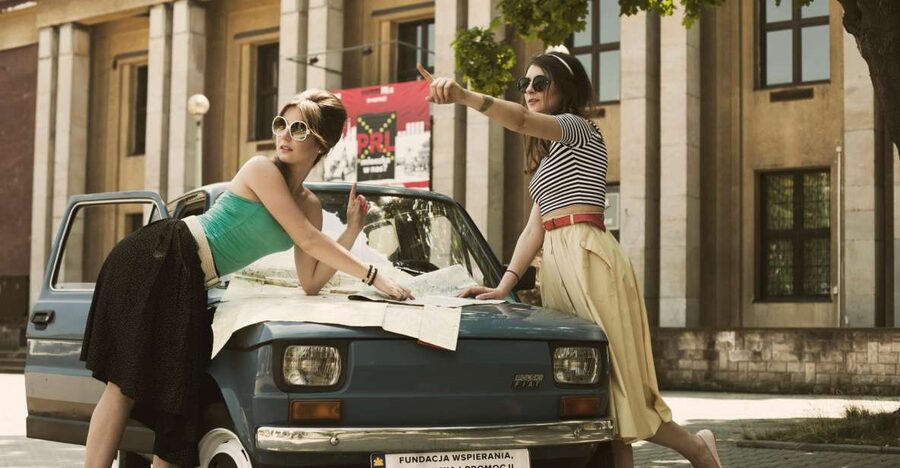
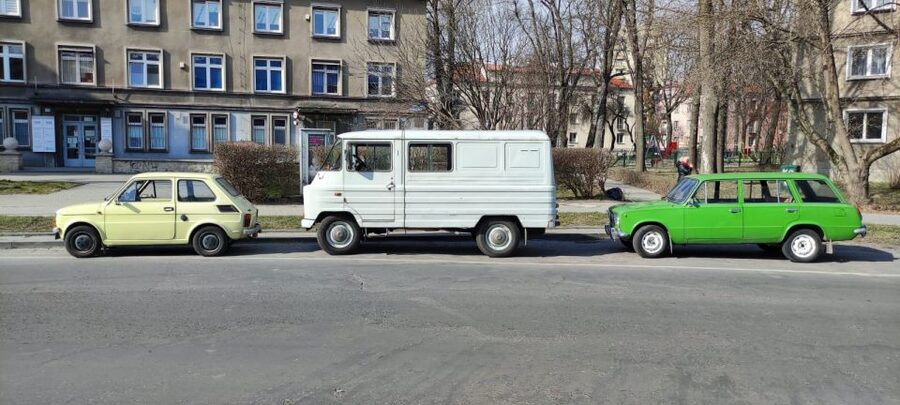
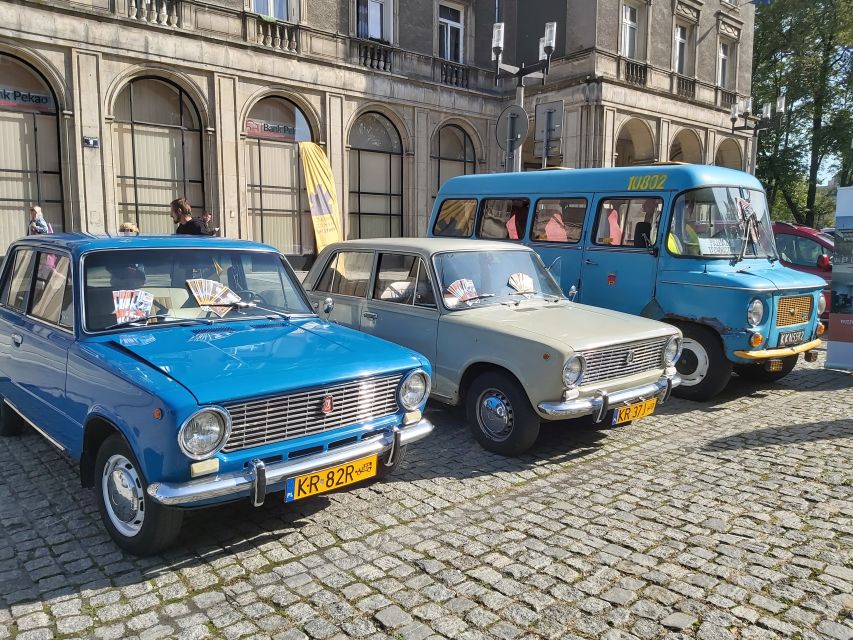
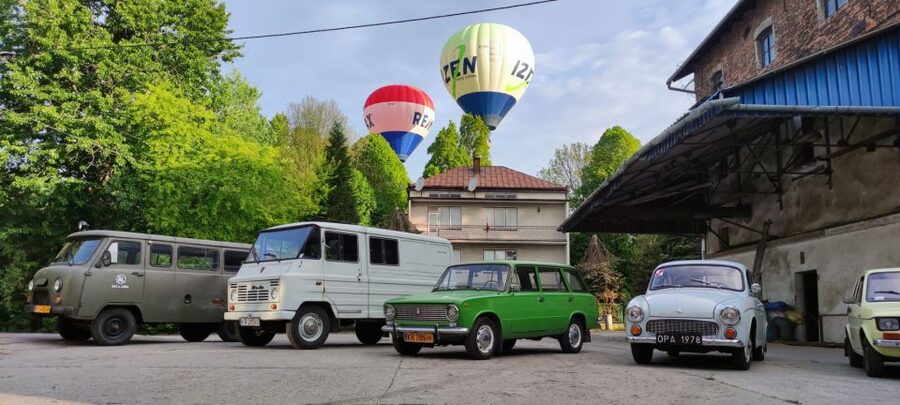
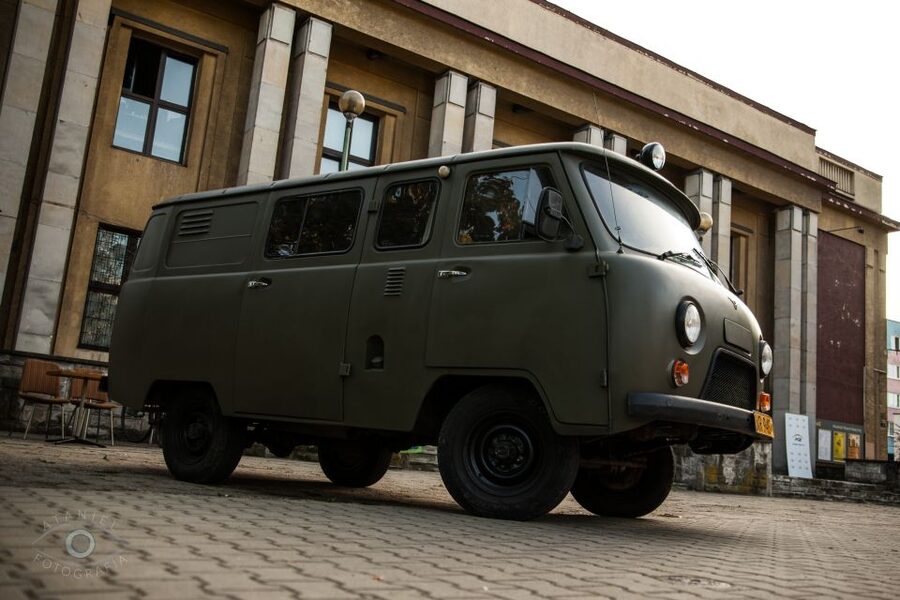
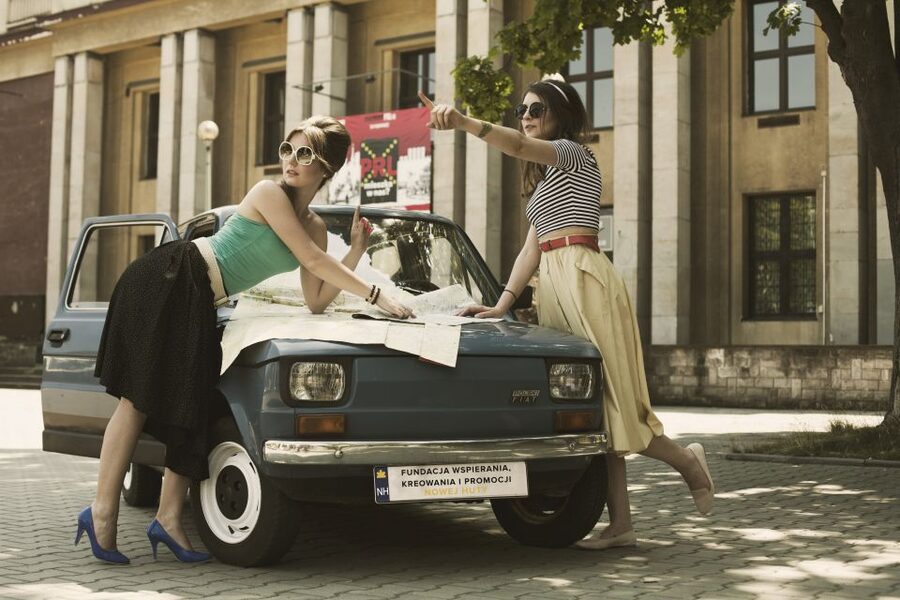
What makes this tour click is the format. You don’t just walk through Nowa Huta with a map. You ride through it in an old Polski-era car like a Fiat 126 (Maluch), Lada 2101, Nysa, Żuk, or a Soviet-style UAZ 452. That means you experience the scale of the city plan from the road, and you reach key spots without losing half the day in transit.
The other big ingredient is perspective. The stories are delivered by an English (and sometimes Polish or Russian) local guide working with the Foundation of Positive Promotion of Nowa Huta, which is focused on preserving the area’s artifacts and telling the story with care. You’ll get the “what happened” timeline, but you’ll also get the “how it felt” street details, including how locals viewed symbols like the Lenin statue.
More of communist-era Poland:
- Legendary Private Nowa Huta Communism Tour with Crazy Guides
★ 5.0 · 262 reviews - Nowa Huta: Steelworks Administration Buildings/Shelters Tour
★ 4.8 · 260 reviews - Krakow: Private Nowa Huta Adventure Tour in Communist Cars
★ 4.9 · 114 reviews
The Vintage Car Experience: Nostalgia With Practical Details
This is the part you’ll probably be grinning about before you even start. You’ll meet your guide and then get into a classic car, often a green Lada or a Fiat 126 model, based on what’s available. The cars are unusual enough that you can expect people to notice you as you roll through Krakow.
The best part of the car ride is not only the fun. It’s the way it changes your brain. In a vintage car, you naturally look wider, you slow down mentally, and you notice details like building proportions and street alignment. When you later walk through squares and avenues, those earlier views help you “connect the dots” in your head.
The main consideration is comfort. Older vehicles may have limited modern features, and at least one guest noted surprise about seatbelts not being in working order. I’d plan to dress for weather changes, bring a light layer, and treat the ride as an experience, not a luxury transfer.
Also, keep your expectations realistic about timing. The tour runs about 150 to 270 minutes, and you’ll spend meaningful time on foot. That means the car is part of the show, but it doesn’t replace the walking and guided stops.
Central Square and Aleja Róż: Where Lenin’s Statue Once Owned the View
Most people associate communism with posters and museums. Nowa Huta makes it spatial. Your route includes a guided stop at Plac Centralny (Central Square), then a stroll connected to Aleja Róż (Avenue of Roses). Even if the avenue doesn’t look like an ideological stage today, the planning shows through.
This is where you learn about the famous Lenin statue that once stood along Aleja Róż. You’ll hear the story behind it, including how the symbol was received by local people and how it was later removed. If you want an extra world-curiosity thread, one guest story mentions that the statue was bought by Sweden and displayed later at High Chaparral, a cowboy city theme park. It’s the kind of fact that makes the history feel like it keeps traveling.
Why this matters: those squares and avenues were not accidental. They were built to broadcast power and order. When you stand in the area and hear how the city was planned as an “utopian” project, you start to see the gap between the ideal and daily life. That contrast is the heart of Nowa Huta.
And yes, there are photo moments. The tour is built for pictures, but it’s not only about photos. The guide uses those points to explain urban layout, propaganda influence, and how the city’s steelworks identity shaped everyday movement.
Ujastek 1 and the Rhythm of the Socialist Block
After the central highlights, the tour shifts into slower, longer observation time at Ujastek 1. You get a guided visit for about 1.5 hours, which is a real chunk of your tour. That length is important because it gives you time to notice patterns.
In Socialist Realism and Stalin-era planning, repetition is a tool. Building shapes, street widths, and public space placement were meant to create a sense of unity and control. On your own, you might walk past blocks and just see “big apartment buildings.” With a guide, you learn how to read the design logic.
A practical tip: when the group is staying put for a longer guided stop, it’s your best moment to ask questions. This is also where you’ll likely understand why locals had mixed feelings about the plans. You’re not only learning politics, you’re learning how a city becomes a system.
More to book in Krakow:
- From Krakow: Auschwitz-Birkenau Guided Tour & Hotel Pickup
★ 4.5 · 33,358 reviews - From Krakow: Auschwitz-Birkenau Guided Tour & Hotel Pickup
★ 4.5 · 29,340 reviews - Krakow: Auschwitz Guided Tour with Optional Hotel Pickup
★ 4.5 · 15,280 reviews - Krakow: Wieliczka Salt Mine Tour with Entry Ticket
★ 4.6 · 10,927 reviews
The Tank, the Museum Stop, and the Church That Changes the Tone
One of the most striking parts of this tour is the chance to see a Soviet tank from World War II up close. It’s one thing to hear about wars and another to stand near military hardware that used to represent threat and force. That moment anchors the broader Cold War theme in something physical.
You also have a photo stop at the Museum of the Armed Act. Expect this to be quick, and use it as a window rather than a deep museum session. The point is to keep the flow moving while you absorb how “armed history” fits into the neighborhood story.
Then the mood shifts again with the Our Lady Queen of Poland Church. You’ll have a photo stop, then a visit and a guided tour lasting about 20 minutes. This matters because it adds a religious and national layer to a tour that could otherwise become only about communist symbolism and steelworks ideology.
If you like history that includes culture, art, and everyday identity, this church stop helps the narrative feel human. If you only want politics, you might still appreciate it as the contrast that makes the communist-era message easier to see.
Now the Steelworks Story: Why the City Was Built at All
Nowa Huta wasn’t just a neighborhood. It was an industrial project. The tour explains how the large steelworks initiative was the reason for the area’s foundation, and that single fact ties together the urban plan and the daily rhythms.
One big value here is that you’ll learn how power worked beyond slogans. The steelworks weren’t only factories. They were institutions, management spaces, and a stage for ideology. In the extended options, you may get access to the steelworks director’s offices. That kind of visit can be surprisingly cinematic, because you’re walking into the rooms where decisions were made.
Some guests highlight that these spaces include rooms that feel frozen in time, especially if the site has been closed for years. Even if you’re not a “factory person,” the management-office angle helps you understand how the system ran from the top down.
If you want the most emotionally intense contrast point, the extended option also can include access to Cold War underground shelters. Built for nuclear war preparation, these spaces bring the story from ideology into fear. You don’t have to agree with any viewpoint to feel the message: someone planned for catastrophe.
The Underground Shelter and Director’s Offices: Choose the Option That Matches Your Mood
Your exact add-on depends on which option you pick, and the tour is designed so you can tailor the ending. Some options include the steelworks director’s offices, and others include the Cold War HQ-style bomb shelter.
Here’s how I’d choose based on your interests:
If you want power and administration: pick the steelworks director’s offices option. You’re looking at how the system organized itself, where authority sat, and what the management culture looked like.
If you want fear and survival planning: pick the underground shelter option. The underground feel changes everything, because the architecture is built around what people imagined could happen.
And if you’re a history-for-details person, you might enjoy the combination choices when available. Several guide-led stories emphasize that the underground bunker visit can be the tour’s high point, because it’s atmospheric and unusual for most Krakow visitors.
Either way, the guide’s job is to connect the space to the larger story. You’ll get context so it doesn’t feel like a spooky detour. It feels like the logical endpoint of the propaganda and the steelworks planning.
Price, Duration, and Whether $75 Actually Makes Sense
At $75 per person, this tour isn’t a budget bus ride. You’re paying for three things: a specialized neighborhood tour, transportation in a vintage car, and guided access that standard walking tours typically don’t include.
The duration runs 150 to 270 minutes, with an option that can stretch to about 3.5 hours depending on what you add. That longer time is where the value becomes clearer. You’re not only seeing “Nowa Huta highlights.” You’re also getting guided time in places that require more explanation, like Ujastek 1 and the deeper steelworks or shelter spaces.
I also think the guide matters for value here. Many guests mention the same pattern: the guide speaks with energy, answers questions, and adds extra old photos that make the area’s transformation easier to understand. When the guide is that strong, the money feels more like education than entertainment.
If you’re trying to decide between a short version and the longer add-on version, I’d make this simple rule: if you’re curious about life under the communist system and the Cold War mindset, pay for the extended visit that includes either the shelter or the director’s offices.
Pickup Points, Timing, and How to Set Yourself Up for an Easy Morning
This tour includes pickup and drop-off depending on your option, and it aims to meet you near where you’re staying. There’s also a note that pickup can be limited in Krakow’s historical center area, but the tour can meet at convenient points around places like Plac Matejki or Mikołaja Zyblikiewicza.
If you stay in Kazimierz, pickup can be arranged from Dajwór street. And if you prefer not to wait for pickup, you can meet directly in Nowa Huta.
A practical tip: when you contact the team on WhatsApp using the voucher number, ask what exact vintage car you’ll be in and where your specific meeting point is. It saves you energy, especially on a day you also want to be on time for photo stops and longer guided segments.
If you’re the kind of traveler who wants a calm start, plan to arrive a few minutes early. This tour is not about rushing. It’s about letting the story land.
The Lunch Option: When Pierogi Fits the Theme
Food is not included by default. But if you choose the lunch option, it can be a satisfying add-on that also keeps the experience grounded in local life.
One guest describes a lunch with mixed pierogi in a restaurant popular with locals. Another story mentions enjoying lunch at a place called the Milk Bar. Either way, the lunch fits well because it pauses the heavy history in a normal, everyday way.
If you’re doing the full option and expect a couple hours of walking and underground time, lunch is also practical. It keeps your energy steady so you can focus on the guide’s explanations instead of thinking about where to eat.
Who This Tour Is For, and Who Might Skip It
This tour is a great match if you want modern Krakow with real 20th-century context. It’s especially good for people who like architecture, urban planning, and the idea that a city design can show political intent.
You’ll also likely enjoy it if you want a different kind of day trip feeling without leaving Krakow. Riding in a vintage Polish car does a lot of emotional work. It makes the history feel less like a lecture and more like something you’re moving through.
On the other hand, if you only want light sightseeing with zero political context, this may feel too heavy. Also, if you’re uncomfortable with older vehicles and simple comforts, plan accordingly.
Should You Book Nowa Huta in a Vintage Car?
I’d book it if you want one Krakow experience that gives you a strong sense of place and time. The combination of Socialist Realist planning, the specific story around Lenin on Aleja Róż, the tank and military cues, and the option for underground shelters or steelworks director spaces makes this more than a quirky photo tour.
If you’re on the fence about what option to pick, choose based on your curiosity. Want the “how the system worked” angle? Add the steelworks director’s offices. Want the “what people feared” angle? Add the Cold War bunker. Either choice gives you a memorable ending that regular walking tours usually skip.
And if you’re worried about comfort, don’t ignore that detail. Ask about the car you’ll ride in, and dress for a classic vehicle day. Do that, and this becomes one of the most distinctive ways to understand Krakow beyond the postcard center.
FAQ
How long is the Nowa Huta guided tour in a vintage car?
The tour duration is listed as 150 to 270 minutes, with an extended option that can run closer to about 3.5 hours depending on what you add.
How much does it cost?
The price is $75 per person.
What is included in the tour price?
It typically includes an English (and sometimes Polish or Russian) Nowa Huta local guide, transportation by classic vintage car, plus hotel pickup and drop-off if you choose the private option. Depending on your selected option, it can also include visits and tickets for the steelworks director’s offices and/or a Cold War HQ bomb shelter.
Is lunch included?
Food and drinks are not included unless you select a lunch option.
Where does pickup happen?
Pickup depends on your selected option. The tour can pick you up near convenient points, and it may not reach the historical center. Examples given include Plac Matejki or Mikołaja Zyblikiewicza. If you stay in Kazimierz, pickup can be from Dajwór street.
Can I meet the guide directly instead of using pickup?
Yes. The default includes pickup and drop-off, but you can meet your guide directly in Nowa Huta.
What vintage cars might I ride in?
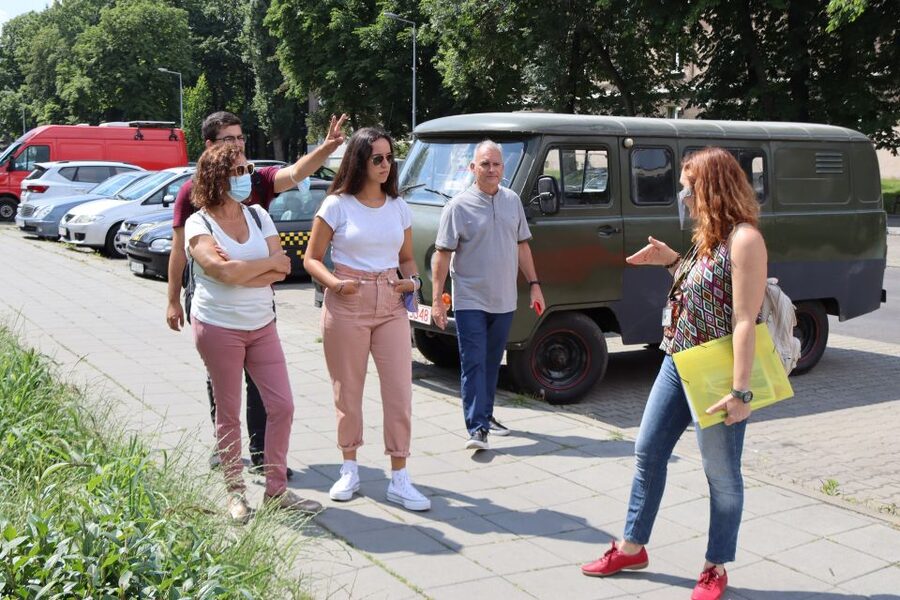
Cars can include Fiat 126 (Maluch), Lada 2101, classic Nysa or Żuk, and even a Soviet army van such as UAZ 452, depending on availability.
Do I need to buy museum tickets separately?
Entrance tickets to other museums are not included. Tickets for the steelworks director’s offices and Cold War HQ bomb shelter are included if you select the relevant option.
What languages are the tours offered in?
The tour is available in English, Polish, and Russian (with Polish or Russian requiring booking at least 48 hours in advance, subject to availability).
Can I cancel for free?
Yes. Free cancellation is available up to 24 hours in advance for a full refund.
Fresh Krakow reviews
- Wawel Hill Audio-Guided Tour★ 3.5 · 19 reviews
- Wieliczka Salt Mine: 4-Hour Guided Tour from Krakow★ 3.5 · 19 reviews
- Wawel Castle and Cathedral Guided Walking Tour in Kraków★ 5.0 · 19 reviews
- Krakow: Oskar Schindler’s Factory Guided Tour&Pickup Options★ 4.3 · 19 reviews
- Krakow: Old Town Guided Walking Tour with a Local Guide★ 4.9 · 19 reviews
- Krakow: Vistula River Sightseeing Cruise ️★ 3.9 · 20 reviews
- Kazimierz, Jewish Ghetto, Schindler’s List story – Golf Cart Tour★ 4.5 · 20 reviews
- Krakow: Oskar Schindler’s Enamel Factory Museum Guided Tour★ 4.6 · 20 reviews
Communism Tours, compared.
Legendary Private Nowa Huta Communism Tour with Crazy Guides
Read our review →
Nowa Huta: Steelworks Administration Buildings/Shelters Tour
Read our review →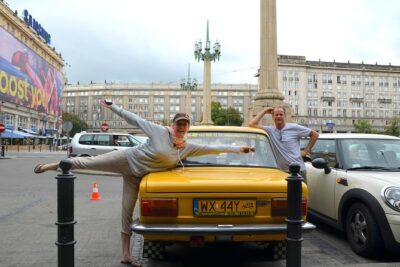
Private Tour: Warsaw’s Communist History by Retro Fiat
Read our review →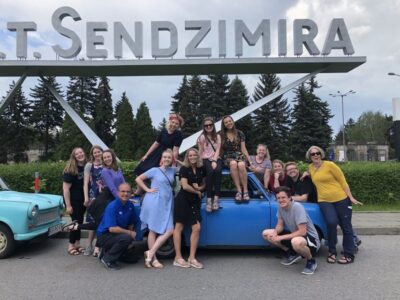
Private Nowa Huta Adventure Tour in Communist Cars
Read our review →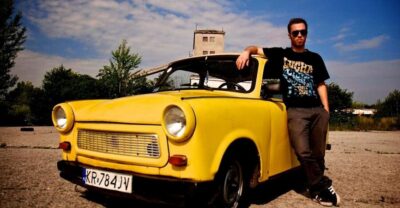
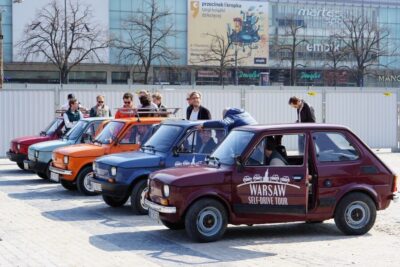

Browse the lists this tour appears in