
Reviewed · GOLF CART CITY TOURS
Krakow: City Sightseeing Tour by Shared or Private Golf Cart
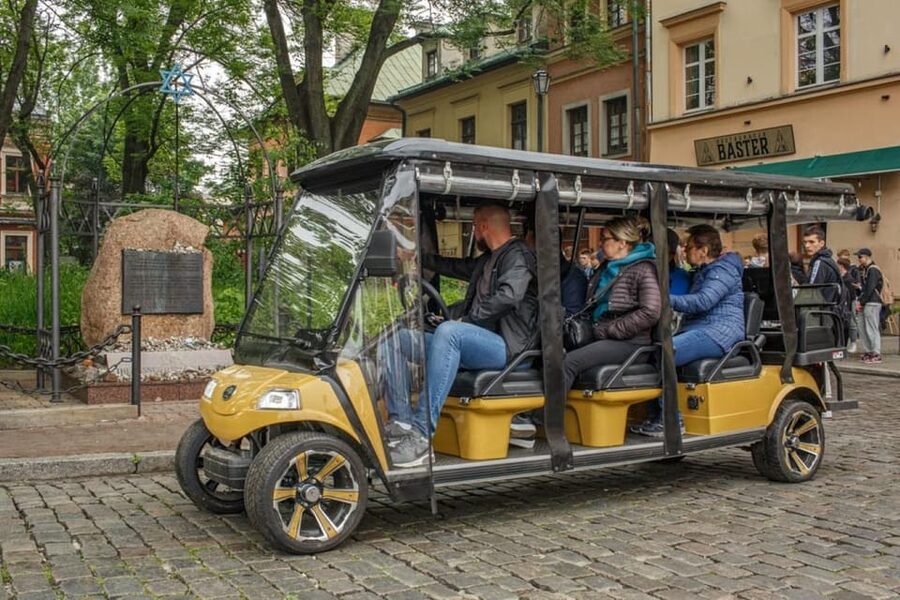
Krakow is one of those cities where the streets do a lot of the talking, and this electric golf cart tour helps you hear that story without wearing out your legs. I like that you get a smooth loop from the Old Town into Kazimierz and Podgórze, plus you cover a lot of meaningful stops in just 1.5 hours.
One thing to consider: the tour is timed and wagon-style, so if you hate tight schedules or you miss the meeting point, you can lose your place fast.
When the guide is a good fit, the ride feels like guided navigation through neighborhoods you’d otherwise struggle to connect. I also love that you get both a live guide (Polish or English) and an audio guide for extra context. The main drawback is that the experience depends heavily on punctual pickup and clear meeting point organization, so arrive early and keep your confirmation handy.
Key things I’d watch for on this Krakow golf cart tour
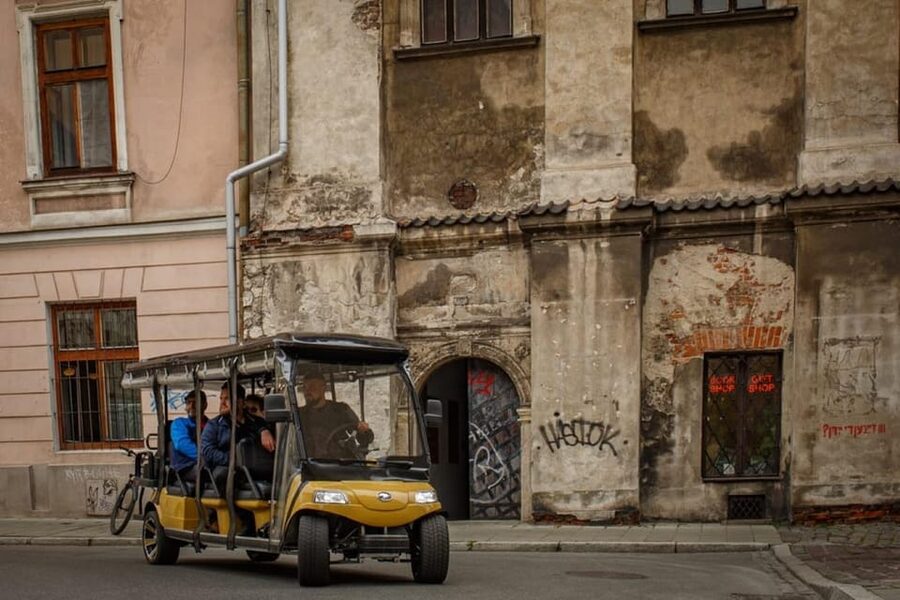
- Small group limit of 10 means you get more chances to ask questions
- 24+ stops across multiple districts in only 1.5 hours
- Kazimierz and the former ghetto area are treated as a connected story, not random sights
- Audio guide in many languages adds backup if you miss a detail
- No large bags allowed, so pack light for a smoother ride
- Wheelchair accessible, which matters on a tour built around short movement and easy sightlines
Why this golf cart style works so well in Krakow
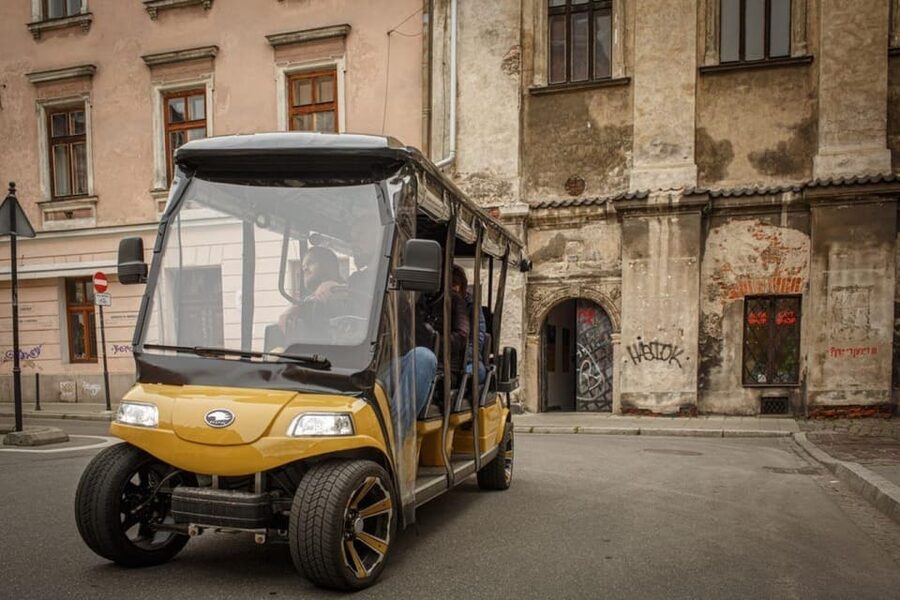
Krakow can be a walking city, but it is also a city of layers. You pass medieval lanes, religious buildings, and then suddenly you are in neighborhoods shaped by 20th-century tragedy. The smart thing about this tour format is that it keeps you moving while still slowing down enough to explain what you are looking at.
The electric golf cart ride helps you cover Old Town, then pivot toward the Jewish Quarter and the former ghetto territory. You also get a mix of viewpoints and “here is what you are seeing” interpretation. For me, that is the difference between a quick bus loop and a tour that actually helps you understand the city.
The other big plus is pacing. With a 1.5-hour duration, you can fit this early or mid-trip without turning your day into a marathon. And if you want to keep walking after, you’ll know where to go next.
More City Tours in Krakow
- Krakow: City Sightseeing Tour by Electric Golf Cart
★ 4.5 · 3,264 reviews - Krakow: City Sightseeing Tour Eco Electric Buggy Golf Cart
★ 4.7 · 3,143 reviews - Creepy Krakow: 2-Hour City Walking Tour
★ 4.7 · 1,131 reviews
The route logic: Old Town to Jewish Quarter to Podgórze
This tour’s power is in how it connects districts that are often visited separately. Even if you have never studied Krakow’s history, the guide’s job is to make the geography feel logical.
You start near greenery and the edge of the historic core with Planty Park, then move into key historic areas. From there, you head into Kazimierz, the Jewish Quarter, with stops that reflect community life, synagogues, and distinctive streets. After that comes Podgórze, often linked in visitors’ minds with the former Krakow ghetto area, including memorials and sites associated with the Holocaust period.
You can think of the tour as three chapters:
- Old Town orientation and medieval context
- Kazimierz as everyday life plus major religious landmarks
- Podgórze as memory, survival stories, and the physical traces of confinement
If you like seeing how neighborhoods connect, you will appreciate that the tour does not treat each stop as isolated trivia.
Planty Park and the medieval city feel
Planty Park is a smart warm-up. It sits around the historic core, and it gives you breathing room while the guide sets the stage. You are not yet doing “the big monuments,” but you are getting the lay of the land.
What I like here is that Planty helps you understand that Krakow’s old center was once encircled, and the city’s shape guides where you can easily picture older streets. Even from a cart, you get enough visual anchors to start spotting the medieval vibe that shows up again later.
A possible catch: if you are expecting a stop where you get out and wander, this part may feel more like orientation than hands-on exploration. The value is in what it teaches you to notice on the rest of the route.
Key Jewish Quarter stops in Kazimierz: synagogues, squares, and street life
Kazimierz is where the tour becomes most personal. You go beyond “pretty buildings” and get explanations tied to how the community lived. The itinerary includes major landmarks and smaller details that help the area make sense.
Here are some of the most important stops and what they mean for you:
More Golf Cart Tours in Krakow
- Krakow: Extended City Sightseeing Tour – Eco Buggy Golf Cart
★ 4.7 · 794 reviews - Krakow: Jewish Quarter and Ghetto Electric Golf Cart Tour
★ 4.6 · 348 reviews - Krakow Grand City Tour by golf cart – All 3 districts
★ 5.0 · 311 reviews - Krakow: City Sightseeing Tour Eco Electric Buggy Golf Cart
★ 4.5 · 311 reviews
Skałka Church and the religious skyline
Skałka Church is a notable early waypoint. It gives you a view of how Krakow’s religious architecture shapes the city even as you move toward Jewish sites. It helps you place Kazimierz within the broader religious landscape visitors can sometimes lump into one big category.
St. Catherine and the feel of old streets
The Church of St. Catherine is another reminder that Krakow’s history is layered, and you see that layering as you transition from one style of sacred space to another.
Wolnica Square and Jewish City Hall
At Wolnica Square and the Jewish City Hall area, the tour shifts from buildings to civic identity. Squares are where daily life happens, and it is easier to understand community history when you think beyond worship and picture administration and public space.
Church of Corpus Christi, then into the synagogue world
When you pass the Church of Corpus Christi, you get a contrast that is actually helpful. Then you move into synagogues, which is where the tour really turns its attention.
Tempel Synagogue and Kupa Synagogue
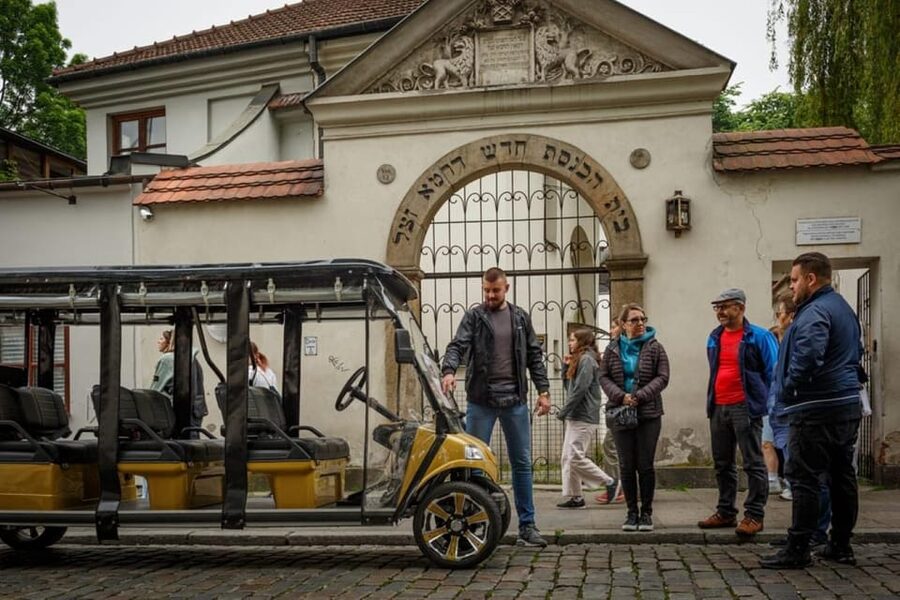
Tempel Synagogue and Kupa Synagogue are two of the important synagogue stops. Even if you do not go into every building deeply, the tour’s framing helps you understand why these sites matter and how they fit into the community’s timeline.
Isaac Synagogue and the “street as story” moment
With the Isaac Synagogue and Ciemna Street in the mix, the tour connects architecture with everyday lanes. Ciemna Street is the kind of place where the name and the setting make you slow down and picture old routes, not just old photos.
Old Synagogue, Popper Synagogue, and Helena Rubinstein’s house
The route includes the Old Synagogue, Popper Synagogue, and the Family House of Helena Rubinstein. That last stop is especially useful because it expands your sense of who is connected to this neighborhood across time, not just during the darkest chapter.
If you want a city tour that does not feel like a worksheet of dates, these stops help. They point out that history includes people who built, lived, funded, and remembered.
Remuh Synagogue and the old cemetery
Remuh Synagogue and the old cemetery help anchor the area in continuity. Cemeteries carry a different kind of weight than any single building. Even from the cart, the tour’s explanations are meant to connect the dots between community resilience and physical memory.
A brief but meaningful memorial marker
You’ll also pass the Memorial Stone of the Nissembaum Family Foundation. I like that the tour does not only focus on large structures. Small memorials matter, because they show how remembrance is maintained at street level.
Old Jewish Shops
The stop for Old Jewish Shops is a nice reality check. You start to picture markets and routines. It keeps the tour from becoming too solemn all the time, which makes the later ghetto-related stops hit harder.
The former ghetto and Podgórze: memory with context
After Kazimierz, the tour enters a different emotional register. This is where the guide’s narrative matters most, because you are seeing a geography that is tied to suffering and survival.
The itinerary includes:
- Former Ghetto
- Ghetto Heroes Square
- Pharmacy under the Eagle, tied to Tadeusz Pankiewicz
- Oskar Schindler’s history
- Life in Ghetto
- The Ghetto Wall
- Church of St. Joseph
Former Ghetto and Ghetto Heroes Square
This is the section designed to give you a framework: what the area became, why it is remembered, and how the city’s space is connected to that story. Ghetto Heroes Square functions like a focal point for memory, and the guide’s job is to help you understand why certain places got memorial importance.
Pharmacy under the Eagle and Tadeusz Pankiewicz
The Pharmacy under the Eagle is one of the most compelling stops on the route because it connects a specific location to a person, Tadeusz Pankiewicz. You get to link history to something you can point at, not just broad ideas. If you like tours that include human-scale stories, this is one to pay close attention to.
Oskar Schindler’s story
With Oskar Schindler’s history in the itinerary, the tour focuses on how Krakow’s events were not only about loss, but also about choices made by individuals. The cart format helps because you keep moving along the relevant area while the guide ties it back to the physical points you are seeing.
Life in Ghetto and the Ghetto Wall
The stops labeled Life in Ghetto and Ghetto Wall shift you from “what happened” into “what it looked like and how it shaped daily life.” The wall is the kind of detail that turns abstract history into something visual. It is a heavy moment, but it is also the reason you do not want to rush through.
A practical note: this part can feel emotionally intense. It’s okay to pause, take a breath, and let the explanation land.
Church of St. Joseph
Finishing with Church of St. Joseph gives a sense of closure. You see a landmark that is part of the city’s ongoing identity, which helps you connect the past to the present rather than leaving with only weight.
The guide and audio setup: how you get value from 1.5 hours
You get a live driver and a live tour guide speaking Polish and English, plus an audio guide included. Audio is included in many languages (Arabic, Chinese, Croatian, Czech, Danish, Dutch, English, French, Finnish, German, Greek, Hebrew, Italian, Japanese, Norwegian, Polish, Romanian, Russian, Serbian, Slovak, Spanish, Turkish, Ukrainian, Hungarian, Lithuanian, Portuguese, Korean, Swedish, and Latvian).
In practice, this means you have a “second track.” If the guide’s voice moves quickly while you are reading the scenery, the audio helps you catch up. It also helps if you are traveling with someone who learns better by hearing a repeated explanation.
Group size is capped at 10 participants, which is another quiet advantage. Smaller groups are easier to manage on tight routes, and that usually means better chances for questions.
It is also worth noting that some guides shine with tone. One guide you might encounter is Oliwia, who has been praised for how clearly she explains the district and the Jewish Quarter and ghetto area history.
Timing, comfort, and what to pack (and what not to)
This tour is 1.5 hours, and it is built for people who want sightseeing without long stair climbs. You will spend most of the time seated and moving, which is great if you have mobility limits, if you are traveling with older relatives, or if you simply want to save your energy for the rest of Krakow.
One downside of the cart format is that you cannot treat it like a “hang out wherever you want” experience. There are many stops, but it stays structured. If you like to wander on your own schedule, you might prefer pairing this with free time afterward in Kazimierz.
A clear packing constraint: no luggage or large bags are allowed. Keep your day bag small so the cart ride stays comfortable for everyone.
Price and value: is $55 worth it?
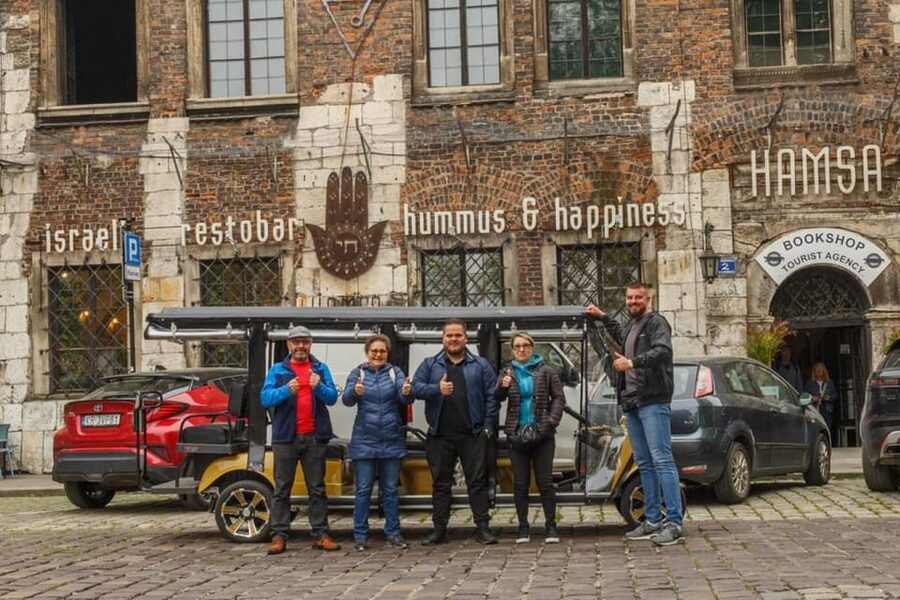
At about $55 per person for 1.5 hours, this is not a bargain-basement option, but it can be good value for the kind of tour you are getting.
Here is how I’d think about it:
- You are paying for transportation by electric golf cart, which replaces walking distances and helps you reach multiple districts efficiently.
- You get a live guide plus audio. That is two layers of interpretation for the price of one guided outing.
- You cover 24+ places tied to real neighborhoods, not just sweeping views.
If you are tight on time and want a coherent narrative across Old Town, Kazimierz, and Podgórze, the cart format saves you effort and reduces the chance that you will miss key context.
If you have unlimited time and you love independent wandering, you could recreate parts of the route on foot or by public transit. But most people end up walking and then realizing they did not connect enough of the history while they were busy navigating streets.
Should you book this Krakow golf cart tour?
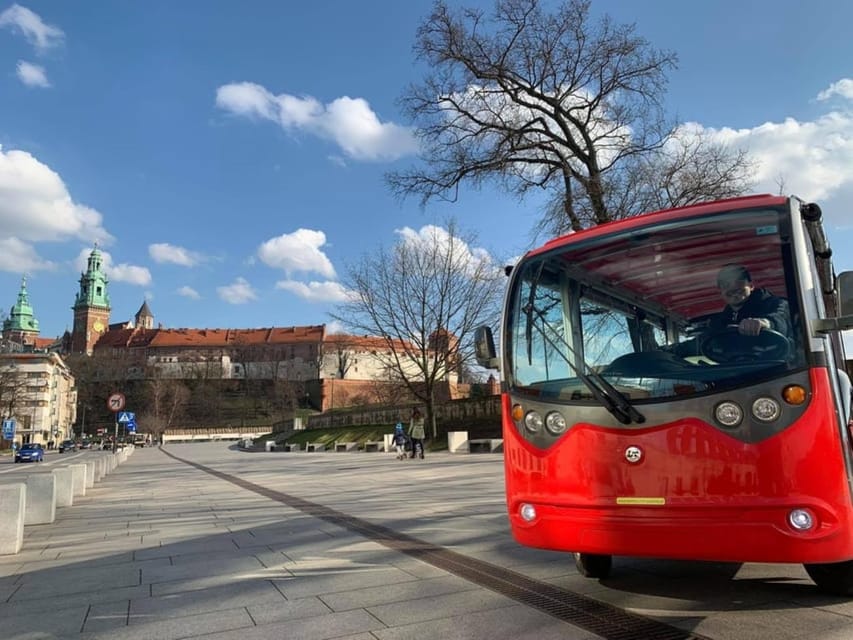
Yes, I’d book it if you want a fast, organized way to connect Old Town, Kazimierz, and the former ghetto area into one story. It’s especially worth it if you want to reduce walking, travel with mixed mobility needs, or you like getting names, places, and meaning rather than just photos.
I’d think twice if you:
- want lots of independent time to roam at each site
- dislike structured tours with timed stops
- expect a lot of humor and lightness in the narration. The tone can vary by guide, and the explanations are primarily focused on history and place.
One practical tip: arrive early at the meeting point so you are not at the mercy of last-minute matching. Keep your confirmation ready and be easy to spot. For a timed 1.5-hour tour, that small habit protects your whole day.
FAQ
FAQ
How long is the Krakow City Sightseeing Tour by golf cart?
The tour lasts 1.5 hours.
What is included in the tour price?
It includes an audio guide, transportation by golf cart, and a driver.
Do I need hotel pickup and drop-off?
Hotel pickup and drop-off are not included.
What languages are available on the tour?
There is a live tour guide in Polish or English, and an audio guide is available in many additional languages.
Is the tour wheelchair accessible?
Yes, the tour is wheelchair accessible.
Are large bags allowed on the golf cart?
No, luggage or large bags are not allowed.
Fresh Krakow reviews
- Czestochowa Black Madonna Private Day Tour from Krakow★ 5.0 · 18 reviews
- Zakopane PRIVATE TOUR from Krakow★ 5.0 · 18 reviews
- Krakow City Pass – Museums, Atractions & City Transport★ 4.0 · 18 reviews
- Chopin Candlelight Concert with Wine in Krakow★ 5.0 · 18 reviews
- Krakow: Garden of Lights Pinocchio Entry Ticket★ 4.7 · 18 reviews
- Half-Day Wieliczka Salt Mine Tour from Krakow★ 5.0 · 18 reviews
- Auschwitz Birkenau Memorial and Museum group tour from Krakow★ 5.0 · 18 reviews
- Krakow: Schindler’s Factory & Ghetto Guided Tour★ 5.0 · 18 reviews
Golf Cart City Tours, compared.
Extended City Sightseeing Tour – Eco Buggy Golf Cart
Read our review →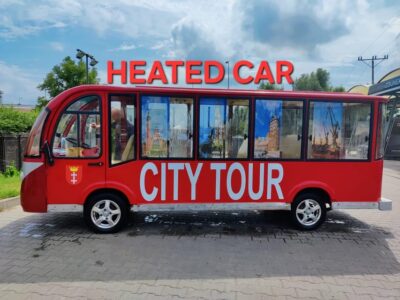
Shared or Private City Tour Sightseeing by Golf Cart
Read our review →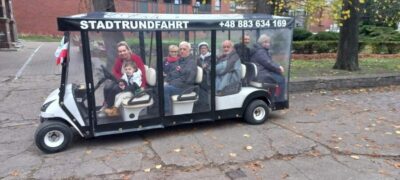
City Tour Live Guided by Golf Cart/Buggy Sightseeing
Read our review →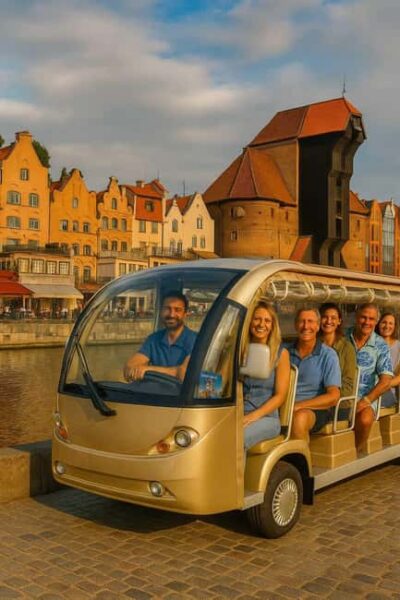
Shared/Private Golf Cart City Tour with Local Guide
Read our review →
NO LIMIT BEER City Tour by Golf Cart Private/Shared
Read our review →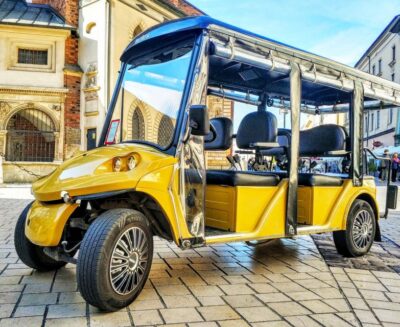
Jewish Quarter and Ghetto Electric Golf Cart Tour
Read our review →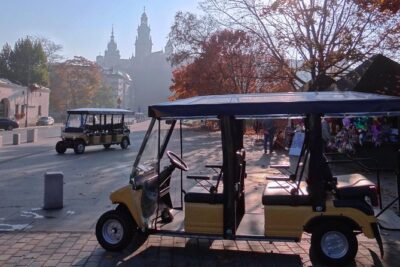
Krakow Grand City Tour by golf cart – All 3 districts
Read our review →Browse the lists this tour appears in