
Reviewed · GOLF CART CITY TOURS
Krakow: City Sightseeing Tour Eco Electric Buggy Golf Cart
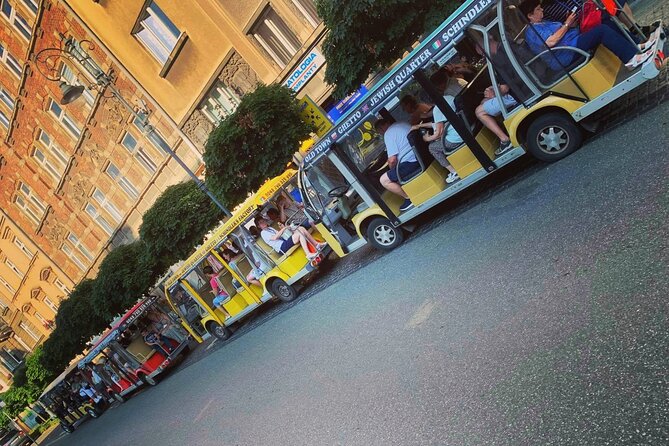
Krakow is packed with stories, but the city can be a lot of walking in a short time. This eco electric buggy golf cart tour is a smooth way to cover many districts fast, while still stopping to look closely at major places.
I love the mix of synagogues and church stops in one outing, because you get the big picture without bouncing between multiple tours. I also like that the ride builds in downtime, and people consistently note blankets and heating for cold days. One possible drawback: some departures can feel tight or a bit bumpy, so if you are picky about comfort, plan for a more basic ride feel.
The route is built for seeing a lot in 90 minutes, with stops that focus on Kazimierz and the WWII-era sites in Podgórze, plus quick scenic pauses along the way. Guides often cover the meaning behind the buildings, not just their names, and that makes your photos more than just pretty postcards.
Key highlights you will care about
- Nearly 24 sights in 1.5 hours, so you can get your bearings fast and then choose what to revisit
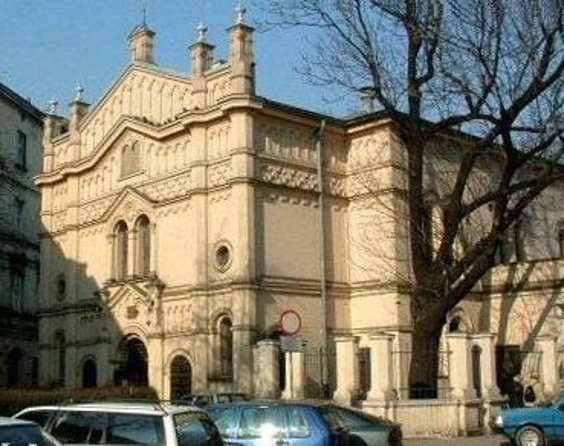
- Kazimierz synagogue circuit, including Tempel, Kupa, Izaak, High, Old, Popper, and Remah stops
- WWII focus in Podgórze, including Ghetto Heroes Square and the Eagle Pharmacy Museum
- Church stops with real backstory, like the Church on the Rock (Skałka) tied to Saint Stanislaus
- Warm comfort for winter rides, with blankets reported repeatedly, plus heating in the buggy
Eco electric buggies in Krakow: why this format makes sense
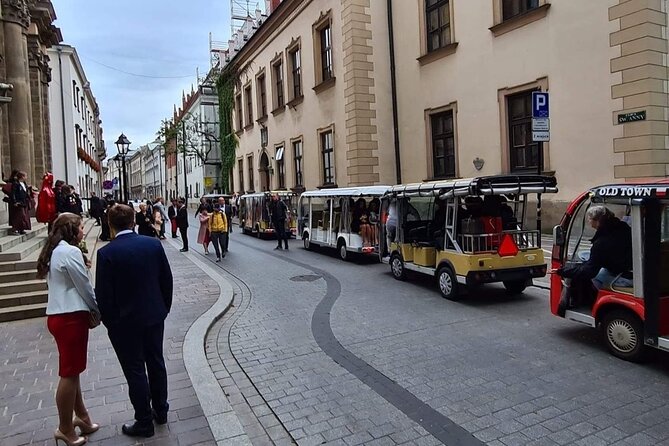
Krakow is an easy city to love and a little hard on your knees if you cram too much. An electric buggy tour solves that by doing the heavy lifting of transport, while still letting you step out at meaningful locations.
What makes this especially practical is how it is paced. You get short stop times, enough to read, take photos, and hear context, then you move on before the group stretches too thin. That is a big deal in winter, and it is also handy in rain, since the buggy keeps you protected and warm. Several people highlight that the vehicle is cozy, with blankets and heating offered.
Now, the tradeoff. This is not a quiet private car. Expect a shared group ride with a limited max size (up to 50 travelers). Some people report the ride can feel bumpy, and at least one person felt the buggy was too packed. If you are sensitive to cramped seating or you need spotless audio, you might want to choose a less busy time slot when possible.
More City Tours in Krakow
- Krakow: City Sightseeing Tour by Electric Golf Cart
★ 4.5 · 3,264 reviews - Krakow: City Sightseeing Tour Eco Electric Buggy Golf Cart
★ 4.7 · 3,143 reviews - Creepy Krakow: 2-Hour City Walking Tour
★ 4.7 · 1,131 reviews
Getting oriented fast: meeting point and how the tour uses your time
You start at Parking 24H Kraków old town car park on Mikołaja Zyblikiewicza 2 (31-029 Kraków). The good news is that this is the kind of place you can find with a quick map search, and multiple guide names show up in traveler feedback, including people such as Olivia, Natalie, Jacob, and Oskar.
The tour runs about 1 hour 30 minutes and is usually booked about 13 days in advance on average, which tells you it is a popular “first or second day in Krakow” option. If you want value, I suggest using it early in your trip, then coming back on foot later for anything that grabs you.
This also helps because the route covers multiple neighborhoods. You are not just circling the Main Market. You are moving through Old Town into Kazimierz, then down toward Podgórze for the ghetto-related stops. The stop count is big, around nearly 24 sights, and the tour design is built to let you rest your legs while still seeing the places you would otherwise spend hours trying to line up.
Skałka and the church stops: how the tour handles Krakow’s spiritual landmarks
The outing starts with a classic Krakow spiritual stop: Church on the Rock (Kosciol na Skalce), also known as Skałka, tied to Saint Michael the Archangel and Saint Stanislaus the Bishop and Martyr Basilica. It sits on a small rocky outcrop with a Pauline monastery.
Here is what to listen for when your guide explains it. In 1079, Saint Stanislaus was slain on that spot by order of Polish king Bolesław II the Bold. The political fallout was significant enough that the king faced exile, and the church story eventually leads to canonization. Even if you do not catch every detail, this is the kind of stop where the site’s meaning sticks, because the location connects the story to a real place.
The stop is short (about 10 minutes) and the ticket is listed as free. After that, the tour flows into Kazimierz, where the mood shifts from church-centered storytelling to the layered Jewish quarter of Krakow.
Later, in Podgórze, you also reach St. Joseph’s Church (Kościół św. Józefa) at Podgórski Square. That gives the tour a balanced ending note: religion and community are not only part of the old Jewish quarter, they are part of the broader Krakow landscape you see today.
Kazimierz square moments: Plac Wolnica, trade, and the setting of Jewish Krakow
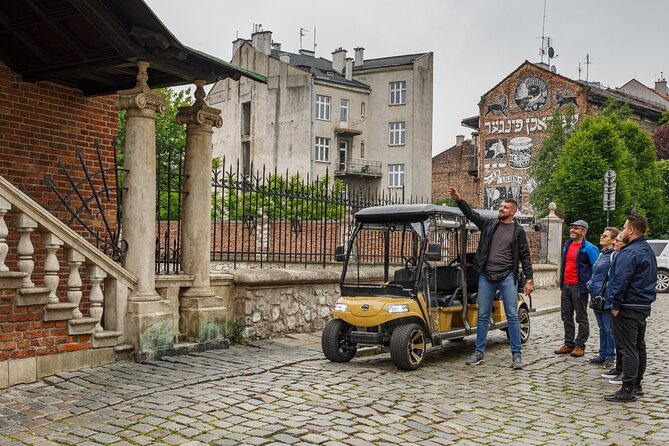
Kazimierz is the district where Krakow starts to feel like a patchwork of old streets, old commerce, and old neighborhoods. One of the stops focuses on Plac Wolnica, tied to the original market square of Kazimierz.
This square dates back to 1335, when the city of Kazimierz was founded. It used to be comparable in function to Krakow’s main market square, with trade happening there and civic buildings such as a town hall for local administrative and judicial authorities.
What I like about this kind of stop is that it gives you context before you jump into the synagogue buildings. You understand that this was not only a religious space. It was also everyday life: stalls, scales, and the meat trade concept behind the name. The name Plac Wolnica is connected to the Latin idea of free trade in meat outside the regular stalls, and it has existed in that form since the late 18th century.
The tour also includes a stop describing the area that used to include Libuszhof, a complex of streets and buildings whose shape was shaped by regulatory projects in 1808 and 1844. On the northern side of the square are houses that used to belong to the Jewish hospital connected to the area near the Kupa Synagogue. If you are the type who wants to understand what you are actually looking at, this stop helps.
More Golf Cart Tours in Krakow
- Krakow: Extended City Sightseeing Tour – Eco Buggy Golf Cart
★ 4.7 · 794 reviews - Krakow: Jewish Quarter and Ghetto Electric Golf Cart Tour
★ 4.6 · 348 reviews - Krakow Grand City Tour by golf cart – All 3 districts
★ 5.0 · 311 reviews - Krakow: City Tour by Electric Golf Cart
★ 4.9 · 310 reviews
The synagogue circuit: Tempel to Remah, what each stop teaches you
This is the heart of the tour. You move through Kazimierz and visit multiple historic synagogues. The tour listing points out a set of specific ones, and your guide’s job is to connect each building to its role in the community.
Tempel Synagogue: music, meetings, and continuity
Tempel Synagogue is presented as a major worship site and also a cultural hub. If you listen closely, it helps you understand how these institutions can be both sacred and socially active, hosting concerts and meetings, including during festivals.
Kupa Synagogue: a 17th-century community anchor
Kupa Synagogue dates to the 17th century and is located in the former Jewish quarter of Kazimierz. The tour context ties it to the neighborhood set aside for the Jewish community in 1495, after Jewish residents were transferred from the Old Town.
The most practical takeaway: this is where religious ceremonies and cultural festivals in Krakow connect to the historical neighborhood layout that still shapes Kazimierz.
Izaak Synagogue: patronage and design
Izaak Synagogue (Isaak Jakubowicz Synagogue) is dated to 1644 and is described as Orthodox Jewish. The tour also notes the donor Izaak Jakubowicz, sometimes called Isaac the Rich, a banker linked to King Ladislaus IV of Poland. The design attribution includes architect Francesco Olivierri.
This stop is a good one if you care about how wealth and leadership influenced what got built.
High Synagogue: Late Renaissance and the idea of height
High Synagogue is described as an inactive Orthodox synagogue from the 16th century, also known as the Tall Synagogue. The tour explanation you are likely to hear is that the name relates to its height and possibly the prayer hall position upstairs. The building is noted as an example of Late Renaissance architecture.
This is a great stop for photos, but also for listening to the building logic, not just the look.
Old Synagogue: the oldest surviving landmark and the central hub
The Old Synagogue (Stara) is described as the oldest synagogue building still standing in Poland, and one of the most precious examples of Jewish architecture in Europe. It also served for a long time as a main religious and organizational center for Krakow’s Jewish community, until 1939.
If you only have time for one synagogue on your trip, this one is a major stop for understanding continuity and interruption.
Wolf Popper Synagogue: symbols, artistry, and later repurposing
Wolf Popper Synagogue (also called Poppera, Bociana) is described as one of the most splendid houses of prayer in old Kazimierz, founded by Wolf “The Stork” Popper in the early 17th century.
The tour description highlights symbolic openwork doors depicting four animals: an eagle, a leopard, a lion, and a buck deer, intended to represent traits of a devout man. It also notes the synagogue’s later decline and that today it functions as a bookshop and art gallery in the women’s area upstairs.
This stop is a reminder that buildings do not freeze in time. They get reused, and that shapes how you experience them now.
Rubinstein: a human story tied to modern thinkers
One part of the route includes Rubinstein, described as Augusta Rubinstein, with family connections mentioned to Martin Buber and others in the Rubinstein and Rappaport lines. This type of stop is less about architecture and more about people who lived in the wider Krakow Jewish world.
Even if you only catch the name links, it gives the district a human scale.
Remah Synagogue: small size, active role
The Remah Synagogue is noted as the smallest of the historic synagogues in Kazimierz, and it is active. The tour context connects it to Rabbi Moses Isserles, known by the acronym ReMA, and to his work complementing Yosef Karo’s Shulchan Aruch for Ashkenazi customs.
This stop is useful because it shows continuity of religious practice, not only historical remembrance.
Ghetto Heroes Square and the Eagle Pharmacy Museum: what to pay attention to
After the Kazimierz synagogue cluster, the tour shifts to the WWII-era sites in Podgórze.
Ghetto Heroes Square
Ghetto Heroes Square (historically Mały Rynek, then Plac Zgody) is described as a place within the Kraków ghetto from 1941 to 1943. It was a concentration point before people were transported to concentration camps. The square’s meaning is hard and direct, and this is one of the stops where the guide’s tone matters.
Also noted is that at number 18 there was the pharmacy “Under the Eagle,” run by Tadeusz Pankiewicz, the only non-Jewish resident with rights to stay in the ghetto. That detail matters because it keeps you focused on specific people, not only tragedy as an abstract concept.
The Eagle Pharmacy Museum
The tour goes to The Eagle Pharmacy Museum at number 18. The listing includes specific context: the pharmacy existed since 1910 under Jozef Pankiewicz and later ran by his son Tadeusz Pankiewicz from 1933.
The key WWII detail is that when the Germans established the ghetto in March 1941, this pharmacy was the only one within the borders, and the owner was the only Pole with rights to stay inside. That is the kind of information that helps you understand why this place is preserved as a museum today.
If you want your visit to feel meaningful rather than rushed, take a minute here to slow down and read what you can before you get back into the buggy.
Schindler’s Enamel Factory and the old ghetto wall: where the tour gives perspective
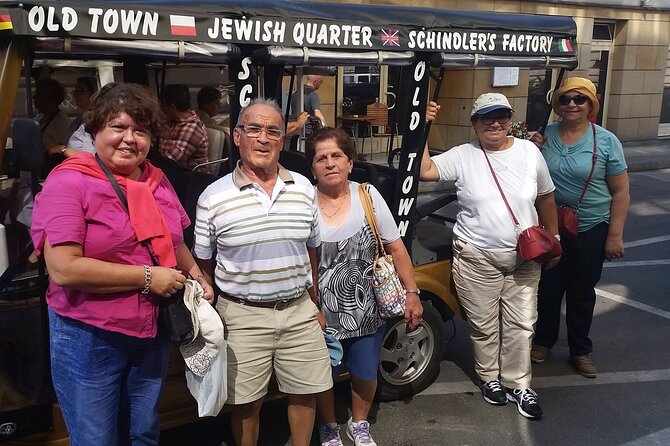
The route reaches Oskar Schindler’s Enamel Factory, now hosting museum spaces. The description you will likely hear connects it to the film Schindler’s List, but the important part is the real-world function: it was a metal item factory, and today it hosts two museums as part of the enamel factory complex.
Your guide may reference that the current museum spaces include one for contemporary art and one branch under the Historical Museum of the City of Kraków. It also notes that the facility was operating as the first Malopolska enamelware and metal products limited liability company, instituted in March 1937.
One practical note for your planning: while the tour reaches the site, some departures focus on the exterior and pass by rather than taking time inside. If touring Schindler’s factory is your number one goal, I would pair this buggy tour with separate museum time later, so you do not rely on this stop to be a full ticketed visit.
The tour also includes a stop at the Old ghetto wall. Even without extra explanation, seeing the physical boundary helps anchor everything you heard at Ghetto Heroes Square. It turns a story about transport into something you can point to and visualize.
Comfort, group size, and the ride reality on cold or rainy days
The best part of the “eco buggy” format is comfort, and many people specifically call out that the ride is warm. Blankets are mentioned repeatedly, and heating is part of the setup. On a wet day or in cold weather, that alone can make Krakow feel easier.
Guides also seem to play a major role in whether the trip feels special. Names like Olivia, Natalie, Jacob, Philip, and Oskar show up, and the recurring theme is clear delivery: friendly personality, and explanations that connect the stops in a way that actually helps you understand.
Still, I want to be honest about the downsides you might encounter:
- The ride can be bumpy, especially over uneven streets.
- Sometimes the experience can feel cramped if you end up with a fuller-than-expected load.
- Audio can be imperfect. At least one person reported that headphones were not working well.
- If you book at night, visibility can drop, and some details become harder to see from the buggy.
If you are sensitive to crowding, aim for an earlier departure in the day. If you are only after a quick overview and a warm ride, night can work, as long as you accept less sightseeing detail.
Price and value: is $28.88 worth it for 90 minutes?
At $28.88 per person for about 1 hour 30 minutes, this is priced like an “efficient introduction” tour. That means the value is not in soaking up one building for a long time. It is in seeing many places in one shot, getting context, and then deciding what to revisit later.
You get a lot of practical extras:
- Pickup offered, which saves you time hunting for the starting area.
- Mobile ticket, so you are not stuck with paper tickets.
- English language narration and guide support.
- A max group size of 50, which is big, but still keeps the ride organized enough to function.
- Stops built around major sightseeing priorities, especially Kazimierz synagogues and WWII-era sites.
For me, the best value use case is simple: do this early, then use your energy for focused walking later. One review tip in the same spirit was to book earlier rather than at the end, because the tour acts like a map in motion.
Should you book this Krakow eco electric buggy golf cart tour?
Book it if you want:
- A fast way to get your bearings and see both Kazimierz and Podgórze in one outing
- An easier day on your feet, with warm blankets and heating
- A guided path through multiple synagogues, not just one or two
- An English-friendly overview that helps you choose future stops
Skip or adjust your expectations if:
- You are very sensitive to cramped seating or rougher ride feel
- You expect every site, especially Schindler’s Enamel Factory, to be a full inside visit with tickets and full museum time
- You are booking late at night and you hate low-light sightseeing
If you do decide to go, I’d treat this as your orientation layer. After the buggy, pick one or two places that grabbed you most, and plan a slower return on foot so you can read, listen, and look without the pressure of a timed stop.
FAQ
How long is the Krakow city sightseeing eco electric buggy tour?
It runs for about 1 hour 30 minutes.
What does the tour cost per person?
The price is $28.88 per person.
Is pickup included?
Pickup is offered.
Is the tour in English?
Yes, it is offered in English.
Where is the meeting point in Krakow?
The start point is Parking 24H Kraków old town car park at Mikołaja Zyblikiewicza 2, 31-029 Kraków, Poland.
How many people are on the tour?
The maximum group size is 50 travelers.
Are mobile tickets used?
Yes, the tour uses a mobile ticket.
Are service animals allowed?
Yes, service animals are allowed.
Can I cancel for a full refund?
You can cancel up to 24 hours in advance for a full refund.
Does the tour include recorded audio narration?
The experience includes an audio guide in addition to the driver/guide commentary.
Fresh Krakow reviews
- Zakopane PRIVATE TOUR from Krakow★ 5.0 · 18 reviews
- Czestochowa Black Madonna Private Day Tour from Krakow★ 5.0 · 18 reviews
- Chopin Candlelight Concert with Wine in Krakow★ 5.0 · 18 reviews
- Krakow City Pass – Museums, Atractions & City Transport★ 4.0 · 18 reviews
- Krakow: Garden of Lights Pinocchio Entry Ticket★ 4.7 · 18 reviews
- Half-Day Wieliczka Salt Mine Tour from Krakow★ 5.0 · 18 reviews
- Krakow: Schindler’s Factory & Ghetto Guided Tour★ 5.0 · 18 reviews
- Auschwitz Birkenau Memorial and Museum group tour from Krakow★ 5.0 · 18 reviews
Golf Cart City Tours, compared.
Extended City Sightseeing Tour – Eco Buggy Golf Cart
Read our review →
Shared or Private City Tour Sightseeing by Golf Cart
Read our review →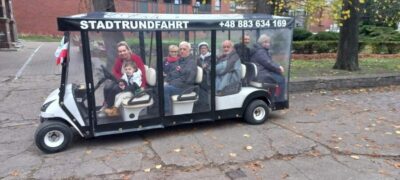
City Tour Live Guided by Golf Cart/Buggy Sightseeing
Read our review →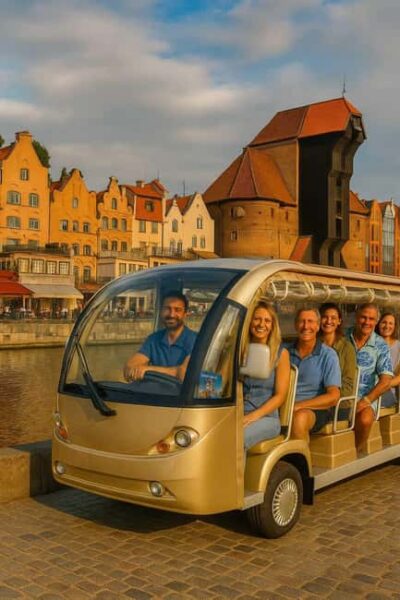
Shared/Private Golf Cart City Tour with Local Guide
Read our review →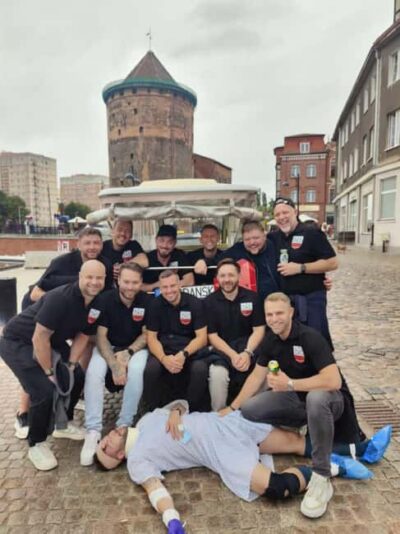
NO LIMIT BEER City Tour by Golf Cart Private/Shared
Read our review →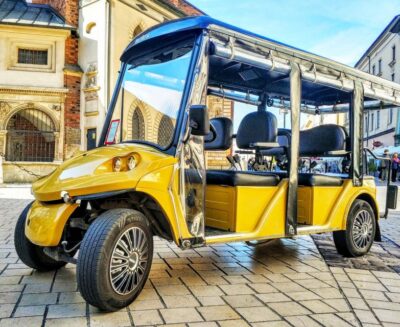
Jewish Quarter and Ghetto Electric Golf Cart Tour
Read our review →
Krakow Grand City Tour by golf cart – All 3 districts
Read our review →Browse the lists this tour appears in