
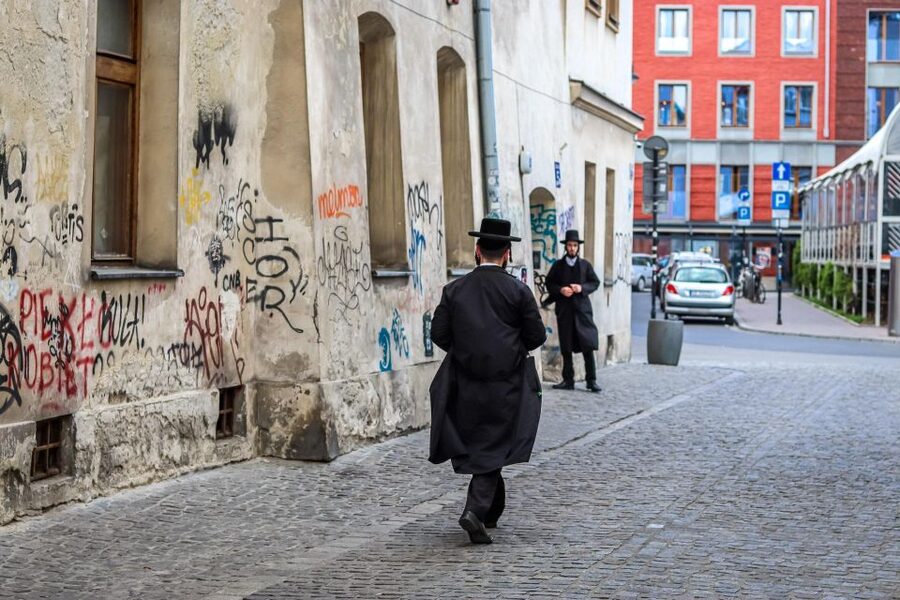
Reviewed · JEWISH HERITAGE TOURS
Jewish Krakow in German
Krakow’s Jewish story is interesting because it is not only about what was lost in WWII, it is also about what came back after. I like that this walk follows a carefully structured story, so the places actually connect. I also like that the guide speaks excellent German, which makes heavy moments easier to understand. The one drawback to plan for is that you will visit places tied to the Holocaust, so it can feel emotionally demanding.
You spend about 150 minutes moving through the historic Jewish quarter, starting in front of an old synagogue and then shifting to the areas that tell the story of destruction during the war and ghetto life in 1941-1943. You also get the “today” side in Kazimierz, where Jewish culture has revived and a small, lively community still shapes the neighborhood.
Key things that make this walk worth your time
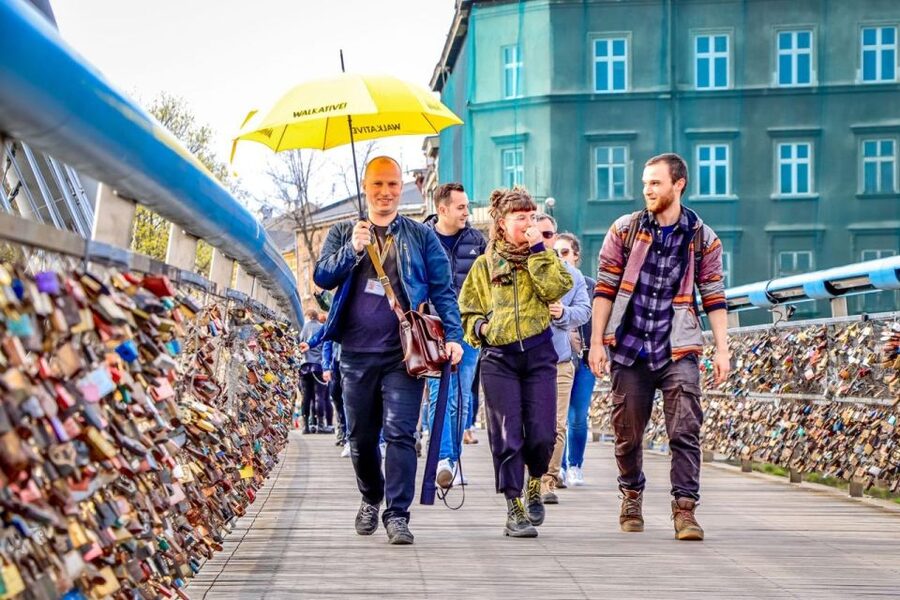
- German-language guide who can explain meaning, not just point at buildings
- 7 surviving old synagogues as living proof of what endured through WWII
- Kazimierz + Podgórze in one route, so past and WWII-era reality are not separated
- Where the Holocaust took place in Krakow, with context that helps you understand what you are seeing
- Story-driven pacing that balances tragedy with the revival of Jewish culture today
Where the tour starts, and how to set your mindset
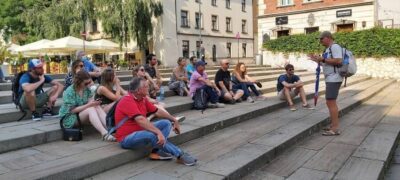
This tour meets on the stairs in front of the old synagogue, on the main street in Krakow’s Jewish district. Do yourself a favor and arrive 10 minutes early, because getting everyone gathered and oriented matters more on this kind of walk. Once you start, you move through spaces that are both architectural and emotional, so you want a calm start.
Language matters here. The tour is in German, and the feedback you will hear from people who did it is consistent: the guides communicate clearly and keep the group engaged. That matters because many of these sites are not “just sights.” They are places where details and context change how you read a street, a doorway, or the feel of a square.
One more thing: you should mentally prepare for a story that includes death and destruction of the Second World War and the Holocaust. You do not need to force emotions, but it helps to accept that the walk will ask something of you.
More Jewish Heritage Tours in Krakow
- Krakow: Schindler’s Factory & Ghetto Guided Tour
★ 4.7 · 1,694 reviews - Krakow: Jewish Quarter and Former Ghetto Tour
★ 4.9 · 1,441 reviews - Krakow: Bike Tour of Old Town, Jewish Quarter and the Ghetto
★ 4.9 · 1,155 reviews
Price and the value you actually get in 150 minutes
At $26 per person for a 150-minute guided experience, you are paying for two things: a local expert guide and a structured narrative that ties locations together. You are not paying to be driven around or handed a stack of facts on your own. You are paying for interpretation, pacing, and a clear path through Kazimierz and Podgórze.
For value, I look at what is included. Here, the expert local travel guide is included, and the tour format is described as a carefully structured story. That is the key. Without structure, Jewish heritage tours can turn into a checklist. With structure, you understand why certain places matter and what the area’s different layers represent.
The main cost trade-off is time. 150 minutes sounds long until you are standing at emotionally important places that deserve your attention. Some people wish they had a bit more time at certain stops. So if you like slow, lingering photo breaks, you may feel a bit rushed.
Kazimierz: the surviving architecture that changes your perspective
Your first chapter is the historical Jewish quarter, often associated with Kazimierz. This is where the tour leans into Jewish art and architecture and shows why Krakow was once a center of Jewish life in Poland. The idea is simple but powerful: you are not only learning what happened. You are learning what the neighborhood looked like and why it symbolized a flourishing culture.
A major point along the way is the presence of 7 old synagogues that surprisingly survived the destruction of World War II and the Holocaust. That detail matters. It means the neighborhood does not only carry memory through ruin or monuments. It also carries memory through places that stayed standing, which makes the story feel tangible in a different way.
As you move, your guide explains historical context and the meaning behind what you see. I love this approach because it reduces guesswork. Instead of walking past a building thinking, I wonder what this used to be, you learn what the place represents in the neighborhood’s Jewish past and its later history.
Practical note: since the meeting point is in front of an old synagogue, you get an immediate anchor. You do not start with a lecture. You start with a place, then the story follows.
Understanding WWII’s rupture, without losing the thread
Midway through the walk, the tone shifts toward the death and destruction of the Second World War and the Holocaust. The tour is designed to keep the thread intact, moving from heritage and community into the reality of what happened to Jewish life in Krakow during the war.
I appreciate this sequence. It helps you avoid a common trap: skipping from “beautiful historic buildings” straight to “tragic history,” with nothing in between. Here, you get a sense of what existed before the break, so the later suffering is not floating in abstract time.
Your guide also points out that you will find the places where the Holocaust took place in Krakow. That phrase is important. It means you are not just hearing general history from far away. You are walking in the same urban fabric where people lived and where the war-era story unfolded.
This is also where your language advantage pays off. A German-speaking guide can guide you through nuance, not only translate words. And the feedback you will see from German speakers is that the guides explain with real depth and keep the experience engaging.
Another way through a Krakow day:
- From Krakow: Auschwitz-Birkenau Guided Tour & Hotel Pickup
★ 4.5 · 33,358 reviews - From Krakow: Auschwitz-Birkenau Guided Tour & Hotel Pickup
★ 4.5 · 29,340 reviews - Krakow: Auschwitz Guided Tour with Optional Hotel Pickup
★ 4.5 · 15,280 reviews - Krakow: Wieliczka Salt Mine Tour with Entry Ticket
★ 4.6 · 10,927 reviews
Podgórze: why the ghetto landscape still feels present
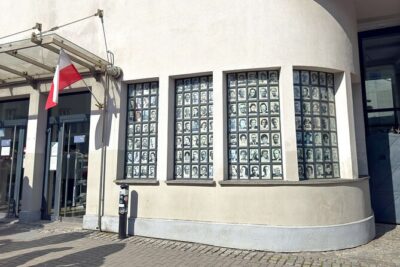
After Kazimierz, the tour turns to Podgórze, the area of the former Jewish ghetto during WWII. This stop is not about turning away from tragedy. It is about facing it in the specific geography where it happened.
The tour frames Podgórze as a place where the tragedy from 1941 to 1943 still tells itself through the area’s remaining buildings and setting. That is what makes this part of the walk so affecting. You are seeing how an urban area can store memory. Even when you cannot feel the past directly, the neighborhood’s arrangement can help your mind grasp what life and confinement meant in that specific context.
I also like that the tour does not treat Podgórze as a final stop with no future. The overall route includes the revival of Jewish culture in today’s Krakow. That balance matters. It prevents the tour from ending only in grief. It leaves you with a fuller understanding of how communities can return and rebuild, even after catastrophe.
Today in Krakow: Jewish culture revival in the same streets
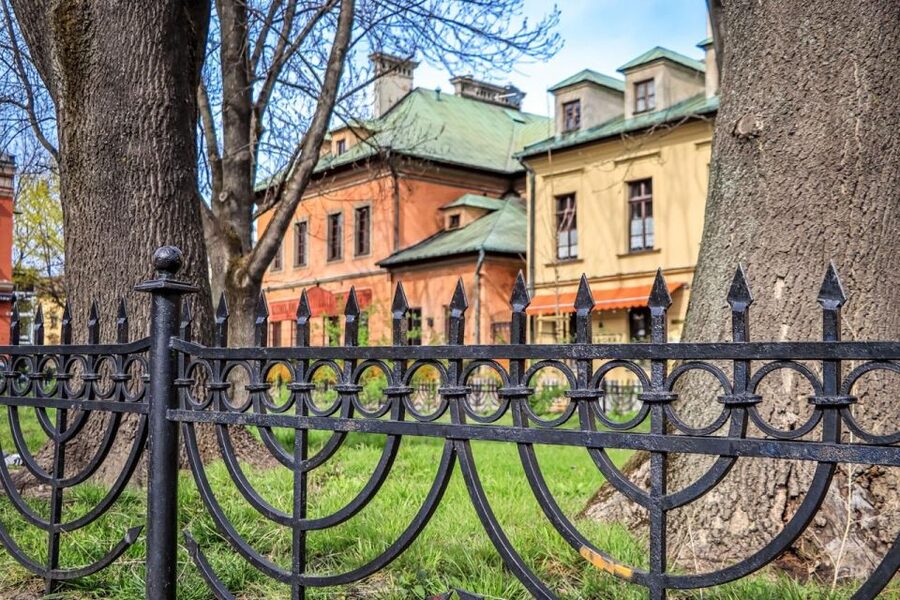
One of the best reasons to take this tour is that it does not stop at WWII. The experience explicitly connects the past to what you can still see in today’s Krakow.
Kazimierz is described as a cultural heart of the modern city and as a neighborhood that houses a small but lively Jewish community. On the walk, this shows up as more than a feel-good ending. It’s part of the logic: you learn what Jewish life meant historically, you learn what war destroyed, and then you learn how culture has revived in the same broader area.
If you have ever done a memorial-type tour that ended with a heavy silence and nothing else, you will appreciate this format. You get a way to leave the past behind without erasing it. You leave with places that still function, still host culture, and still matter for people today.
What the guide is doing well, and why it matters to you
Good guides change your pace and your attention. This tour’s guide quality is a clear standout in the feedback. People describe the German as excellent, and they praise the way the guide keeps the group engaged, moving people from point to point with facts and explanation.
One name that comes up is Max, highlighted for leading the group to various places and for strong factual knowledge. Another theme is that the tour feels both informative and varied, with good interaction and a touch of humor in the delivery. That last part matters more than you might think. Humor can be a tool to keep you present, especially when the subject matter is heavy.
So what should you expect from your guide’s method?
- You get historical context, not random facts.
- You get explanations tied to each location, not only descriptions.
- You get a narrative arc that carries you from Kazimierz to Podgórze and back to present-day meaning.
A realistic time breakdown, so you do not feel rushed
Even without a minute-by-minute schedule, you can plan your own expectations. Think of it like three chapters.
First, you spend time in the historic Jewish quarter and around the surviving synagogues, with your guide building context about Jewish heritage in Krakow. Second, you shift toward WWII and the Holocaust, including the locations tied to that history. Third, you end in the “meaning now” side, including the Jewish cultural revival in today’s Krakow.
Because the total duration is 150 minutes, the stops are not infinite. If you are the type who wants to linger and read every surface, you may feel you are moving quickly at some points. Still, for many people, the structured route is exactly what they want. It is an efficient way to see the key districts and leave with understanding, not just photos.
Included vs not included: what you should plan around
This experience includes an expert local travel guide and a carefully structured story. That is the heart of the value.
What is not included: collection from your hotel and return transport, and a snack. So plan on moving on foot and bring water. If you tend to feel your energy drop mid-walk, pack a small snack. Even if the tour is only 150 minutes, you will likely want steady energy when the topics get intense.
Also, keep in mind the tour language is German, so if you are not comfortable with German, you may prefer a different language option.
Who should book Jewish Krakow in German?
This tour fits best if you want:
- A German-guided explanation of Krakow’s Jewish heritage
- One walk that connects Kazimierz and Podgórze in a meaningful way
- A route that includes both WWII tragedy and the revival of Jewish culture today
- A local guide who handles facts and context with clarity and keeps the group engaged
You should also consider it if you like walking through neighborhoods where architecture and street layout matter. If you prefer museums and indoor exhibits only, this might feel too outdoor and too story-driven. But if you enjoy reading a city as a living document, you will likely like the approach here.
Should you book it?
If you want a thoughtful, guided walk through the places tied to Jewish heritage and Holocaust history in Krakow, and you want it explained in German with a clear narrative, I think this is a strong choice at $26 for 150 minutes. The biggest reason to book is the combination of surviving synagogue architecture, WWII context, and the way the tour carries you into present-day Kazimierz.
Skip it only if you know you cannot handle emotionally heavy material, or if you hate walking and would rather cover this topic through readings or museum time. Otherwise, this is the kind of tour that helps you leave the city with understanding, not just a route.
FAQ
What language is the tour in?
The tour is in German.
How long is the experience?
It lasts 150 minutes.
Where do we meet?
We meet on the stairs in front of the old synagogue, in the main street of the Jewish district.
What is included in the price?
It includes an expert local travel guide and a carefully structured story.
Is hotel pickup or return transport included?
No. Hotel collection and return transport are not included.
Are snacks included?
No snack is included.
Can I cancel and get a refund?
Yes. You can cancel up to 24 hours in advance for a full refund.
Do I have to pay right away?
No. You can reserve now and pay later.
Is this tour private or pay as you wish?
This booking joins a general pay as you wish tour. The amount you pay covers the reservation fee and the guide’s payment.
Fresh Krakow reviews
- Czestochowa Black Madonna Private Day Tour from Krakow★ 5.0 · 18 reviews
- Zakopane PRIVATE TOUR from Krakow★ 5.0 · 18 reviews
- Chopin Candlelight Concert with Wine in Krakow★ 5.0 · 18 reviews
- Krakow City Pass – Museums, Atractions & City Transport★ 4.0 · 18 reviews
- Krakow: Garden of Lights Pinocchio Entry Ticket★ 4.7 · 18 reviews
- Auschwitz Birkenau Memorial and Museum group tour from Krakow★ 5.0 · 18 reviews
- Krakow: Schindler’s Factory & Ghetto Guided Tour★ 5.0 · 18 reviews
- Half-Day Wieliczka Salt Mine Tour from Krakow★ 5.0 · 18 reviews
Jewish Heritage Tours, compared.
Bike Tour of Old Town, Jewish Quarter and the Ghetto
Read our review →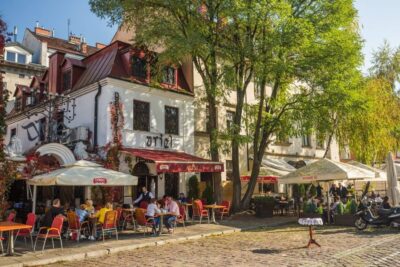
Kazimierz, Schindler’s Factory & Ghetto Guided Tour
Read our review →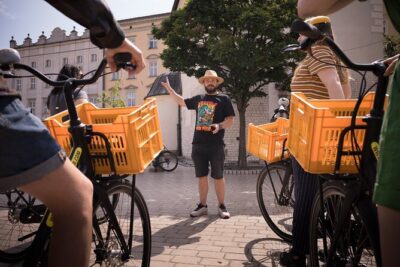
Full Bike Tour – the Old Town, Jewish Qtr & the Ghetto NEW BIKES
Read our review →
Warsaw Ghetto Private Walking Tour with Hotel Pickup
Read our review →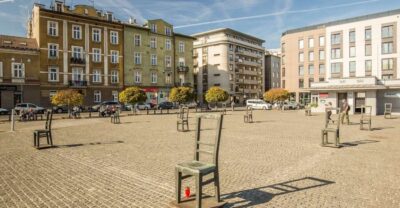
Browse the lists this tour appears in