
Gdańsk in 1945 is not a vague concept on this tour, it is a street-level time machine into the immediate aftermath of World War II. You roll through the Old and Main Town with the city mapped in your mind as it was, then compared to what you see now.
I especially like the archival photographs paired with your guide’s narration, because it makes the changes feel concrete instead of abstract. I also like that the live guide, Ewelina, keeps the story clear and easy to follow, with great English and lots of room for questions.
One thing to consider: with a 1-hour ride and many short stops, you will get a strong overview, not a slow, in-depth museum-style experience.
Key points worth knowing before you go
- Heated electric golf cart comfort for day trips, even when it is cold
- Ewelina’s storytelling in English, plus German and Polish support
- Archival photos that help you connect 1945 to today’s street layout
- Old Town and Main Town highlights in a single, efficient loop
- Photo-stop pacing that saves your legs while still hitting major landmarks
- A moving sense of rebuilding as the guide compares destruction to what stands now
Why this Gdańsk 1945 electric golf cart tour hits differently
Most city tours show you where things are. This one shows you why they look the way they do.
You step into an electric golf cart and travel through the immediate aftermath of 1945, when reconstruction was underway and the city still carried visible scars. As you glide through the Old Town and Main Town, your guide links what you see today to what the city had to endure, then rebuild.
What makes it feel powerful is the contrast. You are looking at beautiful, restored streets and monuments, but the narration keeps snapping your attention back to the ruins, the strain, and the decisions that shaped the rebuilt Gdańsk.
More Golf Cart Tours in Gdansk
- Gdansk: Shared or Private City Tour Sightseeing by Golf Cart
★ 4.9 · 754 reviews - Gdansk: City Tour Live Guided by Golf Cart/Buggy Sightseeing
★ 4.9 · 715 reviews - Gdansk: Shared/Private Golf Cart City Tour with Local Guide
★ 4.9 · 604 reviews
Getting comfortable in the heated cart, especially in winter
This tour is built around an electric cart, so you spend less time walking and more time listening and looking. That matters in Gdańsk, because weather can turn fast, and standing around for a long time is not always fun.
In colder months, the cart is heated, and there are blankets available if you need them. Some carts also run with a wind shield setup, which helps a lot when you are moving slowly through historic streets.
My practical advice: wear warm layers anyway, even if you are offered blankets. You will be out for an hour, and you will get more out of the tour if you can focus on the story, not on being uncomfortable.
The route: what you see from Pańska 1 to the Great Armoury
You start at Pańska 1, then the tour moves in a loop through major Old Town and Main Town points. The stops are short, so think of each one as a guided snapshot, with the guide explaining how that location fits into the 1945 transformation.
Pańska 1: your orientation point
Pańska 1 is your launch pad. Before the cart even gets going, the tone is clear: this is about comparing then and now, not just naming sights.
More Historical Tours in Gdansk
- Gdansk: City Cruise on Historical Polish Boat
★ 4.8 · 2,913 reviews - Gdańsk: Sunset Cruise on a Historic Polish Boat
★ 4.9 · 977 reviews - Gdańsk City Sights & History Guided Walking Tour in English
★ 4.8 · 876 reviews - Historic City Center Tour Gdansk in German
★ 4.6 · 455 reviews
Polish Post Office Museum
The tour makes a quick stop at the Polish Post Office Museum. Even without a long visit, this kind of landmark is a natural anchor for postwar stories, because communications and everyday infrastructure were central to rebuilding a working city.
Your guide ties the building and its surroundings into the bigger picture: what life looked like right after the war and how key services had to come back online.
Parafia pw. Świętej Brygidy (St. Bridget’s Parish)
Next you are guided past Parafia pw. Świętej Brygidy, with a short viewing moment. Churches and parish areas often help show continuity, what survived, and what had to be repaired or replaced.
You will likely notice how the street fabric and the monument presence create a visual map your brain can compare to earlier destruction.
St. Catherine’s Church, Gdańsk
At St. Catherine’s Church, the guide gives you context as you look around for form, position, and scale. On a tour like this, it is not about studying every architectural detail, it is about realizing how the skyline and major religious buildings shape how a city feels.
You get that immediate 1945-to-present contrast right away, because your guide keeps reminding you that the city you are seeing is the result of rebuilding.
Wielki Młyn (Great Mill)
Then comes Wielki Młyn, a stop that adds an industrial and civic feel to the route. Mills and working infrastructure help round out the story beyond monuments, because postwar recovery was not only about rebuilding facades.
This is where you start seeing the city as both symbolic and functional, which makes the whole narrative more believable.
Plac Solidarnosci (Solidarity Square)
At Plac Solidarnosci, you pause briefly. A modern square can feel far from 1945, but your guide’s job is to connect moments in Polish history, including how a community rebuilt identity after catastrophe.
This stop gives you a reset in the story, keeping it grounded in real people and real change over time.
The Museum of Second World War
You get a quick stop at the Museum of Second World War, which makes sense because it frames the broader events you are talking about. Even with limited time, it is useful for orienting your understanding of why 1945 matters so much in Gdańsk.
Your guide’s commentary helps you connect the museum’s purpose to what you are experiencing on the cart, a history lesson with the city as the classroom.
Statue of John III Sobieski
At the Statue of John III Sobieski, you get another kind of landmark: royal and national symbolism. Your guide uses points like this to show how public memory is maintained or reinterpreted when cities are rebuilt.
It is also a good moment for photos, since statues are easy reference points for comparing street angles and sightlines.
St. Mary’s Church, Gdańsk
Then you come to St. Mary’s Church. In tours like this, churches are more than religious buildings, they are anchors for how a city reads at a glance.
This is one of the places where the comparison hits hardest, because the guide is essentially saying, look at what still defines the skyline now, and then imagine what had to be restored to bring that skyline back.
Stary Zuraw Portowy (Old Crane)
You stop at Stary Zuraw Portowy, and that adds a waterfront, trade, and maritime rhythm to the journey. Port areas tend to tell fast stories of survival and rebuilding, because commerce and shipping shape the life of a city.
Even if your time is brief, the guide helps you connect the port presence to recovery and the practical side of rebuilding.
Brama Wyzynna (High Gate)
Next is Brama Wyzynna, a quick stop at the gate area. Gates are perfect for the tour’s theme because they define entrances and boundaries, the kinds of places where war damage and reconstruction are hard to ignore.
You will likely catch how the city’s lines and access points are part of the recovery story, not just the buildings inside.
Katownia
You then pause by Katownia, which gives the tour a darker note in a controlled, educational way. Stops like this remind you that history is not only about restoration and beauty.
Your guide frames it in a way that stays connected to the 1945 story, so it does not feel like random drama, it feels like context.
Golden Gate, Gdańsk
At the Golden Gate, you get another strong visual reference point. Gates are built to be remembered, and on this tour they become markers for how Gdańsk carries forward its identity even after severe disruption.
If you like architecture and old-town geometry, you will enjoy this moment because your eyes naturally map the shapes you are seeing to what your guide has been describing.
The Great Armoury
Finally, you arrive at The Great Armoury, ending the loop with a classic historic civic landmark. This closing stop works well because it brings you back to a broader sense of how buildings were repurposed, repaired, and used as the city moved forward.
Then you return to Pańska 1, with your brain already doing the time-travel comparison in reverse, from present to past.
How the guide and audio keep the 1945 story clear
The tour runs with a live guide, and the language options are English, German, and Polish. An audio guide is included as well, with English, Polish, and German audio available.
What I like about this setup is that it gives you two ways to follow the story. If the cart is moving and you miss a line, you can get back on track through the audio.
In the real world, history tours often fall into one of two traps, either too fast or too dense. Here, guides like Ewelina are praised for keeping the explanation clear and answering questions, which helps the time period feel human instead of textbook.
Why the price feels like good value for Gdańsk orientation
The price is listed at $4.89 per person for a 1-hour electric car tour. At that rate, you are paying mainly for three things: transport, a guided 1945-focused narration, and a structured route with a lot of major stops packed into one loop.
You also get archival photographs as part of the experience, which is not a standard add-on on cheap sightseeing rides. The combination matters, because the photographs turn the tour into a comparison exercise rather than just a drive-by.
If you are short on time, this kind of quick orientation can save you from spending your first day zig-zagging around. You learn where the key landmarks are, then you can decide what deserves a longer visit later.
Who this tour suits best, and who may want something else
This tour is a great fit if you want a meaningful history lesson without committing to a long museum day. It is also smart if you are visiting in cold weather, because the heated cart and blankets cut down on misery.
It is also a strong pick for people who want to see a lot while keeping legs and stamina in check. You still get the big hits, and the guide helps you connect them to the 1945 theme so it does not feel like random sightseeing.
If you want a deep dive into any single museum or monument, this might feel too fast. The pace is designed for coverage and context, not for long stops and detailed study at one site.
Should you book this Gdańsk 1945 electric cart tour?
Book it if you want an hour that gives you both orientation and emotional context. The 1945 focus, the archival photos, and the guide quality, including Ewelina’s clear storytelling, make the comparison between then and now feel real.
Skip it only if you dislike quick stop pacing or you want long, independent time inside specific museums. Otherwise, this is one of the most efficient ways to understand Gdańsk’s postwar transformation without exhausting yourself.
FAQ
Where does the tour start?
The tour starts at Pańska 1.
How long is the Gdańsk 1945 history local guide tour?
The duration is 1 hour.
What does the tour cost?
The price is listed as $4.89 per person.
What languages are available for the live tour guide and audio?
The live guide is available in English, German, and Polish. The audio guide is included in English, Polish, and German.
Is an audio guide included?
Yes, an audio guide is included.
Does the tour include archival photographs?
Yes, the tour includes archival photographs.
Which sights are included on the route?
The route includes stops at places such as the Polish Post Office Museum, St. Catherine’s Church, Wielki Młyn, Plac Solidarnosci, the Museum of Second World War, St. Mary’s Church, Stary Zuraw Portowy, Brama Wyzynna, Katownia, the Golden Gate, and The Great Armoury.
Is the tour wheelchair accessible?
Yes, the tour is wheelchair accessible.
Can I cancel and get a refund?
Yes. You can cancel up to 24 hours in advance for a full refund.
Is reserve now, pay later available?
Yes. You can reserve now and pay later, with the option to book your spot and pay nothing today.
Fresh Gdansk reviews
- Gdansk: Hansa Electric Golf Cart City Tour with Local Guide★ 5.0 · 3 reviews
- Aiport Gdansk Transfer to Malbork Castle or Stutthof★ 5.0 · 3 reviews
- 6 Hours Teutonic Castle Tour in Malbork★ 3.5 · 3 reviews
- Sopot Sunset Cruise with Welcome Drink★ 3.5 · 3 reviews
- Slowinski National Park Private Tour★ 5.0 · 3 reviews
- Lions & Unicorns of Gdańsk: Self-Guided Fantasy Puzzle Walk★ 3.5 · 3 reviews
- Segway Tour Gdańsk: Shipyard Tour – 1,5-Hour of Magic!★ 5.0 · 3 reviews
- Culinary Cruises Pierogi Tasting Motława★ 5.0 · 3 reviews
Golf Cart City Tours, compared.
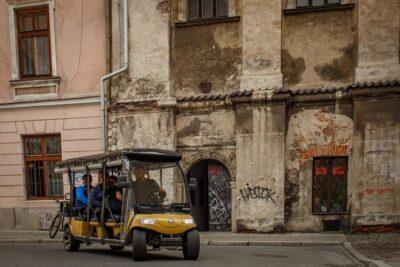
Extended City Sightseeing Tour – Eco Buggy Golf Cart
Read our review →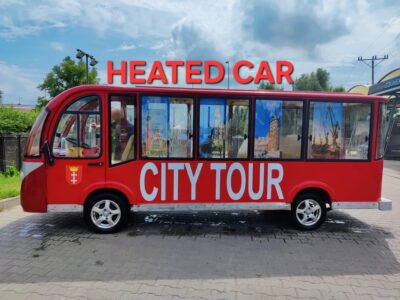
Shared or Private City Tour Sightseeing by Golf Cart
Read our review →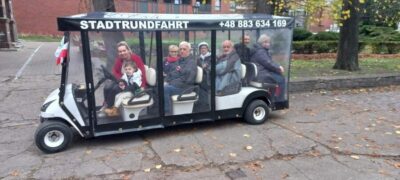
City Tour Live Guided by Golf Cart/Buggy Sightseeing
Read our review →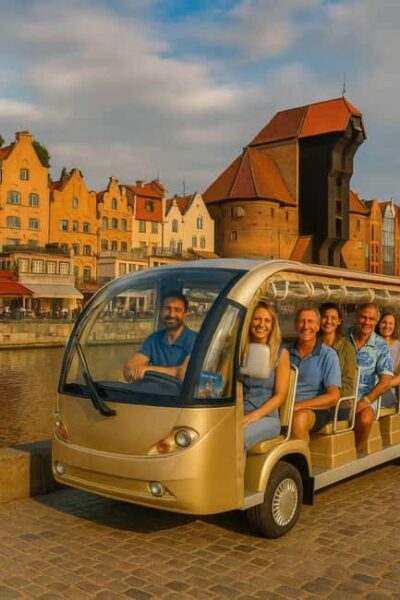
Shared/Private Golf Cart City Tour with Local Guide
Read our review →
NO LIMIT BEER City Tour by Golf Cart Private/Shared
Read our review →
Jewish Quarter and Ghetto Electric Golf Cart Tour
Read our review →
Krakow Grand City Tour by golf cart – All 3 districts
Read our review →Browse the lists this tour appears in