
Reviewed · HISTORICAL TOURS
Warsaw: POLIN Museum of the History of Polish Jews Ticket
POLIN Museum in Warsaw turns a huge slice of history into something you can actually follow, gallery by gallery. I love how the exhibits are hands-on and visual, with interactive installations that keep you moving through centuries. I also love the audio guide that helps you make sense of what you’re seeing. One consideration: this is emotionally serious material, and you will want time, because entry to the core exhibition closes 2 hours before the museum’s closing time.
This is one of those “plan the day, don’t rush it” museums. The core exhibition takes about 2 hours on paper, but many people feel better allowing 3 to 4 hours, especially if you stop to read and use the interactive stations.
Key things you’ll notice right away
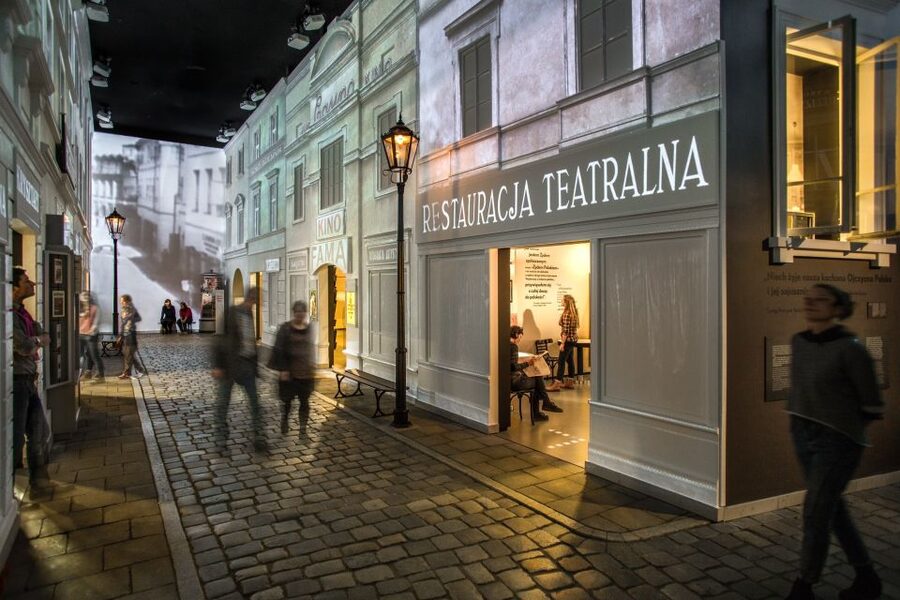
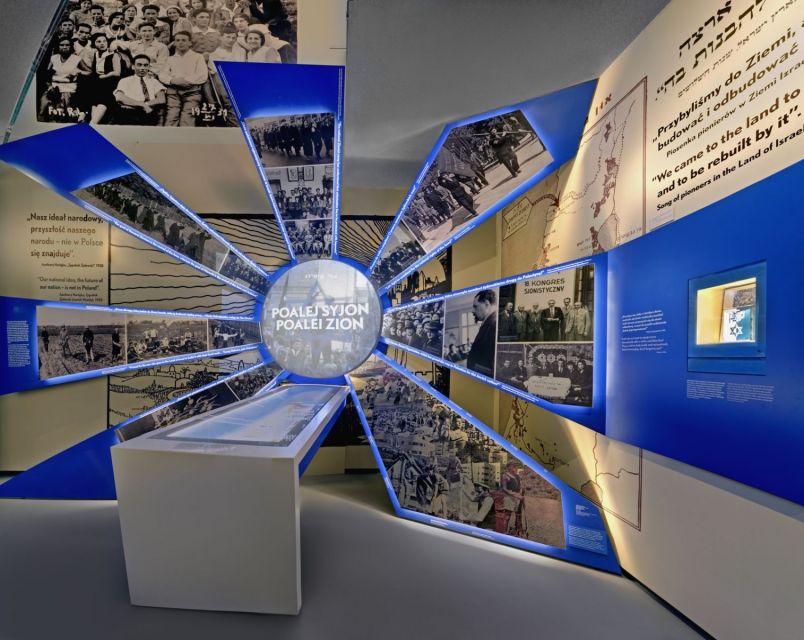
- 1000 years in 8 galleries, using artifacts, paintings, audio, and interactive stations
- Audio guide with smart navigation, designed to match your location inside the museum
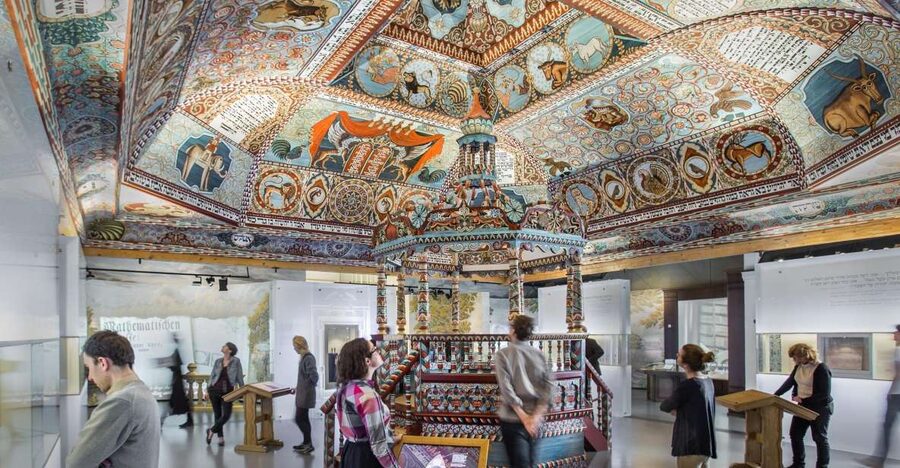
- A standout reconstructed synagogue ceiling that many people single out as a highlight
- The Holocaust is one major section (often referred to as The Terror), framed in the broader story of Jewish life in Poland
- Comfort breaks built in, with seating and a cafeteria-style restaurant you can use mid-visit
POLIN’s core idea, 1,000 years you can actually track
POLIN is built around a simple promise: you’ll learn the story of Polish Jews from the earliest communities through today. Instead of a straight timeline you have to power through, you move through eight different galleries that mix visuals, audio, and objects.
That structure matters, because it helps you notice patterns. You see how community life formed, how Jews participated in Polish society in different ways, and how politics and religion shaped everyday reality. Then you reach the period when everything collapses, and you understand what the loss changed, not just what happened.
The museum does not treat Jewish life as only a tragedy. Even when the material gets heavy, the design keeps returning to culture, community, and continuity after World War II.
More Historical Tours in Warsaw
- Warsaw: Chopin Concert at Historical Venue in Old Town
★ 4.7 · 445 reviews - Small-Group Historical Guided Tour of Warsaw with pick up/drop off. Public Tour.
★ 4.5 · 343 reviews - Warsaw: Jewish History Guided Walking Tour in English
★ 4.7 · 324 reviews
Ticket value at around $12, what you get for your time
The price for this ticket is about $12 per person, and that is strong value for what’s included: access to the permanent exhibition, access to a temporary exhibition when available, and an audio guide.
Here’s the real value play. This is not a guided tour package where someone talks at you for a fixed schedule. You walk at your pace with a well-structured audio track, so you can spend longer where you’re interested, and skim where you’re not. In a museum like this, pacing is everything.
Also, the museum experience is wheelchair accessible, and you’ll have chances to pause. That means the ticket works for more than just history enthusiasts who love standing the whole time.
Timing rules that can make or break your visit
You can enter the museum at your own convenience on your ticket day, but here are the practical rules that affect your plan.
First, admission to the core exhibition is closed 2 hours before closing time. That means you cannot “show up late and still see everything.” If you arrive late afternoon, you may miss parts of what the ticket is meant for.
Second, you can leave for lunch and return the same day. The core exhibition is estimated at about 2 hours, but many people need 3+ hours to take in everything at a comfortable pace.
Finally, there is an electronic scanning requirement before you enter the core exhibition. Expect a brief security process, then you’re in.
Entering the exhibits, what the scan and rules mean in practice
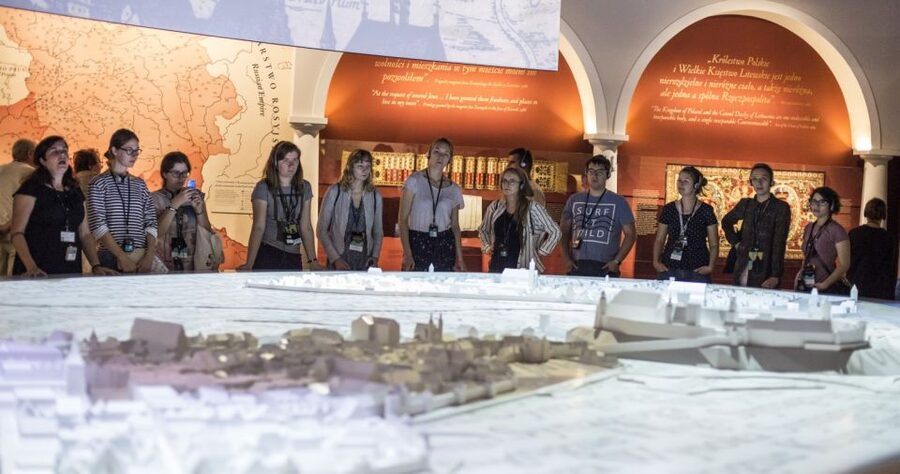
Before you can reach the core exhibition, everyone must go through electronic scanning. This is normal for major museums, but it’s worth factoring in so you don’t feel like you’re losing time you expected to spend inside galleries.
One more rule to plan around: oversize luggage is not allowed. If you’re arriving with big bags, you’ll want to keep that in mind before you head over.
A small but useful note from the experience: the museum is closed on Tuesdays. Warsaw plans can get messy fast if you miss this one.
More Museums in Warsaw
- Warsaw: Polish Vodka Museum Tour with Tasting
★ 4.6 · 788 reviews - Warsaw: Museum World of Illusion Entry Ticket
★ 3.9 · 666 reviews - Warsaw: Museum of Life Under Communism Entry Ticket
★ 4.5 · 178 reviews - Warsaw: Ghetto, Jewish Cemetery & POLIN Museum Private Tour
★ 4.8 · 132 reviews
What you’ll see across 8 galleries, early communities to today
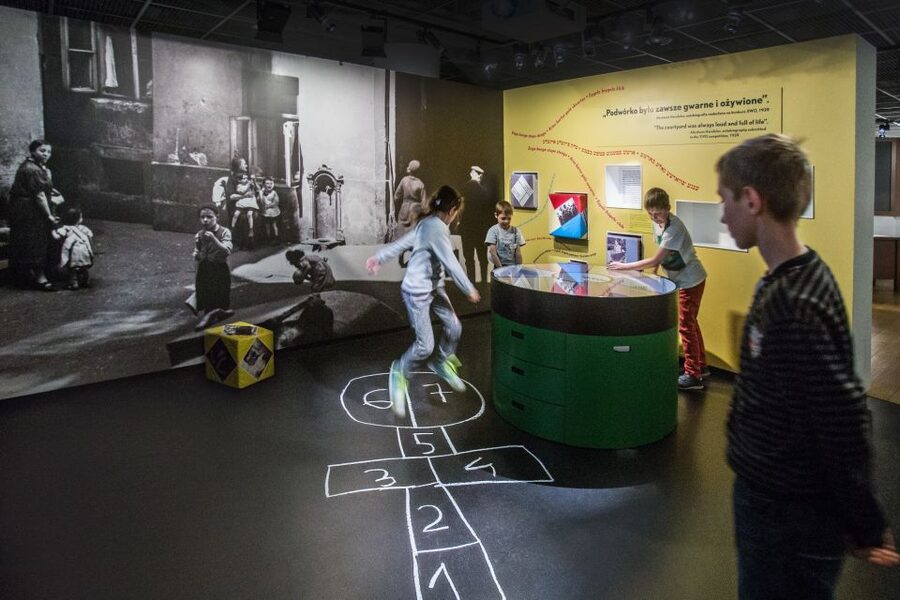
The museum is organized into eight sections/galleries that tell the story across roughly a thousand years. The format is consistent: you’ll see artifacts, paintings, and interactive installations, and you’ll hear audio materials that guide you through what each part means.
Here’s how I would think about the flow, so you can decide how long to give each zone:
Early chapters, when communities form and take root
You start with the beginnings of Jewish settlement and community life in Poland. The museum uses objects and visual storytelling to explain why these early communities mattered and how they grew.
This part can feel especially detailed if you like structure, because it sets up the next centuries. One caution I’ll give you is simple: if you’re tired later in the day, you may not want to save this for last.
Community life and the role of people in Polish society
As the story moves forward, you’ll see how individual figures and community structures shaped Jewish life alongside the wider Polish world. The exhibits aim to show daily life and social patterns, not just major events.
This is where the museum’s “interactive” approach pays off. You are not only reading labels. You’re making connections between artifacts, context, and the audio narrative that explains what you’re looking at.
Political, social, and religious diversity over time
As centuries roll on, the exhibits highlight diversity: how politics, society, and religion affected Jewish life in Poland. This is important because it prevents the history from feeling like one uniform experience.
You’ll also get a sense of how Jewish culture functioned within a changing European environment, while still maintaining identity.
The turning point, when normal life is shattered
Eventually, the museum leads you to the period when the Holocaust drastically impacted Jews in Poland. One review noted that the museum is intense, but the exhibits are straightforward and try not to rely on cheap emotional tricks. That tone helps the facts stay clear.
The Holocaust section (The Terror), why the museum frames it within the whole story
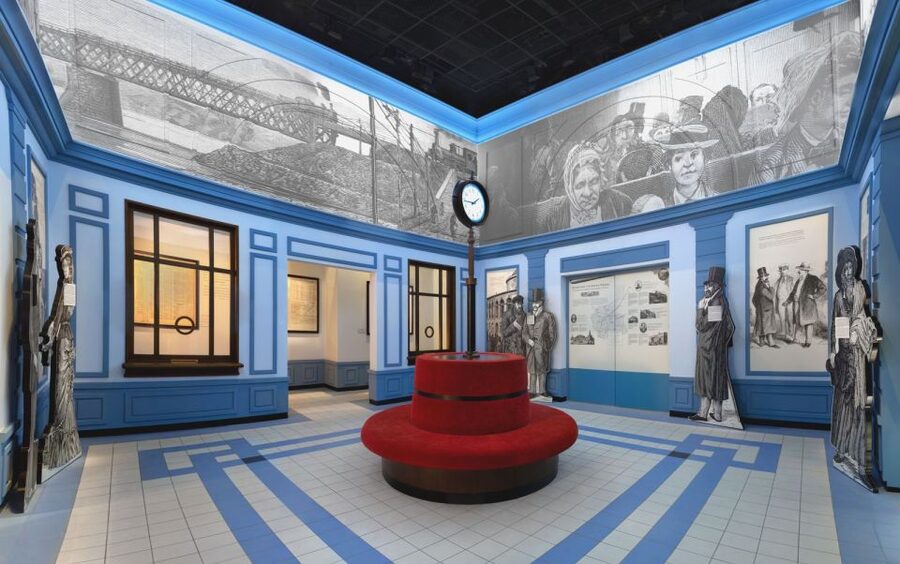
One of the museum’s eight sections is called The Terror. Even if you already know the broad facts, this part is hard.
What makes POLIN’s approach useful is the framing. You do not arrive at the Holocaust “out of nowhere.” The museum builds context first, so you understand what is being destroyed: a living community with political, social, and religious diversity.
I also appreciate how the museum balances tragedy with broader meaning. One reviewer put it bluntly: it’s not a Holocaust museum per se. The Holocaust is a major component, but it sits inside a much wider story of Jewish life in Poland.
If you’re pairing this with a visit to Auschwitz Birkenau, POLIN can work as a meaningful prequel or complement. The museum gives context for how people lived, organized, and identified, before the final years.
The reconstructed synagogue ceiling you’ll want to slow down for
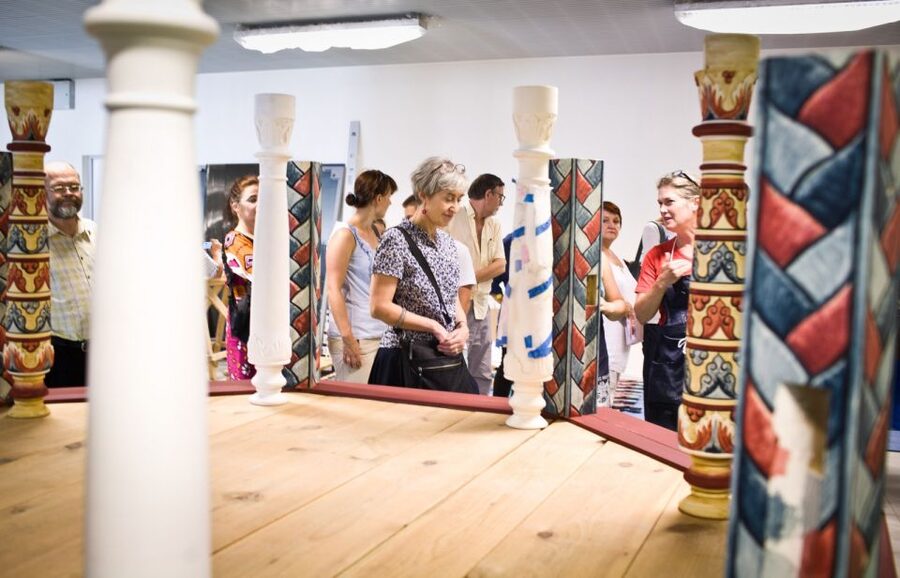
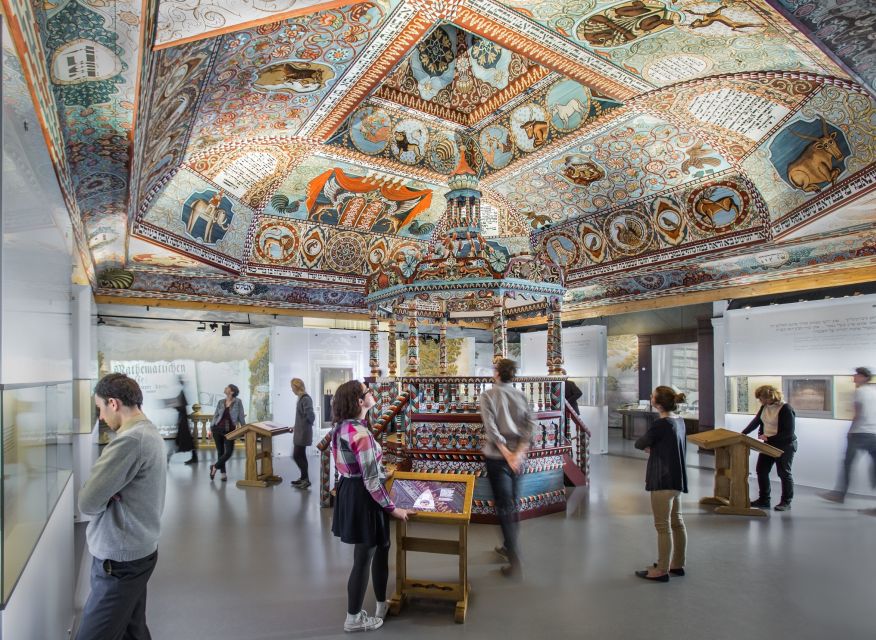
A standout highlight that comes up again and again is the reconstructed synagogue ceiling. It’s one of those moments where the museum quietly asks you to stop and look.
This kind of exhibit detail matters because it turns the idea of culture into something tangible. You see craftsmanship and design, and you connect that to the human story the museum is telling.
If you care about visual detail, build in extra minutes here. Even if you’re not the “read every panel” type, this is worth lingering for.
Audio guide tech and how it affects your pace
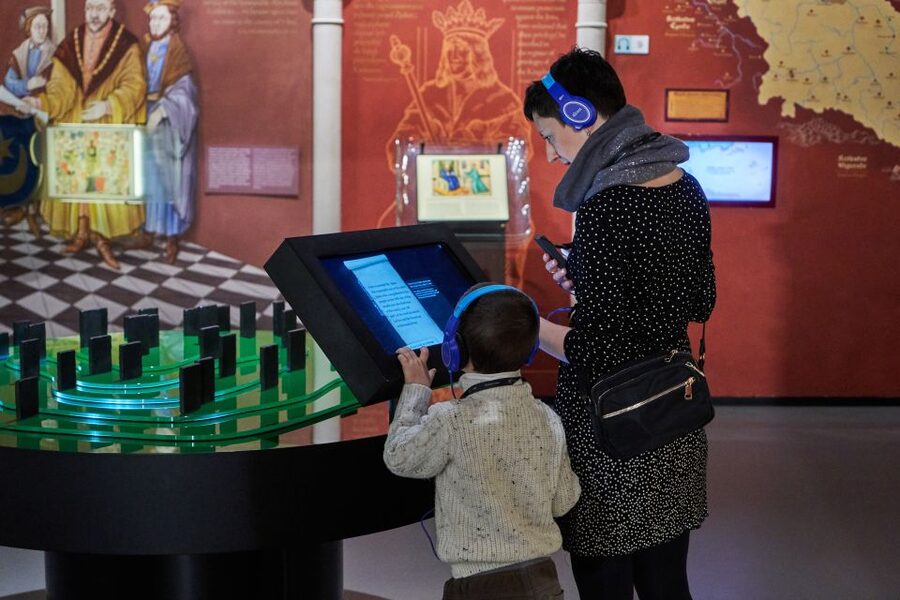
The audio guide is included with the ticket, and the experience is described as high quality. A major selling point is that the audio guide can recognize where you are in the museum and automatically give you the correct narrative.
That reduces the mental load. You don’t constantly hunt for what you should hear next. Instead, you can let the exhibits and audio line up naturally.
That said, there are a couple of practical considerations:
- Some visitors found it a bit noisy when large groups of school children were present.
- Some visitors mentioned the audio guide could distract when they were trying to read wall texts.
- In at least one area, ceilings can feel low as you go down a level.
None of this is a deal-breaker, but it’s good to know. If you prefer quiet reading, plan your visit for a time when school groups are less likely.
How long to plan, and what to do if you want a full visit
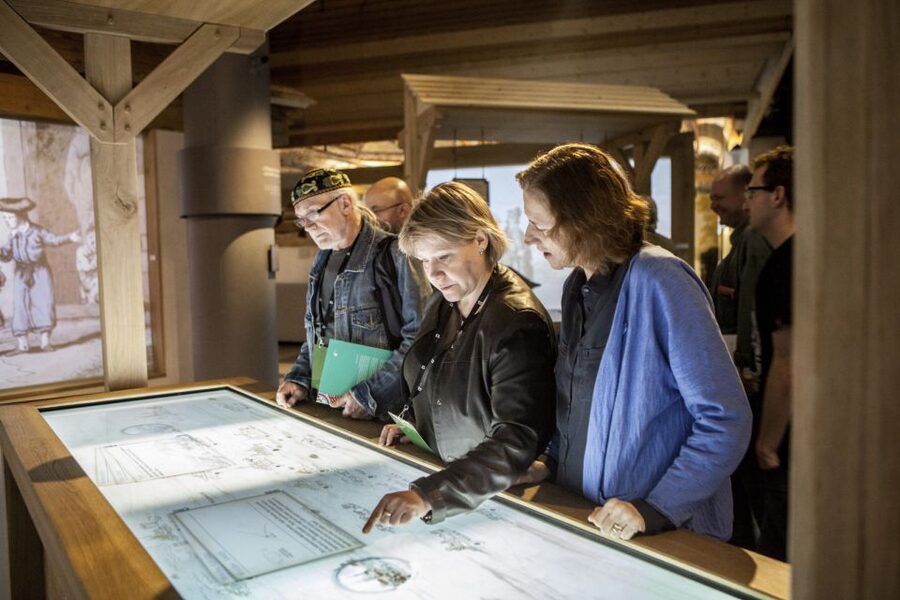
The museum’s core exhibition is estimated at about 2 hours, but the better number to plan around is 3 to 4 hours. Many visitors end up spending longer, sometimes significantly.
If you try to do it in 2 hours, you may still learn a lot, but you’ll likely have to move quickly through interactive areas and skip more of the audio.
Here’s a simple strategy that works:
- Use the audio guide from start to finish at a comfortable speed.
- When you find an interactive installation you like, spend a few extra minutes there, even if it makes the rest of the schedule feel slightly tighter.
- Build a mid-visit break so you can keep your attention for the Holocaust section, which is the emotional peak.
Also, wear comfortable shoes. People repeatedly recommend that, and it makes sense for a museum where you’re moving between many exhibits.
Seating, lunch, and the cafeteria-style restaurant
One thing I really like about POLIN is that it doesn’t assume you should power through nonstop. Reviews mention plenty of seating and the ability to eat mid way.
The restaurant is cafeteria-style and described as very good, with informal service and generous portions. That’s useful, because it lets you refuel without turning lunch into a whole travel detour.
If you want a simple comfort hack, one review suggested portable chairs. That is not required, but it’s a smart idea if you’re sensitive to discomfort while you read or listen.
Putting POLIN into a Warsaw day plan
POLIN is a cultural must-do in Warsaw, especially if you want context before or after visits to other Holocaust sites in Poland.
You can also treat it as a main event. Because the museum is self-paced and takes time, it pairs well with slower sightseeing nearby rather than cramming in a packed list of landmarks.
For example, a good day structure looks like:
- Start earlier so you’re not trapped by the “entry closes 2 hours before closing” rule.
- Reserve a lunch window inside the museum so you can keep moving.
- Plan your other stops with the understanding that you might spend longer than you expect.
Should you book the POLIN Museum ticket?
Book it if you want a structured, respectful way to learn about the history of Polish Jews across 1,000 years, using interactive exhibits and an audio guide that keeps you oriented.
I would skip or adjust expectations if you:
- Have very limited time and can only spare about 1 to 2 hours total.
- Prefer guided group commentary rather than a self-paced audio experience.
- Know you get overwhelmed by emotionally intense material, even if the museum tries to present it in a straightforward way.
If you do book, give it 3 to 4 hours if you can. You’ll get more out of the early sections, you’ll have time to slow down for highlights like the reconstructed synagogue ceiling, and you’ll be less rushed when you reach The Terror.
FAQ
How long should I plan to spend at POLIN?
The core exhibition is estimated at about 2 hours, but many people suggest planning 3 to 4 hours to see everything comfortably.
Is there a guided tour included with the ticket?
No. This ticket includes access to the exhibition and an audio guide, but it does not include a guided tour.
What does the museum cover?
You’ll learn about the history of Jewish communities in Poland from early settlement up to the present day, including major impacts of the Holocaust and how culture is revived after the Second World War.
What languages are available?
Languages are listed as Polish and English for the experience.
Can I leave the museum for lunch and come back the same day?
Yes. You can leave to have lunch and return as long as it is within the same day.
Do I need to go through security scanning?
Yes. Due to security restrictions, every guest must undergo electronic scanning before entering the core exhibition.
Is the museum closed at any time during the week?
The museum is closed on Tuesdays. Also, admittance is closed 2 hours prior to the closing time for the core exhibition.
Fresh Warsaw reviews
- Warsaw Off The Beaten Path Self-Drive Tour★ 5.0 · 18 reviews
- Private Warsaw Chopin Airport One Way Transfer★ 5.0 · 18 reviews
- Zelazowa Wola: Frederic Chopin Half-Day Private Tour★ 4.7 · 18 reviews
- Warsaw: 2-Hour Chopin’s Life Walking Tour★ 5.0 · 19 reviews
- Warsaw: melt museum Entry Ticket★ 3.5 · 19 reviews
- Deluxe Polish Food Tour Experience in Warsaw★ 5.0 · 19 reviews
- FSO Gunrange, Shooting Package US ARMY★ 5.0 · 19 reviews
- Gdansk and Malbork Castle Small Group Tour from Warsaw with Lunch★ 4.5 · 20 reviews
Historical Tours, compared.


Gdańsk City Sights & History Guided Walking Tour in English
Read our review →


Tipsy Polish Food Tour With History, Pierogi & Shots
Read our review →

Small-Group Historical Guided Tour of Warsaw with pick up/drop off. Public Tour.
Read our review →Browse the lists this tour appears in