
Reviewed · SCHINDLER'S FACTORY TOURS
Schindler’s Factory and Jewish Ghetto Walking Tour in Kraków
Schindler’s Factory in Kraków is interesting because it connects one man’s choices to the daily squeeze of Nazi-occupied life. You get prebooked access to the museum and guided storytelling that helps the photos and objects make sense fast, like the thoughtful guiding you might hear from people such as Magdelena or Phil.
Two things I like a lot: you also walk outside to see what is left of the ghetto boundaries, and the guide ties it back to what inspired Schindler’s List. One possible drawback to plan for is crowds and pace, especially inside the packed museum spaces and in the street walk where you will want good shoes and patience.
Key highlights to know before you go
- Skip extra museum waiting with prebooked entry to Fabryka Emalia Oskara Schindlera
- A licensed guide does the heavy lifting, linking exhibits to people, not just dates
- You walk real surviving traces of the ghetto, including wall fragments and key square stops
- Headsets may be used on some runs, which helps you hear clearly even when rooms are busy
- Eagle Pharmacy is nearby but not included, so decide in advance if you want to pay extra
Schindler’s Enamel Factory Museum: why this place hits
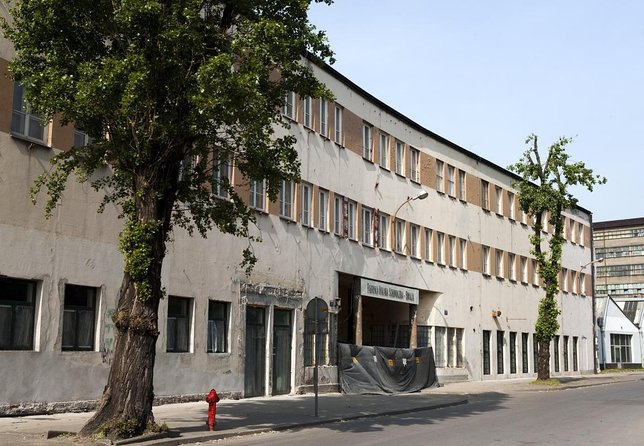
Fabryka Emalia Oskara Schindlera, now the Schindler’s Factory Museum, is housed in a historic building that is still standing, and that matters. You are not seeing a rebuilt set. This is an original cultural heritage site in Kraków, which the museum uses to frame what life looked like from 1939 to 1945.
What I like about the experience is that the museum does not treat Schindler as a superhero floating above history. Instead, the exhibition you will follow is called Kraków under Nazi Occupation 1939 to 1945, and the guide brings Oskar Schindler into that wider pressure-cooker world. You learn how his factory employed Jewish workers and how his position, influence, and resources were used to help protect them from deportation.
A gentle reality check: the building is a museum now and it does not contain the original production equipment. So if you are expecting to see factory machinery in action, you will mostly be seeing a staged and curated exhibit space. The payoff is understanding how the story is told through photographs, personal items, and reconstructed street scenes.
More Jewish Heritage Tours in Krakow
- Krakow: Schindler’s Factory & Ghetto Guided Tour
★ 4.7 · 1,694 reviews - Krakow: Jewish Quarter and Former Ghetto Tour
★ 4.9 · 1,441 reviews - Krakow: Bike Tour of Old Town, Jewish Quarter and the Ghetto
★ 4.9 · 1,155 reviews
The flow of the 3-hour tour, from Lipowa to the ghetto stops
Plan for about 3 hours, give or take based on site scheduling. The tour runs in English, keeps group size capped at 25 people, and you should arrive at least 10 minutes early. Once the group has entered, late arrivals cannot be accommodated and tickets are not refundable, so treat the start time seriously.
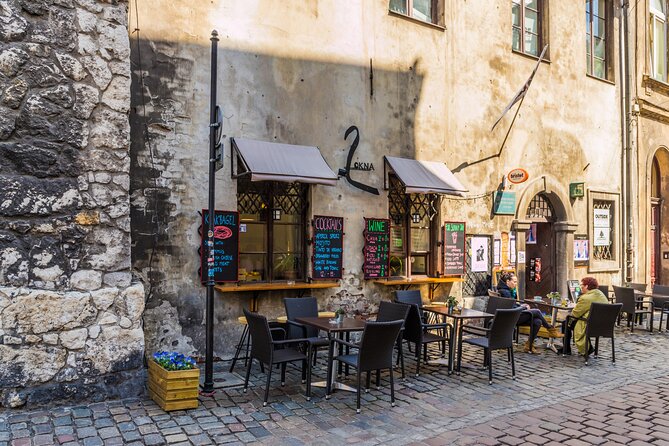
You start at Lipowa 4 (a meeting point near public transport). You then move through the museum first, then shift into a walking segment that goes deeper into the district. The walking portion is relatively short at each stop, but you will still want comfortable footwear because parts of the museum layout include narrow passageways.
You end around Plac Bohaterów Getta 18, close to Apteka pod Orłem (Under the Eagle Pharmacy). That end location is convenient because it leaves you near more Holocaust-era context you can explore on your own, including Eagle Pharmacy if you choose.
Stop 1: Fabryka Emalia Oskara Schindlera and the guided exhibit experience
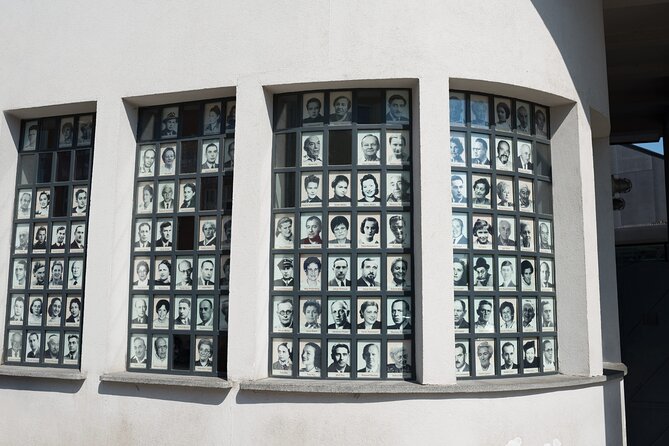
This is where you gain the foundation for everything you will see afterward. Your museum time is about 1 hour 30 minutes, and admission is included. With a licensed expert guide, you will move through the exhibition around Kraków under Nazi Occupation 1939 to 1945, using Schindler’s story as the human thread inside a broader occupied-city narrative.
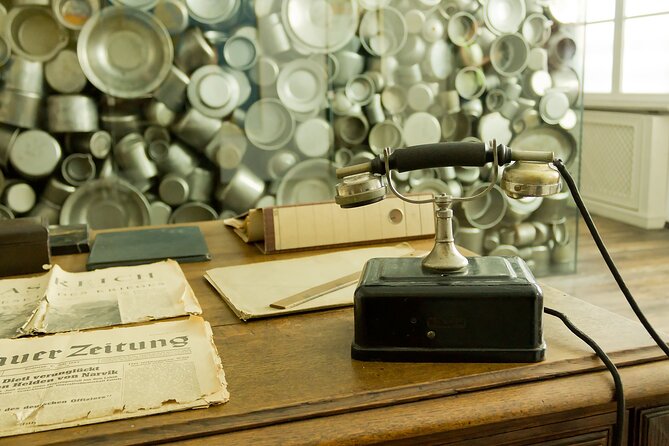
Inside, expect narrow spaces and a layout designed to reflect wartime atmosphere. That design choice is a big reason a guided tour works better than wandering solo. When corridors squeeze your view, it is easy to miss the point of a display. A good guide helps you pace your attention so you catch the key stories behind the photos and artifacts.
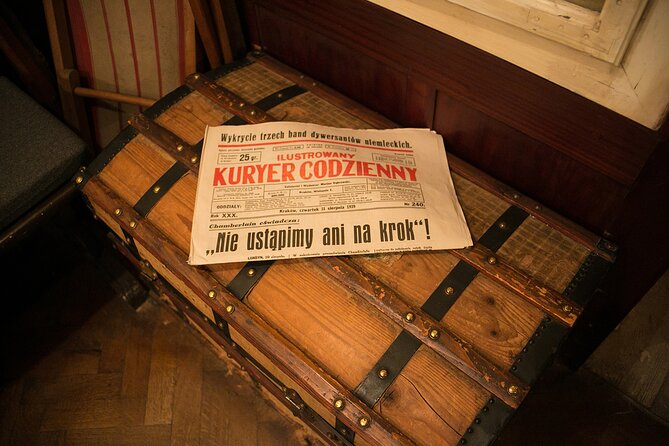
The museum highlights the fear and uncertainty of daily life, using reconstructed streets plus recovered objects and testimony-based context. The most moving part is learning what Schindler did for Jewish workers, sometimes known as Schindlerjuden. The guide typically helps you connect individual testimonies to the larger Nazi system that was trying to erase choice and hope.
One more practical note: personalized tickets are issued by the museum, and you must provide the full names of all participants at booking. If you travel with friends or family and names are inconsistent with passports or booking details, fix that early. This is one of those small steps that keeps the whole day from turning into a stress test.
Stop 2: the ghetto wall fragment and why Józefińska 41 matters
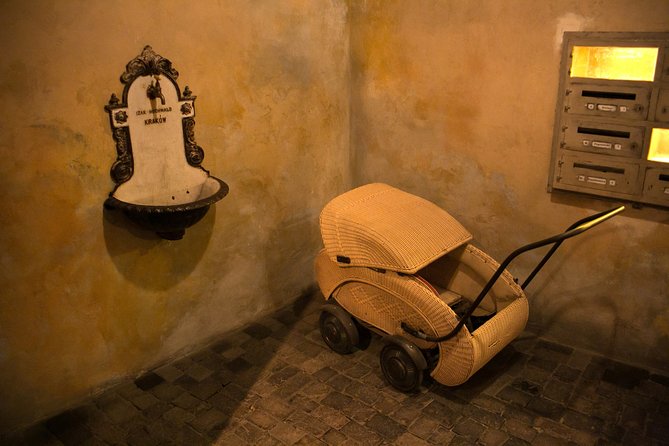
After the museum, the tour shifts from exhibits to the physical landscape. The walking segment starts among remnants of the Kraków Ghetto. You then stop at Józefińska 41, a location tied to key support functions inside the walls, including an orphanage, welfare offices, and a hospital.
This is a powerful stop because it gives you a fuller picture of what a ghetto meant day to day. It was not only fear and confinement. People needed places for care, food distribution, and survival support, even as the Nazi machinery tightened.
At Józefińska 41, the tour also points you toward preserved fragments of ghetto wall. Those remaining sections are stark for a reason: you can feel the boundaries as a real idea, not just a concept. The stop includes about 30 minutes here, and there is no ticket fee for this portion.
A consideration: what survives is limited. Some parts have been erased by time and reconstruction. So if your goal is to see lots of original buildings standing exactly as they were, manage expectations. The goal here is interpretation and context, not a walk through a fully preserved open-air museum.
More Walking Tours in Krakow
- Old Town Krakow & Wawel Castle Walking Tour
★ 5.0 · 1,508 reviews - Creepy Krakow: 2-Hour City Walking Tour
★ 4.7 · 1,131 reviews - Krakow: The Old Town Walking Tour
★ 4.8 · 794 reviews - Krakow: Kazimierz Jewish Quarter Walking Tour
★ 4.8 · 571 reviews
Stop 3: Ghetto Heroes Square and the Chair Memorial
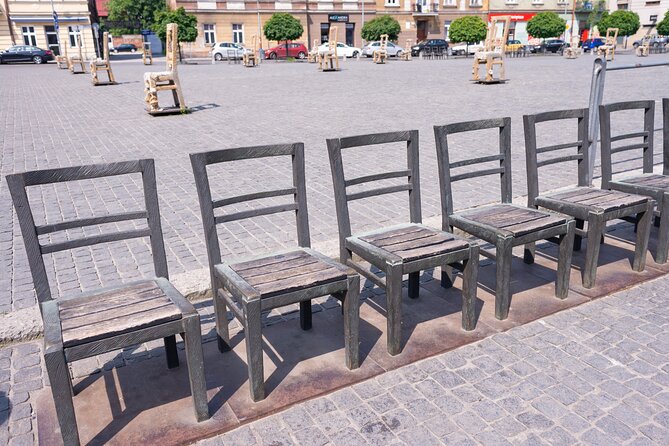
At Ghetto Heroes Square, you’ll learn how open space became a stage for roundups and deportations to concentration camps. This stop is shorter, about 20 minutes, but it often leaves a long emotional echo.
The chair memorial is the key focal point. Even if you do not read every label, a good guide uses this moment to explain what deportations meant in practice, including how people were processed and forced into the path of the camps. The square’s layout helps you understand how quickly ordinary space could be repurposed for terror.
I like this stop because it is a change of pace from museum walls and alleyways. You can look around and feel the modern city pressing in, which makes the history feel less distant.
Stop 4: Eagle Pharmacy near the square, what you get and what costs extra
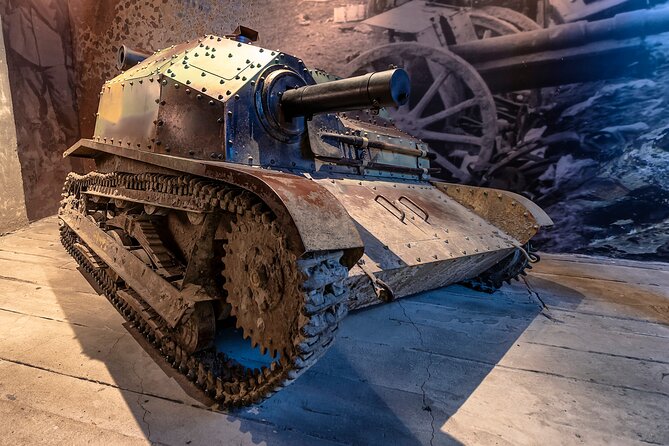
Across the square stands Eagle Pharmacy, also known as Under the Eagle Pharmacy. The tour route places you near it, with about 20 minutes set aside for the area. Importantly, admission for Eagle Pharmacy is not included, so treat this as either a chance to visit independently or as a quick look depending on your energy and budget.
This stop is tied to Tadeusz Pankiewicz and his staff, who risked everything to aid Jewish residents by offering medicine, shelter, and hope. It is a different kind of wartime story, one that shows moral courage operating under extreme danger.
If you are doing this tour as part of a longer WWII trip in Poland, consider Eagle Pharmacy as a valuable add-on. It offers a more immediate, human-scale angle compared with larger-scale camp-focused sites.
Guides, group size, and pace: how to make it work for you
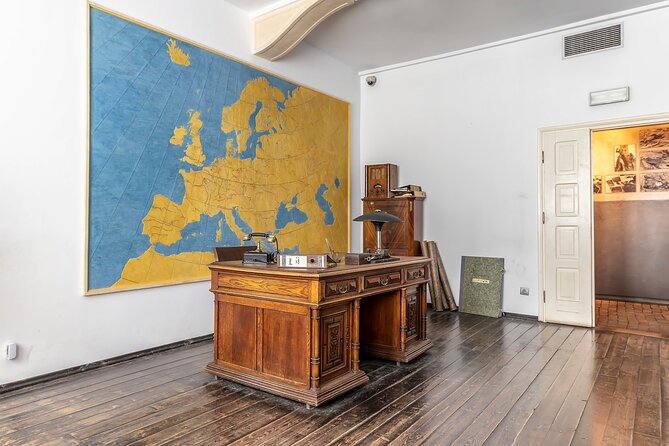
This experience lives or dies by the guiding. The best versions you will hear about do two things well: they keep the tour moving, and they explain what you are looking at in plain language. Guides mentioned in strong reviews include Phil, Joanna, Alicja, Magdelena, and Ela.
You should expect a group maximum of 25 participants. That cap helps, but it does not remove the reality that Schindler’s Factory can feel crowded because it is extremely popular. One clear takeaway from feedback is that some groups found the pace too fast for full comprehension in busy areas. If you are the type who likes to stop, read slowly, and take in details, do not count on having long quiet time in every room.
My practical advice:
- Arrive early so you are not rushed at the door
- Wear shoes you can walk in for a real street portion
- Bring your questions. A guide can answer what you might miss in a quick glance
- If you are traveling with kids or a teen who needs breaks, ask your guide for short pauses. Frequent stopping was mentioned as helpful in some runs
Also, expect the museum route to include narrow corridors. That can feel tight for anyone with mobility limits, but the tour does happen in all weather conditions and the guides adapt.
Value and price: what you are really paying for at $58.81
At $58.81 per person for about 3 hours, the value comes from two places.
First, you pay for time savings and certainty with prebooked tickets. In a top-visited museum, that matters. Second, you pay for human translation of the exhibit. Museums can be information-heavy, and a guide helps you understand what is important, why it matters, and how the pieces connect.
Admission is included for the museum portion, while the ghetto wall fragment stops are free. Eagle Pharmacy is the only stop listed as not included for admission, so you control that extra cost.
In other words, you are not just buying a seat. You are buying a guided bridge between a museum and a walk through surviving traces of the ghetto. If you would otherwise read labels alone, this tour is the difference between seeing history and understanding it.
One more small detail that affects value: the tour depends on personalized museum tickets. When that is handled correctly, your schedule stays clean.
Should you book the Schindler’s Factory and Jewish Ghetto walk?
Book it if you want one structured day in Kraków that connects Schindler’s Factory to the Jewish ghetto landscape without you having to research every corner on your own. I especially think it is a good match if you like guided context, want the story that inspired Schindler’s List explained with real historical grounding, and you enjoy short stop-and-learn moments.
Skip or consider alternatives if you strongly prefer a slow museum pace with lots of independent reading time, or if you dislike crowded enclosed spaces. Some people found the pace and space inside the museum tough for full absorption. If that is you, plan to ask your guide to slow down at key moments.
If you are flexible and you arrive on time, this is a well-priced way to turn a difficult subject into a clearer, more human experience.
FAQ
How long is the tour?
It lasts about 3 hours, with timings that are approximate and may adjust due to museum or site scheduling.
What does the tour cost?
The price is $58.81 per person.
Is the tour offered in English?
Yes, it is offered in English. The tour language is conducted in a single language per group.
Does the price include admission to Schindler’s Factory Museum?
Yes. Admission to Fabryka Emalia Oskara Schindlera is included for the museum stop.
Are the ghetto wall and square stops ticketed?
No. The ghetto wall fragment stop and the Ghetto Heroes Square stop are admission free.
Is Eagle Pharmacy included?
Not included. Eagle Pharmacy has an admission that is not included in the tour price.
Where does the tour start and end?
The tour starts at Lipowa 4, 32-051 Kraków, Poland. It ends near Apteka pod Orłem at Plac Bohaterów Getta 18, 33-332 Kraków.
Do I need to provide participant names?
Yes. The museum issues personalized tickets, so you must provide the full names of all participants at booking.
What should I wear or bring?
Wear suitable footwear because the tour includes walking and the museum has narrow passageways. Also check the weather forecast since comfort depends on conditions.
Can I get a refund if I change my mind?
Yes, there is free cancellation. You can cancel up to 24 hours in advance for a full refund.
More of Schindler's Factory and Wartime Krakow
- Krakow: Schindler’s Factory Ticket and Guided Tour Option
★ 4.3 · 4,306 reviews - Krakow: Schindler’s Factory Tour with Entrance Ticket
★ 4.5 · 3,182 reviews - Krakow: Schindler’s Factory Skip-the-Line Ticket
★ 4.4 · 3,105 reviews - Krakow: Schindler’s Factory Tour with Entrance Ticket
★ 4.6 · 1,737 reviews
Fresh Krakow reviews
- Zakopane PRIVATE TOUR from Krakow★ 5.0 · 18 reviews
- Czestochowa Black Madonna Private Day Tour from Krakow★ 5.0 · 18 reviews
- Chopin Candlelight Concert with Wine in Krakow★ 5.0 · 18 reviews
- Krakow City Pass – Museums, Atractions & City Transport★ 4.0 · 18 reviews
- Krakow: Garden of Lights Pinocchio Entry Ticket★ 4.7 · 18 reviews
- Half-Day Wieliczka Salt Mine Tour from Krakow★ 5.0 · 18 reviews
- Auschwitz Birkenau Memorial and Museum group tour from Krakow★ 5.0 · 18 reviews
- Krakow: Schindler’s Factory & Ghetto Guided Tour★ 5.0 · 18 reviews
Schindler's Factory Tours, compared.
Schindler’s Factory Ticket and Guided Tour Option
Read our review →
Krakow Schindler’s Factory Guided Tour with Admission Ticket
Read our review →
Kazimierz, Schindler’s Factory & Ghetto Guided Tour
Read our review →Browse the lists this tour appears in