
Reviewed · JEWISH HERITAGE TOURS
Krakow Jewish Quarter and Ghetto Tour by Electric Golf Cart
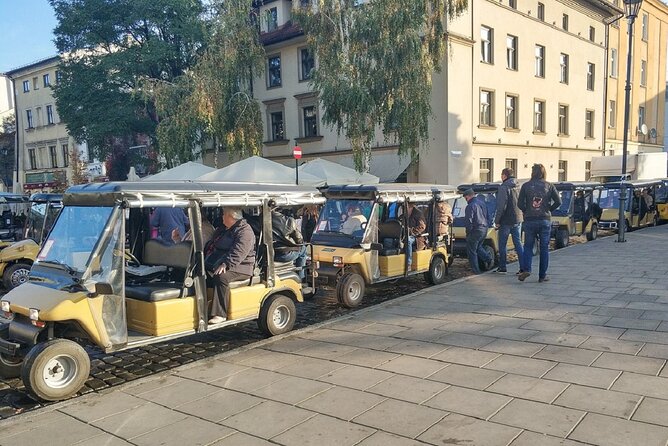
Kazimierz and the Krakow Ghetto are close enough to feel like the same neighborhood, yet their stories feel like two different worlds. This electric golf cart tour helps you cover a lot fast while staying comfortable, and I like that you get English commentary plus an audio guide that keeps the history clear. The one tradeoff to plan for is that some stops involve Christian church interiors, even though the theme is Jewish life and the ghetto.
What really makes this tour work is the flow. You drive between major sites, then you get short chances to step inside where it’s possible. Guides such as Matt, Natalie, Olivia, Martina, and Michael have been praised for being engaging and respectful, and that matters on a topic that is heavy and personal.
Key Highlights You Will Feel Right Away
- Electric cart speed with less legwork: You can see far more in 90 minutes than you can by foot.
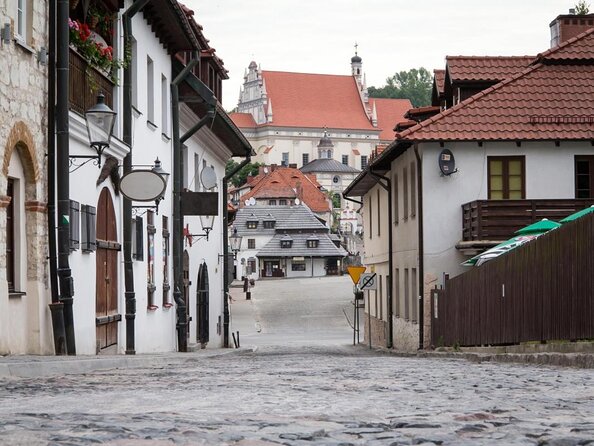
- Szeroka Street’s Jewish concentration: Once four synagogues stood along this street, a clue to how central it was.
- Old synagogue presence: You visit one of the oldest preserved synagogues in Poland in good condition.
- Plac Zgody to Umschlagplatz: You stand where Jews were forced to gather for deportations.
- Ghetto wall fragment with a plaque: A small, preserved piece makes the tragedy concrete.
- Short pop-in visits: You typically get brief moments to enter buildings when allowed.
Why Kazimierz and the Krakow Ghetto Fit in One Tour
Kazimierz sits just south of Wawel, and for centuries it was the hub of Jewish life in Kraków. Today it is one of Kraków’s main tourist areas, full of churches, synagogues, and streets that still feel lived-in.
The Krakow Ghetto story is tied to Podgórze, where the Nazis created a confined district in 1941. Seeing Kazimierz and the former ghetto in one run helps you understand how layered Kraków is, not as a single museum stop, but as a city that kept changing around real people.
More Golf Cart Tours in Krakow
- Krakow: City Sightseeing Tour by Electric Golf Cart
★ 4.5 · 3,264 reviews - Krakow: City Sightseeing Tour Eco Electric Buggy Golf Cart
★ 4.7 · 3,143 reviews - Krakow: Extended City Sightseeing Tour – Eco Buggy Golf Cart
★ 4.7 · 794 reviews
Starting Points, Time on the Clock, and How You Move
The tour is about 1 hour 30 minutes, and it runs in a small-to-medium group setting with up to 50 people. You’ll get a mobile ticket, and you should receive confirmation at booking time. There is no hotel pickup, so you need to meet at the locations listed by the operator.
You start at Mikołaja Zyblikiewicza 2, and you end at Mikołaja Kopernika 3. Both are in central Kraków and marked as near public transportation, which helps if you want to continue exploring after the tour.
You ride in an electric golf cart with an English-speaking driver, and you’ll also use an audio guide. In practical terms, this format is ideal if you want context while still having your feet free to walk short distances when you stop.
The Golf Cart Advantage in Real Life: Comfort Plus Efficiency
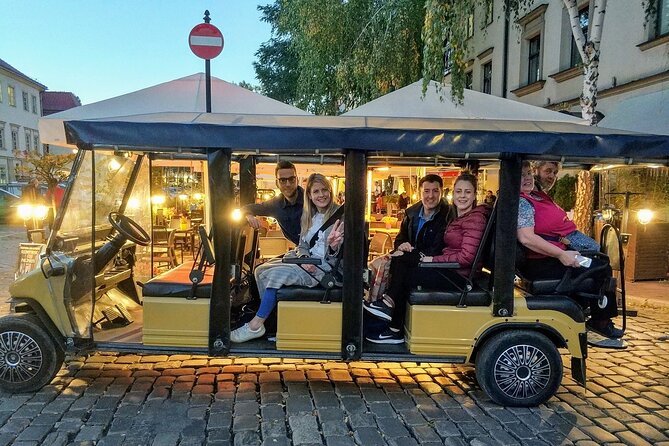
The big reason this tour gets booked is simple: you get motion without the strain. In hot weather, or if you have limited stamina, sitting while someone else handles the route can make the difference between enjoying the day and rushing through it.
The cart also helps you with city navigation. Kazimierz and Podgórze have enough streets and corners that you can lose time if you are only going by map and memory. Here, the driver takes you between key points, and you spend your limited energy on what matters.
One heads up: this is not a private, slow-paced experience. It is organized for speed and coverage, so you need to be ready to move when the group moves.
Szeroka Street: The Jewish Heart That Shapes the Whole Walk
Szeroka Street is the core artery of Kazimierz. It is also famous for what used to stand there: four synagogues were once along the same street, which was unusual across Europe. That detail matters because it tells you how concentrated Jewish religious and community life was, not just scattered landmarks.
On this stop, you are in the neighborhood’s center of gravity. You get the perspective of how the area functioned as a hub, then you also get a street-level feel for why it became a magnet for visitors today. If you care about architecture, look at how the buildings line up and how the street scale supports crowd life.
A possible drawback is expectation management. Even when a tour is framed around Jewish sites, time inside religious buildings can vary. If your priority is strictly synagogues, plan to treat this as an introduction, then follow up with targeted visits later.
More Jewish Heritage Tours in Krakow
- Krakow: Schindler’s Factory & Ghetto Guided Tour
★ 4.7 · 1,694 reviews - Krakow: Jewish Quarter and Former Ghetto Tour
★ 4.9 · 1,441 reviews - Krakow: Bike Tour of Old Town, Jewish Quarter and the Ghetto
★ 4.9 · 1,155 reviews - Krakow: Kazimierz Jewish Quarter Walking Tour
★ 4.8 · 571 reviews
The Old Synagogue Moment You Should Not Skip
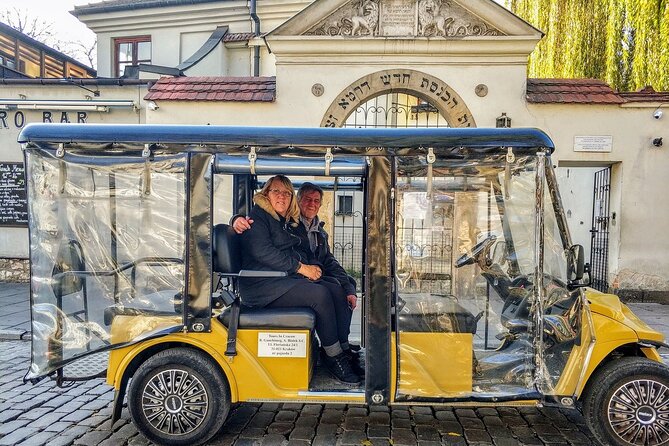
You stop on Szeroka Street at one of the oldest synagogues in Poland preserved in very good condition. Standing there with context changes how you read the space. Without background, it can just look like another historic building. With the story, you start noticing what this building represents as a surviving piece of a community that was violently disrupted.
This is also the part of the tour where you benefit from the short “pop in” structure. You do not linger for hours, but you can still step inside if access is available. That quick entry is often enough to add meaning, especially if you are short on time in Kraków.
If access is limited on your day, you can still learn a lot from the exterior and the route context. Just do not judge the tour only by whether you get to enter every single site.
St Joseph Church and Podgórze Market Square: A Visible Landmark
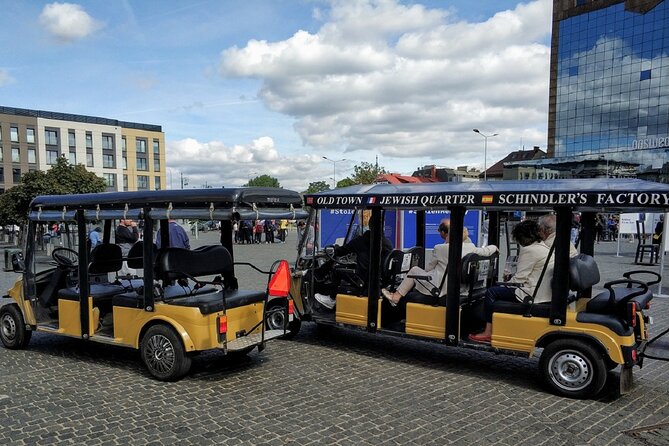
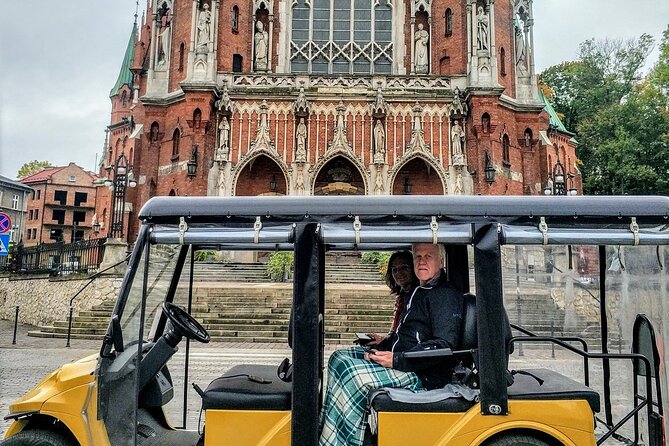
Podgórze is where history turns sharply, but it is also where daily city life continues. The parish church of St Joseph dominates Podgórze Market Square, and it is one of the most widely recognizable devotional sites in the area.
This stop adds an important layer. It reminds you that Kraków did not freeze in the wartime story. The square is a real place, and the church stands over it, physically anchoring the neighborhood.
There is a tradeoff to consider here. Some visitors who wanted more synagogue time feel the tour leans into church interiors. I do not think that automatically makes it “wrong,” but if you are sensitive to the balance of religious sites, you should know this tour can include both.
Finding the Ghetto Wall Fragment With a Plaque
One of the most affecting stops is a small preserved fragment of the original wall around the former ghetto, plus a plaque commemorating the fate of the inhabitants. It is small, but that is part of why it hits.
When you see a physical boundary that still exists, the concept stops being abstract. You can picture containment and separation in a way that photos sometimes cannot. The plaque also gives the visit a clear purpose, it is not only about aesthetics, it is about remembrance.
This is a good moment to slow down. Let the audio guide do its job, then take a minute to look around and connect it to the surrounding modern streets.
Plac Zgody and Umschlagplatz: Deportation Made Concrete
The tour takes you to the Podgórze district, where in 1941 it was turned into the Krakow Ghetto. Here, Plac Zgody became what the Nazis called Umschlagplatz, the place where Jews were forced to congregate for deportations.
Hearing the story while standing in the location makes it feel more real. You are not just learning terms. You are connecting a word you might recognize from history classes to the street-level setting where human lives were gathered under coercion.
In a 90-minute format, you do not get to process for long. That is why it helps to listen actively. If you feel overwhelmed, it is okay to take a breather, step away for a few breaths, then rejoin the group when ready.
The Polish Pharmacy Story: Shelter, Messages, and Risk
One of the most human parts of the route comes next. Near the tragic geography of the ghetto, the tour highlights a Polish pharmacy that acted as a kind of asylum or embassy during deportations. It provided shelter and helped deliver messages or packages inside and outside the ghetto.
This is the detail that often stays with people, because it adds complexity. It does not remove the horror. It also shows that even in impossible conditions, some people tried to help, at real personal risk.
If you tend to only focus on the worst moments of history, this stop gives you a more complete picture of how people survived and how information and care sometimes moved despite barriers.
How the Guided Format Feels on the Ground
Most of the experience blends an audio guide with an English-speaking driver who explains what you are seeing. This is a good combo if you want structure. You get a clear narrative, but you also hear real-time explanations at the stops.
You typically get brief entry opportunities, described as short pop-in times when buildings allow access. That means you should treat the tour as a sampler. It is perfect for getting oriented and deciding what you want to revisit later at your pace.
A small practical note from experience reports: audio may be delivered through individual headsets. That is usually a good thing for clarity, but it also means you will hear less of your group’s chatter while you listen.
Price and Value: What $34.75 Really Buys You
At $34.75 per person for about 1 hour 30 minutes, you are paying for three things: transport by electric cart, an audio guide, and an English-speaking driver who keeps the story coherent across multiple sites.
If you tried to do the same route by taxi and then add audio and guide time, you would likely spend more. And if you did it entirely on foot, you could see fewer landmarks in the same amount of time, especially if you want to enter buildings.
That said, it is not a bargain on autopilot. If you are arriving in Kraków with plenty of time and you prefer slow wandering, you may decide you get more satisfaction doing Kazimierz and the ghetto sites on foot. For time-compressed trips, though, this is one of the most efficient ways to get context fast.
If you can, book a slot ahead. The experience is often reserved around 17 days in advance on average, so peak times can fill up.
Who This Tour Fits Best (And Who Might Want Something Else)
This tour is a great match if you want a strong overview without exhausting walking. It also suits you if you want an emotionally grounded route where the main landmarks are explained in English.
It can also work well for visitors who like to mix quick guided learning with longer self-guided time afterward. After this tour, you will usually know which street or building deserves a second visit.
You might want a different style of tour if you care only about synagogue interiors. Some time can go to church interiors too, and a headset audio format can limit group interaction during listening segments. In that case, you can still benefit from the cart and context, but you should be prepared.
Practical Tips to Make It Smoother and More Meaningful
- Bring a layer. Weather changes fast in Kraków, and carts are comfortable but not always warm like a car.
- Arrive a bit early. With group transport, a few minutes of buffer can prevent stress at the start.
- Pay attention to seating. If you have a preference for forward-facing seats, check with staff when boarding.
- Use the pop-in time wisely. When access is possible, move quickly, look, then step back so the group can continue.
- Expect emotions. This route includes deportation-related sites like Umschlagplatz, so take your time even if the schedule is tight.
Should You Book This Electric Cart Tour of Kazimierz and the Ghetto?
I think this is worth booking if you want an organized, English-friendly way to understand Kazimierz and the former ghetto in a short window. The electric cart keeps you comfortable while still covering the key locations, and the combination of audio guide plus driver narration helps you connect street names to real events.
I would book it with open expectations about the mix of religious buildings, since the route can include churches alongside synagogue landmarks. If you want zero church time and you plan to spend hours on foot, you might prefer a more focused walking approach.
If your schedule is tight, you want to see over 20 key monuments in Kazimierz, and you appreciate a respectful overview led by guides like Matt, Natalie, Olivia, Martina, or Michael, this cart tour is one of the smartest ways to get your bearings fast and then choose what to revisit next.
FAQ
How long is the Krakow Kazimierz and ghetto tour by electric golf cart?
It is about 1 hour 30 minutes.
How much does the tour cost?
The price is $34.75 per person.
Is the tour offered in English?
Yes, it is offered in English.
What is included in the price?
You get transport by electric golf cart during the tour, an audio guide, and an English-speaking driver.
Is hotel pickup or drop-off included?
No, hotel pickup and drop-off are not included.
Where do I meet for the tour?
The start meeting point is Mikołaja Zyblikiewicza 2, 31-029 Kraków, Poland, and the end point is Mikołaja Kopernika 3, 31-034 Kraków, Poland.
How big is the group?
The maximum group size is 50 travelers.
Do I get a mobile ticket?
Yes, the tour provides a mobile ticket.
Who can participate?
Most travelers can participate.
Can I cancel for a refund?
Yes. You can cancel up to 24 hours in advance for a full refund. If you cancel less than 24 hours before the start time, the amount paid is not refunded.
Fresh Krakow reviews
- Czestochowa Black Madonna Private Day Tour from Krakow★ 5.0 · 18 reviews
- Zakopane PRIVATE TOUR from Krakow★ 5.0 · 18 reviews
- Chopin Candlelight Concert with Wine in Krakow★ 5.0 · 18 reviews
- Krakow City Pass – Museums, Atractions & City Transport★ 4.0 · 18 reviews
- Krakow: Garden of Lights Pinocchio Entry Ticket★ 4.7 · 18 reviews
- Auschwitz Birkenau Memorial and Museum group tour from Krakow★ 5.0 · 18 reviews
- Krakow: Schindler’s Factory & Ghetto Guided Tour★ 5.0 · 18 reviews
- Half-Day Wieliczka Salt Mine Tour from Krakow★ 5.0 · 18 reviews
Jewish Heritage Tours, compared.
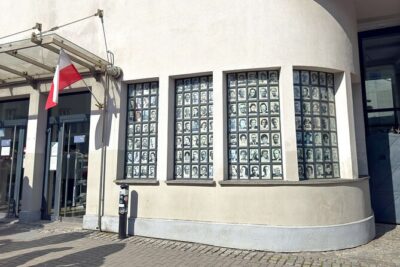
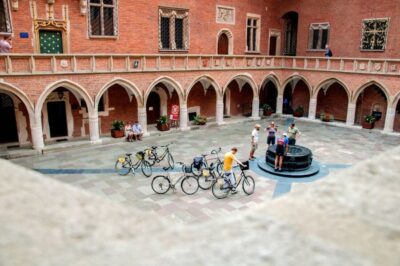
Bike Tour of Old Town, Jewish Quarter and the Ghetto
Read our review →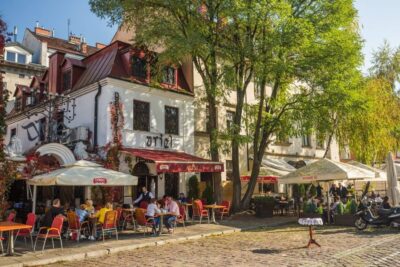
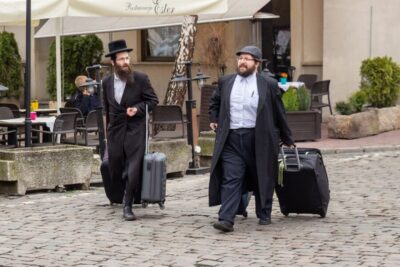
Kazimierz, Schindler’s Factory & Ghetto Guided Tour
Read our review →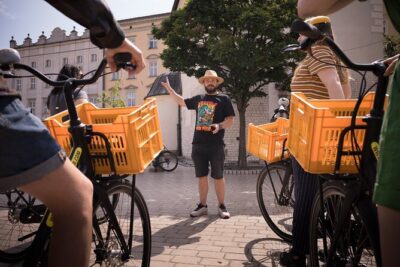
Full Bike Tour – the Old Town, Jewish Qtr & the Ghetto NEW BIKES
Read our review →
Warsaw Ghetto Private Walking Tour with Hotel Pickup
Read our review →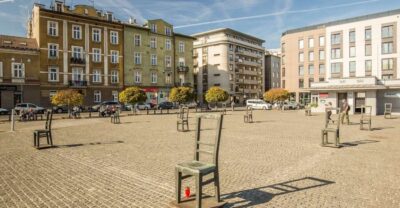
Browse the lists this tour appears in