
Reviewed · AUDIO TOURS
Warsaw at War 1939-1945: A Self-guided Audio Tour
This self-guided audio tour turns Warsaw’s World War II stories into a walk you can pace yourself, with offline access so you are not hunting for signal between stops. I like how it mixes big-picture history with specific memorial moments, so the time passes fast, but the meaning stays.
My second favorite part is the format: you start at Kościół Akademicki św. Anny, follow the audio cues through about 3 km, and end at the statue of Józef Piłsudski. The main drawback to plan for is navigation friction, since one review flagged that the route guidance and the off-route alert can be a bit too sensitive if you accidentally cross to the wrong side of a street.
Key Highlights Worth Knowing Before You Go
- Offline audio, maps, and geodata so you can keep moving without mobile data
- A 90-minute, ~3 km walk with built-in pauses whenever you want to look around
- Airy, headphone-friendly audio with narration plus sound effects and music
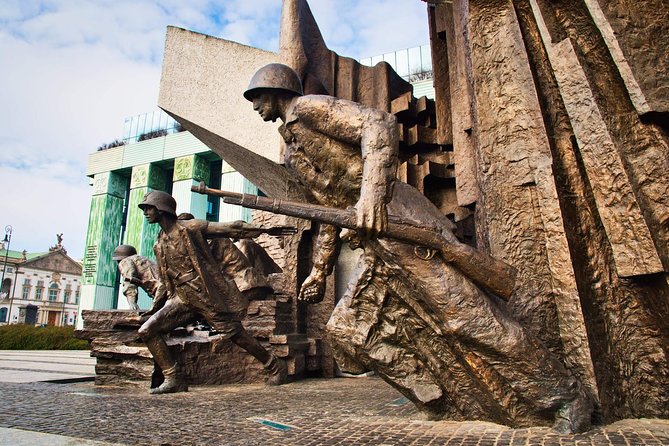
- Real memorial stops, including Mały Powstaniec and the Tomb of the Unknown Soldier
- Small group cap (up to 10), even though the tour is self-guided with your own listening pace
A 90-minute Warsaw WWII Walk That Works Even If You Walk Alone
If you like your history while walking, this tour hits a sweet spot. You cover roughly 3 km in about 90 minutes, and the whole plan is designed for a relaxed pace, not a hard march. You can pause mid-route to linger at photos, duck into a garden area, or grab a meal in the city center, then jump back into the narration when you’re ready.
What makes it especially useful in Warsaw is how tightly the story is tied to the streets you are already seeing. The audio does more than give dates. It frames how Warsaw survived, then rebuilt itself into the cultural city you walk through today. You get that feeling of a city with scars, but also one that keeps going.
One more practical win: it is offered in English and is set up so most people can take part. If you are traveling solo, the self-guided style matters because you are not waiting for anyone’s pace. You can stop for a viewpoint when you want, not when a group decides.
More Warsaw bookings to weigh
- Warsaw: Evening Cruise with Drink and Audio Guide
★ 4.8 · 15 reviews - Self Guided Legends and Uprisings Walking Tour of Warsaw
★ 5.0 · 14 reviews - Warsaw’s Old Town A Self-Guided Audio Tour
★ 4.5 · 10 reviews
Starting at Kościół Akademicki św. Anny, Then Letting the Audio Lead
Your day begins at Kościół Akademicki św. Anny, Krakowskie Przedmieście 68, 00-322 Warszawa. From there, you follow the route on foot until the end point at the Statue of Józef Piłsudski, plac Marszałka Józefa Piłsudskiego, 00-073 Warszawa.
The tour format is very “put your phone away, listen, and walk.” You start the experience in the VoiceMap app, then you can keep your attention on the street rather than constantly checking the screen. That is a nice fit for old-town areas where the sidewalks can change style quickly and where it is easy to lose the thread of a guided plan.
You’ll also want to plan your listening gear. You can use ear buds or headphones. If you are in a small group, you can even use a small speaker, which can make it easier for friends to share the story together.
And because it includes offline access to audio, maps, and geodata, you can treat this like a real walk plan, not a “hope your internet survives” exercise. That matters in cities where signal can flicker near buildings or around thicker blocks of historic streets.
Old Town Stories and the City’s Phoenix Moment
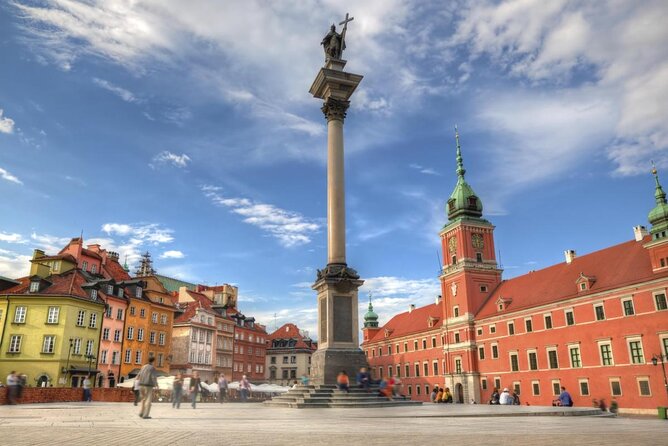
The route begins just outside the famed Warsaw Old Town and stays in the walkable core. Expect a guided exploratory feel rather than a “stand at every corner and look at a plaque” routine. The audio is the main guide, with narration supported by sound effects and music to keep the experience engaging.
The history thread is built around Warsaw’s WWII ordeal and its aftermath. The narration paints Warsaw as a phoenix, a city that rose from the ashes of World War II into the art and beauty you see now. It does not stay abstract. It points out how Polish resistance and defense of heritage played out under pressure from both Nazi Germany and Communist Russia.
This is where you get the tour’s emotional tone. It is not only about battles. It is about what the war did to people, and how the city remembers those who suffered and fought. For me, that makes the Old Town walking part more than scenery. You are seeing locations, but you are also learning how Warsaw chose to carry the past forward.
Quick practical tip: the route area gives you options if you want to break the flow. You might spot chances to stop for lunch at restaurants nearby, wander around Saxon Garden, or even consider a visit to the Vodka Museum if you are curious. The tour does not sell you those detours, but the timing and central location make it easy to weave them in.
Mały Powstaniec: Seeing the Warsaw Uprising Through Child Soldiers
One of the most important stops in the walk is the memorial to Mały Powstaniec (Little Insurgent). This is dedicated to child soldiers who fought and died during the Warsaw Uprising of 1944.
This kind of memorial hits differently while you are walking, because you are not sitting in a museum setting with everything controlled for you. You are in the city, surrounded by normal life, while the story is pulled into sharp focus by the narration. The audio helps you understand the background of the “little insurgent” idea, so the memorial does not feel like a random statue or nameplate.
For readers who care about human scale, this stop is a standout. It puts faces and age to the cost of resistance. And it also explains why the Warsaw Uprising is such a central event in Polish WWII memory, not just a footnote in European history.
Timing-wise, build a few extra minutes here. Even if you are not the type to linger, take a moment to read and absorb. The tour includes this stop as part of the main storyline, so it is best treated as a full moment, not something you rush past while staying on schedule.
Another way through a Warsaw day:
- Warsaw: Chopin Concert in the Old Town
★ 4.8 · 2,287 reviews - Warsaw: Traditional Galar Cruise on The Vistula River
★ 4.6 · 1,640 reviews - Warsaw: Old Town Highlights Walking Tour in English
★ 4.7 · 1,516 reviews - Warsaw Concert: Chopin – Painted by Candlelights with Wine
★ 4.8 · 1,442 reviews
Tomb of the Unknown Soldier: A Quiet, Big Message
Another stop on the route is the Tomb of the Unknown Soldier, where the audio invites you to pay respect to those who were lost fighting for their country. The experience also gives the monument’s history and explains a detail that really matters.
Today, the tomb contains ashes and soil from every 20th-century battlefield where Polish soldiers lost their lives. That is the key idea the audio helps you hold onto. It turns the monument into a living link to many wars and many losses, not just one specific conflict.
If you like memorials that connect past and present, this is the one. You can admire the design and symbols, but the strongest effect comes from understanding what the tomb represents. It becomes a pause in a walking tour, a short shift from street-level movement to something more reflective.
Practical note: this stop can feel like a good place to slow down your pace for a few minutes. Since the tour is self-guided, you can give it the attention it deserves and then continue.
Ending at Józef Piłsudski: Independence, 1920, and Why It Still Matters
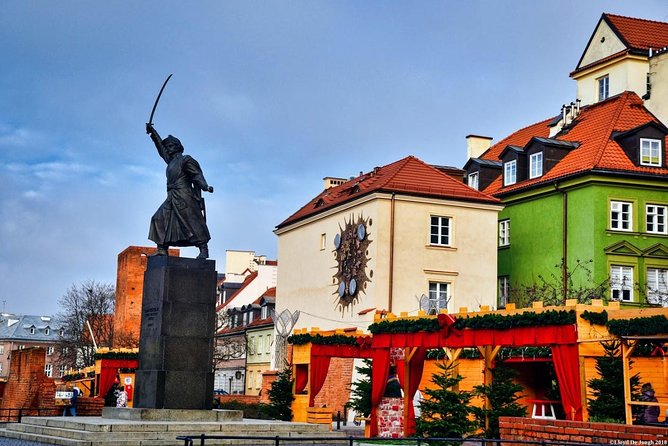
The walk ends with a face-to-face moment at the statue of Józef Piłsudski. This is a fitting ending because the narration closes the WWII thread by rooting Polish independence in earlier struggles and the long arc of fighting for sovereignty.
You hear about how Piłsudski is regarded as a political and military hero. The audio focuses on how he fought relentlessly to free Poland from Russian control. It also includes the claim that he ultimately defeated Lenin’s Red Army at the gates of Warsaw in 1920.
Even if you already know the basics of Piłsudski, the audio framing is useful because it links his legacy to why Warsaw’s later WWII resistance carried so much weight. The statue is not just a final stop. It is the story’s closing point, where the narrative shifts from occupation and catastrophe to a concept of national self-determination.
When you reach the end, take a moment to look around before you turn the audio off. The statue area is a good place to orient yourself for the rest of your day. And since this tour ends in the same general area where you can easily keep exploring Warsaw, you do not feel “dropped” in the middle of nowhere.
Price and Value: Why $9.99 Can Make Sense Here
The tour costs $9.99 per person and runs about 1 hour 30 minutes. That price is not for a museum ticket or a bus ride. It is for the walking experience itself, the VoiceMap app content, and the ability to use it repeatedly.
You get lifetime access to the Warsaw at War 1939-1945 tour, plus VoiceMap application access. Most importantly, you get offline access to audio, maps, and geodata. In practice, that turns the $9.99 into a tool you can use on more than one trip, or even use if you want to replay sections later without paying again.
You do not need to budget for entrance fees along the route, since tickets or entrance fees to museums or other attractions are not included. If you decide to add side visits like the Vodka Museum, that will be on your own dime. But the tour itself does not lock you into paying extra to complete the story.
The value question is simple: if you enjoy learning while walking and you like self-paced experiences, this is a reasonable deal. If you prefer a live guide or want lots of indoor exhibits, you may find the format more “on the street” than “in the building.” Either way, it is easy to fit into a day because it stays within a compact walk.
Audio Quality and Tech Tips So You Do Not Waste Time
This is one of those tours where production quality matters. The narration is described as crisply mastered by professional audio engineering staff. You also get sound effects and music, which can help you track the story and keep the tone focused, especially during harder subjects like the child soldier memorial and WWII losses.
Because it is self-guided, your comfort with a smartphone matters. A smartphone is not included, so you’ll need your own device to run the VoiceMap app. The route is designed to work well with offline features, but you still need the app open at the start, and you’ll likely check the map occasionally.
About that one drawback: there is a report that it can be difficult to follow navigation, and that an alarm for leaving the route may trigger too easily, even if you are only on the opposite side of the street. So here is the practical workaround that can save your mood:
- Stay close to the route side the app seems to prefer.
- If you get an alert, look at where you are relative to the crossing or median, then correct rather than panicking.
- Treat the map as a quick confirm, not as a constant distraction.
If you prefer quiet, set your headphone volume so it is easy to hear over street noise, then keep walking. If you want a slightly more social vibe, use a small speaker with your group, as the tour supports that.
The tour’s design is made for flexibility, so you can pause anytime and explore further wherever you are. Just remember that pausing longer can make rejoining the audio harder if you wander too far from the planned path.
Who This Tour Fits Best (And Who Might Be Happier Elsewhere)
This works best if you like history that is tied to places, not just a set of facts. You also get extra value if you enjoy solo exploring on your own time. The self-guided setup means you are not stuck with group pacing, and the offline design makes it feel more reliable for an urban walk.
It also fits families, at least in the sense that the audio is designed to be suitable for all ages and can be listened to with earbuds or headphones. Still, some topics in the story are heavy, especially the WWII tragedy elements and the memorial to child soldiers. If you are bringing kids, consider how you want to handle tough subjects and how long they can listen while walking.
You might consider skipping it if you strongly dislike any form of “route discipline.” The one navigation complaint suggests that the route guidance system can be unforgiving. If you want ultra-flexible wandering with zero chance of alerts, you may find that annoying.
Should You Book Warsaw at War 1939-1945?
Yes, if you want a compact, meaningful walk through Warsaw’s WWII memory, with offline audio and a price that does not inflate your budget. The lifetime access and the ability to explore at your own pace make it a smart buy, especially for solo travelers.
I would book it with one caveat: be ready to pay attention at street crossings and stick close to the suggested route when possible. If you do that, you get a strong mix of Old Town atmosphere, memorial learning, and a clear ending at Józef Piłsudski that ties the story together.
FAQ
How long is the Warsaw at War 1939-1945 self-guided audio tour?
It is approximately 1 hour 30 minutes.
Where does the tour start and end?
It starts at Kościół Akademicki św. Anny, Krakowskie Przedmieście 68, 00-322 Warszawa, Poland, and ends at the Statue of Józef Piłsudski, plac Marszałka Józefa Piłsudskiego, 00-073 Warszawa, Poland.
What language is the tour available in?
The tour is offered in English.
Is the audio available offline?
Yes. The tour includes offline access to audio, maps, and geodata.
Do I need a smartphone?
Yes. A smartphone is not included, but it is needed to run the VoiceMap application.
Is there an entrance fee for museums along the route?
Tickets or entrance fees to any museums or other attractions are not included. The tour itself lists admission as free.
Is transportation included?
No, transportation is not included.
How many people can be on the tour?
There is a maximum of 10 travelers.
Are service animals allowed?
Yes, service animals are allowed.
What is the cancellation policy?
This experience is non-refundable and cannot be changed for any reason.
Where is the tour located for public transportation access?
The tour is near public transportation.
Fresh Warsaw reviews
- Warsaw: Wolf’s Lair & Swieta Lipka Small-Group Tour + Lunch★ 5.0 · 3 reviews
- World War II Warsaw Old Town, Military Cemetery Walking Tour★ 4.7 · 3 reviews
- Warsaw: Old Town Walking Tour, Hidden Gems & Hot Chocolate★ 4.3 · 3 reviews
- Warsaw: Explore the Vistula on Its Longest Speedboat Route★ 4.6 · 3 reviews
- 5-hour: Royal Castle, Old Town and POLIN Museum/inc.Pick-up/★ 5.0 · 3 reviews
- Majdanek – German camp from II World War – Private Tour – 1 DAY TRIP FROM WARSAW★ 5.0 · 3 reviews
- Museum of Modern Art in Warsaw★ 5.0 · 3 reviews
- Warsaw Outdoor Paintball with Transfers (all year round)★ 5.0 · 3 reviews
Audio Tours, compared.


Day or Night Vistula River Cruise with Audio Guide
Read our review →

Sightseeing Cruise on Vistula River with Audio Guide
Read our review →
Vistula River Sightseeing Cruise with Audio Guide
Read our review →

Wrocław University: Tour with Audio Guide & Admission
Read our review →
Browse the lists this tour appears in