
Reviewed · WALKING TOURS
Warsaw: 2-Hour Old Town Walking Tour
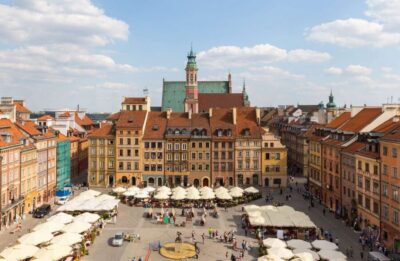
Warsaw’s Old Town is interesting in a way few European centers are: it did not just survive history, it was totally destroyed and then rebuilt to match the pre-war city. I like that this walk keeps you moving through the Royal Route and romantic backstreets, while also explaining how the Old Town earned UNESCO status. One thing to consider, it is only two hours, so you will get the big story beats and key views, but you will not have time to linger like you would on a self-guided roam.
My favorite part is how the tour connects art and memory, especially the story of Canaletto’s paintings and why they mattered during reconstruction. I also like that you stop at places with strong political and human meaning, like the Royal Castle, where Poland’s second oldest constitution in the world was adopted. The possible drawback is practical: entrances are not included, so if you want to go inside specific sites, you may need extra time and tickets.
You should also know this is a focused walking experience with no lunch served. The good news is there is a cafe nearby where you can buy something, and the guide typically shares smart ideas for what to try after the tour.
Key points that make this Old Town walk worth your time
- WWII to UNESCO, with the full rebuild story spelled out as you walk
- Royal Route stroll, with viewpoints that make the Old Town feel like a movie set (in a good way)
- Stops tied to Royal Castle and a historic constitution
- A visit that explains the story behind a church used as a war front
- City stop-offs linked to Chopin, Pope John Paul II, and Marie Curie
- The guide weaves in the Solidarity movement and how it left marks on Warsaw streets
Why Warsaw’s Old Town feels different from other “Old Towns”
Warsaw’s Old Town can feel oddly moving at first, because the city you see is not the city that started the 20th century. The tour’s core promise is simple: you learn how a neighborhood that was effectively erased was rebuilt afterward so closely that it could claim its original form. That is why this is sometimes described as the youngest Old Town in the world, because the version you walk through is a result of modern reconstruction, not medieval survival.
This matters for your trip. If you only take photos, you might miss why the streets and monuments matter so much. If you understand the rebuild logic, then every façade and square becomes more than postcard material. You start noticing details you would otherwise ignore, like how each monument fits into the wider story the guide is telling.
And the pacing helps. Two hours is long enough for a real narrative, but short enough that you do not lose your energy before you explore the rest of Warsaw.
More Walking Tours in Warsaw
- Warsaw: Old Town Highlights Walking Tour in English
★ 4.7 · 1,516 reviews - Warsaw: Old Town Guided Walking Tour
★ 4.9 · 599 reviews - Half-Day Polish Food Walking Tour with Guide and Dinner
★ 4.5 · 381 reviews
Meeting at Nicolaus Copernicus Monument and getting your bearings fast
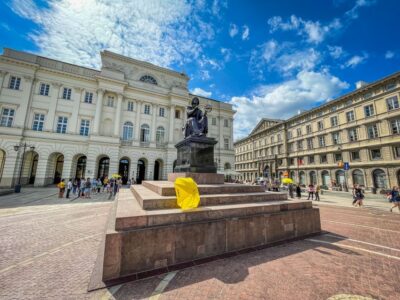
You meet in front of the Nicolaus Copernicus Monument at Staszic Palace, ul. Nowy Świat 72 in central Warsaw. It is easy to find once you know what you are looking for, and you should look for the guide with a sign reading PolinTours – Private Guide.
Bring comfy shoes because you will be walking the whole time. Also, have sun protection ready. Warsaw in warm months can be bright and sweaty, and the tour asks you to bring sunglasses, a sun hat, and sunscreen. If you like having options, bring cash too, since you might want to buy a snack at the cafe during or after your route.
One more practical note: pets are not allowed, and you should plan to travel with a small bag. Oversize luggage and large bags are not permitted, and alcohol and drugs are also not allowed.
The Royal Route and Old Town streets: where beauty meets a hard timeline
The walk leans into romance, but it does not let the mood hide the facts. You follow the Royal Route, then drift through the old streets and corners that make Warsaw’s Old Town feel theatrical. Expect the guide to point out architectural highlights and the kind of small landmarks that are easy to miss when you are staring at your phone camera.
This is where the tour earns its storytelling value. Warsaw’s Old Town is rebuilt to look like the pre-war city, so the guide’s job is to show you what you are seeing and why it matters. Instead of just naming buildings, you get the meaning behind them: what stood there before, what was lost, and how rebuilding turned those losses into a public statement.
Also, this segment is about orientation. You will start to recognize the structure of the Old Town layout, which helps later when you explore on your own. If you are short on time, this first part is how you avoid getting turned around.
Castle Square and King Sigismund’s Column: power, identity, and perspective
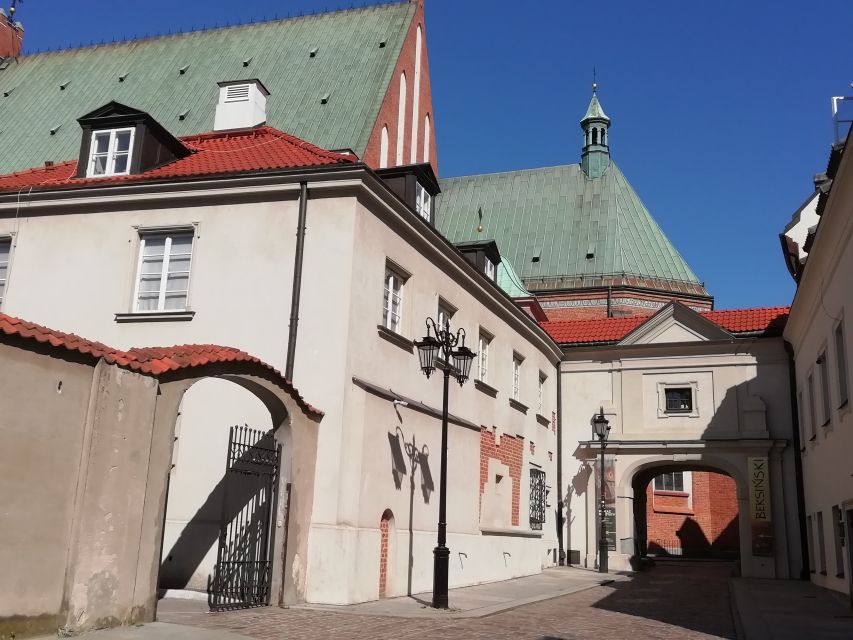
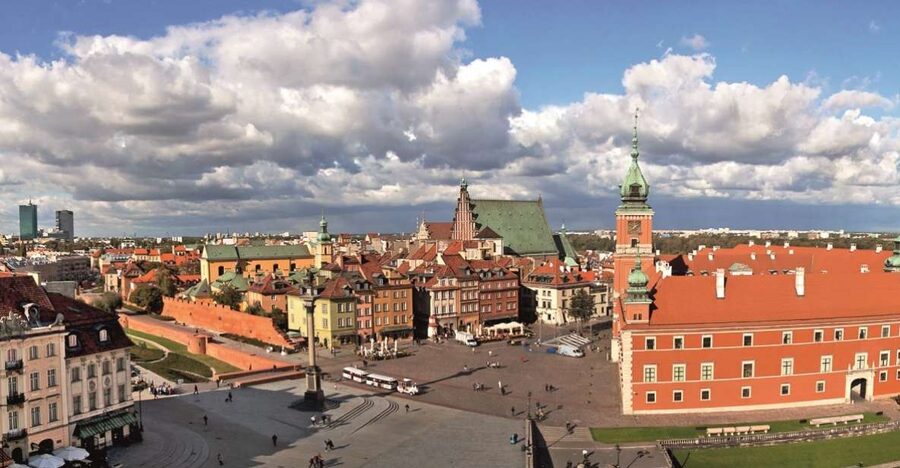
Your route includes Castle Square, and your guide ties the space to the idea of leadership and legitimacy. You will also see King Sigismund’s Column, a landmark that works well as a mental anchor. If you remember one visual from this walk, make it that column, because it helps you map the rest of the area as you move.
Here is why I think this stop is valuable for you: public spaces like this are where history becomes visible. A column is not just a tall object, it is a way a city projects authority into everyday life. When the guide connects it to the Old Town’s story, you start seeing the square as more than a photo stop.
One consideration: entrances are not included. So if you were hoping to rush into the Royal Castle complex and start walking immediately, plan instead for explanations and outside views, unless you decide to add paid access on your own.
Another way through a Warsaw day:
- Warsaw: Chopin Concert in the Old Town
★ 4.8 · 2,287 reviews - Warsaw: Traditional Galar Cruise on The Vistula River
★ 4.6 · 1,640 reviews - Warsaw Concert: Chopin – Painted by Candlelights with Wine
★ 4.8 · 1,442 reviews - Warsaw: City Sightseeing Hop-On Hop-Off Bus Tour
★ 3.6 · 1,415 reviews
St. John’s Cathedral and Market Square: stories you feel in your feet
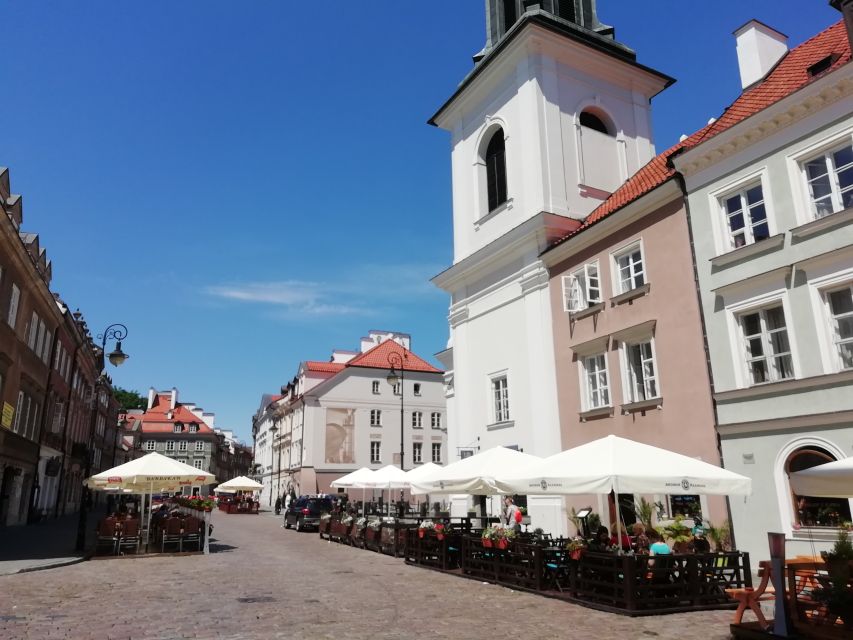
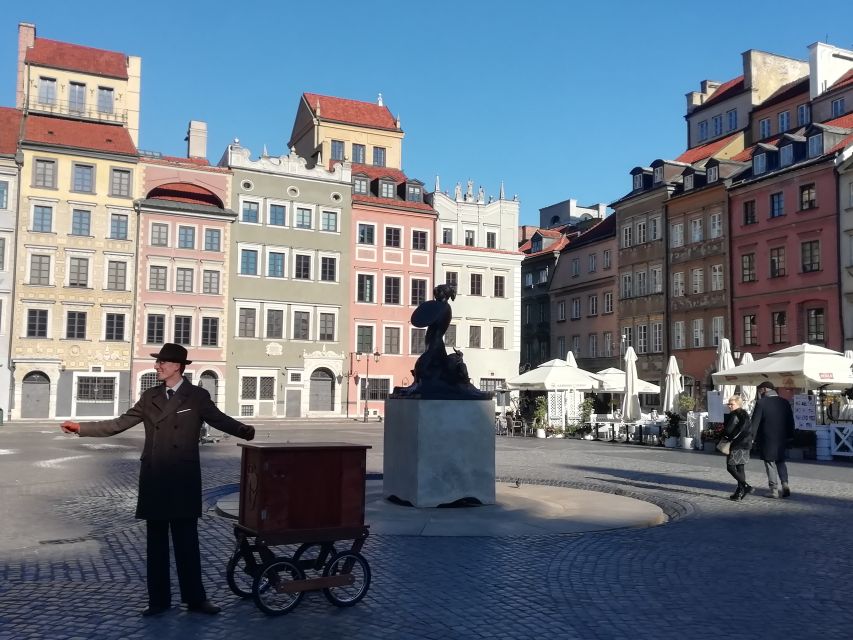
St. John’s Cathedral and the Market Square are on the route, and this is where the tour’s emotional weight ramps up. The highlights include a striking concept: a church that served as a war front. Your visit to St. John’s Cathedral is tied to that larger WWII narrative, so you will likely hear how a sacred space became part of the conflict in ways that changed the city forever.
Market Square is different. It is the social and economic center, so the guide can connect daily life to the bigger political story. When you stand there with the war and rebuilding context in your head, you get a more complete sense of what reconstruction meant beyond architecture. It meant restoring the places where people would gather and trade and celebrate.
If you are the type who likes to understand context before taking pictures, this section is a good fit. You will not just capture the square, you will understand why the square was worth rebuilding.
Barbican and defensive walls: Warsaw’s grit in stone
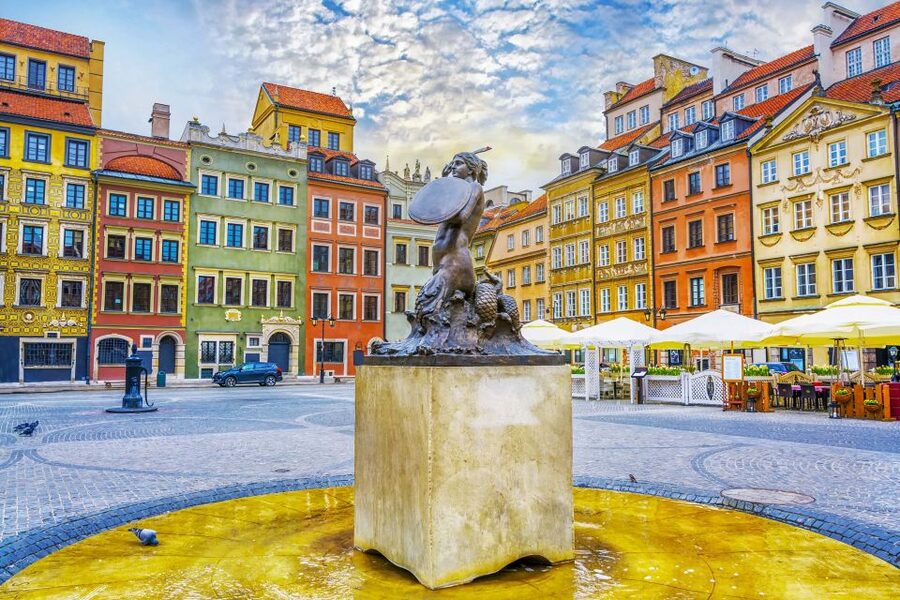
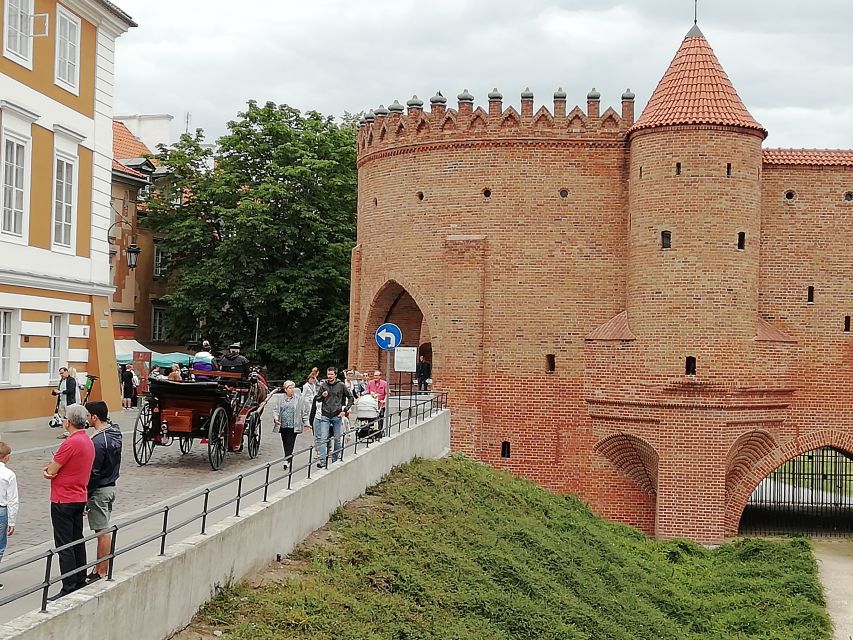
The walk includes the Barbican, and the defensive story helps balance the rest of the itinerary. Reconstruction is one theme, but protection is another. When the guide points out where defensive architecture sits in the city plan, it becomes clearer how Warsaw’s Old Town functioned as more than a symbolic center.
Why this stop helps your trip: defensive walls and gates are usually the hardest things to interpret on your own. The guide can show you what to look for and how to read the space, which makes the Old Town feel more logical as a system, not a random collection of pretty buildings.
And since entrances are not included, this section is ideal. You get the key sights from outside, so you spend your time on walking and learning, not ticket lines.
The Royal Castle stop and the constitution that matters
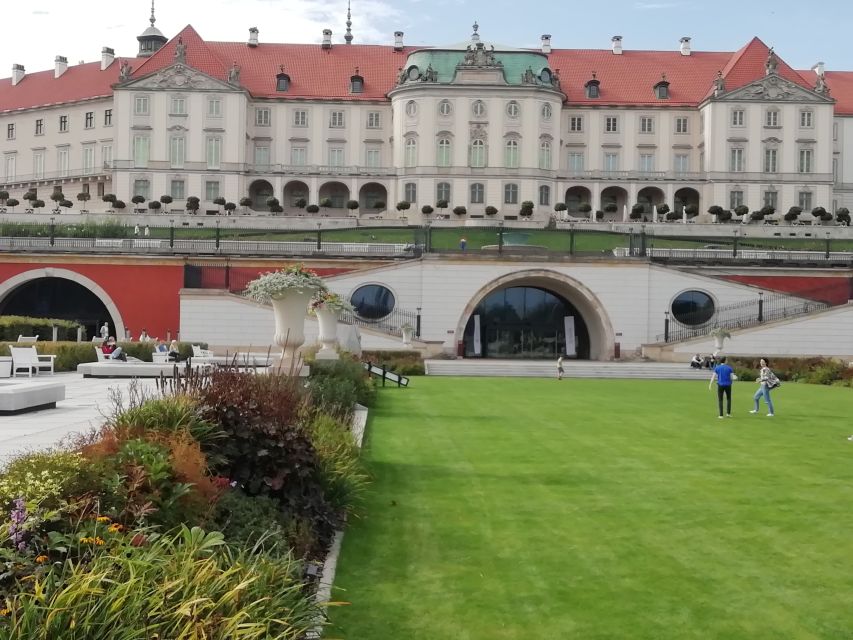
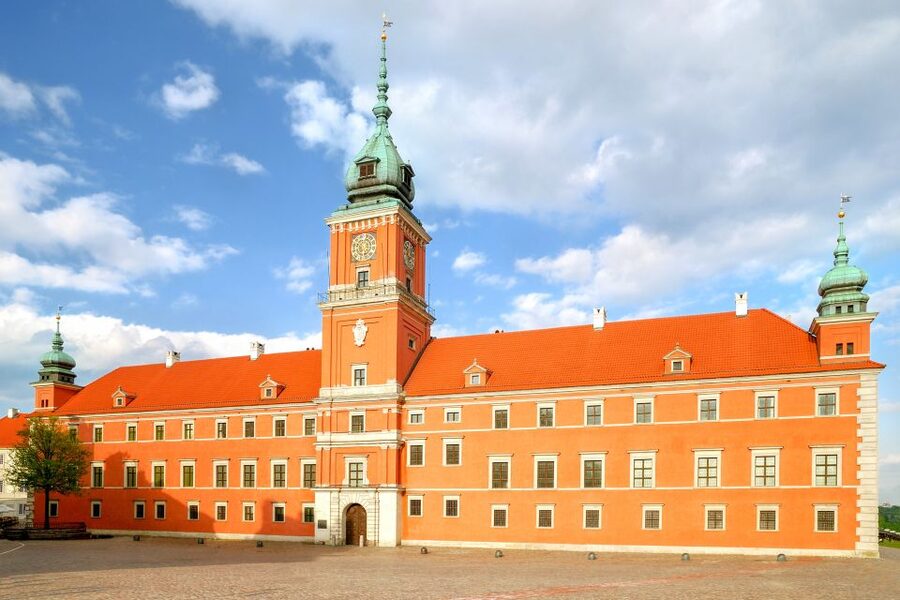
You will stop at the Royal Castle, and it is one of the most important learning moments of the tour. The highlight here is direct: the second oldest constitution in the world was adopted at this location.
Even if constitutions are not your usual travel obsession, this is worth hearing about. It connects Warsaw to a wider story about governance and political thinking. Standing near the castle in the Old Town context, you get a sense of why this was a center of national identity, not only a royal residence.
Again, remember that entrances are not included. You can still appreciate the building from the outside while the guide explains the significance.
The church that served as a war front: a lesson in how conflict reshapes space
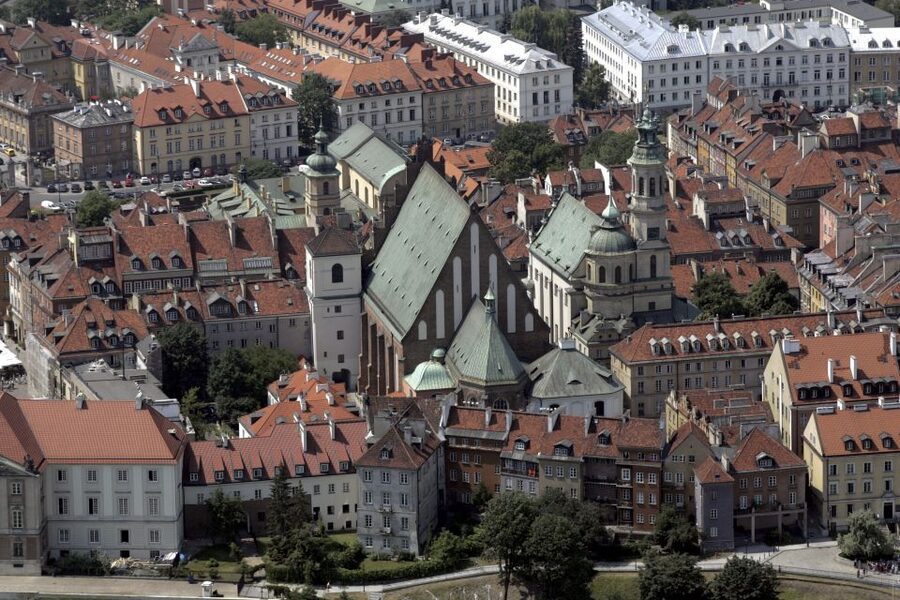
One of the tour highlights is the visit to the only church in the world that served as a war front. This is not the kind of story that stays abstract. The guide ties it back to the broader destruction of the Old Town and how rebuilding shaped what you see today.
I find this kind of stop makes a walking tour feel honest. It prevents the Old Town from becoming only a style, only a set. You learn that the city’s beauty is connected to suffering and survival, and that reconstruction is not just aesthetic work, it is memory work.
If you prefer emotionally heavy content, this will be a good match. If you do not, you can still take in the architectural points, just prepare yourself for WWII themes.
Famous Warsawians and political movements you can spot in real places
The guide points to sites connected with major figures, including Fréderic Chopin, Pope John Paul II, and Marie Curie. You also get references to the Solidarity movement, which is a key part of Poland’s modern story.
This is one of the most practical parts of the tour for your understanding of Warsaw. When you only see names on a map or a museum placard, it is easy to forget why they matter. On this walk, the guide links those people to specific city spaces, so you start building a mental map of Warsaw as a place shaped by ideas, faith, science, and organized change.
If you are traveling solo, or you enjoy history that feels personal, this section can be a real win. It turns the Old Town into a living timeline rather than a static collection of landmarks.
Canaletto’s paintings and the art behind the reconstruction
A standout highlight is the role of Venetian painter Canaletto and how his paintings helped reconstruction. The idea is straightforward but powerful: when a city is destroyed, images of its former appearance become a kind of blueprint for rebuilding.
This is why the tour feels more than sightseeing. The guide gives you a way to look at the buildings with one extra question in your mind. Not just what is here now, but what reference points made it possible to rebuild so close to the pre-war look.
If you like art, architecture, or the mechanics of restoration, this part of the walk is often where you start paying attention to details more carefully. You might find yourself noticing street angles, building proportions, and the overall “look” the city is trying to recreate.
New Town and the walk’s ending rhythm: what you’ll have time for next
The route includes New Town as well, so you are not stuck in only the most famous core. That extension helps you see how the Old Town fits into the broader Warsaw plan.
Because the tour is two hours, your day can still stay flexible. After you finish, you can keep exploring without feeling like you missed the “real” history, because the guide gives you the big context and key anchors. It is a great way to set up the rest of your afternoon or evening.
A practical note: no food is served on the tour. But there is a cafe where you can purchase food. If you get hungry, plan a quick stop afterward rather than waiting for the tour to provide lunch.
What two hours really buys you, pace-wise
A two-hour walking tour is a sweet spot for Old Town. You get enough time to learn the story, cover the main sights, and ask questions, but not so much time that you feel drained before dinner.
This is also where the private group format helps. It is still a walking tour, so you will want comfortable shoes and a sensible pace, but being able to interact with your certified guide is a big part of the value. The tour includes headsets by groups up to 10 pax, which keeps you from straining your voice or missing explanations at busy street corners.
Drawback to plan around: because entrances are not included, your time inside any sites may be limited or require extra ticketing. If you want maximum time in specific buildings, you might need to pair this with follow-up visits later.
Price and value: is $69 a fair deal for this experience?
At $69 per person for a 2-hour guided walk, the value depends on what you want from Warsaw. If you are the kind of traveler who likes stories and context, this price makes sense because the guide is certified, you get map and information booklets, and the content is built around big themes: total destruction, careful reconstruction, and the places where major cultural and political stories intersect.
You are also getting a “high density” format. The route covers multiple iconic stops, from Castle Square and King Sigismund’s Column to St. John’s Cathedral, Market Square, the Barbican, and Royal Castle. You are not paying extra for lunch, because there is no lunch, but that also keeps the itinerary from dragging.
The other value factor is time saved. Trying to piece together all these connections on your own is possible, but it takes reading and careful planning. Here, a local expert strings it into a coherent path that you can follow step by step.
Should you book this Old Town walking tour?
Yes, if you want your Warsaw Old Town visit to come with meaning, not just photos. Book it when you want a clear explanation of how a destroyed city was rebuilt and how that rebuilding shaped what you see on the ground today. The stops at the Royal Castle, St. John’s Cathedral, Market Square, and the Barbican make the tour feel like a guided “why,” not only a guided “what.”
You might skip it or add extra time on your own if you specifically want to spend long minutes inside multiple buildings, since entrances are not included and the format stays focused on the walk.
If you do book, do one simple thing: bring sun protection and wear shoes you can stand in. Two hours in central Warsaw moves faster than you think, and you will want to feel fresh enough to soak up the stories at every corner.
FAQ
How long is the Warsaw 2-Hour Old Town Walking Tour?
The tour lasts 2 hours.
How much does the tour cost?
The price is $69 per person.
Where is the meeting point?
Meet in front of the Nicolaus Copernicus Monument at Staszic Palace, ul. Nowy Świat 72, in Warsaw (address given as Krakowskie Przedmiescie, 00-333 Warsaw). Look for the guide sign that says PolinTours – Private Guide.
What languages are available for the guide?
The tour is led in English, German, or Polish.
Is the tour wheelchair accessible?
Yes, the tour is wheelchair accessible.
What is included in the tour price?
A certified tour guide is included, plus a city map and information booklets. Headsets are provided by groups up to 10 pax.
Is lunch included?
No. No food is served on the tour, but there is a cafe where you can purchase food.
Should I tip the guide?
Gratuities are not included, and it is recommended to tip the guide 15 to 20% at the end of the tour.
Can I pay later and cancel for free?
Yes. You can reserve now and pay later. Free cancellation is available up to 24 hours in advance for a full refund.
Fresh Warsaw reviews
- Warsaw: Wolf’s Lair & Swieta Lipka Small-Group Tour + Lunch★ 5.0 · 3 reviews
- World War II Warsaw Old Town, Military Cemetery Walking Tour★ 4.7 · 3 reviews
- Warsaw: Old Town Walking Tour, Hidden Gems & Hot Chocolate★ 4.3 · 3 reviews
- Warsaw: Explore the Vistula on Its Longest Speedboat Route★ 4.6 · 3 reviews
- 5-hour: Royal Castle, Old Town and POLIN Museum/inc.Pick-up/★ 5.0 · 3 reviews
- Museum of Modern Art in Warsaw★ 5.0 · 3 reviews
- Majdanek – German camp from II World War – Private Tour – 1 DAY TRIP FROM WARSAW★ 5.0 · 3 reviews
- Warsaw Outdoor Paintball with Transfers (all year round)★ 5.0 · 3 reviews
Walking Tours, compared.
Gdańsk City Sights & History Guided Walking Tour in English
Read our review →
Browse the lists this tour appears in