
Reviewed · AUDIO TOURS
The Birthplace of Poland: A Self-Guided Audio Tour of Poznań
Poznań’s Cathedral Island (Ostrów Tumski) is one of those places where the setting does half the work. You’re surrounded by centuries of churches, walls, bridges, and stories, and the audio gives you a clear path to follow without feeling rushed.
I especially like the self-paced VoiceMap format, so you can pause for photos or linger at viewpoints. I also love that it’s in English and comes with offline access, which makes the walk smooth even if your connection is spotty.
One thing to plan for: this is audio-first. You’ll need your own smartphone and headphones, and you won’t get tickets included for museum stops along the way.
Key things that make this audio tour worth your time
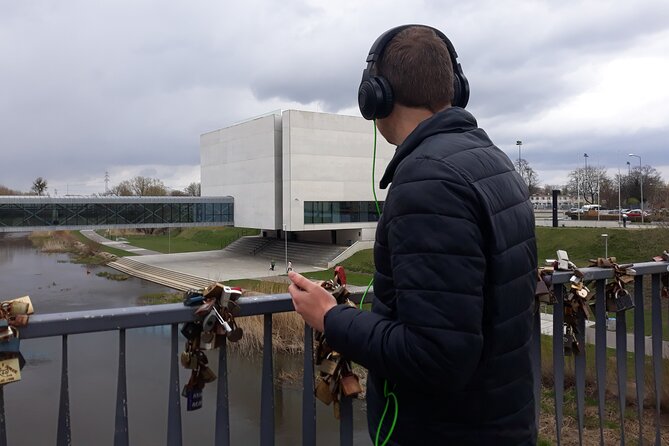
- GPS-triggered playback keeps you oriented as you walk
- Offline audio and maps help you keep going when data fades
- Cathedral Island highlights in one circuit from Mieszko-era hints to modern museums
- No tickets required to follow the route since entry fees are not included
- Lifetime access means you can repeat the walk or revisit points later
Why Cathedral Island in Poznań is a great place for an audio walk
Cathedral Island is basically Poznań’s historical backbone. You start on the river, move between major landmarks, then cross the Jordan Bridge into Śródka, a district with its own separate identity for a long stretch of time. It’s not a “stand in one square and listen” kind of tour. You’re walking through layers of the city.
What makes this route work is that the audio doesn’t just list dates. It points out what to look for as you pass key buildings, bridges, and museum entrances. So instead of feeling like you’re sightseeing randomly, you feel like you’re reading the city in order.
More Poznan bookings to weigh
- Krakow: Auschwitz-Birkenau Guided Tour or Self-Guided Tour
★ 4.1 · 5,852 reviews - Wroclaw: E-Car Tour and Audio Guide
★ 4.6 · 1,738 reviews - Krakow: Day or Night Vistula River Cruise with Audio Guide
★ 4.5 · 1,303 reviews
Price and value: $8.99 for lifetime access, offline, and English narration
At $8.99 per person, this is one of the better-priced ways to explore a dense historical area on your own terms. You’re not paying for a guided group session, and you’re not paying museum admission fees that you might skip.
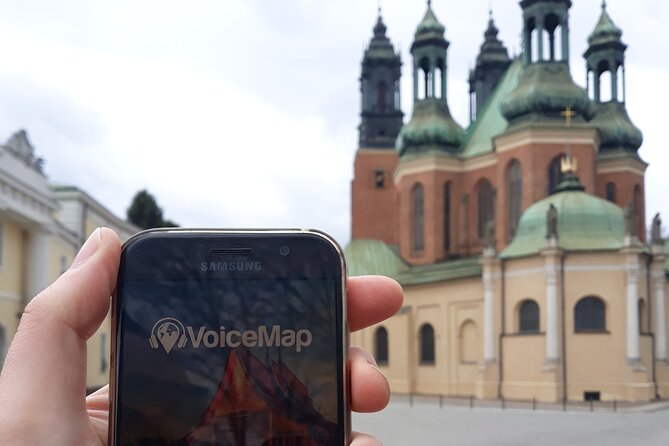
You do get lifetime access to the tour in English, plus the VoiceMap app for Android and iOS. The tour also includes offline access to audio, maps, and geodata, which matters in Poland because you can run into dead zones or expensive roaming if you forget to prepare.
The tradeoff is simple: you’re responsible for your own device setup. That means you should budget a little time to load the tour properly before you start.
Getting started at Ostrów Tumski: the scale model and how VoiceMap sets your bearings
Your walk begins at Makieta Ostrowa Tumskiego, Ostrów Tumski 9, 61-109 Poznań. Right away, you’re presented with a scale model of the island, and the audio uses that as a mental map. That’s a smart start. You get the “shape” of the place before you’re out in the real streets and paths.
You’ll also hear a bit about how VoiceMap works before you start moving. The practical point for you: don’t treat this like a podcast you press play on once. You’ll get the best results when you let the GPS location trigger the audio as you walk.
The Mieszko connection at Church of Our Lady in Summo
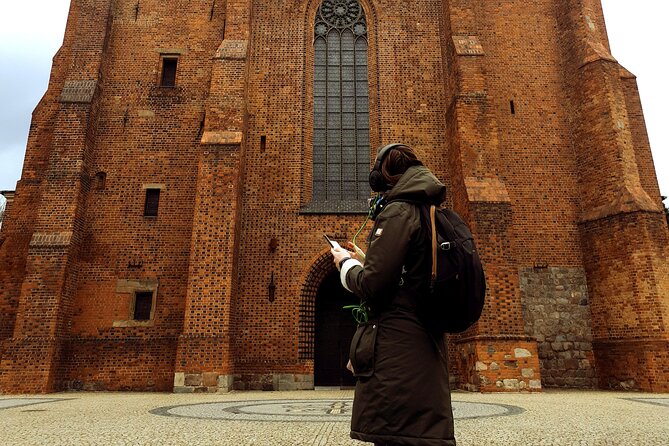
As your route continues, the tour passes the Church of Our Lady in Summo. This stop is interesting because the audio connects the church to something bigger beneath it. Underneath the church is a vast relic of Mieszko’s palace and palace chapel, linking the area to Poland’s early statehood era.
Even if you’re not planning to enter the church itself, the audio gives you a reason to pay attention to this spot. When a landmark sits above something historical like this, it helps to know the story while you’re looking at the walls and surroundings.
Practical tip: keep your pace steady through this stretch. It’s a “walk-and-listen” section, and you’ll miss some of the flow if you constantly stop to troubleshoot your phone.
Another way through a Poznan day:
- Poznań Experience 2-Hours Guided Walking Tour
★ 5.0 · 155 reviews - Undercover City Games: Poznan
★ 5.0 · 88 reviews - Old Town Poznan: Guided Walking Tour in English
★ 4.6 · 78 reviews - Poznań: Private or Public Highlights Tour with a local guide
★ 5.0 · 66 reviews
Poznań Cathedral: oldest on the route, but the walk explains why
Next, you’ll pass Poznań Cathedral, described as the oldest Polish cathedral in the area. The audio focuses on what you’re seeing as you walk by, so you’re not just hearing trivia in the background.
This is one of those stops where the city’s physical scale helps you understand the text. Cathedrals tend to dominate the skyline, but the audio makes you notice how the rest of Cathedral Island supports that dominance.
If you like architecture but don’t want a museum ticket, this is a good compromise. You’re getting guided interpretation in outdoor form.
Archbishop’s Palace: multiple iterations and the power center feel
The tour then moves past the Archbishop’s Palace. The audio highlights that the building has had many iterations over time. That detail matters because it reminds you these structures are not frozen in one moment. They evolve, get rebuilt, and keep serving the same role in city life.
This is also a “social geography” moment. Once you hear about the palace, you start to feel where power sat, how it influenced the cathedral district, and why this stretch of Poznań functioned as more than just religious space.
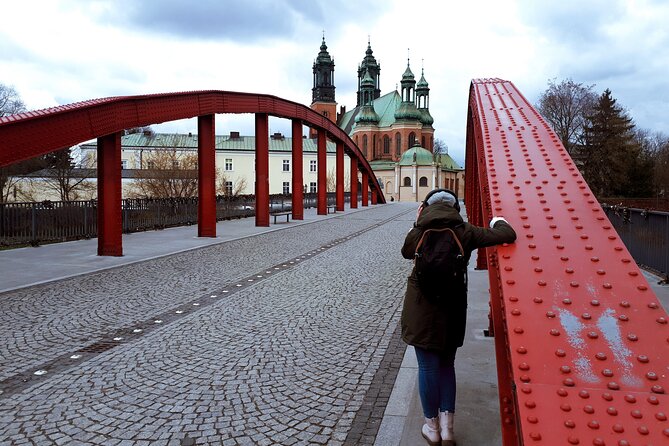
Jordan Bridge: built, destroyed, rebuilt, and still doing its job
The route crosses the Jordan Bridge, one of the key connectors in the story of Cathedral Island. The audio explains how the bridge was built, destroyed, and rebuilt to finally reconnect Cathedral Island and Śródka District.
That kind of history makes a bridge more than a way to get across water. It becomes proof that the city kept trying to reconnect people and places, even when conflict or change forced reversals.
When you cross, slow down for a moment if you can. It’s the easiest part of the tour to forget the “why” because you’re just walking across. Let the audio bring it back.
Śródka District: when this neighborhood had its own independence
After crossing the Jordan Bridge, the tour takes you through Śródka District, which at one stage was independent from the rest of Poland. That single detail changes how you think about the whole area.
Instead of seeing Cathedral Island and the surrounding streets as one uniform historical zone, you realize there were shifting political boundaries. The walk becomes more meaningful because you’re not just moving between buildings, you’re moving through eras of identity.
For you, this is a good reminder that “close together” in a city does not always mean “the same story.”
The Srodka mural and Saint Margaret Church: street-level art and continued tradition
Your route includes the Srodka mural, noted as one of the first wall paintings of this type in Poland. That’s a fascinating detail because it signals that street art and public visuals have local roots, not just modern imports.
Then you pass Saint Margaret Church. Like the other church stops, the audio gives you what to watch for while you move along the path. The main value here is continuity. The walk doesn’t jump randomly from one era to another. It keeps returning to the religious and cultural anchors of the district.
If you’re someone who normally skips side streets, this section encourages you to slow down. You’re not just walking past walls. You’re seeing what the city chose to preserve or display.
Brama Poznania and Genius Loci: modern museums that help you see the old borough
The tour passes Brama Poznania, Porta Posnania Heritage Center. It’s described as a state-of-the-art museum created in 2014 to address fascinating issues connected with Cathedral Island and Śródka District.
Here’s the important practical piece: tickets or entrance fees are not included. So if you want to go inside, plan on paying separately or choosing to keep this as an exterior walk. Either way, the audio helps you understand why these museum spaces sit where they do.
Next comes the Cathedral Lock, described as a 19th-century element of the Prussian fortification system. This is a different kind of history than church-building and royal connections. It shows the strategic, defensive layer that shaped how water, access, and fortifications were managed.
Finally, the route passes Genius Loci, a modern museum that shows relics of the one thousand-year-old borough’s walls and also includes 3D films. Again, entry fees aren’t included, so you can decide how much time and money to spend. The value of the audio is that it frames what you’d be looking at if you do enter.
If you’re short on time, even just seeing these museum fronts gives you a stronger sense of how Poznań interprets its own past.
The Cathedral Lock and Prussian fortifications: why this part belongs on your walk
This stop is easy to overlook because “lock” sounds technical, and forts sound heavy. But this is exactly what makes it useful. It reminds you that the city’s story is not only about devotion and art. It’s also about borders, control, and engineering.
When the audio calls out the Prussian fortification system, it gives context for why elements like this would exist near major historic districts. It’s the kind of detail that turns a quick glance into a “now I get it” moment.
Ending at the Archdiocese Museum (Lubrański Academy)
The tour finishes in front of the Archdiocese Museum in Poznań, Jana Lubrańskiego 1, 61-003 Poznań, near the Lubrański Academy. The audio notes that this place played an important role not only in the city but across Poland from the 1500s until the 1700s.
It’s a strong ending because the audio doesn’t stop at “here are buildings.” It points to the idea that institutions here influenced learning and authority over a long time.
The listing also gives opening hours showing it’s open essentially all day, which is helpful if you want to step inside after your walk. You still won’t have entry bundled in, but at least you can plan the timing.
Timing, pacing, and what 45 to 75 minutes feels like in real life
The tour duration is about 45 minutes to 1 hour 15 minutes, so you can fit it into a half day without stress. If you move quickly and mostly listen, you’ll land closer to the shorter side. If you stop to look at churches and linger near viewpoints, plan more time.
One of the best parts of a self-guided audio route is that you can take breaks without feeling like you’re “falling behind.” You can stand where the audio tells you to look, then move on when you’re ready.
What you need to bring (and what not to worry about)
This experience includes the VoiceMap app and offline access, but it does not include:
- your smartphone
- headphones
- any museum tickets or entrance fees en route
- food and drinks
- transportation
So the simplest checklist is: charge your phone, bring headphones, and keep an eye on your battery. If you’re planning to use museums afterward, set aside a separate budget for entry.
If you run into technical issues with the download at the start, use the VoiceMap support channel. The provided guidance points to reaching out to [email protected] if you get stuck.
Who this tour fits best
This is a great match if you want:
- a low-cost, high-information walk
- a route that’s interesting even if you don’t enter museums
- an itinerary you can run at your own pace
It also works well if you prefer audio over reading. The city is full of details, and having the audio tell you what matters helps you notice more without turning sightseeing into homework.
If you hate walking for long stretches, this may feel like a lot. The route is built around a connected loop across Cathedral Island and into Śródka.
Should you book this self-guided VoiceMap tour of Poznań?
Yes, if you want an efficient way to understand Cathedral Island and the surrounding district without paying a guide fee. The pricing is fair, the audio is in English, and the offline access makes it practical.
Skip the strict “must do” pressure if you’re not a museum person. Even with no ticket included, the route still gives you strong context for why each church, bridge, and fortification detail matters.
Book it if you enjoy history that feels tangible. You’ll walk through the places where Poland’s early story, the district identities, and later engineering all touch the same ground.
FAQ
How long is the audio tour?
The walk takes about 45 minutes to 1 hour 15 minutes.
What is the price per person?
It costs $8.99 per person.
Is the tour available in English?
Yes, the audio is offered in English.
Does it work offline?
Yes. The tour includes offline access to audio, maps, and geodata.
What do I need to bring with me?
You’ll need your smartphone and headphones. Tickets or entrance fees for museums are not included.
Where does the tour start?
It starts at Makieta Ostrowa Tumskiego, Ostrów Tumski 9, 61-109 Poznań, Poland.
Where does the tour end?
It ends in front of the Archdiocese Museum in Poznań, Jana Lubrańskiego 1, 61-003 Poznań, Poland.
Are tickets included for attractions on the route?
No. Tickets or entrance fees for museums or attractions en route are not included.
Is this tour private for my group?
Yes. It’s listed as private, so only your group participates.
Is it refundable if plans change?
No. It is non-refundable and cannot be changed for any reason.
Fresh Poznan reviews
- Poznan Private Vodka Tasting Tour★ 5.0 · 3 reviews
- Poznan Old Town and Croissant Museum Private Walking Tour★ 5.0 · 3 reviews
- Poznan: Private Polish Beer Tasting Tour★ 4.6 · 3 reviews
- Poznań: Cathedral Island and Śródka District Guided Tour★ 5.0 · 4 reviews
- Palace, Castle and Ancient Oaks – Rogalin and Kórnik guided tour from Poznan★ 5.0 · 4 reviews
- Discover Poznan: Walk, Take a tram and have a traditional snack★ 5.0 · 4 reviews
- Poznan: City and Brewery Private Walking Tour with Beer★ 4.6 · 5 reviews
- Private 3-hour Poznan Old Town Tour★ 5.0 · 5 reviews
Audio Tours, compared.

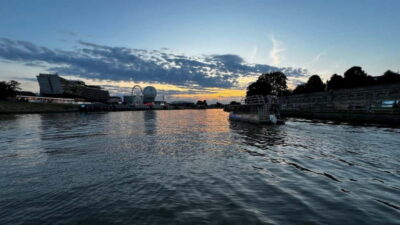
Day or Night Vistula River Cruise with Audio Guide
Read our review →

Sightseeing Cruise on Vistula River with Audio Guide
Read our review →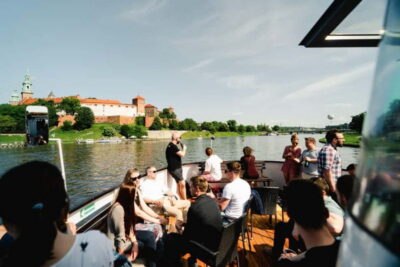
Vistula River Sightseeing Cruise with Audio Guide
Read our review →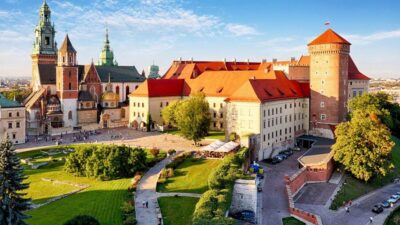
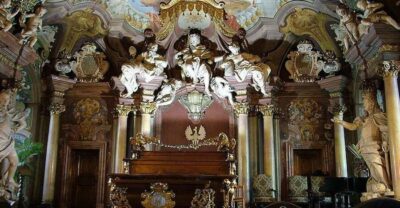
Wrocław University: Tour with Audio Guide & Admission
Read our review →
Browse the lists this tour appears in