
Reviewed · WALKING TOURS
Private Warsaw Old Town & Royal Route Walking Tour – Bestseller
What makes this tour interesting is how it threads together Warsaw’s famous Royal Route sites and the character of the Old Town, with a big focus on what happened to the city during WWII. You start with major landmarks, then you walk into the quieter corners where the stories feel close and personal, with Royal Route views and Old Town details.
Two things I like a lot are the guide, Łukasz Benedykciński, and the way he turns each stop into a reason you’ll remember. I also like the strong practical vibe, with clear communication before you go and storytelling that helps you connect the dots across the whole walk.
One thing to consider is simple: it is about 2.5 hours of walking, with many outdoor portions. If your legs are not great for long city walking, plan on comfortable shoes and a slower pace when you need it.
Key highlights worth planning around
- Chopin’s heart at Holy Cross Church, including the smuggling story and where it is kept
- Krakowskie Przedmieście street facts, from why Warsaw became the capital to coffee history links
- Pilsudski Square skyline views, plus the wartime twists around key buildings
- WWII survival and reconstruction stories, with explanations that connect the Royal Castle and the rebuilding timeline
- Canonia’s small Amsterdam mood, including the wishing bell and what was there before
- Old Town details you can actually point out, like Piwna Street (the beer street), the Pigeon Lady, and the Warsaw Mermaid
Why this Royal Route to Old Town route is such a smart way to see Warsaw
If you want a Warsaw walk that feels like it has a beginning, middle, and end, this is a good fit. You do not just look at buildings and move on. You get guided explanations for why these places matter, and how the city changed through war and rebuilding.
The biggest win is that the tour covers both the grand, formal side of Warsaw and the more intimate Old Town moments. That means you get skyline views early, then you finish in the places where you can slow down and absorb the details, including iconic Old Town symbols.
Also, this is a private format for your group (up to 15 people). That matters because it keeps the pace flexible, and it makes it easier to ask your guide to repeat or clarify something that clicked for you.
More Walking Tours in Warsaw
- Warsaw: Old Town Highlights Walking Tour in English
★ 4.7 · 1,516 reviews - Warsaw: Old Town Guided Walking Tour
★ 4.9 · 599 reviews - Half-Day Polish Food Walking Tour with Guide and Dinner
★ 4.5 · 381 reviews
Getting oriented fast: meeting at Nicolaus Copernicus and hotel pickup
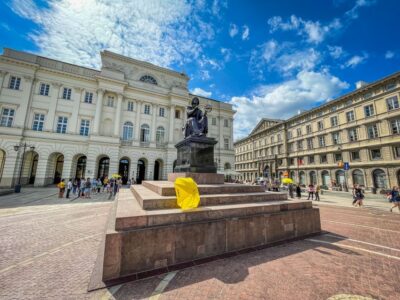
The meeting point is at the Nicolaus Copernicus Monument on Krakowskie Przedmieście. Your tour ends at the Warsaw Mermaid statue at Rynek Starego Miasta.
If you are staying in a hotel nearby, the guide offers pickup at your hotel reception. From there, you can either head to the start by walking, public transport, or taxi. There is also an option to begin right at your hotel, with a few extra stops along the way before you reach the main route.
This kind of setup is practical. If you land with limited time, you do not want to spend half your morning figuring out where to meet. Pickup helps you start the experience already in motion, not still hunting for the right corner.
You also get a mobile ticket, so you can keep things simple on your phone.
Holy Cross Church: Chopin’s heart and the smuggling story
The tour’s first stop is Holy Cross Church, Kosciol Swietego Krzyza. This is where the guide connects one of Poland’s best-known composers to a personal family mission and a hidden detail about his final wishes.
You hear how Fryderic Chopin, who died abroad, asked his sister to bring his heart back to Warsaw. The tour then leads into the smuggling story, and you see where Chopin’s heart is located.
This stop works even if you are not a hardcore music person. It is not just Chopin trivia. It gives you a clear human story that makes the church feel like more than a backdrop.
Practical note: the tour indicates this stop has free admission, so you are not juggling extra ticket steps while you are trying to listen.
Krakowskie Przedmieście: why Warsaw became the capital and why coffee matters
After Holy Cross Church, you walk along Krakowskie Przedmieście, one of Warsaw’s most representative streets. The guide uses this section to answer several big “how did this happen?” questions.
You learn why Warsaw became the capital of Poland. You also hear about where the oldest coffee place in Warsaw is, and how Polish people connect to the broader European history of coffee. And yes, you get the reason behind the name Krakowskie Przedmieście, the suburbs of Kraków.
This is the kind of stop that rewards curiosity. Even if you walk the street on your own later, you will have a frame for what you are seeing. The street stops being just a pretty route and turns into something with meaning.
Another plus is that the tour keeps it efficient: the segment is about 40 minutes, long enough for context but not so long that you feel dragged.
Another way through a Warsaw day:
- Warsaw: Chopin Concert in the Old Town
★ 4.8 · 2,287 reviews - Warsaw: Traditional Galar Cruise on The Vistula River
★ 4.6 · 1,640 reviews - Warsaw Concert: Chopin – Painted by Candlelights with Wine
★ 4.8 · 1,442 reviews - Warsaw: City Sightseeing Hop-On Hop-Off Bus Tour
★ 3.6 · 1,415 reviews
Plac Marszalka Jozefa Pilsudskiego: the skyline view and the big political center feeling
Next you reach Plac Marszalka Jozefa Pilsudskiego, with a view that helps you understand Warsaw’s scale. The guide keeps this short but purposeful, about 10 minutes.
This stop is a setup. It puts you in the right “mindset” for the wartime stories that follow, because you can actually see the city layout and how key buildings sit within it.
Admission is listed as free in the tour plan, so you can focus on the explanation instead of logistics.
The Presidential Palace that survived WWII, and why it matters
Soon after, you are given a wartime turning point story. After WWII, 70 percent of Warsaw was destroyed, but the Presidential Palace of Poland was spared.
The tour explains why that happened. That matters because it is easy to hear the headline numbers about destruction. This is the part that gives you a reason, which makes the city’s survival feel less random.
I like that the tour keeps returning to causes instead of only listing events. You leave with a better sense of how choices, timing, and circumstances shaped what still exists today.
Royal Castle bombing plans: drilled holes in 1939, explosives in 1944, rebuild time
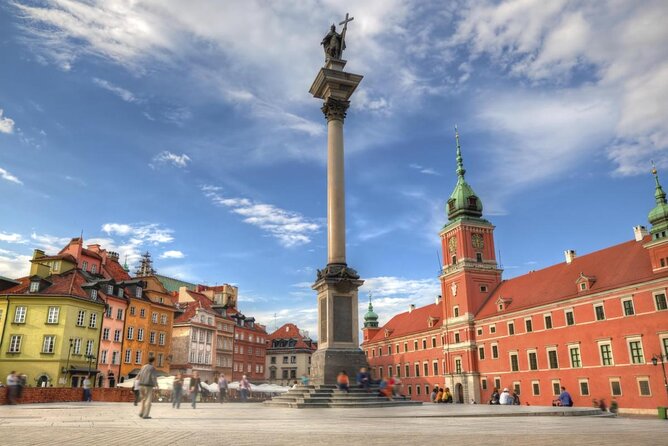
Then the tour zooms in on the Royal Castle, Zamek Królewski. You hear that Adolf Hitler asked his soldiers to blow it up in 1939. The story includes the detail that soldiers drilled holes for dynamite in 1939, but filled those holes with explosives in 1944, five years later.
You also learn why it took so long, and why it took additional 40 years to rebuild the Royal Castle.
This section is one of the most striking because it is not the usual simple wartime story. The timeline details force you to see how complicated destruction and reconstruction really are. It is the kind of explanation that makes you look at a building and think about decisions behind it.
This is also a good reminder that history has lag time. Things do not always happen immediately. Sometimes the “plan” stretches out, and the results show up later.
Warsaw’s most important church, built twice, and the reason behind it
After the Royal Castle discussion, you stop at the most important church of Warsaw. The tour notes that it was built twice, and the guide explains why.
Even without a name, the structure of the story is clear: you are being shown how Warsaw’s most central religious landmark ended up being rebuilt, and you connect that to what the city went through.
This stop is worth your attention because rebuilding is a huge theme on this route. You see it in the Royal Castle story, and then you see it again in this church’s “built twice” narrative.
If you are tired of walking, this is a good moment to shift into listening mode. Churches tend to make you slow down anyway, and the tour uses that to deliver the explanation.
Admission is listed as free, so this is another stop without extra ticket friction.
Tomb of the Unknown Soldier: a quick stop with big meaning
You then visit the Tomb of the Unknown Soldier. The tour includes the monument and the history behind it, about 5 minutes.
Even short stops can land well, because the guide uses them as anchors. After all the long wartime stories and rebuild talk, this is the moment where the focus shifts to remembrance.
It is listed as free in the tour plan, so it stays light on logistics.
Kanonia, the small Amsterdam feel, and the wishing bell
Next is Kanonia. Right now, locals call it the small Amsterdam, and there is even a wishing bell at Kanonia Square.
The tour also reminds you that for hundreds of years, a cemetery was located here. You get the story of what happened and how the place changed.
This is one of those “yes, it is pretty, but do not ignore the layers” stops. The tour does not pretend the past disappeared just because a square looks charming today. It gives you context before you romanticize the spot.
If you like photo moments, you will probably want to stop and look around here. Just keep your eyes open for what the guide points out, because the explanation changes how you see the same view.
Admission is listed as free for this stop too.
Rynek Starego Miasta: photos before and after WWII, and the rebuild process
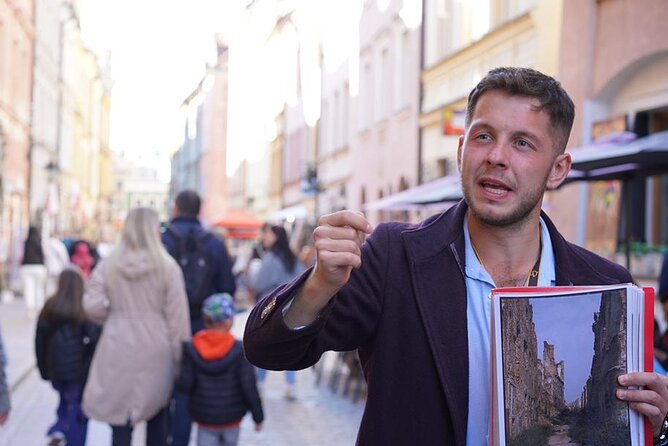
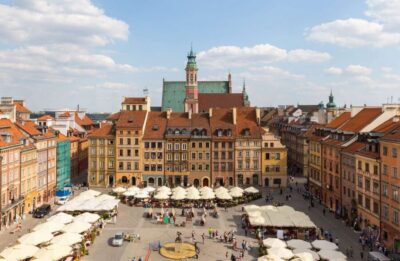
At Rynek Starego Miasta, the Old Town’s Market Square, you get a focused look at how Warsaw rebuilt itself after WWII. The guide shows photos of the place before and after the war, then talks through the rebuilding process.
This stop is about 10 minutes on the plan, but it can change how you feel about the square. Market squares can feel like just an attraction. Here, you are pushed to see it as a result of work, time, and decisions.
I also like that this is where the tour nudges you to start noticing Old Town details. You are not only being told the story, you are being trained to spot it on your own.
Admission is listed as free in the tour plan.
Barbakan and Gnojna Góra: city walls with a twist, and love locks with a caution
Barbakan is part of Warsaw’s City Walls, but the tour highlights that when it was built it had no military importance. You hear who built it, why, and who used it.
That might sound odd at first. A wall part that was not meant for military use sets up a bigger point: history is full of surprises. The guide uses this to keep your attention on the “why,” not only the “what.”
Then you head to Gnojna Góra hill, currently known for romance. People come here and lock their love in padlocks. The guide, though, says they would not do it because of the history of the place, and you learn that story.
This is a good reality check moment. Many famous viewpoints get wrapped in modern rituals. This tour helps you balance the modern photo behavior with what came before.
Both of these stops are listed as free, and both are quick enough that you keep moving without burning out.
Old Town hidden treasures: Piwna Street, the Pigeon Lady, and the Mermaid
You finish with a concentrated walk through Old Town. The guide shares hidden treasures and stories, including Piwna Street, the beer street, plus the Pigeon Lady and the mermaid of Warsaw.
You also hear about WW2 in Warsaw, with stories tied directly to what you can see around you. The final stretch is about making you feel like you actually know your way through the Old Town, not just pass by it.
This part is especially valuable because it turns your last 40 minutes into something you can carry beyond the tour. Once you understand why these spots have their names or legends, you can revisit them later and notice new details.
The tour ends at the Warsaw Mermaid statue at Rynek Starego Miasta 18i. If you have time after the walk, this is a solid place to linger for photos, since you are already at the symbolic heart of the area.
Price and value: $258.88 for a private group up to 15
The price is $258.88 per group, for up to 15 people, for about 2 hours 30 minutes.
Here is how I think about value. If you have a small group, you are paying more per person than a shared tour. But you gain a private guide who can focus on your pace and your questions. If you have a larger group of friends or family, the cost becomes much more manageable per person, because the price is per group, not per head.
Also note the tour lists admission ticket free for the stops included. That does not mean everything is always free in every situation, but it does suggest you are not adding separate entry fees at each step of the route. That helps keep the final cost closer to what you expect.
With a 5-star rating and a strong recommendation rate based on existing feedback, this is one of those tours where you are paying for quality storytelling, not just walking from one landmark to the next.
If you want this to be good value for your trip, the key is to bring questions. The guide’s strength is explaining the connections.
One more practical point: this tour is booked far in advance, with an average of 128 days. If your dates are set, it makes sense to lock it in early.
Should you book this Warsaw Old Town and Royal Route tour?
Book it if you want a private walking plan with a guide, and you like history that is explained with reasons, not just dates. This is also a great choice if you want a mix of big, formal sites and Old Town details, including the Chopin heart story and the WWII rebuild focus.
You might skip it if you want a strictly casual sightseeing walk with no deep explanations, or if long walking is hard for you. Since it is about 2.5 hours and covers multiple key points, you need at least moderate comfort walking around the historic center.
If you do book, I suggest you go in with one goal: pick two or three stories you want to remember. The tour gives you plenty to choose from, from Chopin’s heart to the Royal Castle timeline, to what was once at Kanonia.
FAQ
Is this tour private?
Yes. It is a private tour/activity, and only your group participates.
How long is the walking tour?
The duration is about 2 hours 30 minutes.
What is the meeting point and where does the tour end?
You meet at the Nicolaus Copernicus Monument on Krakowskie Przedmieście and the tour ends at the Warsaw Mermaid statue at Rynek Starego Miasta 18i.
Is hotel pickup available?
Yes. The guide meets you at your hotel reception. You can then walk, use public transport, or take a taxi to reach the starting point. You can also start at your hotel with extra stops before reaching the main route.
What language is the tour offered in?
The tour is offered in English.
How much does it cost?
It costs $258.88 per group, up to 15 people.
Can I cancel for a full refund?
Yes, free cancellation is available. You can cancel up to 24 hours in advance for a full refund. If you cancel less than 24 hours before the start time, the amount you paid is not refunded.
Fresh Warsaw reviews
- Warsaw: Wolf’s Lair & Swieta Lipka Small-Group Tour + Lunch★ 5.0 · 3 reviews
- World War II Warsaw Old Town, Military Cemetery Walking Tour★ 4.7 · 3 reviews
- Warsaw: Old Town Walking Tour, Hidden Gems & Hot Chocolate★ 4.3 · 3 reviews
- Warsaw: Explore the Vistula on Its Longest Speedboat Route★ 4.6 · 3 reviews
- 5-hour: Royal Castle, Old Town and POLIN Museum/inc.Pick-up/★ 5.0 · 3 reviews
- Majdanek – German camp from II World War – Private Tour – 1 DAY TRIP FROM WARSAW★ 5.0 · 3 reviews
- Museum of Modern Art in Warsaw★ 5.0 · 3 reviews
- Warsaw Outdoor Paintball with Transfers (all year round)★ 5.0 · 3 reviews
Walking Tours, compared.
Gdańsk City Sights & History Guided Walking Tour in English
Read our review →
Browse the lists this tour appears in