
Reviewed · 3-HOUR EXPERIENCES
Private Tour: Warsaw best of 3-Hour Sightseeing Tour
Warsaw gets more interesting when someone else drives and you get the story in order. This private 3-hour tour strings together big landmarks and the places that shaped modern Poland, with stops paced so you still feel like you saw the city.
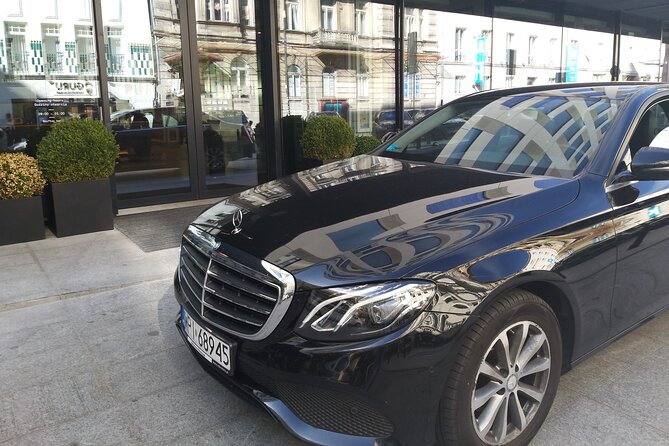
I like that you skip the planning grind and ride in a comfortable Mercedes with pickup and drop-off anywhere in Warsaw. I also like the way the tour balances lighter sights like Łazienki Park with heavier memorial stops, so you understand what you’re seeing without turning it into a history lecture. One possible drawback: with 11 stops in about 3 hours, you’ll get smart orientation and views, but not deep museum time at every location.
Key Takeaways
- Mercedes private transport means you can relax, scan the skyline, and avoid transit stress.
- No research needed: the route is planned for a tight, best-of first look at Warsaw.
- A balanced mix of places: Royal Baths Park, Old Town, major monuments, plus ghetto and uprising sites.
- Outdoor-first stops: many points are listed with admission ticket free, so you spend more time walking than paying.
- Guide energy matters: the guide experience is consistently praised for being clear, friendly, and full of context.
A Mercedes Private Tour That Handles the Driving
This is a true private setup, for up to 3 people, so it feels less like a bus tour and more like a guided city walk that happens to include car time. You get pickup and drop-off anywhere in Warsaw, which is handy if you’re staying near the center, out near a station, or unsure how to connect the sights efficiently.
The vehicle is a Mercedes, and that sounds fancy, but the real win is practical. In a compact time window, comfortable transport helps you move between distant areas like the riverfront and the Warsaw Uprising zone without eating your day alive in traffic or waiting.
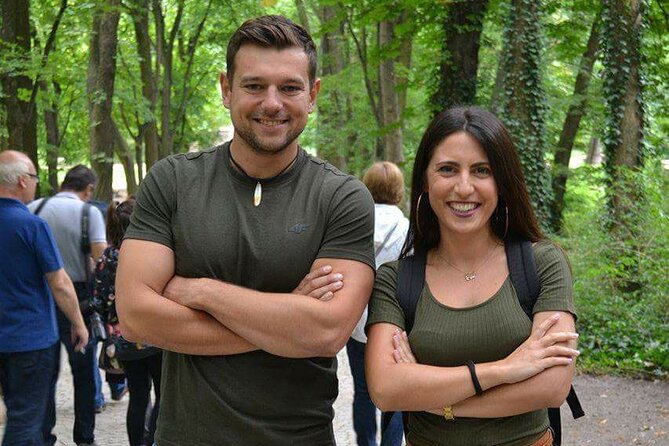
English is offered, and the guide approach is a standout. In my view, the best city tours do two things: they help you notice what matters and they explain enough background to make the streets feel intentional. This one aims straight at that sweet spot, and the guide is repeatedly described as excited, engaging, and easy to follow, including when the topics get serious.
Lazienki Park, Peacocks, and Royal Route Views
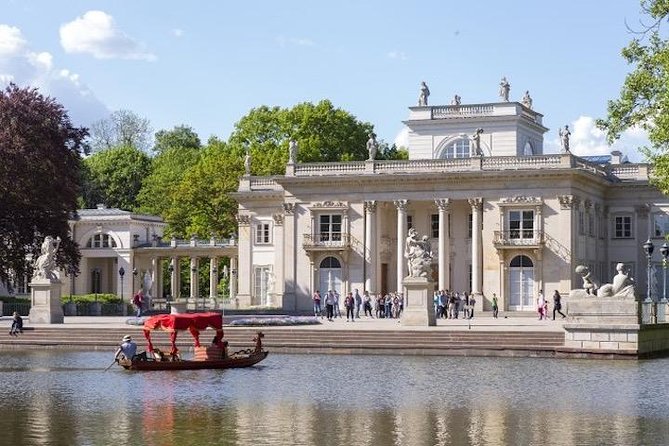
You start at Łazienki Krolewskie w Warszawie, also known as Łazienki Park or Royal Baths Park. This is the biggest park in central Warsaw, about 76 hectares, and it’s not just pretty greenery. It’s a royal-era design story: originally planned in the 17th century as a baths park, later transformed under King Stanisław II Augustus into a setting for a palace complex, villas, classicist follies, and monuments.
Here’s what you can actually enjoy in the time you have. You’ll get a feel for why Łazienki works as both a calm escape and a cultural stage. It hosts music and arts events, and in the park itself you might spot peacocks and plenty of squirrels, which turns a history stop into something you can experience, not just read about.
The main consideration is pacing. You’ll spend about 45 minutes here, and that’s perfect for strolling, taking photos, and getting orientation. It’s not enough for deep exploration of every corner of the palace grounds, so go in with the mindset of quick immersion.
More Warsaw bookings to weigh
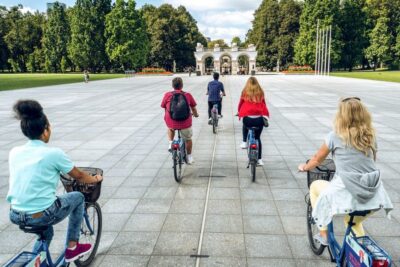
- 3-Hour Guided Cycling Tour of Warsaw
★ 4.9 · 624 reviews - Warsaw Old Town 1.5-Hour or Full 3-Hour Segway Tour
★ 4.9 · 209 reviews - Warsaw: 3-Hour Panoramic City Bus Tour with Pickup
★ 4.5 · 169 reviews
POLIN and Jewish Ghetto Sites You See from the Street
Next comes a stop tied to POLIN Muzeum Historii Żydow Polskich and the surrounding Jewish Ghetto Warsaw area. Instead of focusing on museum interiors, this tour highlights key points you can view on foot outside the museum area, with commemorations and sculptures.
You’ll get a concentrated look at places connected to ghetto history and deportations, including references like Umschlagplatz and Mila 18 (also treated later again on the route). The names associated with these memorials matter, and the stops mention people and artworks like Natan Rapaport monument, Jan Karski, and Leon Suzin sculptures. If you’ve ever felt overwhelmed by Warsaw history, this kind of organized street-level route is useful. It helps you connect the physical locations to the larger story you’ll hear later in museums or books.
One word of advice: this part of the day is emotionally heavy. In a short tour, the goal isn’t to make you feel like you’ve finished studying. It’s to get your bearings and recognize the major memorial spots. If you need extra processing time, plan for a quiet moment after the tour.
Old Town and Rynek Starego Miasta, Rebuilt After WWII
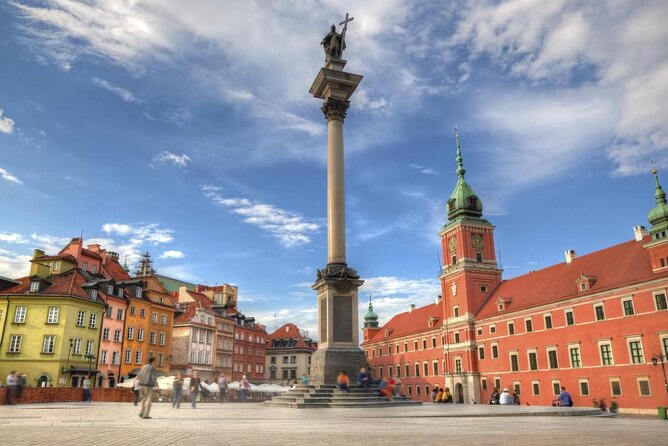
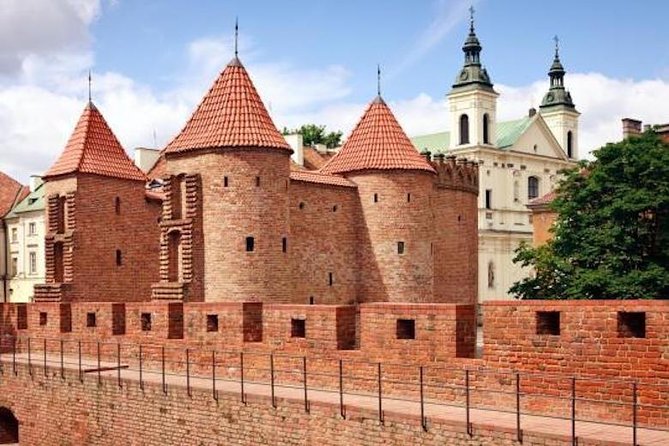
After the ghetto area, you pivot to Old Town, where Warsaw shows its “rebuilt” personality. You’ll pass through cobblestone lanes and medieval-style buildings that were reconstructed after WWII. The central hub is Rynek Starego Miasta, a lively square lined with burgher houses and Polish eateries. Even in a short stop, you’ll feel how the square functions as a meeting point for locals and visitors.
Old Town is also where the architecture brings context. Nearby is St. John’s Archcathedral, dating back to the 14th century, and the area connects to the Royal Castle complex, including restored apartments and gardens. The contrast is striking: you’re moving from memorial ground to a working urban center that’s survived, rebuilt, and re-centered around community life.
Time-wise, you’re here for about 40 minutes. That’s great for an easy walk, photos, and grabbing lunch later nearby. Just don’t expect to read every plaque. Let the streets give you the big picture first.
Palace of Culture and Science, From Stalin to Eighth Sister
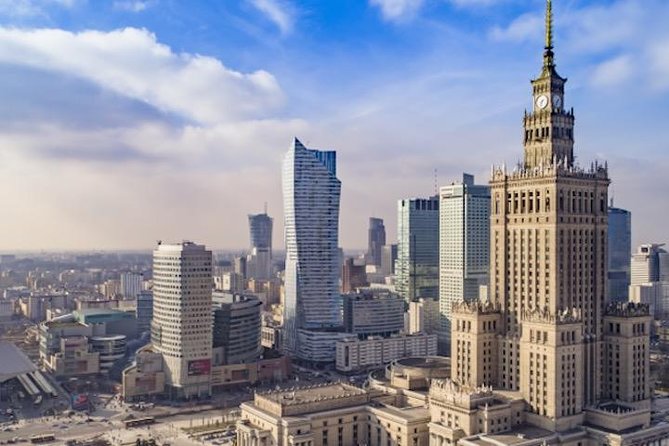
Then it’s straight to one of Warsaw’s most recognizable silhouettes, the Palace of Culture and Science, known historically as Joseph Stalin’s Palace. The guided explanation you get is important because this building isn’t just a skyline object. It’s a piece of political history, including how the Stalin dedication was later removed after destalinization.
Construction began in 1952 and finished in 1955. It was a gift from the Soviet Union, built using Soviet plans with both Soviet and Polish workers. Today it’s the tallest building in Poland, about 237 metres, and it’s designed in that “Seven Sisters” style, with the nickname Eighth Sister. Even if you don’t care about architecture, you’ll learn something useful: Warsaw can be shaped by powerful external forces, then reinterpreted by Polish identity over time.
You’ll spend roughly 20 minutes here. That’s enough for a close look from the right angles, a photo or two, and the kind of context that makes the building’s symbolism click. Just note that a single view won’t tell the whole story, so rely on the guide’s explanation.
More to book in Warsaw:
- Warsaw: Chopin Concert in the Old Town
★ 4.8 · 2,287 reviews - Warsaw: Traditional Galar Cruise on The Vistula River
★ 4.6 · 1,640 reviews - Warsaw: Old Town Highlights Walking Tour in English
★ 4.7 · 1,516 reviews - Warsaw Concert: Chopin – Painted by Candlelights with Wine
★ 4.8 · 1,442 reviews
Vistula Boulevards, Mermaid Photos, and Stadium Energy
With Old Town behind you, the route swings toward the river. The Vistula Boulevards are a long riverside promenade, about 5 kilometres, built for walking, cycling, and seasonal hangouts. You’ll notice the design touches, like gazebos with sun loungers, stone benches, and seating made from tree branches. There’s also a lookout point and a small beach area.
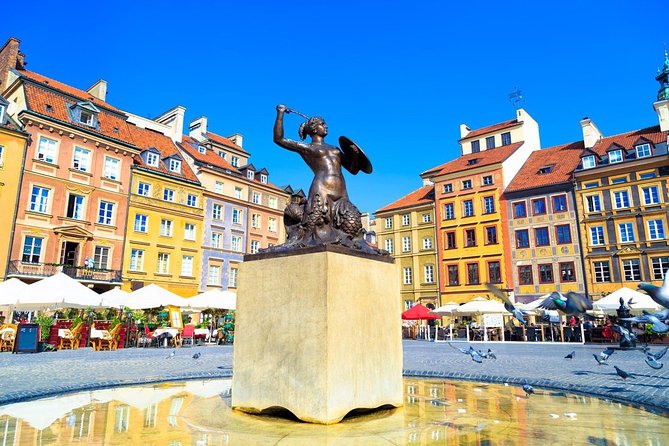
This stop includes a photo moment at the Warsaw Mermaid monument, a symbol tied to the city’s river identity. It’s a small detail, but it’s exactly the kind of thing that makes your mental map of Warsaw feel personal.
Then you move to PGE National Stadium, also called the National Stadium. This one is all about modern scale: retractable roof, seating capacity around 58,580, construction from 2008 to 2011, and its role in UEFA Euro 2012. Even if you never watch football, it’s impressive to see how Warsaw built this arena near the city center on the former stadium site.
You’ll spend short blocks of time here. Use them for orientation photos and a quick look around. If you want a longer river walk or stadium visit, you can build that into a separate day after the tour.
Warsaw Uprising Museum Stop, and the Value of Specific Details
Next comes Warsaw Uprising Museum in the Wola district. Even though your time is brief, the tour gives you the core framework: the uprising in 1944, the museum’s long path to opening, and what the museum is trying to protect for the future. The institution was established in 1983, and it opened July 31, 2004, marking the 60th anniversary of the uprising.
What makes this museum focus different is the way the tour’s description highlights artifacts tied to everyday people, not only battle facts. It collects weapons used by insurgents, plus items like love letters, aiming to show the human dimension of the conflict. The museum also supports research and story recording, with an emphasis on preserving memories from participants.
Names are included in the tour notes too, which helps you remember what you’re seeing: director Jan Ołdakowski, with historian Dariusz Gawin as deputy. In my view, these details matter. They turn a memorial stop from a general “war story” into something anchored and specific.
This is another moment when you may feel the day turning serious again. If you’re sensitive to heavy themes, take your time reading what you can and then let the next stop bring you forward.
Marie Curie’s Birthplace Area, Then Uprising Memorials
After the museum stop, you briefly visit the area connected to Maria Skłodowska-Curie’s birthplace and museum. The tour notes that she was the first female Nobel Prize winner, which is a useful fact to keep in mind as you look around. Even in a few minutes, it offers a nice shift from mid-century conflict history to scientific achievement tied to Polish identity.
Then the route continues to the Warsaw Uprising Monument. The background here is worth paying attention to because it explains why monuments look the way they do. The tour notes that monuments to the Warsaw Uprising appeared first in Warsaw in the 1970s, and that before then there were mostly monuments to Red Army soldiers and the Polish National Army. It also notes that until 1989, no mention of the uprising was allowed, which helps explain how memory can be shaped by politics.
You’ll also hear that many uprising victims were buried in graves across the city and later exhumed and reburied in mass graves far from the city center, leaving only smaller concrete memorials for the victims of the war with Nazism. This part can feel confusing unless someone frames it for you. That’s where a good guide earns their fee.
Your stop is short, around 20 minutes. Think of it as a memory marker. For deeper exploration, you’d pair it with a full museum day later.
Umschlagplatz and Mila 18: Learning the Names of Places That Hurt
The last major historical section focuses on Holocaust-related sites connected to deportation logistics during the occupation. You’ll visit Umschlagplatz, a term used during the Holocaust for holding areas beside railway stations where Jews from ghettos were assembled for deportation to Nazi death camps. In Warsaw, it was the largest collection point adjacent to the Warsaw Ghetto.
Then you stop at Memorial at Mila 18, specifically Ulica Miła 18. This was the headquarters bunker of the Jewish Combat Organization, a resistance group in the Warsaw Ghetto during World War II. The short stop length, about 5 minutes for Mila 18, might sound too quick, but it’s often enough to connect the address to its meaning, especially when the guide explains why the site exists today as a memorial.
If you want one practical takeaway from these final stops, it’s this: names matter. Knowing Umschlagplatz and Mila 18 turns a map of Warsaw memorials into something you can follow, even weeks later.
Price, Value, and Who This 3 Hour Tour Fits
At $336.44 per group (up to 3), you’re paying for a private guide, a Mercedes vehicle, and a tight route through the city’s key first-look sights. That price can feel high if you compare it to a group bus tour. But when you break it down, you’re also buying time, comfort, and clarity.
Here’s how I see the value working for you:
- If you want a first day overview, this tour helps you avoid the “we walked everywhere but didn’t learn the right things” problem.
- If your time in Warsaw is short, you’ll cover big contrasts: Royal Baths Park, Old Town, the Palace of Culture and Science, riverfront, and major memory sites tied to the ghetto and uprising.
- If you’re traveling as a small group, the per-person cost drops quickly compared to solo private time.
Who it suits best: couples, friends, and small families who want a guided introduction without committing to full museum days. If you love photography, you’ll have multiple prime windows for shots, from park scenery to the river to the Stalin-era skyline icon. If you prefer long, slow walking, you’ll likely want to come back for additional time at your favorite stop.
Should You Book This Tour?
Yes, if you want a smart, time-efficient way to understand Warsaw in one sitting. This isn’t a long museum crawl, so it works best as your orientation day, especially if you’re the type who likes to know what you’re looking at while you’re looking at it.
Skip it if you already have a strict plan and you’re committed to self-guided wandering with lots of museum entry time. This tour is about seeing a lot, not doing everything.
If you book, do yourself a favor: after the tour, pick one stop that hit you hardest and spend more time there on your own. That second visit is where the details actually stick.
FAQ
How long is the Warsaw best of 3 hour sightseeing tour?
The tour lasts about 3 hours.
Is pickup and drop-off included, and where does the driver pick me up?
Pickup and drop-off are offered anywhere in Warsaw.
How many people are included in the private group?
This is a private tour for up to 3 people in your group.
Is the tour offered in English?
Yes, the tour is offered in English.
Are there admission fees for the stops?
The listed stops are marked as admission ticket free.
What is the cancellation policy if plans change?
You can cancel for a full refund if you cancel at least 24 hours before the experience starts. If you cancel less than 24 hours before, the amount paid is not refunded.
Fresh Warsaw reviews
- Warsaw: Wolf’s Lair & Swieta Lipka Small-Group Tour + Lunch★ 5.0 · 3 reviews
- World War II Warsaw Old Town, Military Cemetery Walking Tour★ 4.7 · 3 reviews
- Warsaw: Old Town Walking Tour, Hidden Gems & Hot Chocolate★ 4.3 · 3 reviews
- Warsaw: Explore the Vistula on Its Longest Speedboat Route★ 4.6 · 3 reviews
- 5-hour: Royal Castle, Old Town and POLIN Museum/inc.Pick-up/★ 5.0 · 3 reviews
- Museum of Modern Art in Warsaw★ 5.0 · 3 reviews
- Majdanek – German camp from II World War – Private Tour – 1 DAY TRIP FROM WARSAW★ 5.0 · 3 reviews
- Warsaw Outdoor Paintball with Transfers (all year round)★ 5.0 · 3 reviews
3-Hour Experiences, compared.
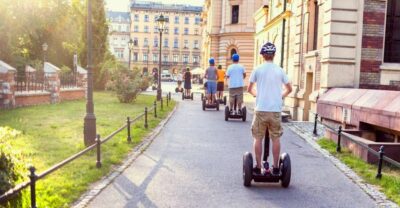
Warsaw Old Town 1.5-Hour or Full 3-Hour Segway Tour
Read our review →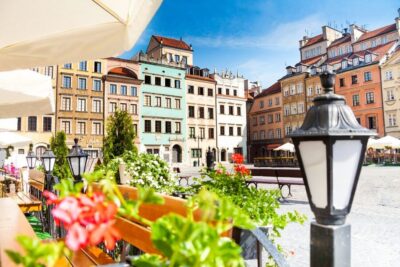
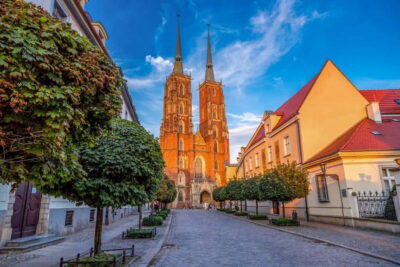
3-Hour City WalkingTour with University & Cathedral
Read our review →
3-Hour Novice Ski Adventure & Relaxing Zakopane or Baths Combo
Read our review →
Private 3-Hour Sightseeing Tour by Car with Pickup
Read our review →Browse the lists this tour appears in