
Reviewed · WALKING TOURS
Life Behind the Iron Curtain Warsaw Walking Tour
Warsaw has a lot of ways to explain how communism shaped everyday life, and this walking tour threads the story into a route you can follow on your own afterward. I love how the guide turns big, public spaces into clear ideas you can picture, starting at Plac Konstytucji.
I also love the human angle. Guides such as Olivia and Agnieszka share personal family context, so the talk about censorship, control, and shortages lands as lived experience, not just dates and names.
One thing to consider is the walking time and pace. It runs about 2 hours 30 minutes, and it is not recommended if you struggle with longer distances.
Key Takeaways Before You Go
- A route built from the symbols of control, not just random stops, so the themes connect as you walk.
- Socialist realism explained on the street, using specific buildings you can see and compare.
- Censorship and espionage made concrete at Mysia 3, with street-level cues you would otherwise miss.
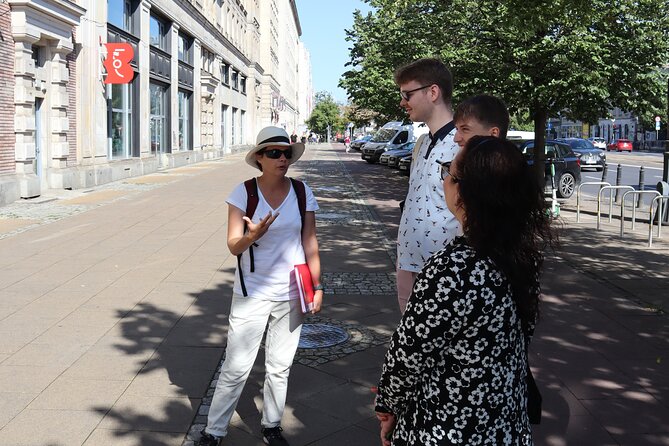
- Small group size, max 10, which helps questions and keeps the pace comfortable.
- A strong guide experience, with multiple guides praised for cheerful storytelling and real-life context.
How This Walk Tells Warsaw’s Communist Story
This is the kind of tour where the city starts talking back. Instead of treating communist-era Warsaw like a museum, the walk focuses on what power looked like in public space, how it worked in daily routines, and why certain buildings still matter today. You get the sense of a system, not just a timeline.
What makes it especially useful is the balance. You’re not only looking at architecture. You’re also learning what those sites meant for people on the ground, from marching-ready streets to the stress of finding basic goods. The route stays compact, and the themes keep stacking as you go.
The guide’s style is a big reason this earns top marks. Many people point out how guides make the period feel alive, including family stories that connect the political story to ordinary life. If you like history that feels practical and human, you’ll probably enjoy this more than the typical “here’s a plaque” approach.
More Walking Tours in Warsaw
- Warsaw: Old Town Highlights Walking Tour in English
★ 4.7 · 1,516 reviews - Warsaw: Old Town Guided Walking Tour
★ 4.9 · 599 reviews - Half-Day Polish Food Walking Tour with Guide and Dinner
★ 4.5 · 381 reviews
Price and Logistics That Keep It Easy
The tour costs $28.57 per person for about 2 hours 30 minutes. For Warsaw, that is solid value for a guided walk that covers eight meaningful stops, with free admission at each one except the optional terrace later on.
You’ll also get a full info pack before the tour, including a FAQ and practical links. That matters because it helps you keep going after the walk, with suggestions on where to eat, drink, and explore next.
Two more practical points make it easier to plan: it’s offered in English, and the tour has a maximum of 10 travelers. Smaller groups tend to mean better Q and A, plus fewer “missed the explanation” moments.
On the other hand, this is still a walking tour. Plan for a steady stroll through central Warsaw, and if long distances are tough for you, you may want a different format.
Stop 1-2: Plac Konstytucji and Marszałkowska Street
You start at Constitution Square (Plac Konstytucji), a place that was meant to act like a new city center during the Polish People’s Republic. Even if you have never studied socialist city planning, you’ll understand why squares like this were important. They were stage sets for the state, designed to shape how people moved, gathered, and looked at authority.
From there, you head along Marszałkowska Street, a wide avenue associated with parades and marches. This is where the tour stops being abstract. A broad street tells you a lot about what the government wanted: space for crowds, clear sight lines, and a sense that public space belonged to the system.
If you pay attention to details while walking, this section is a fast way to learn how to “read” a city. The guide points out elements that connect the street’s scale to its purpose. When you leave, you’ll likely notice other sites in Warsaw in the same way.
Stop 3: Ministry of Agriculture and Socialist Realism
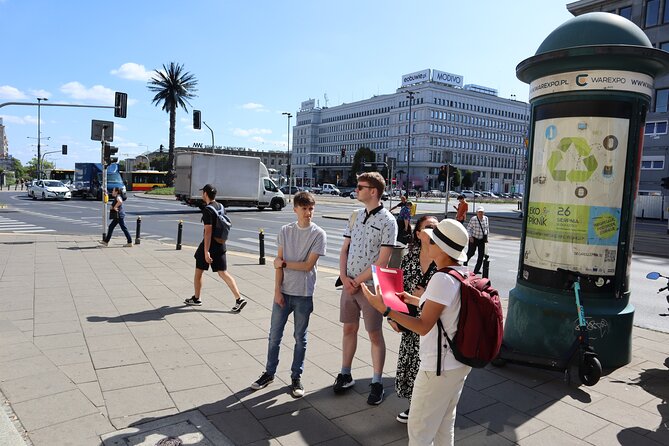
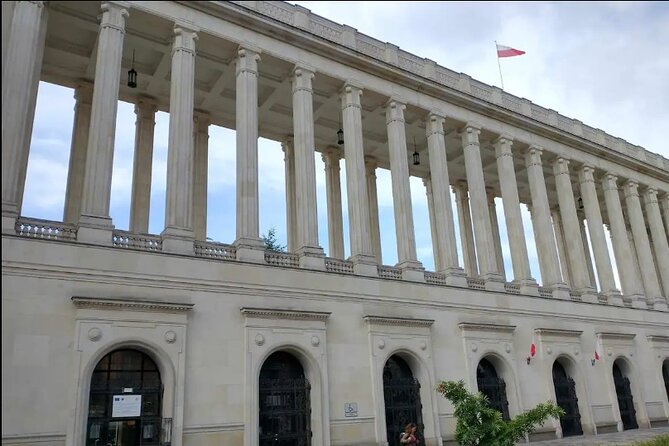
Next comes the Ministry of Agriculture and Rural Development building, described as a strong example of socialist realism. This stop is useful even if you think you do not care about architecture, because the tour explains the “why” behind the look.
Socialist realism was not just a design preference. It was a tool. The forms, proportions, and overall style were meant to project strength, stability, and the right kind of power. You’ll learn what characterizes the style and why buildings were shaped this way during the era.
What I like about this stop is the focus on translation. The guide doesn’t only show you what the building looks like. It explains how the style was meant to influence how people felt when they encountered the state in brick and stone.
This is also a good moment to slow down and watch the area around the building. Even if you are not looking at every detail, you start to see that these structures were built for attention.
Another way through a Warsaw day:
- Warsaw: Chopin Concert in the Old Town
★ 4.8 · 2,287 reviews - Warsaw: Traditional Galar Cruise on The Vistula River
★ 4.6 · 1,640 reviews - Warsaw Concert: Chopin – Painted by Candlelights with Wine
★ 4.8 · 1,442 reviews - Warsaw: City Sightseeing Hop-On Hop-Off Bus Tour
★ 3.6 · 1,415 reviews
Stop 4: Mysia 3, Free Speech Memorial, and the Fear of Censorship
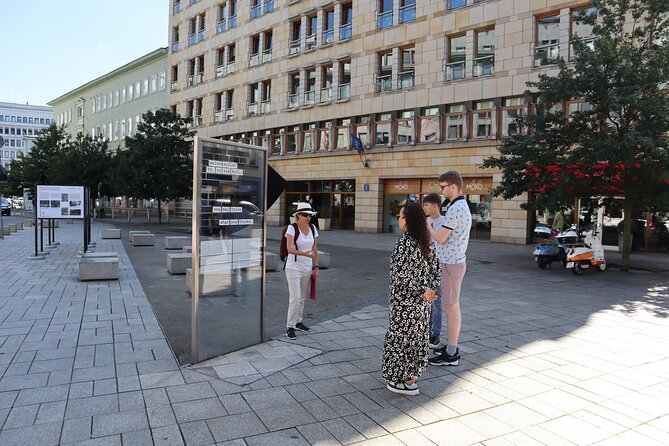
At Mysia Street 3, you’ll see the Free Speech Memorial and talk about censorship and espionage. This is one of the stops where the tour becomes emotionally sharper, because it moves from “state design” to “state pressure.”
The key value here is context. The guide helps you connect how censorship works, not just as a vague concept, but as something that changes behavior. You learn why people self-censored, why information mattered, and how fear could shape everyday conversations.
This is also where the guide’s storytelling style really matters. People in the feedback highlight that guides use real-life accounts to make the time period feel immediate. If you’re the kind of traveler who likes learning from personal perspective, this stop should click for you.
Look around as you listen. Memorials can feel fixed and official, but here the talk brings out why the subject was urgent and risky. When the walk moves on, you’ll carry the lesson with you.
Stop 5: Nowy Świat 6/12 and Communist Party Control
Next is Nowy Świat 6 to 12, a building that today houses the Banking and Finance Center. During the Polish People’s Republic, this place was described as where the country was managed, including the Communist Party HQ.
This stop is a strong reminder that governments use space for control, even after regimes change. You get to stand in a location that once centralized decision-making, then see how it has been repurposed. That contrast is part of what you came for: the way power leaves fingerprints on a city.
The guide helps you understand what “management” meant in practice. It’s not only about who had authority, it is also about how that authority shaped what was possible for ordinary people. When you connect this site to the earlier ones, the story becomes tighter: squares, streets, institutions, then the command center.
If you’re trying to grasp the big picture in a short time, this is a key anchor stop. It helps the rest of the route make more sense.
Stop 6: Central Department Store Cedet and the Daily Hard Work of Buying Stuff
Then you reach the former Central Department Store Cedet. This is one of the most practical stops on the walk because it tackles a basic pain point: buying everyday things during the era of the Polish People’s Republic.
The guide explains why everyday shopping was harder than it might sound. Even if you know that communist systems often struggled with shortages, this stop gives you the local flavor of how it played out in daily life. You learn how a store could become a social experience and a challenge, shaped by what people could get and when.
I like that the tour does not treat this like a sad side note. It frames shortages as part of the larger system. Control over distribution and resources affects more than the economy. It affects patience, routines, and even trust in public promises.
This stop is also a reminder for your future meals and market visits. After learning how supply and access worked, you’ll read modern Warsaw commerce with more awareness of how much changed since then.
Stop 7: Warsaw Central Railway Station and Cross-Border Travel
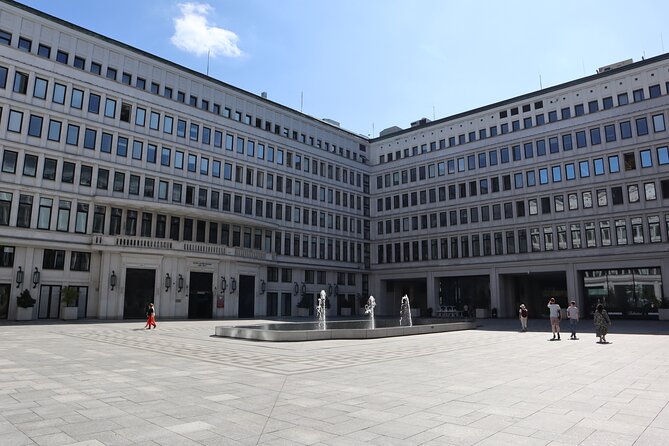
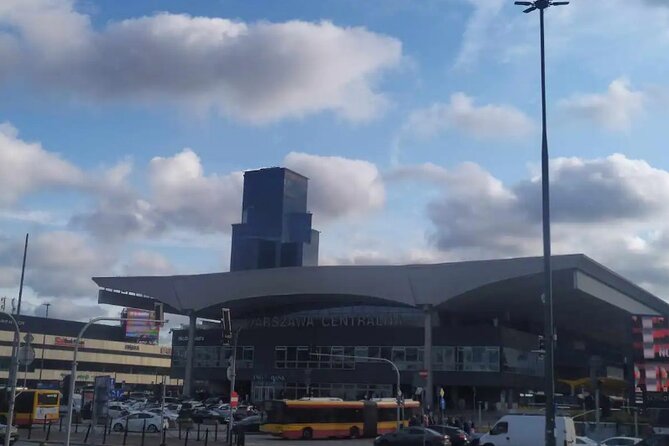
At Warsaw Central Railway Station, plus the mention of the Downtown Railway Station, you talk about local, regional, and international travel during the communist period. This stop shifts the angle from buildings to movement.
Rail travel matters because it is where personal plans bump into politics. Borders, schedules, and access can all reflect what a government wants people to do and where it wants them to go. Even without heavy technical detail, the conversation helps you understand why travel could feel different under that system.
The guide connects these station spaces to the broader theme of control. You’ll likely start seeing stations as more than transit hubs. In the communist era, they were also channels of regulation and monitoring.
If you are the type of traveler who likes transportation history, you’ll appreciate this stop. It gives you a different way to understand Warsaw, beyond the usual street-corner landmarks.
Stop 8: Palace of Culture and Science, Plus the Terrace Choice
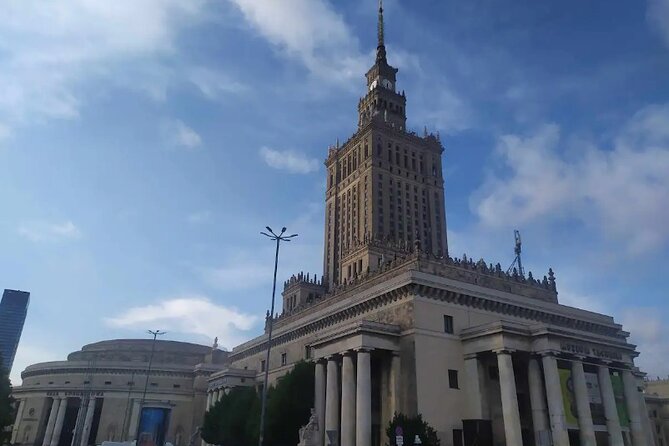
The tour finishes in front of the Palace of Culture and Science, a symbolic but controversial landmark. This is where the walk lands its final message: this building is not just a photo stop. It stands for how the era projected power and how people interpret that legacy now.
There is also an optional viewing element. The terrace entry fee is 28 PLN and is not included in the tour price. If you want the best views, you can budget for it. If you prefer to keep costs simple, you can skip the terrace and still get the full tour explanation at street level.
This finish is a good way to end because it gives you a big reference point for the rest of your day in Warsaw. After learning how the palace is tied to the era’s symbolism, you’ll see it differently on your skyline photos.
If you do plan to go up, wear comfortable shoes. You will already have walked most of the route by then.
Should You Book This Iron Curtain Walking Tour?
I’d book this if you want Warsaw history that feels human, not just architectural. The combination of eight concrete stops, English delivery, and the guide’s storytelling approach hits a sweet spot for many travelers who want more meaning per minute.
It is also a great pick if you like small-group tours. With max 10 travelers, the experience tends to feel conversational, and you can ask questions when you want clarity. The strong feedback on guides like Olivia and Agnieszka is a good sign that you’re likely to get energy and clarity, plus that personal layer that makes the era feel real.
Skip it or consider a different option if walking longer distances is a problem for you. Even though the route is central and the walking time is reasonable, it is still a walking tour built around seeing multiple sites.
For the right kind of traveler, this is a high-value way to understand why modern Warsaw looks the way it does, and what its communist past still communicates in stone, street width, and public space.
FAQ
Is the tour offered in English?
Yes. This experience is offered in English.
How long is the Warsaw walking tour?
It runs about 2 hours 30 minutes.
What is the price per person?
The price is $28.57 per person.
Is the ticket mobile?
Yes, the tour uses a mobile ticket.
Are all stops free to enter?
Most stops are listed as free. The viewing terrace fee at the Palace of Culture and Science is not included.
What does the Palace of Culture and Science terrace cost?
The terrace entry fee is 28 PLN, and it is not included in the tour price.
Is there free cancellation?
Yes. You can cancel for a full refund up to 24 hours before the experience start time.
Fresh Warsaw reviews
- Warsaw Off The Beaten Path Self-Drive Tour★ 5.0 · 18 reviews
- Private Warsaw Chopin Airport One Way Transfer★ 5.0 · 18 reviews
- Zelazowa Wola: Frederic Chopin Half-Day Private Tour★ 4.7 · 18 reviews
- Warsaw: 2-Hour Chopin’s Life Walking Tour★ 5.0 · 19 reviews
- Warsaw: melt museum Entry Ticket★ 3.5 · 19 reviews
- Deluxe Polish Food Tour Experience in Warsaw★ 5.0 · 19 reviews
- FSO Gunrange, Shooting Package US ARMY★ 5.0 · 19 reviews
- Gdansk and Malbork Castle Small Group Tour from Warsaw with Lunch★ 4.5 · 20 reviews
Walking Tours, compared.
Gdańsk City Sights & History Guided Walking Tour in English
Read our review →
Browse the lists this tour appears in