
Reviewed · SCHINDLER'S FACTORY TOURS
Krakow: Schindler’s Factory Guided Tour
This is one of those Krakow tours that feels “small” in time but huge in meaning, because you’re walking through the exact industrial site tied to Oskar Schindler’s rescue work during Nazi occupation. You’ll learn how normal routines for the people of Krakow were smashed by the war, while Schindler used his factory role to help more than 1,200 Jews survive.
I especially like two parts: the guided storytelling that connects World War II events to everyday life in Krakow, and the chance to see Schindler’s authentic office desk in the museum setting. One consideration, because the subject matter is heavy, is that the museum can feel crowded and fast-paced depending on the group and timing, so you may not get long, quiet reading time in every room.
Key things to know before you go
- Skip-the-line entry means less time stuck outside a very popular museum.
- A pro guide in English or Spanish helps you connect the dots between dates, places, and people.
- See Schindler’s office desk for a direct, human-scale link to the story.
- Plan for 2 hours of walking and looking, but pacing can vary when rooms are busy.
- Bring your passport or photo ID for every participant, or you may not get in.
Entering Schindler’s Enamel Factory, and why the setting matters
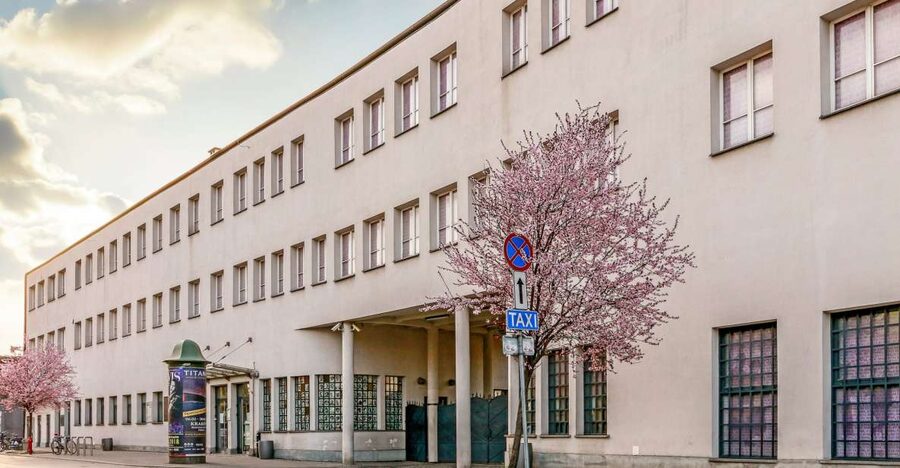
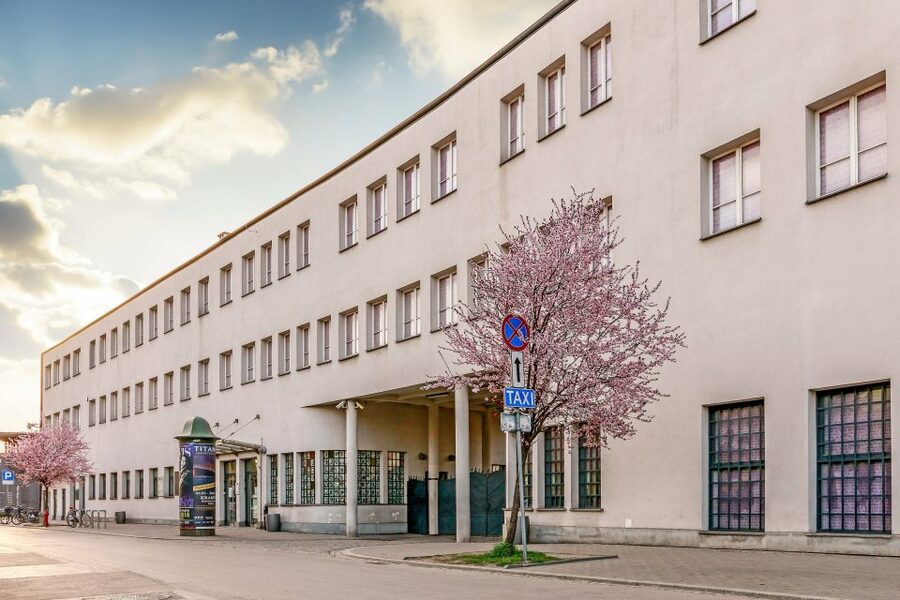
You’ll meet right where it counts, in front of the Oskar Schindler’s Enamel Factory museum entrance, where you’ll spot a greeter with a GetYourGuied banner. From there, the tour experience starts immediately, not with a lecture in a café, but by grounding you in the place itself.
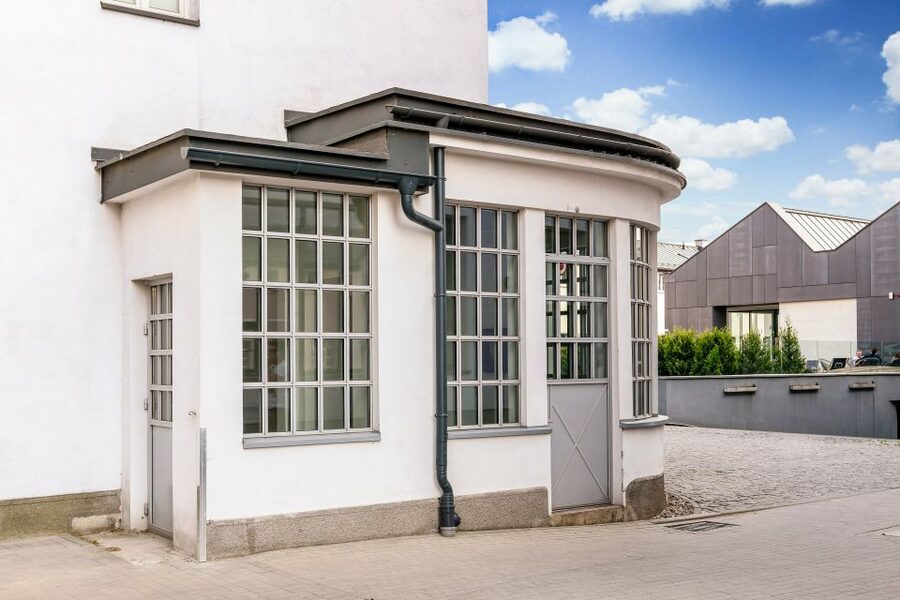
The factory is known in German as Oskar Schindler’s Deutsche Emailwarenfabrik, and it traces back to 1937, when it was established. That matters because it explains why the site could function as a working factory in wartime, not just as a museum set piece. You’re not only learning about resistance in the abstract. You’re seeing how industrial life intersected with occupation and survival.
More of Schindler's Factory and wartime Krakow:
- Krakow: Schindler’s Factory Ticket and Guided Tour Option
★ 4.3 · 4,306 reviews - Krakow: Schindler’s Factory Tour with Entrance Ticket
★ 4.5 · 3,182 reviews - Krakow: Schindler’s Factory Skip-the-Line Ticket
★ 4.4 · 3,105 reviews
Nazi occupation in Krakow: how the story is framed for a guided visit
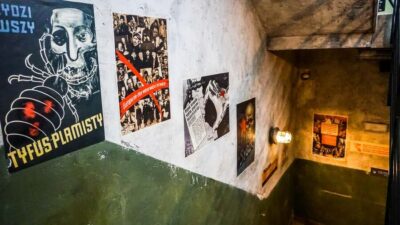
This tour focuses on Krakow under Nazi occupation, roughly 1939 to 1945, with a clear emphasis on how people lived day to day while laws, control, and violence tightened. Instead of treating history as a list of battles, the guide connects wartime policy to ordinary routines, including what people could access, what they could not, and what fear did to daily life.
The tone is necessarily somber. But the structure of a guided tour helps. You get a thread to hold onto: dates like the German invasion on September 1, 1939, and then Schindler’s arrival in Krakow around September 6, when German troops entered the city. Once the tour anchors those moments, the rest of what you see inside becomes much easier to understand.
The factory timeline you’ll hear: 1937, 1939, and a wartime workforce
Here’s the core timeline you’ll keep hearing, because it explains why Schindler’s role was possible. The original enamel factory dates to 1937. Then the war changes everything fast.
When Germany invaded Poland on September 1, 1939, it triggered a chain of occupation actions across the country. By about September 6, Oskar Schindler arrived in Krakow, after German troops entered the city. The tour describes how he soon took control of the factory and how the workplace became a point of survival for people from the Krakow ghetto, with Schindler employing more than a thousand Jewish workers through the factory.
As you move through rooms, that story helps you interpret what you’re seeing. A factory desk is not just furniture. In this context, it’s part of a system. A room isn’t just a room. It’s a place where paperwork and authority could mean the difference between forced labor and something closer to survival.
Step-by-step inside the museum, and what to watch for in each area
The experience is designed as a guided circuit through the museum spaces. You’ll start in the areas devoted to life under Nazi occupation in Krakow, then shift to the factory connection and how Schindler’s administration operated inside the building.
Expect three big “modes” while you’re there.
First, you’ll get context building. This is where the guide explains the occupation environment and how the Nazi regime disrupted daily life. If you like history you can hold onto, this part is your foundation.
Second comes the site-based story. The tour centers on the factory building itself as the administration site of Schindler’s enamel factory. This is where you stop seeing the museum as a generic exhibition and start thinking in terms of systems, logistics, and decision-making.
Third is the personal, human-scale moment. The highlight here is seeing an authentic desk of Oskar Schindler that is still in his office. It’s a small object compared to the big, brutal machinery of war, but that’s exactly why it hits. You’re looking at the tools of a person who tried to use his position to save lives.
More to book in Krakow:
- From Krakow: Auschwitz-Birkenau Guided Tour & Hotel Pickup
★ 4.5 · 33,358 reviews - From Krakow: Auschwitz-Birkenau Guided Tour & Hotel Pickup
★ 4.5 · 29,340 reviews - Krakow: Auschwitz Guided Tour with Optional Hotel Pickup
★ 4.5 · 15,280 reviews - Krakow: Wieliczka Salt Mine Tour with Entry Ticket
★ 4.6 · 10,927 reviews
Schindler’s office desk: the highlight that lands differently in person

Seeing Schindler’s office desk is the kind of museum detail that can reset your brain. On a normal tour, desks are just props. Here, it’s described as an authentic desk still in his office. That authenticity turns the story from a moral lesson into something more concrete and unsettling.
In that office setting, you’re not only learning that Schindler helped people. You’re confronted with how close the rescue effort was to everyday administration, paperwork, and command. The guide’s job is to connect the object to the broader story of why more than 1,200 Jews were saved through Schindler’s efforts in Krakow.
If you want a takeaway that stays with you after the tour, it’s this: history isn’t only made on battlefields. Sometimes it’s made in offices, with documents, decisions, and pressure from every direction.
The best part of the tour is often the guide, and you can feel it fast
One reason this tour earns strong scores is that the guides tend to bring energy and structure to a difficult topic. In particular, one guide named Barb is repeatedly singled out for being very knowledgeable and passionate, with a delivery that keeps the two hours moving while still feeling informative.
You’ll also likely be given headsets so you can hear clearly, which helps a lot inside a museum where groups can be close and sound can get messy. That might sound like a small detail, but it changes your experience. You can focus on the guide’s explanation instead of straining to catch every sentence.
A balanced note: not every guide’s framing will match every visitor’s values. One participant raised concerns about a guide’s comments regarding postwar occupation impacts for Austria and Germany. If you care a lot about historical nuance beyond the 1939 to 1945 core, I’d go in knowing that guides sometimes share personal takes, and you might want your own mental checklist for what you hear.
Pace, crowding, and time management in a 2-hour schedule
This is a popular museum, and it shows. One of the most practical considerations is that group size and room crowding can affect how long you spend reading exhibits. Even with a 2-hour duration, the pace can feel rushed when the museum is busy.
Here’s how I’d handle it if your priority is both understanding and absorbing details. First, bring your expectations in line with the format: this is a guided tour with a set flow, not free-roam time. Second, take a few minutes before and after the guided part to scan at least a couple of exhibit panels on your own, so you can slow down where you personally care most.
Also, the museum rules are strict about behavior and recording. You’ll want to put your phone away quickly, because the tour is all about listening and looking, not documenting every square inch.
Price and value: is $42 for 2 hours worth it?
At $42 per person for a 2-hour guided experience with professional guidance and skip-the-line entry, you’re paying for two things: an expert to connect the history to what you see, and guaranteed access so you lose less time waiting.
Whether it’s a great value for you depends on how you like to travel. If you enjoy absorbing difficult history through narration and context, this price makes sense because you’re not only buying entry, you’re buying time with a guide and translation in your chosen language (English or Spanish). If you prefer reading at your own pace without a structured route, the cost can feel steep because you’re paying for someone else’s itinerary.
Still, the skip-the-line ticket is an important practical perk. For a top-tier museum, the waiting game can eat your day. Paying for guided access reduces that risk.
Who this tour is best for in Krakow
This experience fits well if you want a focused introduction to the Schindler story tied to daily life under Nazi occupation in Krakow. It’s also a strong option if you’re the type of traveler who likes structure and explanation, especially for complex historical periods where dates and places can blend together.
It is not suitable for children under 14 years, so I’d only bring teens if they’re genuinely ready for heavy WWII content and can handle a full guided visit.
If you’re traveling with limited time and you still want a meaningful stop, this tour is a manageable length. It’s also wheelchair accessible, which matters if you need an on-the-ground, guided option rather than only self-guided museum wandering.
Practical museum rules you should plan around
Inside, the rules are designed to keep things orderly. The tour data lists several no-go items and behaviors, and you should follow them to avoid problems at the entrance.
Key items to remember:
- Bring passport or ID card with photo for every participant.
- No large bags or luggage inside the museum.
- No flash photography and no video recording.
- No pets, and no weapons or sharp objects.
- No smoking, and no alcohol or drugs.
You should also remember that food and drinks are not included, so plan a meal before or after. When you’re walking through serious history, you want your energy steady, not low.
Should you book this Schindler’s Factory guided tour?
If your goal is to understand how the Nazi occupation shaped life in Krakow, and how Oskar Schindler’s factory role became part of a survival network, I think this tour is a very solid choice. The combination of skip-the-line entry, a live guide, and a standout personal artifact like Schindler’s authentic desk makes it more than a generic museum stop.
Book it especially if you like guided context and appreciate devices like headsets that make listening easier. Consider a different plan only if you know you get stressed in crowds, want long silent reading time in every room, or you strongly prefer a completely self-paced museum experience.
FAQ
FAQ
Where is the meeting point for the tour?
You meet in front of the entrance to the Oskar Schindler’s Enamel Factory museum. You will see a greeter holding a GetYourGuied banner.
How long is the guided tour?
The duration is 2 hours. Starting times depend on availability.
What is the price per person?
The price is $42 per person.
Is there a skip-the-line ticket included?
Yes. The tour includes a skip-the-line entrance ticket.
What languages are available for the guide?
The live tour guide is available in Spanish and English.
Do I need a passport or photo ID?
Yes. You must bring a physical passport or ID card with photo for every participant.
Is the tour wheelchair accessible?
Yes, the activity is wheelchair accessible.
Is this tour suitable for young children?
No. It is not suitable for children under 14 years.
Can I take photos or record video inside?
Flash photography is not permitted, and video recording is not allowed inside the museum.
Are food and drinks included?
No. Food and drinks are not included.
What is the cancellation policy?
This activity is non-refundable.
Fresh Krakow reviews
- Czestochowa Black Madonna Private Day Tour from Krakow★ 5.0 · 18 reviews
- Zakopane PRIVATE TOUR from Krakow★ 5.0 · 18 reviews
- Krakow City Pass – Museums, Atractions & City Transport★ 4.0 · 18 reviews
- Chopin Candlelight Concert with Wine in Krakow★ 5.0 · 18 reviews
- Krakow: Garden of Lights Pinocchio Entry Ticket★ 4.7 · 18 reviews
- Half-Day Wieliczka Salt Mine Tour from Krakow★ 5.0 · 18 reviews
- Auschwitz Birkenau Memorial and Museum group tour from Krakow★ 5.0 · 18 reviews
- Krakow: Schindler’s Factory & Ghetto Guided Tour★ 5.0 · 18 reviews
Schindler's Factory Tours, compared.
Schindler’s Factory Ticket and Guided Tour Option
Read our review →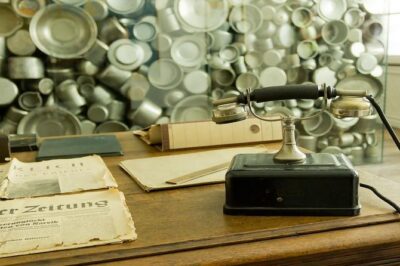
Krakow Schindler’s Factory Guided Tour with Admission Ticket
Read our review →
Kazimierz, Schindler’s Factory & Ghetto Guided Tour
Read our review →Browse the lists this tour appears in