
Reviewed · WALKING TOURS
Krakow: Plaszow Concentration Camp Guided Walking Tour
Plaszow Concentration Camp hits different because so much of it is open ground, not preserved buildings. You walk where prisoners once lived, worked, and were processed, and the silence does the heavy lifting.
Two things I really like: the tour’s pace for reflection (it does not feel like a race) and the way the guide turns empty space into a map you can actually follow. You get clear context, plus named memorial points like the Monument of Torn-Out Hearts, so your memory stops feel grounded.
One consideration: this is an outdoors walk with limited physical remains, so you’ll need a bit of weather tolerance and patience. If you want lots of intact structures to photograph, this is not that kind of site.
Key things that make this Plaszow tour worth your time
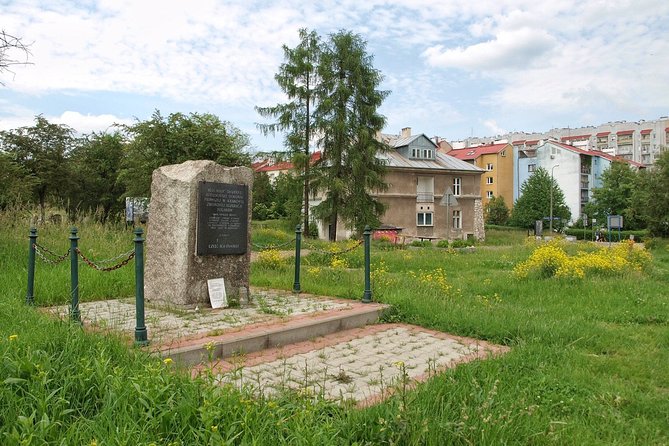
- A guide stitches together what survives, from the Grey House area to the roll-call square, so you do not get lost in a park-like setting.
- Major memorials are built into the route, including the Monument of Torn-Out Hearts, with time to pause rather than speed through.
- You connect Plaszow to Schindler’s story, including how Oskar Schindler used work permits tied to Plaszow and later transfers to Brunnlitz.
- Schindler’s List filming connections are part of the walk, which helps the movie locations make real-world sense.
- The structure mirrors how the camp functioned, including living, hospital, administrative, and industrial sections.
- Guides matter here, and the consistent theme across the experience is sensitive, clear explanations delivered with real care, with guides like Anna, Dominika, Barbara, Krysztof, and Phil specifically praised.
Plaszow in context: why this camp tour feels so different
Plaszow was established by Nazi German occupiers in October 1942 on the grounds of two Jewish cemeteries in Krakow. It started as a forced-labor camp for Jews from the liquidated Krakow ghetto, and from July 1943 it expanded to include a penal-labor section for Poles.
Then the camp shifted again. In January 1944, it was redesignated as a concentration camp. Later that year, it also functioned as a transit camp for Hungarian Jews being sent onward to Auschwitz. Over its existence, more than 35,000 people were imprisoned there, and around 6,000 were murdered. Executions took place at several internal sites, and today mass graves and memorials mark the ground where it happened.
Here’s the key difference for your visit: Plaszow is mostly memory without preserved buildings. That can feel odd at first, especially if you’re used to sites where you can “see” history in walls and roofs. On this tour, the guide does the essential job of turning traces and locations into understanding, so you are not left guessing what you’re looking at.
More Walking Tours in Krakow
- Old Town Krakow & Wawel Castle Walking Tour
★ 5.0 · 1,508 reviews - Creepy Krakow: 2-Hour City Walking Tour
★ 4.7 · 1,131 reviews - Krakow: The Old Town Walking Tour
★ 4.8 · 794 reviews
Meeting point and getting there without stress
You meet the guide in front of the entrance of Apteka Pod Orlem, and you should look for the guide holding an excursions.city sign. The tour lasts 2 hours, so this is meant to be efficient without turning into a sprint.
You’ll also be handed a single tram ticket, which helps if you are timing things around other Krakow sights. The start requires punctuality. You should arrive 10 minutes early, because once the group has departed, latecomers can’t join and tickets can’t be refunded.
If you’re planning your day, I’d treat this as a serious historical stop, not a quick “add-on.” It works well when you pair it with other Krakow sites about Jewish history and World War II, but keep your next stop lighter on intensity, because you’ll carry this one with you.
The 2-hour walk: how the route keeps moving and still lets you reflect
This tour is designed to feel paced for thinking, not rushing. Since Plaszow has few preserved structures, the route depends on interpretation: where things were, how the camp was organized, and how prisoners’ lives played out across different zones.
The guide pieces the site together from several main points you will move between:
- the Grey House
- the ruins of the pre-burial hall
- traces connected to the Jewish cemeteries
- the roll-call square
- and paths where fragments of gravestones were once used to pave roads
That last detail is one of those facts that changes how you experience the grounds. You stop seeing it as “just paths,” and you start understanding how even the idea of a cemetery was brutalized and repurposed.
You’ll also learn how the camp was organized into practical sections: living, hospital, administrative, and industrial areas. That organization matters because it turns the camp from an abstract tragedy into a system with functions, routines, and power structures.
Expect reflection time at major memorial points. The tour is built to keep your attention on the meaning of the place, not on checklists.
Stop by stop: what you’ll see and what to pay attention to
Another way through a Krakow day:
- From Krakow: Auschwitz-Birkenau Guided Tour & Hotel Pickup
★ 4.5 · 33,358 reviews - From Krakow: Auschwitz-Birkenau Guided Tour & Hotel Pickup
★ 4.5 · 29,340 reviews - Krakow: Auschwitz Guided Tour with Optional Hotel Pickup
★ 4.5 · 15,280 reviews - Krakow: Wieliczka Salt Mine Tour with Entry Ticket
★ 4.6 · 10,927 reviews
The Grey House and the feeling of control
The Grey House is one of the anchor points on the walk. Even without a full “museum” style setting, the guide uses the area to explain the camp’s functioning and how administration and control shaped daily life.
When you’re standing there, I’d focus on the guide’s explanation of what that space likely represented for prisoners. In a place like this, the exact shape of the building matters less than the role it played inside the camp system.
The pre-burial hall ruins and the weight of what’s missing
You’ll also visit the ruins of the pre-burial hall. Ruins can feel frustrating for some visitors because you can’t “read” them visually the way you can inside an intact structure. But for Plaszow, that sparseness is part of the truth.
The guide helps you interpret what you’re seeing, and more importantly, helps you understand what was happening there. Take your time. If you rush, the place gets harder, not easier.
Traces of the Jewish cemeteries, and the reality of desecration
Plaszow was created on cemetery grounds. The tour includes traces connected to the Jewish cemeteries, which gives you a concrete sense of what was destroyed and repurposed.
This section of the walk is usually where the tour’s tone becomes most reflective. If you’re there with someone else, it’s also a good moment to go quiet together and let the meaning land.
Roll-call square: where routines became punishment
The roll-call square is another major part of the route. A “square” sounds ordinary in a travel sense, but here it represents a repeated moment in camp life, where people were gathered and counted under brutal conditions.
I recommend you listen closely to how the guide explains the function of roll calls and how such routines became tools of control. This is one of those moments where your own assumptions can be wrong. The guide’s job is to reset your mental picture.
Paths paved with gravestone fragments
One of the most haunting details you’ll hear is that fragments of gravestones were once used to pave roads. When you’re walking those paths, it helps to remember that objects tied to burial were reused as construction material.
This is not a “facts only” stop. It changes how you look at the ground under your feet. If you’re someone who needs to absorb things slowly, this is where you’ll want to slow down too.
Memorials that shape the emotional arc: torn-out hearts and more
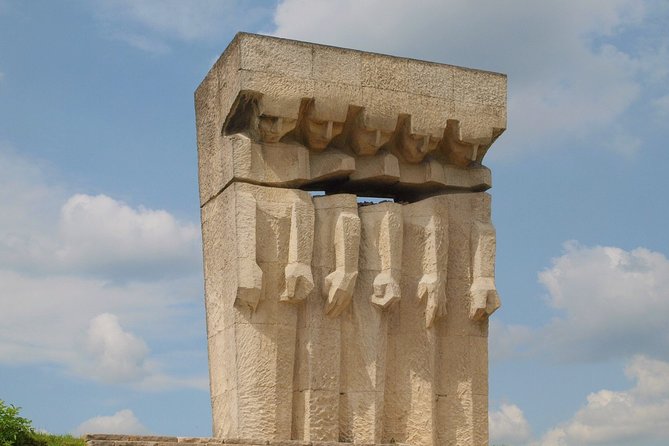
A big reason this tour works is that it does not leave you to stumble from spot to spot. It builds an emotional and educational arc through memorial points.
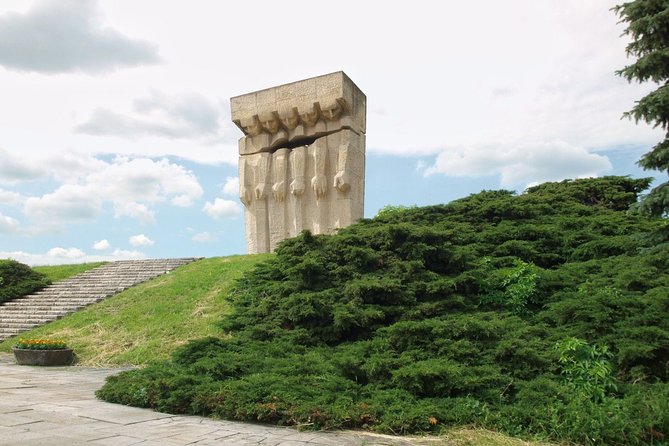
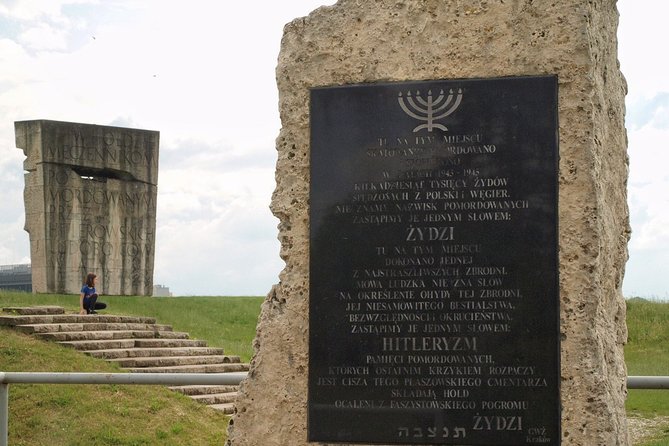
One memorial you will reflect on is the Monument of Torn-Out Hearts. The guide includes it as a major moment in the story, so you get time to pause rather than just pass by.
The overall approach here matters: Plaszow is open, quiet, and sparse. That means there is a chance for thought, but there’s also a chance you’ll feel overwhelmed if you do not have context. A strong guide keeps you oriented while still honoring the seriousness of what you’re seeing.
Schindler’s thread: from work permits to Brunnlitz
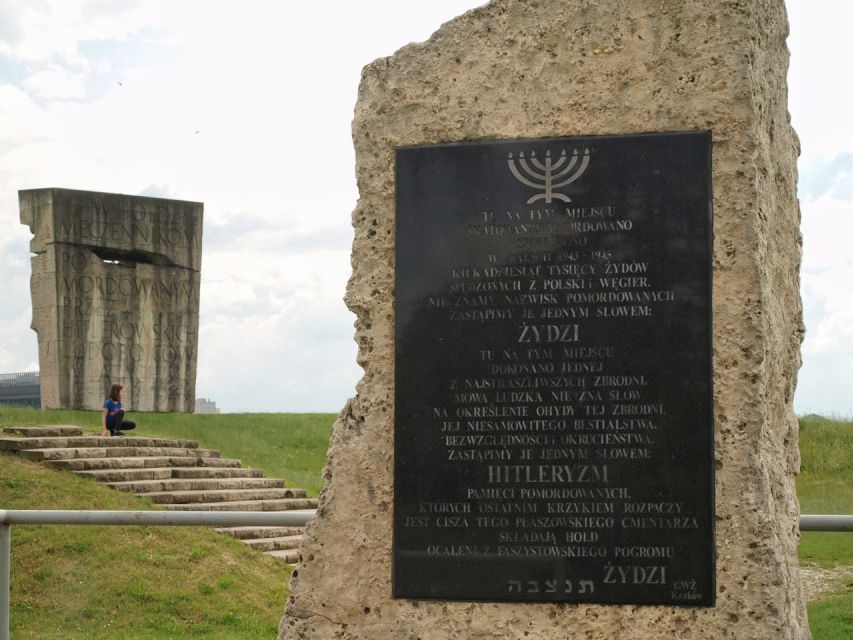
This is the part that ties the film to real lives, without letting it become “movie trivia.”
The tour treats Oskar Schindler as inseparable from Plaszow’s story. He ran an enamelware enterprise and sought work permits for Jewish prisoners who were registered through Plaszow. That effort helped shield some people from being sent on transports.
Later, he organized their transfer to his wartime plant in Brunnlitz, saving over a thousand lives. On this walk, you learn how Plaszow served as a point in the registration process and how paperwork became a lifeline.
And yes, you’ll also learn where Schindler’s List was filmed. The practical value of this is that it connects two ways of understanding history: the cinematic representation and the real geography that shaped what ended up on screen.
Just remember: the film connection is there to help your understanding, not to replace the seriousness of the place.
What the guides do well, and why names matter
In a site like Plaszow, the difference between a good and a bad guide is huge. The most praised guides here are the ones who manage to explain with clarity and sensitivity, keeping the tone respectful while answering questions with real depth.
You’ll see names like Anna, Dominika, Barbara, Krysztof, Phil, and Bartolomiew (spelling as it appears on bookings) tied to standout experiences. The common thread is that the tour doesn’t dump information at you. It gives you a path through the site, explains the camp’s organization, and gives you time to reflect at key points.
If you have questions, this is a tour where your questions are likely to be met with thoughtful answers.
Outdoors, weather, and the attention span factor
Since this is an open-ground walk, you’ll want to dress for the weather. One practical note: it can be tough if you’re not comfortable standing and walking for about two hours in changing conditions.
Bring layers, wear comfortable shoes, and accept that some parts of the experience rely on silence and attention. If you get antsy at memorial sites, this tour can still work, but it requires you to go at a slower mental pace.
Price and value: is $29 worth it?
At $29 per person for a 2-hour guided walk, the value is strong if you care about understanding what you’re seeing. Plaszow is not the kind of place where you can easily self-navigate from minimal remains and traces.
Here’s where the math becomes more than just price:
- You get a live local guide who interprets the site
- The route includes key locations like the Grey House, roll-call square, and major memorials
- You learn connections like the real story of Schindler and filming locations from Schindler’s List
- You get a single tram ticket, which helps you keep the day moving
If you were paying the same amount for a generic walk without context, you’d feel shortchanged. With this kind of route, the guide is the product. And the product here is interpretation, reflection pacing, and careful explanations.
Who should book this Krakow Plaszow tour
I think this tour is a great fit if you:
- want a focused Plaszow experience in about two hours
- care about how camps were organized and functioned, not just the broad tragedy
- appreciate memorial sites where the aim is reflection, not spectacle
- like connecting film locations to real geography, especially with Schindler’s List
It may feel less satisfying if you’re the type who expects lots of preserved buildings to photograph or if you struggle with outdoor walks and minimal physical remains. But for most people coming to Krakow with a serious interest in World War II history, this is a strong use of time.
Should you book the Plaszow Concentration Camp guided walking tour?
If you want to understand Plaszow instead of just seeing it, I’d book. The site is too open and the remains too limited to make sense without guidance. The best part is the respectful pacing, the memorial focus, and the way the guide connects the camp’s organization to the human stories, including Schindler’s efforts tied to work permits and Brunnlitz.
If you’re deciding between tours in Krakow, this one earns its place as a meaningful, two-hour stop that turns empty ground into clear, careful remembrance.
FAQ
Where is the meeting point for the Plaszow tour?
Meet your guide in front of the entrance of Apteka Pod Orlem. Look for the guide with the excursions.city sign.
How long is the guided walking tour?
The tour lasts 2 hours.
What does the tour cost?
The price is $29 per person.
Which languages are available for the live guided tour?
The tour is available in Spanish, Italian, French, English, German, and Russian.
Is the tour offered in multiple languages at once?
No. Group tours are only in 1 language, so you should select your preferred language when booking.
What can I expect to see during the walk?
You’ll cover major locations across the camp area, including the Grey House, ruins of the pre-burial hall, traces of the Jewish cemeteries, the roll-call square, and paths where gravestone fragments were used to pave roads. You’ll also reflect at memorials, including the Monument of Torn-Out Hearts.
Does the tour include any connection to Schindler’s List?
Yes. You’ll learn where Schindler’s List film was filmed, and you’ll also hear about Oskar Schindler’s role in helping prisoners associated with Plaszow.
Is public transit included?
Yes. A single tram ticket is included.
What is the weather situation?
The tour is outdoors, and since most of the camp remains are limited, comfortable weather planning is important.
What are the important arrival rules?
Arrive 10 minutes before the tour begins. Once the group has departed, latecomers can’t join, and tickets can’t be refunded.
Fresh Krakow reviews
- Czestochowa Black Madonna Private Day Tour from Krakow★ 5.0 · 18 reviews
- Zakopane PRIVATE TOUR from Krakow★ 5.0 · 18 reviews
- Krakow City Pass – Museums, Atractions & City Transport★ 4.0 · 18 reviews
- Chopin Candlelight Concert with Wine in Krakow★ 5.0 · 18 reviews
- Krakow: Garden of Lights Pinocchio Entry Ticket★ 4.7 · 18 reviews
- Half-Day Wieliczka Salt Mine Tour from Krakow★ 5.0 · 18 reviews
- Auschwitz Birkenau Memorial and Museum group tour from Krakow★ 5.0 · 18 reviews
- Krakow: Schindler’s Factory & Ghetto Guided Tour★ 5.0 · 18 reviews
Walking Tours, compared.
Gdańsk City Sights & History Guided Walking Tour in English
Read our review →
Browse the lists this tour appears in