
Reviewed · WALKING TOURS
Krakow: Plaszow Concentration Camp Guided Walking Tour
This tour is interesting because it traces how Krakow’s Jewish ghetto world was dismantled and then turned into Plaszow, where the camp’s layout and memorials still map the cruelty. I love the clear, guided path through the key sites and I love how the story ties directly to Oskar Schindler’s efforts. One drawback: this is heavy material, and the walk requires you to focus through a lot of grim specifics.
I also like that the group stays small, and guides use on-site context and supporting visuals to help you make sense of what you see, even when buildings and features are gone. If you want an emotional, respectful visit, plan your pace and bring sturdy shoes.
Key Highlights You Should Care About
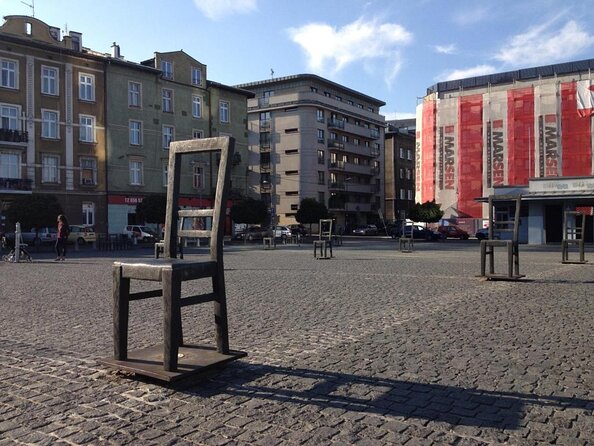
- Ghetto Heroes Square as the starting point for understanding control, registry, and transport
- A guided route through surviving camp markers like the Grey House area and roll-call spaces
- What remains of Jewish cemetery traces, including signs of how fragments were reused
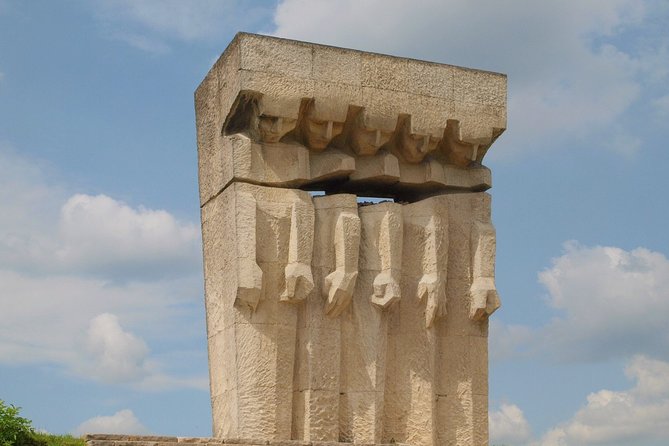
- Major memorial stops, including the Monument of Torn-Out Hearts
- Schindler’s connection explained step-by-step, from work permits to transfer to Brunnlitz
From Plac Zgody to Square of Ghettos Heroes
Your visit starts at the Square of Ghettos Heroes, a place locals also knew as Plac Zgody. During the Nazi occupation, the square functioned as a logistical nerve center for the ghetto, used for control, registry, and departures of transports. Standing there helps you understand that Plaszow did not appear out of nowhere, it was part of a larger system.
The renaming after the war matters because it turns a place of bureaucracy into a memorial space. This stop is brief, but it sets the tone and gives you a framework for everything you’ll walk through next.
If you’re sensitive to details, it helps to know you’ll be hearing very direct language about how people were processed and sent away.
More Walking Tours in Krakow
- Old Town Krakow & Wawel Castle Walking Tour
★ 5.0 · 1,508 reviews - Creepy Krakow: 2-Hour City Walking Tour
★ 4.7 · 1,131 reviews - Krakow: The Old Town Walking Tour
★ 4.8 · 794 reviews
Plaszow Camp: Forced Labor, Then a Concentration and Transit Camp
When you reach Plaszow, the ground tells a brutal story. The camp was created in October 1942 by Nazi German occupiers on the grounds of two Jewish cemeteries in Krakow. It started as a forced-labor camp for Jews from the liquidated Krakow ghetto, and later, from July 1943, it also held Poles in a penal-labor section.
Then, in January 1944, it was redesignated a concentration camp. Later that year, Plaszow also acted as a transit camp for Hungarian Jews who were sent onward to Auschwitz. Over the life of the camp, more than 35,000 people were imprisoned and around 6,000 were murdered, with executions carried out at multiple sites inside the camp area. Today, mass graves and memorials mark where that system operated.
What I like here is that a good guide does not just list dates. You start linking the camp’s functions to the physical spaces you are seeing, so it clicks rather than staying abstract.
Grey House, Pre-Burial Hall Ruins, and Cemetery Traces
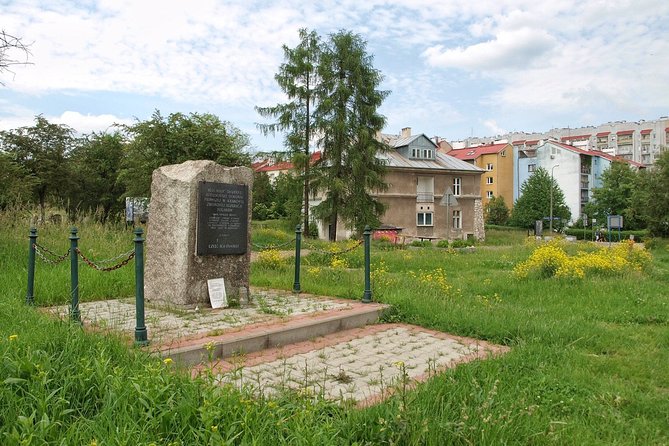
Inside the camp area, the guide helps you piece together what survives. You’ll spend time around the Grey House and the ruins connected to the pre-burial hall. The tour also points out traces of the Jewish cemeteries that existed before the camp was built.
That cemetery connection is not a side note. The camp was placed on cemetery grounds, so even when some structures are gone, the site retains layers of meaning that you will not get from photos alone. It’s also where you may notice how the past was physically disrupted.
One detail that can be shocking, but is part of understanding the place, is that fragments of gravestones were once used to pave roads. Seeing that concept explained on the ground helps you grasp how deliberate the erasure and repurposing was.
A possible consideration: because so much has changed, parts of the visit depend on the guide’s explanations. If you prefer a strictly visual visit with minimal talking, this may feel more interpretive than you expect.
Roll-Call Square, Memorial Stops, and the Monument of Torn-Out Hearts
As you move through Plaszow, you’ll also learn about the camp’s organization into working and control spaces, including living areas, hospital areas, administrative spaces, and industrial sections. The goal is to help you understand how the camp was run day to day, not just what happened at the worst moments.
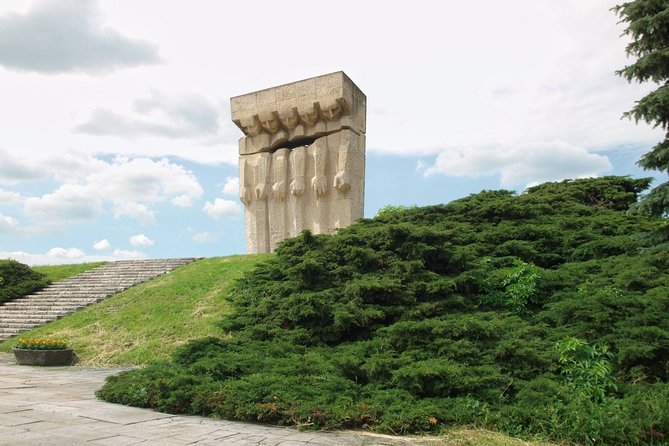
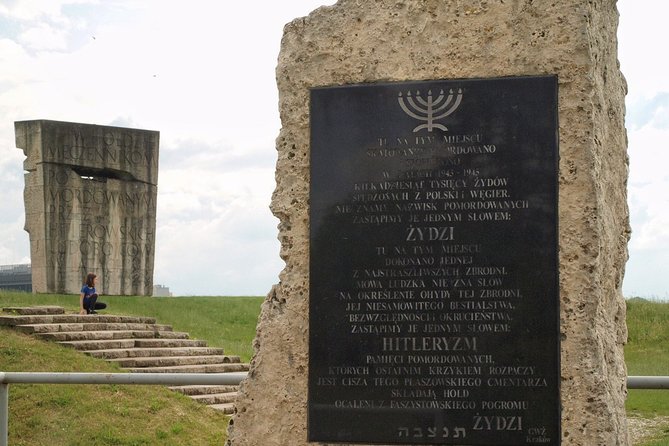
You’ll visit key memorial moments, including the Monument of Torn-Out Hearts. A guide will connect that memorial to the people the camp swallowed and the wider purpose of remembrance.
You can also expect a stop around the roll-call square, where the camp’s routine of assembly and counting is implied by the spaces that remain. Even without intact buildings, the layout helps you picture how control was enforced through procedure and timing.
This segment is where I think comfort items matter most. If you need to step back briefly or pause for a moment to take in what you’re hearing, do it. There’s no prize for rushing grief.
Another way through a Krakow day:
- From Krakow: Auschwitz-Birkenau Guided Tour & Hotel Pickup
★ 4.5 · 33,358 reviews - From Krakow: Auschwitz-Birkenau Guided Tour & Hotel Pickup
★ 4.5 · 29,340 reviews - Krakow: Auschwitz Guided Tour with Optional Hotel Pickup
★ 4.5 · 15,280 reviews - Krakow: Wieliczka Salt Mine Tour with Entry Ticket
★ 4.6 · 10,927 reviews
Schindler’s Enamelware and the Work Permits That Changed Lives
This tour includes Oskar Schindler, and it does it in a way that helps you connect history to action. Through his enamelware enterprise, Schindler sought work permits for Jewish prisoners who were registered through Plaszow. In practical terms, those permits could shield people from further transports.
Later, he organized their transfer to his wartime plant in Brunnlitz. The story remembered worldwide here is that his actions saved over a thousand lives. Hearing that explained as part of Plaszow’s operational system makes the rescue feel less like a legend and more like a chain of decisions made under impossible conditions.
If you’ve seen Schindler’s List, you’ll likely recognize the story beats, and you’ll understand how the film followed a real sequence rather than inventing everything from scratch. A strong guide often uses that comparison carefully, without turning the event into movie trivia.
I like this part because it gives you something to think with beyond suffering. It shows that within the system, individuals still tried to change outcomes.
How Long It Takes, and How the Walking Works
The tour runs about 2 hours. The exact walking feels manageable, but you should assume you’ll be on your feet for most of it. The tour notes a moderate fitness level, so if you have mobility limits, you should plan carefully.
Most people cover the distance between major stops using a mix of walking and local transit within the session. In one example, the guide even used a tram ride from Heros square to Plaszow, which is the kind of practical detail that can make the visit smoother. Even if you do not take transit, the camp area still requires staying alert and keeping your attention on directions and explanations.
Practical tip: wear comfortable shoes. The route includes uneven or memorial-ground surfaces, and you’ll be standing in place at times. This is not the day for brand-new soles.
Arrive about 10 minutes early so you can get your bearings before departure. Once the group leaves, late joiners cannot slide in, and refunds are not offered for missed time.
English Guides, Small Groups, and Real Value at About $30
At about $30.04 per person, the value is in what you get for that price: guided interpretation in English with a small group size, plus admission tickets for the stops that are listed as free. The session size tops out at 25 people, which means you’re less likely to be lost in a crowd.
I also think this is a fair price because this is a site where self-guiding can leave huge blanks. Plaszow is not a single dramatic monument you can simply take in. It’s many spaces, some changed, some missing, and the meaning depends on how someone connects what’s left to what happened.
If you want one of the more effective guides, look for a well-run session where the guide can answer questions clearly and pace the group with respect. If you happen to get Bartholomew, for example, that is a name you’ll hear attached to praise for being informative and easy to follow. Guides like Barbara or Phil are also noted for slowing down at the main points and using pictures to help you picture what stood there before.
Who This Tour Is Best For
You’ll love this if you want more than a quick stop. It’s for people who like understanding systems: how ghetto control led to deportations, how camps evolved over time, and how specific individuals acted within the machinery.
It’s also a good fit if you care about film-to-history accuracy. The Schindler thread is handled in a grounded way, so the connection to Schindler’s List feels meaningful instead of superficial.
You might skip it if you know you do not handle intense historical material well. This is not a light cultural walk. You should only book if you feel ready to take it seriously and respectfully.
Should You Book This Krakow Plaszow Tour?
Yes, I’d book it if you are committed to learning and you want a guided route that explains what survives at Plaszow. The combination of Ghetto Heroes Square context, on-site interpretation of camp remains, and a Schindler-focused human layer makes this tour more than a checklist.
Book it sooner rather than later, since it’s commonly reserved about 39 days in advance. If you’re deciding last minute, still go for it, just make sure you can arrive on time and wear shoes that can handle a few hours on your feet.
FAQ
How long is the Krakow Plaszow Concentration Camp guided walking tour?
It lasts about 2 hours.
Where does the tour start and where does it end?
It starts at Apteka pod Orłem, Plac Bohaterów Getta 18, Kraków, and it ends at Henryka Kamieńskiego 57. The end point notes a nearby bus stop on Kamienskiego street.
What language is the tour offered in?
The tour is offered in English only.
How much does the tour cost?
The price is $30.04 per person.
Is this tour a walking tour only, or do we use transit too?
It is a guided walking tour. The route between stops may involve local transit depending on the group, but you should expect to walk during the experience.
Do I need tickets or any paid admissions for the stops?
The information provided notes admission ticket free for the listed stops.
What group size should I expect?
The tour has a maximum of 25 travelers.
What should I wear and what fitness level is needed?
The tour requests a moderate physical fitness level. Wear comfortable shoes, since there is a lot of walking.
Is there free cancellation?
Yes, free cancellation is available up to 24 hours in advance for a full refund.
Fresh Krakow reviews
- Krakow Zakopane Cable Car Vodka Cheese and Hot Springs Tour★ 3.5 · 3 reviews
- Krakow Skip The Line Wawel Castle & Old Town Guided Tour★ 5.0 · 3 reviews
- Krakow: Zakopane and Thermal Pools Tour with Hotel Pickup★ 5.0 · 3 reviews
- Museo Czartorisky : Visita in Lingua Italiana salta fila…★ 3.5 · 3 reviews
- Half-Day John Paul II Route Tour from Krakow★ 5.0 · 3 reviews
- Krakow: John Paul II Home & Black Madonna Sanctuary – Guided Tour★ 5.0 · 3 reviews
- 1-Hour Tour to Krakow’s Old Town by Electric Golf Cart★ 5.0 · 3 reviews
- Auschwitz and Birkenau WITHOUT GUIDE private transport from Kraków★ 5.0 · 3 reviews
Walking Tours, compared.
Gdańsk City Sights & History Guided Walking Tour in English
Read our review →
Browse the lists this tour appears in