
Reviewed · AUSCHWITZ-BIRKENAU TOURS
From Kracow: Auschwitz Complex Alternative Tour
This tour is interesting because it does not try to hit every famous checkpoint. Instead, it focuses on the parts around the Auschwitz system that explain how victims were processed, imprisoned, punished, and killed across connected sites.
I like that you get a clear, guided route that includes Auschwitz-Monowitz (Auschwitz III) and the camp extension areas, not just the most talked-about sections. I also like the range of specific stops, from the pre-war theater connected to Zyklon B storage to the Polish Ramp and the Old Jewish Ramp, plus Birkenau’s Death Gate and SS barracks.
One big consideration: this is heavy material, and the day involves a lot of walking. Also, it does not include the main Auschwitz I and Auschwitz II-Birkenau camp visits, so if that is what you came for, this route may feel like it skips parts you expected.
Key Points You Can Actually Use Before You Go
- Krakow round-trip transport: you start and end in Krakow with built-in transportation to the memorial sites.
- Auschwitz III and the camp extension focus: Auschwitz-Monowitz, new SS barracks, the last women’s camp areas, and the final public execution site.
- Specific processing and selection stops: the pre-war theater tied to Zyklon B storage, Polish Ramp, and Old Jewish Ramp.
- High-impact Birkenau sights, but not the full main camp: Death Gate, main SS barracks, extermination zone sites, and Soviet POW cemetery.
- What happened in the final months is centered: maps from 1944 about the Interest Zone and the memorial to final victims.
- Good guide interaction: the experience is led by an English-speaking live guide, and people appreciate the guide’s polite, clear answers.
A Different Way to See Auschwitz Complex Sites
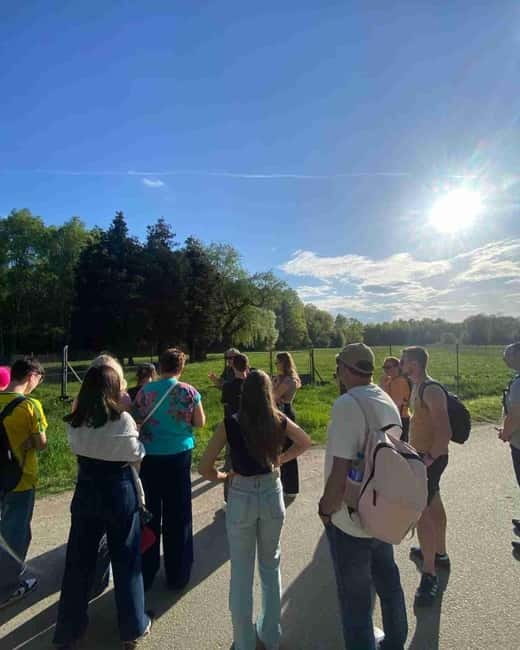
If you are used to the classic Auschwitz and Birkenau combo, this one feels more like a guided reconstruction. You move through linked locations that show how the camp system worked as a machine, not just a single place.
The focus on Auschwitz III (Monowitz) and the camp extension gives you a better sense of how imprisonment and killing expanded beyond the first impressions many people have. It also helps you understand that Auschwitz was not one scene, it was a whole network of functions and zones.
The tone is solemn and the subject matter is sensitive. You should expect moments where you cannot really rush or “power through,” even if the schedule is set.
More Auschwitz-Birkenau visit options:
- From Krakow: Auschwitz-Birkenau Guided Tour & Hotel Pickup
★ 4.5 · 33,358 reviews - From Krakow: Auschwitz-Birkenau Guided Tour & Hotel Pickup
★ 4.5 · 29,340 reviews - Krakow: Auschwitz Guided Tour with Optional Hotel Pickup
★ 4.5 · 15,280 reviews
Where Your 8-Hour Day Starts in Krakow
This tour runs for about 8 hours and begins and ends in Krakow. The meeting point is the K+R bus stop, and the day is built around round-trip transportation so you do not have to figure out rail or bus connections under stress.
You also get a skip-the-line approach using a separate entrance, which is a practical win on a busy memorial day. In places like these, the less time you spend in uncertainty, the more brain space you have for the guided context.
The tour is English with a live guide, and it is listed as wheelchair accessible. You will still want to plan for walking, because the stops are spaced out and the sites are outdoors.
Pre-War Theater, Zyklon B Storage, and the Ramps That Tells the Story
One of the most instructive parts of the day is the stop at a pre-war theater that was later used to store Zyklon B. Even if you already know the basics, seeing how ordinary buildings were repurposed can help make the scale of the system feel real.
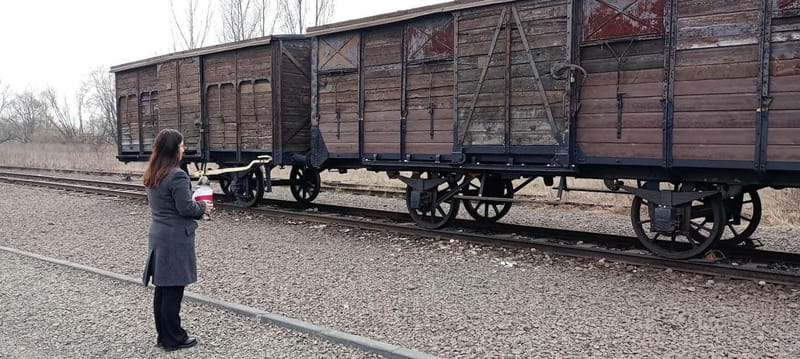
Then come two key ramp areas: the Polish Ramp and the Old Jewish Ramp. These are not just “looking at old platforms.” They connect to how transports arrived and how people were sorted at the start of their suffering.
What I appreciate about this sequence is the logic. You are shown sites that relate to the processing flow, which makes later areas like the gas chamber and crematorium parts easier to place in your mind.
A drawback to know up front: because this is a sensitive topic, it can be hard to take photos, or even want to. If you prefer to keep your focus on absorbing rather than documenting, that is absolutely okay.
Auschwitz III (Monowitz) and the Camp Extension Areas
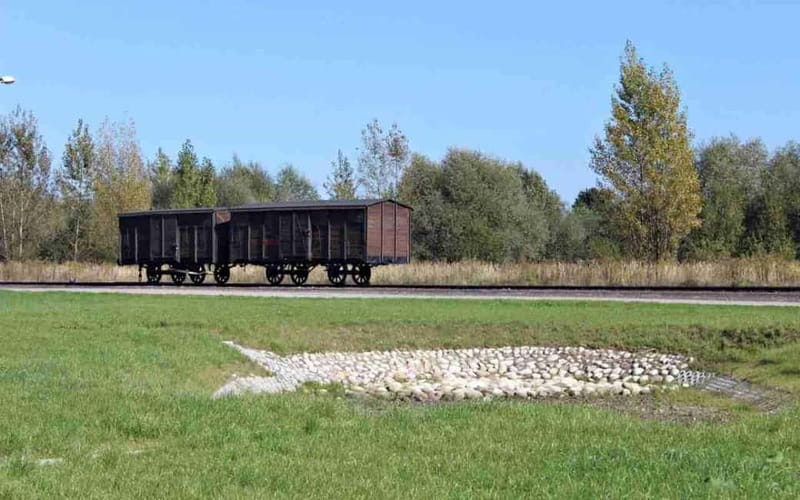
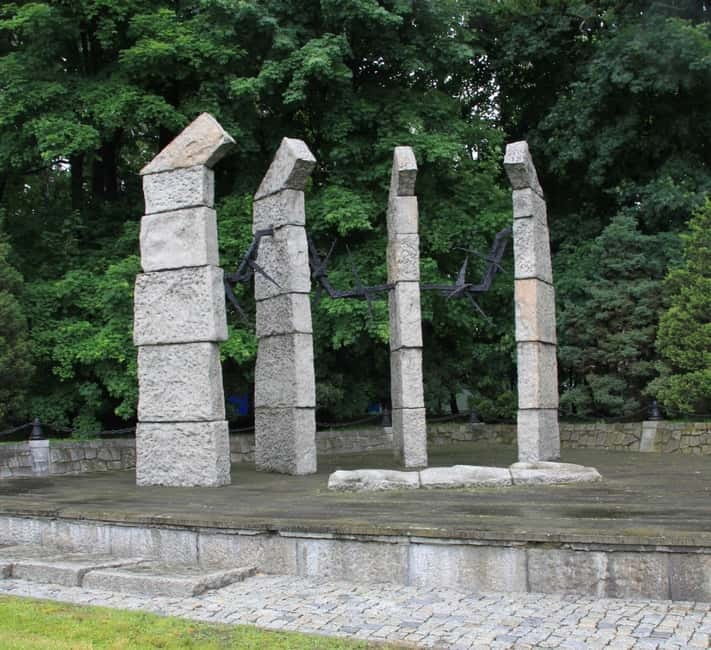
The center of the tour’s identity is Auschwitz-Monowitz (Auschwitz III). This is where you spend time at the memorial connected to the final victims and the system’s expansion.
A highlight is the exploration of the camp extension, including SS barracks, the women’s camp areas, and the site associated with the last public execution. These stops help you understand that the camp complex was not static. It changed, shifted, and grew, especially as the war turned and the Nazis pushed the system toward its final phases.
You also get a look at the mass grave of 700 prisoners shot during the camp evacuation in January 1945. That specific detail matters, because it anchors the timeline. It is one thing to know Auschwitz lasted until 1945, and another thing to see how the ending played out on the ground.
If you get overwhelmed, give yourself permission to pause. This tour is meant to be guided and structured, but your emotional pace still matters.
More to book in Krakow:
- Krakow: Wieliczka Salt Mine Tour with Entry Ticket
★ 4.6 · 10,927 reviews - Krakow – Zakopane: Cable Car, Chocholow Baths, Cheese & Vodka
★ 5.0 · 10,720 reviews - Krakow: Auschwitz-Birkenau Guided Tour with Pickup & Lunch
★ 4.5 · 9,800 reviews - From Krakow: Wieliczka Salt Mine Tour
★ 4.6 · 9,393 reviews
The Villas, Gravel Pits, and Punishment for Clergy and the Intelligentsia
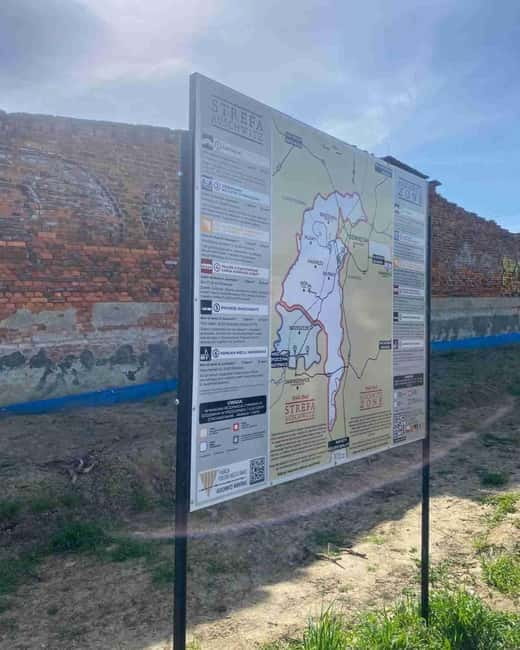
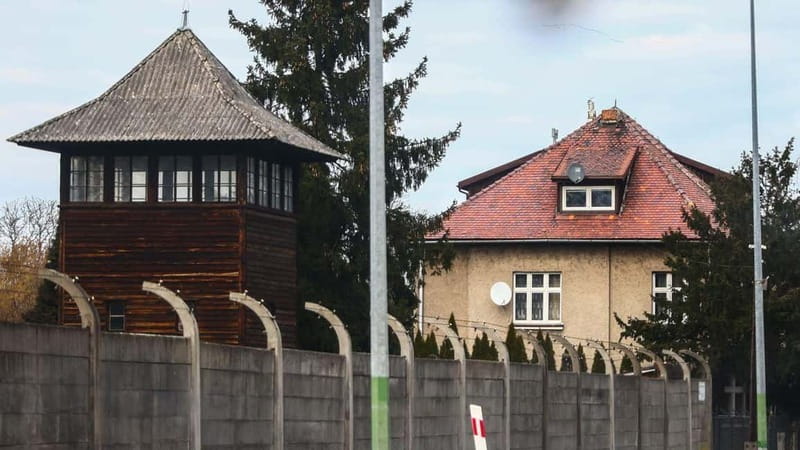
Some tours focus on the public-facing machinery. This one adds the sites tied to punishment and control, including the view of the commandant’s villa and the gravel pits.
The gravel pits are associated with executions, including those of clergy and members of the Polish intelligentsia. Even when you are not fully versed in the specific persecution categories, the stop pushes you to think beyond one group of victims.
What I like here is that it widens your understanding of who was targeted and why. Auschwitz was not only about racialized genocide in a single channel. It also targeted people for belief, education, leadership, and resistance.
Just be ready: these are not “quick photo stops.” Expect silence, gravity, and the feeling that every step is part of a bigger story.
The Crematorium and Gas Chamber Stops You Will Not Forget
This tour includes the first crematorium and gas chamber. That is a phrase that can sound clinical before you see the setting, but the physical layout and guided explanations usually make it land in a very real way.
You should treat this segment like a moment of learning, not a scene to sprint through. Listen closely for the guide’s links between the processing sites earlier in the day and what you are seeing here.
I also recommend you keep your camera put away during the most intense parts. Not because it is forbidden for everyone, but because watching with your eyes and ears tends to stick longer than images.
The content is sensitive. If you are worried about that, you should choose your day carefully, and have a plan for a quieter moment afterward.
Understanding the Interest Zone Through 1944 Maps and Aerial Photos
Another valuable piece is the explanation of the so-called Interest Zone, using maps and aerial photographs from 1944. This helps you move from “what happened inside the camp” to “how the whole area was shaped and controlled.”
It also gives you a sense of scale. When you can visualize boundaries, zones, and proximity, you understand how the camp could operate like an enclosed system while still being part of a wider region.
If you like historical context but hate vague explanations, this is one of the more practical parts of the tour. It gives you a reference framework you can carry afterward.
Birkenau’s Death Gate, Main SS Barracks, and Extermination Zone Sites
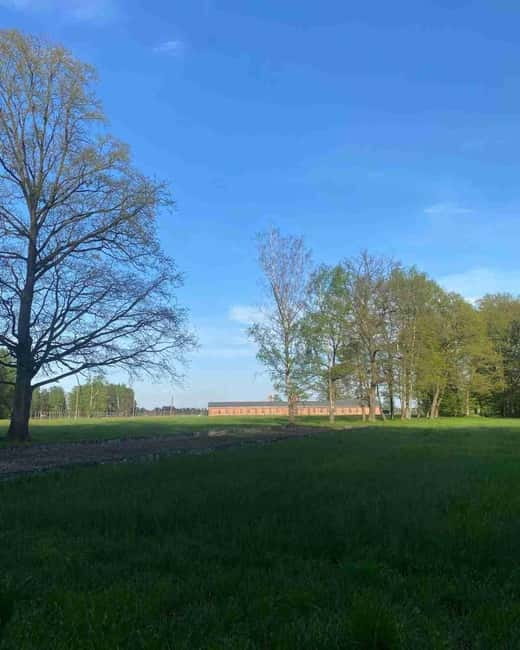
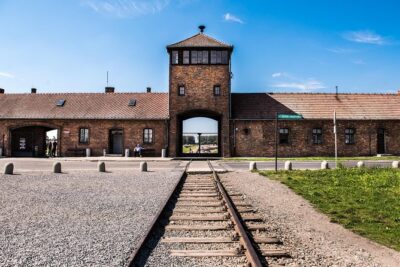
The route includes key Birkenau moments, but not the full main camp experience. You visit Death Gate and the main SS barracks, which are central images people associate with Birkenau.
Then you move through parts connected to the extermination zone, including Bunker 1 (Red House) and Bunker 2 (White House). You will also see the remains of dressing rooms for victims, plus a cemetery of Soviet POWs.
What makes these stops valuable is how they complete the earlier story. You can track the logic from arrival, selection, and processing, into the killing sites and the places tied to victims’ last steps.
You also visit the sauna building used for prisoner disinfection and belongings processing. That is the kind of detail that can feel chilling because it shows how even basic routines and sanitation were weaponized inside the system.
This portion of the day can be physically and mentally draining. If you need a short break, step back, breathe, and let the group move without you for a minute. Your focus will come back.
Finishing at the Auschwitz-Monowitz Memorial for the Final Victims
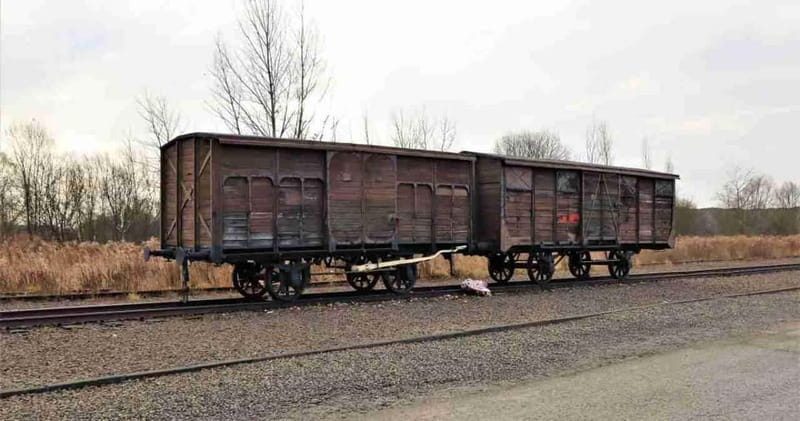
The tour ends at the memorial to victims of Auschwitz-Monowitz (Auschwitz III). Ending here is more than geography. It reinforces the tour’s theme: the Auschwitz complex evolved, and the last victims and final days were part of that story too.
You get an experience that stretches beyond the most photographed locations and instead ties together what happened in the final phase of the camp system. For me, that matters because it keeps the timeline honest, not frozen in one dramatic image.
By the time you head back to Krakow, you should feel like you walked a connected network rather than a list of sites.
Price and Value for $55 in an 8-Hour Memorial Day
At $55 per person for roughly 8 hours, the value depends on what you want from the day. If you want transportation plus guided context plus multiple connected sites, this pricing can be fair.
You are not just paying for access. You are paying for a route that intentionally links sites like the ramps, Zyklon B storage repurposing, camp extension areas, and Birkenau extermination zone points into a single narrative.
It also helps that the day includes round-trip transportation from Krakow. In practical terms, that saves time, reduces stress, and keeps you on schedule when you are dealing with a strict memorial environment.
If you only want Auschwitz I and the main Birkenau visit, you might feel like you are spending money without getting those exact stops. But if you want the story of the network, the price starts to make sense fast.
Who This Tour Fits Best
This is a strong choice if you want Auschwitz-related sites that explain the system’s wider operation. I would pick it if you enjoy clear guided structure and you like learning how places were repurposed, expanded, and coordinated.
It is also a good fit if you are the kind of traveler who values specific sites like the Polish Ramp, the Old Jewish Ramp, the commandant’s villa viewpoint, and the gravel pits for understanding how control and punishment worked.
If you are easily overwhelmed, or if walking for hours is hard for you, you should plan carefully. The tour is wheelchair accessible, but that does not remove the fact that this is a long, emotionally heavy day with multiple outdoor stops.
Should You Book This Auschwitz Complex Alternative Tour?
Book it if your goal is understanding the Auschwitz network beyond the most famous postcard areas. The route’s emphasis on Auschwitz III, the camp extension, ramps, Zyklon B storage context, and key Birkenau killing-zone sites gives you a more connected picture of the camp system.
Skip it, or at least compare alternatives, if you specifically want the full focus on Auschwitz I and the Auschwitz II-Birkenau main camps. This one intentionally does not include those visits.
If you do book, wear comfortable shoes, bring water, and dress for weather. Then, give yourself the mental permission to slow down where you need to. This tour is designed for guidance and clarity, but your attention is the real currency.
FAQ
What is the duration of the Auschwitz Complex Alternative Tour from Krakow?
The tour runs for 8 hours.
Where does the tour start in Krakow?
The meeting point is the K+R bus stop.
Does this tour include Auschwitz I or Auschwitz II-Birkenau main camp visits?
No. It does not include visits to Auschwitz I or Auschwitz II-Birkenau main camps.
What does the tour include?
It includes a guided visit to Auschwitz surrounding sites, Auschwitz-Monowitz memorial, camp extension areas, the first crematorium and gas chamber, the commandant’s villa area and gravel pits, the pre-war theater tied to Zyklon B storage, the Polish Ramp and Old Jewish Ramp, and Birkenau sights like Death Gate, main SS barracks, extermination zone sites, and a sauna building.
How much does it cost?
The price is $55 per person.
Is the tour guided and in English?
Yes, it has a live English-speaking guide.
Is the tour wheelchair accessible?
It is listed as wheelchair accessible.
What should I bring?
Bring comfortable shoes, water, a camera, and weather-appropriate clothing.
Fresh Krakow reviews
- Czestochowa Black Madonna Private Day Tour from Krakow★ 5.0 · 18 reviews
- Zakopane PRIVATE TOUR from Krakow★ 5.0 · 18 reviews
- Chopin Candlelight Concert with Wine in Krakow★ 5.0 · 18 reviews
- Krakow City Pass – Museums, Atractions & City Transport★ 4.0 · 18 reviews
- Krakow: Garden of Lights Pinocchio Entry Ticket★ 4.7 · 18 reviews
- Auschwitz Birkenau Memorial and Museum group tour from Krakow★ 5.0 · 18 reviews
- Krakow: Schindler’s Factory & Ghetto Guided Tour★ 5.0 · 18 reviews
- Half-Day Wieliczka Salt Mine Tour from Krakow★ 5.0 · 18 reviews
Auschwitz-Birkenau Tours, compared.
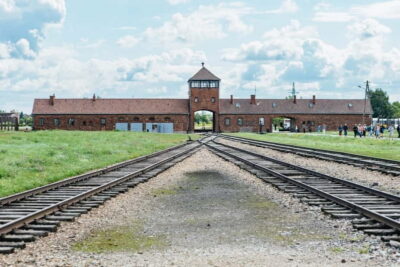
Auschwitz-Birkenau Guided Tour & Hotel Pickup
Read our review →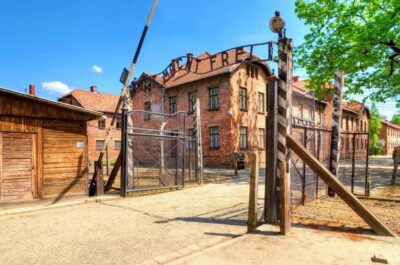
Auschwitz Guided Tour with Optional Hotel Pickup
Read our review →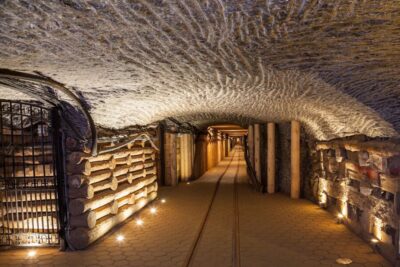
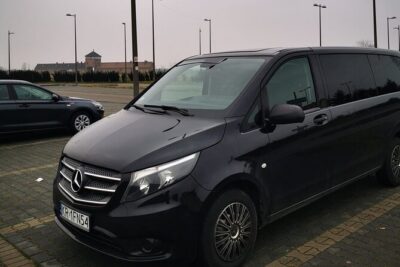
Krakow to Auschwitz Birkenau Guided Tour with Transfer and Ticket
Read our review →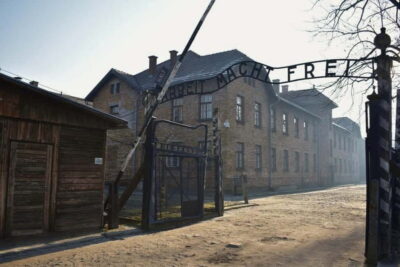
Auschwitz Birkenau Small Group Tour with Pickup
Read our review →
Day Trip: Auschwitz-Birkenau and Wieliczka Salt Mine from Krakow
Read our review →Browse the lists this tour appears in