
Reviewed · WROCLAW TOURS
Famous Islands of Wroclaw – Cathedral Island and Sand Island Private Tour
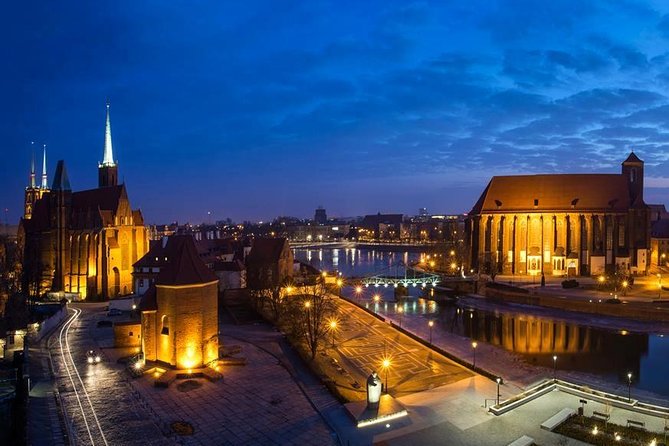
Wroclaw’s Cathedral Island and Sand Island are interesting because the river here shaped not just scenery, but power, faith, and even how justice worked. I love the way this private walk connects medieval life to the churches around Plac Katedralny, and I love the heavy focus on real architectural details as you go. One drawback to plan for is that it runs on foot and needs decent weather.
This tour is also a smart way to get organized fast in a city full of church spires. You get a clear route, a convenient meet point at Wrocław Cathedral, and an end point near Sand Island at Sand Bridge. The private format helps if you like asking questions without the noise of a larger group.
If you want an easy, story-driven church tour that still feels personal, you’ll likely enjoy it. It’s not a long day, but you do cover enough landmark ground to leave with a much better sense of how these two island districts fit together.
Key highlights worth your time
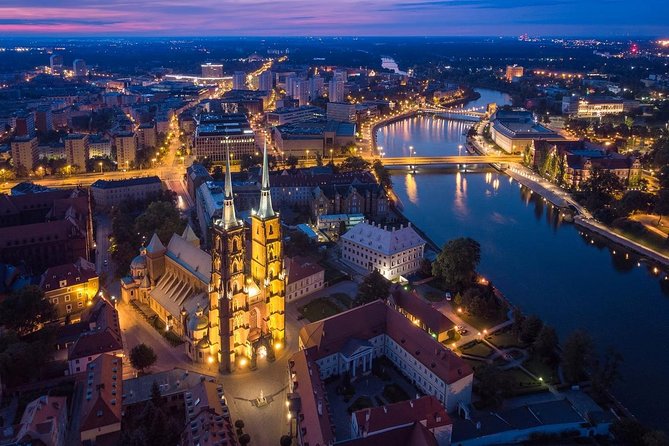
- Cathedral Island storytelling that explains why dukes and clergy once lived there and how it relates to justice
- St. Giles Church, Dumpling Gate, and the Leaning Tower area in a walkable circuit
- Archbishop’s Palace drama, including a 1980 story about hiding 80 million zloty for the Solidarity movement
- Holy Cross and Bartholomew church details, including a copy of the Turin shroud
- Tumski Bridge as a jurisdiction marker, then a transition to Sand Island’s big landmark church
- Our Lady on the Sand plus views of the former Augustinians monastery and surviving tenement houses
Famous Islands of Wroclaw: How Two River Districts Feel Like Different Worlds
Wroclaw is built like a puzzle, and this tour shows you two of its key pieces: Cathedral Island and Sand Island. Even though they are part of one city now, the walking route helps you feel how separate these districts used to be in function and identity.
I like that the focus stays practical. You are not just stopping for photos. You’re learning how these places worked in medieval times, how religious authorities shaped daily life, and how later history left its mark too. That mix is what makes a short, private tour feel more worthwhile than a quick self-guided stroll.
You’ll also get a natural “story arc” across the route. It starts with the Cathedral Island area, moves through older church sites and palace history, then crosses at Tumski Bridge toward the much larger Gothic presence of Sand Island. The guide ties it together so it makes sense as one walking journey rather than random sightseeing.
More to book in Wroclaw:
- Wroclaw: E-Car Tour and Audio Guide
★ 4.6 · 1,738 reviews - Wroclaw: 2-Hour Private Guided Tour by Electric Car
★ 4.8 · 805 reviews - Wroclaw: Ticket for Old Town Boat Cruise
★ 3.9 · 361 reviews
Outside Wrocław Cathedral: Cathedral Island and the Medieval Justice Angle
Your tour starts outside the main entrance of Wrocław Cathedral at Plac Katedralny 18. This is a great place to begin because the cathedral setting instantly frames the whole day. From here, you walk around Cathedral Island and take in views and landmark angles that connect to the island’s older role.
The highlight here is the medieval story. You’ll hear how wrongdoers could escape justice from this island area, and why you would see dukes and clergy living here so long ago. That’s the kind of detail that changes how you look at a place. Instead of seeing the island as just pretty riverside scenery, you’ll understand it as a strategic location with real rules behind it.
You’ll also learn why Cathedral Island is not an island anymore. That matters more than it sounds. When a landscape changes, the boundaries change, and the “why” behind church power can be easy to miss if you do not have context.
Practical tip: Cathedral Island is the first walking section, so start with comfortable shoes. You’ll be on foot from the start, and you’ll want your legs fresh for the next clusters of churches and gates.
St. Giles, Dumpling Gate, and the Leaning Tower Zone
Next up is the Church of St. Giles, described as the oldest existing church in Wroclaw. This is one of those stops where age becomes visible. Even if you’re not a church-architecture specialist, the age label gives you an instant reason to pay attention.
Right in the same neighborhood you’ll pass by the Leaning Tower of Wroclaw and the Dumpling Gate. The point of including these isn’t just variety. Each one reinforces a different layer of the old town. A gate signals movement and entry. A leaning tower makes a landmark memorable. St. Giles anchors the area in the longer timeline of local worship.
A few steps away, you’ll also have an entrance to the 19th century Botanical Gardens for anyone who wants a nature pause. If you like green breaks between churches, this is a nice option. If you prefer to keep momentum, you can simply note it and focus on the next historical stops.
Potential drawback: Because this section is tied to nearby sights, you’ll cover multiple stops in a short distance. If you want lots of inside time in each church, you might find the pace a bit brisk, but the trade-off is that you see a wider range of landmarks within a compact route.
The Archbishop’s Palace Story: 1980 and 80 Million Zloty
One of the most memorable parts of the tour is the stop by the Archbishop’s Palace. Here, the guide tells a story about a brave cardinal who in 1980 hid 80 million zloty for the Solidarity movement. That’s not a typical tourist fact. It’s the kind of moment that makes history feel human and risky, not just dates on a plaque.
This stop gives you a bridge between centuries. You started with medieval justice and church life, and now you land in 20th century Poland. The guide ties the religious presence of the region to events beyond architecture. It becomes clear that these church-linked buildings were part of public life, not isolated from it.
If you care about history that connects faith, politics, and everyday consequences, this is the segment to pay closest attention to. It’s the type of story you’ll remember on future walks around the city.
More Wroclaw bookings to weigh
- Wroclaw: Private Old Town Guided Walking Tour (2 hours)
★ 4.8 · 275 reviews - 2-Hours Private Electric Car Tour with a Guide, Wroclaw
★ 4.5 · 87 reviews - Wroclaw: Private UNLIMITED beer incl. City Tour By Golf Cart
★ 4.6 · 50 reviews - Wroclaw: Project Riese and Ksiaz Castle Private Tour
★ 4.7 · 39 reviews
Holy Cross and Bartholomew, Turin Shroud Copy, and Orphanotropheum
Across the street you’ll see a two-tier Gothic church: the Church of the Holy Cross and Bartholomew. This is one of the most beautiful Gothic churches in the Silesia area, and it comes with a specific detail that invites curiosity. Inside is a copy of the Turin shroud.
That’s a fascinating stop because it changes how you think about religious artifacts and local devotion. Instead of imagining only famous sites in far-away places, you see how major religious symbols and stories travel and reappear in different forms.
Right in the neighborhood, your guide also brings up Orphanotropheum, described as a former orphanage. This is one of those “quiet” stops where the importance is not in how dramatic it looks from afar, but in what it represented locally. You’ll get a fuller view of what institutions did for communities, not just what they worshipped.
Why this cluster works: You’re surrounded by different kinds of buildings with different roles. A church, an orphanage, a palace-linked historical story. Together they show Wroclaw as a working city with institutions shaped by need and belief.
Tumski Bridge to Sand Island: From Jurisdiction to the Big Gothic
Finishing on Cathedral Island before crossing to Sand Island is a smart design. You pass Tumski Bridge, described as representing the border for the church’s jurisdiction. That single sentence helps you “see” boundaries in a place where everything looks like one unified historic center.
Then you move to Sand Island, where the atmosphere shifts in a good way. You see the monumental Church of Our Lady on the Sand, which is described as the biggest Gothic church in Wroclaw. When you reach it, the size does the talking. It’s the sort of landmark that makes the walk feel like more than a list of stops.
This is where you’ll also spot the former Augustinians monastery and charming tenement houses, noted as the only remains of the old residential buildings on Sand Island. That residential detail matters. It prevents the Sand Island story from feeling purely monumental. You see evidence that ordinary people lived here too, even as institutions loomed large.
Our Lady on the Sand: What to Look For Beyond the Size
The Church of Our Lady on the Sand is the payoff. If you like big church exteriors, Gothic lines, and dramatic river-district landmarks, you’ll enjoy the arrival.
I also like that the tour frames the church as part of a larger Sand Island picture. You’re not only collecting one impressive photo. You’re connecting it to the monastery nearby and to the remaining traces of old homes.
For first-timers, the best way to enjoy this stop is to keep one question in mind: Why build something this large in this specific district? The tour’s earlier focus on jurisdiction boundaries and island identity gives you clues so the church’s scale feels purposeful, not random.
Pace and Comfort: A Walk You Can Actually Enjoy
This is a private tour, meaning only your group participates. That matters because the experience feels more conversational. You’re not fighting for attention. You can ask for clarification as you go, especially when the guide hits those story-based historical moments.
In terms of timing, expect about 1 hour 40 minutes to 2 hours. That’s long enough to feel meaningful, but short enough to keep it from turning into a full-day endurance event.
The walk is described as convenient and easy, with a clear start at Wrocław Cathedral and a finish around Sand Island at Sand Bridge. Also, it’s near public transportation, which makes it easier to combine with other stops in Wroclaw.
One more practical note: service animals are allowed. If that matters for your planning, you can feel comfortable booking with that in mind.
Price Value: When $75 Buys You More Than Sightseeing
At $75 per person, the value depends on what you want from a city. If you like checking off churches with minimal context, you could do something cheaper on your own. But if you want stories tied to each location, this price starts to make sense quickly.
Here’s why it feels like good value to me:
- You cover multiple landmark areas across two island districts in under two hours.
- The guide provides insight and stories, including specific historical episodes like the 1980 hiding of 80 million zloty.
- The private format saves time and reduces friction. You don’t need to figure out what to do next, and you do not need to interpret history alone.
Think of it as buying clarity. The guide turns the route into a coherent narrative, so you leave with more than photos. For Wroclaw, that narrative is the whole point.
Who Should Book This Private Cathedral Island and Sand Island Tour
This tour is a great fit if you:
- Want a focused overview of Wroclaw’s church-centered core without spending all day
- Like architecture, but also want the human stories behind it
- Prefer a private experience where questions are welcome
- Are curious about how medieval and more recent history overlap in the same neighborhoods
It’s also a good choice if you’re traveling with someone who appreciates guided context, but you still want a relatively easy walking circuit.
If you dislike walking or need a very slow pace, you might consider a longer, more flexible sightseeing plan. This one is compact by design.
Should You Book It?
I think you should book this private tour if you want Cathedral Island and Sand Island to feel connected. The route works because it builds context as you go, starting at Wrocław Cathedral, moving through St. Giles and the nearby gate and tower area, then landing on the Archbishop’s Palace and the Holy Cross and Bartholomew church with its Turin shroud copy. Finally, you end with the big Sand Island moment at Our Lady on the Sand.
You’ll likely enjoy it most if you care about history that includes details, not just names. And if you like short walks that still feel substantial, this one hits the sweet spot.
FAQ
How long is the Cathedral Island and Sand Island private tour?
The tour lasts about 1 hour 40 minutes to 2 hours.
Where does the tour start and end?
It starts outside Wrocław Cathedral at Plac Katedralny 18, and it ends at Sand Bridge, most Piaskowy.
Is this tour private or shared?
It is a private tour/activity, with only your group participating.
What language is the tour offered in?
The tour is offered in English.
What stops and sights are included?
You’ll see Cathedral Island highlights around Wrocław Cathedral, the Church of St. Giles, the Leaning Tower area and Dumpling Gate, the Botanical Gardens entrance area, the Archbishop’s Palace, the Church of the Holy Cross and Bartholomew with a copy of the Turin shroud, Orphanotropheum, Tumski Bridge, and on Sand Island the Church of Our Lady on the Sand, the former Augustinians monastery area, and surviving tenement houses.
Do I need to print anything or is there a mobile ticket?
You get a mobile ticket.
What happens if the weather is poor?
This experience requires good weather. If it is canceled due to poor weather, you will be offered a different date or a full refund.
What is the cancellation policy?
You can cancel for a full refund up to 24 hours in advance of the experience start time. If you cancel less than 24 hours before, the amount paid is not refunded.
Fresh Wroclaw reviews
- Wrocław: Long City Walk and Luxury Ship Cruise (for groups)★ 1.9 · 3 reviews
- Wroclaw to Rock City in Adsprach and Church of Peace in Świdnica Private Tour★ 5.0 · 3 reviews
- Wroclaw: Skip the Line Panorama Raclawicka and Ostrow Tumski Guided Tour★ 4.5 · 3 reviews
- Private Transfer from Wroclaw (WRO) Airport to Wroclaw city centre★ 5.0 · 3 reviews
- Wrocław: 2-Hour Guided Tour for Children★ 4.9 · 3 reviews
- Wrocław: Following the dwarfs’. See the city differently! 2h★ 4.4 · 3 reviews
- Wrocław: World War II and the non-existent city of Breslau★ 3.6 · 3 reviews
- Wroclaw : Walking Custom Tour with a Local Guide★ 4.8 · 3 reviews
Wroclaw Tours, compared.

Old Town and Ostrów Tumski Walking Tour in English
Read our review →
Private Old Town Guided Walking Tour (2 hours)
Read our review →
Wrocław Dwarfs & Sightseeing Tour by Electric Mini Bus
Read our review →
Group city tour (walking tour) through Wroclaw in German
Read our review →Browse the lists this tour appears in