
This experience is interesting because Wawel Hill is where Polish power, faith, and legend all pile onto one small stretch of stone. I like that you get a guided route with a clear rhythm, not a random museum wander. I also like that you see both the Royal Castle interiors and the Cathedral in the same outing, so the story connects instead of feeling like separate attractions. One possible drawback to think about: the Cathedral is an active place of worship, so access to parts of the site can be paused during major events.
The best part is how the guide turns the place into a timeline you can actually follow, from early-11th-century building to coronations and later royal burials. You also end with practical advice for continuing your Krakow visit from the same hill area, which helps if it is your first time in town. If you’re sensitive to stairs or tight spaces, you should plan carefully because the tour includes time inside the Cathedral and up to the bell tower.
Key things that make this tour worth your time
- Wawel Hill orientation so the whole complex makes sense fast
- One permanent exhibition in the Royal Castle, chosen based on what is available
- Coronation setting in Wawel Cathedral, where kings were crowned
- Sigismund’s Belfry access to see one of Poland’s biggest bells
- Royal tombs view in the crypts under the church
- Story-led guiding that stays focused without turning into a lecture
Where Wawel Hill starts to click in your head
Wawel is one of those places that can look like just “big old buildings” if you show up without context. With this tour, you start on the hill with a guide and a plan, so you understand what you are looking at and why it mattered.
The experience runs about 150 minutes, which is long enough to cover the key spaces but short enough that you do not feel trapped. You will walk between the Castle complex and the Cathedral, and the schedule keeps moving with short guided bits mixed with sightseeing time.
If you are visiting Krakow on a tight calendar, this is the kind of outing that compresses a lot of meaning into a manageable chunk of time. You get the big highlights, plus enough explanation to make later self-guided wandering easier.
More of Wawel:
- Krakow: Wawel Castle & Cathedral Guided Tour
★ 4.7 · 2,111 reviews - Old Town Krakow & Wawel Castle Walking Tour
★ 5.0 · 1,508 reviews - Krakow: Wawel Castle and Cathedral Guided Tour
★ 4.6 · 595 reviews
Finding the meeting point without stress
The tour meets at Podzamcze 4, at the small square between Grodzka and Kanonicza streets. A useful detail: you will be near the memorial plaque of Jaroslav Hašek, and Google Maps labels it as Pamětní deska Jaroslava Haška.
This matters more than it sounds. Wawel is surrounded by hills, stairways, walls, and side streets. If you arrive late or confused, you spend your precious minutes doing detective work. Starting at a specific square near a recognizable plaque helps you get oriented, then the guide takes over from there.
The first steps on the hill, and why the guide begins there
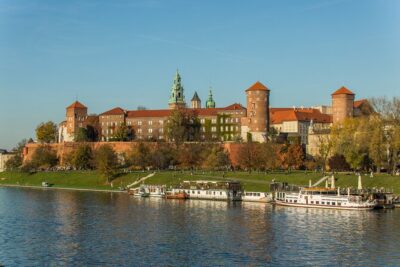
Before you even reach the Cathedral and main interiors, you spend time on the outside areas of Wawel Hill with guidance. You learn where the main story begins. The hill’s castle and primary church were erected in the early 11th century, and that early era becomes the base layer for everything that comes after.
This matters because Wawel has multiple layers, and it is easy to assume it was built in one clean burst. A good guide explains how later centuries reused the same sacred and strategic ground for ceremonies and dynastic power. It is the difference between looking at stone and understanding why people cared about that stone so much.
Royal Castle time: Royal Apartments or Treasury, depending on availability
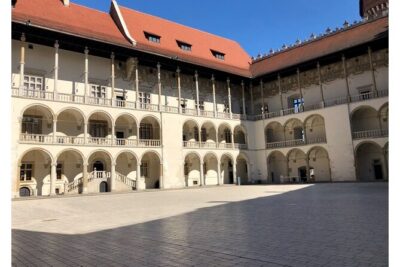
You will head into the Wawel Royal Castle for about 50 minutes of sightseeing. Here you get access to one permanent exhibition, and the exact choice can vary depending on what is available that day:
- Royal Apartments
- Crown Treasury
- Private Apartments
Think of this as a “choose-your-available” situation. If you have your heart set on a specific room set, you might not control which exhibition you get. The practical upside is that you still get an interior experience with real curatorial content, not just a quick exterior look.
What I like about this format is how it prevents the tour from feeling like a checklist. Instead of repeating the same generic “look at this hall” spiel, the guide can focus on the themes of whatever exhibition is open, connecting art, power, and the royal life that played out in these spaces.
Also, the tour includes ticketed access for these castle parts, so you do not have to coordinate separate admissions mid-visit. That is usually what makes a short tour feel worthwhile.
More to book in Krakow:
- From Krakow: Auschwitz-Birkenau Guided Tour & Hotel Pickup
★ 4.5 · 33,358 reviews - From Krakow: Auschwitz-Birkenau Guided Tour & Hotel Pickup
★ 4.5 · 29,340 reviews - Krakow: Auschwitz Guided Tour with Optional Hotel Pickup
★ 4.5 · 15,280 reviews - Krakow: Wieliczka Salt Mine Tour with Entry Ticket
★ 4.6 · 10,927 reviews
The walk to the Cathedral: the story shifts from crown to soul
After the Royal Castle, you move on foot toward Wawel Cathedral. This part of the tour is important because it changes the tone. The castle is about rule and ceremony, but the Cathedral is where that power got tied directly to faith.
The tour includes Cathedral ticketing, plus access to areas tied to the religious and dynastic story. Inside, you will learn why the Cathedral is central to Polish royal tradition, including the fact that most Polish kings were buried here.
A good guide helps you notice what you would otherwise miss. You start looking past the obvious scale and pay attention to how the building itself supports the narrative of mourning, remembrance, and legitimacy.
Wawel Cathedral: where kings were crowned, and why that matters
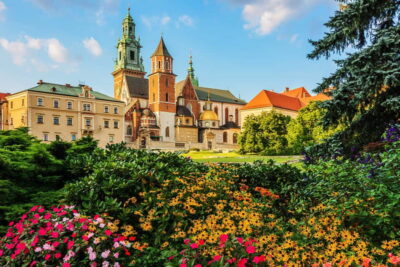
Inside Wawel Cathedral, the tour focuses on the church as a site of ceremonies, not just architecture. You are there for the big idea: Polish rulers were crowned here, and the Cathedral became a long-term stage for royal identity.
This is one of the reasons I think this tour works better than doing only the castle. When you visit the Cathedral with context, the art, burial areas, and symbolism start speaking to each other. The castle and Cathedral stop feeling like two unrelated must-sees and become one connected story about state and belief.
You also get time to understand the burial side of the Cathedral. The tour includes a look at the royal tombs, which leads to the next step.
Sigismund’s Belfry: going upstairs to see one of Poland’s heaviest bells
Next comes one of the most memorable parts of the outing: Sigismund’s Belfry. The tour includes access to the bell tower, and you go upstairs to see one of Poland’s largest and heaviest bells.
This is not just a “view from a tower” moment. The bell is a physical symbol. It calls attention to how the Cathedral complex functioned as a public, time-marking presence, not just a quiet religious interior.
A quick reality check: the tower involves climbing and the Cathedral is an active worship site. If you are claustrophobic or easily unsettled by enclosed stairs or crowded interior areas, you should take that into account. The tour is not listed as suitable for claustrophobia, and it is also not designed for wheelchair use.
Still, if you are comfortable with steps, this is one of the clearest “you are here, right now” experiences on the hill because you are literally inside the Cathedral’s vertical system.
Royal tombs in the crypts: seeing the afterlife part of the story
After you return from the tower, you will see the royal tombs in the crypts under the church. That is where the tone turns even more serious. You go from the power of ceremony and the sound of bells to the quieter reality of dynastic continuity and remembrance.
What I find useful about this included stop is that it gives you a concrete answer to a question you might have on your own: where exactly did the royals end up? Instead of wandering and guessing, you get a guided route that links the tombs back to what you learned about the Cathedral’s role.
If you like genealogy, symbolism, or just understanding why certain families mattered, this portion can feel like the emotional center of the whole hill.
The tour’s pace, and the guide factor that makes or breaks it
The tour is guided the whole way, with short guided moments and then set blocks for sightseeing in the castle and the Cathedral. The overall goal is balance: enough information to connect the dots, but not so much that you feel lectured while standing under vaulted ceilings.
The strongest praise from past participants is about the guide’s storytelling style and ability to explain without overwhelming you. Guides named Andrew, Andrij, Andrzej, and Andy are mentioned across different reviews, and the common thread is that they were warm, prepared, and able to answer spontaneous questions.
There is also a practical detail worth noting: one review mentions a small gift at the end. That is not the reason to book, but it supports the idea that the experience feels intentionally run, not like a rushed handoff.
Also, pay attention to this fact: the Cathedral is active. During important religious, state, or jubilee events, access to the Cathedral, royal tombs, or the bell tower may be suspended without the provider explaining why in advance. If that happens, the activity provider reserves the right to replace the Cathedral entrance with another visit within the castle complex.
This is one reason I like a guided tour here. If plans shift, you are not left staring at closed doors. Your guide can adapt within the rules they are given.
Price and value: what you get for about $55
At $55 per person for roughly 2.5 hours, you are paying for a focused, ticketed, guided visit through the most important Wawel spaces. That price covers more than “a walk with commentary.”
You get:
- Cathedral Church ticketing
- Access to Sigismund’s Belfry
- Viewing royal tombs in the crypts
- Entry into one permanent Royal Castle exhibition, depending on availability
- A professional live guide in English
- A tour structure that keeps you moving between castle and Cathedral
I think this price makes sense if:
- It is your first time at Wawel and you want the full story, not just highlights.
- You want access to the bell tower and tombs without figuring out the order yourself.
- You appreciate guidance that turns details into meaning, especially in a place where you could easily get lost.
It might feel less worth it if you prefer to roam independently for longer stretches, or if you already plan to spend several hours at Wawel on your own with a guidebook and no rush. For most people, though, the included access and the story-led format help justify the cost.
Practical do’s and don’ts for getting through Wawel smoothly
Wawel has rules, and they can affect what you can bring and how you move. For example, oversize luggage and baby strollers are not allowed, and pets are not allowed (assistance dogs are allowed). There are also clothing constraints: short skirts and sleeveless shirts are not allowed.
There is also a list of behaviors and item restrictions that affect everyday travel habits, like no smoking indoors, no flash photography, no video recording, and no umbrellas.
So my advice is simple:
- Dress with shoulders covered and avoid short skirts.
- Keep your bag small and travel light.
- Expect that photos may be limited in certain spaces and video recording may not be permitted.
If you show up properly prepared, the tour feels smooth. If not, you can lose time at the entrance sorting out what you can bring.
Who should book this tour, and who should think twice
This tour is best for people who want a guided overview of Wawel that includes the Cathedral, tombs, and the bell tower. If you enjoy stories, symbolism, and a clear “why this matters” explanation, you will probably feel the payoff quickly.
It is not suitable for:
- Wheelchair users
- People with mobility impairments
- People with claustrophobia
One past participant described extra care for a disabled aunt, including planning an accessible route and using an available lift. That can sound comforting, but the tour is still not listed as suitable for mobility needs. If accessibility is a top concern for you, it is worth asking the provider directly what route and facilities are available on your specific date.
If you are generally able-bodied and okay with stairs, this tour is a strong way to see the hill’s key spaces in a tight window.
Should you book the Wawel Castle and Cathedral guided tour?
Book it if you want Wawel Hill’s main attractions in one guided flow: Royal Castle interiors, the Cathedral where kings were crowned, the royal tombs, and the climb to Sigismund’s Belfry. At about 150 minutes and with included ticketing for major parts of the complex, it is a time-efficient way to make the site make sense.
Skip or rethink it if stairs and enclosed areas would make you uncomfortable, or if your mobility needs are significant. Also, if you are visiting on a date when major events are likely, remember that Cathedral access can be suspended without notice, and the provider may substitute a different visit within the castle complex.
FAQ
How long is the Wawel Castle and Cathedral guided tour?
The tour lasts about 150 minutes, so plan for roughly 2.5 hours on Wawel Hill and inside the castle and Cathedral.
Is the tour offered in English, and does it include skip-the-line access?
Yes, the tour includes a live guide in English. It also skips the ticket line.
What parts of Wawel are included in the ticket?
You get access to Wawel Hill, the Wawel Cathedral Church, Sigismund’s belfry, and the royal tombs (crypts under the church). You also get entry to one permanent exhibition in the Royal Castle.
Which Royal Castle exhibition will I see?
You will enter one permanent exhibition, chosen based on availability. The options listed are State Rooms, Royal Private Apartments, or Crown Treasury.
Can I go up to Sigismund’s Belfry on this tour?
Yes. Access to Sigismund’s belfry is included, and you will go upstairs to see the bell.
What happens if the Cathedral or bell tower is closed during an event?
The Cathedral is an active worship place. If access to the Cathedral, royal tombs, or the bell tower is suspended during important events or visits, the provider may replace the Cathedral entrance with another visit within the castle complex.
Is this tour suitable for wheelchair users or people with mobility impairments?
No. The tour is not listed as suitable for wheelchair users or people with mobility impairments, and it is also not suitable for claustrophobia.
Fresh Krakow reviews
- Krakow Skip The Line Wawel Castle & Old Town Guided Tour★ 5.0 · 3 reviews
- Krakow Zakopane Cable Car Vodka Cheese and Hot Springs Tour★ 3.5 · 3 reviews
- Museo Czartorisky : Visita in Lingua Italiana salta fila…★ 3.5 · 3 reviews
- Krakow: Zakopane and Thermal Pools Tour with Hotel Pickup★ 5.0 · 3 reviews
- Half-Day John Paul II Route Tour from Krakow★ 5.0 · 3 reviews
- Krakow: John Paul II Home & Black Madonna Sanctuary – Guided Tour★ 5.0 · 3 reviews
- 1-Hour Tour to Krakow’s Old Town by Electric Golf Cart★ 5.0 · 3 reviews
- Auschwitz and Birkenau WITHOUT GUIDE private transport from Kraków★ 5.0 · 3 reviews
Wawel Castle Tours, compared.

Old Town & Wawel Castle Walking Tour in English
Read our review →
Historic Krakow : Old Town & Wawel Castle Walking tour
Read our review →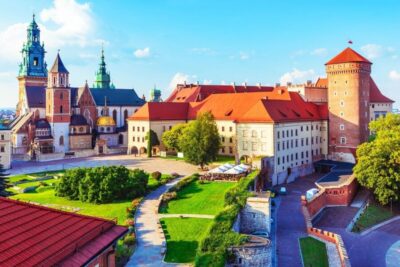
Skip-the-Line Wawel Castle Chambers Private Tour
Read our review →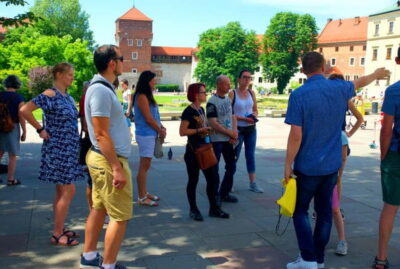
Browse the lists this tour appears in