Reviewed · GUIDED
Bydgoszcz: Old Town Guided Tour
Bydgoszcz feels like it has a secret life when you connect its river spots, sculptures, and old legends into one walk. This Old Town Guided Tour is a smart way to get oriented fast, starting right in the center and ending near King Casimir the Great. You get a live guide and a tight 2-hour loop that turns the city into a story you can follow.
I especially love the way Jędrzej Triebwasser (Glanc Przewodnik) delivers local history with humour. It is not dry facts, it is the kind of storytelling that makes you look up at buildings and sculptures and actually remember them. I also like the stop mix, from The Man Crossing the River to Fara Church, because it gives you both landmarks and the legends that explain why people care about them.
One possible drawback: this is a walking tour with set pacing, so if you want long, unhurried photo stops at every corner, you may feel slightly rushed. Still, it is built for getting your bearings and then continuing on your own with better context.
Quick hits on this Bydgoszcz Old Town walk
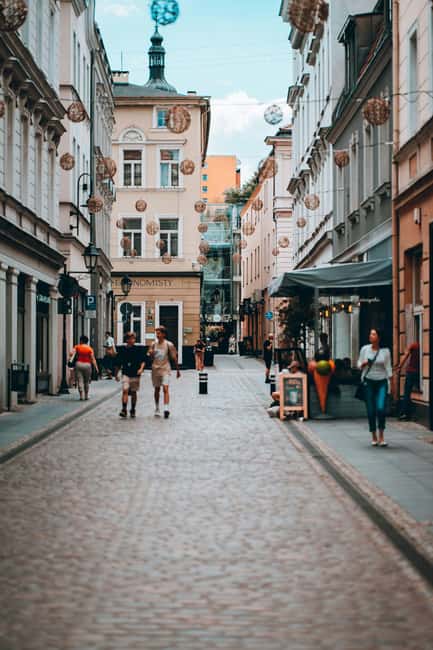
- Meet on Mostowa Street so the river story starts immediately
- Funny, humour-filled storytelling that keeps the pace light
- Sculptures that you actually notice like The Man Crossing the River and The Basket Weaver
- Old Market Square legends including Mr. Twardowski and Bloody Sunday
- Fara Church with a treasure tale tied to jewellery and gold coins
- Mill Island to Rother’s Mills and Bydgoszcz Venice for a cool river-and-industry connection
Getting oriented on Mostowa Street and The Man Crossing the River
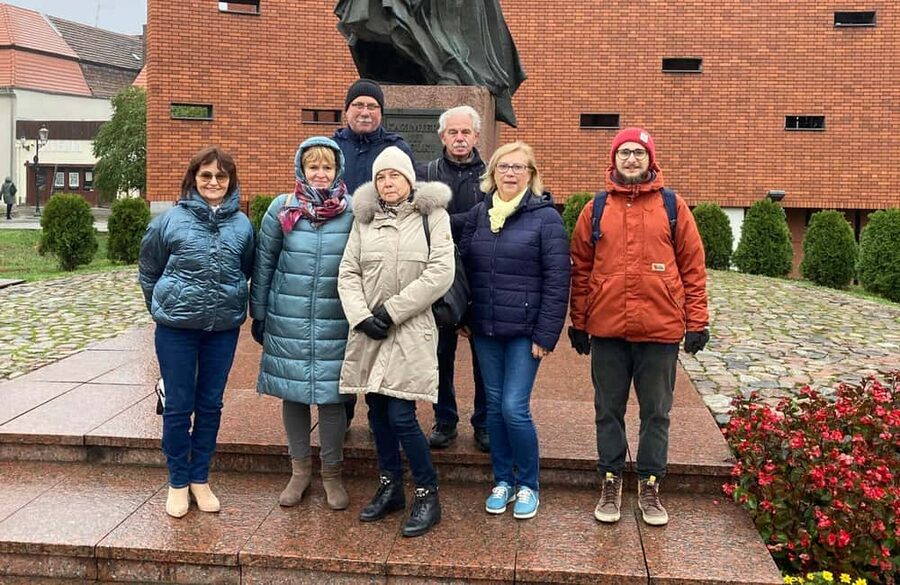
The tour begins in the heart of Bydgoszcz on Mostowa Street. That is a good start because you are already close to the places that tie the city together, especially the river connections that shape daily life and local pride.
From the first minutes, the guide sets the theme: Bydgoszcz is a river town, and the landmarks you see were placed for a reason. You will learn about The Man Crossing the River, a sculpture that acts like a visual shortcut to the city’s personality. After that, it is easier to look around and spot other details you might otherwise miss.
This opening also matters because it builds momentum. Instead of wandering in circles, you are walking with a map in your head before the tour reaches the big names like the church and the mills.
More Bydgoszcz bookings to weigh
- From Krakow: Auschwitz-Birkenau Guided Tour & Hotel Pickup
★ 4.5 · 33,358 reviews
The city model stop that compresses 700 years into something you can remember
Next you go to the city model stop. It is quick, but it is a very effective trick: you get an overview of the last 700 years of Bydgoszcz before you start moving point to point.
When a guide gives you that time-lapse view early, the rest of the walk clicks. You stop thinking of the Old Town as a set of isolated sights, and start seeing it as a city that grew, shifted, and reused space. Even if you only remember a few time anchors from the explanation, they help you make sense of why the route feels logical.
I like this approach because it reduces decision fatigue. You do not have to figure out what to pay attention to on your own, the tour hands you a framework.
Jatki Street sculptures and the Old Market Square legends
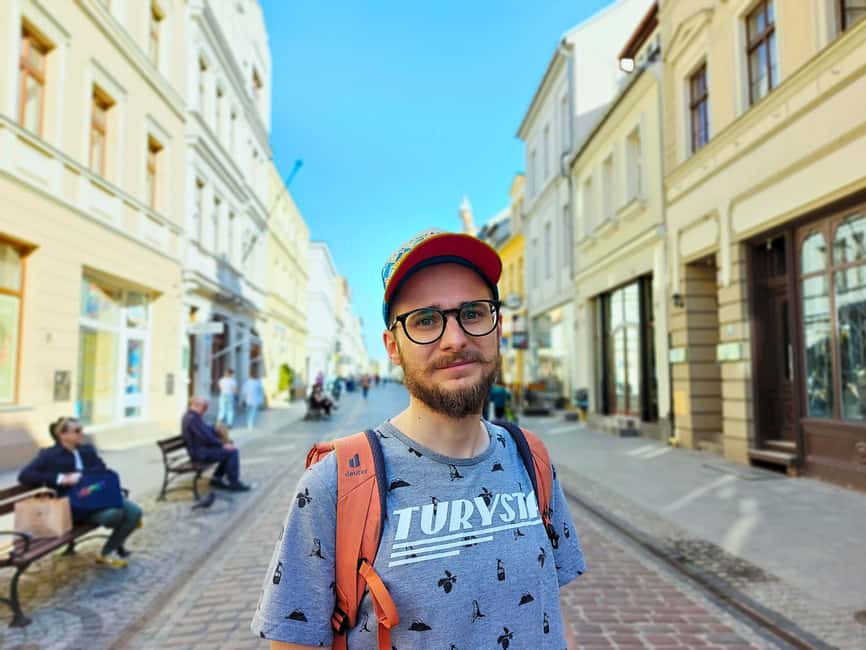
After the city overview, the walk moves to Jatki Street and introduces another balancing sculpture, The Basket Weaver. It is one of those spots where the sculpture is small enough to miss if you are rushing, but memorable once you know what you are looking for.
From there, you head to the Old Market Square, and this is where the tour leans hard into story. You will hear legends connected to Mr. Twardowski and Bloody Sunday. The details are presented like local lore, not like a lecture, and that is a key part of why people enjoy this tour.
There is also a practical benefit to these legend stops. Old Market Square is the kind of place you could walk through without much emotion. With the tour framing, you start noticing the human side of the space, which makes the square feel alive instead of just photogenic.
Fara Church and the treasure story with jewellery and gold coins
The Fara Church is next, and it is described as the most beautiful church in Bydgoszcz in the way the guide positions it during the walk. You are not only seeing the building, you are learning why it earned attention and reputation.
The guide also shares a specific story from inside the church’s fame: a real treasure full of jewellery and gold coins was discovered there. That kind of detail changes how you experience a church. You stop treating it as a static monument and start thinking about it as a place where real, surprising events happened.
This is also a good stop for slowing down just a bit. Even though the overall tour is timed, church visits naturally encourage quieter attention. If you like architecture and atmosphere, you will get more out of this segment than if you mainly want quick photos.
One note for your expectations: this is part storytelling, part sightseeing. If you want strict art-history depth on every decorative element, you might want to follow up with independent time after the tour. If you want the big picture plus a compelling narrative, this stop hits the mark.
Mill Island, Rother’s Mills, and why Bydgoszcz is called Bydgoszcz Venice
Then the route heads to Mill Island, where you visit one of the city’s top attractions: Rother’s Mills. You learn that flour was produced here about 170 years ago. That is a simple timeline detail, but it ties the river to everyday work and industry, not just scenery.
Today, the same mill area operates as a center for science and culture. I like this kind of reuse because it gives you continuity. You are not stuck in the past, and you are not only looking at ruins or old walls. You are seeing how a working river site became a modern place to learn and gather.
Next comes Bydgoszcz Venice, another river-linked stop. The nickname might sound like a fun marketing line, but in context it works because it points you toward how water shapes Bydgoszcz’s feel. The guide uses these river stops to make the city’s identity easier to grasp.
If you enjoy cities where waterways are more than background, you will probably rate this part highly. It is the section where the tour’s theme, river connections, becomes obvious rather than theoretical.
Closing on Długa Street near King Casimir the Great
The final stretch is a walk along Długa Street, finishing near the monument of King Casimir the Great. This ending is practical, because you are placed near another anchor point in the Old Town area, so you can keep walking without feeling like you have to backtrack.
Ending with a king monument also gives the tour a satisfying arc. You started with the river and a modern-feeling sculpture, moved through legends and a major church, then finished at a civic identity point tied to the long sweep of local time.
After a 2-hour guided route, I find this kind of finish helps you turn the experience into a plan for the rest of your day. You know the story beats already. Now you can explore with confidence.
Price and value: what $111 per group up to 25 is really buying
The price is listed as $111 per group up to 25, and the tour lasts about 2 hours. That phrasing matters, because it suggests you are paying for the guide service for your group size, not per person in the way many city tours do.
For smaller groups, this can be a decent value because you are buying guided storytelling without the usual per-head climb. Even if your group is closer to the upper limit, you still benefit from having one guide explain the key landmarks and legends in a structured route.
You are also paying for time efficiency. Instead of figuring out what to see first on your own, you follow a curated path that makes the city easier to understand. When you consider that the tour includes guided narration in English or Polish, plus the core landmark sequence from sculptures to church to mills, the value looks more reasonable.
In plain terms, I would book it when you want orientation plus fun storytelling. I would not book it if you only want to check off a list of sites with minimal explanation.
Who this tour fits best (and who might want something else)
This is best for you if you enjoy a mix of city sights and story. The tour leans into humour and legends like Mr. Twardowski and Bloody Sunday, so it rewards curiosity and people-watching in the Old Town.
It also works well if you are short on time. Two hours is enough to learn the city’s main themes, but not so long that it dominates your entire day. If you plan to do more independent sightseeing afterward, this tour sets you up with better questions to ask and better places to return to.
If you prefer silent museum-style experiences or highly technical architecture lectures, this tour might feel lighter than you want. Still, even then, the structured route and the specific stories around key landmarks are useful, because they give you a way to read the city without getting lost.
Making the most of your 2-hour walk
Because this tour is paced, your best move is to treat it like a guided route, then shift into exploration mode immediately after. After you finish near King Casimir the Great, look for chances to circle back to any stop that caught your attention.
A smart way to prepare is to keep an eye out for the sculpture moments. The Man Crossing the River and The Basket Weaver are the kinds of details you can walk past in any city tour. Here, the guide gives them meaning, so you will actually want to look at them twice.
Also, since the tour includes both English and Polish live guiding, pick the language you can follow comfortably without straining. Storytelling lands better when you do not feel like you are translating in your head.
If you are the type who likes to collect small local names, you will probably appreciate the legend references. They make the Old Market Square feel less like a generic open space and more like a stage for local memory.
Should you book the Bydgoszcz Old Town Guided Tour?
Yes, if you want a fun, story-driven introduction to Bydgoszcz with a clear route and a guide who knows how to keep things light. I especially recommend it for first-timers, people visiting for a short stay, and anyone who likes river towns where industry, architecture, and legends all mix together.
Book it if you value humour, sculptures that make sense only once someone explains them, and a route that leaves you inspired to keep exploring. Skip it only if you need a slow, freeform walk or deep technical detail at every stop. For everyone else, this is a solid way to get under the skin of the Old Town in just 2 hours.
FAQ
How long is the Bydgoszcz Old Town guided tour?
The tour lasts 2 hours.
Where does the tour meet?
The meeting point is in the heart of the city on Mostowa Street.
What languages are offered?
The live tour guide is available in English and Polish.
Is this tour private?
Yes, it is a private group.
What does the tour cost?
The price is $111 per group, up to 25 people.
What is included, and can I cancel?
The tour includes a guided tour, and you can cancel up to 24 hours in advance for a full refund. There is also a reserve now and pay later option.
Fresh Bydgoszcz reviews
- Bydgoszcz: River Cruise with local Wine and Cheese Tasting★ 5.0 · 3 reviews
Guided, compared.
Auschwitz-Birkenau Guided Tour & Hotel Pickup
Read our review →
Auschwitz Guided Tour with Optional Hotel Pickup
Read our review →

Krakow to Auschwitz Birkenau Guided Tour with Transfer and Ticket
Read our review →
Wieliczka Salt Mine Fast-Track Ticket & Guided Tour
Read our review →
Schindler’s Factory Ticket and Guided Tour Option
Read our review →