
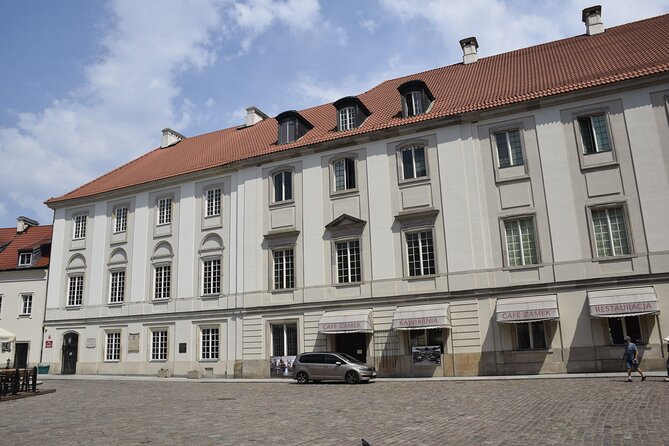
Reviewed · WARSAW TOURS
A Journey Through Old Town Warsaw
Old Town Warsaw has a way of turning pictures into places you can actually stand in. This tour is interesting because you walk the core sites of Old Warsaw and New Warsaw, then connect the dots between royals, rebels, and everyday city life. I love the clear, story-driven route and the way the guide brings landmarks to life with exact details. I also love that you get smart context in English without it turning into a lecture. A possible drawback: it is a walking tour, so if you want lots of sitting breaks, you may need to plan for that.
The highlight for me is how the guide, Cezary Gembarzewski (listed as Cesar), makes each stop feel purposeful. The route covers everything from royal power symbols to a wartime survival object, and the pacing fits an easy half day. One thing to consider is that entrance tickets, food, and transport are not included, so you will want to budget a bit extra if you plan to go inside museums or specific churches.
Key things that make this tour worth your time
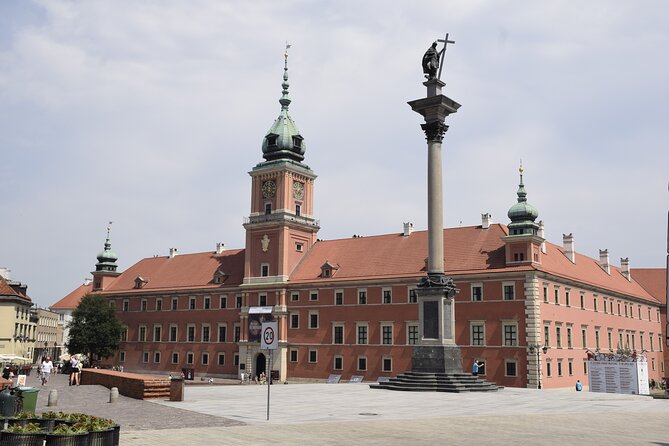
- Sigismund’s Column at Plac Zamkowy sets the stage for what Old Warsaw used to be
- Royal Castle area history is explained through what stood there before
- A mermaid saved from the Warsaw Uprising gets real attention at the Museum of Warsaw
- The Barbican is your walking lesson in how the city used to be physically divided
- Kanonia Square’s historic bell brings a neat sound-of-the-place detail
- Chopin’s heart in the Church of the Holy Cross gives the walk a powerful ending
Old Warsaw vs. New Warsaw: why this tour starts in the right place
Warsaw’s Old Town is not just one postcard neighborhood. Up until the end of the 18th century, Warsaw basically meant Old Warsaw. Later, the New Town got folded in, and the two sides used to feel like separate cities.
That matters because the tour route actually follows that logic. You will hear about how each side had its own coat of arms, including Old Warsaw’s mermaid and New Warsaw’s lady with a unicorn. When you understand that old split, the streets stop feeling random and start feeling like they were designed for a reason.
This is a walking tour, but it is also a guided reading of the city. You are not just looking at sights, you are learning what those sights were for, and who they served.
More to book in Warsaw:
- Warsaw: Chopin Concert in the Old Town
★ 4.8 · 2,287 reviews - Warsaw: Traditional Galar Cruise on The Vistula River
★ 4.6 · 1,640 reviews - Warsaw: Old Town Highlights Walking Tour in English
★ 4.7 · 1,516 reviews
Getting oriented at Sigismund’s Column and the Royal Castle area
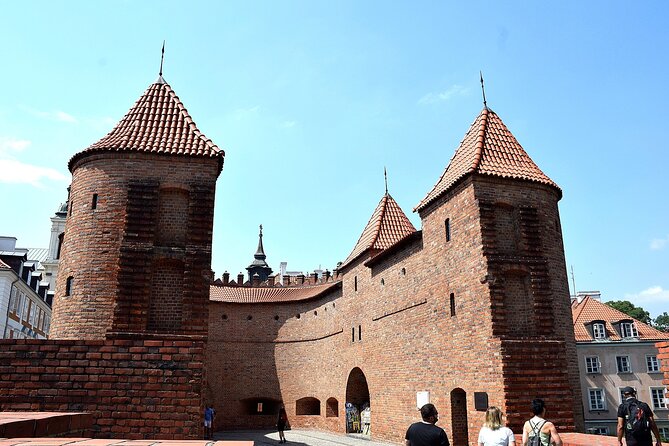
The tour begins at Sigismund’s Column, right by Plac Zamkowy. It is a strong visual starting point, and the guide uses it to frame the royal history of the area.
From there, you move toward the Royal Castle zone. The key detail here is that the famous castle spot was formerly the residence of Masovian dukes before later changes. That is a small fact, but it completely reshapes what you think you are looking at. Instead of seeing one era stacked on another, you start seeing a chain of power.
If you like getting your bearings fast, this start helps. You get a historical spine early, so later stops feel connected, not like a list of highlights.
One practical note: your meeting point is a public square area near transport, so it is usually straightforward to get there and regroup after the walk.
St. John’s Cathedral: tombs of the Masovian dukes
Next comes St. John’s Cathedral. This is one of those places where you immediately understand the value of a guide, because the important stuff is not always obvious at a glance.
You will see the tombs of Masovian dukes. The guide explains how these burial sites fit the political story of the region. Even if you are not a church person, this stop works because it is not only about architecture. It is about who held authority here and how that authority wanted to be remembered.
Drawback check: cathedrals can be quieter and sometimes more rules-based than outdoor streets. If you tend to browse slowly, build in a little patience. The guide does not rush, but you still want to follow the place.
Museum of Warsaw and the mermaid saved from the Warsaw Uprising

Then you get to the Museum of Warsaw. This is where the tour gets emotionally real.
Inside, you can admire the historic mermaid saved from the Warsaw Uprising. That detail is not just interesting trivia. It is the kind of object that turns history from an abstract concept into something you can almost picture being protected, carried, and preserved.
The guide connects this mermaid to the broader Old Warsaw identity, since the mermaid is part of the old coat of arms story. So you are not just seeing an artifact. You are seeing a symbol tied to the neighborhood you are walking through.
If you want a balanced experience, this stop hits a sweet spot. It is historical and meaningful, but not so heavy that the entire tour becomes solemn. You still get the narrative structure, which keeps it from feeling like random museum time.
Another way through a Warsaw day:
- Warsaw Concert: Chopin – Painted by Candlelights with Wine
★ 4.8 · 1,442 reviews - Warsaw: City Sightseeing Hop-On Hop-Off Bus Tour
★ 3.6 · 1,415 reviews - Warsaw: Highline Warsaw Entry With 360° Views & Rooftop Bar
★ 4.4 · 1,297 reviews - Warsaw: POLIN Museum of the History of Polish Jews Ticket
★ 4.7 · 1,142 reviews
The Barbican: why this fortification split New and Old Warsaw
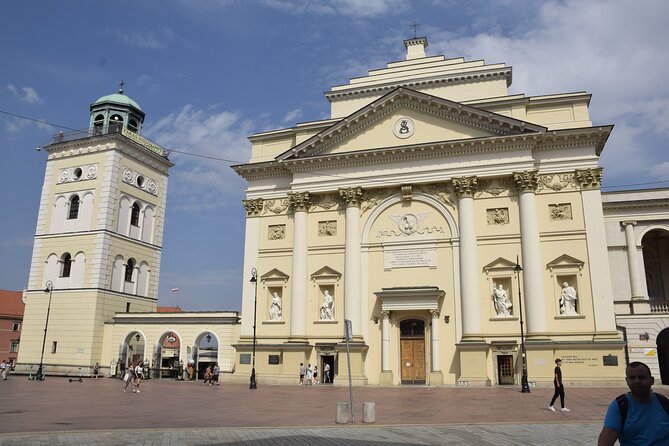
After the museum, you head through the Barbican. This is a former fortification, and it used to separate New and Old Warsaw.
Walking past it feels different than reading about it. You can sense the defensive purpose, and the guide’s explanations help you see why the Barbican mattered in everyday life. It was not just a wall. It was a boundary that shaped movement and identity.
The Barbican stop is also useful because it gives your feet a break from constant straight-ahead street browsing. You change pace as you move along a more distinct structure, and the guide ties it back to the old city layout.
A small consideration: fortification areas can mean more stone surfaces and open space. Wear shoes you trust. I would rather you bring comfortable walking footwear than hope your sneakers are good enough.
Kanonia Square and the historic bell detail
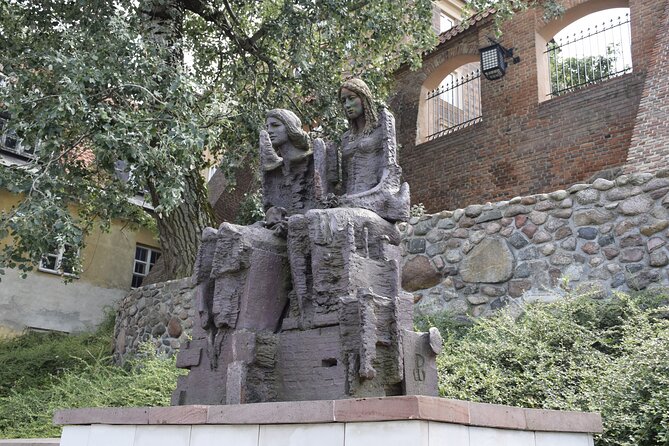
Then you reach Kanonia Square, where you will see a historic bell. This is one of those stops that many walking tours skip because it sounds minor.
Here, it is not treated as minor. The bell becomes a clue about how the city marked time and gathered attention. You get the sense that old squares were practical tools for daily rhythm, not just pretty backdrops for photos.
If you like tours that include small, oddly specific details, this one delivers. You end up with a better sense of place, not just famous landmarks.
Church of the Holy Cross: Chopin’s heart as a closing moment
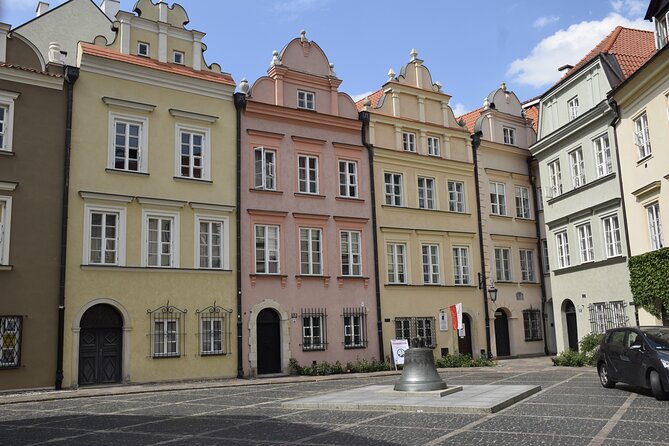
The final major stop is the Church of the Holy Cross, where Chopin’s heart is embedded.
This is the kind of ending that works on almost everyone. Chopin is a global name, but the tour makes the connection feel local and personal rather than vague. You also get a strong sense of how art, national identity, and memory all intersect in Warsaw.
Timing note: the entire tour runs about 3 to 4 hours. That is long enough to connect the story end-to-end, but not so long that you feel dragged from one site to the next with no breathing room.
At the end, the activity finishes back at the meeting point.
Price and what $72.01 really buys you
At $72.01 per person for about 3 to 4 hours, the price can look like a lot at first glance. But here is what you are actually paying for: a guide and their on-the-ground knowledge.
That is important. This tour is not positioned as a do-it-yourself route. It is designed around interpretation, names, and connections. You get the narrative glue that turns scattered sights into a coherent walk, and the guide’s skill is repeatedly praised.
The feedback is consistently strong about Cezary Gembarzewski. People highlight that he is extremely knowledgeable, personable, patient with questions, and has excellent English. One review also stresses his punctuality and courtesy. Another mentions that even when a solo participant joined, he stayed attentive.
Because entrance tickets are not included, you should assume the value here is the guiding itself. If you want to add museum entries or other paid spots, budget accordingly. If you plan to keep things simple and focus on what is available on the walking route, the base tour price still makes sense.
In short: you are buying a guided storyline, not a stack of included admissions.
What the 3 to 4 hours feels like in practice
This is a private tour, so it is just your group with the guide. That changes the feel. You are less likely to be herded through stops at a pace that does not match your curiosity.
English is offered, and most people can participate. Service animals are allowed, and the starting area is near public transportation, so logistics tend to be manageable.
The real win is the flexibility in questions. The guide is described as patient, even with lots of curiosity. If you like to ask what something meant back then, or why a monument looks the way it does, you will probably feel comfortable here.
One drawback to keep in mind: since food and drink are not included, you may want to plan a meal before or after. If you start at 11:00 am, lunch timing depends on your pace. I like to carry a small snack just in case I end up running a bit late.
How to get the most out of each stop (without forcing it)
You will get the biggest payoff if you go in ready to connect details. Here is how I would approach it:
- When you see Sigismund’s Column, treat it as your timeline anchor. Ask what you are seeing and why that area mattered.
- At St. John’s Cathedral, focus on the tombs of the Masovian dukes. That is where the story of authority and memory becomes visible.
- At the Museum of Warsaw, give extra time to the mermaid saved from the Warsaw Uprising. Look at it like a survivor object, not just an exhibit.
- At the Barbican, notice the boundary idea. The guide’s explanations make more sense once you mentally picture movement being restricted.
- At Kanonia Square, pay attention to the bell. It is a reminder that city life was managed through sound and schedule.
- At the Church of the Holy Cross, lean into the emotional ending with Chopin’s heart. It helps the tour land with meaning.
The guide should handle the story thread, but your attention still matters. If you are checking your phone every two minutes, the points of connection will slip by.
Practical tips for a smooth Old Town walk
A few small things can make the tour feel easier from start to finish:
- Wear shoes with good grip. You are on streets and stone surfaces, and the walk is long enough to matter.
- Bring water. Food and drink are not included, so do not count on buying something mid-route unless you want to take detours.
- Have your questions ready. The guide is praised for being patient, so use that.
- Plan for a half-day window. It starts at 11:00 am and lasts about 3 to 4 hours, so keep evening plans flexible.
Also, you will get a mobile ticket, so have your device ready when you meet. Confirmation is received at booking, which typically reduces last-minute stress.
Should you book this Old Town walking tour?
I think this is a smart booking if you want a guided, meaningful introduction to Warsaw that goes beyond the obvious. The reason is simple: the route ties together Old Warsaw and New Warsaw, and you end with both a political memory stop and a cultural one.
Book it if:
- You care about context, names, and how different eras connect.
- You want a tour led by Cezary Gembarzewski, known for excellent English, humor, and patience.
- You prefer a private format where you can ask questions without feeling rushed.
Skip it or plan differently if:
- You dislike walking tours and need lots of breaks.
- You expect entrance tickets or meals to be included in the price.
If you want to understand why Warsaw’s Old Town feels the way it does, this is the kind of half day that helps you see the city with better eyes afterward.
Fresh Warsaw reviews
- Deluxe Polish Food Tour Experience in Warsaw★ 5.0 · 19 reviews
- FSO Gunrange, Shooting Package US ARMY★ 5.0 · 19 reviews
- Gdansk and Malbork Castle Small Group Tour from Warsaw with Lunch★ 4.5 · 20 reviews
- Warsaw Old Town: Spy-Themed Walk & Game with Host★ 4.5 · 19 reviews
- Warsaw Praga Guided Historical Walking Tour★ 4.5 · 21 reviews
- Warsaw: Extreme Shooting Range Experience with Transfers★ 5.0 · 21 reviews
- Warsaw : Private Walking Tour With A Guide ( Private Tour )★ 4.4 · 22 reviews
- Fryderyk Chopin’s Birthplace Half Day Private Tour from Warsaw★ 5.0 · 22 reviews
Warsaw Tours, compared.


Traditional Galar Cruise on The Vistula River
Read our review →
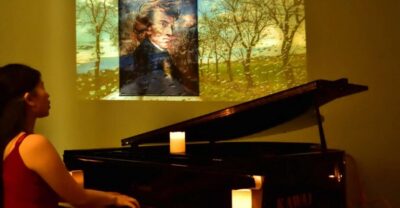
Warsaw Concert: Chopin – Painted by Candlelights with Wine
Read our review →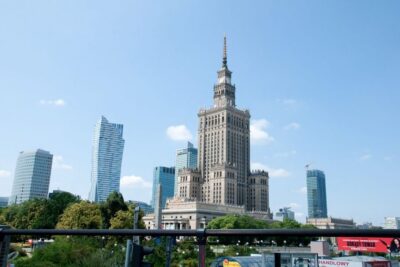

Highline Warsaw Entry With 360° Views & Rooftop Bar
Read our review →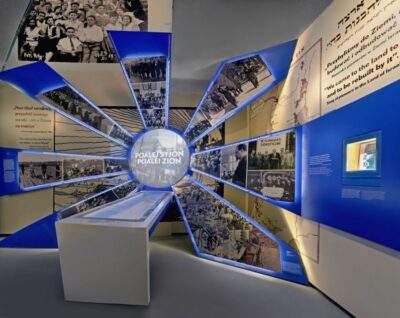
POLIN Museum of the History of Polish Jews Ticket
Read our review →
Browse the lists this tour appears in