
Reviewed · WARSAW TOURS
From Warsaw: Guided Tour of Treblinka Camp
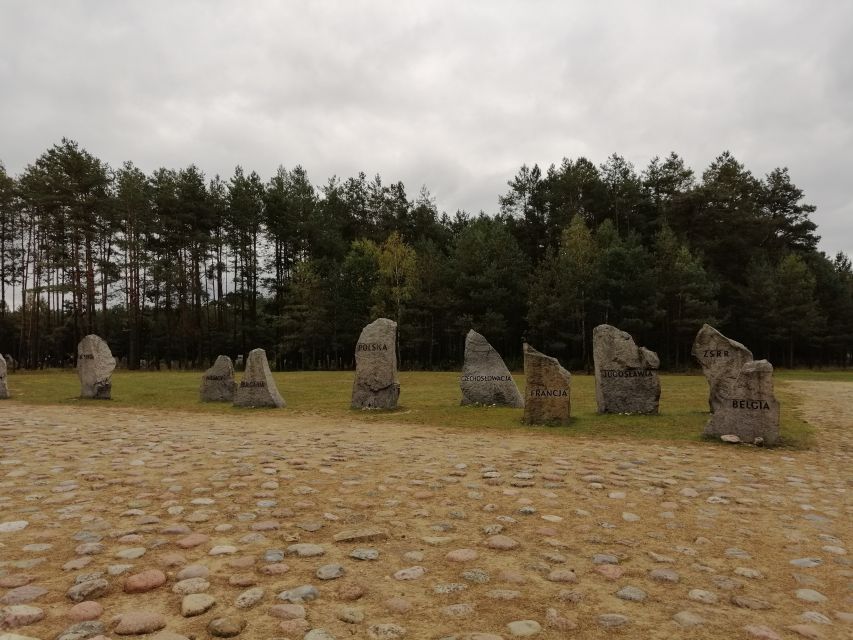
A visit to Treblinka is interesting because the place you see is mostly what survived on purpose. This extermination camp was hidden in a forest northeast of Warsaw, and even today the story lands through traces, ruin lines, and testimony more than through intact buildings.
I love two things here. First, the skip-the-line tickets mean you start learning quickly instead of spending your limited time stuck outside. Second, the English-speaking guide, whether it is Janusz or Leszek, keeps the day structured and human, with room for questions and connections back to Warsaw. One drawback to consider is timing, with a 6-hour total that includes travel, so you may feel a little pressed if you want extra time in every corner of the memorial.
Key highlights you should care about
- Hotel pickup and drop-off from Warsaw to keep the day easy and respectful
- Skip-the-line tickets and guide assistance to avoid idle waiting
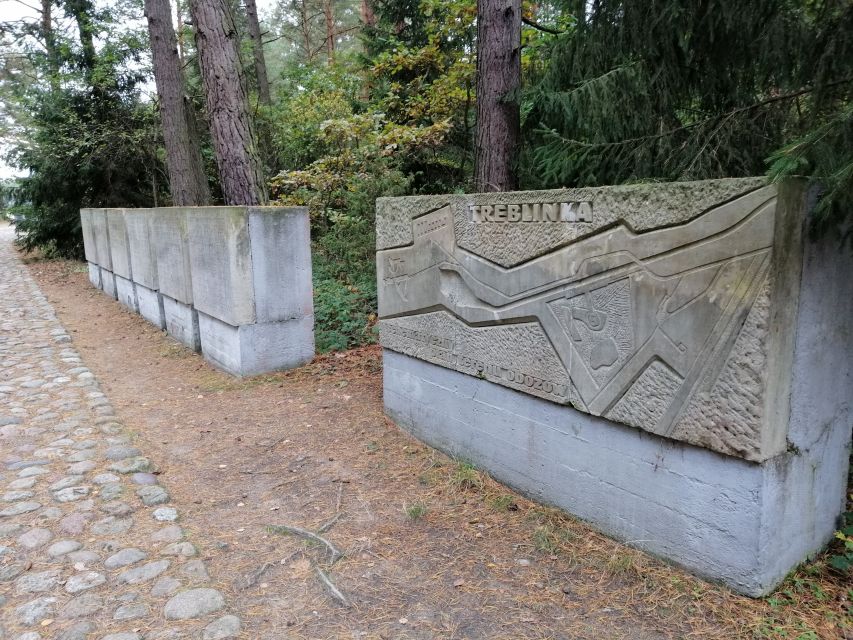
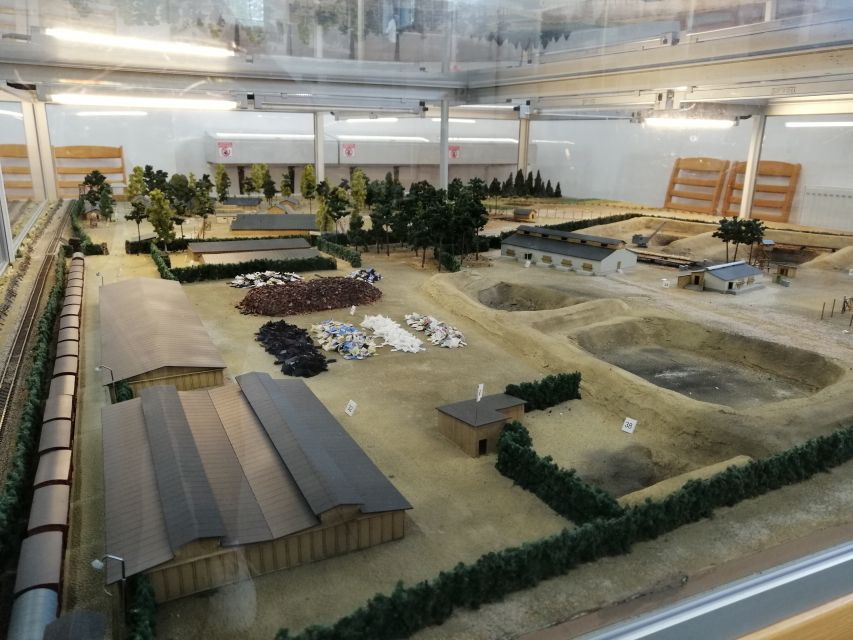
- Treblinka museum visits, including a miniature model to understand camp layout
- Penal Labour Camp ruins and a powerful “in the shoes” style memorial experience
- The August 1943 revolt story, centered on 840 prisoners who resisted
- Guides who keep it personal, with clear explanations and space to ask tough questions
Getting from Warsaw to Treblinka without wasting your day
The tour is built as a true day trip, with pickup from your accommodation and a return drop-off later the same evening. You meet your driver and guide, then settle into an air-conditioned vehicle for the drive out of Warsaw and toward the forest setting where Treblinka sits.
This matters more than it sounds. When you only have a half day, logistics can steal time from the part you came for. Here, the travel is handled so you can focus on the meaning of the site, not on figuring out routes, tickets, and schedules.
You’ll also notice the tone of the day right away. Many people book this tour because they want guidance that stays respectful, clear, and grounded. Guides you might meet, such as Jan or Janusz, are known for answering questions directly, and keeping the pacing steady as the story becomes heavier.
One practical note: the drive includes a briefing, and sound can be an issue depending on where you sit. If you are at the back of the vehicle or you’re sensitive to muffled audio, try to choose a seat that helps you hear the guide clearly.
Treblinka’s real setting: forest near Warsaw, part of Operation Reinhard
Before you arrive, the guide typically sets the framework. Treblinka was an extermination camp operated by Nazi Germany in occupied Poland during World War II. It ran from 22 July 1942 to 19 October 1943 as part of Operation Reinhard, the deadliest phase of the Final Solution.
Geography is part of the lesson. Treblinka was located in a forest northeast of Warsaw, about 4 kilometers south of the Treblinka train station, in what is now the Masovian Voivodeship. The site’s distance from the city helps explain why victims were sent there with a kind of systematic distance from their homes and communities.
The numbers are staggering, and the guide will put them in context. Estimates say between 700,000 and 900,000 Jews were killed in Treblinka’s gas chambers, along with around 2,000 Romani people. More Jews were killed at Treblinka than at any other Nazi extermination camp besides Auschwitz.
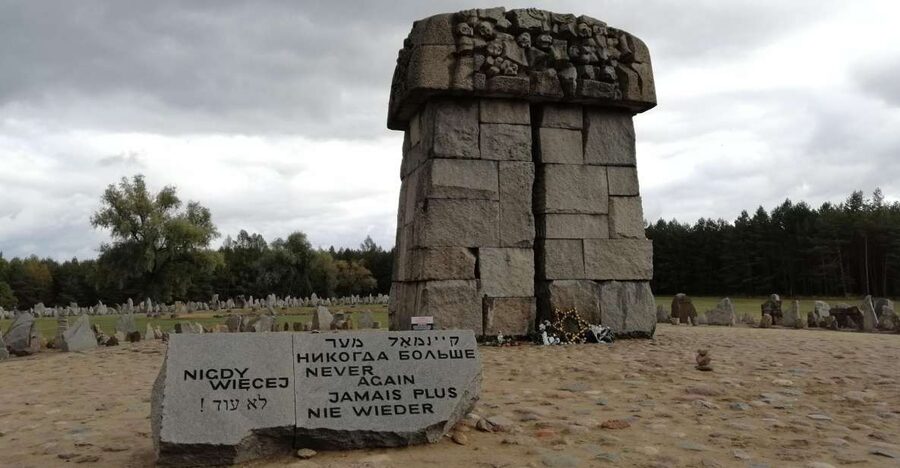
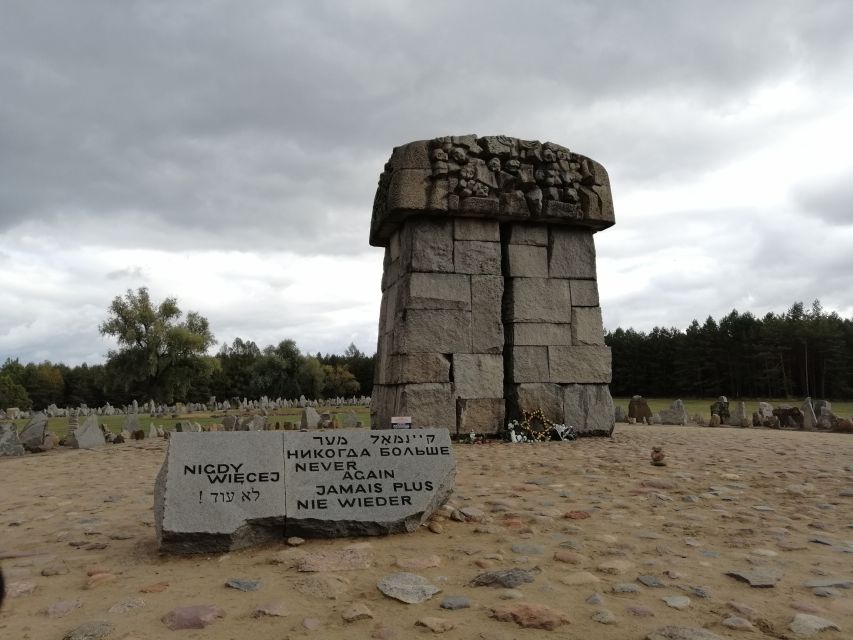
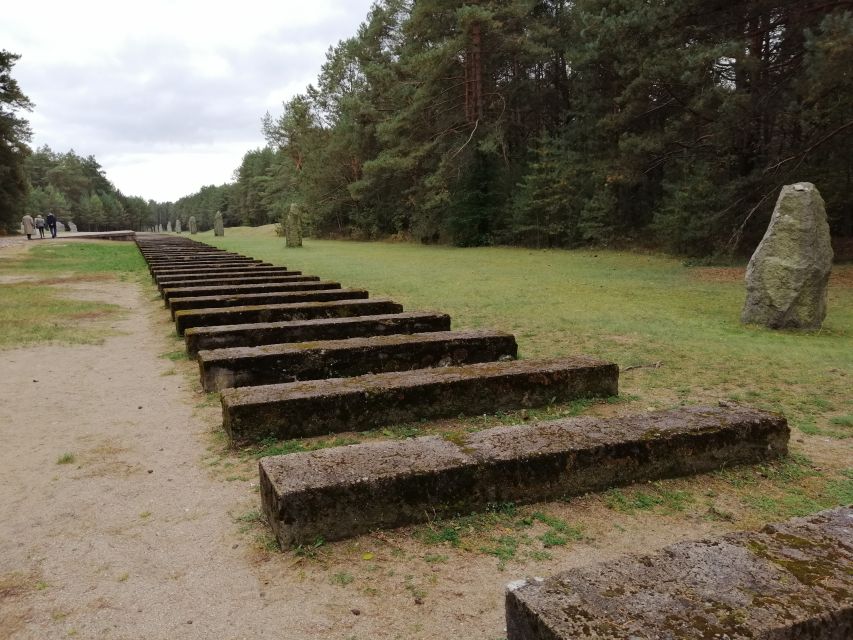
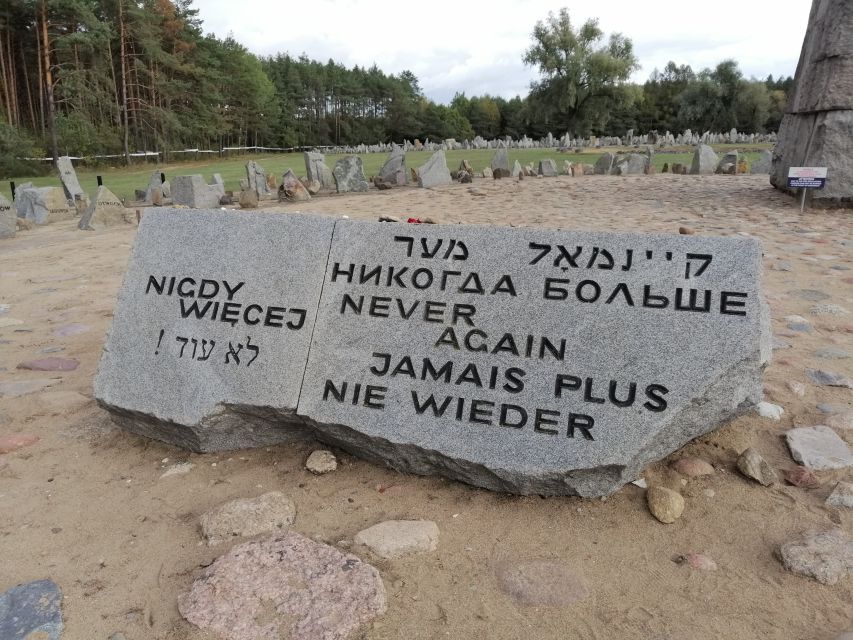
That context matters because Treblinka is different from camps you might picture in your head. Here, you often walk through a memorial landscape where little remains of what once stood. The experience asks you to hold multiple ideas at once: the machinery of murder, the human choices around it, and the fact that the Nazis tried to erase evidence by flattening the site. Learning this with a guide helps you avoid feeling lost, or worse, feeling like you are staring at empty space with no guide rails.
More to book in Warsaw:
- Warsaw: Chopin Concert in the Old Town
★ 4.8 · 2,287 reviews - Warsaw: Traditional Galar Cruise on The Vistula River
★ 4.6 · 1,640 reviews - Warsaw: Old Town Highlights Walking Tour in English
★ 4.7 · 1,516 reviews
Skip-the-line entry: why it is worth it at memorial sites
Skip-the-line tickets sound like a convenience item, but in practice they protect your attention. Memorial sites can have controlled entry and busy periods, and this tour avoids you losing momentum before the real learning starts.
Once you arrive, you are not left to assemble information on your own. You have a guide who can connect what you see to what you just learned on the drive. That continuity is a big deal at Treblinka, where the physical evidence is limited and the meaning comes from interpretation.
Guides often help you get your bearings fast. A strong example from guides in recent departures is the way they use maps and personal records, like memoir references, to explain how Treblinka worked and how the story tied back to Warsaw. That is exactly what you want when the place itself can feel fragmentary.
You will also get ongoing assistance from your guide while you move through museum areas and ruins. It is not just walking and listening. It’s a guided process that makes the order of the day make sense, especially if you are seeing Treblinka for the first time.
The museum and the miniature model that fixes the layout in your head
One of the clearest wins of this tour is time in the museum. The museum focuses on the daily life of inmates and includes materials that help you understand what the camp was designed to do.
You’ll also see a miniature version that shows the architecture. For many people, that is the key turning point. When you only look at ruins, your brain wants to guess. The model gives you an anchor, so later, when you walk among remains, you are not just looking at stones. You’re placing what you learn into a camp-shaped picture.
If you enjoy watching short films inside museum spaces, you might find your route includes films as part of the museum experience. Even if you normally skip videos on trips, this one tends to help connect names, movements, and machinery of the camp into a timeline you can follow.
This is also where a guide’s style really shows. Guides like Janusz and Leszek are praised for keeping explanations clear without turning the day into a lecture marathon. You can ask questions, and they tend to answer in a way that helps you connect what you see to the bigger historical picture.
Because this is a memorial site, it is also fine if you need pauses. The museum gives you controlled pacing, and the guide can adjust your movement from room to room.
Walking the Penal Labour Camp ruins, and the “20,000 inmates” memorial effect
After the museum, you walk among the ruins of the Penal Labour Camp. This part of Treblinka can hit differently because it pulls the focus slightly away from the gas chamber narrative and into the forced labor and confinement system.
There is an interactive element described as getting in the shoes of about 20,000 inmates held there between 1941 and 1944. The idea is simple but powerful: the memorial uses your body position and the sense of scale to make numbers feel less abstract. You feel the weight of repetition, and the way the camp functioned through mass processing.
Practically, this is why comfortable shoes matter. You will be walking among uneven, memorial-design spaces, and you will likely do it with a slow pace because you will want to read and reflect as you go. If your feet tend to tire easily, plan for that. This tour is only 6 hours total, so you don’t want pain to cut your attention short.
Another value of this section is that it helps you understand the broader system the Nazis used. Treblinka was not only a place where people were killed. It was part of an integrated machine that used detention, transport, labor, and terror to crush resistance and erase lives. When you see the labor component, you understand why the story includes both extermination and the daily humiliations that came before it.
More Warsaw bookings to weigh
- 3-Hour Guided Cycling Tour of Warsaw
★ 4.9 · 624 reviews - Warsaw: Old Town Guided Walking Tour
★ 4.9 · 599 reviews - Half-Day Polish Food Walking Tour with Guide and Dinner
★ 4.5 · 381 reviews - From Warsaw: Guided Tour to Auschwitz-Birkenau and Krakow
★ 4.4 · 363 reviews
The 840-prisoner revolt in August 1943: why resistance belongs in the story
You also hear stories about the desperate courage of 840 prisoners who dared to rebel in August 1943. For many visitors, this is the emotional shift that keeps the tour from becoming only a catalog of horror.
Resistance at Treblinka matters because it restores human agency, even in circumstances designed to remove it. You are not only learning what happened to victims. You’re also learning that people tried to fight back and that their choices still matter to the way we remember the camp today.
A good guide will connect this revolt to the larger context of Operation Reinhard, and to the mechanics of how guards, prisoners, and transport schedules created opportunities for action. You do not need to be a scholar to follow. The guide’s job is to make the story intelligible without flattening its complexity.
This is also where personal, attentive guiding really helps. When you are standing in silence, you want answers that do not feel canned. Guides who can explain the revolt’s meaning, and why it is remembered, tend to make the visit feel coherent rather than fragmented.
The personal touch: guides like Janusz, Marek, and Mark make the day feel earned
A lot of Holocaust travel disappoints because the guide sounds like a recording. This tour often goes the other direction. Guides are praised for being attentive, answering questions, and keeping the day personal, with details that help you connect emotionally without turning away from facts.
You might meet guides such as Janusz, Leszek, or Mark, and drivers who keep the journey smooth, like Marek or Leszek on the driving side in some departures. Those names show up because the service experience can be better when the guide understands both history and how people process it.
You’ll also appreciate the small-group feel that can happen on these day trips. When the group is small, questions are easier. You don’t have to shout. You don’t have to wait for the one big Q and A moment at the end. Instead, the guide can respond as the story moves, which helps your brain stay with the tour rather than getting lost in the gaps between exhibits.
One more detail people often notice is that the pace is thoughtful. Even though you have a schedule, the guide tends to avoid rushing you through the hardest parts. That is not just kindness, it is practical. At Treblinka, you need time to absorb what you see, not only time to stand there.
Price and value: is $134 for 6 hours fair?
At $134 per person for a 6-hour half-day, you are paying for more than entry tickets. The tour includes hotel pickup and drop-off, an English-speaking driver, skip-the-line tickets, and a guided tour inside Treblinka. Food and drinks are not included.
So what is the value? It’s the combination of time saved and meaning added. Without a guide, you can visit, but you lose the structure that helps you interpret ruins, models, and memorial choices. The skip-the-line part also helps you avoid wasting your limited hours before the tour even starts.
The price can feel higher if you are traveling solo, especially compared with “cheaper” self-guided day trips. But if you are coming for Holocaust history in a place where the physical evidence is limited, the guided portion is the difference between seeing a memorial and understanding a system of terror.
Bring snacks or plan a meal later, because food is on you. The tour is long enough that you will likely feel hungry if you skip meals, and there is no included lunch time built into the tour data. Comfortable shoes and water also matter because a heavy day works better when your body is cared for.
Who should book this Treblinka tour from Warsaw?
Book this tour if you want a guided day trip that connects Treblinka to Warsaw, rather than treating the camp as an isolated site. It is especially a good fit if you like historical context and structured explanations, or if you are the type of traveler who asks questions when something does not add up.
It also works if you want the memorial experience organized around key elements: the museum, the miniature architecture, the penal labor ruins, and the revolt story. Even if you are well-read, that kind of structure can make the visit clearer.
The main reason you might rethink is if you want a longer, slower visit with lots of free time to wander. With only 6 hours total, you might feel that you need more time in the camp grounds if you are a meticulous reader or you prefer a self-paced approach.
Also consider your personal needs for sound and pacing. If you know you struggle to hear in vehicles, pick seats that help and ask your guide to repeat or clarify as needed.
Should you book the Treblinka Camp guided tour from Warsaw?
If your goal is a meaningful, well-structured day trip, I think this is a strong booking. The skip-the-line entry plus guided interpretation is exactly what you want at a site where little remains intact, and where the story lives in design choices and testimony. Add the hotel pickup and drop-off, and the day stays manageable.
Do be realistic about the schedule. Treblinka is the kind of place where you may want extra time, but this is designed as a half-day experience. If you can accept that, and you come prepared with comfortable shoes and your own food and drinks, you are set for a respectful visit that makes the history clearer and harder to forget.
FAQ
How long is the Warsaw trip to Treblinka?
The tour lasts 6 hours total.
Is hotel pickup and drop-off included?
Yes. Your package includes hotel pickup and drop-off.
Is this a guided tour in English?
Yes. You get an English-speaking driver and a guided tour in Treblinka Camp.
What is included for Treblinka entry?
You receive skip-the-line tickets to Treblinka.
Are food and drinks included?
No. Food and drinks are not included, so you’ll want to bring them or plan for meals after.
Is the tour wheelchair accessible?
The activity is listed as wheelchair accessible.
Fresh Warsaw reviews
- Warsaw Off The Beaten Path Self-Drive Tour★ 5.0 · 18 reviews
- Private Warsaw Chopin Airport One Way Transfer★ 5.0 · 18 reviews
- Zelazowa Wola: Frederic Chopin Half-Day Private Tour★ 4.7 · 18 reviews
- Warsaw: 2-Hour Chopin’s Life Walking Tour★ 5.0 · 19 reviews
- Warsaw: melt museum Entry Ticket★ 3.5 · 19 reviews
- Deluxe Polish Food Tour Experience in Warsaw★ 5.0 · 19 reviews
- FSO Gunrange, Shooting Package US ARMY★ 5.0 · 19 reviews
- Gdansk and Malbork Castle Small Group Tour from Warsaw with Lunch★ 4.5 · 20 reviews
Warsaw Tours, compared.
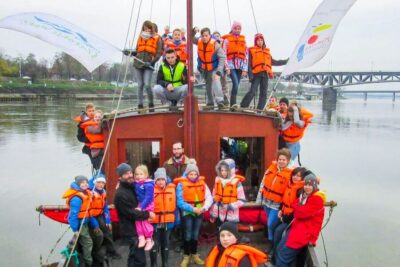
Traditional Galar Cruise on The Vistula River
Read our review →
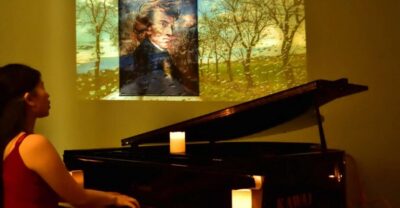
Warsaw Concert: Chopin – Painted by Candlelights with Wine
Read our review →
Highline Warsaw Entry With 360° Views & Rooftop Bar
Read our review →
POLIN Museum of the History of Polish Jews Ticket
Read our review →
Browse the lists this tour appears in