
This is a fun way to see Gdańsk fast, with an easy roll-around in an electric golf cart and mulled wine included the whole time. You get a guided loop through the parts most people want, without turning the trip into a marathon of cobblestones.
I like two things a lot: the guide-led story that ties the sights together, and the simple payoff of warm, spiced wine while you move from place to place. In the best runs I’ve seen, guides like Dominik or Thomas keep things lively, with plenty of history talk that actually helps you understand what you’re seeing.
One thing to consider: the experience is built for moving around, so you won’t linger like you would on a long, walking-only day. If you love long pauses for photos or museum time, you may want extra free time after.
Key highlights you should care about
- Mulled wine for every participant throughout the tour, so you’re not guessing where to warm up
- Electric cart touring that makes hopping between old streets and viewpoints less tiring
- A live guide in English, German, and Polish, with optional audio in many other languages
- A tight route through major Old Town and waterfront icons, including the Crane and Solidarity Square
- A stop-by-stop feel that’s great for first-time orientation in Gdańsk
Why a mulled wine cart tour works in Gdańsk
Gdańsk rewards curiosity. The tricky part is that the city is spread out in ways that can turn a first visit into sore feet and confused turns. This tour solves that with an eco-friendly electric cart and a guide who sets the order so you get perspective quickly.
The mulled wine matters more than it sounds. It is not just a perk. It makes the ride feel like a small event, and it helps you stay comfortable while you take in gates, churches, and the big waterfront landmarks. If you’re visiting in cooler months, that warm cup becomes part of the experience, not an afterthought.
And because it runs as a private tour or a small group option, you’re less likely to feel rushed by a crowd. The guide can adjust pacing for your questions, and you can ask the practical stuff, like what to see next on your own.
More City Tours in Gdansk
- Gdansk: City Cruise on Historical Polish Boat
★ 4.8 · 2,913 reviews - Gdańsk City Sights & History Guided Walking Tour in English
★ 4.8 · 876 reviews - Gdansk: Shared or Private City Tour Sightseeing by Golf Cart
★ 4.9 · 754 reviews
Price and what you really get for $19 per person
At $19 per person, the value comes from bundling three things: a live guide, transportation by electric cart, and unlimited mulled wine during the tour.
A plain walking tour gives you one piece, the guide. A transport-only option gives you the ride. This combines them. Even the “skip the ticket line” detail is worth noting because it can save time, and time is the thing you cannot buy back on a short trip.
The duration is listed as 30 minutes to 2 hours, which is a big clue. Short sessions are ideal if you want a quick orientation loop. Longer ones make sense if you want more stops in the medieval core plus extra time for questions and photo breaks. Check availability for the exact start times so you can match the length to your schedule.
Your cart tour flow: how the ride shapes the experience
This is not a “stand still and stare at one building” kind of tour. You’re rolling from landmark to landmark, and the guide keeps you oriented while the cart does the heavy lifting.
That has clear benefits:
- You can cover a lot of famous Gdańsk spots in one outing.
- You get multiple viewpoints without needing long walks.
- You can keep your energy for later, like dinner, a longer stroll, or a self-guided wander.
The tradeoff is pacing. If you want deep time in one church or one street, you may feel the squeeze. My advice is to treat this as the first chapter of your Gdańsk day. After the tour, pick one or two places you liked most and slow down there.
Stop-by-stop: the sights you’ll see and what to look for
More Golf Cart Tours in Gdansk
- Gdansk: City Tour Live Guided by Golf Cart/Buggy Sightseeing
★ 4.9 · 715 reviews - Gdansk: Shared/Private Golf Cart City Tour with Local Guide
★ 4.9 · 604 reviews - Gdansk: NO LIMIT BEER City Tour by Golf Cart Private/Shared
★ 5.0 · 352 reviews - Gdańsk: City Sightseeing Tour by Buggy/Golf Cart LIVE GUIDED 1H
★ 5.0 · 208 reviews
The medieval gates and the prison tower vibe
You start with a classic medieval feel, moving through stops such as Highland Gate and Golden Gate. Gates are great for orientation because they give you a sense of how the old city was organized. Stand back for a photo first, then circle your viewpoint a bit so you can see how the street lines lead you onward.
Then you’ll head to the darker side of the old town story, with the Torture House and Prison Tower stop. Even if you do not want heavy themes, it helps to see these places in context. A good guide makes it less gloomy and more understandable, connecting it to how cities worked and how authority and punishment showed up in stone.
If you’re the type who likes history that explains the shape of the city, this pair of stops is where you’ll feel it.
Courts, monuments, and the church corridor
Next, you’ll see the Court of the Society of St. George, which is the kind of place that rewards a slow look at details. Court spaces tend to feel “in-between,” not as famous as the biggest squares, so it’s smart to let a guide point out why it matters in the city layout.
From there you’ll pass the Monument of John III Sobieski. Monuments are useful anchors in a tour like this. They give you a landmark to regroup around, and they help you connect street-to-street geography.
Then the tour turns into a church-and-chapel run, with stops including:
- St. Nicholas Church
- St. Mary’s Church
- The Royal Chapel
For churches, I suggest doing two things quickly: look for the front first, then scan upward and around for architectural clues. The guide’s job is to give you the storyline, but your job is to notice the shapes and materials so the explanation sticks.
The Crane and the shipyard era
One of the big emotional payoff moments is the Crane. In many cities, waterfront industry landmarks are hard to appreciate unless someone frames them. Here, the guide keeps you connected to why it’s one of the key stops people talk about.
From there, you’ll move through more maritime and shipyard-leaning sights, including the Ship Soldek. If you like ships, this kind of stop is a fast way to feel the city’s working-water identity without spending an entire day on logistics.
European Solidarity energy at Solidarity Square
The route also includes the European Solidarity Centre and Solidarity Square. Even if you’re not a political-history deep diver, it is still a powerful stop because it gives you a modern layer to Gdańsk, not just old stones and church facades.
I like mixing eras on the same day. It prevents the city from becoming one long postcard. The cart format helps here because you can keep momentum while the guide helps you switch mental gears from medieval street to modern public space.
Philharmonic, the Post Office, and other city icons
You’ll also stop near the Philharmonic and the Post Office in the Free City. These are the kinds of buildings that make a city feel official, arts-focused, and organized, not just historic. If you’re the type who likes to see how a city runs culturally, these stops do the job.
Then you’ll pass or see Railway Station too. Stations can feel like a background element during travel days, but on a tour they turn into a geography tool. They help you understand where the city funnels people and how mobility shaped development.
Mill and Market Hall: daily life in a few stops
Later you’ll reach the Great Mill and the Market Hall. These kinds of stops are where the tour can shift from “wow” to “okay, I get how people lived.”
Look for how the spaces feel: mill-related buildings tend to imply work and production, while markets signal daily routines and social energy. Even if you don’t stop long, the guide’s context helps you understand why those places show up in a top-attractions route.
Final church stops to close out the old town feel
You’ll end with more churches, including:
- St. Bridget’s Church
- St. Catherine’s Church
- and you may also pass St. John’s Church earlier on the loop
This ending style works because it leaves you with a strong visual memory. If one church style clicks for you, you’ll now know what to seek for your self-guided time afterward. If none of them grab you, it’s still fine, because the tour’s real win is the orientation plus the variety of major city landmarks.
Who this tour is best for
This experience fits best when you fall into at least one of these buckets:
- You’re a first-time visitor who wants a fast orientation loop without committing to a long walk.
- You like guided history, but you also want your sightseeing to feel comfortable.
- You’re traveling in winter or cool weather and want warm spiced drinks built into the plan.
- You have limited time and want to see a lot of the “top-name” places in one shot.
It is also a strong option for families who want structure, as long as the group is comfortable riding. And because it is wheelchair accessible, it works for mobility needs where long cobblestone walking might be tough.
How the guide makes or breaks the tour
This is one of the most important factors, and the best experiences here are guide-driven. The names Dominik and Thomas come up with strong praise, and the common thread is clear: they deliver lots of interesting Gdańsk history and keep the route moving in a way that actually helps you understand what you’re seeing.
Here’s what I’d do to get more out of your guide:
- Ask one “why this matters” question early, at your first gate or major square.
- Ask for one recommendation at the end, where to go next for a longer look.
- If you have a theme, like architecture or shipyard life, tell the guide so the story can match your interest.
A good cart tour guide is not just a narrator. They’re a translator between buildings and meaning.
Mulled wine: included, unlimited, and part of the pacing
You get mulled wine for every participant during the entire tour. That means you’re not waiting for a single stop to start sipping. It is there through the ride and through the sightseeing moments.
I like that because it keeps energy steady. If you are timing it with a meal later, you won’t end up rushing to find a warm drink and then losing your tour focus. Just keep it sensible, sip, don’t chug, and take advantage of the comfort it brings for photos and pauses.
Getting the most out of 30 minutes to 2 hours
Because the tour can be as short as 30 minutes or as long as 2 hours, you should choose based on what you want your day to do next.
If you book the shorter option, think of it as a map-making exercise. You’ll get the major sights and the guide’s storyline, then you can follow up later with one or two picks.
If you book the longer option, you’ll likely get more back-and-forth. You can ask follow-up questions and take time to see how different parts of the city connect, from medieval gates to waterfront icons.
Either way, wear comfortable shoes for the moments you will be standing, and bring a camera. You’ll want one for the gates, one for the churches, and one for the waterfront-style landmarks.
Languages and audio support if you want extra control
The live guide is available in English, German, and Polish. That is great if you want real conversation and quick clarifications.
There is also an optional audio guide in a long list of languages, including Danish, Finnish, French, Italian, Norwegian, Slovak, Swedish, English, Russian, German, Portuguese, and Spanish. So if your group includes mixed languages, you can still keep the experience smooth.
If you prefer to move at your own pace on certain stops, the audio option can help you pause for details without waiting for the group to catch up.
Practical tips before you go
A cart tour is easy, but your success still comes down to small planning.
- Bring layers. Even when the weather is mild, you can get chilly in open-air sightseeing moments.
- Treat the first half as your orientation phase. Save your deeper questions for when you have context.
- After the tour, pick one or two stops that made you stop and stare. Then go back on your own when you have time to linger.
This approach turns a short guided ride into a longer-feeling day.
Should you book this mulled wine cart tour in Gdańsk?
If you want an efficient first look at Gdańsk’s top attractions with a comfortable ride and included mulled wine, I think it’s an easy yes. The biggest strength is the way it blends movement, guidance, and comfort, especially when the guide is strong, like Dominik or Thomas.
Book it if:
- You want a guided loop that covers major Old Town and city icons.
- You like history explained in plain language, not just dates.
- You’d rather sip something warm while you see the city than rush around searching for your next stop.
Skip it or pair it with extra time if:
- You love long museum-style visits where you sit for long periods.
- You already know the city well and only need one or two specific places.
For most first-time visitors, this is a smart, good-value way to get oriented, warm up with mulled wine, and leave with a list of places worth returning to on your own.
FAQ
How long is the Gdańsk mulled wine city tour by golf cart?
The tour duration ranges from 30 minutes to 2 hours, depending on the starting time and availability.
How much does the tour cost?
The price is listed as $19 per person.
Is the mulled wine included, and is it unlimited?
Yes. Mulled wine is included, and it is available for every participant during the entire tour.
Is there a live guide?
Yes. The tour includes a live tour guide, available in English, German, and Polish.
Are private tours available?
Yes. Private or small groups are available.
Can I use an audio guide instead of relying only on the live guide?
An optional audio guide is available, with multiple language options listed.
What places are included on the route?
The tour includes major Gdańsk highlights such as Long Market, the Crane, Old Town, Shipyard, European Solidarity Centre, and more.
Is there a way to avoid ticket lines?
The tour includes skip the ticket line.
What languages are available for the optional audio guide?
The optional audio guide is listed for Danish, Finnish, French, Italian, Norwegian, Slovak, Swedish, English, Russian, German, Portuguese, and Spanish.
Is the tour wheelchair accessible?
Yes, it is wheelchair accessible.
More Wine Tastings in Gdansk
- Gdansk: Unlimited Wine Tour by Golf Cart with Local Guide
★ 4.1 · 13 reviews - Exclusive Gdańsk Wine Tour with Polish Wine Tastings
★ 5.0 · 11 reviews - Warsaw Concert: Chopin – Painted by Candlelights with Wine
★ 4.8 · 1,442 reviews - Krakow: Evening Cruise with a Glass of Wine
★ 4.0 · 1,054 reviews
Fresh Gdansk reviews
- Gdansk: Hansa Electric Golf Cart City Tour with Local Guide★ 5.0 · 3 reviews
- Aiport Gdansk Transfer to Malbork Castle or Stutthof★ 5.0 · 3 reviews
- 6 Hours Teutonic Castle Tour in Malbork★ 3.5 · 3 reviews
- Sopot Sunset Cruise with Welcome Drink★ 3.5 · 3 reviews
- Slowinski National Park Private Tour★ 5.0 · 3 reviews
- Lions & Unicorns of Gdańsk: Self-Guided Fantasy Puzzle Walk★ 3.5 · 3 reviews
- Segway Tour Gdańsk: Shipyard Tour – 1,5-Hour of Magic!★ 5.0 · 3 reviews
- Culinary Cruises Pierogi Tasting Motława★ 5.0 · 3 reviews
Golf Cart City Tours, compared.
Extended City Sightseeing Tour – Eco Buggy Golf Cart
Read our review →
Shared or Private City Tour Sightseeing by Golf Cart
Read our review →
City Tour Live Guided by Golf Cart/Buggy Sightseeing
Read our review →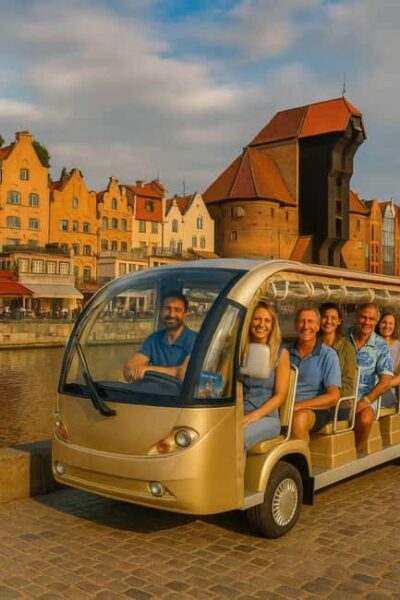
Shared/Private Golf Cart City Tour with Local Guide
Read our review →
NO LIMIT BEER City Tour by Golf Cart Private/Shared
Read our review →
Jewish Quarter and Ghetto Electric Golf Cart Tour
Read our review →
Krakow Grand City Tour by golf cart – All 3 districts
Read our review →Browse the lists this tour appears in