
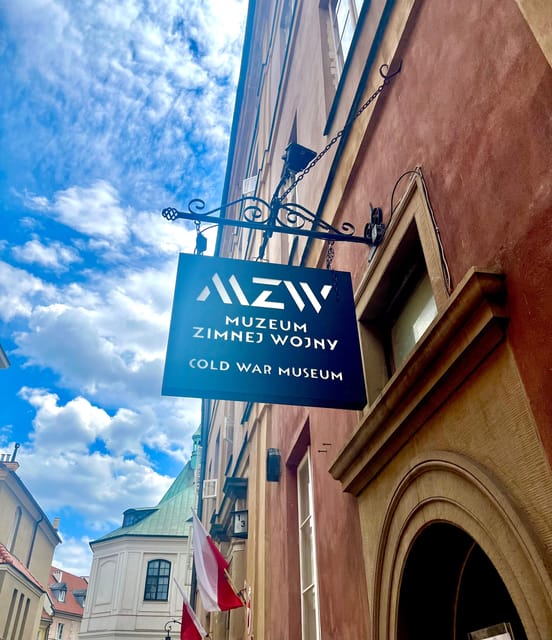
Reviewed · MUSEUMS IN WARSAW
Warsaw: Cold War Museum Entry Ticket
The Cold War Museum in Warsaw is interesting because it turns the East-West standoff into a hands-on walk through the period, with original artifacts and a robot that guides you. It is history you can touch, answer, and try, not just read.
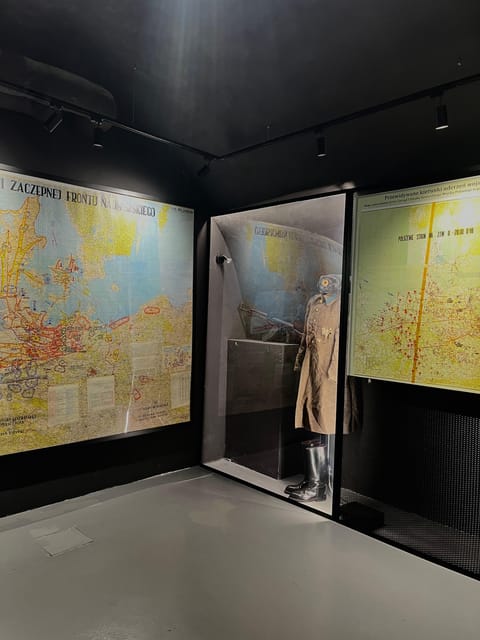
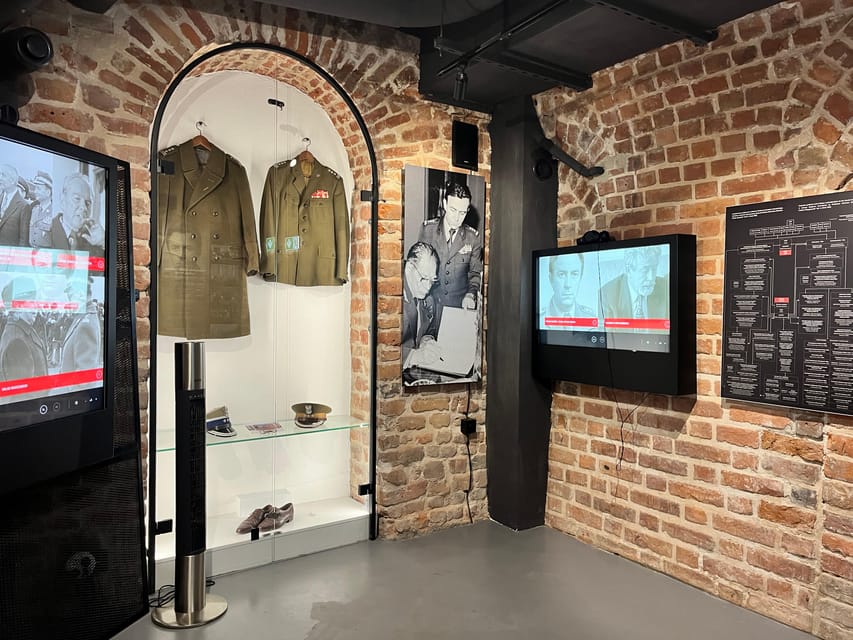
I especially like the VR secret-agent games and the way the museum anchors its story with original devices, maps, and uniforms. The whole place feels designed to keep you active, like you are doing your own little mission as you move from room to room.
One consideration: this museum is not suitable for wheelchair users, so you will want to plan around that if mobility is an issue.
Key highlights I’d plan around
- Autonomous robot guide that helps you navigate the museum experience
- Three VR games where you play a Cold War secret agent and take on missions
- Multimedia knowledge quiz using touch-screen style questions about the Cold War
- Space flight history with a hologram of a space station
- A Polish perspective across the whole Cold War, featuring big names like Ronald Reagan and Pope John Paul II
- A powerful sense of place, since the building ties to the communist militia station and the Grzegorz Przemyk story
Cold War Museum in Warsaw: what makes it feel different
If you have only done the typical museum thing in major cities, you might expect a quiet loop of reading panels. Here, the museum is built to do the opposite. You get a guided, multimedia-driven route through the Cold War, and it leans hard into interaction, not just observation.
What I like is that the story comes from a Polish perspective, not a generic international summary. The exhibition focuses on the Polish role in the victory of the capitalist world over Soviet communism, and it covers the full Cold War span. It also frames the rivalry between the two blocs through the lens of Poland’s experience, which gives you a clearer idea of why the era felt personal here.
The building itself also matters. The museum’s narrative is tied to the address where, during the Polish People’s Republic, a communist militia station operated. At that site, Grzegorz Przemyk, a high school graduate and well-known victim of martial law, was beaten to death. That context is part of why the museum can feel heavy, even when it is using screens, sound, and VR.
More Museums in Warsaw
- Warsaw: POLIN Museum of the History of Polish Jews Ticket
★ 4.7 · 1,142 reviews - Warsaw: Polish Vodka Museum Tour with Tasting
★ 4.6 · 788 reviews - Warsaw: Museum World of Illusion Entry Ticket
★ 3.9 · 666 reviews
First rooms: original devices, maps, uniforms, and a quiz that gets you thinking
Early on, the museum hits you with concrete Cold War visuals. You will see original devices, maps, and uniforms, and the exhibition uses multiple multimedia elements to connect those objects to real events and themes across the decades.
Then you get a knowledge challenge. The museum includes a multimedia knowledge quiz about the Cold War, with interactive questions that push you from passive reading into active recall. I like this approach because it forces you to connect dates, ideas, and key themes as you go. Even if you know the Cold War basics, you will likely pick up details you have not seen framed this way.
This is one of those museum setups where you should not rush. If you skim, you miss the way the museum builds a timeline. Take your time in the early sections and you will be better able to enjoy the later wow moments, like VR and the space hologram.
VR secret-agent missions: why the three-game setup is the star
The biggest hook here is the VR experience. You play three VR games designed to put you in the shoes of a Cold War secret agent, including missions where you try to compromise Soviet plans. That is a very specific kind of storytelling, and it works because it turns abstract politics into decisions you have to make in the moment.
I like VR when it is not just eye candy. In this case, the VR part is tied to the museum’s overall theme of rivalry and intelligence work. You are not just looking at a screen, you are acting. That changes the pacing of the visit too, because VR creates natural “reset points” where your brain shifts from reading to doing.
Practical note: VR can be a little intense if you get motion-sensitive. The museum is not giving details here about comfort settings, so I suggest you take breaks if you need them. Also, since the museum has rules against food and drinks, you will want to keep yourself comfortable and hydrated outside rather than trying to manage it inside.
Space race section: hologram of a space station and flight history
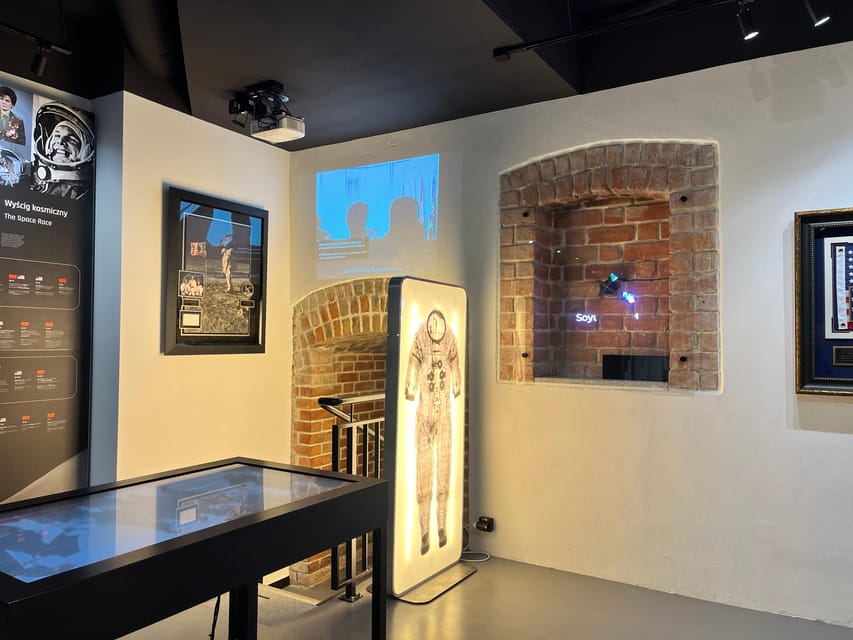
Cold War history is not only about spies and missiles. This museum also gives you a look at the history of space flights, which is a smart choice because the space race was a major battleground for prestige, science, and political messaging.
A standout moment is the hologram of a space station. When you see it in the museum context, it helps connect the Cold War rivalry to something more than propaganda posters. The technology and the ambition feel like part of the same competition that played out on Earth.
If you are the type who usually skips the “science” corner of history museums, this is worth your attention. The hologram makes it easier to understand why space mattered so much to both blocs, and how that competition shaped what people believed would come next.
Another way through a Warsaw day:
- Warsaw: Chopin Concert in the Old Town
★ 4.8 · 2,287 reviews - Warsaw: Traditional Galar Cruise on The Vistula River
★ 4.6 · 1,640 reviews - Warsaw: Old Town Highlights Walking Tour in English
★ 4.7 · 1,516 reviews - Warsaw Concert: Chopin – Painted by Candlelights with Wine
★ 4.8 · 1,442 reviews
Robot guide and cinema: how the museum keeps you moving
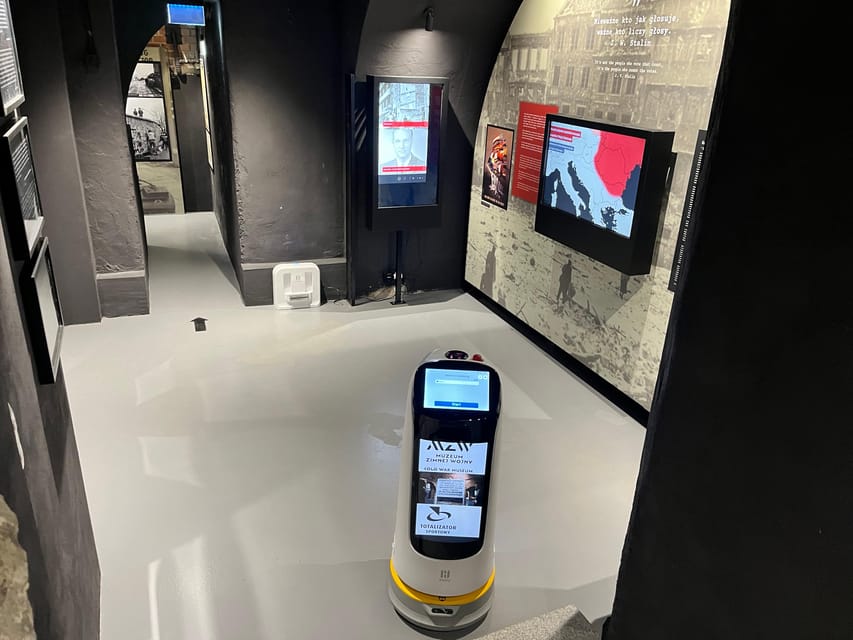
One of the most unique elements is the museum’s autonomous robot guide. It is described as the first and only museum in Poland to have a robot that serves as an autonomous guide. That matters because the robot is not just decoration. It is built into the flow of the visit, and it helps you keep moving through the museum’s sections without feeling lost.
You also have a host or greeter who speaks English and Polish. So if you want help getting your bearings fast, that is built in.
The exhibition also includes a cinema. Even without getting into exact film content, it is a useful pacing tool. After VR and interactive elements, a short video or film moment can give your brain a chance to reset while still keeping the Cold War story moving forward.
The museum’s framing: big names like Reagan, John Paul II, and Ryszard Kukliński
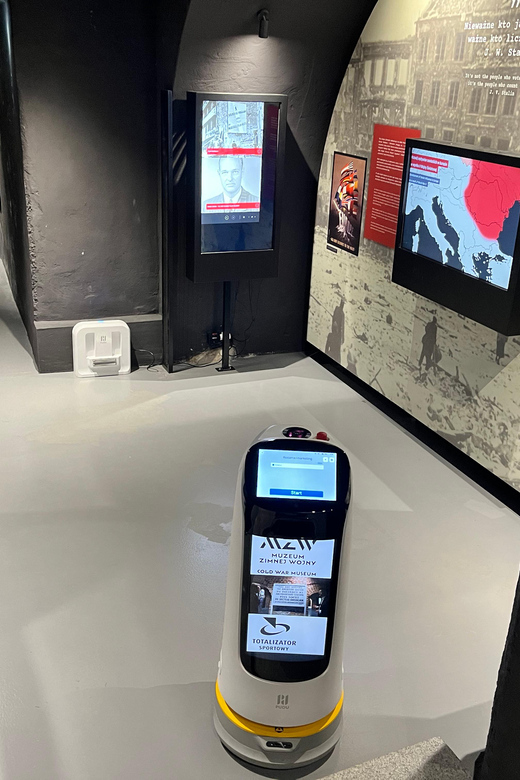
The Cold War Museum does not try to be neutral in the flat sense. It presents the period with a clear narrative, and it points to the messages, commitment, and deeds of three major figures of the era’s final decades: President Ronald Reagan, Pope John Paul II, and General Ryszard Kukliński.
That trio is not accidental. They represent different kinds of influence, public pressure, moral authority, and intelligence work, and the museum’s framing uses their roles to explain why the Cold War turned the way it did. If you already know their names, you will still likely appreciate how the museum connects them to the broader timeline.
If you prefer a simple, balanced “both sides” museum, you may notice the museum’s perspective is firmly Polish. That is not a defect. It is the point of the experience. Just know what you are signing up for: this is history told with a specific lens.
The location story: why the museum’s address hits harder than the exhibits alone
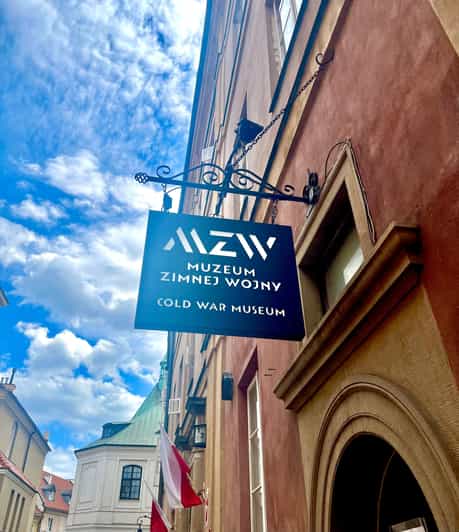
A museum can use artifacts to explain history, but a location can make you feel it. Here, the architecture and setting add weight to the Cold War narrative.
The museum is tied to the communist militia station that operated at the address during the Polish People’s Republic. The Grzegorz Przemyk story is part of that context. Including a real tragedy tied to martial law and state violence changes how you read the exhibition. You start to understand that this rivalry was not only about governments and treaties, it also affected citizens in brutal, personal ways.
That is also why the museum’s narrative mentions victims, aggressors, and survivors. You will not just be learning dates. You will be facing consequences.
Price and value: is $12 worth your time in Warsaw
The entry ticket is priced at $12 per person, and it is valid for 3 months. You also skip the ticket line when you arrive, which is important in Old Town areas where queues can steal time from your day.
For that price, you are getting admission to the exhibitions plus access to all attractions inside the exhibition, including the interactive multimedia, VR, and the autonomous robot guide. So the cost is not just for a room of displays. It is for a technology-heavy experience with multiple formats: touch-screen elements, interactive quiz components, VR goggles, a hologram, and cinema.
I would call the value strong if:
- you like museums that ask you to participate
- you want a Cold War story from a Polish angle
- you are excited by VR and interactive tech
It may feel less worthwhile if your idea of a perfect museum day is mostly walking slowly through galleries with minimal screens. This place is definitely active and media-driven.
Also remember what is not included: transportation and a guide. If you want a human guide, you would need to arrange that separately. The robot provides the “guided” part of this entry ticket.
Practical tips for your visit near Old Market Square
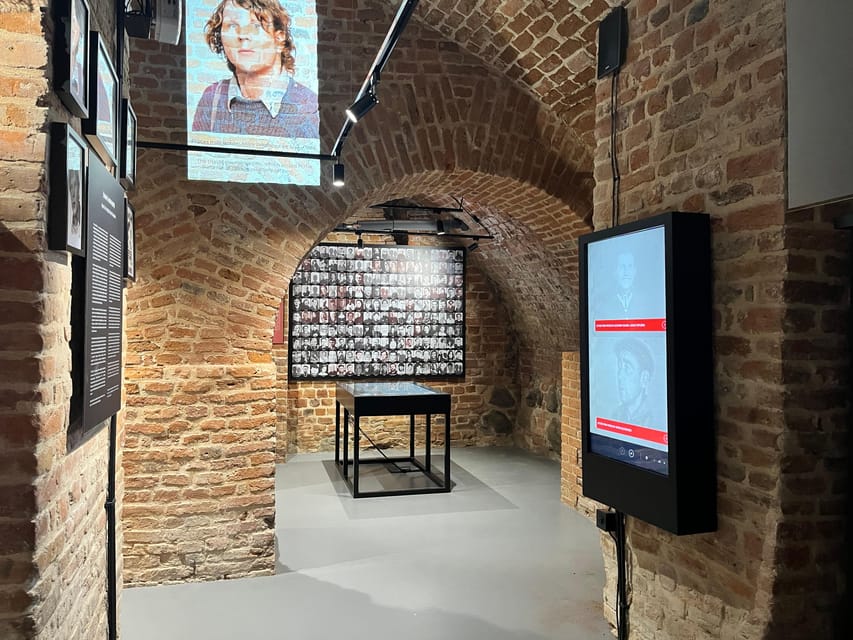
This museum is located about 40 meters from Old Market Square. That is close enough that you can comfortably pair it with other Old Town stops, and you should be able to walk there without a planning headache.
Here is what to do when you arrive: show your ticket at the entrance of the Cold War Museum (Muzeum Zimnej Wojny). From there, the museum experience takes over. You do not need to hunt down the start point for a standard guided tour structure since the robot guide is part of the museum setup.
A few rules to know before you go:
- no smoking
- no food and drinks
- no vaping
- no alcohol and drugs
Those rules matter because they affect what you bring in. Plan to snack outside the museum, especially if you are visiting in the middle of the day.
One more practical note: four-legged visitors are welcome in this museum, which is rare in Warsaw. If you are traveling with a dog, you can likely include this stop without having to skip it. Just follow the inside rules and keep the experience respectful for other visitors.
Who should book, and who may want to rethink it
This museum is open to all visitors, including Polish and foreign visitors of all ages. So from a sheer eligibility standpoint, it is broad.
You will probably enjoy it most if:
- you are a Cold War fan, even a casual one
- you like museums where you answer questions, not just read text
- you want modern tech tied to history, especially VR
You might want to rethink it if:
- you use a wheelchair or need wheelchair-accessible routes, because it is not suitable for wheelchair users
- you dislike VR or have motion sensitivity
- you want a low-tech, quiet, slow museum day with minimal screens
If you fit the first group, this is the kind of stop that makes Warsaw feel different. Instead of just seeing old buildings and monuments, you get a very direct look at how the Cold War shaped Poland’s modern story.
Should you book this Warsaw Cold War Museum ticket?
Book it if you want a high-value museum stop that mixes original artifacts with interactive tech, including three VR agent games, a multimedia quiz, a hologram space moment, and an autonomous robot guide. The $12 price makes more sense when you look at what you actually get, not just the theme.
Pass or plan carefully if accessibility is a concern, especially since the museum is not suitable for wheelchair users. Also, if VR is a deal-breaker for you, your enjoyment may depend on how much you still want to do the touch-screen and artifact parts.
If you like history with your hands on the controls, or you want the Cold War explained through a Polish lens rather than a generic overview, this is an easy yes for me.
FAQ
Where is the Cold War Museum, and where do I check in?
The Cold War Museum (Muzeum Zimnej Wojny) is about 40 meters from Old Market Square. Show your ticket at the entrance.
How much is the entry ticket?
The price is $12 per person.
What is included with the ticket?
The ticket includes admission to the exhibitions, access to all attractions within the exhibition, and an autonomous robot guide.
What VR and interactive experiences are included?
The museum includes a multimedia knowledge quiz, a hologram of a space station, and three VR games where you play a Cold War secret agent. There are also interactive multimedia elements such as touch screens and multimedia tables.
What languages is this experience available in?
The languages listed are English and Polish.
How long is the ticket valid?
The ticket is valid for 3 months.
Are pets allowed?
Yes. Four-legged visitors are welcome.
Is the museum wheelchair accessible?
No, it is not suitable for wheelchair users.
What rules should I follow inside the museum?
Smoking is not allowed, and you also cannot bring in food and drinks, vaping is not allowed, and alcohol and drugs are not allowed.
Fresh Warsaw reviews
- Warsaw Off The Beaten Path Self-Drive Tour★ 5.0 · 18 reviews
- Private Warsaw Chopin Airport One Way Transfer★ 5.0 · 18 reviews
- Zelazowa Wola: Frederic Chopin Half-Day Private Tour★ 4.7 · 18 reviews
- Warsaw: 2-Hour Chopin’s Life Walking Tour★ 5.0 · 19 reviews
- Warsaw: melt museum Entry Ticket★ 3.5 · 19 reviews
- Deluxe Polish Food Tour Experience in Warsaw★ 5.0 · 19 reviews
- FSO Gunrange, Shooting Package US ARMY★ 5.0 · 19 reviews
- Warsaw Old Town: Spy-Themed Walk & Game with Host★ 4.5 · 19 reviews
Museums in Warsaw, compared.
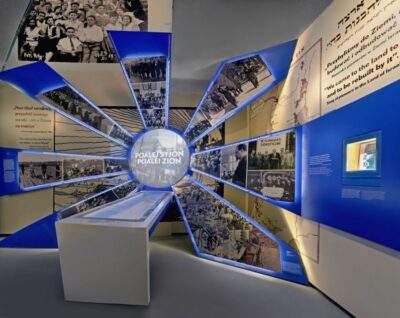
POLIN Museum of the History of Polish Jews Ticket
Read our review →

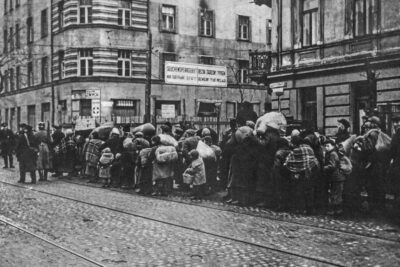
Ghetto, Jewish Cemetery & POLIN Museum Private Tour
Read our review →
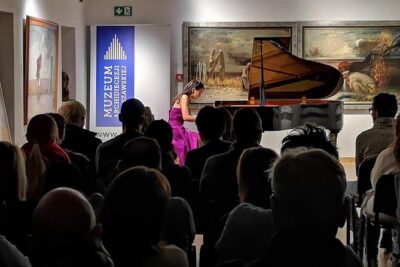
Daily live piano Chopin’s concerts at 6:30 pm in the Warsaw Archdiocese Museum
Read our review →
Browse the lists this tour appears in