Reviewed · KRAKOW TOURS
Kraków Holocaust Tour
Walking through the Krakow Jewish ghetto is interesting for one simple reason: so much of it survived. The buildings and institutional spaces still give you that end-of-war look, so the story lands in a place you can see, not just imagine.
What I like most is that you get the big picture of how the Nazi ghetto system worked, not a random set of plaques. I also appreciate that the tour is led by a guide with a graduate background in Geography and History, which usually translates into clear, grounded explanations. The one drawback to consider is language: the live guide is in Spanish, so you will want to be comfortable following the details.
Key highlights at a glance
- Entire Jewish ghetto coverage gives you a full sense of the neighborhood, not just a couple of stops.
- Historian-led context helps you understand the purpose and mechanics of the ghetto.
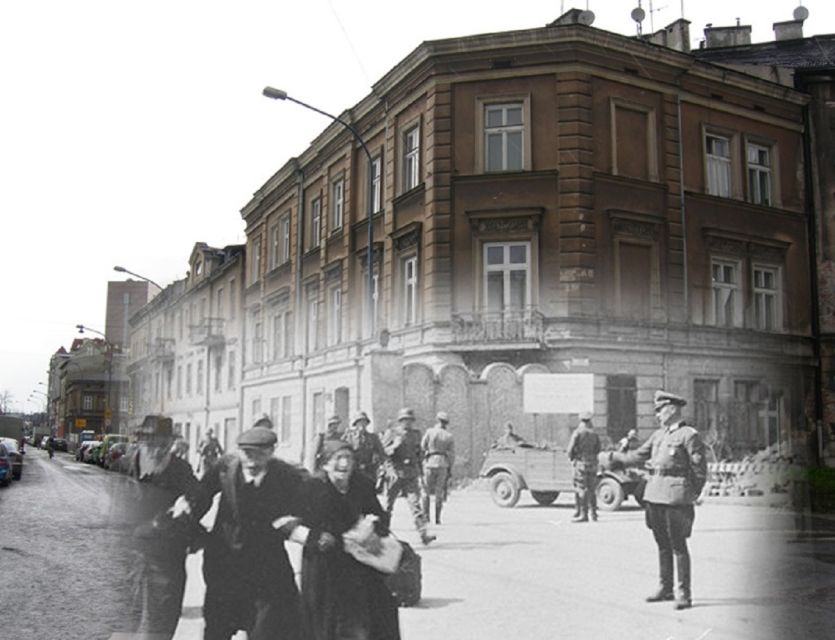
- Two fragments of the wall and old door locations show how movement and control shaped daily life.
- Judenrats, labor organizations, hospitals, and prisons connect policy to real consequences.
- Pharmacy under the Eagle museum is a strong, meaningful way to end the walk.
- Former ghetto atmosphere still present because many buildings retain their 1941-1943 appearance.
Why the Krakow ghetto still feels real (and not just educational)
Krakow’s Jewish ghetto is one of those places where the setting does a lot of work for you. A large part of the old housing is still there, and so are many organizational and institutional buildings. That matters because it keeps the story grounded in location. You do not just hear about constraints and persecution. You stand near the physical spaces where those systems operated.
The tour leans into that fact. Many parts of the district still carry a gloomy look similar to what you would have seen near 1941 to 1943. It is not “pleasant history tourism.” It is the real atmosphere of a neighborhood shaped by Nazi policy, which makes the walk emotionally heavy but also more honest.
More to book in Krakow:
- From Krakow: Auschwitz-Birkenau Guided Tour & Hotel Pickup
★ 4.5 · 33,358 reviews - From Krakow: Auschwitz-Birkenau Guided Tour & Hotel Pickup
★ 4.5 · 29,340 reviews - Krakow: Auschwitz Guided Tour with Optional Hotel Pickup
★ 4.5 · 15,280 reviews
A 2-hour, Spanish-language tour that aims to cover the whole ghetto
This is a tight, 2-hour format, and it is designed to move through the ghetto as a continuous area. The big promise here is that it covers the ghetto in an extensive and in-depth way, including the major spaces that show how the system was built.
You’ll have a live guide (Spanish) who is a graduate in Geography and History. That background is a useful combination for this kind of tour. Geography helps you understand how the ghetto was laid out, and History helps you understand why the Nazis designed it the way they did, and how it functioned day to day.
The route is built around understanding purpose. You’ll start with orientation and physical boundaries, then shift into institutions and structures of control, and finally end at the museum called Pharmacy under the Eagle. If you like tours that explain how systems worked rather than only what happened, this format fits well.
Getting oriented: wall fragments, old doors, and Ghetto Heroes Square
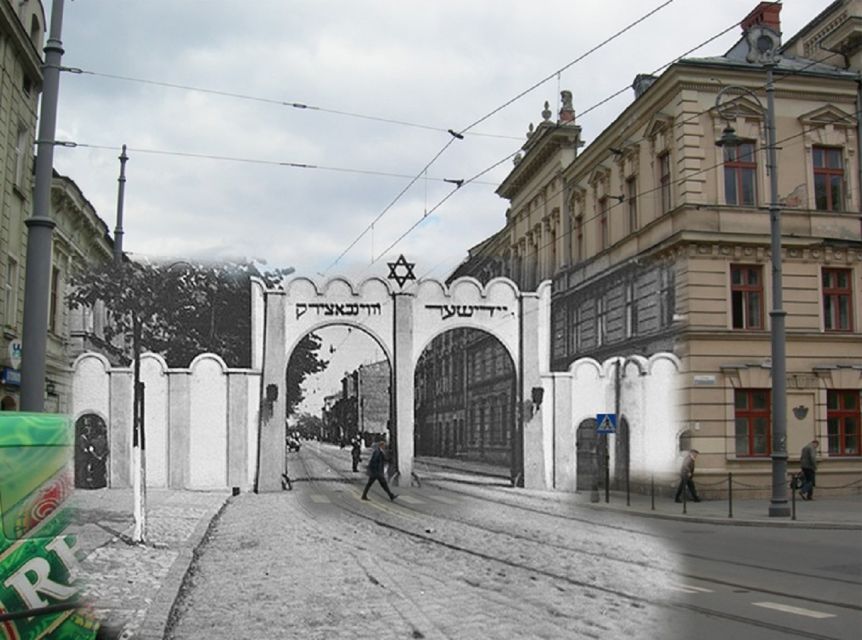
Early on, you tackle the parts of the ghetto that make the boundaries obvious. You will see two fragments of the wall, which helps you understand that the ghetto was not just an idea. It was a physical barrier, used to control who could enter, who could leave, and how the Nazis managed the population.
Next comes the location of the old doors. Even if you are walking modern streets, the tour helps you picture where access points were and what that meant in daily life. Doors sound simple, but in this context they are a way to measure power.
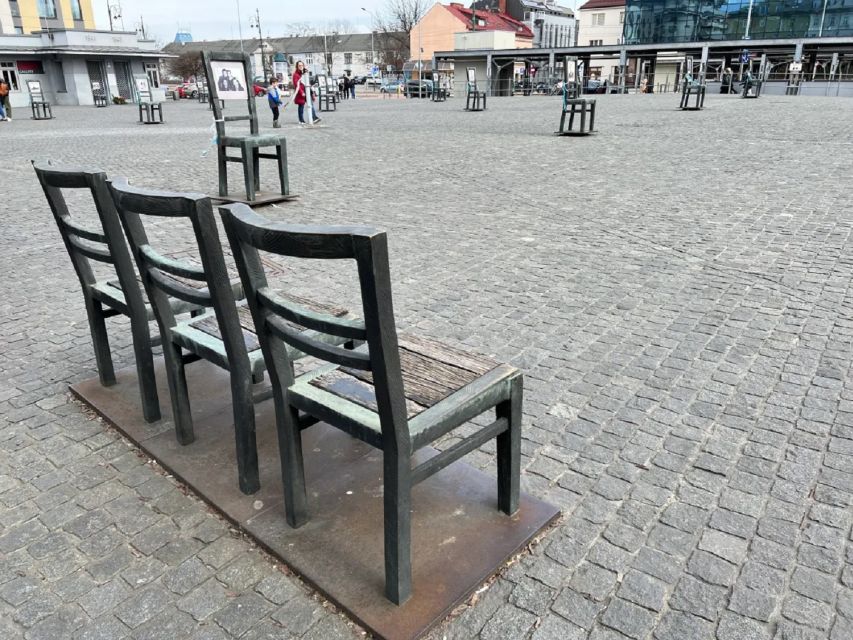
Then you reach Ghetto Heroes Square (Square of Chairs). This stop helps connect the neighborhood’s suffering to resistance and memory. It is the kind of place where you pause a little, let the layout sink in, and then continue with a clearer idea of what mattered locally, not just nationally.
Important buildings and resistance spaces: seeing how control and opposition coexisted
As you move through the ghetto, you’ll pass important buildings tied to organized life under occupation. The tour highlights areas linked to intellectual meetings, resistance, and police agencies. That mix is important. It prevents the story from becoming one-dimensional.
You get a sense that life in the ghetto was shaped by constant pressure, but it was never only about oppression. Institutions also included spaces where people tried to organize, hide information, or resist. Even when the odds were crushing, human agency still existed.
If you are the type of person who likes to understand “who did what,” this section will feel satisfying. You are not just learning names. You are connecting functions to the realities of the neighborhood.
Another way through a Krakow day:
- Krakow: Wieliczka Salt Mine Tour with Entry Ticket
★ 4.6 · 10,927 reviews - Krakow – Zakopane: Cable Car, Chocholow Baths, Cheese & Vodka
★ 5.0 · 10,720 reviews - Krakow: Auschwitz-Birkenau Guided Tour with Pickup & Lunch
★ 4.5 · 9,800 reviews - From Krakow: Wieliczka Salt Mine Tour
★ 4.6 · 9,393 reviews
Judenrats, labor organizations, hospitals, and the machinery of control
This is the heart of the tour, where the guide pushes beyond location into how the ghetto was run. You will learn about the Judenrats, the governing bodies created under the occupation to administer parts of ghetto life. The point is not only who they were, but why they were used by the Nazis, and what that meant for daily decisions people had to make under extreme coercion.
Then you shift to labor organizations. Labor in the ghetto was part of a broader Nazi economic and control system. By the time you reach this area, the tour should make it clearer how “work” was not simply employment. It was structure, sorting, and exploitation.
The tour also includes stops tied to hospitals and prison. Those two themes often hit hard because they represent life under deprivation and the consequences of breaking rules, resisting, or simply surviving long enough to face conditions that were designed to be unbearable.
Practical note: this part is where you’ll want to slow down mentally. The walking pace might not change much, but your attention should.
Synagogue, factories, orphanages: daily life beyond the headlines
One easy way to misunderstand the ghetto is to think it was only about deportations and death. The tour counteracts that by mapping institutions tied to everyday existence: a synagogue, factories, and orphanages, plus more.
These stops matter because they show how the Nazis imposed control even on ordinary structures of community. A synagogue represents spiritual life and identity. Factories represent forced labor and economic exploitation. Orphanages represent the fate of children in a system that destroyed families and social safety nets.
By the time you get to the section on orphanages, the emotional weight increases. But the value of including these sites is that you come away with a more complete picture: the ghetto was designed to control bodies, limit movement, and break community, all while still functioning as a managed neighborhood.
The wall, the institutions, the ending museum: Pharmacy under the Eagle
You end at Pharmacy under the Eagle, one of the most important museums in Krakow on this subject. Ending at a museum spot is a smart move. After you’ve seen the ghetto’s physical map and learned how the system operated, the museum helps you make sense of details you might otherwise miss.
The name fits the kind of place this is: a real-world location that becomes part of historical memory. By the time you arrive, you should feel like the neighborhood itself has been teaching you, and now the museum organizes that information for you.
This finish also works well for time planning. In 2 hours, you do not want the last minutes to feel like rushing. A museum stop gives a natural landing point for your questions and your thoughts.
Price and value: what $16 buys you in Krakow
At about $16 per person for a 2-hour guided experience, the value is tied to two things that you actually care about.
First, it’s built around full-area coverage of the ghetto. If you choose a shorter or partial tour, you can end up with a fragmented story and gaps in your understanding of boundaries and institutions. Here, the intent is to walk the whole ghetto footprint as a coherent unit.
Second, you are not just getting general facts. You get guided interpretation from a graduate guide in Geography and History, with a focus on how the ghettos worked and what daily life was like. That kind of context costs more than a basic walking route in most cities, so it is a fair deal if you want real explanation rather than just photos and dates.
You should also note what’s not included: no food or drinks. That is common for city walking tours, but it matters if you’re scheduling the rest of your day. Plan a snack or a meal before or after, because the emphasis here is the walking and the story.
Who this tour suits best
This tour fits you best if:
- You want structure and explanation, not a random highlights walk.
- You care about how the Nazi system functioned, including institutions like the Judenrats and labor structures.
- You prefer tours that use the physical space as part of the lesson, especially where many buildings still reflect the war-era look.
It may be less ideal if:
- You only speak basic Spanish and would struggle to follow a history-heavy narration.
- You need very light walking. The itinerary covers a lot of ground in a short window, so comfortable shoes are not optional.
Getting ready: shoes, pace, and mental expectations
Bring comfortable shoes. This is a ghetto walk with many stops. Even if the route is manageable, your feet will notice the difference between “a quick stroll” and “a 2-hour guided route with frequent attention to details.”
Also, set your expectations emotionally. This is Holocaust history in a place where the built environment still carries weight. You do not have to feel brave to go. You just need to be prepared for a serious topic and give it the attention it deserves.
One more practical point: the meeting happens with a guide who carries a gray umbrella. That is helpful. Arrive a little early so you can spot the umbrella fast and start with minimal stress.
Should you book this Krakow Holocaust tour?
If your goal is to understand the ghetto as a functioning system, this is a strong choice. The biggest reasons are full ghetto coverage and the focus on how the Nazis created and ran the space, including the institutions that shaped daily life.
Book it if you can handle Spanish narration and you are ready for a serious, physically active 2 hours. Skip it only if you know you want a shorter route, or if language would prevent you from following the explanation. In the right match, this is one of the better ways to leave Krakow with a clearer, more grounded understanding of what the ghetto was.
FAQ
How long is the Krakow Holocaust Tour?
The tour lasts 2 hours.
How much does the tour cost?
The price is $16 per person.
What languages is the tour offered in?
The live tour guide speaks Spanish.
What is included in the price?
The tour includes a graduate guide in Geography and History.
Where do we meet the guide?
Meet at the start point where the guide will be carrying a gray umbrella.
Is food or drinks included?
No. Food and drinks are not included.
What should I bring and wear?
Wear comfortable shoes for walking the route.
Is there free cancellation?
Yes. Free cancellation is available up to 24 hours in advance for a full refund.
Fresh Krakow reviews
- Krakow Zakopane Cable Car Vodka Cheese and Hot Springs Tour★ 3.5 · 3 reviews
- Krakow Skip The Line Wawel Castle & Old Town Guided Tour★ 5.0 · 3 reviews
- Krakow: Zakopane and Thermal Pools Tour with Hotel Pickup★ 5.0 · 3 reviews
- Museo Czartorisky : Visita in Lingua Italiana salta fila…★ 3.5 · 3 reviews
- Half-Day John Paul II Route Tour from Krakow★ 5.0 · 3 reviews
- Krakow: John Paul II Home & Black Madonna Sanctuary – Guided Tour★ 5.0 · 3 reviews
- 1-Hour Tour to Krakow’s Old Town by Electric Golf Cart★ 5.0 · 3 reviews
- Auschwitz and Birkenau WITHOUT GUIDE private transport from Kraków★ 5.0 · 3 reviews
Krakow Tours, compared.
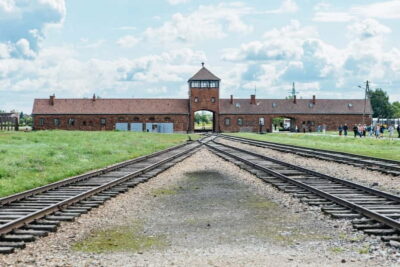
Auschwitz-Birkenau Guided Tour & Hotel Pickup
Read our review →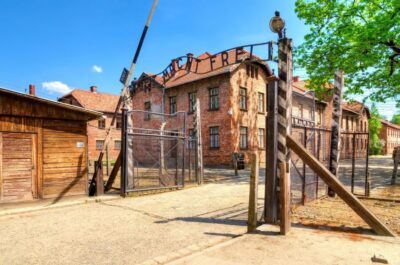
Auschwitz Guided Tour with Optional Hotel Pickup
Read our review →
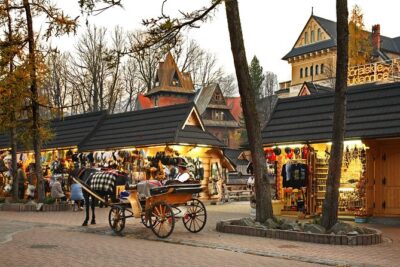
Zakopane: Cable Car, Chocholow Baths, Cheese & Vodka
Read our review →

Krakow to Auschwitz Birkenau Guided Tour with Transfer and Ticket
Read our review →