
Reviewed · WALKING TOURS
Old Town Wrocław Walking Tour
Wrocław is a city that rewrites itself, and this Old Town walk is a smart way to spot the layers fast. You’ll connect Gothic buildings, baroque details, and modern Wrocław personality in a single loop that ends on Cathedral Island.
I especially like the way the guide turns landmarks into stories, not just photo stops. You also get a proper Market Square walk with the important structures around Rynek, plus stops like Wrocław’s big tower church and the baroque University.
One consideration: this is weather-friendly, but the tour is still a lot of standing and walking, and if you end up in a bigger group some people may struggle to hear without a microphone.
Key highlights worth planning for
- Small-group feel with a listed cap of 15, and an overall maximum of 35
- Town Hall stories tied to the oldest beer cellar in Europe and rule by multiple countries
- Rynek Market Square focus on the pillory, Cloth Hall passages, and standout house styles
- St. Elizabeth’s Church with a 91-meter tower plus dwarf-themed modern details
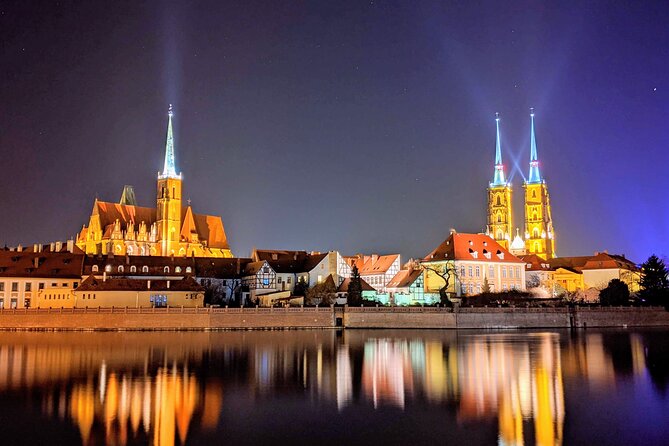
- Ostrów Tumski timing gives you real time in the 10th-century cathedral area and Oder river views
- English narration with a purpose-built route, plus a mobile ticket for easy check-in
Why this 2.5-hour Old Town walk is a great first move in Wrocław
If you’re landing in Wrocław and want to understand what you’re looking at, a guided walk is the fastest shortcut. This route focuses on the Old Town core and then pushes into the oldest part of the city, so you don’t just see pretty facades, you learn how the place got built.
The best part is the way history is woven into each stop. At the Wrocław Town Hall, for example, you’re not just told the building is Gothic, you’re guided through the city’s changing control across time, including the beer cellar story. That narrative approach helps you later when you wander on your own and spot details you would have missed.
I also like that you’re not stuck paying for entrances along the way. Each listed stop is marked as admission ticket free, so your budget stays stable during the walk. For $26.60, that matters, because you’re paying mainly for interpretation, timing, and access to the guide’s angle on the city.
The drawback is simple: you’re moving for roughly 2 hours 30 minutes. It’s not extreme, but it is continuous enough that you’ll want comfortable shoes, especially if it’s raining or cold.
More Walking Tours in Wroclaw
- Wrocław: Old Town and Ostrów Tumski Walking Tour in English
★ 4.8 · 311 reviews - Wroclaw: Private Old Town Guided Walking Tour (2 hours)
★ 4.8 · 275 reviews - Group city tour (walking tour) through Wroclaw in German
★ 4.9 · 203 reviews
Starting at Alexander Fredro and setting up an easy orientation loop
Your tour begins at the Monument of Alexander Fredro on Rynek (Rynek 50-438 Wrocław). Starting at a central square landmark is practical because you can usually connect to it by public transport, and you’re already in the heart of where most people want to be anyway.
What I like about an Old Town route that starts here: it helps you learn the geography. You quickly build a mental map of where the Market Square sits, how the Town Hall relates to the surrounding lanes, and where the path toward Cathedral Island begins.
The walk ends on Ostrów Tumski, Cathedral Island. You’ll have about a 15-minute walk back to the starting area if you’re going to retrace your steps for dinner plans.
Also note the group size. The experience is described as small-group with a cap of 15 people, while the maximum is listed as 35. In real life, that means you should plan to stand where you can see and hear the guide, because a bigger group can make the experience feel more crowded.
Stop 1, Wrocław Town Hall: Gothic architecture plus political history in one room
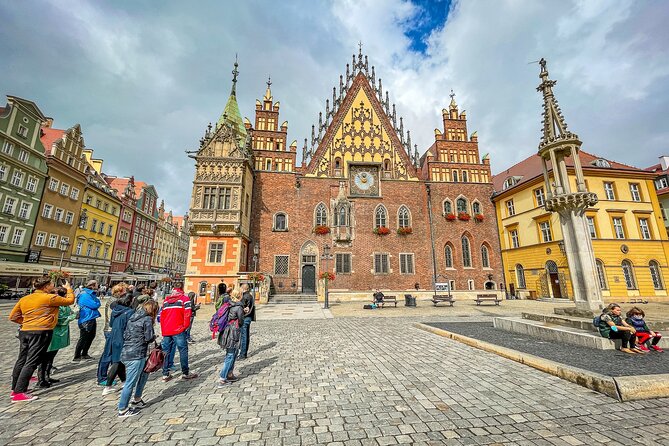
The tour kicks off at the Wrocław Town Hall, where you get hit with the classic Old Town combo: impressive architecture and a story that explains why the building mattered.
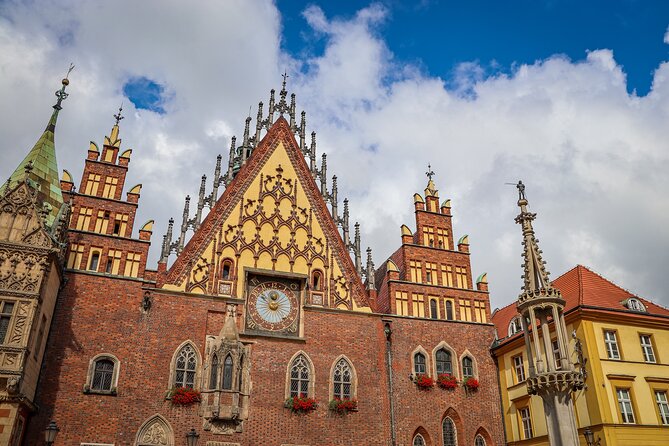
You’ll spend about 20 minutes here. The time goes into two big threads: the gothic masterpiece itself, and what happened around the building across the long sweep of Wrocław’s past. A highlight of this stop is the mention of the oldest beer cellar in Europe, tied into the city’s everyday life and how locals and rulers used shared spaces.
I like that this is not treated like trivia. The Town Hall is a symbol of civic power, so when the guide connects it to shifting control by multiple countries throughout history, the whole place makes more sense. After this stop, Rynek’s other historic structures feel less random and more like a coordinated city center.
Because the stop is marked as admission ticket free, you’re not waiting at a gate or adding extra costs. You’re just learning on the street and in the surrounding area, which keeps the tour flowing.
Stop 2, Rynek Market Square: Cloth Hall passages, baroque-modern mix, and the pillory
Next comes Rynek, Wrocław’s Market Square. This is about 20 minutes of walking the perimeter and pausing at key features so you can understand the layout.
You’ll look at the most significant structures around Rynek, including baroque and modernist houses. This is one of the main reasons I recommend doing this early in your trip. Wrocław’s center is visually layered, and a guided route gives you the “name and reason” for what you’re seeing.
Two specific elements the guide points out are the pillory and the Cloth Hall with its many passages. Those details matter because they show how the Market Square worked. It wasn’t only a pretty stage for photos, it was a place for law, trade, and daily movement through corridors and entrances.
The tour timing is tight but not rushed. If you’re the type who likes to take photos, keep your phone ready, but don’t expect long pauses. This stop is designed for orientation, not a slow museum pace.
Another way through a Wroclaw day:
- Wroclaw: E-Car Tour and Audio Guide
★ 4.6 · 1,738 reviews - Wroclaw: 2-Hour Private Guided Tour by Electric Car
★ 4.8 · 805 reviews - Wroclaw: Ticket for Old Town Boat Cruise
★ 3.9 · 361 reviews - Wrocław Dwarfs & Sightseeing Tour by Electric Mini Bus
★ 4.9 · 214 reviews
Stop 3, Church of St. Elizabeth of Hungary: 91 meters, modern art, and dwarf culture
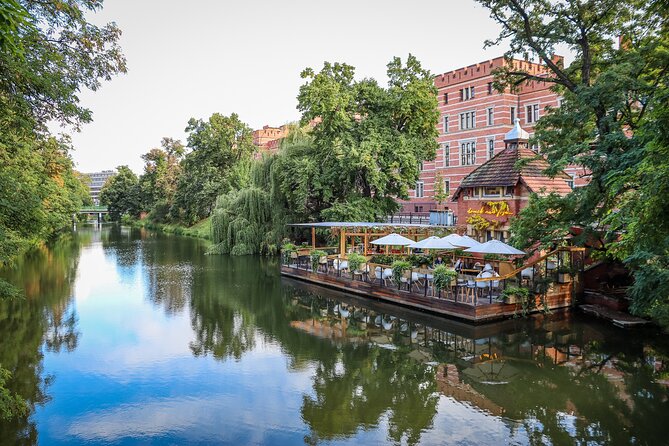
The Church of St. Elizabeth of Hungary is the kind of stop that changes the tone of a tour. The setting feels grand and historic, and then the guide brings in modern Wrocław personality.
You’ll have about 15 minutes at this stop. The big visual anchor is the 91-meter tower, which the guide uses as a way to explain why this church is considered one of the most important in the Old Town.
Then comes the fun and slightly surprising part. You’ll hear about the modern art details connected to the church and, importantly, the famous Wrocław dwarfs nearby. That dwarf element is not random either. It’s how the city turned a serious historic environment into something local, playful, and easy to read for visitors.
The practical note here: don’t plan on a long interior visit. The tour is structured for storytelling around the church area, and your time budget is limited, so enjoy the exterior view and the tower focus, and then do any deeper exploration later on your own.
Stop 4, Wrocław University: Baroque architecture and the Nobel Prize connection
From the church, you move to Wrocław University, where the emphasis shifts from civic life to education and prestige.
This stop is shorter, about 10 minutes, and it focuses on the baroque University of Wrocław. The guide also connects the university to its record of producing as many as 10 Nobel Prize winners.
In a 2.5-hour tour, that short stop can feel like a quick photo break unless your guide makes the context land. In the best versions of this tour, you’ll get a sense of how institutions shape a city’s identity over centuries, not just which building is older.
The fact that the stop is listed as admission ticket free means you’re not stuck planning around entry times. You can fit this walk into a busy day without building your schedule around tickets.
Stop 5, Ostrów Tumski, Cathedral Island: where the Oder river views meet 10th-century roots
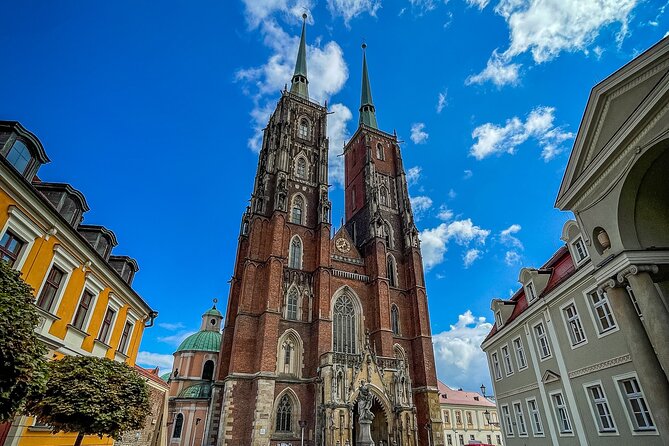
This is the emotional ending to the route. Ostrów Tumski, also called Cathedral Island, is where the tour enters the oldest part of Wrocław, dating back to the 10th century.
You’ll spend about 30 minutes here, which is the longest stop after the Market Square. That extra time makes sense because Cathedral Island is where you want a breath moment. You’ll see the cluster of gothic churches and palaces that define the area, plus you get grand views of the Oder river.
Just as important, the guide uses this location to return to the complex history of the city, with special attention to Polish-German relations. It’s the kind of topic that can sound heavy in a classroom, but here it’s attached to the actual streets and buildings. You end up understanding why history doesn’t feel like a separate chapter. It’s built into the stones.
You’ll also notice that guides often keep answering questions here, because this is the part people visually connect with. If you want to ask about what you should do next in Wrocław, this is a great place to ask, since the guide is in route mode and can point you toward logical follow-ups.
Price and value: what $26.60 buys you, and how to judge it fairly
At $26.60 per person for roughly 2 hours 30 minutes, you’re paying for a guided narrative plus the time-saving benefit of route design. You’re not paying for a series of paid museum entrances, since the listed stops are marked free of admission ticket costs.
This is good value if your goal is orientation and context. You’ll leave knowing what Wrocław’s Town Hall, Rynek, St. Elizabeth’s, the university, and Cathedral Island mean in the bigger story of the city.
It’s also good value if you’re the kind of traveler who likes the guide to answer questions on the spot. Many guides in this route style are praised for clear English and for staying personable, including guiding you on what to do after the walk.
One thing to watch: group size. The tour lists a small group cap of 15, but a maximum of 35. If the group gets larger, you may not get as much attention, and hearing can be an issue if there’s no microphone. If that matters to you, aim to start near the guide and bring patience for a few more seconds of crowding during transitions.
What the best guides do with the story, plus tips to get more out of it
Even with the same route, the experience can vary based on how the guide tells the story. In the feedback I saw, guides such as Lukas and Susanna get praised for being engaging, answering questions, and mixing serious history with entertaining anecdotes.
The big takeaway for you is to treat this tour like a guided thinking exercise. Don’t only look for landmarks. Listen for the why behind them. When you hear about different countries controlling the city over time, tie it to what you see: Gothic civic buildings, baroque details, and modern touches that make the center feel alive rather than frozen.
Here are a few practical ways to get more out of your two and a half hours:
- Arrive a little early at the Alexander Fredro monument so you can get an easy view of the guide.
- If it’s raining, keep your phone protected, but still use it to zoom in on details the guide mentions, like the pillory or Cloth Hall passages.
- At Cathedral Island, ask your next-day question. This ending stop is ideal for recommendations because it connects the big story to where you’ll want to wander next.
Also, while food isn’t included in the tour plan, some guides may include quick breaks or practical pointers around local spots. Don’t plan your meals around that happening, but do expect solid restaurant and sightseeing suggestions as part of the guide’s wrap-up style.
Weather, walking pace, and how to avoid a sore-day souvenir
This tour operates in all weather conditions. That’s useful, because it means you’re not stuck waiting for a sunny day to see the essentials. Dress appropriately, and assume you’ll be outside for the full 2 hours 30 minutes.
The walking level is easy to moderate. You’re moving between Old Town anchors, and you finish on Cathedral Island, so you’ll likely walk back toward your start point if you want to return the same direction.
If you’re sensitive to rain or wind, consider bringing a light waterproof layer and warm socks. You’ll enjoy the church tower and Oder river views more if you’re not busy thinking about cold fingers.
Should you book this Old Town Wrocław walking tour?
Yes, you should book it if you want a clean introduction to Wrocław that goes beyond postcard facts. The route hits the key anchors you’ll see again when you wander later, from Wrocław Town Hall and Rynek to St. Elizabeth’s and Ostrów Tumski.
Book it especially if you like history that connects politics and daily life, because this walk uses buildings as evidence. The beer cellar story, the pillory and Cloth Hall passages, the dwarf modern touch, the Nobel Prize link at the university, and the Polish-German context at Cathedral Island all support one idea: Wrocław’s identity is layered.
Skip it or approach carefully if hearing matters a lot for you and you’re worried about crowding. The overall max can be 35, and in at least one reported case the guide did not use a microphone. If that’s your concern, pick a time when you can arrive early and position yourself well.
If you want the best chance of a smooth experience, treat this as your orientation walk. Then use the rest of your day to return to the places that grabbed you most, armed with the story you just learned. That is where the value really shows.
FAQ
How long is the Old Town Wrocław walking tour?
The tour lasts about 2 hours 30 minutes.
What is the price per person?
The price is $26.60 per person.
Is the tour offered in English?
Yes, the tour is offered in English.
How big is the group?
It is described as a small-group experience capped at 15 people, and it also lists a maximum of 35 travelers.
Where do I meet, and where do we end?
You start at the Monument of Alexander Fredro on Rynek, and the tour ends on Ostrów Tumski (Cathedral Island). The end point includes about a 15-minute walk back to the starting area.
Are there admission tickets to buy for the stops?
All listed stops are marked as admission ticket free.
What is included in the tour price?
The tour includes an expert tour guide and a specially created narrative that covers the history of multiple nations.
Is food included?
No, food is not included.
Does it run in bad weather?
Yes, it operates in all weather conditions, so you should dress appropriately.
Is cancellation free if plans change?
Yes, you can cancel for a full refund, as long as you cancel at least 24 hours before the experience’s start time.
Fresh Wroclaw reviews
- Wrocław: city walk with a professional guide and cruise★ 4.8 · 19 reviews
- Legends of Old Town 1 Hour Walking Tour in Wroclaw (English)★ 4.9 · 20 reviews
- Wroclaw: NO LIMIT BEER City Tour Sightseeing By Golf Cart★ 4.8 · 21 reviews
- Jewels of Lower Silesia★ 5.0 · 22 reviews
- Wrocław: Guided City Tour with a Local★ 5.0 · 22 reviews
- Wroclaw: Private Tour to Project Riese★ 4.6 · 22 reviews
- #1 Bestseller Gun Shooting Package with Hotel Transfers Wroclaw★ 4.5 · 23 reviews
- The Classic E-Scooter (3 wheeler) Tour of Wroclaw – everyday tour at 6:00 pm★ 5.0 · 24 reviews
Walking Tours, compared.
Gdańsk City Sights & History Guided Walking Tour in English
Read our review →
Browse the lists this tour appears in